Top 10 Facts About Living Conditions in Bangladesh
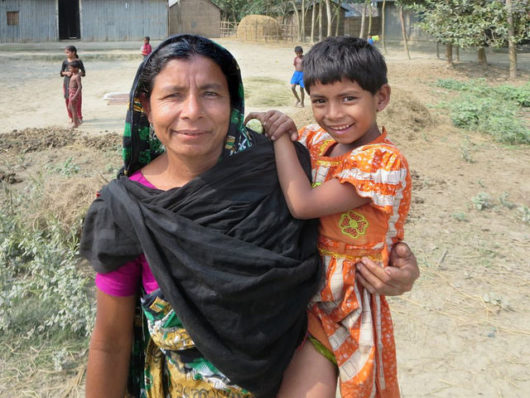
Bangladesh, a small South Asian country located to the right of India, is known for its lush greenery and extensive waterways. Home to one of the longest continuous beach on the planet and the world’s only mangrove forest, the country is characterized by its natural beauty. However, with more than 1,100 people living in each square kilometer, the country faces unique challenges. Here are the top 10 facts about living conditions in Bangladesh:
Top 10 Facts About Living Conditions in Bangladesh
- Nearly a quarter of Bangladeshi people are living below the national poverty line, according to 2015 World Bank data. That roughly works out to almost 41 million people. In addition, according to the Food Security Portal, “Bangladesh’s high poverty and undernutrition rates are exacerbated by frequent natural disasters and high population density.”
- The capital city of Dhaka is home to almost 9 million people. More than 2 million of these individuals either live in slums or are without any proper shelter.
- A dramatic influx of refugees from Myanmar means that people have no choice but to live in dangerous and over-crowded situations. According to the World Food Programme, “slopes in the camps are unstable and are at risk of collapsing during monsoon rains.” UNICEF estimates that 693,000 Rohingya (over half of whom are children) have been driven into Bangladesh since April 2018.
- Health care conditions and services are lacking. According to the World Health Organization, the number of hospital beds per 1,699 people is just four. Additionally, only 3 percent of Bangladesh’s entire GDP expenditure is allocated to health care.
- Though access to drinking water access is widespread, half of it fails to meet safety standards. In addition, the only city in the country that has a sewer system is Dhaka, and it only serves 18 percent of the city. According to the World Bank, in urban areas of Bangladesh, only about a third of the population has access to piped water.
- Roads suffer from extreme and frequent traffic jams due to the country’s incredibly high population density. According to Internations, “this makes driving in the cities very difficult and unpleasant due to issues with air pollution, dangerous driving and common road rage incidents.”
- Bangladesh has reduced its total fertility rate from 5 (children per woman) in 1966 to just 2.44 in 2016. A regional frontrunner, Bangladesh is on track to reach a total fertility rate of 2.1, the amount where, without migration, a country’s population is neither increasing or decreasing.
- The country is making strides in terms of development. The economy is growing which has led to improvements in primary education, gender equality, as well as improved rates of child and maternal mortality.
- Rates of open defecation have improved significantly. In 2015, just 1 percent of the population engaged in open defecation compared to 34 percent in 1990. Though the rate of growth is slow at only 1.1 percent annually, the current rate of improved sanitation is at 61 percent.
- Poverty and extreme poverty are declining, and currently stand at 31.5 and 17.6 percent respectively. Rates of poverty have almost halved since 1990, with 44.2 million people considered impoverished in 1991 and 24.1 million in 2015.
While continuing to deal with unique circumstances due to its high population density and geography, Bangladesh is making strides towards improving living conditions for its people. These top 10 facts about living conditions in Bangladesh only capture part of a diverse and developing country and indicate that, for the country’s people, the future is bright.
– Chelsey Crowne
Photo: Flickr
