• Link to X
  • Link to Facebook
  • Link to Instagram
  • Link to TikTok
  • Link to Youtube
  • About
    • About Us
      • President
      • Board of Directors
      • Board of Advisors
      • Financials
      • Our Methodology
      • Success Tracker
      • Contact
  • Act Now
    • 30 Ways to Help
      • Email Congress
      • Call Congress
      • Volunteer
      • Courses & Certificates
      • Be a Donor
    • Internships
      • In-Office Internships
      • Remote Internships
    • Legislation
      • Politics 101
  • The Blog
  • The Podcast
  • Magazine
  • Donate
  • Click to open the search input field Click to open the search input field Search
  • Menu Menu

Archive for category: Human Rights

Information and stories about human rights.

Global Poverty, Human Rights

Justice System Violates Human Rights in Guinea-Bissau

Human Rights in Guinea-Bissau
While the nation does possess legitimate political rights, including free and fair elections, lack of human rights in Guinea-Bissau continues to make victims out of its citizens. As of 2016, these included abuses such as corruption of government officials as well as violence and discrimination of women and children.

The list continues on, according to the U.S. Department of State. Other abuses included unfair and abusive treatment of detainees, lack of due process and human trafficking. No effective action was taken against the perpetrators of human rights in these situations.

In particular, prisoner detention stands out as one of the most grotesque human rights abuses. The conditions of detention facilities are life-threatening, according to the state departments.

“Cells lack running water, adequate heating, ventilation, lighting and sanitation. Detainees’ diets were poor and medical care was virtually non-existent,” stated the human rights report in 2016. The means by which detainees arrive in these deplorable conditions often violates another human right, lack of due process, as authorities often “arbitrarily” arrest and detain people.

Police are, for the most part, ineffective and corrupt, which might result be a result of their lack of regular payment by the state. Lack of funding results in insufficient of training as well as scarce resources for police to carry out their duties properly. Unfortunately, almost all levels of law enforcement are susceptible to coercion, threats and bribes, including the attorney general’s office.

Consequently, unlawful arrests continue to be made, violating human rights in Guinea-Bissau. These include arrests without warrants and the holding of detainees for longer than the permitted period of time. Additionally, military detainees were often not informed of charges against them.

To add to the human rights abuses conducted throughout the justice system, the independent courts, including judges, were “poorly trained, inadequately and irregularly paid and subject to corruption.”

It appears that those accused of suspected of crime in the state have very little security, as human rights in Guinea-Bissau are not enforced. Furthermore, there continues to be no administrative means of addressing human rights violations.

Little progress had been made in improving these conditions, and the justice system remains extremely weak to this day. One of the only few actions of accountability undertaken by the state was in July 2015 in the Oio region, where three officers were sentenced to imprisonment for human rights abuses.

Investigations continue to be made by human rights organizations, such as Amnesty International. The citizens of Guinea-Bissau are desperately in need of intervention from the international community.

– Melanie Snyder

Photo: Flickr

September 29, 2017
https://borgenproject.org/wp-content/uploads/borgen-project-logo.svg 0 0 Borgen Project https://borgenproject.org/wp-content/uploads/borgen-project-logo.svg Borgen Project2017-09-29 01:30:312024-05-29 22:26:55Justice System Violates Human Rights in Guinea-Bissau
Gender Equality, Global Poverty, Human Rights

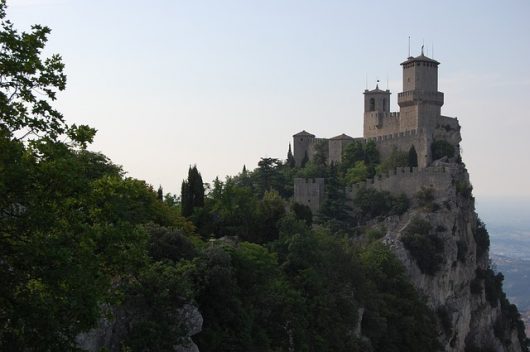
Human Rights in San Marino: The Fight for Gender Equality

Human Rights in San Marino

Securing human rights in San Marino, one of the world’s oldest republics, has been a progressive and relatively successful venture. The state is a multi-party democracy where authorities maintain effective control over law enforcement.

According to the Department of State, no outrageous human rights abuses have taken place in San Marino in recent years. Although, according to various international organizations, the state still needs to reduce gender inequality and further the protection of women’s rights in particular.

The Council of Europe Commissioner for Human Rights, Nils Muižnieks, recently congratulated the state for its success in combating violence against women during his visit in 2015.

The prevention of violence against women has been successful due to legislation passed throughout the last decade, including the “Prevention and elimination of violence against women and gender violence” in 2008. The decree to implement the law was passed in 2012, according the U.N. It also provided an assistance center for victims of violence.

Additionally, during this time, a special study group was established by the San Marino delegation which specializes in meeting the requirements of the Council of Europe Convention for preventing and combating violence against women.

Despite progress against violence, women in San Marino continue to face hurdles in practicing their human rights. According to Muižnieks, action should be taken to address the gender gap in employment and political participation, along with action to combat harmful gender stereotypes.

The commissioner suggested in 2015 that these goals regarding human rights in San Marino, particularly for women, can be achieved through increased efforts by and resources towards the Authority for Equal Opportunities in the state. He also suggested goals of gender equality could be made through the state’s ratification of the Council of Europe Istanbul Convention. San Marino ratified and entered the Istanbul Convention early in 2016, confirming its commitment to ensure human rights and women’s rights in the country.

– Melanie Snyder

September 29, 2017
https://borgenproject.org/wp-content/uploads/borgen-project-logo.svg 0 0 Borgen Project https://borgenproject.org/wp-content/uploads/borgen-project-logo.svg Borgen Project2017-09-29 01:30:242024-05-27 09:28:28Human Rights in San Marino: The Fight for Gender Equality
Gender Equality, Global Poverty, Health, Human Rights, USAID

Reproductive Health App for Youth in Rwanda

Health App for Youth in Rwanda

Tantine is an app that has been developed for youth in Rwanda. It was created by Sylvie and Sylvain Muzungu Uhirwa to tackle the issue of lack of reproductive and sexual health information. A barrier to sexual and reproductive health information has teens in Rwanda vulnerable to unintended pregnancies and diseases, which can hinder their ability to complete their education as well as find stable employment in the future.

Sylvie and Sylvain Uhirwa are twin medical students at the University of Rwanda who originally won the Youth Spark Innovation Grant in 2015. This grant is an initiative from the Resilient Africa Network in Partnership with USAID and the Makerere University School. It has helped them to build a website containing reproductive health information as well as youth mentorship opportunities.

As one of four initiatives chosen at the iAccelerator challenge 2017, the pair received $10,000 to further develop Tantine. Half of the funds went to developing the Android app and website content, as well as to continue to advance and develop the platform.

The app was recently shared in the Mahama camp of 50,000 Burundian refugees. The app for youth in Rwanda, specifically in the camp, gives reproductive health information via the web. Tantine works with a medical professional and psychological team to deliver this education, mentorship and counseling services.

Sylvie has stated that members in the camp do not have consistent access to wi-fi and do not own smartphones, so “…that’s why we thought of bringing those tablets and establishing a centre where they come and then access the internet in the camp. So we are going to equip them with those tablets and then a router with wi-fi.”

Therese Karugwiza, a gender and human rights program specialist at UNFPA, has stressed the importance of Tantine also targeting youth who may not be in school, as it is crucial that they also have access to this information. By taking Karugwiza’s account into consideration, the Uhirwa twins are putting Rwandan youth on a multimodal track to better reproductive health.

– Gabriella Paez

Photo: Flickr

September 28, 2017
https://borgenproject.org/wp-content/uploads/borgen-project-logo.svg 0 0 Kim Thelwell https://borgenproject.org/wp-content/uploads/borgen-project-logo.svg Kim Thelwell2017-09-28 01:30:562020-07-16 21:42:58Reproductive Health App for Youth in Rwanda
Global Poverty, Human Rights, Women & Children

3 Violations of Human Rights in Tanzania

Human Rights in TanzaniaOn June 22, 2017, Tanzanian President John Magufuli stated that pregnant adolescent girls will not be allowed to return to school because their pregnancies encourage other girls to have sex. This statement represents one of the several ways young women and other vulnerable Tanzanian populations are set up to fail, trapped in an endless cycle of poverty. There are numerous violations of human rights in Tanzania. This article will discuss three.

To understand the extensive violation of human rights in Tanzania, one must first understand what the Universal Declaration of Human Rights says. This document was created on December 10, 1948 by the United Nations General Assembly because of the events of World War II. The document lists thirty articles or rights that belong to all people. The three articles of the document that are regularly transgressed in Tanzania are:

  1. Article 3: Everyone has the right to life, liberty and security of person.
  2. Article 5: No one shall be subjected to torture or to cruel, inhuman or degrading treatment or punishment.
  3. Article 26: Everyone has the right to education. Education shall be free, at least in the elementary and fundamental stages. Elementary education shall be compulsory. Technical and professional education shall be made generally available and higher education shall be equally accessible to all on the basis of merit.

Mistreatment of Young Women

Tanzanian women lack the human rights guaranteed to all in articles 3 and 26: the rights to livelihood, freedom, safety and an education. In their 2016 report, “I Had a Dream to Finish School,” the Human Rights Watch reported that girls in Tanzania are sexually harassed by teachers, bus drivers and adults. The leaders in their lives who are supposed to guarantee their safety instead request sex in exchange for gifts, rides or money. Schools in the country do not report sexual abuse cases to police. In addition, there is no system for reporting these infractions confidentially. The result? Less than one-third of girls entering lower-secondary schools graduate.

In addition to being sexually harassed, girls also are forced to take pregnancy tests at school. If a girl is pregnant, the school then expels her. Tanzanian schools expel around 8,000 pregnant girls each year. This policy reinforces President Magufuli’s June comments and is intended to discourage an upsurge in teen pregnancies. In reality, the policy violates the human rights of these young women. It also targets the victims rather than the offenders.

Barring Education through Testing

Tanzanian school children lack the human rights guaranteed in articles 5 and 26: the rights to not be exposed to cruel punishments and to seek an education. According to the Human Rights Watch, the Tanzania government controls the number of students who can seek a secondary education by making it mandatory for all students to take the Primary School Leaving Exam (PSLE). The only students who can attend secondary school are students who pass the exam.

However, passing the exam is very difficult. This is because quality of education at the primary level is poor. At the primary level, students are taught by teachers who have not specialized in the subject they instruct and class sizes are enormous. The average class has 70 students enrolled. Many students fail the PSLE as a result and are not allowed to retake it. Since 2012, more than 1.6 million adolescents can’t pursue secondary education because of their exam results. This violation of human rights in Tanzania thus denies an opportunity for upward mobility.

Corporal Punishment in the Classroom

In addition to impeding children’s chances to continuing their education, adults utilize corporal punishment to discipline students when they do attend school. Students suffer from physical and psychological abuse in Tanzanian schools. Some teachers beat students with bamboo or wooden sticks, or with their hands or other objects. These actions make securing rights that much harder for this population.

While the state of human rights in Tanzania may seem grim for vulnerable populations, there is hope. Legislation currently in Congress can help to reverse these violations if passed. The Protecting Girls Access to Education in Vulnerable Settings Act seeks to work with international governments to ensure all women and children can peaceably seek an education. Help get this important piece of legislation passed by contacting your leaders today.

– Jeanine Thomas

Photo: Flickr

September 26, 2017
https://borgenproject.org/wp-content/uploads/borgen-project-logo.svg 0 0 Kim Thelwell https://borgenproject.org/wp-content/uploads/borgen-project-logo.svg Kim Thelwell2017-09-26 07:30:412020-07-16 21:26:243 Violations of Human Rights in Tanzania
Developing Countries, Global Poverty, Human Rights

Relatively Clean Record of Human Rights in Monaco

According to the U.S. Department of State’s 2015 human rights report, there have been no recent outstanding abuses of human rights in Monaco.

The country is governed by a sovereign prince, and legislative acts are conducted by the prince and the popularly elected National Council. Elections in 2013 were accepted by international organizations as free and fair.

Despite meeting its commitment to the protection of citizens human rights, there continues to be some pressure to further protect human rights in Monaco in the following areas:

In 2015, the Department of State reported instances of prisoner mistreatment in the country. There is one single detention center in Monaco, in which detainees have been reported to not be given enough time in the sunlight and outdoor exercise. Monaco’s government has allowed independent human rights observers, such as the Council of Europe’s European Committee for the Prevention of Torture (CPT), to continue to monitor the situation. The CPT regularly schedules visits to the detention center.

Additionally, much can still be done to strengthen human rights in Monaco, especially for children and people with disabilities, which the council of Europe’s commissioner for human rights acknowledged after his visit to Monaco at the beginning of the year.

The Office of the High Commissioner, which was created for the protection of rights, liberties and for mediation, was urged to strengthen the legislation against all forms of discrimination in general. For example, Monaco is still in the process of ratifying the United Nations’ Convention on the Rights of Persons with Disabilities.

Other issues on the horizon for human rights in Monaco include the recent passing of a law on the preservation of national security. The law allows for Monaco authorities to undertake administrative surveillance using voice recordings. Since the enactment of this law in 2016, the Monaco police can monitor anybody presenting a threat or suspected of organized crime and terrorism.

The commissioner for human rights emphasized the use of effective democratic control when it comes to security surveillance during his visit. With proper legislation, the already good record of human rights in Monaco can only continue to improve in the future.

– Melanie Snyder

Photo: Flickr

September 25, 2017
https://borgenproject.org/wp-content/uploads/borgen-project-logo.svg 0 0 Borgen Project https://borgenproject.org/wp-content/uploads/borgen-project-logo.svg Borgen Project2017-09-25 07:30:422024-05-29 22:26:46Relatively Clean Record of Human Rights in Monaco
Human Rights

Human Rights in Luxembourg

Luxembourg is a small, prosperous country in western Europe. Since the beginning of the 21st century, Luxembourg has made great strides in continuing to achieve and secure basic human rights in Luxembourg for their citizens.

As of 2017, the government of Luxembourg has met the minimum standards for the elimination of human trafficking. According to the U.S. State Department, “These achievements included increasing the number of prosecutions and convictions, finalizing and adopting a written national referral mechanism, enhancing the number of dedicated personnel to anti-trafficking positions” and others.

There were reported occasional cases of discrimination throughout the country over the last decade, specifically discrimination with respect to employment on the basis of race, color, political opinion, sex, gender, disability and other categories. Luxembourg law requires quotas for hiring diverse types of employees. It also mandates equal pay for equal work.

In September 2014, in reaction to reporting that employers paid women 8.6 percent less on average than men for the same work, the Ministry of Equal Opportunities began an awareness campaign using newspapers, online advertisements and posters in order to end the unequal treatment of women in the workplace.

On a more controversial note, Luxembourg legalized euthanasia in 2009, making it the third country in Europe to legalize euthanasia. The law on palliative care, advance instructions and end-of-life accompaniment “applied to anyone in a hopeless medical situation as a result of an accident or serious illness.” Many human rights advocacy groups, such as the Minnesota Citizens Concerned for Life Global Outreach, have spoken out against the practice.

The Human Rights Council will be reviewing human rights in Luxembourg early next year to determine whether they are fulfilling their human rights commitments. But it is safe to say that with a stable government and human rights laws that are routinely enforced, human rights will continue to be respected in Luxembourg.

– Melanie Snyder

Photo: Flickr

September 24, 2017
https://borgenproject.org/wp-content/uploads/borgen-project-logo.svg 0 0 Borgen Project https://borgenproject.org/wp-content/uploads/borgen-project-logo.svg Borgen Project2017-09-24 01:30:252024-05-29 22:26:45Human Rights in Luxembourg
Developing Countries, Global Poverty, Human Rights

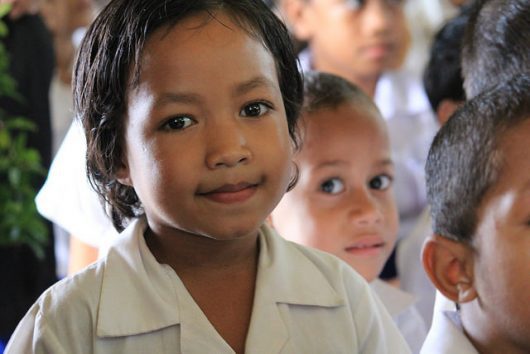
Human Rights in Nauru

Human Rights in Nauru

What do you know about Nauru? That it is the smallest republic in the world? In 1968, the island of Nauru gained its independence, and a bit over three decades later became the smallest independent republic in the world when it joined the United Nations.

The south Pacific island is home to just under 10,000 people. Those who live there are governed by a parliamentary republic. Today, Nauru is arguably better known for its human rights issues than for its last place finish in the world’s largest country contest. While there are certainly those who are not satisfied with the protection of human rights in Nauru, the evidence suggests that the nation does a very admirable job in this area.

Some of the allegations of human rights violations in Nauru were related to corruption. However, the U.S. State Department’s 2014 report on Nauru did not reach the same conclusion. The report states that the government, led by President Baron Waqa, utilizes its resources effectively to investigate and punish abuse and corruption. This seems to be working well, as there were zero reports of impunity involving Nauruan security forces in 2014.

Another frequent concern are the prison and detention center conditions in Nauru. This worry stemmed from an incident in the summer of 2013 when asylum seekers in Nauru’s Australian-run detention center rioted. The riot was the result of Australia announcing that Australia would put into effect more rigid immigration policies. Ultimately, more than 60 asylum seekers faced criminal charges. The world’s perception of human rights in Nauru has been greatly affected by this incident.

While this occurrence certainly represents a stain on the nation’s human rights record, it does not capture the full picture. In fact, the State Department’s report states that prison conditions generally met international standards.

The protection of women and women’s rights is another aspect of Nauru’s protection of human rights that is sometimes criticized. Part of this concern stems from the fact that women’s participation in politics is significantly less than that of men’s. However, since there are no rules or laws stopping women from participating, this may be more of a cultural issue.

Authorities in Nauru have been successful in protecting women against domestic violence and rape. The State Department’s report states that the courts “vigorously prosecuted” reported cases of rape.

There is clearly still work to be done and room for improvement, but the tiny island nation of Nauru is succeeding in protecting its people’s human rights in many regards.

– Adam Braunstein

Photo: Flickr

September 24, 2017
https://borgenproject.org/wp-content/uploads/borgen-project-logo.svg 0 0 Borgen Project https://borgenproject.org/wp-content/uploads/borgen-project-logo.svg Borgen Project2017-09-24 01:30:022024-05-29 22:26:56Human Rights in Nauru
Human Rights, War and Violence, Women and Female Empowerment

The Female Experience of War

Female Experience of War

Contrary to the title of this article, there is no singular female experience of war. The very statement illuminates one of the issues in historical and contemporary engagement in understanding and analyzing women during wartime. Too often, the intellectual and political community groups women from different countries, ethnicities and religions together to presume they suffer the same wartime experiences. The world sees war through a gendered lens which colors women as victims who idly wait for their husbands, sons and fathers to return home. War is as immediate and tolling for women as it is for men in ways that vary drastically across the board.

Take World War II as an example of the diversity of the female experience of war. The white American woman gained access to the workforce during WWII and momentum in furthering her cause in the feminist movement. Meanwhile, her black counterpart experienced barriers and institutionalized racism. These consequences did not decline until over a decade later. When employed, African-Americans were forced to use separate bathrooms and often worked the lowest-paying jobs despite having high qualifications or manual and cognitive skills. Black men and women accounted for only 6 percent of employees in the American aircraft industry while white women accounted for approximately 40 percent. Despite the pushback, black women used WWII as a platform to herald the inequalities back at home with campaigns such as “Victory Over Racism at Home” and “Victory Over Fascism Abroad”.

Across the Pacific Ocean, the Korean female experience differed significantly from that of women in the U.S. Thousands of Korean (and other southeast Asian) women under Japan’s imperial rule were forced into sexual slavery and served as “comfort women” for Imperial soldiers during WWII. Gross violations of human rights included female genital mutilation, forced abortions and even murder. Under colonization, many women turned to prostitution as a means of survival, adopting the fetishized symbols of orientalism that their oppressors projected upon them. In the eyes of the public, many of these survivors of sexual slavery lost their virtue and thereby their value to their community following liberation from Japan. Their communities ostracized them, forcing them to live isolated lives. In this way, it not only becomes a question of women’s experiences during the war but also their experiences after the war.

In her book, “Bananas, Beaches and Bases,” international relations theorist and author Cynthia Enloe illustrates how women in Jaffna, Sri Lanka played a role as ethnic minorities during the armed conflict between Tamil guerrillas, the government’s military and the Indian army. These women describe how their experiences as women compared to their oppression as Tamils in the Singhalese-dominated nation, penetrating what had been a male-dominated intellectual space. Eventually, these women played a crucial role in the reconciliation period, finding allies in Singhalese feminists and voicing their concerns about the militarized state and lack of female rights. Enloe further notes that these women, who played an essential part in stabilization, were repressed by their husbands who believed their outspoken critique to be outside the parameters of their female duties.

These examples neither serve to pit woman against woman nor seek to rank their experiences, but rather illustrate the diversity of women and the female experience of war. These women as individuals and as participants in a wider community have their own narratives and experiences. Giving them the due diligence they deserve begins with recognizing the diversity of 50 percent of the world’s population and their nuanced participation as both victims, perpetrators and protestors of war.

How do societies break out of masculinized power structures of international politics to acknowledge women as a priority during conflict and post-conflict discussions? It is critical to recognize the many different and extremely nuanced versions of war that women around the world experience. The idealized projection of the ‘female’ is so deeply entrenched that society often glosses over the experiences of women from ethnic, religious and sexual minorities. The female experience of war is extremely diverse, and it is critical that existing international and domestic power structures acknowledge and embrace it.

– Sydney Nam

Photo: Google

September 23, 2017
https://borgenproject.org/wp-content/uploads/borgen-project-logo.svg 0 0 Kim Thelwell https://borgenproject.org/wp-content/uploads/borgen-project-logo.svg Kim Thelwell2017-09-23 01:30:422020-07-11 18:26:26The Female Experience of War
Developing Countries, Global Poverty, Human Rights

Human Rights in Nicaragua: Three Issues You Should Know

There are many components to consider when evaluating how well a country is promoting human rights. On many fronts, the government of Nicaragua is failing its most marginalized populations: women and indigenous people. Human rights activists and journalists are also subject to government harassment. Here are three issues of human rights in Nicaragua:

Violence Against Women and Girls
The lack of legal protections for women in the case of domestic violence is a huge issue for human rights in Nicaragua. Studies estimate that one out of every two women in Nicaragua has experienced violence. Though a comprehensive law addressing gender-based violence was passed in 2012, many of the major advances in the law were overturned in subsequent years. In 2014, President Daniel Ortega issued a special decree shifting responsibility for the law’s implementation to the Ministry of the Family and mandated the establishment of neighborhood-based counseling as the first step to resolving “family conflict” prior to filing a legal complaint.

In 2016, this decree made it more difficult to access legal justice in cases of domestic abuse. The already under-resourced police units in charge of handling gender violence cases were shut down altogether. There is an emphasis on “family values” within Nicaraguan culture which makes it difficult for women to be taken seriously when coming forward with cases of domestic abuse. The actions of the government are only exacerbating the problem.

Indigenous Peoples’ Rights
In the past several years, there has been a wave of violent attacks against the Miskitos, the largest indigenous group on the Caribbean coast of Nicaragua. According to CEJUDHCAN, a non-governmental indigenous rights organization, 21 indigenous men have been killed since 2014 and dozens more wounded or kidnapped. Women have been raped, and armed men have attacked several villages. The Miskitos blame the attacks on settlers coming from other parts of the country. Thousands of Mestizos (Nicaraguans of Spanish descent) have moved into the rainforest, enticed by cheap, fertile land and timber and gold. Tensions have erupted into violence, and almost 3,000 Miskitos have fled their homes since 2015. The government’s failure to properly address this conflict has been a huge blight to human rights in Nicaragua.

The Miskitos say the government has done little to stop this violence. The army was only deployed once in December 2015, and once stationed, they did little else to help the locals. President Daniel Ortega has publicly backed the Miskitos’ right to their land but has initially denied any connection between the violence and the land conflict. The Miskitos accuse the president of only using the conflict for political gain around election time, and of taking no concrete action to protect the Miskitos or their land.

Mistreatment of Activists
The Nicaraguan government has been accused of unfairly targeting, detaining and deporting activists. In June 2016, six foreign environmental activists were detained and expelled from the country. There was a human rights hearing last year in regards to the killing of Francisco Garcia, whose family claims that he was targeted due to his wife’s work in the field of indigenous rights. His family alleges the government failed to diligently investigate the incident. Several other indigenous activists have reported cases of harassment and intimidation, with little response or support from authorities. Governmental targeting of activists leaves these citizens vulnerable and is a hindrance to human rights in Nicaragua.

In Nicaragua, the government is failing to protect the human rights of women and indigenous people. Activists are being unfairly targeted and left without legal protection. Without fair legislation and concrete action by the government, these groups will continue to struggle.

– Hannah Seitz

Photo: Flickr

September 23, 2017
https://borgenproject.org/wp-content/uploads/borgen-project-logo.svg 0 0 Borgen Project https://borgenproject.org/wp-content/uploads/borgen-project-logo.svg Borgen Project2017-09-23 01:30:162020-07-16 10:10:44Human Rights in Nicaragua: Three Issues You Should Know
Developing Countries, Global Poverty, Human Rights

Human Rights in Bulgaria

Human Rights in BulgariaBulgaria is integrated into the EU and its economy is growing while unemployment and poverty decline. But not all populations are benefiting from these improvements. Income inequality is vast and not all Bulgarians have good economic opportunities. Furthermore, certain populations are denied human rights in Bulgaria.

Journalists
The U.S. State Department notes that there have been threats of intimidation against journalists. While the courts generally rule in favor of free speech, government officials have often sued for libel and defamation. Some have threatened journalists’ lives for their reporting.

The Disabled
Mentally and physically disabled people tend to be institutionalized in Bulgaria. These sites are poorly maintained and understaffed. For those capable of education, there is little policy to guide how to teach them. As a result, many disabled children are uneducated. While discrimination based on disability is illegal, many cannot obtain jobs because of their lack of education and training. Additionally, most workplaces are not equipped to accommodate the disabled.

Roma
Bulgaria generally excludes the Romani population from society. Their children have less access to education and healthcare than other Bulgarian children. They are also found in mental health institutions, special education schools and detention centers more often. The Romani also experience more violence and police harassment.

Women
Women face several human rights abuses in Bulgaria, from income inequality to religious discrimination and sexual abuse. Sex trafficking of Bulgarian women and children is recognized as a great concern to the U.S. State Department. Furthermore, there is a taboo about reporting rape in Bulgaria, leading to many women not reporting the crime.

Refugees
There are numerous reports of police brutality against refugees fleeing into Bulgaria. Refugees have been separated from family members, beaten and robbed. Some are sent back to their country of origin, while others are detained longer than what is considered ethical.

There are alarming abuses of human rights in Bulgaria. The good news is that many watchdog organizations are aware and working to end them. Amnesty International and The Human Rights Watch are acting as sentries on Bulgaria’s activity. The U.S. State Department has released reports about Bulgaria, while the U.N. has called on Bulgaria to improve conditions. As the country grows in the global community, hopefully the gains will been felt by all populations.

– Mary Katherine Crowley
Photo: Flickr

September 22, 2017
https://borgenproject.org/wp-content/uploads/borgen-project-logo.svg 0 0 Borgen Project https://borgenproject.org/wp-content/uploads/borgen-project-logo.svg Borgen Project2017-09-22 01:30:212020-07-14 11:10:16Human Rights in Bulgaria
Page 19 of 45«‹1718192021›»

Get Smarter

  • Global Poverty 101
  • Global Poverty… The Good News
  • Global Poverty & U.S. Jobs
  • Global Poverty and National Security
  • Innovative Solutions to Poverty
  • Global Poverty & Aid FAQ’s
Search Search

Take Action

  • Call Congress
  • Email Congress
  • Donate
  • 30 Ways to Help
  • Volunteer Ops
  • Internships
  • Courses & Certificates
  • The Podcast
Borgen Project

“The Borgen Project is an incredible nonprofit organization that is addressing poverty and hunger and working towards ending them.”

-The Huffington Post

Inside The Borgen Project

  • Contact
  • About
  • Financials
  • President
  • Board of Directors
  • Board of Advisors

International Links

  • UK Email Parliament
  • UK Donate
  • Canada Email Parliament

Get Smarter

  • Global Poverty 101
  • Global Poverty… The Good News
  • Global Poverty & U.S. Jobs
  • Global Poverty and National Security
  • Innovative Solutions to Poverty
  • Global Poverty & Aid FAQ’s

Ways to Help

  • Call Congress
  • Email Congress
  • Donate
  • 30 Ways to Help
  • Volunteer Ops
  • Internships
  • Courses & Certificates
  • The Podcast
Scroll to top Scroll to top Scroll to top