• Link to X
  • Link to Facebook
  • Link to Instagram
  • Link to TikTok
  • Link to Youtube
  • About
    • About Us
      • President
      • Board of Directors
      • Board of Advisors
      • Financials
      • Our Methodology
      • Success Tracker
      • Contact
  • Act Now
    • 30 Ways to Help
      • Email Congress
      • Call Congress
      • Volunteer
      • Courses & Certificates
      • Be a Donor
    • Internships
      • In-Office Internships
      • Remote Internships
    • Legislation
      • Politics 101
  • The Blog
  • The Podcast
  • Magazine
  • Donate
  • Click to open the search input field Click to open the search input field Search
  • Menu Menu

Archive for category: Human Rights

Information and stories about human rights.

Global Poverty, Human Rights

Human Rights in Andorra

Human Rights in AndorraAndorra is a country with a population of around 85,000 and currently has a constitutional parliamentary democracy as its form of government. In recent years, the migrant population in Andorra has dramatically increased. This increase has caused many in the nation to consider the current state of human rights in the country, as in the past they were not ideal for women and religious minorities.

Arrest Procedures
In many countries that suffer from continual human rights violations, one symptom of this suffering takes the form of its citizens being unlawfully arrested. Andorra has laws that require police to have a warrant for an arrest. Also, Andorra police must release detainees after 48 hours if they are not charged with a crime.

Women’s Rights
One way to evaluate human rights in a country is to examine the treatment of women. Andorra was the tenth country to ratify the Istanbul Convention, which targets violence against women and created a plan to fight against domestic abuse. The treaty defines the various methods of violence used against women and prohibits them by law. Thus, human rights in Andorra are on the rise because of its support for women’s rights described in the Istanbul Convention.

Freedom of Speech and Press
The constitution of Andorra states that the country’s citizens have the right to freedom of speech and the press. The restriction of these human rights in Andorra is punishable by law. The Andorran government recognizes how important the collaboration of the press and the government is to ensure the human rights of its citizens.

The Takeaway
The primary markers of human rights are how people are treated in court, how women are treated in society and if the citizens of a country are allowed to practice freedom of speech. The people of Andorra are fortunate to live in a country that guarantees these fundamental rights in their constitution. The continued effort to enforce these laws ensuring human rights in Andorra proves that it is a leader in human rights and an example to other nations.

– Nicholas Beauchamp

Photo: Flickr

September 11, 2017
https://borgenproject.org/wp-content/uploads/borgen-project-logo.svg 0 0 Borgen Project https://borgenproject.org/wp-content/uploads/borgen-project-logo.svg Borgen Project2017-09-11 01:30:312024-05-28 00:16:14Human Rights in Andorra
Human Rights

The Current State of Human Rights in Finland

Human Rights in FinlandFinland has a population of about 5.5 million, and is seated next to Sweden and Norway. Human rights in Finland are ultimately made a priority by the country’s government, and this country is considered more progressive than most, although there are still a few areas that could be improved.

According to a report from the Ministry for Foreign Affairs of Finland, the Nordic country strives to dedicate time and attention to minorities in the country, including the Roma, linguistic or religious minorities and other ethnic minorities. On the other hand, the report also states that residents who belong to multiple of these minority groups are typically “the most vulnerable to human rights violations.” Finland promotes openness in respect to human rights policy and works toward “effective empowerment of the civil society,” according to the same report.

Human rights in Finland are also supported by nongovernment organizations in the region. In addition, human rights defenders work with minority groups. The Ministry for Foreign Affairs states that, “the key message is to encourage and urge the Ministry’s entire staff to collaborate actively with human rights defenders.”

Finland prioritizes areas including women’s rights, the rights of persons with disabilities, the rights of sexual and gender minorities, the rights of indigenous peoples and economic, social and cultural rights, according to the report. Regarding the rights of sexual minorities, in March of this year, Finland became the 13th country in Europe to allow same-sex marriage, according to the Human Rights Watch.

While human rights in Finland are heavily prioritized, there are still areas in need of improvement.

The U.S. Department of the State reports that human rights problems in Finland include the failure of police to provide detainees with timely access to legal council, “questionable” donations and contributions to political campaigns and violence against women and members of the LGBT community.

The report also included information on issues surrounding the treatment of survivors of sexual abuse and domestic violence. It stated that survivors seeking justice have encountered many obstacles with respect to their interactions with police and judicial officials. However, it also stated that police and government officials strongly encourage victims to report rapes through “various public awareness campaigns.”

While human rights in Finland have a few shortcomings, they are one of the more progressive nations in Europe, meaning that further progress is certainly possible.

– Leah Potter

Photo: Flickr

September 10, 2017
https://borgenproject.org/wp-content/uploads/borgen-project-logo.svg 0 0 Borgen Project https://borgenproject.org/wp-content/uploads/borgen-project-logo.svg Borgen Project2017-09-10 01:30:532020-07-09 06:20:23The Current State of Human Rights in Finland
Global Poverty, Human Rights

4 Concerns About Human Rights in Lithuania

Human Rights in LithuaniaThe Republic of Lithuania is located west of Russia along the Baltic Sea. 3.3 million people live in this 65,300 square km country. Historic changes have taken place in just one generation.

Lithuania had been occupied by Russia since 1940, but regained its independence in 1991 following the collapse of the Soviet Union. Thirteen years later, in 2004, Lithuania joined NATO (North Atlantic Treaty Organization) and the EU (European Union).

This country has seen a lot of political change in the past 25 years. A new constitution in 1992 presented a new form of government for Lithuania, including a presidency.

However, despite advancements, there are still problems with human rights in Lithuania. The government and people of this Baltic country are working hard to improve human rights, but there are still four notable areas of concern.

1. Children’s welfare
The 2016 Human Rights Report on Lithuania stated that “despite a multi-year effort to combat violence against children, many problems continued.” The Council of Europe Commissioner of Human Services, Nils Muižnieks, plans on reducing child abuse and harm in Lithuania by “implementing the law banning all forms of violence against children through a coordinated strategy and effective and independent monitoring.”

One area that can be improved is the country’s child hotline. It was reported that in the first eight months of 2015, the hotline received over 421,000 calls but was only able to respond to 192. This lack of resources and funding is a serious issue that results in injuries to and sometimes deaths of children.

Another issue that needs to be addressed is the number of institutionalized and displaced children in Lithuania. There are close to 100 orphanages in the country, which house about 4,000 orphans as of 2015. It is an important goal for Lithuanian government officials and NGOs to improve the orphanage system, because many institutionalized children’s issues stem from their time without a family in these temporary homes.

2. Domestic violence
According to the 2016 Human Rights report, in Lithuania, “rape and domestic violence are criminal offenses” and are dealt with according to the degree of harm done to the victim.

Domestic violence is one of the biggest human rights issues in Lithuania. Although there have been efforts to stop it, violence still continues. “In the first eight months of the year, police received 33,453 domestic violence calls and started 6,718 pretrial investigations, including 24 for murder.”

Compared to the United States’ 20,000 calls a day for rape or domestic violence, Lithuania’s numbers may not seem substantial. However, when people are being harmed, any number is significant and needs to be addressed.

3. Discrimination against minorities
Human rights in Lithuania in regard to discrimination against minorities are a very prevalent issue. Whether it is a mentally disabled person or a Jewish person, discrimination occurs against various minority groups in Lithuania.

People with disabilities are among the groups that face the worst discrimination in Lithuania. Some rights that have been known to be unequal for disabled people include “inaccessibility, forced hospitalization, human rights violations in closed institutions and psychiatric wards, restrictions on the right to vote and an inadequate mental health system, which remained among the least reformed areas in the health sector.”

Jews also have a history of discrimination in Lithuania. Recent research has shown that between January and April of 2016, 90 Jewish people who applied for passports were rejected, compared to only 20 non-Jewish applicants rejected.

However, like most human rights issues in Lithuania, the government is working to improve the situation. About $14.3 million was put aside between 2013 and 2019 to be spent by the Department of Affairs of the Disabled.

4. Inhumane treatment of prisoners
Conditions in some prisons and detention facilities remain sub-standard. There have been credible allegations of inadequate access to hygiene products, poor sanitary conditions such as filthy blankets and mattresses, poor food and inferior medical care.

Some improvements have been made, though. “Between January and September, the government spent approximately 364,000 euros ($400,000) on the renovation of seven prison facilities.” With more aid and support, these prisons and detention centers can become healthy and safe places.

– Sydney Missigman

Photo: Flickr

September 8, 2017
https://borgenproject.org/wp-content/uploads/borgen-project-logo.svg 0 0 Borgen Project https://borgenproject.org/wp-content/uploads/borgen-project-logo.svg Borgen Project2017-09-08 01:30:412024-05-28 00:16:044 Concerns About Human Rights in Lithuania
Government, Human Rights

Human Rights in Guinea

Human Rights in GuineaStill in the early stages of transitioning into a constitutional democracy after decades of authoritarian rule, Guinea still has significant room for improvement regarding its human rights. Guinea struggles with issues such as state-sponsored violence against dissidents, violence against women and restrictions on freedom of the press. Despite the implementation of the modified Criminal Code in 2016 – which criminalized torture and abolished the death penalty for ordinary crimes – the defamation and insulting of public figures remain punishable by up to five years’ imprisonment. With a score of 41 out of 100 in Freedom House’s Freedom in the World 2017 report, Guinea continues to be classified as a Partly Free nation.
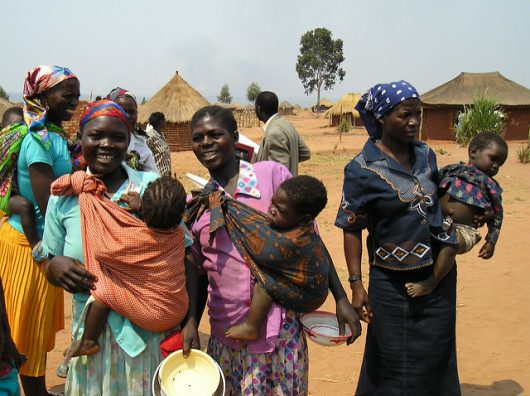
According to the United States Department of State’s 2016 Human Rights Report on Guinea, the country’s second democratic presidential campaign in 2015 was more peaceful than the previous one in 2010 or the 2013 legislative elections. Incumbent president Alpha Condé won re-election with 58 percent of the vote. The report does mention, however, that a few deaths still occurred during confrontations between demonstrators and state security forces.

Human Rights Watch has reported that the election was flawed, though Condé’s government took steps in 2016 to consolidate the rule of law and address the excessive use of force employed by security forces. Human rights violations by these security forces have reportedly decreased, but the Guinean judiciary appears to have done little to investigate past instances of state-sponsored violence – except the 2009 massacre of unarmed protesters. The massacre occurred under the military rule of Moussa Dadis Camara and resulted in the death of over 100 protesters. According to Human Rights Watch, while the investigation received political and financial support from the government, there was significant failure to suspend high-ranking government suspects from their positions.

In addition to the use of force against dissidents, the freedoms of speech, press and assembly are also restricted in order to decrease public criticism of the government. Since 2016, there have been multiple cases of citizens being imprisoned or fined for defamation or being in “contempt of the President.” In June 2016, journalist Malick Bouya Kébé of a private radio station was fined one million Guinean francs (approximately $112) for complicity in contempt of the President; he failed to interrupt a listener who criticized the president during a phone-in segment. His listener, another journalist, was sentenced to a year in prison and fined 1.5 million Guinean francs (approximately $168). To put this in perspective, the average annual income in Guinea is approximately $446. Both were tried without access to a lawyer.

Discrimination and violence against women and girls have also been human rights issues needing improvement in Guinea. In accordance with Guinean law, violence against women causing injury is punishable by up to five years in prison and a maximum fine of 30,000 Guinean francs (approximately $3.30). Though the law does not specifically address domestic violence, a charge of general assault carries a sentence of two to five years and a fine of up to 300,000 Guinean francs (approximately $33). Though grounds for divorce, the U.S. State Department has found that police rarely intervene in instances of domestic violence. It has also been reported that approximately 96 percent of Guinean women and girls have undergone female genital mutilation or cutting.

Key international actors such as the European Union, the United Nations Peacebuilding Commission and the International Criminal Court have undertaken efforts to strengthen judicial reforms, support security sector reform and engage national authorities on progress in investigations into state-sponsored violence. In its 2017 World Report, Human Rights Watch asserts that there must be more international pressure put on the Guinean government from these international actors in order for there to be lasting improvements made on human rights in Guinea.

– Amanda Quinn

Photo: Flickr

September 8, 2017
https://borgenproject.org/wp-content/uploads/borgen-project-logo.svg 0 0 Borgen Project https://borgenproject.org/wp-content/uploads/borgen-project-logo.svg Borgen Project2017-09-08 01:30:382024-05-28 00:16:21Human Rights in Guinea
Government, Human Rights

Human Rights in Angola

Human Rights in AngolaAngola is a country in Southern Africa which borders the South Atlantic Ocean and is between Namibia and the Democratic Republic of the Congo. Despite its massive oil reserves, the country scores low on the human development index – an index that measures the quality of life in a country. Angola suffered from a civil war lasting 27 years, which ended in 2002. In recent years, the country has adopted a republic-based government which is led by President Dos Santos.

Human rights in Angola suffered during 2016 due to government repression and the largest economic crisis since the civil war ended. The drop in oil prices was a primary factor in the crisis, which slowed growth for a decade, alongside exposing government corruption that had been present for years. Here are a few of the most prevalent human rights issues needing attention in Angora.

Freedom Of Media

Human rights in Angola continue to suffer due to the government’s control of the media. The Popular Movement for the Liberation of Angola (MPLA) is the ruling party in Angola, and the state run-media has proved itself to be highly biased toward portraying this party in a favorable way.

In 2016, a state television channel named TPA attempted to cover a story on civil society groups and opposition parties. However, government intervention switched the new tone of TPA back to a pro-MPLA bias. Blogs, social media and privately owned websites continue to be the central space for any ideas which oppose those of the ruling party.

The Justice System

Human rights in Angola continue to be held back due to an inadequate justice system. Often there are politically-influenced trials, new national security laws and slander charges which suppress human rights defenders in Angola. The Constitution of Angola states that these actions are illegal; however, due to the corruption of the MPLA, many fighting for human rights in Angola often become imprisoned.

Abuses By Security Forces

Human rights in Angola remain unimproved, in part because of abuses by the nation’s security forces. Use of excessive force is commonplace for citizens who oppose the government. On top of this, the corrupt justice system makes bringing these security forces to trial nearly impossible.

In April of 2016, police in the Huíla Province fired at a student demonstration taking place at Caluquembe. Due to the actions of these officers, three people were wounded and many others threatened with further violence. The police initially denied these actions, but when later pushed to confess, they still did not get charged with any crimes.

The Takeaway

Human rights in Angola are in an unfortunate state of affairs and have been ever since the 2016 economic crisis. This economic crisis exposes the government corruption taking place, further making the situation in the nation more volatile. However, continued action from human rights defenders and online groups may improve the situation for human rights in Angola.

– Nicholas Beauchamp

Photo: Flickr

September 8, 2017
https://borgenproject.org/wp-content/uploads/borgen-project-logo.svg 0 0 Borgen Project https://borgenproject.org/wp-content/uploads/borgen-project-logo.svg Borgen Project2017-09-08 01:30:022024-05-28 00:00:03Human Rights in Angola
Global Poverty, Human Rights

How Human Rights in Namibia Impact Schools and Children

Human Rights in NamibiaNamibia is a country on the coast of the southern tip of Africa, and since 1990, has gained independence from South Africa and established a representative democratic republic. Human rights in Namibia continue to be an issue for children seeking a safe education, as the nation has yet to commit to the Safe Schools Declaration.

While one in four children in conflict zones around the world get denied the right to an education, much of the problem is due to the use of schools by government security forces and non-state armed groups.

These armed groups have used schools and other educational institutions as military bases, shelters, weapons caches and outposts. While takeover time can vary from weeks to years, military usage of schools disrupts students’ learning. Additionally, it makes them more vulnerable to attacks from opposing forces or sexual violence caused by the very soldiers who inhabit the school.

In addition to these violations of human rights in Namibia, the use of schools for military purposes also diminishes student attendance and transition to higher levels, as well as permanent school closures.

To protect these children, 64 countries have given their allegiance to the Safe Schools Declaration. An international agreement started in 2015 to provide for the safety and continuation of education throughout times of war. Countries who have joined the declaration have committed to avoiding military usage of educational buildings during periods of conflict, as well as collecting data to investigate and potentially prosecute those in violation.

While Namibia’s neighboring countries, including Angola, South Africa, and Zambia, have all already committed to the Safe Schools Declaration, the nation’s avoidance of the treaty is a cause of major concern for the future of human rights in Namibia.

As children and teachers continue to suffer the consequences of armed forces use of schools in Namibia, a commitment to ending the practice is in immediate need on the part of the nation’s government.

– Kendra Richardson

Photo: Google

September 4, 2017
https://borgenproject.org/wp-content/uploads/borgen-project-logo.svg 0 0 Borgen Project https://borgenproject.org/wp-content/uploads/borgen-project-logo.svg Borgen Project2017-09-04 01:30:422024-05-28 00:16:26How Human Rights in Namibia Impact Schools and Children
Global Poverty, Human Rights

Seven Facts About Human Rights in Poland

Human Rights in PolandPoland has been a liberal democracy ever since it transitioned from communism in 1989. It is a nation that enjoys free and fair elections and civil liberties protections; however, there is a strong partisan divide in Poland. The Law and Justice Party has become skeptical of the efficacy of liberal democracy; it has enacted a number of authoritarian reforms, enhancing the power of the party and undermining checks and balances enshrined in the Polish constitution. Here are seven facts about human rights in Poland:

  1. Speech is free in Poland, but there are some limitations. A person with a public platform can be fined and even jailed for promoting anti-government activity, amorality and disrespect for religion. However, these restrictions are rarely enforced.
  2. Freedom of the press is a constitutional human right in Poland, but recent laws enacted by Poland’s governing party have limited that freedom. Starting in 2017, journalists must be pre-approved in order to interview legislators in the halls of Parliament. The Law and Justice Party has also made moves to have more influence on public media. The party amended Polish law so that the treasurer has the power to choose the heads of public media, rather than an independent board. Polish public media officials were quickly replaced with Law and Justice party officials after the amendment was passed.
  3. Roma, LGBT and Muslim communities experience frequent discrimination in Poland. In 2016, violent hate crimes rose by 40 percent and most of these attacks targeted Muslims. Despite this, Poland has shut down its Council for the Prevention of Racial Discrimination, Xenophobia, and Related Intolerance.
  4. Women have equal rights in Poland, but domestic violence and sex trafficking are still significant issues. The Polish government recently defunded the Women’s Rights Center, which had played a major role in aiding female victims of domestic violence. Polish officials have claimed that they shut down the institution because it did nothing to help the male victims of domestic violence.
  5. Poland has been going through a constitutional crisis, as the Law and Justice Party has taken steps that increase the power of the party and reduce the power of the Constitutional Tribunal – the nation’s highest court. The crisis began when the Law and Justice Party refused to seat five judges appointed to the court by the previous ruling party, and instead nominated their own. The tribunal ruled this act unconstitutional, but the government refused to release the ruling, making it technically non-binding. The Polish government has passed several laws designed to make the tribunal run less efficiently, and has appointed party ally Julia Przyłębska to be president of the tribunal. These actions have raised concerns among the EU and the U.S. that the Polish government is eroding democratic checks and balances.
  6. In 2016, Poland passed a counter-terrorism law that gives the government far-reaching surveillance powers. The law allows for the government to wiretap and monitor the communications of people the government fears might be involved in terrorism-related activities. The government has the power to continue these activities for three months without oversight, as well as use illegally obtained evidence in court and detain suspects for up to two weeks.
  7. Polish prisons fail to meet the standards set by other European countries. The minimum legal size of a jail cell in Poland is 32 square feet, which falls below the internationally recognized standard. Many prisons are in need of renovations and lack adequate healthcare and accommodations for prisoners with disabilities.

Though the Polish ruling party is encroaching on the nation’s civil liberties, there are still actions that can be taken to protect human rights in Poland. Poland still has free and fair elections, and if that remains unchanged, the Polish people have the power to democratically reject these illiberal reforms by voting in candidates that promise to restore power to the Constitutional Tribunal. The EU also has the power to sanction Poland if it goes too far – something it threatened to do last month in the face of efforts to stack the Constitutional Tribunal with even more party allies. Both of these situations should bring hope to the people of Poland, as it makes the improvement of their human rights a very possible outcome of the future.

– Carson Hughes

September 4, 2017
https://borgenproject.org/wp-content/uploads/borgen-project-logo.svg 0 0 Borgen Project https://borgenproject.org/wp-content/uploads/borgen-project-logo.svg Borgen Project2017-09-04 01:30:332024-05-28 00:16:01Seven Facts About Human Rights in Poland
Global Poverty, Human Rights

Human Rights in Chad

Human Rights in ChadThe Republic of Chad is a nation located in Central Africa, and is home to about 11.8 million people. The nation has endured a difficult past, which includes three decades of civil war from the time it stopped being part of the French African holdings in 1960. Today, Chad is a presidential republic with three branches of government: executive, legislative and judicial. Despite progress made, one weakness that this government has shown is an inability to protect human rights in Chad.

According to the 2015 United States Department of State’s Human Rights Practices report on Chad, there are three human rights problems that stand out above the rest: security force abuse, harsh prison conditions and discrimination and violence against women and children.

Protecting people from physical danger is an integral part of human rights protection, but Chad has largely failed in this area. According to reports, the government or its agencies have committed illegitimate killings, including by torture. A tragic example of this occurred in the fall of 2014, when protests against a variety of issues, including increased fuel prices, was met with live fire from police. According to Freedom House, a self-described “watchdog organization” that aims to spread freedom and democracy around the globe, between three and five protestors were killed. Unfortunately, an end to events like these may not come anytime soon due to a lack of accountability. The Department of State’s report found that Chad’s government rarely punishes those who commit abuses.

There are 45 prisons in Chad. Unfortunately, the conditions in these prisons are absolutely reprehensible. Finding oneself in one of these prisons can be potentially life-threatening due to a number of reasons, including inadequate food storage and deleterious sanitary conditions.

Human rights in Chad must be protected equally among all people, but this is unfortunately not always the case. Women, for instance, widely report instances of domestic violence. While this is technically against the law, police have seldom been helpful and women have few legal options. One can only hope that Chad will take steps to improve its protection of human rights, so that its citizens can one day enjoy a higher quality of life.

– Adam Braunstein

Photo: Flickr

September 2, 2017
https://borgenproject.org/wp-content/uploads/borgen-project-logo.svg 0 0 Borgen Project https://borgenproject.org/wp-content/uploads/borgen-project-logo.svg Borgen Project2017-09-02 01:30:332024-05-29 22:26:35Human Rights in Chad
Developing Countries, Global Poverty, Human Rights

Problems of Human Rights in the Bahamas

Human Rights in the BahamasThe Bahamas is a chain of islands located in the northern Atlantic Ocean with great historical significance. The islands first became a British colony in 1783, slightly over a century after British settlement of the islands began. The Bahamas gained its independence in the late 20th century. Since that time, the Bahamas has thrived thanks to a few very fruitful industries such as tourism. The nearly 330,000 people who populate the Bahamas are ruled by a parliamentary democracy under a constitutional monarchy.

One blemish on this nation’s record is its substandard record on human rights, particularly in the areas of immigrants and prison and detention center conditions.

The 2015 United States Department of State’s report on human rights in the Bahamas concluded that several different types of human rights problems do in fact exist.

The report states that poor treatment of irregular migrants exacerbated by issues in processing them is an issue needing attention. Haitian immigrants to the region, for example, have been detained by Bahamian authorities and kept in custody until proper arrangements were made for them to exit the country or legally stay.

The Bahamian and Haitian governments have taken measures to alleviate the problem, but their solution has brought its own problems with it. The Bahamian government required that non-Bahamian citizens must carry legal documents with them beginning in the fall of 2014. However, outcry poured in from certain international organizations that enforcement of this law was applied unfairly to those of Haitian descent, along with several other complaints. Perhaps the most disturbing accusation of the abuse of human rights in the Bahamas came in the form of reports claiming that “immigration officials physically abused persons as they were being detained and that officials solicited and accepted bribes to avoid detention or secure release,” according to the State Department’s report.

To make matters even worse, the places where these people are being held is substandard. Prison and detention centers did not meet international standards, and overcrowding is a major issue at the government’s only prison.

This data suggests that human rights in the Bahamas are not as well protected as they need to be. In the future, more work must be done by the local and international communities to ensure the better enforcement of human rights in the Bahamas.

– Adam Braunstein

Photo: Google

September 2, 2017
https://borgenproject.org/wp-content/uploads/borgen-project-logo.svg 0 0 Borgen Project https://borgenproject.org/wp-content/uploads/borgen-project-logo.svg Borgen Project2017-09-02 01:30:172024-05-28 00:16:16Problems of Human Rights in the Bahamas
Global Poverty, Human Rights

The Current State of Human Rights in Denmark

Human Rights in DenmarkCenturies ago, Denmark was home to Viking raiders, but today, the nation is successful and technologically advanced. The 5.5 million people who live in Demark are governed by a parliamentary constitutional monarchy. The Scandinavian nation is very impressive on many fronts, including economics. In 2016, for instance, Denmark’s unemployment rate was just 4.2 percent. Human rights in Denmark are largely protected, but room for improvement remains.

Denmark is one of the 192 Member States of the United Nations and uses that position to advance its protection of human rights. For example, Denmark has pushed for treaties that support the abolition of torture as well as augmenting the rights of people with disabilities.

Within its own borders, steps are taken to protect human rights as well. Free speech and a free press are two of the many human rights in Denmark protected by the nation’s constitution. According to the U.S. Department of State’s 2010 report, Denmark’s government did not limit either of these practices.

The report also demonstrated that Denmark does not violate the integrity of its people. Prison and detention centers keep with international standards, fair trials are granted and each individual’s privacy is respected.

One area in which Denmark’s reputation regarding human rights is less widely praised is when it comes to the nation’s treatment of refugees. According to The Washington Post, many European nations have experienced an influx of immigrants over the past decade. Some of the actions taken by Denmark’s government include slashing benefits to refugees, allowing police to confiscate refugees’ valuables and taking steps to make it increasingly difficult for refugees to reunite with their families.

As the laws in Denmark have changed, so too have the have peoples’ sentiments. Ideas regarding refugees that in the past would have been considered outlandish have infiltrated more mainstream ideology. Denmark has received much criticism for this. In fact, Human Rights First, “an independent advocacy and action organization that challenges America to live up to its ideals” stated that this is a violation of refugees’ human rights.

The evidence suggests that Denmark is more successful at protecting the human rights of its own people than of others.

– Adam Braunstein

Photo: Flickr

September 1, 2017
https://borgenproject.org/wp-content/uploads/borgen-project-logo.svg 0 0 Borgen Project https://borgenproject.org/wp-content/uploads/borgen-project-logo.svg Borgen Project2017-09-01 07:30:432024-05-28 00:16:00The Current State of Human Rights in Denmark
Page 21 of 45«‹1920212223›»

Get Smarter

  • Global Poverty 101
  • Global Poverty… The Good News
  • Global Poverty & U.S. Jobs
  • Global Poverty and National Security
  • Innovative Solutions to Poverty
  • Global Poverty & Aid FAQ’s
Search Search

Take Action

  • Call Congress
  • Email Congress
  • Donate
  • 30 Ways to Help
  • Volunteer Ops
  • Internships
  • Courses & Certificates
  • The Podcast
Borgen Project

“The Borgen Project is an incredible nonprofit organization that is addressing poverty and hunger and working towards ending them.”

-The Huffington Post

Inside The Borgen Project

  • Contact
  • About
  • Financials
  • President
  • Board of Directors
  • Board of Advisors

International Links

  • UK Email Parliament
  • UK Donate
  • Canada Email Parliament

Get Smarter

  • Global Poverty 101
  • Global Poverty… The Good News
  • Global Poverty & U.S. Jobs
  • Global Poverty and National Security
  • Innovative Solutions to Poverty
  • Global Poverty & Aid FAQ’s

Ways to Help

  • Call Congress
  • Email Congress
  • Donate
  • 30 Ways to Help
  • Volunteer Ops
  • Internships
  • Courses & Certificates
  • The Podcast
Scroll to top Scroll to top Scroll to top