• Link to X
  • Link to Facebook
  • Link to Instagram
  • Link to TikTok
  • Link to Youtube
  • About
    • About Us
      • President
      • Board of Directors
      • Board of Advisors
      • Financials
      • Our Methodology
      • Success Tracker
      • Contact
  • Act Now
    • 30 Ways to Help
      • Email Congress
      • Call Congress
      • Volunteer
      • Courses & Certificates
      • Be a Donor
    • Internships
      • In-Office Internships
      • Remote Internships
    • Legislation
      • Politics 101
  • The Blog
  • The Podcast
  • Magazine
  • Donate
  • Click to open the search input field Click to open the search input field Search
  • Menu Menu

Archive for category: Human Rights

Information and stories about human rights.

Children, Global Poverty, Human Rights

Examining Human Rights in Comoros

Comoros

Comoros is an archipelago off the coast of Africa composed of three distinct volcanic islands: Nhazidja, Mwali and Ndzouani. Since declaring independence from France in 1975, the state has suffered a steady decline in its gross domestic product. Environmental hazards such as an unpredictable climate, overpopulation and poor harvests have stunted the growth of Comoros’s economy. In 2016, Comoros’ agriculture-based workforce was at a stagnant unemployment rate of 19.96% and scored .497 on the Human Development Index, indicating insufficient rates of life expectancy, education and per capita incomes.

In 2001, Comoros published its official constitution. In its preamble, the constitution states that equality, freedom and both economic and basic security will be provided for its citizens, “without distinction based on sex, origin, race, religion or belief.” The proclamation goes on to specify direct measures of this freedom, emphasizing both the promised protection of accused citizens to properly defend his or herself before the courts, as well as the rights of a child to be safeguarded by authorities against “any form of abandonment, exploitation and violence.”

Despite these mandates, however, Comoros’ human rights record is tainted with accounts of political corruption, extensive pretrial detention, as well as several instances of child exploitation and abuse. In its current state, Comoros is acting out of the bounds of its own written law and the Universal Declaration of Human Rights adopted by the United Nations. Here are two examples of the evasion of human rights in Comoros.

Prisoner Conditions

According to the 2016 Human Rights Report, Comoros’ prison and detention centers were severely overcrowded. Out of three prisons, the largest is based in the nation’s capital city, Moroni. After analyzing the size and structural scope of this prison, the International Committee of the Red Cross announced its capacity at 60 prisoners. However, when examined at the time of this report, Moroni’s prison was holding 148 inmates. Reports also concluded that each prisoner was allotted, on average, only one meal per day. Malnutrition was prevalent among inmates, most particularly those who were not supplemented with food from family members

Investigation into the livelihood of inmates suggested that juveniles and adults are also held together in the same cellblock. Studies like the one done by the Justice Policy Institute suggest that this practice leads to juveniles re-entering society as hardened criminals, more assimilated to an immoral way of life. This leads to higher levels of recidivism and stunts the growth of the nation’s next generation.

When discussing human rights in Comoros, however, one of the biggest concerns comes from the delay of fair trials when a citizen falls under formal accusation. Disarray within the judicial system often leaves pretrial detainees awaiting trial for more than four months, beyond the permissible limits of holding. On top of this, many of the innate liberties in which the accused are entitled to are ignored or unacknowledged by the court system. These rights include that to a public defender and an impartial judicial environment in which to present his or her case. Oftentimes, bribery, corruption and unpredictability within the court system stomped on the rights of the accused, and many are imprisoned without a fair chance at proving their innocence.

Child Abuse

Among other violations of human rights in Comoros include the exploitation and forced labor of young children. In 2002, three studies financed by UNICEF evaluated and confirmed the widespread physical and psychological abuse suffered by the children of Comoros. These studies determined sexual abuse to be at the forefront of offenses, and the average age of the victim to be 13.

In 2005, UNICEF published the story of Amina, an 11-year-old girl whose life was stolen after the delivery of her illegitimate child. Amina’s rapist, the father of this child, was a Koranic teacher who lived near Amina and her family. Ashamed of what had transpired between her and the 45-year-old aggressor, Amina hid her pregnancy for seven months — neglecting the necessities of prenatal care and putting her life at risk.

Cases like Amina’s are far too common within Comorian society, often ending in informal contracts between the victim’s family and the abuser. Instead of reporting instances of rape and molestation, the offender pays money to the victim and, in the case of pregnancy, agrees to care for and support the unborn child.

Reports also show high instances of human trafficking in the case of young, impoverished children being sent to work for wealthier families in both the financial and agricultural sectors. Their new caretakers often exploit the children by having them work long, exhaustive hours and expose them to both physical and sexual abuse. Some of these children are reportedly placed into positions where they are forced to smuggle drugs into neighboring islands or operate covertly in unlawful tasks.

In other cases, children are sent to Koranic schools headed by fundi, a “learned person,” in order to edify themselves on Islamic law and culture. In 2009, the ILO reported more than 60% of the children it surveyed were victims of sexual abuse by their fungi — forced, then, to live among and learn from their attacker.

In order for human rights in Comoros to be acknowledged and respected, these transgressions need to be punished with the proper repercussions. This comes primarily from supporting the U.N. in their initiatives like the Global Action Programme on Child Labor Issues. In its targeting of problem countries, Comoros included, this project works to pinpoint the legal gaps that allow child labor to exist, and diminish its existence in terms of both legislation and livelihood. The effort of the individual to lobby for programs and projects like this helps perpetuate the regard for human rights in Comoros.

– Briana Fernald

Photo: Flickr

October 20, 2017
https://borgenproject.org/wp-content/uploads/borgen-project-logo.svg 0 0 Kim Thelwell https://borgenproject.org/wp-content/uploads/borgen-project-logo.svg Kim Thelwell2017-10-20 01:30:322024-06-07 05:07:46Examining Human Rights in Comoros
Global Poverty, Human Rights

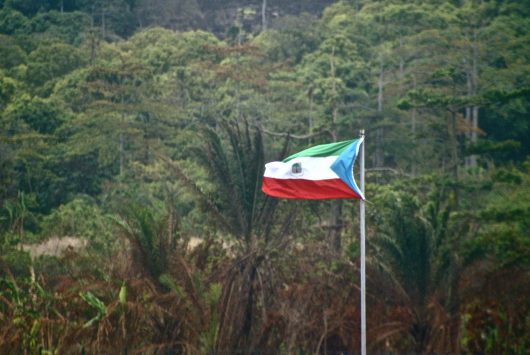
Human Rights in Equatorial Guinea

Human Rights in Equatorial Guinea

The human rights in Equatorial Guinea are influenced significantly by a nearly omnipotent government. The per capita gross national income is $21,056, which, according to the Human Rights Watch, is the highest in Africa. Unfortunately, much of this is due to citizens who are loyal to President Teodore Obiang Nguema Mbasogo having most of the wealth, whereas the rest of the country is living in poverty.

According to the Human Rights Watch, 26% of all children have stunted growth. Nearly half of elementary school-aged children are not enrolled in school, and half of the ones who are do not finish. A ruling in July 2017 by the Minister of Education, which expels all pregnant students in an effort to discourage pregnancy, exacerbates the situation.

Human Rights Watch puts many of the violations of human rights in Equatorial Guinea on President Obiang, the president since 1979, and his government. He was recently reelected in April 2016, amid much controversy. Many citizens in opposition to Obiang boycotted the election, given the unlikeliness of his defeat. Those who came out in opposition to Obiang were arrested, sometimes en masse, and held in jail without charges for over one week. In the week before the election, for example, Obiang’s government targeted members of the opposition party, Citizens for Innovation. Even outside of the elections, those opposing the Obiang government are swiftly dealt with, usually under “disturbing the peace,” according to Amnesty International. One story involved police arresting two members of another opposition party for passing out leaflets.

Not only are opposition leaders persecuted by the government, but so are their families. An example of this involved the son and nephew of an opposition leader, whom, according to Amnesty International, the government arrested and held for nine months, only charging and convicting them for revealing state secrets at the end of their incarceration.

The government’s influence reaches beyond silencing its opposition. When President Obiang’s son Teodorin was charged with embezzlement by the French government, Obiang responded by making his son vice president and accusing France of violating his immunity.

In spite of the severe violations of human rights in Equatorial Guinea, many organizations have spoken out for government reform. According to the Human Rights Watch, Amnesty International and six other organizations condemned the government for silencing opposition leaders.

The government is making an effort to improve how it treats the opposition party. In order to join the Extractive Industries Transparency Initiative, Equatorial Guinea has to “refrain from actions which result in narrowing or restricting public debate in relation to implementation of the EITI.” In response to this, the government has allowed one of its opposition parties to resume business as of September 2016.

The government is a large complication when it comes to improving human rights in Equatorial Guinea, but there are small signs of improvement, which hopefully will continue into the future.

– Cortney Rowe

Photo: Flickr

October 20, 2017
https://borgenproject.org/wp-content/uploads/borgen-project-logo.svg 0 0 Borgen Project https://borgenproject.org/wp-content/uploads/borgen-project-logo.svg Borgen Project2017-10-20 01:30:022020-06-22 16:19:02Human Rights in Equatorial Guinea
Human Rights, Women's Rights

Women, Peace, and Security Act Becomes Law

House Passes the Women, Peace, and Security Act

The Women, Peace, and Security Act (S. 1141) became a public law at the beginning of October 2017. The purpose of the bill is to ensure that women play meaningful roles in diplomacy and leadership, especially in regions of violent conflict.

The bill recognizes the importance of women as peacemakers in their communities and the power they have in promoting inclusive, democratic societies. If signed into law, this bipartisan legislation would establish gender equality as a priority in U.S. foreign policy.

Sen. Jeanne Shaheen (D-NH) first introduced the bill to the Senate in May. It then passed the Senate body without amendment in early August. The bill is the Senate-companion bill to H.R. 2484, which passed the House earlier this session.

The Women, Peace, and Security Act is really a culmination of years of bipartisan work throughout the course of several administrations. Versions of this bill have been presented in past sessions; in fact, a hallmark of the Obama administration’s foreign policy was the implementation of the National Action Plan on Women, Peace, and Security. Like the S. 1141, the executive order was established to promote global gender integration as a means of conflict prevention and peace-building.

A wealth of research demonstrates the successful outcomes gleaned from the participation of women in leadership roles. Women in conflict-affected areas have been shown to be effective in combatting violent extremism, countering terrorism and resolving disputes through nonviolent negotiation. Furthermore, the presence of women in government is critical in the creation of sustainable, democratic policies in post-conflict relief scenarios.

When women are invited to participate in decision-making, the whole community is elevated. Studies suggest a positive correlation between a country’s gender equality and the strength of its economy. Thus, not only would women in leadership promote global security, but it would also fight poverty.

Representative Eliot L. Engel, Ranking Member of the House Committee on Foreign Affairs, stands firmly behind the Women, Peace, and Security Act. He is concerned, however, about the current foreign aid budget. The new budget would see funding reduced by more than one third.

He said of the proposed cuts, “The Administration’s budget proposal would slash funding for diplomacy and development to dangerous levels, and a current redesign effort at the State Department might strip out initiatives like women, peace, and security. I hope that won’t happen.”

Indeed, with mounting evidence to verify the importance of female leaders, programs that endorse the progress of women cannot afford to be forgotten in a time of such global upheaval. Were this bill to pass into law, it would reaffirm the United States’ stance on gender equality. Furthermore, it would pave the way for comprehensive global policies that sustain peace and economic security.

– Micaela Fischer
Photo: Flickr

October 17, 2017
https://borgenproject.org/wp-content/uploads/borgen-project-logo.svg 0 0 Borgen Project https://borgenproject.org/wp-content/uploads/borgen-project-logo.svg Borgen Project2017-10-17 07:30:452024-05-29 22:27:32Women, Peace, and Security Act Becomes Law
Human Rights

Human Rights in Saint Vincent and the Grenadines

Human Rights in Saint Vincent and the Grenadines

The island nation of Saint Vincent and the Grenadines, often known as just Saint Vincent, has made an active effort to alleviate human rights infringements. However, residents are still subject to infractions of their basic rights. Women and children often bear the brunt of these infractions, but the government is working toward passing legislation to help the nation sustain its “free” status given by the Freedom House.

2015 in particular was a year of major violations in Saint Vincent and the Grenadines. The country’s political election elicited many peaceful protests that were met with brute force by the police. Media outlets reported that adversaries of certain politicians were harassed and physically abused. Some were even subject to misdemeanor charges or property confiscation. Once the election was finished, these rough and unreasonable acts by the police diminished.

Human rights in Saint Vincent and the Grenadines have been upheld as far as laws against sexual assault. According to precedent, the government has followed through on reports of rape, with a starting punishment of at least 10 years. Furthermore, spousal rape has been condemned and is considered an illegal act.  Unfortunately, some victims are paid off by perpetrators for not reporting the violations, thus hindering justice.

Sexual harassment, domestic violence and human trafficking are three major issues in Saint Vincent and the Grenadines. Both sexual harassment and domestic violence have yet to be criminalized by the government, and prostitution of girls under the age of 18 is rampant. Many young girls are forced into pursuing sexual relationships with tourists or older men by their mothers in order to make a contribution to the family income. After government effort, the nation was able to go from tier three to tier two on the Watch List for Human Trafficking.

Lastly, child labor is also a primary concern for residents of Saint Vincent. Children under the age of 18 have no legal restriction on the number of hours that they can work while enrolled in school. Furthermore, there are no restrictions about workplace environment and safety.

While Saint Vincent and the Grenadines are clearly in need of major overhauls regarding human rights, the government is indeed taking action. However, quicker and more severe punishments for violations of rights are necessary in order to make living conditions better for the nation’s inhabitants.

– Tanvi Wattal
Photo: Flickr

October 17, 2017
https://borgenproject.org/wp-content/uploads/borgen-project-logo.svg 0 0 Borgen Project https://borgenproject.org/wp-content/uploads/borgen-project-logo.svg Borgen Project2017-10-17 07:30:032024-05-29 22:27:32Human Rights in Saint Vincent and the Grenadines
Human Rights, Women and Female Empowerment, Women's Rights

Women’s Collectives in India Offer Solutions and Empowerment

Indian slums

Many people living in India’s slums do not have a toilet in their own home. Their only option for using a toilet is walking 15 minutes to a run-down community toilet and waiting in an often chaotic line.

For men, relieving themselves in the open is an option, albeit one with negative effects on public health. Women who do this are targets for harassment, so they drink very little water and wait for the protection of nightfall to perform this necessary human function. 15 years ago, the miserable conditions in the slums of Ahmedabad prompted the Gujarat Mahila Housing SEWA Trust to use community-based women’s organizations to improve sanitary conditions.

The SEWA Trust identified local women leaders who recruited other women to join community-based organizations. These women were trained in sanitation system planning and how to demand funding from certain government programs. The women’s collectives in India monitored and maintained the sanitation systems they installed. Communities paid for one-third of the costs and the government covered the rest.

The program ultimately established 46 community-based organizations in 895 slums, trained more than 13,000 women and installed toilets in nearly 90,000 households. Many women opened bank accounts during the course of the program, strengthening their financial power.

Women used the skills gained from sanitation planning to tackle other issues in their communities. One woman used her skills to convince a power company to supply electricity to her slum. That company adopted a modified payment plan and eventually supplied electricity to nearly 1 million people in India. Many of the original community-based organizations have expanded to become citywide federations and make their voices heard in city planning.

CARE is an organization that is dedicated to ending world poverty, and one of the methods they use is establishing women’s collectives in India and around the world. On average, women joining CARE collectives see their yearly income increase twice as quickly as women in similar communities without CARE collectives.

According to women surveyed by CARE, the five main barriers to their economic empowerment are lack of time, limited access to resources, violence, low incomes and the productivity gap between men and women. Women who join CARE collectives fare better in all five categories compared to those who do not.

The number of women who believe that it is acceptable for their husband to beat them dropped from 50 percent in the control group to 12 percent in CARE collectives. The percent of women who feel that they have control over their income is 37 percent higher for women in collectives.

Typically, women produce 80 percent of what men produce while working twice as many hours. Women in collectives receive two additional hours of labor support from their families and produce 90 percent of what men do.

Women usually have access to 50 percent of the resources that men do, but for women in collectives that number jumps to 90 percent. Women’s collectives are not only effective in solving menacing community issues, but a tool for empowering women in all aspects of society.

– Kristen Nixon

Photo: Flickr

October 16, 2017
https://borgenproject.org/wp-content/uploads/borgen-project-logo.svg 0 0 Borgen Project https://borgenproject.org/wp-content/uploads/borgen-project-logo.svg Borgen Project2017-10-16 01:30:212020-07-17 19:19:57Women’s Collectives in India Offer Solutions and Empowerment
Human Rights, Nonprofit Organizations and NGOs, Women's Rights

Global Women’s Rights Organizations Working to Improve Conditions

Global Women's Rights OrganizationsIn the fight for global poverty, we must also examine the fight for global women’s rights. In fact, giving women equality and empowering them to use it is a key to a world where global poverty is abolished. This is the case because as the amount of women in the workforce increases, so does overall productivity. It is also proven that when women have more say over the household spending, it can enhance a country’s growth prospects because women tend to spend money in a way that benefits children in their education. Lastly, empowering women to be leaders allows for more diversity among people who are creating social policy, which will allow different topics to be addressed, such as greater provision of public goods.

So while organizations that directly target ending global poverty are important, it is equally as important to recognize global women’s rights organizations for the world-altering work that they do. Here are five organizations that are taking part in the fight for global women’s rights and in turn helping to reduce global poverty.

Global Fund for Women
The Global Fund for Women is an organization founded in 1987 by Anne Firth Murray, Frances Kissling, Laura Lederer and Nita Barrow. They believed that women’s rights are the key to social, economic and political change. The Global Fund for Women finds and gives funding to women who are building social movements and challenging societal norms.

MADRE
MADRE is an organization that is “demanding rights, resources and results for women worldwide.” They partner with community-based women’s groups that are facing disaster and advocate for human rights. Some of their missions include ending violence against women, ending rape as a weapon of war, economic justice, women’s health and emergency relief.

Campaign for Female Education (Camfed)
Camfed is a non-profit that supports and empowers young girls in rural areas to go to school and even become leaders. Their efforts specifically focus on sub-Saharan Africa, and since 1993 the organization has helped 1,876,214 students to go to school.

The Association for Women’s Rights in Development (AWID)
AWID is a global feminist organization. The objective of AWID is to strengthen the collective voice of women to create global change. Their priority areas are women’s rights, challenging religious fundamentalists, promoting young feminist activism and economic justice.

International Women’s Health Coalition (IWHC)
The IWHC views women’s rights as a key component of social, environmental and economic reform. Their goal is to ensure that all women have equal access to resources to protect their health, make informed family planning decisions, and participate in society through leadership roles.

All of these organizations are doing important work to address specific goals on the path to global women’s rights. By improving the lives of women all over the world, they also play a major role in alleviating poverty as a whole.

– Téa Franco
Photo: Flickr

October 16, 2017
https://borgenproject.org/wp-content/uploads/borgen-project-logo.svg 0 0 Borgen Project https://borgenproject.org/wp-content/uploads/borgen-project-logo.svg Borgen Project2017-10-16 01:30:072024-12-13 17:51:56Global Women’s Rights Organizations Working to Improve Conditions
Global Poverty, Human Rights

Varying Degrees of Poverty in Former USSR States

58. Poverty in Former USSR States

The countries that once made up the USSR are complex and differ in nearly every way. During the most of the 20th century, however, they were ruled over by one central government. Since the peaceful fall of the regime, the Soviet Union has splintered into the different countries we know today, connected via the Commonwealth of Independent States. Although poverty in former USSR states has generally decreased when comparing the rates of today to the past, this does not mean that the road to alleviating poverty in former USSR states was easy.

For many of the former “-stan” countries, for example, the fall had a rather negative effect on those economies. Turkmenistan became a dictatorship whose elections were not deemed fair and democratic. As a result, the country became very corrupt. Uzbekistan was not ruled by a dictatorship, but corruption inside the country is very high, making foreign aid difficult to administer. Furthermore, due to a highly controversial massacre of protesters in the country in 2005, it is the only country to have cut ties with the Western world. Tajikistan suffered a civil war right after the collapse. Kazakhstan, on the other hand, is different. The country has grown its economy since its independence due to its robust energy industry. Except for Turkmenistan (no data) and Kazakhstan (2.7 percent), every single one of the countries has a poverty rate of about 20 percent or higher.

For the countries located between the Black and the Caspian Seas, the state of poverty does not look much better. Armenia has a poverty rate of over 30 percent due to political instability, while Georgia experienced a civil war that created a few frozen conflict zones (South Ossetia and Abkhasia). Azerbaijan was spared any wars and has plentiful oil fields from which to grow its economy. Alas, corruption is very high in this country as well.

The countries in Europe, however, have done relatively well. Estonia is rated as the least poor of the countries (despite a 20 percent poverty rate) due to embracing the free market system and capitalizing on electronics. Latvia has also grown its GDP. Although it is poor, it proved itself immensely resistant to the 2009 recession and recovered very quickly while putting itself onto a path to join the EU. Moldova, however, has been suffering for two decades because of political instability, leading to the self-proclaimed state of Transnistria forming within the country. Now though, it is on its way towards EU membership, with a poverty rate of about 10 percent.

Ukraine has actually had a fairly peaceful transition into post-Soviet politics, making the 2000s a prosperous period for Ukraine. Although recent events in the country make it sound like a dangerous place, the poverty rate is in fact at only 6.4 percent. Finally, Belarus, arguably the worst country to live in after the collapse of the USSR. The country has been led by a dictator, Alexander Lukashenko, since its independence. The country has been graded as having the worst human rights of all the countries summarized in this article, making foreign aid questionable. Still, the poverty rate is supposedly at only 5.1 percent.

Overall, such a quick summary of each country cannot completely summarize the state of poverty in former USSR states. Every country is independent, making their political outcomes as varied as any group of countries in the world. What we can learn from this information is that whatever past a country might have had does not predict how it will perform in the future in regards to poverty. Those states that have succeeded in transitioning and becoming more wealthy have set a good example. Now it is up to the oppressive and poor countries to learn from this and grow.

– Michal Burgunder

Photo: Flickr

October 15, 2017
https://borgenproject.org/wp-content/uploads/borgen-project-logo.svg 0 0 Kim Thelwell https://borgenproject.org/wp-content/uploads/borgen-project-logo.svg Kim Thelwell2017-10-15 01:30:562020-02-13 19:20:24Varying Degrees of Poverty in Former USSR States
Education, Human Rights

The Right to Education in Sub-Saharan Africa

The Right to Education in Sub Saharan Africa

“Everyone has the right to education,” stated the Universal Declaration of Human Rights 61 years ago. Unfortunately, this statement has not been true for all countries in the world. More than 72 million children are currently out of primary school, with 50 percent living in Sub-Saharan Africa and 11 million of them concentrated in Nigeria alone. According to a ruling from the Economic Community of West African States Community Court of Justice, all Nigerians are entitled to education as a legal and basic right. However, the right to education in Sub-Saharan Africa has not been granted to many children who suffer from marginalization and deprivation of education.

Recent data from the UNESCO Institute for Statistics (UIS) and the Global Education Monitoring (GEM) Report revealed alarming out-of-school rates in Sub-Saharan Africa. The report shows rates reaching 21 percent for primary school-aged children, 34 percent for lower secondary school-aged children and 58 percent for upper secondary school-aged adolescents – the highest percentage worldwide.

UNICEF released a report in 2016 on The State of the World’s Children, showing that even children in school for at least four years are not learning the skills and knowledge that are vital for their intellectual and social development. Because of inaccessibility to quality education, the same report states that about 130 million children of primary school age in Sub-Saharan Africa lack basic literacy and numeracy skills. According to the World Bank, Sub-Saharan Africa has the lowest adult literacy rate worldwide, with 60 percent of their population of 15 and over able to read and write, which is far below the 80 percent world rate.

Increases in out-of-school and dropout rates are directly linked to many poverty factors such as health issues, unemployment and have illiterate parents. Some children are forced to quit school for health problems or the need to provide support for their household. Another factor increasing risks of non-schooling concerns the lack of financial resources needed for schooling materials, creating schools and recruiting and training teachers.

By taking a closer look at the data, girls reveal to be the ones majorly disadvantaged by non-schooling. UNESCO data discloses major gender inequity statistics such as 23 percent of out-of-school girls compared to 19 percent of boys in primary school. It also states that the exclusion rate of adolescent girls reaches 36 percent, while the one for adolescent boys is 22 percent.

Now, the question is what needs to be done to achieve the right to education for all in Sub-Saharan Africa? First of all, there needs to be additional investments in educational aid from leading international donors, such as the U.S. Reducing the general costs of schooling for families will also help increase access to education for many children. Gender equality is also a key issue to be considered in education that can be achieved through training teachers and parents to increase gender awareness in the classroom.

According to the UNICEF report, it is also important to make sure all children get quality education by acquiring skills that enable them to participate fully in society and obtain jobs that can help lift them out of poverty. If every child was entitled to education and had the opportunity to build a secure livelihood, it would have major positive effects on the society and economy of Sub-Saharan Africa and around the globe.

– Sarah Soutoul

Photo: Flickr

October 14, 2017
https://borgenproject.org/wp-content/uploads/borgen-project-logo.svg 0 0 Borgen Project https://borgenproject.org/wp-content/uploads/borgen-project-logo.svg Borgen Project2017-10-14 01:30:212024-06-07 05:07:47The Right to Education in Sub-Saharan Africa
Global Poverty, Human Rights, Slavery

Samarthan: Fighting Against Bonded Slavery in India

Bonded Slavery in India

India has one of the best anti-slavery laws in the world, yet an estimated 18 million people in India live in modern slavery. This includes forced labor, sexual slavery and forced begging.

Bonded slavery in India is rampant, even though it was outlawed in 1976 by the enactment of the Bonded Labour Slavery Abolition Act. It thrives on the invisible leash of illegal financial obligations that result in a lifetime of forced labor. Whole families, including children, are forced to work for the money-lender, sometimes for generations, in an attempt to pay the debt and the exorbitant interest. Bonded slavery in India has its roots in vast inequality and extreme poverty.

Samarthan, which means “support” in Hindi, is a grassroots nonprofit organization that won the Free the Slaves Freedom Award in 2016. They fight poverty and slavery by empowering rural communities, raising awareness and providing access to essential information.

Samarthan joined hands with the BBC Media Action radio program “Majboor Kisko Bola!” (Who Are You Calling Helpless!) which aimed to help workers trapped in bonded labor by providing information about their legal rights. It is a 36-episode Hindi-language radio broadcast, each running for 30 minutes.

Samarthan spread awareness among the bonded laborers in the villages where there is no access to the internet, television or radio by using portable radios with a pen drive option. Samarthan made the effort to reach the most marginalized communities that remain isolated and uneducated, where a large number of families are under the bondage of rich farmers and money-lenders due to illegal debts.

Some of the steps taken by Samarthan include:

  • Reaching out to the most rural villages that are “media-dark” and giving access to essential information about legal and democratic rights through the “Majboor Kisko Bola!” initiative.
  • Providing the victims further personalized counseling, where anyone can make a phone call to understand what recourse they have.
  • Answering questions and register reports of abuse and forced labor.
  • Mobilizing listeners’ dialogues, called “Shrota Samvads”, in areas most affected, providing a platform for grievance redressal.

Samarthan has proved itself effective through its innovative approach to deal with the massive problem of bonded slavery in India. Due to the government’s failure to enforce the laws in realistic terms, the most effective solution seems to lie with passionate groups like Samarthan who are willing to support the forgotten slaves in the booming economy of India.

– Tripti Sinha

Photo: Flickr

October 13, 2017
https://borgenproject.org/wp-content/uploads/borgen-project-logo.svg 0 0 Borgen Project https://borgenproject.org/wp-content/uploads/borgen-project-logo.svg Borgen Project2017-10-13 01:30:552020-04-09 04:38:00Samarthan: Fighting Against Bonded Slavery in India
Human Rights

Human Rights in Micronesia: Inching Towards Equality

Human Rights in Micronesia
Micronesia is a collection of more than 600 islands and islets located in the western Pacific Ocean. It is part of the Caroline Islands archipelago and is split into the states of Yap, Chuuk, Pohnpei and Kosrae.

According to a 2016 report on human rights in Micronesia filed by the United States Department of State, corruption, discrimination and violence against women are the most common violations of human rights in the republic. Judicial delays, domestic violence, child neglect and foreign worker abuse pose problems for human rights in Micronesia as well. There is no protection in the Micronesian constitution against discrimination based on gender, sexual orientation or disability.

In 2014, the Family Health and Safety Study reported that violence against women is a regular occurrence, and is most often perpetrated by a close family member. The same study found that 33 percent of of partnered women were physically or sexually assaulted in their lifetime by a partner.

There is no law that prohibits a husband from sexually assaulting his wife in Micronesia. Although it is punishable by up to ten years in prison, depending on whether it involves a deadly weapon, it often goes unreported and authorities do not prosecute many cases.

Effective prosecution of domestic violence poses yet another problem for human rights in Micronesia. This is partly due to many victims choosing not to press charges against a family member. Pressure from their families, fear of being assaulted again, and the belief that authorities will not get involved in private family affairs are common reasons for this.

The government does not provide shelter or support for battered women, although there is a private facility for women in Chuuk that receives its funding from a foreign government. The department of public safety in Pohnpei offers education on domestic violence and trains officers to handle such cases. There is also a hotline specifically for reports of it.

Although violence against women is a significant problem for human rights in Micronesia, The Family Health and Safety Study emphasizes raising awareness of violence against women and advancing methods to improve the well-being of women and children. Women’s groups in the republic continue working towards raising awareness, and the island nation is being motivated to consider passing laws that criminalize violence against women.

Several groups shared the results of regional meetings in October 2014 and discussed several issues, including the progress of women, women and children’s access to health and education and women in leadership. Micronesia’s government was given a number of recommendations for strengthening the protection of women at its universal periodic review in 2016. With these steps being taken, Micronesia is getting closer to resolving its gender equality and human rights issues.

– Fernando Vazquez

Photo: Flickr

October 12, 2017
https://borgenproject.org/wp-content/uploads/borgen-project-logo.svg 0 0 Kim Thelwell https://borgenproject.org/wp-content/uploads/borgen-project-logo.svg Kim Thelwell2017-10-12 07:30:082024-05-29 22:27:25Human Rights in Micronesia: Inching Towards Equality
Page 17 of 45«‹1516171819›»

Get Smarter

  • Global Poverty 101
  • Global Poverty… The Good News
  • Global Poverty & U.S. Jobs
  • Global Poverty and National Security
  • Innovative Solutions to Poverty
  • Global Poverty & Aid FAQ’s
Search Search

Take Action

  • Call Congress
  • Email Congress
  • Donate
  • 30 Ways to Help
  • Volunteer Ops
  • Internships
  • Courses & Certificates
  • The Podcast
Borgen Project

“The Borgen Project is an incredible nonprofit organization that is addressing poverty and hunger and working towards ending them.”

-The Huffington Post

Inside The Borgen Project

  • Contact
  • About
  • Financials
  • President
  • Board of Directors
  • Board of Advisors

International Links

  • UK Email Parliament
  • UK Donate
  • Canada Email Parliament

Get Smarter

  • Global Poverty 101
  • Global Poverty… The Good News
  • Global Poverty & U.S. Jobs
  • Global Poverty and National Security
  • Innovative Solutions to Poverty
  • Global Poverty & Aid FAQ’s

Ways to Help

  • Call Congress
  • Email Congress
  • Donate
  • 30 Ways to Help
  • Volunteer Ops
  • Internships
  • Courses & Certificates
  • The Podcast
Scroll to top Scroll to top Scroll to top