• Link to X
  • Link to Facebook
  • Link to Instagram
  • Link to TikTok
  • Link to Youtube
  • About
    • About Us
      • President
      • Board of Directors
      • Board of Advisors
      • Financials
      • Our Methodology
      • Success Tracker
      • Contact
  • Act Now
    • 30 Ways to Help
      • Email Congress
      • Call Congress
      • Volunteer
      • Courses & Certificates
      • Be a Donor
    • Internships
      • In-Office Internships
      • Remote Internships
    • Legislation
      • Politics 101
  • The Blog
  • The Podcast
  • Magazine
  • Donate
  • Click to open the search input field Click to open the search input field Search
  • Menu Menu

Archive for category: Food Security

Information and stories about food security news.

Food Security

What is the Global Food Security Index?

What is the Global Food Security Index?
The Global Food Security Index ranks 105 countries according to their access to affordable, available and quality food.  The index was launched in 2012 by The Economist – Intelligence Unit (EIU) with sponsorship from the DuPont Corporation. The index is a dynamic quantitative and qualitative scoring model, constructed from 25 unique indicators which measure drivers of food security across both developing and developed countries.

Food security is defined as the state in which people at all times have physical, social, and economic access to sufficient and nutritious food that meets their dietary needs for a healthy and active life based on the definition established at the 1996 World Food Summit. The overall goal of the study is to assess which countries are most and least vulnerable to food insecurity through the categories of Affordability, Availability, and Quality and Safety.

Beginning in October 2012, the EIU began updating the index on a quarterly basis to adjust for the impact of fluctuating food prices. This food price adjustment factor is applied to each country’s Affordability score and is based on changes in income growth and global and domestic food prices. Over time, countries’ scores improve if food prices fall, and deteriorate if prices rise. The country-specific adjustments and their goal of translating fluctuations in global food prices to the national level result in different levels of score changes for each country, with vulnerable countries hurt the most by rising prices.

All scores are normalized on a scale of 0-100 where 100=most favorable. There are scores based on three categories: 1. Affordability, 2. Availability, and 3. Quality and Safety.

As of the first quarter of 2013, the top three scores and the bottom three scores in each category are as follows:

Affordability

Top three countries: USA (95.2), Australia (92.4), Switzerland (91.5)

Bottom three countries: Madagascar (20.4), DR Congo (17.4), Chad (14.4)

Availability

Top three countries: Denmark (92.4), Norway (91.8), France (88.3)

Bottom three countries: Niger (25.0), Haiti (22.4), Chad (21.7)

Quality & Safety

Top three countries: France (90.2), Israel (90.2), USA (89.3)

Bottom three countries: Togo (22.7), Ethiopia (20.0), DR Congo (16.1)

In a report titled ‘The Global Food Security Index 2012: An assessment of food affordability, availability and quality’, the EIU found that there is a positive correlation between countries with good food security and their related policies. Example policies include improving access to financing for local farmers, developing food safety net programs like school feeding programs, investing in agricultural technology, research & development, and promoting nutrition awareness.

Other key findings from the report :

  • The U.S., Denmark, Norway and France are the most food-secure countries in the world.
  • The food supply in advanced countries averages 1,200 calories more per person per day than in low-income economies.
  • Most food secure nations score less well for micronutrient availability.
  • Several of the sub-Saharan African countries that finished in the bottom third of the index, including Mozambique, Ethiopia, Rwanda, and Nigeria, will be among the world’s faster-growing economies during the next two years.
  • China experienced the least volatility of agricultural production during the last 20 years, and three North African countries—Morocco, Tunisia and Algeria—among the most.
  • Landlocked countries fared nearly as well as those with a coastline.

– Maria Caluag

Source: Global Food Security Index
Photo: UN Earth News
July 21, 2013
https://borgenproject.org/wp-content/uploads/borgen-project-logo.svg 0 0 Borgen Project https://borgenproject.org/wp-content/uploads/borgen-project-logo.svg Borgen Project2013-07-21 04:42:472020-07-06 23:34:40What is the Global Food Security Index?
Food Security

Nigerian Grain Trade Threatens Food Security

nigerian wheat_opt
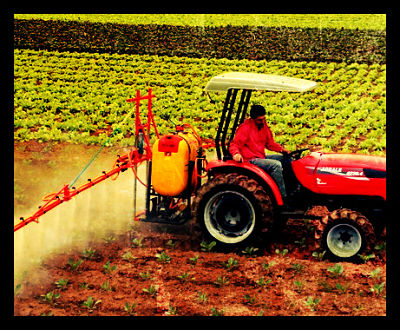
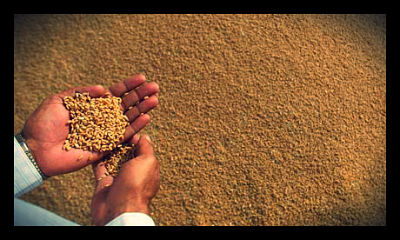
The recent slowdown in Nigeria’s grain trade holds tremendous implications for food security in the Sahel. Nigeria supplies almost half of the region’s cereal and is the most important market for farmers, herders, and traders from surrounding areas.

The communities most at risk from the rise in food insecurity are located in southeastern and central Niger, northern Nigeria, and northern Benin. Chad is usually highly dependent on the grain supplies from Nigeria, but a very strong 2012 harvest has somewhat insulated the country from the current crisis.

In the hardest-hit areas, staple grains like maize and millet, are selling at prices even higher than those seen during the 2012 regional food crisis. For example, a 100kg bag of maize now sells for $9 more than at the same time last year.  This trend is particularly worrisome as prices are only expected to increase during Ramadan in the month of July.

The increase in food prices are devastating in a region where many of the poorest families will spend up to 80% of their household income on market food. Nigeria’s production is so critical to these markets that despite the fact most Sahelian countries saw an increase in maize and millet, the decrease in Nigerian supply offset three-quarters of the regional gain.

The factors behind the current grain shortage are complex, but three major facets can be distinguished. The first is last year’s widespread flooding. Many of the farmers have not been able to recover their fields and crops from the damage.

The second major factor is the popularity of cash crops. Many farmers are switching from staple crops to cash crops, not generally sold in the regional food markets. In fact, the production of millet, a major staple grain, has decreased by 13% from the five-year average.

In addition to the previous two factors, the rise of Boko Haram has greatly disrupted Nigerian agriculture. The violent extremist group has forced an estimated 65% of farmers in northeastern Nigeria to flee their homes and fields. The violence has also discouraged traders from engaging in traditional trade routes and markets.

Experts say aid to Nigeria must be increased to combat the growing food security crisis. Nigeria receives millions of dollars in aid every year, but the amounts are far less than what is received by its neighbors. Given Nigeria’s key position within the food market of the region, aid priorities should be reassessed to insure the current agricultural slowdown does not worsen to a widespread food crisis.

– Lauren Brown

Sources: ISN, World Bank
Photo: Kansas Agricultural Network

July 19, 2013
https://borgenproject.org/wp-content/uploads/borgen-project-logo.svg 0 0 Borgen Project https://borgenproject.org/wp-content/uploads/borgen-project-logo.svg Borgen Project2013-07-19 04:54:302024-05-25 00:00:50Nigerian Grain Trade Threatens Food Security
Education, Food Security, Poverty Reduction

Poverty in Chad

poverty in chad
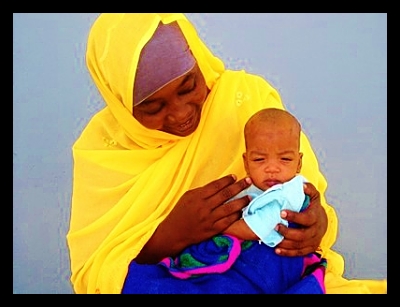
Poverty in Chad? Surprisingly for an oil-producing nation, Chad is one of the poorest countries in the world. After gaining its independence from France, Chad struggled to find its footing. Mismanagement, corruption, conflict and a harsh climate did the country no favors, and Chad has consistently remained one of the poorest countries in Africa.

Over half of Chad’s population lives in poverty; this is partly a result of the harsh geographical conditions. The majority of Chad is covered by desert and for a developing country that depends largely on subsistence farming, this presents a significant challenge. The most successful practice is migratory farming, where herds can move and adapt to changing climate conditions, but even these are severely limited by resources. As well, droughts in the 1970s and 80s aggravated already sub-optimal conditions. Recently, changes in climate have brought lower rainfalls and consistent overuse has led to soil erosion and land degradation. Farmers lack infrastructure, support and resources needed to grow sufficient food.

Geographic isolation, a lack of cultural cohesion and lack of education are all contributors to the problem. Spread out among a huge amount of land, Chad’s citizens are separated by large swaths of land, making it difficult to distribute necessary resources. Most people do not speak either of the country’s official languages (Arabic and French) and 90% of the country is illiterate.

Gender discrimination is also rife in Chad, though women are an essential part of a family’s survival. They are given work outside the home as well as the responsibility of raising a family, tending farms, gathering water, raising children and cooking. Yet they are culturally limited from access to education or training, and marginalized by society. These women are especially vulnerable to the psychological as well as physical effects of poverty.

Chad’s reality is brutal; a large percentage of the population is undernourished and lacks access to education, as well as high levels of food insecurity and infant mortality. Chad is not set to meet the MDGs as a result of poor management and weak planning and implementation.

Chad’s story is not a pretty one, but an important one. It is a reminder of the harsh reality that is daily life in Sub-Saharan Africa, and the amount of work that remains to be done in the region.

– Farahnaz Mohammed

Source: Rural Poverty Portal, World Bank
Photo: Charity in Chad

July 14, 2013
https://borgenproject.org/wp-content/uploads/borgen-project-logo.svg 0 0 Borgen Project https://borgenproject.org/wp-content/uploads/borgen-project-logo.svg Borgen Project2013-07-14 05:00:102024-05-24 23:58:15Poverty in Chad
Food Security, Poverty Reduction

Latest Statistics on Philippine Poverty

Poverty in the Philippines
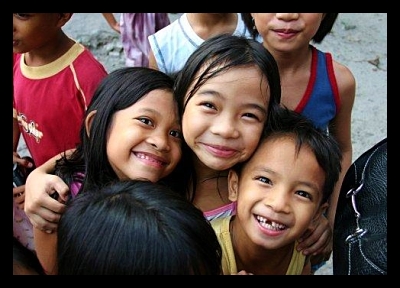
The National Statistics Coordination Board (NSCB) released its latest report on poverty in the Philippines on April 23, 2013. The results of the survey, which is taken every three years, showed that as of the first semester of 2012, 27.9 percent of Filipinos were living below the poverty line. This estimate is a concern to the Philippine government because it shows that despite the government’s targeted efforts, poverty rates have remained relatively unchanged from their 2009 levels.

According to the World Bank, the number of people living in extreme poverty has dropped in every other developing region in the world between 2005 and 2008, leaving many to ask why the Philippines has not seen the same decline.

In the NSCB’s 2006 survey, results showed that 28.8 percent of Filipinos were living on less than $1.25 per day. That number barely changed in 2009 when poverty levels were reported at 28.6 percent. With a decrease of only 0.7 percent over three years, poverty levels appear to have remained stagnant in the Philippines.

In order for a family of five to escape the label of “extremely poor” in 2006, they would have had to earn P1,681 ($39.09) a month. In 2009, they needed to bring home P2,042 ($47.49). By the 2012 survey, those income requirements more than doubled. The most recent NSCB report shows that families must earn P5,458 ($126.93) a month to put food on the table every day. If they want to meet non-food needs, such as clothing, they would have to earn P7,821 ($181.89).


Poverty in the Philippines


The report indicated that the Autonomous Region in Muslim Mindanao (ARMM) ranked as the worst national region with poverty levels in its provinces ranging from 42 percent to 47 percent. The region with the lowest incidences of poverty was the National Capital Region (NCR), averaging around 3.9 percent.

According to the NSCB, poverty rates are well above 40 percent in 15 provinces and one city (Catabato City is chartered and therefore not a part of a province).

The poorest province, Lanao del Sur, registered 68.9 percent poverty levels. The province with the lowest rate was the 2nd District of the NCR with 3.1 percent. The capital city of Manila, located in the 1st District of the NCR, had a 3.8 percent poverty rate.

In an attempt to combat the intergenerational transmission of poverty, the Philippine government began implementing a grant program for the country’s poorest in 2008.

Conditional Cash Transfers (CCT), funded by the World Bank, are intended to meet short term consumption needs. CCT is given to young children for attending school; to pregnant women to help them with pre-natal care and to families who get their health checked regularly. Despite meeting one goal of keeping children in school, many now believe that the CCT program is not doing enough.

Currently, the bottom 20 percent of the country’s earners make up six percent of the country’s total income. The top 20 percent bring in 50 percent of the total income. Based on the findings of the NSCB’s study, CCT has not been able to significantly improve this income inequality.

The CCT budget for the first semester of 2012 accounted for only a quarter of the amount needed to eradicate poverty in the Philippines. The NSCB estimates that P79.8 billion ($1.86 billion) was needed for the first half of 2012, but the budget for the whole year was only P39.4 billion ($92 million).

The government responded to the NSCB report by stating that it would begin monitoring poverty trends more closely through an annual survey instead of waiting every three years to do so.

It is not immediately known why extreme poverty in the Philippines has failed to show improvement. Regardless of the cause, it is evident that more has to be done to improve the lives of the country’s poorest.

Read more about poverty in Philippines


– Allana Welch

Source: The Inquirer, The Rappler, Philstar, World Bank
Photo: Pototour

July 11, 2013
https://borgenproject.org/wp-content/uploads/borgen-project-logo.svg 0 0 Borgen Project https://borgenproject.org/wp-content/uploads/borgen-project-logo.svg Borgen Project2013-07-11 04:00:142019-07-17 13:37:05Latest Statistics on Philippine Poverty
Activism, Education, Food & Hunger, Food Security, Health, Sanitation, Water

Bruno Mars Sings for Poverty Relief

bruno mars sings for poverty relief
Bruno Mars isn’t just another handsome face singing catchy love songs. He — along with over 70 artists — is partnering with the Global Poverty Project to address poverty worldwide by using a fanbase to raise awareness and funds.

Global Citizen is a website managed by the Global Poverty Project that centralizes information about global poverty and opportunities to help. Its ultimate goal is to increase the number of citizens actively advocating for change. The site is comprised of actions related to education and advocacy campaigning, all of which address 13 key issues:

  • Food and Hunger
  • Primary Education
  • Gender Equality
  • Child Mortality
  • Maternal Health
  • Fighting Diseases
  • Water and Sanitation
  • Environmental Sustainability
  • Global Partnerships
  • Fighting Corruption
  • Effective Governance
  • Polio Eradication
  • Fair Trade

Participation in Global Citizen actions such as watching a video about extreme poverty, signing petitions, contacting representatives or volunteering time or money earn points for users, which can be redeemed for prizes.

14-time Grammy Award nominee Bruno Mars is one of over 70 artists who realize the importance of ending global poverty. As touring recording artists, they are exposed to areas of the world that suffer the effects of extreme poverty in outrageous percentages. Recognizing the power of their celebrity, they have stood up to support the movement. Mars joins a group of industry power-players like Jay-Z, Beyoncé, Bruce Springsteen, Pearl Jam, Kings of Leon, Kesha, Kanye West, John Mayer and more who have donated at least 2 tickets from each show scheduled in their current tour, resulting in over 20,000 tickets donated to Global Citizen. Once users reach enough points, they can enter a drawing for a chance to win concert tickets. Another option is simply redeeming a higher number of points for tickets, similar to the ‘Buy It Now’ feature on eBay.

Extreme poverty has been cut in half in the last 30 years, and the knowledge and resources necessary to end the crisis completely within a generation are available. It won’t happen overnight, but Global Citizen is breeding an army: an army with the power to end extreme poverty by making informed consumer decisions and advocating for change. Global Citizen and artists like Bruno Mars are helping people to see that every voice counts and every person is capable of changing lives around the world.

– Dana Johnson

Source: Global Citizen, New York Times
Photo: Smash Vault

July 10, 2013
https://borgenproject.org/wp-content/uploads/borgen-project-logo.svg 0 0 Borgen Project https://borgenproject.org/wp-content/uploads/borgen-project-logo.svg Borgen Project2013-07-10 07:00:312016-04-07 18:48:02Bruno Mars Sings for Poverty Relief
Development, Food & Hunger, Food Security

Brazil’s Agricultural Development Success

brazil_farmer_family_agricultural_development_global_poverty_opt
The greatest challenge of a generation remains as the world figures out in the decades ahead how to feed an additional two billion people. Unprecedented population growth, rising incomes in the developing world and a growing need for energy contribute to the increase in demand for agricultural products. Agricultural development is needed now more than ever to meet this demand, but if Brazil‘s success in recent decades is any indicator, development can be improved worldwide to address global poverty.

Agricultural Development or Perpetuated Hunger?

Depending on the actions of the international community, this increase in demand will lead the world down one of two paths. If agricultural production is not increased, millions of people will increasingly be left in a state of perpetual hunger. On the other hand, the increase in demand for agricultural products can be seen as an opportunity for economic development through new food markets in the developing world.

While there is a certain amount of truth to the argument that the global food security problem stems from distribution rather than production, there is also strong evidence that an increase in production is possible — and necessary. Economists predict that as incomes and population rise, the global demand for food will increase 60 percent by 2050. This means that the world will need to produce as much food in the next 40 years as they did in the last thousand.

If done properly, agricultural development can be a driving force for economic development and poverty reduction. Research conducted by the Chicago Council on Global Affairs suggests that global food security is particularly advanced with increases of the agricultural potential of smallholder farmers in Sub-Saharan Africa and South Asia. The benefits are two-fold: the increase in agricultural income for smallholder farmers can lift millions out of chronic hunger, and the increase in production can provide more food to the global market as a whole.

How can a country best facilitate agricultural development? The simple answer is through investment research and training in science-based agriculture. The success story of Brazil best illustrates this methodology.

Brazil’s Success Story

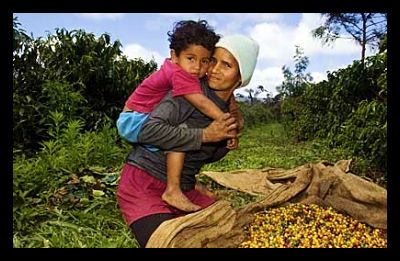
Through investments in agricultural research, Brazil has moved from a net importer of food to one of the world’s largest breadbaskets. Between 1996 and 2006, the total value of Brazil’s crops rose by 365%. The tropical country has now caught up with the “big five” grain exporters (America, Canada, Australia, Argentina and the European Union) – all of which are temperate producers.

This astounding progress has been made through the successes of the Brazilian Agricultural Research Corporation – Embrapa for short. Since its founding in 1973, Brazil has doubled its cultivated land and multiplied its agricultural output by six. Antonio Lopes, the president of Embrapa, says that the success lies in the delicate balance between agricultural expansion and land conservation.

Because no model for successful agricultural development in a tropical climate existed previously, Brazil was forced to create its own. First, they increased the amount of ploughable land by adding lime and nitrogen-fixing bacteria to soil that was previously unfit for farming. Second, they introduced a larger-leafed variety of grass and converted part of the new land into pastures so as to allow for the expansion of Brazil’s beef herd. Third, and perhaps most importantly, they converted temperate-climate soybeans into a tropical crop through genetic modification. Last, Embrapa encouraged and integrated new operation farm techniques such as “no-till” agriculture and forest, agriculture and livestock integration.

According to Lopes, Brazil will continue to invest in agriculture research and development for the foreseeable future. Brazil should serve as an example to the rest of the world for the ways in which private and public investment can transform a developing country in the tropics into an agricultural powerhouse.

– Kathryn Cassibry

Source: InterAction, The Economist
Photo: Guardian

July 6, 2013
https://borgenproject.org/wp-content/uploads/borgen-project-logo.svg 0 0 Borgen Project https://borgenproject.org/wp-content/uploads/borgen-project-logo.svg Borgen Project2013-07-06 07:00:522024-05-24 23:55:27Brazil’s Agricultural Development Success
Food Security, Poverty Reduction

Rural Poverty in Azerbaijan

Rural Poverty in Azerbaijan
Azerbaijan is a small Central Asian country about the size of South Carolina bordered by The Caspian Sea, Armenia, Georgia, Iran, and Russia. Similar to Russia, Azerbaijan’s heritage is derived from both Eastern and Western civilizations, making her a distinctly Eurasian entity.  In the years initially following the Russian revolution of 1917, the victorious Bolsheviks invaded Azerbaijan, integrating it into the Soviet Union.  This was an effort by Lenin to capitalize on the oil reserves of the Azerbaijanis.

Consequently, agriculture in Azerbaijan was collectivized.  This caused agricultural workers to become dependent on a very specific, prescribed method of farming in which success depended upon the survival of the Soviet system.  When the Soviet Union collapsed in the early 1990s and farms were privatized, agricultural workers were completely unprepared to grow crops on their own.  This resulted in a situation in which uneducated farmers with limited resources were unable to maximize the productivity of their land.

Like other nations that declared independence after the fall of the USSR, Azerbaijan’s rural communities have struggled immensely to stand on their own two feet economically.  Rural poverty is widespread, but it is especially concentrated in the desolate northeastern part of the country, with pockets also appearing in the mountainous northwestern region of  Sheki-Zagatal where the poverty rate is over 50%.  The International Fund for Agricultural Development (IFAD) describes the severity of the economic conditions there, stating:

“Remote areas and upland or mountainous areas show high rates of poverty. These areas often lack basic infrastructure and services, including irrigation, adequate road access, a reliable drinking water supply and health services.”

Fortunately, IFAD has invested almost $200 million in development projects in Azerbaijan over the last decade and a half.  These projects focus on improving food security through practical education (such as irrigation tutorials) and the establishment of business connections between rural farmers and lucrative markets.  With support such as this, agriculture in Azerbaijan has the potential to rise out of poverty in the coming years.

– Josh Forgét
Source: Rural Poverty Portal via IFAD,Glenn E. Curtis
Photo: Azerbaijan News

July 1, 2013
https://borgenproject.org/wp-content/uploads/borgen-project-logo.svg 0 0 Borgen Project https://borgenproject.org/wp-content/uploads/borgen-project-logo.svg Borgen Project2013-07-01 05:18:532020-07-08 19:09:30Rural Poverty in Azerbaijan
Food Security, Global Poverty

Food Insecurity in Pakistan

Food Insecurity in Pakistan

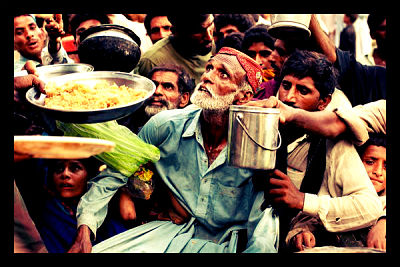
Pakistan has been pummeled by three consecutive years of flooding resulting in destroyed crops and forced evacuations. Coupled with tribal violence this situation has prompted the UN to declare Pakistan in a state of food “emergency.” However, aid may be slow in coming.

Forty-five percent of Pakistan’s population depends on agriculture for their livelihoods. Flooding in 2007, 2010, and 2012 coupled with earthquakes in 2005 and 2008 severely affected Pakistan’s food production. Wheat production, a major component of Pakistan’s food supply, was affected in 2008 but has since recovered some. However, rice production, a significant export, is still down from its high. This Spring the Indus river, providing much of the irrigation for production areas in Pakistan’s coastal district is unusually low. The colder winter has delayed glacier melt which feeds the River. Scientists believe climate change will continue to affect glacier melt and lead to increased flooding and drought.

Malnourishment is another result of these natural disasters and unrest in Pakistan. Fifteen percent of Pakistani children are malnourished. The UN World Food Programme (WFP) works to combat this nutrient deficiency in Pakistan with locally produced products called “Wawa Mum” and “Acha Mum.” Programs providing children aged six to fifty-nine months with this nutrient-rich product has seen positive results. Reaching more children in the most remote parts of the country requires additional resources, however.

In addition to the crops lost to natural disasters the evacuation of rural populations also leads to food insecurity. The population dependent on sustenance farming is forced to abandon their production and livestock when moved to safe areas. The loss in this production and investment is difficult to monetize. Areas bordering Afghanistan affected by tribal violence and spill-over from conflict across the border also lead to evacuations and loss in property. Even when refugees are able to return to their homes their houses and property are often destroyed, making food production difficult if not impossible.

A program launched in May 2009 by the UN Food and Agriculture Organization (FAO) and implemented in conjunction with the WFP is designed to assist the rural population with food production and re-building local agricultural infrastructure. The 24.7 million Euro project targets families growing staple foods. In addition to this funding, the FAO works to assist agriculture production in conflict areas of Pakistan.

Despite these programs, the WFP chief says aid for Pakistan food security has been rerouted to assist with the Syrian refugee crisis. The WFP spends $19 million monthly on Syria operations. With the increasing violence in Syria, and the refugee numbers climbing, Pakistan may see a further drop in its food aid.

– Callie D. Coleman

Sources: Global Post, Food Security Portal, WFP
Photo: Spark

June 27, 2013
https://borgenproject.org/wp-content/uploads/borgen-project-logo.svg 0 0 Borgen Project https://borgenproject.org/wp-content/uploads/borgen-project-logo.svg Borgen Project2013-06-27 09:53:122024-05-25 00:00:29Food Insecurity in Pakistan
Advocacy, Food & Hunger, Food Security

Think.Eat.Save: A Global Food Initiative

Think.Eat.Save: A Global Food Initiative
“Think.Eat.Save: Reduce Your footprint,” is a global initiative to reduce food loss and waste. It is a partnership between UNEP, FAO, and Messe Düsseldorf that seeks to spur widespread global, regional and national actions and inspire social awareness of the global “food footprint”. Through the exchange of ideas and projects, the Think.Eat.Save campaign raises awareness and showcases solutions to global food waste and food loss issues in both developed and developing countries.

Think.Eat.Save also provides a “one-stop-shop” for news and resources for consumers and producers featuring tips and facts. The website contains advice including how to eat sustainably and methods of preserving food. For producers and sellers of food, the site also offers suggestions for farming, processing and distribution, and restaurant management. Ultimately, the campaign urges everyone from the average consumer to retailers to think critically about food and take action.

In his statement for World Environment Day on June 5, United Nations Secretary-General Ban Ki-moon mentioned Think.Eat.Save. Ban state that approximately one-third of all food is wasted or lost through poor storage facilities and transportation in developing countries. In order to address this problem, Ban mentioned Think.Eat.Save as a means to create greater efficiency in the food industry.

Food shortages are only half of the global food problem. The other half is food waste and food loss. As tons and tons of precious food and water are dumped into the trash or spoiled in transportation, the world teeters on the brink of a food system failure.

What Think.Eat.Save promotes is a solution for existing issues of the global food system. Instead of producing more, the global community is encouraged to take more responsibility for environmentally and socially equitable food systems. By simply reducing the amount of waste produced, we can save resources and money, lessen environmental impacts, and preserve enough food to create a world in which everybody has enough to fill their stomachs.

– Grace Zhao

Source: Examiner,Think.Eat.Save.
Photo: 2Luxury2

June 26, 2013
https://borgenproject.org/wp-content/uploads/borgen-project-logo.svg 0 0 Borgen Project https://borgenproject.org/wp-content/uploads/borgen-project-logo.svg Borgen Project2013-06-26 05:12:502024-06-04 02:43:53Think.Eat.Save: A Global Food Initiative
Food Security, Global Poverty

West Africa Restoring Healthy Ocean Habitats

West Africa Restoring Healthy Ocean Habitats
As the world celebrated World Environment Day on June 5th, countries in West Africa looked to continue their work to preserve fish ecosystems and ocean habitats that are currently under threat.

Oceans provide food for over 1 billion people globally and provide income for 200 million people in developing countries. Along the coastal regions of West Africa, fishing practices provide half of the fish catch for the entire continent; fish is a source of income and nutrition in West Africa, especially for the poor. The World Bank says that fishing earns these West African countries approximately $4.9 billion per year. As a result, GDP has increased at the national level and provides local communities with an income and greater food security.

However, the marine sources and habitats that support them are being threatened by weak management, declining fish stocks, local exploitation and harmful fishing practices. In addition, foreign industrial ships stalk African coasts and steal fish stocks. To combat this, in 2009 the World Bank launched the West African Regional Fisheries Program (WARFP), which helps governments strengthen ocean management. WARFP has four main areas of focus: good governance and sustainable fisheries management, reducing illegal fishing, increasing the contribution of marine resources to the local economy, and coordination, monitoring and evaluation, and program management. The program helps communities in Ghana, Cape Verde, Guinea-Bissau, Liberia, Sierra Leone and Senegal.

The program has helped people in these countries to successfully achieve national, regional and local reforms that educate and empower fishing communities to work together and share their resources. By stamping out illegal fishing in Sierra Leone, creating community-based monitoring in Liberia and encouraging locals to engage in fishing in Senegal, World Bank programs have aided in the fight to preserve and maintain the environment and ocean resources that are so vital to fishing.

“Developing partnerships between countries along the coast of Africa is key to promoting the recovery of Africa’s fish resources and preserving the ocean environment,” said Colin Bruce, World Bank Director for Regional Integration. In order to continue protecting West Africa’s marine environment, research and management programs need to continue, which in turn will secure a better future for the fishing communities of the region.

– Chloe Isacke

Sources: World Bank, WARFP
Photo: Knowing South Africa

June 26, 2013
https://borgenproject.org/wp-content/uploads/borgen-project-logo.svg 0 0 Borgen Project https://borgenproject.org/wp-content/uploads/borgen-project-logo.svg Borgen Project2013-06-26 04:13:182024-05-24 23:55:13West Africa Restoring Healthy Ocean Habitats
Page 27 of 31«‹2526272829›»

Get Smarter

  • Global Poverty 101
  • Global Poverty… The Good News
  • Global Poverty & U.S. Jobs
  • Global Poverty and National Security
  • Innovative Solutions to Poverty
  • Global Poverty & Aid FAQ’s
Search Search

Take Action

  • Call Congress
  • Email Congress
  • Donate
  • 30 Ways to Help
  • Volunteer Ops
  • Internships
  • Courses & Certificates
  • The Podcast
Borgen Project

“The Borgen Project is an incredible nonprofit organization that is addressing poverty and hunger and working towards ending them.”

-The Huffington Post

Inside The Borgen Project

  • Contact
  • About
  • Financials
  • President
  • Board of Directors
  • Board of Advisors

International Links

  • UK Email Parliament
  • UK Donate
  • Canada Email Parliament

Get Smarter

  • Global Poverty 101
  • Global Poverty… The Good News
  • Global Poverty & U.S. Jobs
  • Global Poverty and National Security
  • Innovative Solutions to Poverty
  • Global Poverty & Aid FAQ’s

Ways to Help

  • Call Congress
  • Email Congress
  • Donate
  • 30 Ways to Help
  • Volunteer Ops
  • Internships
  • Courses & Certificates
  • The Podcast
Scroll to top Scroll to top Scroll to top