• Link to X
  • Link to Facebook
  • Link to Instagram
  • Link to TikTok
  • Link to Youtube
  • About
    • About Us
      • President
      • Board of Directors
      • Board of Advisors
      • Financials
      • Our Methodology
      • Success Tracker
      • Contact
  • Act Now
    • 30 Ways to Help
      • Email Congress
      • Call Congress
      • Volunteer
      • Courses & Certificates
      • Be a Donor
    • Internships
      • In-Office Internships
      • Remote Internships
    • Legislation
      • Politics 101
  • The Blog
  • The Podcast
  • Magazine
  • Donate
  • Click to open the search input field Click to open the search input field Search
  • Menu Menu

Archive for category: Food Security

Information and stories about food security news.

Food Security, Water

Restored Canal in Cambodia Brings Hope

canal_opt
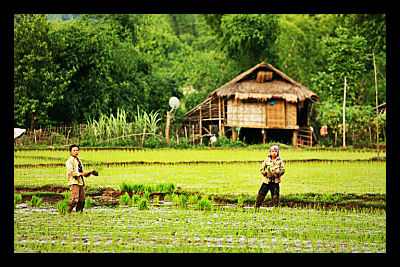
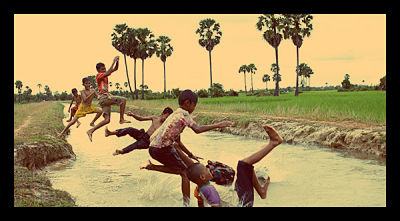
The restored canal in Cambodia has transformed lives for small rice-farming communities that depend heavily on rice for their livelihoods. Rice farming is the main source of income for 80% of Cambodia’s 14.5 million population, however, for years, farmers in the region have only been able to expect one rice cycle. Thanks to the restored canal, those in the area have enjoyed three harvests in just nine months, increasing total rice yield three times over.

Previously, the canal that zigzags across the rice paddy in the southern region of Cambodia was shallow, meaning that farmers had to depend on rainwater for a successful crop yield. Rainfall can be erratic and unpredictable. Two years before the restoration of the canal started, a bad drought destroyed rice crops, leaving scores of people hungry. The restoration involved dredging and enlarging 47 kilometers of canal in order to feed water to more than 41,100 hectares of rice in 12 provinces. Now at 6.5 kilometers wide, the canal is linked to a lake, and provides farmers with enough water to grow rice in three cycles of three months each. As a result of the project, approximately 11,240 families across the 12 provinces will have better irrigation for farming.

The restoration of the canal was funded by Sweden and Australia, and the work was carried out by an NGO in conjunction with local authorities. It was launched in an effort to help communities in vulnerable areas manage the risks of climate change. With the impacts of climate change expected to adversely affect the production of rice, it has been a goal of the UNDP to put mechanisms in place that will help to guarantee food production and food security in the future.

With rice yields already on the increase, farmers in the region are beginning to feel the financial benefits. Lim Savoeun, a rice-farmer, said the increased profits have made a big difference for her family. “In the past, we struggled to scrape by and sometimes had to loan money from others to fill the gap [in the income],” she said. “But we can avoid that since we are now able to grow rice for often that before. As long as there is water, we will keep working tirelessly on our land. We can’t complain.”

– Chloë Isacke

Sources: UNDP, United Nations
Photo: New York Times
August 12, 2013
https://borgenproject.org/wp-content/uploads/borgen-project-logo.svg 0 0 Borgen Project https://borgenproject.org/wp-content/uploads/borgen-project-logo.svg Borgen Project2013-08-12 05:51:072024-06-05 01:53:36Restored Canal in Cambodia Brings Hope
Food & Hunger, Food Security, United Nations

FAO Perennial Crops for Food Security

perennial_crops
The UN Food and Agriculture Organization (FAO) will hold a workshop on Perennial Crops for Food Security later this month to highlight the development of a perennial wheat variety by NSW Department of Primary Industries (DPI), CSIRO and Charles Sturt University.

DPI was recently successful in growing a perennial wheat variety in the Cowra district in Australia. Perennial crops offer significant benefits in sustainability that support efforts to address food security. The wheat variety will produce for three consecutive years compared to other wheat varieties produce only one year. DPI is also pursuing research in inter-cropping of perennials in Cowra. Their work involves planting perennial grain and legumes side by side to boost soil nutrition.

In addition to discussing developing new perennial crops the workshop will focus on increasing perennial crop yields and integrating these crops in production cycles. Perennial crops are more sustainable as they are able to be harvested without killing the plant. This ensures that the plant continues to grow and produce. The perennial crops are also heartier and able to survive temperature changes and extremes. However, annual plants have received the vast amount of technological attention (i.e. corn).

However, there are several barriers to encouraging farmers to adopt these crops. In regions where land tenure or ownership rights are tenuous, investing in perennials crops does not appeal to farmers who do not need investment security of perennials. Many of these crops take several years to establish and produce a crop and it can be difficult to convince farmers that this investment is worth the wait. The specialized equipment and the new techniques required do not make conversion any easier and often involve a high price tag.

The FAO expert workshop will include speakers from several countries. These experts will discuss trends and the status of various perennial crop developments. The gaps and opportunities for integrating these crops in the production chain will also be addressed by presenters. Speakers and participants also come from diverse public and private backgrounds.

Perennial crops will be a long term solution for food security, as demonstrated by the various barriers that must be overcome. However, the many benefits that they present make it an important endeavor. If food security is to be achieved and 9 billion people fed by 2050, scientists and international development specialists must pursue a variety of options.

– Callie D. Coleman

Sources: Cowra Guardian, FAO, Perennial Solutions
Photo: Perennial Solutions

August 6, 2013
https://borgenproject.org/wp-content/uploads/borgen-project-logo.svg 0 0 Borgen Project https://borgenproject.org/wp-content/uploads/borgen-project-logo.svg Borgen Project2013-08-06 06:18:572024-12-13 17:49:37FAO Perennial Crops for Food Security
Food & Hunger, Food Aid, Food Security

5 Things You Didn’t Know about Hunger

hunger_child
Did you know that…

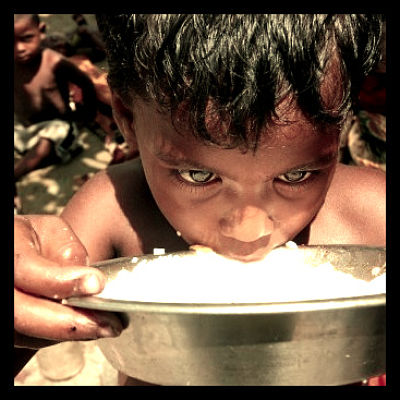
  1. Today, 870 million people worldwide suffer from hunger. Despite a 130 million decrease since 1990, progress has been slower since 2008.
  2. 98 percent of the underfed – 852 million – live in developing countries, where almost 15 percent of the population is undernourished. By contrast, in developed countries, 16 million people are underfed.
  3. Gender-related discrimination has repercussions on hunger statistics. Indeed, if women farmers had access to the same resources as men, up to 150 million underfed people would no longer be hungry.
  4. 45 percent of deaths of children under five are due to poor nutrition. This represents 3.1 million children each year.
  5. The World Food Program calculated that only US $3.2 billion is needed to satisfy the 66 million primary school-age children who attend class hungry.

– Lauren Yeh

Sources: WFP, FAO
Photo: Huffington Post

August 6, 2013
https://borgenproject.org/wp-content/uploads/borgen-project-logo.svg 0 0 Borgen Project https://borgenproject.org/wp-content/uploads/borgen-project-logo.svg Borgen Project2013-08-06 05:01:242024-12-13 17:49:345 Things You Didn’t Know about Hunger
Food & Hunger, Food Security

Corn: A Cornerstone of Global Food Security

corn_opt
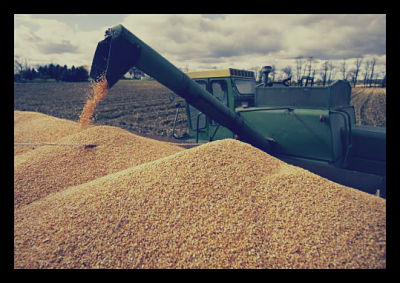
A paper recently published in the Journal for the Society of Risk Analysis, brings attention to the important role corn plays in global food security. Corn’s many uses make it a central commodity and a great influence on prices and global food security. Corn can be found in: starch, oil, food sweeteners, alcohol, as well as livestock feed and biofuel that assists global food security.

Corn’s central role also means that a disruption in corn supply can create a global crisis. This is compounded by reliance on two major export markets: the United States and Argentina. Of the top five import countries, four of them rely on the United States to provide the vast majority of their corn.

Climate change, however, is a growing concern among corn growers world-wide. According to a study done at the University of Reading in the United Kingdom focusing on corn production in France, temperature levels are a significant variable in corn production. When temperatures exceed a certain level, corn yield suffers, according to the study. Already the average number of days over this threshold per year has risen. This is disturbing news as average temperatures are expected to continue to rise during the 21st century. As the study’s leader, Dr. Ed Hawkins of the Natural Environment Research Council’s National Centre for Atmospheric Science, states “It’s a serious risk to food security.”

Scientists estimate corn production will need to increase by 12 percent per acre between 2016 and 2035 in order to maintain current production levels. In order to increase crop yields, additional technology advancements will be necessary.

The importance of global food security has led corn growers from leading export nations to form a collaborative group to address this shared issue as well as biotechnology, stewardship, and trade. This cooperative group formation, dubbed The International Maize Alliance (MAIZALL), is the first of its kind and is significant for the collaboration among trade competitors. The United States, Argentina, and Brazil, the three top corn export markets, are members.

MAIZALL will discuss biotechnology in regards to food security as well. Getting import markets to accept drought-resistant traits is an important component for global food security, stated National Corn Growers Association President, Pam Johnson. MAIZALL members will travel to China and South Korea in October to discuss biotechnology in those markets.

Incorporating technological innovation to boost yields and counteract climate change is important for protecting and increasing future corn yields. A significant drop in these yields will lead to increased food prices and shortages that will endanger global food security. With a world population expected to reach 9 billion by 2050, corn producers world-wide are on the alert.

– Callie D. Coleman

Sources: Farm Futures, Corn and Soybean Digest, Food Security

August 6, 2013
https://borgenproject.org/wp-content/uploads/borgen-project-logo.svg 0 0 Borgen Project https://borgenproject.org/wp-content/uploads/borgen-project-logo.svg Borgen Project2013-08-06 04:53:512024-12-13 17:49:36Corn: A Cornerstone of Global Food Security
Food & Hunger, Food Security

The Solution to Food Security: Eat More Bugs?

cricket_bars_protein
Insects have been eaten by humans for centuries. Little do most people know that pound for pound, insects pack more protein than regular beef or chicken. Today, one start up company plans to reclaim bugs as a source protein to improve food security and protect the environment.

Exo is a new company started by Brown University graduates Greg Sewitz and Gabi Lewis. Exo produces protein bars that are made with a very special ingredient: cricket flour. The crickets are slow roasted and milled into a fine powder. The cricket flour is then combined with organic ingredients such as raw cacao, dates, almond butter, and coconut. The result is a high protein, low sugar, nutritionally packed protein bar. The bar boasts a high content of omega 3 fatty acids, iron, and calcium. The bars are also gluten free, dairy free, soy free, and have no artificial preserves or processed ingredients.

Why eat crickets? Crickets are extremely nutritious. They are made up of a majority of protein by dry weight. They also contain all the essential amino acids. Compared to beef, 100 grams of cricket powder contains 69% protein while 100 grams of dried beef contains only 45% protein. Sirloin steak has even less at 29% per 100 grams. Cricket powder also contains nearly as much calcium as cow’s milk.

Cricket protein presents a solution to the global food and environmental crisis. Crickets need 12 times less feed than cattle and 4 times less than sheep. They require very little water and very little space. High densities of crickets also require significantly less space for storage and transportation, making this insect protein highly sustainable. Furthermore, harvesting insects such as crickets is far less environmentally destructive as raising traditional livestock. The average cow produces 132 pounds of methane that is released into the atmosphere. Crickets produce 80 times less.

By creating these protein bars, Exo hopes to convert the world’s food eating patterns into more sustainable ones. Despite the many benefits of consuming insects, most people are still hesitant to do so, especially in the United States. However in reality, 80% of the world already does so. Additionally, Exo has worked with expert chefs and conducted taste tests to produce a protein bar that is both wholesome and enjoyable.

Both Gabi and Greg of Exo hope to see their company expand to include a variety of insect based foods. Ultimately their goal is to “feed the world without destroying the planet.” By tapping into insects as a source of protein, Exo stands to make a real difference in the food industry.

– Grace Zhao

Sources: Forbes, Kickstarter
Photo: The World

August 6, 2013
https://borgenproject.org/wp-content/uploads/borgen-project-logo.svg 0 0 Borgen Project https://borgenproject.org/wp-content/uploads/borgen-project-logo.svg Borgen Project2013-08-06 04:01:352015-02-09 14:08:42The Solution to Food Security: Eat More Bugs?
Food & Hunger, Food Aid, Food Security, Foreign Aid, United Nations

What Is Global Food Insecurity?

Global Food Insecurity
There really is no formula to defining global food insecurity. Still, many world health organizations use the term to point out deficiencies in global food security. To understand what something is, it sometimes helps to understand what it is not. This may just be the case with food insecurity. To understand food insecurity, that is, one must first define and understand food security and work backwards. If food security does not exist, then, by definition, you have food insecurity.

The World Food Summit of 1996 defined food security as existing “when all people at all times have access to sufficient, safe, nutritious food to maintain a healthy and active life.” This definition hinges on three qualifications: namely food availability, food access, and food use. Lacking one of these elements of food security, a population faces food insecurity, which can and does arise in an endless permutation of manners.


Global Food Insecurity: Failing Food Security Criteria


To establish food security, say, in a developing nation, food must first be available on a consistent basis. Some will argue that there is currently enough food in the world to feed everyone in the world. Nonetheless, people go hungry due to inconsistency in their daily intake of food. For example, one may go days without a meal. In this situation, a cornucopia of food, arriving two weeks later, does nothing to alleviate that person’s current hunger. As such, food security depends on food availability.

Second, the nation’s population must have access to the right kinds of food to sustain a healthy diet. Not only must a person have food available, that is, it must be the right kind of food. For example, a human cannot survive on rice alone. We need all different kinds of food to live healthy lives. The definition of healthy diet here also includes accommodations to particular dietary needs, such as avoiding certain foods or increasing intake of others.

Finally, food security requires appropriate use of food based on adequate knowledge of basic nutrition and care. In order to maintain a healthy diet, one must know how to eat the food that is available to him or her and portion that food out in a way that best serves the needs of his or her body. When USAID drops bags of food over Africa, for example, it will be helpful to also teach those receiving the aid how to ration the food. Basic sanitation and access to water are included in appropriate use to complete the qualifications of food security.

If even one of these three elements or qualifications is not met, it is easy to see how even a full plate of food, three times a day, may not be enough to maintain a healthy diet. Food security requires that the food is enough to satisfy the short, mid, and long-term needs of the human body and that the person consuming the food does so in an appropriate manner to maintain him or herself. Global food insecurity, or deficient food security from a worldwide perspective, exists in a world where even one person goes hungry.

Though great strides have been made in alleviating global hunger, the current level of food insecurity is unacceptable. Even in the United States, 1 out of 10 households were food insecure, hence the importance of food provision and education programs, like, local food banks. To learn more about food (in)security in the U.S., you can visit this site.

– Herman Watson

Sources: U.S. Food Aid and Security, World Health Organization, World Food Programme, Food and Agriculture Organization
Photo: Security and Sustainability Forum

August 5, 2013
https://borgenproject.org/wp-content/uploads/borgen-project-logo.svg 0 0 Borgen Project https://borgenproject.org/wp-content/uploads/borgen-project-logo.svg Borgen Project2013-08-05 11:35:562024-05-25 00:15:01What Is Global Food Insecurity?
Food & Hunger, Food Security

Global Poverty Could End by Giving Women Land

women_rice_farms
Why Women?
A lack of distinct land ownership laws leads to poorly cultivated land and hungry families who are forced to work as day laborers or indentured servants. This weighs even more heavily on women, who are rarely given the opportunity to act as a land owner. In addition to benefiting the women themselves, recent studies have shown that giving land rights to women can have a direct impact on the elimination of global poverty.

Women Can Bring Home The Bacon Too

Rural women play a large part in agricultural production. According to the UN, women workers are involved in fisheries, agro-forestry, and wild-harvesting systems. They work along-side men to produce commercial crops, manage livestock and grow vegetable gardens. However, women also have the added burden of caring for their families.

Despite their crucial work in both production and family well-being, rural women are often under recognized laborers. Most rural women are unpaid or highly underpaid. This means that rural women frequently work in “unofficial” or informal agricultural settings. In India alone, 34% of informal women’s employment is made up of unpaid agricultural work. In Egypt, the percentage comes in at a staggering 85% compared to the 10% for men. Furthermore, many institutions do not recognize or define rural women’s work as economically active employment.
However, the UN is now calling for the economic empowerment of women as a means to combat global poverty. Economic empowerment can first come through the recognition of women’s land rights. Land ownership leads to greater respect, status and increased decision-making power for women.

Research indicates that land ownership can lead farming communities to reinvest in improving their production. This no doubt contributes to greater food security alongside increased welfare for individual families. Research also indicates that when women have land rights, there is an even greater improvement upon food security and hunger. This is largely due to the fact that women are more likely to focus on sustainable crops for their families as opposed to the riskier cash crops that are exported out of the nation.

Women with rights to their own land are also more likely to have a higher status and higher income within their community. This kind of empowerment enables women to make decisions that ensure improved nutrition for themselves and their children. Additionally, women with higher social standings are also likely to be healthier themselves. The effect of such is increased infant survival rate and higher birth-weight children. In fact, research on child malnourishment in Nepal suggests that infants born to mothers that own land are half as likely to be born critically underweight.

Ultimately, increased support for land rights coincides with Millennium Development goals to reduce poverty. But more importantly, land rights give hard-working rural women a chance to better enjoy the fruits of their labor.

– Grace Zhao
Sources: The Christian Science Monitor UN
Photo: Declan McCullagh

July 28, 2013
https://borgenproject.org/wp-content/uploads/borgen-project-logo.svg 0 0 Borgen Project https://borgenproject.org/wp-content/uploads/borgen-project-logo.svg Borgen Project2013-07-28 09:34:222020-08-28 15:45:17Global Poverty Could End by Giving Women Land
Food & Hunger, Food Aid, Food Security

5 Facts About World Hunger

5 Facts About World Hunger

When most people think of world hunger, they picture the emaciated children shown on television commercials or news footage of refugees lining up for food rations. The media portrays hunger as a dire emergency directly resulting from natural disasters, war, or some other kind of unrest. These graphic examples of acute hunger do portray actual people and circumstances, but they fail to account for 92 percent of the world’s hungry who suffer from chronic undernourishment rather than food emergencies. Though the number of people living with chronic hunger has decreased by 130 million people over the past two decades, one in eight people in the world still goes to bed hungry each night. Listed below are five facts about world hunger.

5 Facts About World Hunger

  1. Hunger kills more people each year than AIDS, tuberculosis and malaria combined. Listed as the number one health risk on the WHO’s list of the world’s top ten threats to health, hunger causes 10 million deaths each year. That is roughly equivalent to the number of people killed in the Holocaust.
  2. If female farmers had the same access to resources as their male counterparts, the number of the world’s hungry could be reduced by 150 million people. Though women often hold responsibility for feeding their families, they face severe constraints in accessing the materials and markets needed to contribute successfully to the agriculture sector.
  3. 870 million people currently suffer from hunger. 98 percent of these people live in developing countries, with the largest proportion living in Asia and the Pacific. While the number of hungry people is declining in Asia and Latin America, it is steadily rising in sub-Saharan Africa.
  4. Another 24 million children could be hungry by the year 2050 due to climate change and irregular weather patterns. $7.1-7.3 billion is needed in order to offset the negative impact of climate change on world hunger.
  5. According to the World Food Programme, hunger is the “single biggest solvable problem” facing the world today. It costs just $0.25 per day to provide a child with the nutrients he or she needs to live, and $3.2 billion is needed to feed the 66-million school-age children who are currently hungry. While this may seem like a large amount of money, the U.S. spends more than 200 times that amount on the military alone.

– Katie Bandera

Sources: WFP, World Hunger

July 24, 2013
https://borgenproject.org/wp-content/uploads/borgen-project-logo.svg 0 0 Borgen Project https://borgenproject.org/wp-content/uploads/borgen-project-logo.svg Borgen Project2013-07-24 07:22:512024-05-25 00:03:345 Facts About World Hunger
Food Security

Revamp or Remove India Free School Lunch Program?

Revamp or Remove India Free School Lunch Program?
In Bihar, India 22 school children dies and dozens more became ill of contaminated school lunches. The food was made with cooking oil that had been stored in a used pesticide container. Now, parents and officials are questioning the reliability of the food and some children are even refusing to eat the lunches after the incident. The “Mid Day Meal Scheme” has been an integral part of India’s attempt to help impoverished children, and could now be facing its own end. Should the program that now feeds 120 million children a day and that has provided many of those children with their only meal of the day for so long face the chopping block? Or should the Indian government work to improve it?

While eating their daily meal of lentils, beans, rice, and potatoes the children complained that the food did not taste right. Shortly after, large numbers of them started to suffer from vomiting and diarrhea. Students were sent home to deal with the illness, but they did not find help there. The local private clinics were overrun with patients and could not deal with the sudden influx.

Akilinand Mishra, father of one of the students, told the New York Times that he tried to take his son to the clinic once he became ill. He was finally able to hitch a ride to the hospital, but his son died in his arms on the way there. Mr. Mishra stated in the interview, “It was poison that the children ate, not food. Food contamination doesn’t happen that fast. It was poison.” Bacterial contamination is relatively common throughout India and poisoning, although much more rare, has been known to happen in schools that take part in the program.

The Mid Day Meal scheme originated in 1925 in the Madras Municipal Corporation as a way to help disadvantaged children. The idea spread slowly through the country and in 2001 the government mandated that all states provide lunch to their students. According to the UN’s State of School Feeding 2013, India’s school lunch program has resulted in higher levels of student enrollment and lower levels of absenteeism. Due to low-income, many children are required to stay home from school in order to work, but with the promise of a free meal, many parents have started sending their children to school so they do not have to worry about feeding on their own pocket.

The Evaluation Study on Cooked Mid Day Meal did by PEO Planning Commission shows that only 13% of children receiving the free lunch consume fruit during meals at home on a daily basis and 33% get milk at home every day. Some surveys suggest that as much as 50% of children in India suffer from some form of malnutrition, thus these meals can play a very important role in helping these children grow into adults. But, according to parents, this may not be enough of an incentive to continue relying on the program. With contaminated food occurring regularly and corruption in all levels of the CMDM scheme, it is risky for parents to allow their child to eat at school.

That does not necessarily mean that there should be an end to the program altogether. While there are numerous issues that need to be addressed, the CMDM is the largest free lunch program in the world. Therefore it could easily be one of the most helpful if it were run properly. The problems with the overall implementation of the program are certainly outweighed by the positive effects it has already had and the even better results that could come if the program was improved.

– Chelsea Evans

Sources: New York Times State of School Feeding 2013 Performance Evaluation of Cooked Mid Day Meal
Photo: The Nation

July 23, 2013
https://borgenproject.org/wp-content/uploads/borgen-project-logo.svg 0 0 Borgen Project https://borgenproject.org/wp-content/uploads/borgen-project-logo.svg Borgen Project2013-07-23 10:08:112024-06-05 01:53:35Revamp or Remove India Free School Lunch Program?
Food & Hunger, Food Security, Foreign Aid

Food Crisis in the Central African Republic

Food Crisis in the Central African Republic
The Central African Republic is now facing a food crisis nearly four months after a coup overthrew the government and proclaimed the leader of the Seleka rebel coalition, Michel Djotodia, as president. More than 60,000 people are suffering from severe food shortages, and 200,000 have been forced to flee their homes due to instability in the region.

Food shortages are nothing new for the country, as last year the United Nations claimed that upwards of 800,000 people, nearly 20% of the country’s population, experienced some level of food crisis. However, the current shortages have the potential to be much more severe as the fighting has severely impacted the country’s agriculture, with many families losing food stocks, seeds, and livestock.

Due to the new government administration, and ongoing political turmoil following the coup, access for humanitarian agencies throughout the country has been restricted, especially in some of the hardest-hit rural areas. Yet before this can change, security throughout the country must improve. This lack of security has further led to the closing of health centers and schools due to safety concerns. Nearly a million children are out of school as a result of these closures, and a significant percentage of those have missed nearly a full school year due to the ongoing conflict.

Funding for humanitarian work is an ongoing issue. Current donations account for only about 43% of the $125 million in aid that the UN estimates are needed in the Central African Republic. The Archbishop of Bangui, Dieudonné Nzapalainga, said, “The current humanitarian crisis is the worst in the country’s history. It is urgent that the international community provides funds quickly to help and to save lives. The world can’t turn a blind eye on the crisis here. The country is bordered by six of the most fragile African nations—there is a high risk of destabilization throughout Central Africa.”

– David Wilson

Sources: WFP, The Examiner, Action Against America

July 22, 2013
https://borgenproject.org/wp-content/uploads/borgen-project-logo.svg 0 0 Borgen Project https://borgenproject.org/wp-content/uploads/borgen-project-logo.svg Borgen Project2013-07-22 08:15:242024-05-25 00:02:57Food Crisis in the Central African Republic
Page 26 of 31«‹2425262728›»

Get Smarter

  • Global Poverty 101
  • Global Poverty… The Good News
  • Global Poverty & U.S. Jobs
  • Global Poverty and National Security
  • Innovative Solutions to Poverty
  • Global Poverty & Aid FAQ’s
Search Search

Take Action

  • Call Congress
  • Email Congress
  • Donate
  • 30 Ways to Help
  • Volunteer Ops
  • Internships
  • Courses & Certificates
  • The Podcast
Borgen Project

“The Borgen Project is an incredible nonprofit organization that is addressing poverty and hunger and working towards ending them.”

-The Huffington Post

Inside The Borgen Project

  • Contact
  • About
  • Financials
  • President
  • Board of Directors
  • Board of Advisors

International Links

  • UK Email Parliament
  • UK Donate
  • Canada Email Parliament

Get Smarter

  • Global Poverty 101
  • Global Poverty… The Good News
  • Global Poverty & U.S. Jobs
  • Global Poverty and National Security
  • Innovative Solutions to Poverty
  • Global Poverty & Aid FAQ’s

Ways to Help

  • Call Congress
  • Email Congress
  • Donate
  • 30 Ways to Help
  • Volunteer Ops
  • Internships
  • Courses & Certificates
  • The Podcast
Scroll to top Scroll to top Scroll to top