Information and stories about food security news.

New Proposals for Development in Haiti
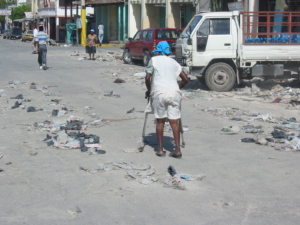
In an ambitious goal to help other nations help themselves and possibly shift the paradigm of foreign aid forever, Canadian aid worker Hugh Locke has started a forestry program aimed at fostering a sense of independence in the Haitian citizenry. Lock, critical of the current state of NGO and government involvement in projects, is employing his aptly titled “exit strategy aid” to change the scope of development in Haiti.

The country of Haiti, still emerging from the destruction wrought by Hurricane Sandy and previous natural disasters, has had no shortage of challenges involving their crippled infrastructure and forecasted food shortages. However, Lock, armed with his forestry background, noticed that the Caribbean nation was lacking key ecological resources and decided to embark upon a re-forestation program dependent upon native farmers to encourage development in Haiti. When questioned about the efficacy of such a program, Lock remarked: “A road that is built by donor money using foreign contractors is never going to be fully a part of the national transportation system,” before clarifying that such a project, because of its foreign ownership, would need foreign aid to maintain it, which is neither sustainable nor helpful to empowering local projects.

Lock, along with his Haitian counterpart Timote Georges, were able to bring together a group of farmers in a forestry cooperative whose primary goal is both the growth and sales of trees. The Haitian forests, a natural resource that once afforded certain energy and topsoil advantages, has since been stripped from much of the countryside, devastating crop and charcoal production levels.
Subsequently, by having farmers plant trees, Lock hopes to encourage greater internal participation in the development of Haiti. Thus, by establishing a strong ecological and agricultural foundation, the people of Haiti can look forward to a much brighter, more independent future for years to come.
– Brian Turner

Source: World News
Photo: Trees for the Future

2013: The International Year of QuinoaThe year 2013 has been titled “The International Year of Quinoa” by the United Nations and the Food and Agricultural Organization (FAO) has named Bolivia’s president, Evo Morales, the Special Ambassador for the International Year of Quinoa. So, why is that important?

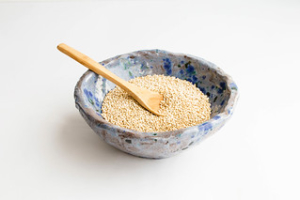
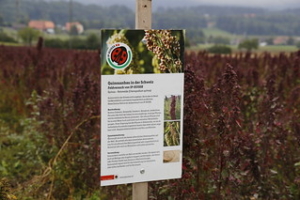
Quinoa is a semi-cereal, not quite a grain, that is mostly grown in Peru and Bolivia. If you have any “foodie” friends or know any hip cooks, you will probably have heard a lot about quinoa. In fact, the factor of “hipness” may have had a huge part in increasing the popularity of the food, as well as the fact that it has astonishing nutritional value. The UN’s declaration of 2013 being the International Year of Quinoa is part of an effort to further increase the food’s popularity. The real reason that quinoa is being pushed as a popular food is that quinoa is extraordinarily hardy, and is a great source of amino-acids. It is one of the most durable foods on Earth. Quinoa is able to thrive even in semi-arid deserts and the high Altiplano.

Quinoa is now being planted more and more in other harsh climates that span countries like Chad and Niger. While most of the world’s quinoa still comes from Peru and Bolivia, it is gaining ground in other countries. The heightened popularity of the food has increased the average crop value and provided higher income to farmers and local business owners alike. Hopefully, the popular attention that quinoa is receiving will help consumers make the choice to join in and celebrate the International Year of Quinoa.

Kevin Sullivan

Source: United Nationsl