• Link to X
  • Link to Facebook
  • Link to Instagram
  • Link to TikTok
  • Link to Youtube
  • About
    • About Us
      • President
      • Board of Directors
      • Board of Advisors
      • Financials
      • Our Methodology
      • Success Tracker
      • Contact
  • Act Now
    • 30 Ways to Help
      • Email Congress
      • Call Congress
      • Volunteer
      • Courses & Certificates
      • Be a Donor
    • Internships
      • In-Office Internships
      • Remote Internships
    • Legislation
      • Politics 101
  • The Blog
  • The Podcast
  • Magazine
  • Donate
  • Click to open the search input field Click to open the search input field Search
  • Menu Menu

Archive for category: Food Security

Information and stories about food security news.

Food Security, Global Poverty

Poverty in Scotland

Scotland_poverty
Poverty in Scotland is worse than it has been for the past 30 years. According to a Breadline Britain Poverty and Social Exclusion report, 29 percent of Scots are unable to afford three or more basic necessities for living (things like food, water, shelter, and clothing).

A spokeswoman for Glasgow University (which helped to fund the report) said: “For a significant and growing proportion of the population, living conditions and opportunities have been going backwards. Housing and heating conditions in particular have deteriorated rapidly.”

The report found that 8 percent of Scots could not afford to heat the living areas of their homes, and 16 percent of children in Scotland live in a home which is either damp or ineffectively heated. Commonly known as fuel poverty, those affected are unable to keep adequately warm at a reasonable price, and are often forced to spend more than ten percent of their household income on fuel for heating.

“These findings paint a very bleak picture of life for large numbers of people living in low- income households in Scotland today,” said Nick Bailey, a senior urban studies lecturer at Glasgow University.

It is such a crucial issue that the Scottish government has sworn to eradicate it by 2016, or else risk more citizens falling into lifestyles of poverty.

Enter Knowes Housing Association: a company that decided to help fight this growing problem. 350 homes at risk of fuel poverty in the city of Clydebank were supplied with solar PV installations by Edison Energy. Also known as photovoltaic systems, the devices use solar energy to supply usable electric power for a large amount of purposes.

Part of a £2 million energy improvement program for the housing association over the next two years, the solar arrays will generate a revenue stream for the housing association through the associated feed-in-tariff payments. Local installer Edison Energy plans to offer aftercare, financing and maintenance support during the lifetime of these payments.

“In a climate of escalating uncertainty over traditional energy supplies and concern about potential price hikes, it is important to emphasize the vital role that solar PV is already playing – and will continue to play – as part of the renewable energy mix, helping to stave off the threat of fuel poverty in areas hardest hit by the challenging economic circumstances of recent years,” said Richard Rushin, a sales manager for Trina Solar, a company that supplied 4,000 pieces of equipment for the project.

KHA, Edison Energy, and Trina Solar plan to continue working together to create and maintain high-quality projects like this one, in order to help those in danger of fuel poverty in the UK.

“Our relationship with Trina Solar has allowed us to develop a sustainable energy solution using market-leading solar technologies, resulting in lower operations and maintenance costs. It is critical to our business model that we have established relationships with our supply partners to ensure that we work together to deliver a consistently high-quality product, in terms of both system performance and maintenance,” said Fraser MacKenzie, Business Development Director at Edison Energy.

The improvements are expected to deliver annual energy bill savings of £70,000.

– Samantha Davis

Sources:  Herald Scotland, Scotland.gov, Solar Power Portal
Photo:  STV News
February 3, 2014
https://borgenproject.org/wp-content/uploads/borgen-project-logo.svg 0 0 Borgen Project https://borgenproject.org/wp-content/uploads/borgen-project-logo.svg Borgen Project2014-02-03 04:00:002024-05-26 23:09:29Poverty in Scotland
Development, Food & Hunger, Food Security, Global Poverty

Call for Second Green Revolution

Farming_Agriculture_India_Food_Insecurity_Green Revolution
PUNJAB, India – A declining Indian economy and growing food insecurity has policy and environmental experts calling for a Second Green Revolution since one of the best solutions would be heightened research and investments in the agricultural sector to increase the production and yields of small farmers.

This new Revolution would focus on the next generation of agricultural modernization since the original movement in the 1960s. “Food security became a major cause for concern in the 1960s,” says The National, “when it caught the imagination of India’s policymakers and spawned the green revolution, an ambitious plan to transform the country’s agricultural land via high-yielding crops, increased use of fertilizers and a raft of land reforms.” That is to say, as a result of population growth, political upheaval and massive socio-economic shifts throughout the world, the world endeavored to overhaul the current agro-environmental systems.

The main goal of the first Green Revolution was to supply enough food for the growing populations as cost efficiently as possible. “Fearing global upheaval, the developed nations initiated a deliberate strategy to supply cheap, abundant food to prevent political unrest,” states Kenny Ausubel, author of Restoring the Earth.  However, the plant seeds used to develop and economize food production were expensive, and the equipment needed to produce the seeds were costly as well. “While initially the “miracle high-yielding” seeds did produce bigger crops,” Ausubel notes, “this gain proved to be at the expense of the environment and small farmers.”

Moreover, the first Revolution privileged corporations and big agribusiness, leaving small, rural and hometown farmers in the dust. Experts from agriculture, economics and policy agree that a Second Green Revolution is needed “to improve the yield of crops grown in infertile soils by farmers with little access to fertilizer, who represent the majority of third-world farmers.” Small farmers are the key to food production in many countries around the world – not just India – and must be protected from being bought out by large agricultural corporations.

As such, research and development initiatives need to be undergone in order to generate more cost-effective and easily accessible resources for small farmers. Advancements in plant biology seem to be promising, as genetic modifications within crops could significantly yield larger harvests. As J.P. Lynch from the college of Agricultural Sciences states, “population growth, ongoing soil degradation and increasing costs of chemical fertilizer will make the Second Green Revolution a priority for plant biology in the 21st century.”

Food security is a necessary factor to global economic and development systems. Despite the advances made in the initial agricultural movement, more action is necessary in order to modernize and economize production for the world’s thousands of small farmers. “While the first Green Revolution was aimed at undertaking mass production,” declares Dr. N.G. Hedge of BAIF Development Research Foundation, “the second Green Revolution should be to promote production by the masses.

– Mallory Thayer

Sources: BAIF, The National, Penn State, Urban Habitat
Photo: Tree Hugger

January 31, 2014
https://borgenproject.org/wp-content/uploads/borgen-project-logo.svg 0 0 Borgen Project https://borgenproject.org/wp-content/uploads/borgen-project-logo.svg Borgen Project2014-01-31 23:37:162024-06-05 02:51:43Call for Second Green Revolution
Activism, Developing Countries, Development, Extreme Poverty, Food & Hunger, Food Security, Global Poverty, Poverty Reduction, Technology

Spreading Agricultural Technology to India’s Poor Farmers

India_Technology
It is an accepted fact that poverty is the root cause of malnutrition. Over 42% of the Indian population lives on less than $1.25 a day. However, if farmers could increase their output and earn more from what they already have through the use of innovative technology, food insecurity could decrease and that same dollar and a quarter could go much further.

Technology can help farmers to augment their knowledge of which crops to produce for the best return, find the most effective farming practices and make plans based upon weather forecasts.

The e-Choupal initiative is one way that technology is being used to give farmers the information they need to be more successful. The aforementioned benefits of technology are all accounted for on the e-Choupal platform, even enabling buyers to come to the farmers instead of having to haul the produce to market, where oftentimes traders manipulate the market in order to exploit the farmers out of their proper earnings.

The initiative also provides access to storage services and agricultural equipment in addition to other important assets for rural farmers. The e-Choupal network has expanded to 6,500 centers synchronizing the efforts of 40,000 villages to produce greater quantities of better produce and profit.

In this same vein of increased technology and higher profits, organic farming is a possible venue poor farmers could explore. Organic produce consistently garner high prices, the demand for which is only rising. The only constraints are the ones that the e-Choupal network is already helping to eradicate, at least in India, including lack of technical expertise and insufficient market knowledge.

Another example of innovative agricultural technology is the use of drip-irrigation, which cuts water use by 40%, and saves the equivalent of 10 million households water expenditures per year. Much in the same way, the e-Choupal initiative has created a network where over 25,000 small farmers have organized a supply chain that has augmented their average annual incomes by a very significant $1,000.

India is a country of fertile lands and capable farmers. Technology is the catalyst that promises to drive the more than 400 million people living on less than $1.25 a day out of poverty.

– Jordan Schunk
Sources: The Huffington Post, New Indian Express, Rural Poverty Portal
Photo: The Fourth Revolution

January 22, 2014
https://borgenproject.org/wp-content/uploads/borgen-project-logo.svg 0 0 Borgen Project https://borgenproject.org/wp-content/uploads/borgen-project-logo.svg Borgen Project2014-01-22 16:07:182015-02-09 14:12:08Spreading Agricultural Technology to India’s Poor Farmers
Food & Hunger, Food Aid, Food Security, Global Poverty

Zimbabwe Facing Food Crisis Due to Corn Shortage

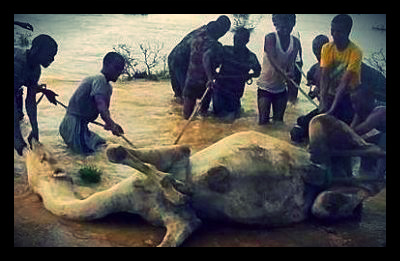
zimbabwe_food_crisis_corn_shortage`
Zimbabwe announced plans last Friday to import 150,000 tons of corn from South Africa in attempt to stave off the threat of mass starvation as poor crop yields and bad credit plunge the country into its worst food crisis in years.

A UN report found that at least 2.2 million Zimbabweans will require food assistance before the next harvest season to survive. Many people in rural areas are subsisting only on what wild fruit they can find.

Zimbabwe was once known as southern Africa’s breadbasket, but is now suffering low yields of its staple crop due to last year’s droughts, the late arrival and poor distribution of rainfall and an infestation of army worms. Economic collapses and poor planning by the government exacerbated the bad growing season, and Zimbabwe was able to produce only 800,000 of the 2.2 million tons of corn necessary to feed its population.

Scarcity has driven the price of corn up 20 percent since 2012, according to the to US-based Famine Early Warning System (FEWSNET).

“Communities, especially rural ones, are facing a twin evil: food is scarce, and that tends to push prices up,” Innocent Makwiramiti, an economist and former executive officer of the Zimbabwe National Chamber of Commerce, told reporters.

“The government has no money to import enough grain so that people can buy it at subsidized levels,” Makwiramiti said. “The hungry are therefore forced to buy from private sellers, who charge high prices.”

Zimbabwe’s hyperinflation and resulting economic freefall, which many critics blame on President Robert Mugabe and his chaotic ascension to power, threaten the country’s ability to borrow to feed its citizens.

In the past, Zimbabwe has combated inflated food prices by importing grains on credit from neighboring countries like Zambia, many of whom are no longer willing to gamble that they will be paid back. In October, Zambia reversed its decision to give Zimbabwe 150,000 tons of corn on credit, instead requesting cash up front.

Zimbabwe managed to obtain only 14,000 tons.

Many Zimbabweans are angered by the response from President Mugabe and his ZANU PF party, who have acknowledged the food crisis and promised that “no Zimbabwean will die of hunger” but have yet to reveal any concrete plans to address food scarcity or the underlying economic problems ravaging the country.

In addition to a poor growing year and an economy in free fall, Zimbabwe’s food crisis has roots in Mugabe’s violent redistribution of land in 2000. Many white landowners fled the country as government forces seized their farms.

Instead of turning land over to Zimbabwe’s poor black farmers, as he had promised, Mugabe gifted properties to leaders of his ruling party, whom left much of it unattended and improperly cared for. Ironically, the farming surplus that Zambia has experienced, allowing them to sell corn to Zimbabwe, can be attributed at least in part to white farmers chased out of the country.

It will take time for Zimbabwe’s economy to rebound, but its people are dying now. The 150,000 tons of corn recently granted by South Africa will help some, but without money or credit, Zimbabwe and its citizens will be largely dependent on food aid from international organizations. Now is the time to get involved.

– Sarah Morrison

Sources: All Africa, New Zimbabwe, New Zimbabwe, New York Times, World Food Programme
Photo: The Guardian

January 21, 2014
https://borgenproject.org/wp-content/uploads/borgen-project-logo.svg 0 0 Borgen Project https://borgenproject.org/wp-content/uploads/borgen-project-logo.svg Borgen Project2014-01-21 18:53:402024-05-26 23:05:47Zimbabwe Facing Food Crisis Due to Corn Shortage
Activism, Aid Effectiveness & Reform, Charity, Food & Hunger, Food Aid, Food Security, Global Poverty, Health

Food Aid in Puntland, Somalia

puntland_cyclone
On November 10, a deadly cyclone raged through the region of Puntland, located in Somalia’s northeastern coast. Though the cyclone has reportedly killed up to 300 people, the death toll has not yet been verified. Many of these victims were children and elderly, both of which are more vulnerable to hypothermia and exposure. Moreover, the United Nations says as many as 30,000 people are in need of food aid.

Whole villages have been washed away by the storm, thus forcing local aid workers to struggle to reach the stranded victims due to the damaged infrastructure. Furthermore, large portions of roads have been damaged, driving aid workers to deliver food aid on foot. Many people are also missing, especially in coastal towns where fisherman and their boats have been lost at sea.

Pastoralists have been hit the hardest since their livestock and poorly built homes and barns have been washed away. The region does not normally experience rain so the area’s infrastructure has not been built to withstand this sort of storm. In fact, some of the worst hit villages have lost 90 percent of their livestock to icy rain and flooding.

Moreover, areas infamous for pirates such as the port of Ely are some of the worst affected. This is worrisome as the 2004 Tsunami was considered one of the major triggers of the pirate attacks off the coast of Somalia where 736 people and 32 ships were held hostage.

The World Food Programme (WFP) recently arrived in Puntland and transported 340 metric tons of food including cereal and vegetable seeds to the worst affected areas of Bossaso, Banderbayla, Dongoroyo and Eyl. In total 27, 000 people have been given a month’s worth of food rations. In addition Puntland’s government sent 32 trucks of emergency supplies throughout the needed areas.

Once emergency aid has been distributed and the region is no longer in a state of disaster the WFP will begin recovery work to rebuild the infrastructure of the area. The Food-for-Assets initiative is a recovery program run by the WFP that assists communities in rebuilding their infrastructure in a way that would better withstand a future natural disaster. Moreover, community workers are paid in food rations for assisting with the development.

Further south in Middle Shabelle, flooding has devastated the town of Jowhar and surrounding areas, pushing over 10,000 people to flee their homes. Their water supplies have, furthermore, been contaminated increasing the risk of waterborne diseases, while all standing crops and livestock in the area have been destroyed or lost. The International Committee of the Red Cross has provided 25,800 people with emergency essentials such as kitchen sets, clothes and sleeping mats.  They have also been able to stop flooding and repair riverbanks in five locations and distributed emergency food aid and water.

– Lisa Toole

Sources: AllAfrica: Food Aid, AllAfrica: Twin Natural Disasters, Yahoo, World Food Programme, Aljazeera

January 1, 2014
https://borgenproject.org/wp-content/uploads/borgen-project-logo.svg 0 0 Borgen Project https://borgenproject.org/wp-content/uploads/borgen-project-logo.svg Borgen Project2014-01-01 17:22:102024-05-25 00:37:18Food Aid in Puntland, Somalia
Food & Hunger, Food Security, Global Poverty, USAID

Haiti’s Hunger Crisis

Haiti Hunger Crisis Earthquake Reconstruction
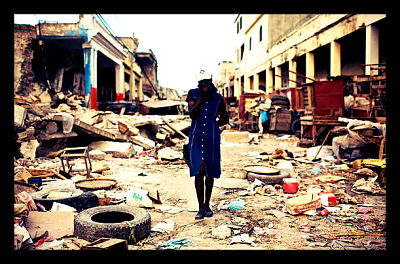
Last June, when reports abounded of the chronic hunger and food insecurity crisis that was ravaging Haiti, the world learned that 1.5 million people were in need of food assistance in the struggling nation, while another 6.7 million people were failing to meet their food needs on a regular basis.

Soon, images of broomstick-thin children with distended stomachs crossed the globe, while international donors and NGOs pledged additional donor dollars to the nation that was devastated by an earthquake in 2010. Despite the international assistance, a staggering 67 percent of the population still has limited access to food, according to the government’s National Coordination of Food Security.

Much of the crisis stems from extreme weather conditions such as floods and droughts which destroyed key crops last year. Worse still, scientists predict that more natural disasters are on their way due to climate change.

Klaus Eberwein, general director of the government’s Economic and Social Assistance Fund believes that the current hunger crisis is due to “decades of bad political decisions,” last year’s storms and drought, and the fact that hunger is not new to Haiti.

The country’s food insecurity issues also have to do with the fact that 80 percent of Haiti’s rice and half of all its food is imported now. With so much depending on imports, meals are becoming harder to obtain on a minimum wage, which is about $4.54 a day.

To make matters worse, Haiti has lost almost all of its forest as poor Haitians continue to chop down trees to make charcoal. Consequently, the loss of trees does not help to contain heavy rainfall or to yield crop-producing soil.

One of the organizations that continues to help stem the widespread hunger is USAID, which has provided over $38 million for emergency and development food assistance in Haiti. This past month, the organization launched a four-year food security program to improve nutrition and access to locally produced foods for the most vulnerable households in Haiti. The project, the Kore Lavi Program, is part of the U.S. government’s global hunger and food security initiatives Feed the Future and Title II.

The program supports the Haitian government in establishing a voucher-based safety-net system to increase poor household’s access to food and prevent malnutrition in children under 2 years of age. It is expected to reach 250,000 households by providing food vouchers, improving maternal and child health and nutrition knowledge, strengthening links between households and health systems, and improving the quality of health and nutrition services. Additionally, it aims to develop a national database system within the Government of Haiti’s Ministry of Social Affairs and Labor to target vulnerable households.

The goal is to change the harsh reality of the statistic that two in three Haitians currently face hunger as the country’s woes continue to mount.

– Nayomi Chibana
Feature Writer

Sources: USAID AP
Photo: TIME

October 20, 2013
https://borgenproject.org/wp-content/uploads/borgen-project-logo.svg 0 0 Borgen Project https://borgenproject.org/wp-content/uploads/borgen-project-logo.svg Borgen Project2013-10-20 17:19:212024-06-05 01:53:40Haiti’s Hunger Crisis
Children, Food & Hunger, Food Aid, Food Security

Optifood Software Analyzes Diets to Address Malnutrition

Working through the World Health Organization (WHO), a team of scientists and programmers have created a new software that is capable of analyzing a person’s diet and determining what in their geographic area can be used to supplement nutritional deficits cheaply. The software is currently undergoing USAID-approved trials in Guatemala, with promising results.

According to the Food and Nutritional Technical Assistance III Project (FANTA), malnourished children in the two studied Highlands communities of Huehuetenango and Quiche can be adequately fed for 25-50¢ US each day. The study consists of randomly selected children in the two communities between the ages of 9 and 11 months, and suggests that in addition to breastmilk, potatoes, beans, eggs, tortillas, and fortified cereal, a local powder called Chispitas would complete the children’s diet. Currently, Chispitas is only available to some communities in Guatemala.

With the average Guatemalan woman giving birth to three children, and the average Highlands household earning US$3.15 per day, even Optifood’s findings will require effort to become reality. Most families simply cannot spend 8-15 percent of their income feeding a single baby. And despite the fact that the ingredients in Chispitas can be found locally, the finished product is most available in urban areas where poverty is more severe than in the Highlands.

Whatever the practical limitations, Optifood takes a great step forward by simply identifying, in almost real time, what the nutritional problems are and the optimal, if ultimately impossible, solutions. With workshops being offered in Guatemala and a handful of other countries, to educate local aid workers in the use of the software, hard data can begin to emerge from poor areas and provide international agencies like the WHO the information it needs to assess priorities. It also gives national programs, such as Guatemala’s Zero Hunger Initiative, with a clear set of objectives to accomplish.

As one of the major criticisms of aid organizations is the uncertainty about what funding can actually accomplish, Optifood is able to provide a nutritional “before and after” comparison, elucidating the problem and demonstrating the effects of policy changes or investments.

– Alex Pusateri

Sources: USAID Blog, Google Translate, CIA, INCAP, FANTA Project
Photo: Hunger and Undernutrition Blog

October 11, 2013
https://borgenproject.org/wp-content/uploads/borgen-project-logo.svg 0 0 Borgen Project https://borgenproject.org/wp-content/uploads/borgen-project-logo.svg Borgen Project2013-10-11 04:00:392024-05-25 00:24:30Optifood Software Analyzes Diets to Address Malnutrition
Developing Countries, Food & Hunger, Food Aid, Food Security, Global Poverty, Inequality, Poverty Reduction

Could GMO’s Help Prevent Food Shortages?

Genetically_Modified_Crops_Prevent_Food_Shortages
With the world population expected to double by 2050, food security will continue to be an increasingly complicated and important issue. More food will be needed to feed more people and, to preserve vital biodiversity sites, we’ll need to produce this additional food using land already devoted to agriculture. While there are many factors that could improve agricultural efficiency, genetically modified crops hold the most potential. Many scientists now believe that transgenic plants could help prevent or minimize future food shortages.

Transgenic plants are those that possess an inserted portion of DNA either from a different member of their own species or from an entirely different species. The inserted DNA serves some special purpose, such as allowing the plant to produce natural insecticides. Once the genes are transferred, they can be passed on to offspring through simple fertilization, allowing farmers to breed advantageous traits in their plants. Transgenic plants have proven extremely profitable in the developed world, accounting for a 5% to 10% increase in productivity, and reducing the cost of herbicides and insecticides.

Such methods could effectively increase productivity in the developing world, where a surge in food production is sorely needed. Developing countries, especially those in the tropics and subtropics, suffer severe crop losses due to pests, diseases, and poor soil conditions. In addition, a lack of financial capital often prevents farmers from investing in high quality seeds, insecticides, and fertilizers. Poor post-harvest conditions such as inadequate storage facilities and thriving fungi and insect populations also fuel crop loss. Currently, pests destroy over half the world’s crop production. Transgenic plants could provide an innovative solution.

Fortunately, bioengineering solutions can be easily adapted from one species to another, allowing one advancement in plant biotechnology to quickly produce many more. For example, insect-resistant strains of several important plant species have been produced using one specific endotoxin. Commercial production of insect-resistant maize, potato, and cotton has already begun. Plant bioengineers hope to use similar technology to create fruits that ripen more slowly, allowing for longer shelf lives and less post-harvest crop loss.

It is important to note that this technology has mostly been established with the developed world in mind. Therefore, adapting it for use in the developing world must be done carefully. For instance, many crops grown in the developing world are local varieties and have not been extensively tested thus far by plant bioengineers. Blindly replacing local crops with bioengineered varieties from the developed world could disturb deep social or religious traditions that are represented in the widely varied cultures in the developing world. Additionally, societies are more likely to embrace a familiar crop than a foreign one. Research and development in bioengineering must, therefore, adapt to include the crops of the developing world.

Although the globe produces enough food for everyone, people everywhere continue to die of starvation. With this unequal distribution in mind, it is imperative that, moving forward, small farmers in the developing world receive the same access to plant biotechnology given to large agribusinesses in the developed world. First-world corporations cannot be granted even more unfair advantages over small landholders in poorer nations, especially as global populations grow and food security becomes ever more scarce and important. As this technology is developed, it is up to us to share it with the developing world in order to minimize severe food shortages in the years to come.

– Katie Fullerton

Sources: Plant Physiology, Colorado State University
Photo: Tree Hugger

August 31, 2013
https://borgenproject.org/wp-content/uploads/borgen-project-logo.svg 0 0 Borgen Project https://borgenproject.org/wp-content/uploads/borgen-project-logo.svg Borgen Project2013-08-31 08:18:222024-06-05 01:53:37Could GMO’s Help Prevent Food Shortages?
Food & Hunger, Food Security

Algeria Food Security

Algeria_food_security
Algeria has launched an agriculture development program designed to boost domestic production. Using its increased revenue from hydrocarbon exports, the country will tackle food security through a variety of programs working with farmers in rural and low-income areas.

Like most of North Africa, Algeria imports a substantial portion of its food. As a result, it is extremely vulnerable to shifts in commodity pricing. In 2011 riots broke out across Algeria due to the high price of sugar and cooking oil and were influenced by the Arab Spring in neighboring nations as well.

In response, the Algerian government reduced the import taxes on these two goods. While the riots may have died down the country remains vulnerable to similar price spikes. As a result Algeria heavily subsidizes key food items that are estimated to amount to 1.1% of gross domestic product (GDP) in 2013.

Algeria imports almost seventy percent of its wheat consumption. Egypt also imports a significant percentage of food and is the world’s largest importer of wheat. The Egyptian government also uses a system of subsidies in an attempt to alleviate the price burden. However, these governments recognize subsidies are not a sustainable way to ensure food security.

Algeria’s agriculture development program will focus on improving farm management practices, addressing regulations, and promoting modern technological practices in the industry. Previously the country’s food security programs have focused on putting more arable land into production. While useful, this is not a sustainable way to ensure the country’s food security.

More effective programs have focused on public-private partnerships that help introduce modern farming practices among rural growers. These practices have helped increase agricultural output by 23 percent in 2011 and an additional 32 percent in 2012.

The country wishes to increase its irrigated acres, adding 0.5 million hectares to the current 1.1 million currently irrigated by 2014. Algeria will also focus on developing its infrastructure. This will be a key component to affecting agricultural development in remote areas, which in a country of Algeria’s size are significant. This component will also include development efforts to reduce post-harvest losses through storage and transportation modifications.

The effect food prices have on the country’s stability will help motivate the government to introduce new and sustainable practices. This will be done not only in an effort to increase Algeria food security but also to ensure governmental stability.

– Callie D. Coleman

Sources: Global Arab Network, IFPRI
Photo: Flickr

August 27, 2013
https://borgenproject.org/wp-content/uploads/borgen-project-logo.svg 0 0 Borgen Project https://borgenproject.org/wp-content/uploads/borgen-project-logo.svg Borgen Project2013-08-27 21:14:372024-12-13 17:49:40Algeria Food Security
Food & Hunger, Food Security, Health

International Health Institutions Changing the World

international_health_institutions

The needs and rights of the world’s poor come in all shapes and sizes. For decades, aid organizations have used their funds, manpower and resources to mobilize corrective programs for these vulnerabilities. Health organizations in particular play a critical role serving the world’s poor by employing a wide range of expertise to aid in mitigating international health concerns. These organizations believe that all people deserve the dignity of regular, healthy meals, and to have access to basic and affordable medical treatment. Here are four top international health institutions that stand out:

World Health Organization

The WHO is probably the best-known health institution in the world. Established in 1948 as the United Nations’ global health authority and headquartered in Geneva, Switzerland, the World Health Organization leads the world in public health statistics, public health policy, emergency response, and research. The WHO is probably most visible in disaster relief and immunization programs, which reach tens of millions of people. Their experts also publish health and wellness guidelines and work with UN-member states to promote these guidelines for maximum impact. WHO workers also keep close tabs on achieving Millennium Development Goals and other international standards to ensure that progress promised is progress made. Overall, the World Health Organization continues its work as the world’s leading international health coordinating and authoritative body.

Oxfam International

While the World Health Organization’s focus is all-encompassing with regard to international health standards and policy, Oxfam International has a more targeted approach on relief and development. Headquartered in Washington, D.C. with advocacy offices in Brussels, Geneva, New York, Brasilia and Addis Ababa, Oxfam has a much heavier focus on advocacy and emergency response initiatives. Oxfam focuses its development, emergency assistance, campaigning, advocacy and policy research to empower the global poor to exercise their economic rights and right to development. And like many international organizations, they have Hollywood Ambassadors that bring star power to the cause. One of Oxfam’s most notable campaigns is Health & Education for All, which pushes for clinics and schools to be built in post-conflict communities by partnering with local actors and mobilizing the necessary resources. The relief and development agency’s programs aim to empower those living in poverty to exercise their rights so that they can live lives of dignity.

GAIN Alliance

In contrast to Oxfam’s mission of advocacy and emergency response and the World Health Organization’s all-encompassing approach to international health issues, GAIN Alliance has a much more precise mission: provide nutritional foods to malnourished communities all over the world. GAIN operates in more than 30 countries, just over half of them in Africa. Its work centers on healthy aid provisions for more than 667 million people, half of which are women and children. Projects to improve nutrition in poor communities address maternal and infant nutrition, large scale food fortification and supporting local agricultural initiatives to be more market-friendly and nutritious.

UNICEF

While not specifically an international health institution, the United Nations Children’s Fund (UNICEF) makes critical contributions to improved global health. Its work invariably encompasses investing in improved health outcomes for infants and young children in chaotic environments and emergency situations. The nexus of UNICEF and better health outcomes for children is clearly visible in its efforts to provide adequate, nutritious meals to 180 million children under the age of 5 who suffer physical and mental impairments as a result of malnutrition and stunted growth. Further, UNICEF aligns its health initiatives with many of its focus areas, which include programs focusing on HIV prevention, child protection, promoting gender equality and basic education. UNICEF has made great strides in its health programs, underlining UNICEF’s mission to foster children’s holistic development and protection.

– Zach Crawford

Sources: World Health Organization, Oxfam International Health and Education for All, GAIN Alliance 2011-2012 annual report, TIME Magazine
Photo: United Nations

August 22, 2013
https://borgenproject.org/wp-content/uploads/borgen-project-logo.svg 0 0 Borgen Project https://borgenproject.org/wp-content/uploads/borgen-project-logo.svg Borgen Project2013-08-22 15:16:412024-06-04 02:43:58International Health Institutions Changing the World
Page 25 of 31«‹2324252627›»

Get Smarter

  • Global Poverty 101
  • Global Poverty… The Good News
  • Global Poverty & U.S. Jobs
  • Global Poverty and National Security
  • Innovative Solutions to Poverty
  • Global Poverty & Aid FAQ’s
Search Search

Take Action

  • Call Congress
  • Email Congress
  • Donate
  • 30 Ways to Help
  • Volunteer Ops
  • Internships
  • Courses & Certificates
  • The Podcast
Borgen Project

“The Borgen Project is an incredible nonprofit organization that is addressing poverty and hunger and working towards ending them.”

-The Huffington Post

Inside The Borgen Project

  • Contact
  • About
  • Financials
  • President
  • Board of Directors
  • Board of Advisors

International Links

  • UK Email Parliament
  • UK Donate
  • Canada Email Parliament

Get Smarter

  • Global Poverty 101
  • Global Poverty… The Good News
  • Global Poverty & U.S. Jobs
  • Global Poverty and National Security
  • Innovative Solutions to Poverty
  • Global Poverty & Aid FAQ’s

Ways to Help

  • Call Congress
  • Email Congress
  • Donate
  • 30 Ways to Help
  • Volunteer Ops
  • Internships
  • Courses & Certificates
  • The Podcast
Scroll to top Scroll to top Scroll to top