What is the Global Food Security Index?
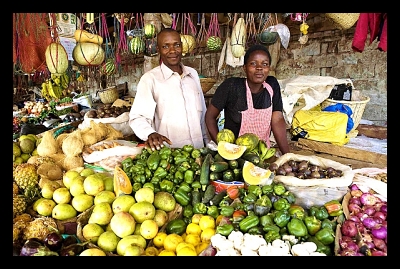
The Global Food Security Index ranks 105 countries according to their access to affordable, available and quality food. The index was launched in 2012 by The Economist – Intelligence Unit (EIU) with sponsorship from the DuPont Corporation. The index is a dynamic quantitative and qualitative scoring model, constructed from 25 unique indicators which measure drivers of food security across both developing and developed countries.
Food security is defined as the state in which people at all times have physical, social, and economic access to sufficient and nutritious food that meets their dietary needs for a healthy and active life based on the definition established at the 1996 World Food Summit. The overall goal of the study is to assess which countries are most and least vulnerable to food insecurity through the categories of Affordability, Availability, and Quality and Safety.
Beginning in October 2012, the EIU began updating the index on a quarterly basis to adjust for the impact of fluctuating food prices. This food price adjustment factor is applied to each country’s Affordability score and is based on changes in income growth and global and domestic food prices. Over time, countries’ scores improve if food prices fall, and deteriorate if prices rise. The country-specific adjustments and their goal of translating fluctuations in global food prices to the national level result in different levels of score changes for each country, with vulnerable countries hurt the most by rising prices.
All scores are normalized on a scale of 0-100 where 100=most favorable. There are scores based on three categories: 1. Affordability, 2. Availability, and 3. Quality and Safety.
As of the first quarter of 2013, the top three scores and the bottom three scores in each category are as follows:
Affordability
Top three countries: USA (95.2), Australia (92.4), Switzerland (91.5)
Bottom three countries: Madagascar (20.4), DR Congo (17.4), Chad (14.4)
Availability
Top three countries: Denmark (92.4), Norway (91.8), France (88.3)
Bottom three countries: Niger (25.0), Haiti (22.4), Chad (21.7)
Quality & Safety
Top three countries: France (90.2), Israel (90.2), USA (89.3)
Bottom three countries: Togo (22.7), Ethiopia (20.0), DR Congo (16.1)
In a report titled ‘The Global Food Security Index 2012: An assessment of food affordability, availability and quality’, the EIU found that there is a positive correlation between countries with good food security and their related policies. Example policies include improving access to financing for local farmers, developing food safety net programs like school feeding programs, investing in agricultural technology, research & development, and promoting nutrition awareness.
Other key findings from the report :
- The U.S., Denmark, Norway and France are the most food-secure countries in the world.
- The food supply in advanced countries averages 1,200 calories more per person per day than in low-income economies.
- Most food secure nations score less well for micronutrient availability.
- Several of the sub-Saharan African countries that finished in the bottom third of the index, including Mozambique, Ethiopia, Rwanda, and Nigeria, will be among the world’s faster-growing economies during the next two years.
- China experienced the least volatility of agricultural production during the last 20 years, and three North African countries—Morocco, Tunisia and Algeria—among the most.
- Landlocked countries fared nearly as well as those with a coastline.
– Maria Caluag
Source: Global Food Security Index
Photo: UN Earth News
