The worst dictators have a strange kind of fame. Many manage to escape widespread awareness until their regime turns irredeemably bloody or repressive. As a result of their bizarre behaviour and the extensive list of human rights violations committed under their rule, figures such as Idi Amin, Muammar Qaddafi and Kim Jong Il are now household names. Yet their notoriety grew at the end of their reigns, when their own people had revolted or their regime was nearing its final days. However, there are a number of dictators in the world in power today committing great crimes against their own people unchecked. Here are the top 5 worst dictators in the world.
1. Isias Afewerki, Eritrea
In power since 1993, Afewerki has plunged Eritrea into a living nightmare for its residents. Starting out, as many do, as an idealistic young revolutionary, Afewerki was chosen as the country’s first president after its liberation from Ethiopia. Yet after gaining the position, Afewerki essentially cut off democracy, with the country operating under a one party system and no free press. Interceptions from cables paint a desperate picture of the nation, as seen in the excerpt: ”Young Eritreans are fleeing their country in droves, the economy appears to be in a death spiral, Eritrea’s prisons are overflowing, and the country’s unhinged dictator remains cruel and defiant.”
2. Omar al-Bashir, Sudan
Though he has been in power during comparatively good economic times, Omar al-Bashir has led Sudan to becoming one of the bloodiest and most conflicted countries in the region. Bashir was at the helm of the country during Sudan’s horrific genocide, which saw upward of 300,000 deaths, largely at the hands of militant groups that were said to have government support. He has been accused by the International Criminal Court of crimes against humanity, genocide and war crimes. The unceasing violent conflicts that characterized his reign ultimately led to South Sudan’s secession from the state. The new territory, however, quickly entered into war with Sudan over oil disputes and into yet another bloody conflict.
3. Islam Karimov, Uzbekistan
Ruling since 1989, Karimov’s term was first extended, and then he was reinstated in a sham election which was discounted entirely by watchdogs, against a political opponent who publicly admitted he himself had voted for Karimov. There is little to no religious or press freedom, with universities told not to train students in the realm of public issues. Brutal torture is seen as routine in the Uzbek judicial system, with Human Rights Watch expressing repeated concern over the accepted practices in Uzbek prisons. Karimov is still to call for an investigation into the Andijan massacre, where hundreds of people were killed. He also made international headlines in 2002 after evidence emerged that he had boiled one of his prisoners to death. Repeatedly named as one of ‘Parade’ magazine’s worst dictators, international rights groups have had great difficulty in breaching Uzbekistan’s borders and little success in implementing reforms.
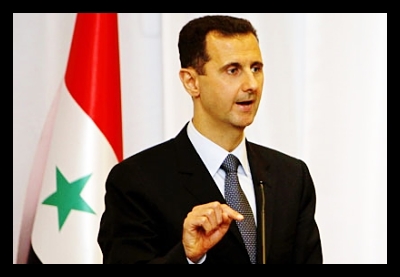
4. Bashar Al-Assad, Syria
In a stunning display of irony, Syria’s blood-soaked dictator started his career in medicine and is a trained ophthalmologist. Inheriting power after his father and older brother died, Assad’s cruelty showed after the start of the Arab Spring. After a violent crackdown on not only rebels, but civilians, his government has no real way of restoring order and remaining in power, yet Assad stubbornly refuses to concede to any agreements. Many international leaders have called on Assad to recognize the reality of the Syrian rebellion and step down, with Britain even stating it would consider taking in Assad if it meant his departure from the state. Support from Iran and Russia, however, have strengthened the leader long enough to continue Syria’s endless and bloody war, with Assad himself showing no signs of remorse or weakening of resolve.
5. U Thein Sein, Myanmar
Thein Sein started on the right foot. His actions in opening up Myanmar garnered praise from Western leaders such as Barack Obama and Ban-Ki Moon and he was recently given a peace award from the International Crisis Group. This image sits uncomfortably with the Thein Sein of recent days. Having initially opened dialogue with Myanmar’s Aung Sang Suu Kyi, she was again recently threatened, as was a Democracy League operating in the country. He is also accused of blatantly ignoring a deepening crisis in his own country with the violent persecution of the Royingha Muslims. His actions in response to the crisis have attracted accusations of ethnic cleansing. In response, Thein Sein has recently spoken to the international press making clear that he is not afraid to use violence to maintain order, with the unsettling statement, “I will not hesitate to use force as a last resort to protect the lives and safeguard the property of the general public.”
Sources: Parade, HRW, Foreign Policy, BBC
Photo: Atlanta Blackstar

Why General Petraeus Supports International Aid
The United States Military takes a huge piece of the American Federal Budget, with 23% of spending allocated to defence. The armed forces are carrying a heavy responsibility in a time when national security is at the forefront of most citizens’ minds, with threats and responsibilities so numerous that the country has come to merit possessing the world’s most powerful army.
Taking this into consideration, it seems unlikely – and significant – that General David Petraeus, who had an illustrious career within the army – is outspokenly advocating the continued funding of foreign aid. Petraeus recently wrote an impressive op-ed in Politico outlining the many potential benefits of continuing development work, as well as the moral and strategic importance of doing so. He offers the gentle reminder that America’s influence does not come solely from its military muscle but also from what he calls its ‘softer’ power, i.e. its generosity and ability to contribute to the betterment of other nations.
A strategist at heart, Petraeus’ argument is more sense than sentiment. Seen from a strategic standpoint, General Petraeus expounds on the benefits of past development work. He provides real life examples of how assistance has led to results in the past, such as the stabilization of the Latin American region, which has blossomed into new markets and is less threatened by instability. He points out the need for continued restructuring programs in the countries that have already seen US intervention, namely Afghanistan, where he emphasizes how the subsequent relief work is as important as the initial military intervention.
The US is one of the world’s largest contributors to foreign aid from a purely quantitative standpoint. Yet, in comparison to its economy, the US is somewhat conservative. Currently, the United States spends less than 0.19% of its GDP on foreign aid, less than some of the major European countries and falling significantly short of the UN’s goal of 0.7% of GDP. As Petraeus points out, “The State Department budget is still less than 5 percent of the military’s — and the number of Foreign Service officers worldwide is less than half the number of soldiers in a single Army division.”
In addition, General Petraeus highlights some of the past successes of investment in foreign aid. Not only that, he pinpoints areas that may need the US’s help in coming years, including Egypt, the Democratic Republic of the Congo and transitional governments such as Libya, Yemen and Mali.
Citizens and activists have long recognized the need for foreign aid; it is a heartening sign that figures as influential as Petraeus are adding their voice.
– Farahnaz Mohammed
Source: Politico
Photo: IBT
Hugh Evans Teaches Graduates About Poverty
Hugh Evans, the founder of the Global Poverty Project, delivered the commencement address at Kean University on May 16 of this year. He told graduates his story, retelling how he founded the Global Poverty Project as a teenager.
The Global Poverty Project works to campaign the government, businesses, and consumers to take action that will create a systematic change for the world’s extreme poor. The project also is working to build a movement that engages and educates people, helping them to take simple but effective individual actions for change.
He told graduates how his organization has raised $4.3 billion dollars for the world’s poor. The organization would like to see better aid, better trade, more ethical, fair and balanced trade, and an environment that invests in education, infrastructure, and governance. The Global Poverty Project believes that working to achieve these goals will create an enabling environment for developing countries to work their way out of poverty.
At his commencement address, Evans elaborated on the importance of creating your own path. Amidst pictures and videos of slums around the world, Evans told graduates that taking an unorthodox path is bound to test our character. He used his life and chosen career path as an example to explain that going against people’s expectations for your life puts things into perspective and reveals your greatest hopes and greatest ideals.
Evans’ message rings true to the value of hard work and determination in tackling problems and obstacles. His speech illuminates to graduates that sometimes, making an unorthodox choice can improve not only your life, but also maybe even the lives of millions or billions of people around the world.
– Caitlin Zusy
Source NJ.com, Global Poverty Project
Eating Insects Could Fight World Hunger
Entomophagy, or the practice of eating insects, could fight world hunger and global warming. A 200-page report, released by the UN Food and Agriculture Organization (FAO), at the organization’s Rome headquarters, is calling for restaurants, chefs, and food writers to promote eating insects.
According to the FAO, insects provide high-quality protein and nutrients compared to meat and fish. They can also be an important food supplement for undernourished children, reproduce quickly, and leave a low environment footprint. Insects are high in protein, and can also be rich in copper, iron, phosphorus, manganese, magnesium, selenium and zinc. Furthermore, insects are four times more efficient in turning feed mass into edible meat, which suggests that food could be produced more cheaply and with fewer emissions.
The long history of entomophagy starts with grasshoppers served “toasted in a little oil with garlic, lemon and salt” on the streets of Oaxaca, Mexico and fly eggs called “Mexican caviar” that Montezuma devoured. Currently, two billion people worldwide indulge in the delicacy. However, consumer digestion will remain an issue when integrating insects into the Western diet. While ingesting insects outright makes many Westerners squeamish, reports by the FDA suggest that insect fragments can already be found several food products such as wheat and tomato juice but is safe to eat on a small scale.
Though this new protein may not find it’s way onto dinner plates in the near future, eating insects could fight would hunger and is an firm step forward in maintaining food security world wide.
– Kira Maixner
Source: The Telegraph
Top 5 Worst Dictators
The worst dictators have a strange kind of fame. Many manage to escape widespread awareness until their regime turns irredeemably bloody or repressive. As a result of their bizarre behaviour and the extensive list of human rights violations committed under their rule, figures such as Idi Amin, Muammar Qaddafi and Kim Jong Il are now household names. Yet their notoriety grew at the end of their reigns, when their own people had revolted or their regime was nearing its final days. However, there are a number of dictators in the world in power today committing great crimes against their own people unchecked. Here are the top 5 worst dictators in the world.
1. Isias Afewerki, Eritrea
In power since 1993, Afewerki has plunged Eritrea into a living nightmare for its residents. Starting out, as many do, as an idealistic young revolutionary, Afewerki was chosen as the country’s first president after its liberation from Ethiopia. Yet after gaining the position, Afewerki essentially cut off democracy, with the country operating under a one party system and no free press. Interceptions from cables paint a desperate picture of the nation, as seen in the excerpt: ”Young Eritreans are fleeing their country in droves, the economy appears to be in a death spiral, Eritrea’s prisons are overflowing, and the country’s unhinged dictator remains cruel and defiant.”
2. Omar al-Bashir, Sudan
Though he has been in power during comparatively good economic times, Omar al-Bashir has led Sudan to becoming one of the bloodiest and most conflicted countries in the region. Bashir was at the helm of the country during Sudan’s horrific genocide, which saw upward of 300,000 deaths, largely at the hands of militant groups that were said to have government support. He has been accused by the International Criminal Court of crimes against humanity, genocide and war crimes. The unceasing violent conflicts that characterized his reign ultimately led to South Sudan’s secession from the state. The new territory, however, quickly entered into war with Sudan over oil disputes and into yet another bloody conflict.
3. Islam Karimov, Uzbekistan
Ruling since 1989, Karimov’s term was first extended, and then he was reinstated in a sham election which was discounted entirely by watchdogs, against a political opponent who publicly admitted he himself had voted for Karimov. There is little to no religious or press freedom, with universities told not to train students in the realm of public issues. Brutal torture is seen as routine in the Uzbek judicial system, with Human Rights Watch expressing repeated concern over the accepted practices in Uzbek prisons. Karimov is still to call for an investigation into the Andijan massacre, where hundreds of people were killed. He also made international headlines in 2002 after evidence emerged that he had boiled one of his prisoners to death. Repeatedly named as one of ‘Parade’ magazine’s worst dictators, international rights groups have had great difficulty in breaching Uzbekistan’s borders and little success in implementing reforms.
4. Bashar Al-Assad, Syria
In a stunning display of irony, Syria’s blood-soaked dictator started his career in medicine and is a trained ophthalmologist. Inheriting power after his father and older brother died, Assad’s cruelty showed after the start of the Arab Spring. After a violent crackdown on not only rebels, but civilians, his government has no real way of restoring order and remaining in power, yet Assad stubbornly refuses to concede to any agreements. Many international leaders have called on Assad to recognize the reality of the Syrian rebellion and step down, with Britain even stating it would consider taking in Assad if it meant his departure from the state. Support from Iran and Russia, however, have strengthened the leader long enough to continue Syria’s endless and bloody war, with Assad himself showing no signs of remorse or weakening of resolve.
5. U Thein Sein, Myanmar
Thein Sein started on the right foot. His actions in opening up Myanmar garnered praise from Western leaders such as Barack Obama and Ban-Ki Moon and he was recently given a peace award from the International Crisis Group. This image sits uncomfortably with the Thein Sein of recent days. Having initially opened dialogue with Myanmar’s Aung Sang Suu Kyi, she was again recently threatened, as was a Democracy League operating in the country. He is also accused of blatantly ignoring a deepening crisis in his own country with the violent persecution of the Royingha Muslims. His actions in response to the crisis have attracted accusations of ethnic cleansing. In response, Thein Sein has recently spoken to the international press making clear that he is not afraid to use violence to maintain order, with the unsettling statement, “I will not hesitate to use force as a last resort to protect the lives and safeguard the property of the general public.”
Sources: Parade, HRW, Foreign Policy, BBC
Photo: Atlanta Blackstar
Sara Blakely Joins The Giving Pledge
Sara Blakely joins the Giving Pledge by donating half of her fortune. In doing so, Blakely, the inventor of Spanx, becomes the first female billionaire to pledge. The Gates Foundation also signed seven new additional billionaires along with Blakely.
Blakely said that Bill and Melinda Gates encouraged her to join and took her out to dinner to discuss their foundation.
Blakely has used her success to focus on helping girls and women. Recently, she donated $100,000 to The Empowerment Plan,a campaign in Detroit that helps to create jobs for homeless women by paying them to produce sleeping-bag coats for other people sleeping on the streets.
The eight other new Giving Pledge signatories include hedge fund billionaire Paul Singer, real estate investor and Miami Dolphins majority owner Stephen Ross, telecoms guru Craig McCaw and wife Susan, coal mining mogul Joe Craft, British politician Lord Ashcroft, Sequoia Capital’s Mark Stevens and wife Mary, Koret Foundation head Ted Taube, and textile tycoon Samuel Yin.
– Essee Oruma
Source: Global Post
Photo: ABC News
Lesotho Increases Fight Against TB and HIV
The small nation of Lesotho has the third highest HIV prevalence in the world, at 24%, and the fourth highest estimated TB incidence. The TB-HIV co-infection rates are the fifth highest in the world and multidrug resistant TB (MDR-TB) is a growing challenge.
The Ministry of Finance of Lesotho recently signed two grant agreements with The Global Fund to Fight AIDS, Tuberculosis and Malaria totaling $17 million. These grants will allow Lesotho to expand prevention and treatment of HIV and multidrug resistant tuberculosis (MDR-TB). The Global Fund has also invited Lesotho as an interim applicant with US$25 million for HIV and AIDS.
The Minister of Finance, Leketekete, said that the grant agreements “will allow for greater predictability of funding and more strategic investment.”
The Tuberculosis grant will seek to address MDR/XDR-TB, TB/HIV co-infection, expand high quality TB treatment (DOTs), and engage communities in TB control.
Populations that are most at-risk will be reached through prevention interventions that include prevention messages, condom distribution, management of sexually-transmitted infections, and referrals to health facilities.
Lesotho has made great strides towards the reduction of the HIV epidemic. Incidence of new HIV infections declined by 16% between 2008 and 2011.
– Essee Oruma
Sources: allAfrica
Photo: Ezakwantu
Steve Jobs’ Widow & Philanthropy
Laurene Powell Jobs, Steve Jobs’ widow, has begun to publicly focus more on philanthropy. She is normally a very private person who would rather stay out of the spotlight, but she has recently become more public about the issues she cares about the most. One of her greatest passions is education, and she helped found College Track, an organization that helps low-income students in underprivileged communities prepare for college by providing rigorous academic training to help them succeed. The organization has coached over 1,400 students, and as a result 90% of them were able to attend college afterwards.
Although Laurene’s public philanthropic work is minimal, that doesn’t mean this is the first time she’s committed herself to a good cause. Laura Arrillaga-Andreessen, a philanthropist and close friend of Laurene’s, says that “if you total up in your mind all of the philanthropic investments that Laurene has made that the public knows about…that is probably a fraction of 1 percent of what she actually does.”
Laurene is also committed to other charities outside of the United States, supporting many organizations that help the poor in Africa, including Ben Affleck’s Eastern Congo Initiative charity.
– Katie Brockman
Source New York Times
7 Things You Didn’t Know About Intrahealth International
Here are seven things you did not know about one of the World’s largest health system support organizations, Intrahealth International.
– Kira Maixner
Source Intrahealth.org
The Science of Circles – FHI 360
What is the first thing that comes to mind when you think of “science?” Picturesque frames of a mad man with wacky grey hair, tinkering with beakers and laboratory equipment? Perhaps a venerable historical figure, like Marie Curie or Sir Isaac Newton floods the brain. Whatever thoughts the word “science” brings about, the organization FHI 360 seeks to morph the pre-conceived notions of science into one that is directly linked to reducing global poverty.
Operating in more than 60 countries and all U.S. states and territories, their motto, “the science of improving lives”, reflects a “360°” philosophy that socio-economic development is not just a humanitarian issue, but dabbles in all aspects of science.
Based on 40+ years of experience, FHI 360 has discovered the secret to improving lives in an achievable and sustainable manner. Through cultivating, sharing, and applying skill sets taught by programs that combine evidence with experience, this organization is able to deliver the highest level of influence.
FHI 360’s main objective is to empower individuals. In taking ownership of their own human development needs, these individuals can create a life long and sustainable avenue out of poverty. The organization believes that the world can be steered toward an age in which individuals, together with their communities, have equal access to the opportunities necessary to achieve their highest potential.
In partnering with governments, civil society organizations, the private sector and local communities, FHI 360 believes the key to the reduction of global poverty is the unanimous involvement of all individuals.
With a larger-than-life ethical compass, relentless accountability, mutual respect and undying passion, FHI 360 develops programs based on an interconnected perspective that all aspects of life are inseparable. FHI 360 explains their model:
Their dedication to a holistic approach to combating global poverty makes FHI 360 a leader in reducing global poverty. Health, nutrition, education, economic development, environment, and civil society are just a few of the areas where FHI 360 is present. Through research in science and technology, they regularly effect national policies and publish in prominent academic journals that help lead major development partners in a global direction.
The dream of FHI 360, is to convince people to think of “science” as a global issue, not in increasing technologies for already technologically prosperous countries, but building a highly technological and sustainable foundation for the whole world. One scour over their website will show the inspiring persistence of this organization. Utilizing science in a way that fights global poverty builds communities from atom to affluence.
– Kali Faulwetter
Source: FHI 360
Photo: FHI 360
History of the World Bank
For those who think the history of international institutions is boring, it’s time to think again. The history of the World Bank is full of scandals, contentions, failures, and successes, all impacting millions of people. This is part one of a three-part blog about the history of the World Bank. Before discussing the contentions and failures in the next part, it is important to give a brief overview.
The 1944 establishment of the World Bank has its origins in the need for post-WWII reconstruction of Europe. Initially founded as the International Bank for Reconstruction and Development (IBRD), at the Bretton Woods Summit in New Hampshire, the purpose was post-war reconstruction and development. Initial projects ranged from industry to reconstruction of roads, bridges, and buildings.
A shift in focus came during the 1960s with re-energized focus on the world’s poorest and most vulnerable. The basic-needs approach to development is premised on human resilience and desire to contribute to growing societies. The World Bank’s focus on environmental issues in the 1970s reflected social movements at the time demanding higher accountability of human impact on the environment. The first World Development Report was published in 1978 reflecting a growing demand for transparency in the institution and publicly available data.
Through the 1980s, as international development as a whole was being disputed by practitioners, recipients, and academics, the World Bank was pulled in many different directions. The first was macroeconomic failures mandating debt rescheduling. Later that decade social, environmental, and civil concerns vocalized criticisms over the quality of the World Bank’s projects. An investigation panel was set-up, reports were written, and reform was made in the early 1990s.
History of the World Bank
Through the 1980s, 90s, and 2000s the World Bank sponsored programs and reforms in many industries and focused on all four of the established priorities: basic-needs of health, education and livelihoods; economic development through construction projects; improving the environment; and data collection and research.
The World Bank still builds infrastructure, but now has a more holistic approach. At conception, the IBRD was a homogeneous organization based solely in Washington DC. Now it is a complex bureaucracy with diverse professions and 40% of the staff based internationally. The five institutions that constitute the World Bank Group of today are IBRD, International Development Association, International Finance Corporation, Multilateral Investment Guarantee Agency, and International Center for Settlement of Investment Disputes.
The Bank’s performance—efficiency and efficacy—have generally improved and, according to the World Bank, clients are satisfied with the level of service, quality, and commitment. The Bank is an important actor in shaping global policy in the arenas of poverty reduction and disaster (both natural and man-made) recovery.
– Katherine Zobre
Source: World Bank
Photo: Bretton Woodsk