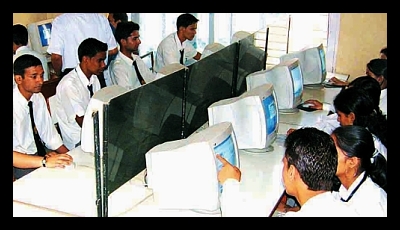
 PLANWEL is an NGO in Pakistan that is short for Planning Professionals for Social Welfare Works. It was founded in 1990 by a group of local technology and business experts for the purpose of promoting basic computer literacy, information sharing, health care, e-government, e-commerce, and e-learning through telecentres, or what they call community access points. Telecentres are public places that provide access to Information and Communications Technologies (ICTs) which help promote development for populations who otherwise would not have such access.
In the past 20 years or so, PlanWel has collaborated with several foreign entities such as Utah State University, Kansas State University, American Distance Learning Consortium, International Telecommunication Union, USAID, and World View Foundation – Malaysia. To date, PlanWel has contributed to the formation of over 400 telecentres all over Pakistan. PlanWel’s mission statement is, “Bringing Technology to the People, Building Technology Based Communities, and Technology for the People and Run by the People”. PlanWel is one of the many examples of telecentre programs that are working to improve lives by providing access to ICTs.
Generally, telecentres are located in rural areas of the developing world. According to the Telecentre.org Foundation, there are over 87,513 telecentres in over 53 countries. In this interview, the PlanWel CEO, Shahab Afroz Khan, talks about how to build a telecentre.
What do the telecentres look like?
“In fact, they are not at all fancy. In a rural setting, it would be a one-room to two-room building with some space for housing 5-10 PCs’s at the maximum, one Printer, Scanner, Fax Machine. Internet connectivity through Fiber lines – DSL (In Pakistan we have a very well connected Fiber Optic network). For power, if it’s not on the National Grid, we have it by solar energy. One teacher would teach the students – Typically he is the Owner/ Manager, who would earn his living through this.
The only missing element – AND most important is content in the local language – which we are still looking for and working on.”
What advice would you give on how to build a telecentre community?
“First of all, motivate the community and tell them what they are missing: Information about business, citizen’s information, money transactions, sharing of information, and computer literacy. Once they are convinced that there is a need to open up a telecentre, they need to try and get some type of support from important local people, such as a landlord, local government representative, and the like. This is important because, in many countries like in Pakistan, you must have local support.
It is also absolutely necessary to have your own building – one room of 14ft X 10ft would be sufficient. You cannot run a telecentre on rented space. Next, locate some donors to give you the hardware – this is the easiest part as the donor would like his name to be advertised – which you can do with some caution.”
– Maria Caluag
Source: PLANWEL, Telecentre.org
Photo: LawaOnline

UTSA Partners with Small Business in Tunisia
The International Trade Center housed within the UTSA (University of Texas at San Antonio) institute of Economic Development is partnering with USAID to train small businesses in Tunisia. UTSA will take their Small Business Development Center (SBDC) Counselor and Director Certificate Training program to Tunisia. The goal of the training is to help Tunisia establish SBDCs to train and support small business owners and entrepreneurs. Many of these are women and young adults with little hope of a sustainable future.
UTSA’s training program is just one component of a larger initiative focused on strengthening Tunisia’s economic development. The initiative is funded and led by USAID. UTSA and USAID will provide the SBDC training in Tunisia, as well as stay involved with providing technical support to owners and employees of small and medium-sized enterprises. The program will work to provide a competitive advantage to these small business owners and work to improve their lifestyles.
North Africa’s smallest country, Tunisia, is working to rebuild its democracy after the 2011 revolution. It is bordered by Algeria, Libya, and the Mediterranean Sea. Tunisia is ready to promote economic growth and trade opportunities with a special focus on small and medium businesses.
The International Trade Center at UTSA has grown to be one of the largest trade assistance organizations in Texas. They have been working with countries in Central and South America. The trade center helps companies increase their global competiveness through technical trade consulting, market research, and innovative training. Follow them on Twitter (@TexasTrade) or find them on Facebook (facebook.com/texastrade).
– Amanda Kloeppel
Source: UTSA
India: Unseized Opportunity
So what then is going wrong with China’s neighbor across the Himalayas? India today has nearly the same number of impoverished citizens as it did thirty years ago, 400 million. And while that may be a drop in percentage, as India’s population has boomed, it doesn’t exactly represent a giant leap forward.
China and India have paralleled each other for some time with regards to population, but that reflection is at an end, with China’s population now trending downwards, while India’s continues to rise. So is India poised to become the next China and take over manufacturing duties for the world? It is true that there’s a shift occurring in China. The labor force is shrinking while wages increase, and as the country continues to increase its global economic presence many manufacturing jobs in China will soon be moving elsewhere. Cumbersome bureaucracy, however, and a lack of suitable firms and factories, may prevent India from competing for these 85 million manufacturing jobs. Other Southeast Asian countries already have the infrastructure in place and are absorbing some of the demand for cheap manufactured goods as China’s economy shifts. India is in danger of missing out or being bypassed as this opportunity presents itself.
The size of India’s workforce is poised to surpass that of China within the next few years. The question that lingers though is whether these millions will have somewhere to turn. India could well experience the next boom and emulate the growth of China, but the necessary reforms have been slow in coming.
The opportunity is there, but it’s anyone’s guess whether ‘Made in China’ will become ‘Made in India’ anytime soon.
– David Wilson
Sources: The Economist
Photo: IBT
British Panel Plans to End Global Poverty by 2030
Last Wednesday, British prime minister David Cameron announced a few recommendations for ending global poverty by 2030. Improving life for the more than one billion people that live on less than $1.25 a day would include provision of drinking water, electricity, health care, and schools.
Cameron reported that ending global poverty “can and should be one of the great achievements of our time. It is doable”. As a co-chair of the high-level panel that will recommend the best ways to combat global poverty, the British prime minister hopes to improve the U. N. Millennium Development Goals that expire in 2015. These goals included ensuring accessibility to elementary school education, stopping HIV/AIDS, increasing access to clean water and sanitation, as well as reduction of maternal and child mortality through healthcare.
These goals, however, Cameron says, didn’t place enough emphasis on the effects of conflict and violence. Building strong institutions and enforcing the law were overlooked in the Millennium Development Goals, and the panel hopes to remedy this by promoting “good governance and private enterprise, investment, and entrepreneurship.” The main focus of ending global poverty is economic growth in the private sector.
Cameron also highlights corruption and how tackling it as well as holding governments accountable is “the golden thread of development.” These reforms in conjunction with those such as food and water provisions, healthcare, and education accessibility could allow a swift eradication of global poverty by the year 2030.
– Sarah Rybak
Photo: Guardian
Following Seattle’s Lead in International Development
The city of Seattle has teamed up with the Seattle International Foundation (SIF) to launch the Seattle Ambassador program, a campaign intended to educate residents about how their community is making some pretty amazing strides in the global fight against poverty, and inspire even more locals to pitch in.
Seattle is a leader in international development efforts; over 300 local organizations are working in 144 developing countries. The Borgen Project has been headquartered in Seattle since 2003, and we are honored to be part of a community that cares so much about the rest of the world.
We have more than a few neighbors who are doing incredible things; Literacy Bridge develops and distributes Talking Books so that illiteracy doesn’t prevent education. Ayni Education International began building schools for girls in rural Afghanistan after 9/11, in an effort to counteract growing prejudice on both sides. One By One fights to end Fistula, which is directly related to maternal mortality during childbirth.
Residents who sign up for the Seattle Ambassador program will receive updates on the efforts of these organizations and others, and also learn ways that they can help. As a bonus, registering for the program automatically enters you for a chance to win an all-expense-paid trip to Africa, Asia, or Latin America, too see up close how your home is improving the world.
The first winner will be announced in June, so visit Seattle Ambassador or text SEATTLE to 80088 to register. If you don’t live in Seattle, contact your government representatives about following Seattle’s lead. Just imagine what ten, twenty, fifty cities like Seattle could accomplish.
– Dana Johnson
Sources: Seattle Ambassador, Seattle Globalist
Photo: Global Journal
How to Build a Telecentre
In the past 20 years or so, PlanWel has collaborated with several foreign entities such as Utah State University, Kansas State University, American Distance Learning Consortium, International Telecommunication Union, USAID, and World View Foundation – Malaysia. To date, PlanWel has contributed to the formation of over 400 telecentres all over Pakistan. PlanWel’s mission statement is, “Bringing Technology to the People, Building Technology Based Communities, and Technology for the People and Run by the People”. PlanWel is one of the many examples of telecentre programs that are working to improve lives by providing access to ICTs.
Generally, telecentres are located in rural areas of the developing world. According to the Telecentre.org Foundation, there are over 87,513 telecentres in over 53 countries. In this interview, the PlanWel CEO, Shahab Afroz Khan, talks about how to build a telecentre.
What do the telecentres look like?
“In fact, they are not at all fancy. In a rural setting, it would be a one-room to two-room building with some space for housing 5-10 PCs’s at the maximum, one Printer, Scanner, Fax Machine. Internet connectivity through Fiber lines – DSL (In Pakistan we have a very well connected Fiber Optic network). For power, if it’s not on the National Grid, we have it by solar energy. One teacher would teach the students – Typically he is the Owner/ Manager, who would earn his living through this.
The only missing element – AND most important is content in the local language – which we are still looking for and working on.”
What advice would you give on how to build a telecentre community?
“First of all, motivate the community and tell them what they are missing: Information about business, citizen’s information, money transactions, sharing of information, and computer literacy. Once they are convinced that there is a need to open up a telecentre, they need to try and get some type of support from important local people, such as a landlord, local government representative, and the like. This is important because, in many countries like in Pakistan, you must have local support.
It is also absolutely necessary to have your own building – one room of 14ft X 10ft would be sufficient. You cannot run a telecentre on rented space. Next, locate some donors to give you the hardware – this is the easiest part as the donor would like his name to be advertised – which you can do with some caution.”
– Maria Caluag
Source: PLANWEL, Telecentre.org
Photo: LawaOnline
World’s Top 5 Largest Refugee Populations
An estimated 15.2 million people in the world are refugees, people forced to leave their home countries because of persecution, war, or other kinds of violence. That’s the equivalent of the populations of New York, Los Angeles, Chicago, and San Francisco combined.
Who are these people? Where do they come from? And where do they currently reside? Data from the United Nations High Commissioner for Refugees give us the following snapshot of these populations: of the 15.2 million refugees, 46% are under 18, and 48% are female. Most of these people have been forced to move to developing nations, which host an estimated 80% of the world’s refugee population.
The country with the largest refugee population in the world is Pakistan, which hosts an estimated 1.7 million refugees. Many of these refugees are from neighboring Afghanistan, the country that produces the greatest number of refugees, an estimated 2.7 million people. To place these numbers in a global context, below is a list of the world’s top 5 largest refugee populations by the nation of origin.
Largest Refugee Populations
1. Afghanistan – 2.7 million refugees worldwide
2. Iraq – 1.7 million
3. Somalia – 770,000
4. Democratic Republic of Congo – 477,000
5. Myanmar – 415,000
Refugees from these and other countries are forced to move across the globe, many of them ending up in Pakistan, Iran, Syria, Germany, and Jordan, the top 5 on the list of host countries. Jordan, Syria, Congo, Chad, and Montenegro are the countries with the highest proportion of refugees per 1,000 people. The United States currently hosts an estimated 265,000 refugees.
Although numbers like these are sometimes hard to grasp, compiling this kind of data is vital for refugee aid organizations like UNHCR, which rely on data to plan ways to help the people and countries involved. UNHCR publishes an annual Global Trends Report on refugee populations. The next such report is due in June 2013.
– Délice Williams
Sources: UNHCR, The Guardian, MSN Causes
Photo: Guardian
Effects of Food Aid Reform
Since the proposed changes to the US system of food aid, many have voiced concerns about the shift away from domestic agriculture and towards local food supplies in developing countries. But how will food aid reform affect US shipping and agriculture?
Devex journalist, John Alliage Morales, reports after the US Agency for International Development (USAID) Administrator Rajiv Shah testified before the Senate Appropriations Subcommittee on State and Foreign Operations held May 7, 2013. Shah defended President Obama’s proposal to reform the $1.5 million US Food Aid Program: it would only affect about 300 employees in the shipping industry and 0.2 percent of American agricultural exports.
The six-decade old food aid program was designed primarily to help American farmers by purchasing their surplus, and American shipping companies by requiring at least 75 percent of the goods to be transported to countries in need on U.S.-flagged vessels.
Under Obama’s proposal for fiscal year 2014, the government would still buy food from farmers, but only up to 55 percent of the total, allowing the USAID to source the remaining 45 percent from local or regional markets closer to the crisis areas. USAID estimates that the $1.8-billion new program could reach an additional four million people simply by freeing up money spent on shipping and other costs.
Responding to queries from senators on the reform’s impact to local agriculture, Shah said: “We think the net change would be close to 0.2 percent of total value of U.S. agriculture export.”
“There are other sources of market demand,” added the USAID chief, who stressed that it is “inaccurate” to say that no one will buy the agricultural produce that would no longer be purchased by the government.
Ten years ago, USAID bought and shipped 5.5 million metric tons of food, but today this figure is down to 1.8 million metric tons. In addition, shipping costs have tripled over the same period of time, eating away about 25 percent of the budget, which could have been used to buy more food.
Shah noted that if the reform is approved by Congress, only about eight to ten ships or about 300 employees of the shipping industry will no longer benefit from the food aid program. That accounts for 0.2 percent of the total 15,000 workers in the American maritime shipping sector, he added.
“Of course, we expect that those ships will have other business activities, some of which will come from Department of Defense, some of which will come from elsewhere that they can pursue,” the official said.
– Maria Caluag
Source: Devex
Photo: US News
World Briefing: Bosnia 101
The Bosnian war took place on the other side of the world, but was so profound in horror and destruction that we in the West still speak of it today.
The Bosnian war started in what was formerly Yugoslavia, when ethnic divisions came to a boil. There were 3 main ethnic groups uneasily coexisting: the Catholic Croats, the Muslim Bosniaks and the Orthodox Serbs. The war started after the Bosniaks and Croats attempted to secede and declare independence. They were subsequently attacked by the Bosnian Serbs, who were against their independence. The conflict was mainly territorial, with the groups warring over allocation of land and ethnicity.
Bosnia’s war was characterized by its brutality, particularly by the Serbian forces. While the entire war was marked by extreme violence and cruelty, the two most infamous events were the Siege of Sarajevo and the Srebrenica massacre, and through their horror, they have come to symbolize the conflict.
The Siege of Sarajevo was the longest siege on a city in the history of modern warfare, lasting from 1992 to 1996. Survivors describe a return to the Stone Age, without access to food, medicine, water, electricity or gas. Citizens lived in constant fear of random shellings by the Serbs, or attacks from others within the city who were desperate for food or ammo. The Serbs deliberately attempted to exterminate Bosnian men and boys, and rape and sexual violence were common weapons of war, against girls as young as 12.
The massacre at Srebrenica (also known as the Srebrenica genocide) saw the organized killing of over 8,000 men and boys at the town of Srebrenica. Accounts of the massacre are reminiscent of the holocaust, with mass transport and murder of citizens. Though the UN attempted to establish a protected perimeter, it was unable to prevent Serbian soldiers from murdering and brutalizing citizens at will. The Serbian government issued an official apology for it in 2010.
The war was a bloody, complex and hideously drawn-out affair in which the Bosniaks and Croats were slowly but surely being defeated until a NATO intervention in 1994. In 1995, after nearly a month of negotiations, the Dayton Agreement was signed, creating the Bosnia and Herzegovina of today. Still relatively recent, the leaders of the respective armies and those who were in political power are still undergoing trial for war crimes. Slobodan Milošević, who was president at the time, died while awaiting a verdict at The Hague.
Many make reference to the Bosnian war as a result of a lack of international intervention in times of crisis. Then US Assistant Secretary of State referred to it as “the greatest failing of the West since the 1930s.”
– Farahnaz Mohammed
Sources: The History Place
Photo: Serbrenica Genocide
Social Media Used in Social Revolutions
More than two years ago, social media helped Egyptian activists organize massive street protests that lead to the end of President Hosni Mubarak’s reign. With billions of people logging onto Facebook, Twitter and Youtube everyday, it is no wonder that social media has become a celebrated and useful fixture in the voice of the people. However, as quickly as revolutions are sparked, third-party antagonists and governments are sure to falsify what is posted on these sites in an attempt to silence people of opposition. In Egypt, sites that seemed beneficial at the start of the revolution have transformed into venues used to spark violence, hate and oppression revealing the dark side of social media used in social revolutions.
During the Tahrir Square uprising in early 2011, networking websites, like Twitter and Facebook, allowed anti-regime activists to organize mass rallies while providing platforms to articulate political demands. Today, those sites allow a rampant slew of messages focused on provoking anger, hatred and in some cases unsubstantiated rumor. Since the revolution, provocative photos or videos appeared on social media venues which, after eliciting angry reactions, were later proved entirely false or highly exaggerated.
The anonymity of the cyber world is partly to blame for the abuse of social media worldwide and begs the question of validity regarding how effective social media is when used in a full blown revolution. A prominent Egyptian political analyst, Ammar Ali Hassan, notes that one of the main downsides of online social media is the ability of anonymous parties to create fake websites or social media accounts and to issue statements on behalf of political figures or groups that are in fact false. Another explanation of the unbridled use of social media comes from Adel Abdel-Saddiq, social media expert at the Cairo-based Al-Ahram Centre for Political and Strategic Studies. Abdel-Saddiq believes that a significant problem is the lack of legal oversight of social media platforms in Egypt, where “laws against libel and slander only apply to traditional media – i.e., television, radio and newspapers – but not to the Internet.”
– Kira Maixner
Source: INTER PRESS SOURCE
Photo: Policy Mic
10 Facts You Should Know About the Nobel Peace Prize
It is a prize that is both coveted and renowned worldwide. As the date of announcement grows closer, here are ten facts to know about the Nobel Peace Prize.
– Kira Maixner
Source: Nobel Prize
Photo: Essence