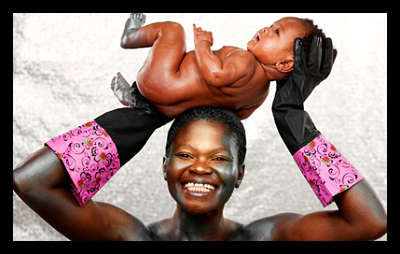
Many people argue that deaths resulting from poverty are an unfortunate solution to overpopulation. They assume that raising families out of poverty will only give them more resources to support ever more children. However, the evidence actually shows that birth rates decrease as people rise out of poverty. This is because parents are often forced by high child mortality rates to have several children to ensure that they will have someone to care for them as they age. When these families are no longer living in extreme poverty, they can be more confident that their children will survive, allowing them to have fewer children. According to the World Health Organization, both the actual death and the fear of death of a child results in higher fertility rates, regardless of a family’s size or income level.
Over the last two decades, reduced levels of extreme poverty in numerous countries, including Guatemala, Cambodia, and Namibia, has coincided with a decrease in average family size to about half. Since the 1960s, Latin American women’s fertility rates have decreased from about 6 to between 2 and 3. This has resulted from decreased child mortality rates, as well as improved maternal health and family planning education in many areas. USAID has been instrumental in helping many Latin American countries, such as the Dominican Republic, El Salvador, Honduras, and Nicaragua, start family planning programs. Most of these programs have become self-sustaining and are preparing for USAID’s gradual departure.
While poverty is an extremely reliable indicator and contributing cause of high birth rates, a society’s treatment of women must also be considered. In societies where women are disenfranchised, birth rates tend to be high and inflexible. This shouldn’t necessarily come as a surprise, given that in these societies girls are taken out of school at a young age, females are often victims of multiple forms of violence, and most women have minimal knowledge of or power to enact family planning strategies. Many women are essentially forced into prolonged motherhood, which can be incredibly damaging to their health, as well as their children’s. With improved family planning education around the world, the lives of 1.6 million children under five could be saved each year.
A woman’s education level is an excellent indicator of her fertility. Well-educated women are much more likely to have smaller families. It is important to note that the education of women does not necessarily cause lower fertility rates. Instead, education is just one aspect of improved social standing for women, and it is likely that this improved status leads to smaller families, not to mention improved women’s health in general.
It is essential to recognize that decreasing levels of extreme poverty will also help minimize the problem of overpopulation. When families no longer live in fear of unacceptable child mortality rates, they decrease their fertility levels. Part of this effort to decrease birth rates also includes family planning education for both men and women and improved societal standing for women.
– Katie Fullerton
Sources: USAID, USAID Blog, Population Institute, Global Issues
Photo: Hatter

95% Discount on HPV Vaccines for Girls in Poverty
HPV vaccines costing an average of $130 a dose in the United States will now be offered in poor countries for as low as $4.50 a dose, a monumental step made possible by the generous and focused work of the GAVI Alliance. These vaccines help prevent strains of human papillomavirus, or HPV, that cause almost 75% of cervical cancers.
According to GlaxoSmithKline and Merck, the two pharmaceutical companies offering these deeply slashed prices, more than 85% of cervical cancer deaths occur in the developing world. “We hope that this will help reduce the burden of cervical cancer and positively impact future generations,” said GSK President and General Manager Christophe Weber in a press release. GSK already supplies 80% of its total vaccine volume to developing countries.
The GAVI Alliance, formerly the Global Alliance for Vaccines and Immunization, was launched under a generous donation from the Bill & Melinda Gates Foundation in 1999; the Alliance works to partner charitable donations with private pharmaceutical companies by negotiating significantly lower vaccine costs for countries in need. This model has allowed over 370 million children to receive immunizations since GAVI’s founding.
In the next few months, GAVI will provide support to countries worldwide by carrying out demonstration programs that raise awareness among the vaccination target group — pre-adolescents — which will allow countries to incorporate the vaccine into their own immunization programs.
– Naomi Doraisamy
Sources: GAVI Alliance, Merck
Photo: Polifaso
Birth Rates Decrease As People Rise Out of Poverty
Many people argue that deaths resulting from poverty are an unfortunate solution to overpopulation. They assume that raising families out of poverty will only give them more resources to support ever more children. However, the evidence actually shows that birth rates decrease as people rise out of poverty. This is because parents are often forced by high child mortality rates to have several children to ensure that they will have someone to care for them as they age. When these families are no longer living in extreme poverty, they can be more confident that their children will survive, allowing them to have fewer children. According to the World Health Organization, both the actual death and the fear of death of a child results in higher fertility rates, regardless of a family’s size or income level.
Over the last two decades, reduced levels of extreme poverty in numerous countries, including Guatemala, Cambodia, and Namibia, has coincided with a decrease in average family size to about half. Since the 1960s, Latin American women’s fertility rates have decreased from about 6 to between 2 and 3. This has resulted from decreased child mortality rates, as well as improved maternal health and family planning education in many areas. USAID has been instrumental in helping many Latin American countries, such as the Dominican Republic, El Salvador, Honduras, and Nicaragua, start family planning programs. Most of these programs have become self-sustaining and are preparing for USAID’s gradual departure.
While poverty is an extremely reliable indicator and contributing cause of high birth rates, a society’s treatment of women must also be considered. In societies where women are disenfranchised, birth rates tend to be high and inflexible. This shouldn’t necessarily come as a surprise, given that in these societies girls are taken out of school at a young age, females are often victims of multiple forms of violence, and most women have minimal knowledge of or power to enact family planning strategies. Many women are essentially forced into prolonged motherhood, which can be incredibly damaging to their health, as well as their children’s. With improved family planning education around the world, the lives of 1.6 million children under five could be saved each year.
A woman’s education level is an excellent indicator of her fertility. Well-educated women are much more likely to have smaller families. It is important to note that the education of women does not necessarily cause lower fertility rates. Instead, education is just one aspect of improved social standing for women, and it is likely that this improved status leads to smaller families, not to mention improved women’s health in general.
It is essential to recognize that decreasing levels of extreme poverty will also help minimize the problem of overpopulation. When families no longer live in fear of unacceptable child mortality rates, they decrease their fertility levels. Part of this effort to decrease birth rates also includes family planning education for both men and women and improved societal standing for women.
– Katie Fullerton
Sources: USAID, USAID Blog, Population Institute, Global Issues
Photo: Hatter
6 Qualities of Social Entrepreneurs
The term “social entrepreneur” is used widely in both the business context and that of social volunteering, and for this reason it can be difficult to pin down a distinct definition of “social entrepreneurship.” Some entities like The Skoll Foundation aim to invest in social entrepreneurs, which they define as “society’s change agents: creators of innovations that disrupt the status quo and transform our world for the better.”
So what makes a social entrepreneur? Can it be taught? The Said Business School – an entrepreneurial business school launched in 2003 – clearly believes so. Even so, there are a few qualities that social entrepreneurs share, according to International Journal of Public Sector Management contributor John L. Thompson.
On the whole, social entrepreneurs operate very similarly to business entrepreneurs; they must be connected to a specific need, savvy with securing capital, be able to address challenges, and design a system that is able to sustain itself. What Thompson says is the difference, however, “is a strong commitment to help others in some way.”
– Naomi Doraisamy
Sources: The Skoll Foundation, International Journal of Public Sector Management, CNN, Buffalo.edu Forbes VisionSpring The HUB.net
Photo: Tree Hugger
Universal Health Care Can End Extreme Poverty
Universal health care in all countries could help bring an end to extreme poverty by 2030, says World Bank President Jim Yong Kim. He explains that “every country in the world can improve the performance of its health system in the three dimensions of universal coverage: access, quality and affordability.” Last month Kim set the goal of ending extreme global poverty around the world, which means that nobody will be living on $1.25 or less each day by the year 2030. He claims that universal health coverage is essential to be able to reach this goal because it is costly to receive medical care, and many of the poorest families cannot afford these costs.
Health issues are a major reason people are in extreme poverty, putting 100 million people into extreme poverty as well as creating severe financial stress for an additional 150 million people around the world each year. Kim states that to create a valuable and helpful system, those in the public sector should take tips from private sector companies to be more efficient and provide “value-for-money health care.” He further explains that to create the best universal health care in poor, developing countries, point-of-service and out-of-pocket costs must be eliminated, because they hinder people’s ability to obtain the services they need but cannot afford.
Kim knows that for the poorest people around the world, even what would seem like small costs to visit a doctor or receive a vaccine can be detrimental to a family’s financial stability, and could push some people back into poverty or extreme poverty. With universal health care, these individuals and families can receive these necessary health benefits without sacrificing other areas of life or worrying about being forced back into poverty.
– Katie Brockman
Source: Businessweek
Photo: World Health Coverage
Nike, NASA, USAID and Sustainability
Nike has partnered with NASA, USAID and the US Department of State to bring together specialists, designers, academics, manufacturers, entrepreneurs and NGOs to take action around a global challenge — sourcing and utilizing sustainable materials. A three-day LAUNCH 2020 Summit is planned for September 2013, highlighting the importance of innovation and collaboration in developing materials that will not have a negative impact on people and the planet.
It is estimated that around 150 billion garments were produced around the world in 2010, and by 2015 the global apparel industry is expected to produce more than 400 billion square meters of fabric every year. This massive industry has a tremendous effect on agriculture, natural resources, communities, and environmental damage due to toxins, waste and carbon emissions.
LAUNCH, started in 2010, seeks “innovations that will transform the system of fabrics to one that advances equitable global economic growth, drives human prosperity and replenishes the planet’s resources.” This is what sustainability is all about; finding business practices that are not detrimental, while also allowing for continued growth.
There is also a LAUNCH 2013 Challenge Statement, an open call for innovators to invent new systems of producing fabrics. In August, 2013, the 10 strongest ideas will be selected and participants will take part in an intensive program to provide them access to “capital, creativity and capacity.” Three years ago LAUNCH chose astronaut Ron Garan’s innovation on clean water. Garan developed a concept to deliver clean water, energy and sanitation to poor communities, through the combination of sustainable development and carbon credits. As part of the LAUNCH process, Garan met with experts and investors to bring his idea to life. His Carbon for Water project has now successfully distributed one million filters that provide clean water to 4.5 million people in Kenya.
Nike also recently joined 32 other multinational companies, including eBay, IKEA, L’Oréal and Limited Brands, in signing a “Climate Declaration” asking federal policymakers to take action on climate change. As part of the declaration, the companies also asserted that over coming climate challenge is also one of the biggest American economic opportunities of the 21st century.
– Mary Purcell
Source: Sustainable Brands, LAUNCH
Illinois Wesleyan University Addresses Human Rights
Each year Illinois Wesleyan University students have the option to participate in a May Term course, which is a one-month course intended to give students an opportunity to explore areas they normally couldn’t in traditional fall and spring semesters. Along with the classes, there are several other opportunities for students to get involved and learn more about a specific theme.
This year, the May Term theme is making human rights real. Through a series of activities, students can learn more about the topic. One such activity is a poverty simulation workshop, which gives students a genuine view of how those in poverty and extreme poverty live each day and also encourages action by discussing solutions to community problems.
Another activity promoted during this term is a “Mini Course on Community Action,” which is led by community leaders to teach students the basics of founding a successful community action campaign, including how to overcome obstacles and encourage others to participate and give back to society.
May Term also offers many volunteer opportunities to give students a better sense of giving back, including the Adopt A Meal program to prepare meals for a local homeless shelter, and Titan2Titan, a program designed to allow current IWU students to work with retired university alums for a day of service.
While May Term is often considered the “play term” by students at the university, it has potential to change lives and encourage a lifetime of service by allowing students to experience new activities related to human rights and giving back.
– Katie Brockman
Source: IWU
Ghana NGO Seeks to End Poverty through Education
The Campaign For Female Education (CAMFED), a non-governmental organization in Ghana that seeks to remedy the challenges that girls face in completing their education, is benefiting from a large grant from the United Kingdom’s Department for International Development. The project is called “Accountable Grants” and allocates several million dollars to young females in the country’s poorest districts.
The support would cover food rations for girls living in hostels, schooling expenses and fees, and textbooks. The Education Program Manager for CAMFED, Cyril Yabepone, has said that poverty remains a significant factor in the retention of young girls. This is especially true in the country’s northern region.
The £9.5million grant (an equivalent of almost 14.5 million USD) allows for CAMFED to expand to a total of thirty districts across the country and provide support for 20,000 girls who previously risked losing their education due to their family’s inability to pay. It would also provide training for the teachers of the affected girls, and provide them (the grant beneficiaries) with mentoring to ensure their success.
The country’s leaders, in order to ensure the success of the program as a whole, are calling on parents, teachers, administrators, and tribal leaders to support it. As one government official summarizes, “education is the panacea for development.”
– Samantha Mauney
Source: Ghana Business News
Photo: The Peace Blog
What is Microenterprise?
What is microenterprise? Microenterprise is the mom and pop shop on the corner. It is the lemon-aid stand on the side-walk. It is the vegetable stand in the local market. Microenterprises are entrepreneurs working towards a livelihood with a small number of products and often limited access to financial security and support.
USAID uses financing of microenterprises as an anti-poverty program. Economic growth on its own is not enough. Poor people in developing countries often do not share in the wealth creation. The distribution of income from economic growth through empowering poor people to participate is a crucial and fundamental challenge undertaken by USAID.
An additional challenge, particularly for women in developing countries, is finding a safe place to keep their savings. Without a reservoir of savings, obtaining credit and making investments in their business is next to impossible. The savings they do accumulate are often drained when natural disasters and social/cultural events occur. Their lack of access to insurance means they spend their available money on purchasing life saving medicine for an ailing relative or purchasing new seeds when drought kills a crop.
The USAID provides financial services to many of those lacking access through their national and private institutions. These services include savings and credit. These two basic financial tools allow entrepreneurs to invest in technology, connect to professional networks and most importantly, get their products to market.
The USAID microfinance programs have three goals:
1. “Improve the quality and affordability of financial services.
2. “Extend access to excluded populations such as women, the disabled, and those living in remote areas
3. “Assist smallholder farmers and small business entrepreneurs in selling their products by linking them with buyers and suppliers of good and services.”
The approach USAID and partners use is called the Value Chain Approach. The VCA views each business as a unique cog in the intricate clockwork of the global marketplace. To assess the potential of projects VCA focuses on influencing “structures, systems and relationships that define the value chain.” Manipulating these factors increases competitiveness by improving/upgrading processes and products. The scope of industry analysis and inputs to intervention design yield a unique perspective that has led to great success.
• “A market system perspective
• “A focus on end markets
• “Understanding the role of value chain governance
• “Recognition of the importance of relationships
• “Facilitating changes in firm behavior
• “Transforming relationships
• “Targeting leverage points
• “Empowering the private sector”
By working to fulfill these goals, USAID and entrepreneurs make higher quality products and increase the visible to consumers. In the experience of USAID, when micro financing options are offered alongside education, health and energy services, household earnings are increased allowing people to “graduate themselves out of poverty.”
– Katherine Zobre
Sources: USAID , Microlinks
Photo: USAID
Meet One Doctor Healing the Blind
As a young child, Dr. Aisha Simjee contracted Trachoma, an eye disease that can lead to blindness if not treated. Dr. Simjee grew up in Burma and as a 7 year-old was being prepared for a life as a housewife when she contracted the disease. She was cured by a folk remedy that consisted of having a local women squirt breast milk into her eye. The experience led Dr. Simjee to a life mission-healing the blind. Her fascination with eye health led her to immigrate to the US and study to be an ophthalmologist in Orange Country, CA.
Now in her sixties with two grown children, Dr. Simjee has written a book reflecting on her life experience. The experiences of a youth growing up in Burma impacted her and motivated her to do more than simply be a good doctor. She wanted to prevent blindness and eye disease in the world’s poor. Her book, “Hope in Sight: One Doctor’s Quest to Restore Eyesight and Dignity to the World’s Poor” tells of her journey and includes decades of personal journals and accounts from friends, families, and colleagues. She wrote the book to motivate others to give back and encourage other young ophthalmologists to help others.
The World Health Organization reports that over three-quarters of all blindness worldwide can be prevented or treated. Around 285 million people are visually impaired due to various treatable causes and about 90% of the world’s visually impaired people live in developing nations where there are little or no welfare services. Dr. Simjee has seen firsthand how eyesight can be a matter of survival. She has served on more than 25 medical missions, often putting her private practice on hold and paying her own expenses. Her trips have spanned Asia, South America, Eastern Europe, and Africa. The 69-year-old persists in taking the trips and she often serves in rural areas. Her mission is not to travel to well-equipped capital cities, but to the villages miles and miles away from modern civilization.
She has worked with children suffering from wounds from knives, people who have walked miles to see her, prison inmates, and indigenous Indians. Her goal is eyesight and helping people regardless of status. Her book focuses on hard facts and short anecdotes about her travels and the experiences she has had. Dr. Simjee wants to motivate others to give their time and money to help others. Dr. Simjee is a wonderful example of someone using their talents to serve the world’s under-resourced. Check out her book from White Spruce Press.
– Amanda Kloeppel
Source: Ophthalmology Times
Photo: Twitter
6 Ways To Help Disaster Victims
The massive tornado in Oklahoma devastated thousands, and many people around the country wanted to do what they could to help disaster victims. But, unfortunately, the days after a major disaster or crisis are when the scam organizations arise, trying to lure innocent do-gooders into donating to their fake charity. Here are six ways to make sure you are doing the best for those you are trying to help.
1. Look up the charity on one of these sites (Wise Giving Alliance, Charity Navigator, Guidestar or Charity Watch) and see what experts think about it. This way you can be certain that the organization you choose is reputable and honest about the donations they receive.
2. Find a charity that has done this a few times. Small, local charities may mean well, but they may not have the best resources to get your donation to the people who need it as efficiently as a larger organization that has faced major disasters before.
3. Designate where you want your donation to go. If you want your money to help rebuild homes, provide food, or buy clothing, specify when you send it to the organization.
4. Send money, not supplies. Although it may seem more helpful to send food, clothes, or toys to disaster victims, it just makes it harder for the charity to sort out and distribute the items. If you have items that you need to get rid of anyway, try selling them and donating the money instead.
5. Avoid donating to people who send mail or emails claiming to be disaster victims. Unless you know them personally, don’t trust them. It’s much safer to simply donate to a reputable charity.
6. If you choose to donate online, do it through the charity’s website, not social media. After Hurricane Katrina, the FBI reported more than 2,400 fake websites that tried to scam money from well-meaning donors. Your best bet is to donate directly through the organization’s website, which is much more trustworthy.
– Katie Brockman
Source: Forbes