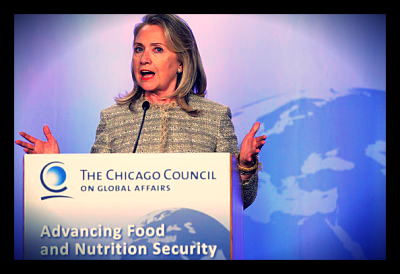
The Chicago Council on Global Affairs was founded in 1922. It is an independent, non-partisan organization charged with influencing discourse on global issues. The organization employs opinion and policy formation, leadership dialogue, and public learning to influence discourse. The organization hosts public programs and private events featuring world leaders and experts. They implement task forces, conferences, and other methods to broadcast their ideas and opinions on a global scale. Individual and corporate members who pay a yearly fee support the council.
The council’s history showcases their importance and focus. The founders believed that World War I had changed foreign affairs, and thus, our policies and methods ought to be reevaluated. In the late twenties and thirties, the council was one of the premier sources for international news and analysis drawing speakers such as John Maynard Keynes and President Herbert Hoover. During the forties and fifties, the Chicago Council on Global Affairs made an effort to attract younger participants as well as to expand programs to the suburbs. Speakers in this period included Eleanor Roosevelt, and then U.S. Senator John F. Kennedy.
During the sixties and seventies the council’s focus changed slightly as they began to focus on world hunger and relations of countries in the Atlantic. They launched biennial conferences with foreign policy experts from around the world. They also began publishing results for its Public Opinion Survey on Foreign Policy Issues. Speakers included President Gerald Ford, Secretary of State Henry Kissinger and UN Secretaries General U Thant and Kurt Waldheim among others.
In the eighties and nineties, the council shifted towards European development, economics and integration as well as human rights. Speakers included Egyptian President Hosni Mubarak, former Soviet President Mikhail Gorbachev and others.
Today, the council has shifted its focus towards globalism. They are eager to help in the fields of public education, the global economy, democratization, sovereignty, intervention, global institutions and a changing America. Additionally, they have begun focusing on Asia, Africa and Latin America- regions that were previously less discussed. Recent speakers have included Secretary of State Condoleezza Rice and former UK Prime Minister Tony Blair.
The Council holds Chicago and World forums where experts present their perspectives on various themes. The council also sponsors corporate programs and emerging leadership programs among others. Their publications and studies include food security as well as a public opinion study of illegal immigration flows among others.
The Council has defined a list of several topics of interest. These include agriculture and development, economics and business, energy, environment and climate, international politics and policy, foreign policy and national security, and values, diversity and pluralism. These topics guide the council’s discourse. The Chicago Council on Global Affairs has an important and rich history. They exist as an important non-partisan organization to provide valuable information and opinions on global affairs. For more information about their programs, studies and events visit them here.
– Caitlin Zusy
Source: The Chicago Council on Global Affairs
Photo: Opportunity.org

Middle School Students Fight Global Hunger
Middle school can be an unforgiving time for young people, but one group of students at St. Francis Episcopal Day School in Texas are using their middle school years to fight global hunger. Under the direction of faculty Debbie Harris, the St. Francis Wolves Against Hunger are making a global difference. The group consists of 7 eighth grade students. They participated in the World Hunger Leadership Challenge, an initiative founded by Lead2Feed with the purpose of promoting leadership among middle school students in the fight against world hunger. It is important to develop future leaders and foster a spirit of giving back to the community especially during the tough middle school years.
The St. Francis Episcopal Day School was awarded a $25,000 check from the Yum! Brand Foundation for the work the Wolves Against Hunger did in the World Hunger Leadership Challenge. More than 300,000 students participated from over 1,500 schools and the Yum! Foundation provided close to $250,000 in prize money grants to 140 schools. The grants will support US public charities engaged in hunger relief. The recognition ceremony was shared with another student group located in Utaar Pradesh, India. The students from St. Francis have been in close contact with the students from K.L. International (KLI) in Utaar Pradesh over the last two semesters. The St. Francis students packed 5,100 sack lunches, collected more than 6,500 cans of food, and packed boxes at a local food back. The KLI students volunteered time at a local orphanage run by Mother Teresa Missionaries of Charity as well as created Project 365 in which at least one hungry person is fed every day of the year.
Harris had heard about the World Hunger Leadership Challenge and entered her students in the hopes of gaining them some recognition for all their hard work. She noted the students participated in events on the weekends in addition to school activities. The program began when Harris organized a campaign for World Water Day in 2012 and came in contact with Jasdeep Lamba, whose father-in-law runs KLI School. They worked together to get a Skype discussion scheduled between the students and faculty of the two schools. The next school year, they arranged for six Skype forums to be held. The forums gave the US students a greater appreciation for hunger and poverty as well as motivated both groups of students to get more involved in their respective communities.
The award money won by St. Francis will be donated to Kids’ Meals Houston, a charity working to feed children under 5. The work done by the KLI students will benefit The Earth Saviours Foundation, a local charity in New Delhi, India.
– Amanda Kloeppel
Source: Indo American News
Mobile Technology for Women is a Global Development Must
Closing the gender gap is high on the priorities of those working in global development and one way to accomplish this is through increasing the availability of mobile technology to women according to Patricia Mechael, Executive Director of mHealthAlliance. In her years working in global health and development, she saw first hand the realities of poverty and gender inequality. The social status of women has a negative effect on their health and ability to care for their families. Problems such as maternal mortality and unintended pregnancies are often the result of poor maternal health care and poor gender representation in countries.
Mobile technology is working to reduce the gender gap and provide women around the globe a chance at a healthy life. Women who would force abortions to save themselves from another mouth to feed now have access to vital family planning information and commodities through the increase of mobile technology. While less than a decade ago, the mobile penetration rate was in the single digits among low-income nations, today reports indicate it stands at 89%. The digital divide is shrinking between low and high-income nations, but women are still 21% less likely to own a mobile device compared to men. Millennium Development Goal #3 is to promote gender equality and empower women and providing them with mobile technology is a way to get closer to accomplishing that goal.
Beyond meeting MDG3, mobile technology is key in accomplishing MDG5, improving maternal health. The mHealth Alliance and the World Health Organization have worked to bring about mobile technology to improve maternal health. These projects use a variety of mobile technologies to provide everything from information about vaccines to improving access to essential medicine through reducing depletion of stock.
The advances in mobile technology have come a long way and will continue to be essential to promoting global development and accomplishing the MDGs. In addition, Mechael is working with her company to come up with ways to further include women in the development and discussion of mobile technology and applications to serve and assist them.
– Amanda Kloeppel
Source: Forbes
Photo: WAHA
How to Help the World’s Poor
Global poverty is an international issue, and because of its scope helping the poor can often seem like an insurmountable problem. However, if everyone one person devoted to the cause could take 5 or 10 minutes to make an effort and get involved, the solution to poverty wouldn’t seem so out of reach. Here are some simple ways to make a difference:
1. Call or Write Congress
The power of free speech is often underestimated; when in reality congressional leaders often support poverty-reduction legislation when as few as 7 to 10 people in their district contact them in support of it. Calling your leaders each week only takes up to a minute out of your schedule – all you need to say is that you are calling to support funding for USAID or poverty-focused aid. Simple as that!
2. Donate to the Cause
There are many ways to donate either time or money – instead of birthday or graduation presents, ask for donations. Set up a fundraiser with your local bakery. Volunteer and donate your time to aid organizations. The options are endless.
3. Spread the Word
In order to solve a global problem, it is important to have a global presence. Whether through flier posting, blogging, or word of mouth, make sure to educate those around you to the trials of those in poverty and the simplicity of the solution. Encourage others to call their congressional leaders in order to have the most impact on foreign aid legislation. It’s as easy as posting a link with the information to your social media accounts.
Being an active member of the movement to eradicate poverty is incredibly important; and the more people that get interested and involved, the faster the government will take note and put more poverty-focused aid into legislation. It’s quick and simple, so why not take a minute to call right now?
-Sarah Rybak
Source: The Borgen Project
Photo: The Ambrose School
The Chicago Council on Global Affairs
The Chicago Council on Global Affairs was founded in 1922. It is an independent, non-partisan organization charged with influencing discourse on global issues. The organization employs opinion and policy formation, leadership dialogue, and public learning to influence discourse. The organization hosts public programs and private events featuring world leaders and experts. They implement task forces, conferences, and other methods to broadcast their ideas and opinions on a global scale. Individual and corporate members who pay a yearly fee support the council.
The council’s history showcases their importance and focus. The founders believed that World War I had changed foreign affairs, and thus, our policies and methods ought to be reevaluated. In the late twenties and thirties, the council was one of the premier sources for international news and analysis drawing speakers such as John Maynard Keynes and President Herbert Hoover. During the forties and fifties, the Chicago Council on Global Affairs made an effort to attract younger participants as well as to expand programs to the suburbs. Speakers in this period included Eleanor Roosevelt, and then U.S. Senator John F. Kennedy.
During the sixties and seventies the council’s focus changed slightly as they began to focus on world hunger and relations of countries in the Atlantic. They launched biennial conferences with foreign policy experts from around the world. They also began publishing results for its Public Opinion Survey on Foreign Policy Issues. Speakers included President Gerald Ford, Secretary of State Henry Kissinger and UN Secretaries General U Thant and Kurt Waldheim among others.
In the eighties and nineties, the council shifted towards European development, economics and integration as well as human rights. Speakers included Egyptian President Hosni Mubarak, former Soviet President Mikhail Gorbachev and others.
Today, the council has shifted its focus towards globalism. They are eager to help in the fields of public education, the global economy, democratization, sovereignty, intervention, global institutions and a changing America. Additionally, they have begun focusing on Asia, Africa and Latin America- regions that were previously less discussed. Recent speakers have included Secretary of State Condoleezza Rice and former UK Prime Minister Tony Blair.
The Council holds Chicago and World forums where experts present their perspectives on various themes. The council also sponsors corporate programs and emerging leadership programs among others. Their publications and studies include food security as well as a public opinion study of illegal immigration flows among others.
The Council has defined a list of several topics of interest. These include agriculture and development, economics and business, energy, environment and climate, international politics and policy, foreign policy and national security, and values, diversity and pluralism. These topics guide the council’s discourse. The Chicago Council on Global Affairs has an important and rich history. They exist as an important non-partisan organization to provide valuable information and opinions on global affairs. For more information about their programs, studies and events visit them here.
– Caitlin Zusy
Source: The Chicago Council on Global Affairs
Photo: Opportunity.org
UK to Protect 360 Million Children from Polio
The British Aid office has announced that it will step up their current efforts to vaccinate more children against polio in developing countries. The office has promised to vaccinate up to 360 million children against polio in the next six years.
The British Aid office will work to eradicate polio in the three countries where it still remains prevalent: Afghanistan, Pakistan, and Nigeria. International Development Secretary Justine Greening was adamant that the UK would not stand on the sidelines while easily prevented diseases, including polio, still exist. She believes that our generation has the ability and responsibility to make polio a thing of the past.
The UK announcement came in the weeks leading up to the Global Vaccine Summit in Abu Dhabi. The Summit was attended by the UK’s International Development Minister Alan Duncan, who pledged the UK’s support of 300 million pounds over six years. The conference highlighted the importance of routine immunization in achieving global child health and development goals. British Aid is attempting to make a final push in this opportunity to eliminate the disease. They would like to see additional donors join them in their fight to form a healthier population to lead to increased economic development.
The British announcement was followed by another from Bill Gates, the co-chair of the Bill & Melinda Gates Foundation, who committed six years of support from his organization to the implementation of the Global Polio Eradication Initiative’s plan to achieve a polio-free world by 2018. The U.K has already helped over 200 million children receive vaccinations since 2009. They believe, however, that there is more work to be done and that polio vaccinations must be included in health programs and routine immunizations in order to improve the general health of developing nations.
-Caitlin Zusy
Source: Gov.uk
Photo: Guardian
What is DFID?
DFID is the Department for International Development. Set up in 1997, DFID leads the UK government’s fight against world poverty. They are responsible for the implementation of long-term programs to help stop the underlying causes of poverty and to respond to humanitarian emergencies.
DFID is a ministerial department that is supported by the Commonwealth Scholarship Commission in the UK and the Independent Commission for Aid Impact. The department is responsible for honoring the UK’s international commitments and taking action on the Millennium Development Goals. These include: targeting international development policy on economic growth and wealth creation, improving international development coherence and performance in fragile and conflict-affected countries, improving conditions for women and girls, including, education, family planning and violence prevention, and finally, working to prevent climate change.
DFID has prioritized several goals to create the most effective aid organization possible. These priorities include education, health, economic growth and the private sector, governance and conflict, climate and the environment, and water and sanitation. Many of their goals within the individual categories closely align with those outlined in the United Nation’s Millennium Development Goals. DFID is a state-funded department, which accepts applications for various aid programs.
DFID works in 29 countries across Asia, Africa and the Middle East. They are working with international organizations and the governments of poorer countries to help end poverty. They are taking action to mitigate climate change, help developing countries’ economies grow and countering weapons. They expel a great deal of energy working to create stability in the developing world as well as fight corruption, forcing countries to become more transparent and accountable. DFID also understands that children in developing countries need improved access to education, health services, and sanitation, and they are implementing programs in many countries to improve these standards.
DFID is headed by three ministers. Justine Greening serves as the Secretary of State for International Development, Alan Duncan serves as the Minister of State for International Development and Lynne Featherstone serves as the Parliamentary Under Secretary of State for International Development.
-Caitlin Zusy
Source: Gov.uk
What is Uniject?
Uniject is a revolutionary new injection method. The idea behind Uniject is that it would be so simple to use, that even untrained health workers would be able to safely and effectively give injections. This idea would allow for prepackaged, low-cost syringes. Not only would Uniject provide a safer and more cost efficient method of administering vaccines, it would also cut down drastically on the amount of wasted vaccines. The new syringes would not be able to be reused, also eliminating the chance of HIV transmission.
Uniject is an autodisable injection system created by PATH in Seattle. It is essentially a small bubble of plastic connected to a needle that contains whatever vaccine is desired. Health workers would be able to learn how to use this within two hours of training. The plastic bubble contains exactly one injection of vaccine, ensuring the correct dosage every single time.
PATH developed Uniject through funding from the US Agency for International Development. The idea has since been licensed to BD, which is the largest producer of syringes in the world. As part of this agreement, the technology must be given to pharmaceutical producers at preferential pricing for use in developing country programs. The development of Uniject has taken twenty years.
While Uniject was developed with the idea of providing low-cost effective syringes for use of vaccinations in developing countries, it also has the potential to help reduce poverty in other ways. Uniject could, down the road, also be used for other life saving drugs, as well as a potential contraception delivery method. The use of Uniject to deliver contraception could have an immense effect on the developing world and provide an extraordinarily important outlet for female empowerment and family planning in the developing world.
-Caitlin Zusy
Source:
Jordanian Law Students Receive Human Rights Coursework
Jordanian law students will get human rights coursework thanks to the American Bar Association and USAID. The Human Rights Curriculum for Jordanian law students was launched on May 15th to Jordanian law faculties. This curriculum hopes to bring innovative, multimedia approaches to the law classrooms of Jordan and improve the quality of students’ legal education. Students have been dissatisfied with their education as it has failed to keep up with evolving technologies, and this program is one solution to the complaints.
The launch brought 19 human rights law professors together as well as several other faculty members to experience and use the curriculum. Demonstrations were done as well as hands-on simulations. The curriculum was created as part of the American Bar Association’s program “Enhancing Protection and Promotion of Human Rights in Jordan.” The program was designed by Jordanian and international professors and human rights experts to provide a complete picture of Jordanian law and human rights principles.
The coursework is designed to be interactive and deviates from the lecture model found in most legal classrooms. The material is conveyed through role play, case analysis, and video segments. Each section includes history and theory regarding different aspects of human rights law. The workshop done at the launch gave professors a glimpse into the curriculum. It gave professors the ability to learn how to implement the program and various outlets for additional resources and help.
The hope is that Jordanian law students will gain greater knowledge and skills through the more hands-on program and have a greater ability to apply the principles to real life law cases. It will also give them a greater appreciation of the depth of human rights law and the many areas in which it applies.
-Amanda Kloeppel
Source: AME Info
The 21st Century Global Health Technology Act
The Global Health Technology Act amends the Health Technologies Program of the Foreign Assistance Act of 1961 under which the US Agency for International Development supports the development of technologies for global health and other purposes. The bill entered the house committee on Foreign Affairs on April 11, 2013 and was introduced by Congressmen Diaz-Balart of Florida.
The bill describes the importance of research and development in global health and explains how research and development on global health technology help break the cycle of dependency by creating sustainable solutions to long-term problems. The bill describes the progress and advances investments in global health have created. It details that funding global health technology today will save the United States a great deal of money in the long run, as well as how overall, the bill and global health technology can greatly benefit the US in terms of an inflated economy and increased national security.
The purpose of the act is to acknowledge USAID’s role in product development, introduction and up-scale of new global health tools and to authorize USAID’s Health Technologies program to improve global health, reduce maternal, newborn and child mortality rates, lower the incidence of HIV/AIDS, malaria, tuberculosis, and other infectious diseases, overcome technical, supply and policy hurdles to product introduction and scale-up, and to support research and development.
The creators of the bill would like to see the introduction of a new Health Technologies Program, which would function as a part of USAID. The program would be aimed at developing, advancing and introducing affordable, available, and appropriate late-stage technologies to the problems listed in the previous paragraph. Additionally, the bill codifies an agreement with USAID for support of the development of technologies for global health.
The act calls for Action Plans to incorporate global health research and development programs with support from coordinating agencies that establish metrics to measure progress. It also calls for Priority Global Health Interventions in order to accelerate the innovation and impact of USAID. The Global Health and Technology Act charges USAID to submit an annual report summarizing yearly research and development activities as well as submit to annual consultation with heads of other Federal agencies to improve alignment of USAID’s health-related research strategy with similar agencies.
-Caitlin Zusy
Source: GovTrack
Photo: Global Health Technologies Coalition
USAID and Qualcomm Expand Relationship
USAID and Qualcomm announced a formal agreement to work to expand global technology and increase collaborative efforts in development. Qualcomm, a San-Diego based telecommunications company, has been working with USAID in recent years to improve access to technology in developing countries. The formal agreement will give Qualcomm’s Wireless Reach Division the ability to carry out projects.
Those that have already benefited from USAID and Qualcomm’s projects are fishermen in Brazil, police officers in El Salvador, and health workers in the Philippines. In Brazil, the joint project provided small-scale fisherman with mobile devices and applications to connect with buyers, track sales, and get weather updates. Qualcomm was able to equip police in high-crime neighborhoods in El Salvador with smart phones that allowed them to connect to a database to work to reduce crime. Collaboration in the Philippines helped rural health clinics establish electronic records.
USAID commended Qualcomm for being an innovative, nimble, and strategic global technology leader. USAID and Qualcomm share a vision of how to address the challenges in the developing world. Among the current goals of the formal agreement are to close the mobile phone gender gap, expand access to broadband, reduce the negative effects of climate change, and connect small farmers to market data. Projects in Africa and Asia are the top priority and future consideration will be given to other areas including Latin America.
The future of technology in developing nations is changing quickly and this is just more step in the right direction.
– Amanda Kloeppel
Source: UT San Diego
Photo: CIAT News