• Link to X
  • Link to Facebook
  • Link to Instagram
  • Link to TikTok
  • Link to Youtube
  • About
    • About Us
      • President
      • Board of Directors
      • Board of Advisors
      • Financials
      • Our Methodology
      • Success Tracker
      • Contact
  • Act Now
    • 30 Ways to Help
      • Email Congress
      • Call Congress
      • Volunteer
      • Courses & Certificates
      • Be a Donor
    • Internships
      • In-Office Internships
      • Remote Internships
    • Legislation
      • Politics 101
  • The Blog
  • The Podcast
  • Magazine
  • Donate
  • Click to open the search input field Click to open the search input field Search
  • Menu Menu

Archive for category: Food Aid

Information and news about food aid

Food Aid, Food Security, Global Poverty, Poverty Reduction

Food Aid Theft Solutions

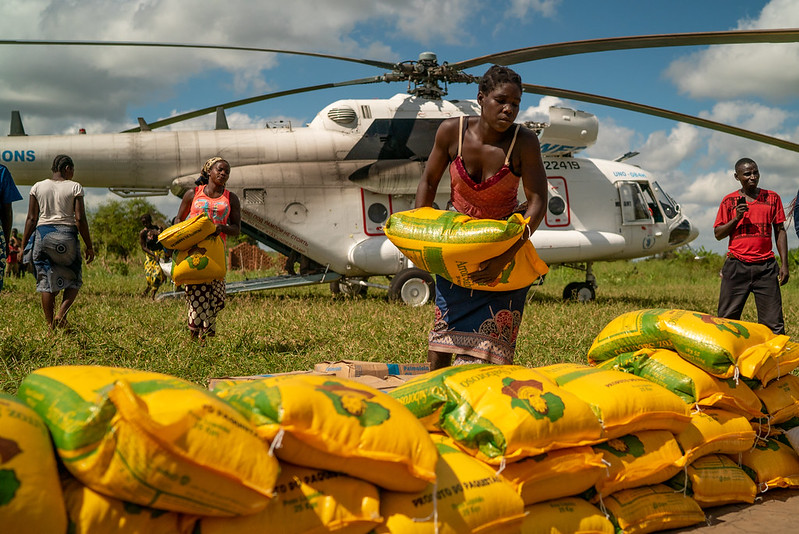
Food Aid Theft SolutionsFood aid theft is an issue with significant implications. It directly affects people in need who do not receive essential goods during critical times, worsening economic conditions and food insecurity. It also undermines trust among humanitarian organizations and can affect their funding levels. Repeated diversion of aid has been shown to lead to suspension of support, as seen in 2019 in Yemen. At that time, in the Yemeni capital, at least 10% of the World Food Programme’s (WFP) deliveries were diverted from people in need.

In some cases, this renders food aid less effective. For instance, in Yemen, despite increased levels of support in 2019, hunger persisted and even increased in some areas. However, innovative grassroots, structural or community-based initiatives have shown potential to reduce the problem in deeply affected places such as Somalia, Ethiopia and Yemen.

Grassroots Initiatives

Action Against Hunger launched a grassroots campaign in Somalia by establishing community call centers to improve aid reporting measures. The approach helps track aid deliveries in areas affected by limited resources and conflict. Addressing these issues is essential because Action Against Hunger reports that limited road access and control of territory by non-state actors significantly contribute to aid diversion.

The organization hired and trained local volunteers in tracking and reporting aid deliveries. The team handles complaints and verification and also manages real-time crises. In 2023, the call center was alerted by community members about a cholera outbreak, allowing the organization to intervene immediately. In two years of operation, the call center has answered more than 30,000 calls regarding aid delivery verification, feedback on aid received and requests for emergency assistance. The calls are prepaid, meaning even people in remote regions can contact the center.

Structural Changes

A growing approach among humanitarian organizations is shifting from in-kind aid to direct financial assistance. According to the WFP, sending money is empowering because cash is often the most important asset during a disaster or crisis. It provides flexibility, allowing recipients to use it for food, medical bills, rent or school fees based on their needs. This has become an increasingly common practice. In 2023, the WFP sent about $2.8 billion to countries including Yemen, Somalia and Afghanistan, directly supporting 51.6 million people.

The Poverty Action Lab, a research center founded by Massachusetts Institute of Technology professors, evaluated cash assistance positively. The organization reported that in Niger, financial support helped families eat more frequently. Delivery costs are relatively low, making this solution cost-effective. Their findings suggest that cash can improve economic conditions and have positive effects on mental well-being. For example, Afghan women who received cash transfers reported feeling happier and more confident about their economic situation. While the Poverty Action Lab notes the need for more research, it concludes that cash has a tangible, positive impact on food security. Provided an area has functioning markets, the organization suggests this type of assistance can support long-term stability by helping families build more secure futures.

Community Approaches

Community-based strategies are another of the solutions addressing food aid theft. Humanitarian organizations engage local residents in various ways, including empowerment projects in Ethiopia’s Tigray region and feedback desks in Sudan.

Omna Tigray, a nonprofit in Ethiopia, addresses food aid theft by involving residents in planning, implementing and monitoring food aid programs. The organization states that local engagement cultivates responsibility among community members. According to Omna Tigray, empowering residents helps identify and report aid diversion and strengthens relationships between donors and beneficiaries, which can be strained by theft. Community engagement is particularly important in a region where 5.4 million residents depend on aid deliveries.

Similar approaches have been implemented elsewhere, including feedback desks in refugee camps in Sudan established by World Vision. A committee of camp residents and World Vision staff selects and trains local volunteers who assist with reports and inquiries from camp residents. These desks help quickly address distribution issues and are recognized positively by locals. During a discussion session with World Vision staff, an anonymous female refugee said the “community help desk system is the best for food distribution.”

Looking Ahead

These various food aid theft solutions demonstrate multiple ways to address the issue. Ranging from grassroots initiatives to structural and community-based approaches, they show potential for reducing the problem. These measures have contributed to more equitable aid distribution in some areas. Furthermore, they have been positively received by local communities and researchers focused on food aid programs.

– Karol Hejduk

Karol is based in London, UK and focuses on Good News and Politics for The Borgen Project.

Photo: Flickr
November 25, 2025
https://borgenproject.org/wp-content/uploads/borgen-project-logo.svg 0 0 Precious Sheidu https://borgenproject.org/wp-content/uploads/borgen-project-logo.svg Precious Sheidu2025-11-25 01:30:042025-11-25 00:32:54Food Aid Theft Solutions
Food Aid, Food Insecurity, Global Poverty, Hunger

Addressing Food Insecurity in Honduras: The CELAC 2030 Plan

Addressing Food Insecurity in Honduras Under the CELAC 2030 Plan The Community of Latin American and Caribbean States (CELAC) launched the Plan for Food Security, Nutrition and the Eradication of Hunger 2030 in 2024. With 33 countries participating, the project aims to tackle food insecurity and reinforce commitment to ending hunger.

As 43 million people—approximately 7% of the population—are still malnourished in the Latin American and Caribbean (LAC) region, CELAC emphasizes the right to food as a priority. Accordingly, the CELAC 2030 plan encourages governments to implement national policies that legally recognize the right to food as a human right. The plan is to further drive policies that allow sustainable food growth, access to adequate nutrition and support for local family farming. 

In March 2025, 26 countries met in Honduras to assess progress on the CELAC 2030 plan and launch the Food Security and Nutrition Platform to strengthen commitment. With the support of the FAO, World Food Programme and Inter-American Development Bank (IDB), the platform is expected to hold states accountable more effectively. With these continuous efforts, food insecurity has decreased over the past two years despite challenges from extreme weather. In line with this global movement and the CELAC 2023 plan framework, Honduras, one of the poorest countries on the continent, has also taken notable steps.

Efforts to Combat Food Insecurity in Honduras

With the national poverty rate at 64% and more than half of the population living in extreme poverty, 1.5 million people in Honduras suffer from food insecurity. Frequent climate shocks such as drought, flood and hurricane have also contributed to Honduras experiencing the highest increase in food insecurity in the LAC region over the past decade.

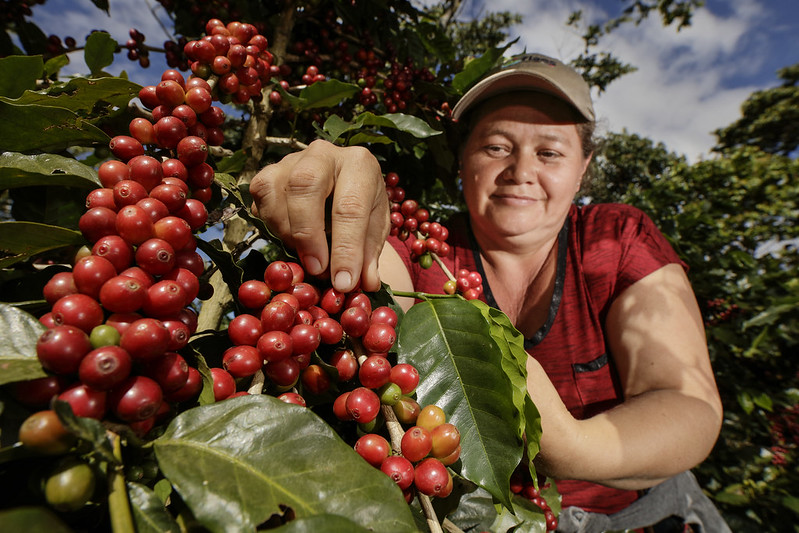
Another contributing factor is the structure of the agricultural sector. Only a small number of large-scale farmers grow competitive crops that dominate exports, while most farms are small-scale, producing primarily for personal consumption. As an example, 95% of coffee farms in Honduras practise family farming, with many struggling to access broader markets to earn sustainable incomes. In response, the Honduran Minister of Agriculture held the first CELAC coffee summit in 2024. This helped small-scale farmers gain access to bigger markets as it improved the local economy and expanded market opportunities. Honduras has also invested in agricultural research and technology to increase productivity and encourage sustainable farming.

Supporting Organizations

The World Food Programme (WFP) has supported these efforts by training smallholder farmers on how to access bigger markets and promoting local and sustainable food businesses. Additionally, it has assisted in disaster risk management, providing resources to prevent and respond to extreme weather. According to the WFP’s latest annual report, this support has directly benefited 1.4 million people and an additional 2.2 million people indirectly.

The Parliamentary Front Against Hunger has also played a role in addressing food insecurity. It has been involved in meetings regarding the CELAC 2030 plan, where it promoted stronger legislation and monitoring mechanisms and ways to improve resource allocation. Specifically in Honduras, its regional Parliamentary Front Against Hunger has supported various legislation to legally recognize and protect the right to food.

Looking Ahead

The CELAC 2030 Plan has set a clear roadmap to combat hunger and improve nutrition across the LAC region. This framework has also helped address food insecurity in Honduras through efforts such as supporting smallholder farmers, improving responses to climate-related challenges and introducing right-to-food legislation. While challenges remain, coordinated regional efforts like CELAC and the ongoing efforts of the Honduran government can potentially drive progress toward a more food-secure future.

– Lucy Cho

Lucy is based in Edinburgh, UK and focuses on Good News and Politics for The Borgen Project.

Photo: Unsplash

July 29, 2025
https://borgenproject.org/wp-content/uploads/borgen-project-logo.svg 0 0 Precious Sheidu https://borgenproject.org/wp-content/uploads/borgen-project-logo.svg Precious Sheidu2025-07-29 01:30:422025-07-28 17:00:51Addressing Food Insecurity in Honduras: The CELAC 2030 Plan
Food Aid, Global Poverty, Women & Children

5 Charities Operating in Kashmir

Charities Operating in Kashmir
Kashmir often dubbed as ‘heaven on earth’ is a region that is equally beautiful as it is troubled. It has suffered a long history of geopolitical strife, changing weather patterns and natural disasters and the yet unsolvable question of its autonomy still lingers on most lips. The breathtaking landscape is split into areas that India administers on one side of the border and Pakistan on the other, with China also holding stake. Life in Kashmir is not without daily challenges and human rights violations in the region are frequent. The average person struggles to feed his family and children, unemployment rate is high and curfews and martial law is common. 

For a region witnessing many upheavals, it is the work of charitable organizations that bring relief and aid in times of great hardship. There are many charities operating in Kashmir that are doing tremendous work to combat the daily struggles faced by the Kashmiri people and to help alleviate some of the difficulties that are widespread in the land. Here are five charities operating in Kashmir.

Unite 4 Humanity

This charity operates on both sides of the border working hard to bring relief to as many parts of the divided region. It recognizes that 27% of the Kashmiri population is living under the poverty line and the rural areas are the ones most affected with the figure rising to 54%. Unite 4 Humanity has implemented many initiatives since 2012. The Borgen Project reached out to the organization which elaborated on its work citing that it has helped many communities in Kashmir. It mentioned that it has sent food packages to 1,454 families, and provided hot meals to 23,700 people and winter packages for 230 children. It is making sure donations reach the most disadvantaged of the population (orphans, widows and disabled).

Helping Hand for Relief and Development

Helping Hand for Relief and Development (HHRD) is another organization operating on either side of the line of control (LOC). It works in tandem with humanitarian teams on the ground in Jammu Kashmir and Azad Kashmir to ensure that the lives of the most vulnerable have protection. It has many different programs such as its seasonal Winter Relief which has been delivered to 336 beneficiaries and Global Qurbani with 29,890 beneficiaries. This charity operating in Kashmir also serves projects such as Skills Development and Medical In-Kind Gifts programmes that aim to reach the most affected, especially children and the elderly. In 2014, when the disastrous floods wrecked the region, HHRD provided instant relief assistance and aid to ensure as many people as possible received support. It continues to work for the displaced people on the ground.

Muslim Hands

Muslim Hands is a notable charity that has been carrying out tremendous work in Kashmir since 1994. Its efforts in the area have spanned more than 25 years. In just 2022 alone, the organization was able to ensure that emergency relief, food parcels and water provisions reached more than 169,000 people. Additionally, the charity has been able to provide medical supplies and treatment to 400,000 people, education to 50,000 children and necessary assistance and support to nearly 3,700 orphans.

CHINAR Kashmir

CHINAR Kashmir is a nonprofit organization that is working to improve the lives of the marginalized Kashmiri people through its advanced projects focusing on health care, education, empowerment and various kinds of relief work. The organization’s work concentrates on gender inequality, quality of education, youth and women empowerment. This also mirrors the objectives of the United Nations’ SDGs which focus on combating such global challenges. CHINAR Kashmir has been able to support 2,500 students and more than 1,000 women and families through its various programs such as the Remote Child Sponsorship Programme (RCSP) and Skills Enhancement and Entrepreneurship Development (SEED).

Orphans in Need

Orphans in Need has been operating in Kashmir for more than a decade. It emphasizes the lasting and devastating effect the many catastrophes have had on the children of Kashmir due to which approximately 215,000 children have lost a parent. The work of this organization is integral as it aims to support and provide relief to orphans in need of necessities and focuses on creating an avenue in which vulnerable children can live a normal life. The organization supplies deprived orphanages with resources and sponsorships to ensure children have the provisions they need. Just last year in 2023, the organization’s Qurbani donations fed thousands of orphans, widows and families.

Looking Ahead

While the issues prevailing in Kashmir are vast, the noteworthy and incredible work that many charities are doing is no small feat. These charities operating in Kashmir and others alike are committed to making a difference to the region.

– Aleena Shahid

Aleena is based in Bradford, UK and focuses on Good News and Celebs for The Borgen Project.

Photo: Flickr

September 21, 2024
https://borgenproject.org/wp-content/uploads/borgen-project-logo.svg 0 0 Jennifer Philipp https://borgenproject.org/wp-content/uploads/borgen-project-logo.svg Jennifer Philipp2024-09-21 07:30:372024-09-21 01:49:215 Charities Operating in Kashmir
Advocacy, Food Aid, Food Insecurity, Food Security, Global Poverty

Papatoetoe Food Hub Fights Food Insecurity in South Auckland

Papatoetoe Food Hub Fights Food Insecurity in South AucklandSouth Auckland, a highly diverse region of New Zealand, is home to numerous Māori communities like mana whenua and Pacific, Asian and European ethnic groups. Each of these groups holds significant food traditions that currently face the risk of increasing food insecurity. Data from the area reveal that one in seven children come from families facing moderate to severe food insecurity, with 30% of Māori children affected. The COVID-19 pandemic exacerbated food insecurity in South Auckland, with a local food bank reporting that most of its food parcel recipients were individuals who lost their jobs due to the pandemic.

Traditional Food Practices

Land ownership, or the lack thereof, has severely affected indigenous communities’ ability to access and cultivate food. This is especially true for Māori communities, where colonization and urbanization have hindered their ability to gather and prepare traditional kai (food). In addition, the respectful use of whenua (land) is central to food cultivation in these communities. However, maintaining these values is becoming more challenging in the context of contemporary food systems. Consequently, the struggle of indigenous communities to engage in environmentally friendly farming practices is a major factor in escalating food insecurity.

The Papatoetoe Food Hub

The Papatoetoe Food Hub set up shop in South Auckland to provide sustainable and affordable meals to the community while embracing traditional values of community and environmental stewardship. A key focus, as reported by the Food Hub, is promoting knowledge exchange on growing, harvesting and maintaining crops. To this end, it conducts on-site lessons about indigenous cooking methods. The hub also prioritizes sustainable food practices aligned with Māori values, rescuing and repurposing 18.6 tons of food between September 2019 and May 2021.

A Community-Led Success Story

The Papatoetoe Food Hub adopts a community-led strategy, working in close collaboration with local schools, universities and government agencies to benefit its local community. Knowledge Auckland conducted interviews with 30 individuals about the hub, seeking to understand its impact. The study revealed the value generated by every dollar spent at the hub:

  • $0.55 goes to the team, comprised of people hired from local communities.
  • $0.38 goes to the local economy, including the purchase of ingredients from local suppliers.
  • $0.07 goes toward government infrastructure.

Julio Bin of the Southern Initiative observed, “The Food Hub is a tangible demonstration of how we can do things differently.” Meanwhile, a local mom emphasized, “They base the menu on what the community wants.” The Papatoetoe Food Hub continues to thrive, attracting an increasing number of patrons and even received endorsement from former Prime Minister Jacinda Ardern. The hub aims to build on this success, with local stakeholder Gael Surgenor noting, “The biggest impact is yet to come.”

Looking Forward

The Papatoetoe Food Hub exemplifies the power of community-driven solutions in combating food insecurity while preserving cultural heritage. Addressing food insecurity in South Auckland, the hub intertwines traditional values with modern sustainable practices. It offers a beacon of hope for diverse communities, showcasing a scalable model for others to follow.

– Kayleigh O’Brien

Kayleigh is based in Leeds, UK and focuses on Good News and Global Health for The Borgen Project.

Photo: Unsplash

April 13, 2024
https://borgenproject.org/wp-content/uploads/borgen-project-logo.svg 0 0 Precious Sheidu https://borgenproject.org/wp-content/uploads/borgen-project-logo.svg Precious Sheidu2024-04-13 07:30:452024-04-12 15:33:07Papatoetoe Food Hub Fights Food Insecurity in South Auckland
Food Aid, Global Poverty

Resuming Food Assistance to Ethiopia

October 2023 saw two major global organizations resume food assistance to Ethiopia and its refugees.
On October 5 and October 9, respectively, both the United States Agency for International Development (USAID) and the UN’s World Food Programme (WFP) announced they were again beginning to provide nutritional aid and food assistance to Ethiopia, specifically the country’s refugee populations. This comes after a pause in June 2023, when both USAID and the WFP suspended provisions after receiving reports of aid diversions.

The Situation

Ethiopia is a landlocked East African country, with a population of 116.5 million people. Following a two-year civil war in the Ethiopian region of northern Tigray — formally resolved in November 2022 — residents and refugees alike have found themselves in need of aid. Conflict has left 9.4 million people requiring food assistance throughout the Tigray, Afar and Amhara regions. Additionally, severe drought in Ethiopia, a product of five consecutive seasons without adequate rainfall, has meant 11.8 million in the nation are facing extreme hunger. 

Assistant executive director of the WFP, Valerie Guarnieri, highlighted the widespread issue following the recent announcements to resume aid. “Food is a lifeline for refugees living in unimaginably hard conditions,” said Guarnieri, “and it’s a relief that we now have measures in place to resume vital support.” 

The Efforts of USAID and WFP

In their announcements, USAID and the WFP outlined effective plans of action to resume and maintain food assistance and combat the diversion of aid. In its press release, USAID reemphasized its pledge to provide for the most vulnerable refugee populations facing food insecurity. The nongovernmental organization stressed its disapproval for events in the past year, firmly stating that any diverting of its assistance is “unacceptable.” Relating to this, it announced the appointment of a “new agency coordinator” in Washington who will work to oversee the implementation of aid across the world and ensure that provisions from the U.S. are not mismanaged or diverted away from those most in need.

The WFP, on the other hand, pointed out in its press release that around 35,000 refugees in Ethiopia are in urgent need of food assistance, after fleeing from conflict in neighboring Sudan. It also noted how Ethiopia is currently hosting a further 850,000 individuals fleeing from Somalia, Eritrea and South Sudan. With this in mind, in its announcement to resume aid, the WFP has pledged to provide refugees with resources such as pulses, cereals, salt and vegetable oil, as well as promising some of the vulnerable with additional cash assistance.

Like USAID, the WFP have worked to prevent future issues of aid diversion: The organization now exclusively manages each and every warehouse in Ethiopian refugee camps, and updated systems have been implemented for the tracking and collection of resources. The WFP has improved face-to-face support systems for refugees in Ethiopia at risk of having their food assistance diverted, placing help desks on-site and introducing an anonymous hotline for feedback and potential reporting.

The European Union’s Pledge

Food assistance to Ethiopia represents part of an international effort to end extreme poverty in the nation. Just days before USAID and the WFP announced they would be resuming aid, on October 3, 2023, the European Union pledged $680 million in support to Ethiopia, a package that the outbreak of civil war delayed. The original aim was for funding to undergo disbursal among Ethiopians from 2021 to 2027. Ahmed Shide, finance minister for Ethiopia, said the deal demonstrated the “strategic importance” of the Ethiopia–EU partnership. Jutta Urpilainen, the European commissioner for international partnerships, also said that the EU aims to “rebuild a mutually reinforcing partnership” with Ethiopia, with the goal of ensuring political peace and stability in the nation. 

Looking Ahead

Overall, global efforts to provide food assistance to Ethiopia and its refugees signal a step in the right direction. Concentrating aid in the regions with the most vulnerable populations — and ensuring all attempts at aid diversion promptly stop — is sure to reduce severe hunger in Ethiopia, contributing to the fight to end global extreme poverty. 

– Alice Weatherley
Photo: Unsplash

January 6, 2024
https://borgenproject.org/wp-content/uploads/borgen-project-logo.svg 0 0 Lynsey 2 https://borgenproject.org/wp-content/uploads/borgen-project-logo.svg Lynsey 22024-01-06 01:30:022024-01-02 12:51:41Resuming Food Assistance to Ethiopia
Food Aid, Global Poverty, Humanitarian Aid

World Central Kitchen’s Work in Ukraine

World Central Kitchen's Work in UkraineThe war in Ukraine has posed a significant threat to the region’s food supplies as ports and bridges have been under attack, limiting exports of Ukrainian grains to the rest of Europe. On June 6, 2023, the Kakhovka hydroelectric dam exploded, flooding one of the world’s largest reservoirs and displacing 190,000 people from the Mykolaiv region in Ukraine. Flooding destroyed entire villages and ravaged miles of crops.
This reservoir is known as “Europe’s breadbasket,” and according to The New York Times, it irrigates millions of acres of farmland. Its catastrophic flooding puts food for millions at risk. More than 5 million Ukrainians are already internally displaced, with an additional 8 million seeking refuge outside of Ukraine. Today, one-third of families in Ukraine are food insecure. Here is some information about World Central Kitchen’s work in Ukraine to feed Ukrainian families.

About World Central Kitchen’s Work in Ukraine

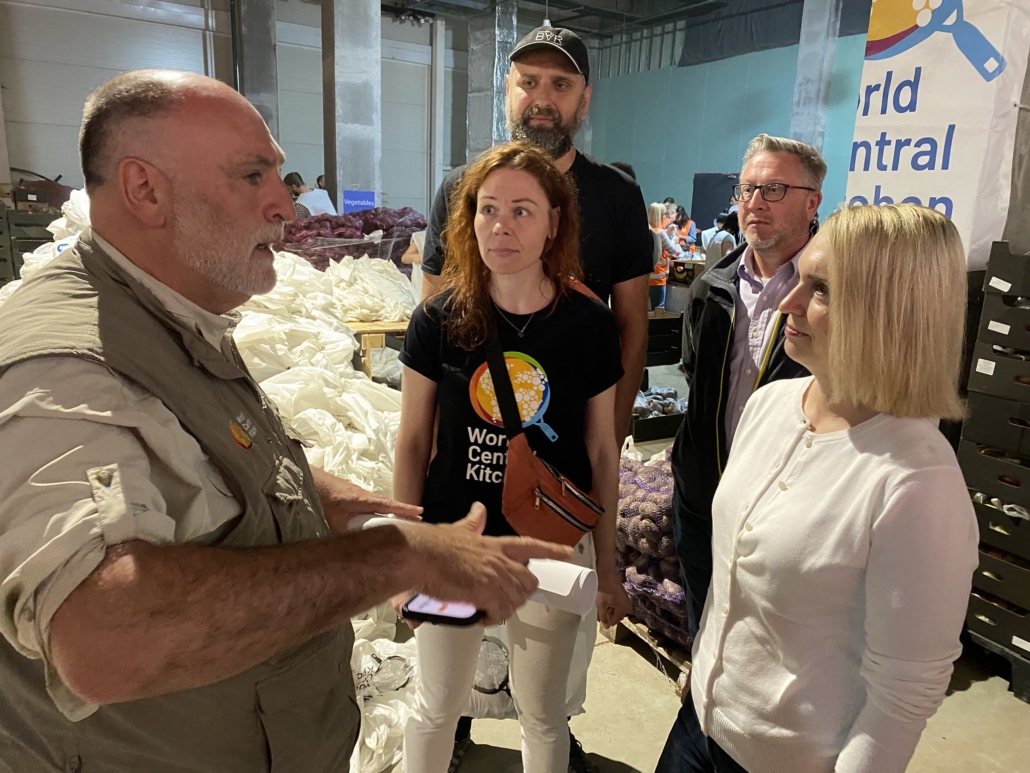
Since 2011, World Central Kitchen (WCK) has worked on the front lines of humanitarian crises, feeding those cut off from a stable food source. Since the onset of the war in Ukraine, WCK has cooked and delivered 235 million meals to refugees in seven other countries and people still in Ukraine.

On the same day the dam exploded, World Central Kitchen in Ukraine set up sites for evacuees. Volunteer teams from the Mykolaiv and Kherson regions arrived at Pryozerne, a village that was underwater. WCK teams used inflatable boats to transport the supplies to reach families stuck without food or drinking water.

How the World Central Kitchen Works

The goal of WCK is to provide hot, locally sourced meals for those with nothing to eat. First Food Fighters respond immediately to disasters where the need is greatest and then partner with local restaurants to affect long-term change. Its approach has come to include meal kits and bags of groceries.

In an interview on “The Late Night Show,” founder of World Central Kitchen Jose Andres, recipient of the 2018 Humanitarian of the Year by the James Beard Culinary Foundation, said of his decision to act: “I think I got tired of sitting in the comfort of my home and seeing that actually big problems had really simple solutions.”

In 2010, Andres went to Haiti to cook for victims of a devastating earthquake. He noticed inefficiencies in existing crisis response systems. Emergency provisions did not arrive soon enough nor stay long enough. To remain community-driven and sustainable, World Central Kitchen partners with local restaurants and chefs. José Andres formed a cooking school École des Chefs alongside a Haitian chef to permanently improve access to quality food in Haiti. Since then, WCK has spearheaded infrastructure that increases food stability in hard-hit regions.

Chefs for Ukraine

Chefs for Ukraine is a branch of WCK. It runs the largest food relief network in Ukraine, with sites in Kyiv, Kramatorsk, Kharkiv and Lviv, among others, despite active missile strikes. In a #ChefsforUkraine interview, a Food Fighter explains, “There is an urgent need for World Central Kitchen. Food is a big contribution because people in the 21st Century are dying of hunger.”

In Kramatorsk, at the end of a train line, World Central Kitchen in Ukraine opened an aid site within hours of Russia’s first attack. As more residential areas are targeted, Chefs for Ukraine sites feed refugees – mostly women, children and seniors. Currently, thousands of Food Fighters run more than 9,000 sites in Ukraine.

Ripple Effect

The impact of giving food and water to those hungry and thirsty is world-changing. José Andres believes WCK is an investment in the people, in democracy and in global interconnectedness. A video for #ChefsforUkraine in 2022 announced 100 million meals served in Ukraine. Andres, in the video, describes how World Central Kitchen’s work in Ukraine is helping fight for “a country of liberty, a country of freedom, and a country that for centuries has been feeding not only Ukraine but has been feeding the world.” Food changes individual lives and, in doing so, changes the world.

– Caroline Crider
Photo: Flickr

July 31, 2023
https://borgenproject.org/wp-content/uploads/borgen-project-logo.svg 0 0 Lynsey Alexander https://borgenproject.org/wp-content/uploads/borgen-project-logo.svg Lynsey Alexander2023-07-31 07:30:102024-12-13 18:02:55World Central Kitchen’s Work in Ukraine
Food Aid, Global Poverty

WFP’s Cash and Food Assistance Programs

WFP’s Cash and Food Assistance Programs
The World Food Programme (WFP) implements cash and food assistance programs that give individuals at risk of falling into poverty money and food to support themselves. The WFP’s cash and food assistance programs’ main goals are to reduce poverty, alleviate food insecurity and boost economic development.

Assisting the DRC

A successful example is the WFP’s cash assistance program in the Democratic Republic of the Congo (DRC) where 26 million people are at risk of facing acute hunger as of May 2022. An article published on May 17, 2022, states that the WFP considers the DRC its “biggest emergency” because conflict and the pandemic compound the nation’s circumstances of poverty.

Benefiting about 100,000 of the most impoverished people in the N’sele municipality, the WFP’s social protection and cash assistance program has occurred in partnership with UNICEF. The cash assistance equates to about $40 a month for beneficiaries to sustain their livelihoods and afford food, which became expensive as a result of the Ukraine-Russia war.

Community members attest that the cash assistance program in the DRC has helped improve the lives of many people. The WFP’s recent success with the cash assistance program in the DRC stands as proof that continuous international financial support for the WFP is necessary to help the developing world tackle poverty.

In recent years, the WFP has been experiencing “funding shortfalls” due to the pandemic’s impact on member states’ abilities to donate. This negatively affected WFP’s ability to reduce poverty further in developing or war-torn countries around the world. Thus, increased financial contribution to the WFP can lead to economic recovery in developing countries.

How Funding Shortfalls are Impacting WFP’s Goals

Although the reduced funding negatively impacted WFP’s cash and food assistance programs, it hurt refugees and vulnerable communities more. For example, in 2021, the WFP had to consider cutting down on food rations for refugees in Cameroon as a result of insufficient funding, potentially impacting 70,000 Nigerians and 100,000 Central African Republic refugees.

In Jordan, the WFP could no longer provide food aid to about 263,000 Syrian refugees by the close of August 2021. In Tanzania, the WFP’s refugee support program had to implement “ration cuts of up to 32[%] of the minimum calorie requirement since December 2020” due to funding inadequacies.

This highlights the necessity of continued funding of the WFP to help developing countries reduce poverty and boost their economies.

WFP Tackles Poverty Despite Funding Issues

Despite its recent financial setbacks, the WFP is still the world leader in tackling food insecurity and poverty. Ukraine stood as the breadbasket of the world until the Russian invasion in February 2022, prompting a humanitarian crisis in Ukraine.

However, the WFP’s cash and food assistance programs managed to mitigate the impacts of the humanitarian crisis in Ukraine. For example, in May 2022, the WFP managed to give 1 million Ukrainians cash to support themselves amid the crisis and “injected nearly US$74 million into the Ukrainian economy.” Furthermore, the WFP is delivering essential foods, such as rice and pasta, to approximately 420,000 people a month.

Countries Financially Supporting the WFP

There are still countries around the world that acknowledge the crucial role of the WFP’s cash and food assistance programs in reducing poverty. On May 19, 2022, the United States Congress passed H.R. 7691, which authorizes the government to spend $5 million on humanitarian assistance in Ukraine. This funding authorization will help the WFP “provide life-saving assistance to millions of people around the world.”

On May 30, 2022, the European Union donated €5 million to the WFP so it can deliver food to 1.6 million food-insecure individuals in Burkina Faso.

Looking Ahead

The World Food Programme still stands as the leading global humanitarian organization that saves millions of lives daily, which is why it won the 2020 Nobel Peace Prize. However, the WFP still needs continuous international support through increased financial contributions from the international community.

Global citizens and anti-poverty advocates must continue to push their governments and representatives to donate more to the WFP to address the impacts of funding shortfalls on the world’s most disadvantaged people.

– Abdullah Dowaihy
Photo: Flickr

June 14, 2022
https://borgenproject.org/wp-content/uploads/borgen-project-logo.svg 0 0 Kim Thelwell https://borgenproject.org/wp-content/uploads/borgen-project-logo.svg Kim Thelwell2022-06-14 07:30:382022-06-10 13:51:22WFP’s Cash and Food Assistance Programs
Food & Hunger, Food Aid, Food Security, Global Poverty

5 Hunger-Fighting Initiatives in India

Hunger-Fighting Initiatives in India
India ranks 101st out of 116 countries on the 2021 Global Hunger Index rankings, with a score of 27.5, which GHI considers “serious.” Currently, there are many hunger-fighting initiatives in India. The five government implemented hunger-fighting initiatives in India include the National Nutrition Mission (NNM), National Food Security Mission, Zero Hunger Programme, Eat Right India Movement and efforts toward food fortification.

National Nutrition Mission

India’s Prime Minister, Shri Narendra Modi, launched the National Nutrition Mission (NNM) or the POSHAN Abhiyaan, on International Women’s Day 2018. NNM targets children, pregnant women and lactating mothers, aiming to reduce stunting, undernutrition, anemia and low birth weight babies. It uses Lives Saved Tool, also known as LiST, to gather results on increased interventions of maternal, newborn and child health, and nutrition.

National Food Security Mission

In 2007, the National Development Council launched the National Food Security Mission. By the end of the 11th Five Year Plan (2011 – 2012), production of rice had successfully increased to the projected “10 million tons, wheat to 8 million tons and pulses to 2 million tons.” The 12th Five Year Plan was even more successful, with a target of 25 million tons of food grain from 2017 to 2020.

The National Food Security Mission implemented eight strategies to accomplish its objectives. Those strategies are to:

  • Place focus on districts with low production and significant potential
  • Establish cropping system-centric inventions
  • Inherit “agro-climatic zone wise planning and cluster approach for crop productivity enhancement”
  • Increase focus on annual crop (pulses) production and grow them with diverse crops
  • “Promote and extend improved technologies i.e., seed, integrated nutrient management (INM), integrated pest management (IPM), input use efficiency and resource conservation technologies along with the capacity building of the farmers/extension functionaries”
  • “Closely monitor the flow of funds to ensure timely reach of interventions to the target beneficiaries”
  •  Combine multiple interventions and the goals of each district and its plans
  • “Implement agencies for assessing the impact of the interventions for a result-oriented approach”

Zero Hunger Programme

The Zero Hunger Programme in India began in 2017 to improve agriculture, health and nutrition. The Indian Council of Agricultural Research, the Indian Council of Medical Research, the M.S. Swaminathan Research Foundation and the Biotechnology Industry Research Assistance Council (BIRAC) created it. The program focuses on developing farm equipment, revamping the farming system, setting up genetic gardens for biofortified plants and beginning zero hunger training. In India, most farmers do not have an adequate amount of land to support their families plus the growing population. Without proper storage available, transportation and marketing places, most food goes to waste. The Zero Hunger Programme aims to:

  • Decrease child stunting for children 2 years and younger
  • Ensure access to food all year round
  • Create stable food systems
  • Increase small farmer productivity and income
  • Eliminate food waste

Eat Right India Movement

The Food Safety and Standards Authority of India started the Eat Right India movement to ensure that the Indian population has access to food that is healthy and safe. The program stands on the foundation of regulatory capacity building, collaborative and empowerment approach.

Overall, the purpose of the Eat Right India Movement is to encourage communities to eat healthy, safe and sustainably. It aims to help all age groups since diet-related illnesses affect everyone if their eating habits are poor. With this common ground, the movement is banding with restaurants, agriculture, food producers, ministries and professional cooks to ensure change.

Food Fortification

Eating low-quality food can cause malnourishment and anemia. Both are present in children and women of the Indian community. In efforts to lower the extent of malnutrition and anemia, food fortification has been a common practice in India since the 1950s. Food fortification is a process of nutrient supplementation chemically, biologically or physically. Fortified food can include rice, wheat flour, edible oil, salt and milk.

Unfortunately, low-income women and children never consume 40%-60% of fortified food. This is due to some states’ failure to purchase fortified food, information disclosure in public supply chains and a shortage of distribution channels in rural areas.

All five hunger-fighting initiatives in India are working towards the goal of combating hunger. Though some have met their targets, the fight is still ongoing. Incorporating more nutrients in daily diets could save many from hunger and diseases. With that, the government recognizes the severities and has established initiatives to address the problem.

– Destiny Jackson
Photo: Flickr

December 15, 2021
https://borgenproject.org/wp-content/uploads/borgen-project-logo.svg 0 0 Jennifer Philipp https://borgenproject.org/wp-content/uploads/borgen-project-logo.svg Jennifer Philipp2021-12-15 01:30:352024-12-13 18:02:385 Hunger-Fighting Initiatives in India
Food & Hunger, Food Aid, Food Insecurity, Food Security, Food Security, Global Poverty

5 Global Food Security Initiatives Secretary Vilsack Supports

Secretary Vilsack
The secretary of agriculture in President Barack Obama’s administration, Thomas J. Vilsack, has returned in 2021 to serve in the same position under President Biden. Secretary Vilsack has received recognition for his civil service and efforts to combat global poverty, receiving recognition from the Congressional Hunger Center and the Global Child Nutrition Foundation. He is also “a former member of the board of directors for GenYOUth as well as Feeding America.” At the U.N.’s Food Systems Summit in September 2021, Secretary Vilsack declared that the U.S. would invest $10 billion to ensure global food security over the next five years. Here are five global food security initiatives that Vilsack supports.

5 Global Food Security Initiatives Secretary Vilsack Supports

  1. Feed the Future. Secretary Vilsack supports Feed the Future, the United States’ program to ensure global food security “by boosting inclusive agriculture-led economic growth, resilience and nutrition in countries with great need and opportunity for improvement.” Feed the Future began in 2010 following the 2007-2008 global food crisis. In 2016, Secretary Vilsack supported the Global Food Security Act, a bill ensuring that the efforts of Feed the Future could continue on even after Obama’s end of term. By backing the bill, he expressed his support for sustainable food systems for the world’s impoverished. The Feed the Future program significantly contributes to poverty reduction, reducing poverty by 37% over 10 years in countries like Bangladesh.
  2. McGovern-Dole Food for Education Program. The McGovern-Dole International Food for Education and Child Nutrition Program combats global poverty and hunger through the support of the USDA. As secretary of agriculture, Vilsack oversees this program, which supports education and child development in low-income countries, donates “U.S. agricultural commodities” and provides financial assistance for school feeding and community nutrition programs. Overall, the program aims to increase literacy and education to break the cycle of poverty. By overseeing the McGovern-Dole Program, Secretary Vilsack works to ensure that students in need, especially girls, receive the nutrition and support required to thrive in schools.
  3. Food for Peace. Secretary Vilsack also oversaw Food for Peace in the International Affairs Budget during the Obama administration. The Office for Food and Peace began with President Eisenhower’s Food for Peace Act in 1954. Food for Peace aids people in low-income countries and areas of conflict by providing international emergency services, organizing development activities and providing nutritional support. Its development activities shares tools and resources with people in food-insecure areas to end global hunger.
  4. Food is Never Waste Coalition. Secretary Vilsack announced in 2021 that the U.S. would be partnering with the Food is Never Waste Coalition. The coalition emerged from the 2021 United Nations Food Systems Summit. The coalition aims “to halve food waste by 2030 and to reduce food losses by at least 25%.” Reducing food waste involves member collaboration to create sustainable food pathways and invest in food loss reduction methods.
  5. School Meals Coalition. While attending the U.N. Food Systems Summit in September 2021, Secretary Vilsack remarked on collaborating with the School Meals Nutrition, Health and Education for Every Child coalition. The coalition strives to provide all children access to nutritious school meals by 2030. In 2021, 150 million students continue to go without school meals worldwide, which sometimes stands as their only meal of the day. The coalition seeks to address the effects of the COVID-19 pandemic by providing nutrition within education. As a member state of the coalition, the United States will invest in feeding programs to incentivize education globally.

Reducing Global Poverty and Hunger

Secretary Vilsack maintains his efforts to reduce both poverty and hunger through his work in the USDA. By supporting and overseeing various food security initiatives and aid programs, Secretary Vilsack positively impacts the lives of those in need across the world.

– Dana Gil
Photo: Flickr

November 17, 2021
https://borgenproject.org/wp-content/uploads/borgen-project-logo.svg 0 0 Jennifer Philipp https://borgenproject.org/wp-content/uploads/borgen-project-logo.svg Jennifer Philipp2021-11-17 01:30:032024-05-30 22:25:255 Global Food Security Initiatives Secretary Vilsack Supports
Food & Hunger, Food Aid, Global Poverty

The World Food Programme Supports Guinea-Bissau

Guinea-Bissau
Guinea
-Bissau, a West African country bordering the Atlantic Ocean, is known for cashew nut farming, which amounts to “90% of the country’s exports,” serving as “a main source of income for an estimated two-thirds of the country’s households.” However, almost 70% of the country’s population lives in poverty.  Among the issues of poverty that plague Guinea-Bissau is food insecurity, low educational attainment and inadequate healthcare. The World Food Programme (WFP), in particular, supports Guinea-Bissau by tackling several issues through humanitarian aid and support.

Food Insecurity and Education

In Guinea-Bissau specifically, the WFP focuses its efforts on supplying “nutritional support” to roughly 96,000 citizens. Data indicates that about a quarter of Guinea-Bissau’s population endures chronic malnutrition. Therefore, in specific, the WFP’s nutrition programs work on combating malnutrition among children younger than 5 as well as “pregnant and nursing women.”

On top of food and nutrition support, the WFP also focuses on education in Guinea-Bissau. In 2014, the overall literacy rates of young citizens aged 15-24 in Guinea-Bissau stood at just 60%. A specific strategy the WFP employs to tackle both food insecurity and low educational attainment rates are supplying meals to more than 173,000 school students to encourage students to attend school. Furthermore, “take-home food rations for female students” aim to “encourage girls to attend and remain in school” since rates of school completion for girls are disproportionately low. The hope is for the WFP to assist the Guinean government in taking over this school feeding program.

In order to strengthen the long-term food security of Guinea-Bissau, the WFP is helping rural people gain access to “social services and markets.” In addition, on June 24, 2021, the WFP provided “agricultural tools and seeds” to about 120 female farmers for the purpose of growing food in their local communities. For short-term food security, the WFP delivered 80 million tons of rice across villages in Guinea-Bissau.

COVID-19 in Guinea Bissau

The WFP is also assisting Guinea-Bissau to better manage the COVID-19 crisis within the country. By October 1, 2021, Guinea-Bissau reported more than 6,000 COVID-19 cases and 140 deaths. As a low-income country with a GDP per capita of just $727, the nation does not have adequate funding or resources for resilient and effective healthcare facilities as well as a strong and efficient COVID-19 response.

The WFP supports Guinea-Bissau with supply chain management of essential COVID-19 resources such as “personal protective equipment, medical equipment, medicines and hospital lab supplies” and delivers these resources to health facilities across the country.

Looking Ahead

Guinea-Bissau faces significant challenges regarding poverty, food insecurity education and healthcare, among other issues. Through how WFP continuously supports Guinea-Bissau, especially amid the COVID-19 pandemic, conditions in the country can improve. With both long-term and short-term humanitarian efforts, hope exists for the people of Guinea-Bissau to rise out of poverty as resilient, empowered and productive individuals.

– Makena Roberts
Photo: Flickr

November 2, 2021
https://borgenproject.org/wp-content/uploads/borgen-project-logo.svg 0 0 Kim Thelwell https://borgenproject.org/wp-content/uploads/borgen-project-logo.svg Kim Thelwell2021-11-02 07:30:132021-11-01 14:18:26The World Food Programme Supports Guinea-Bissau
Page 1 of 13123›»

Get Smarter

  • Global Poverty 101
  • Global Poverty… The Good News
  • Global Poverty & U.S. Jobs
  • Global Poverty and National Security
  • Innovative Solutions to Poverty
  • Global Poverty & Aid FAQ’s
Search Search

Take Action

  • Call Congress
  • Email Congress
  • Donate
  • 30 Ways to Help
  • Volunteer Ops
  • Internships
  • Courses & Certificates
  • The Podcast
Borgen Project

“The Borgen Project is an incredible nonprofit organization that is addressing poverty and hunger and working towards ending them.”

-The Huffington Post

Inside The Borgen Project

  • Contact
  • About
  • Financials
  • President
  • Board of Directors
  • Board of Advisors

International Links

  • UK Email Parliament
  • UK Donate
  • Canada Email Parliament

Get Smarter

  • Global Poverty 101
  • Global Poverty… The Good News
  • Global Poverty & U.S. Jobs
  • Global Poverty and National Security
  • Innovative Solutions to Poverty
  • Global Poverty & Aid FAQ’s

Ways to Help

  • Call Congress
  • Email Congress
  • Donate
  • 30 Ways to Help
  • Volunteer Ops
  • Internships
  • Courses & Certificates
  • The Podcast
Scroll to top Scroll to top Scroll to top