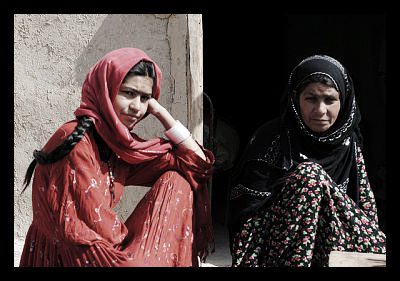
According to the United Nations Department of Defense and Crime, the definition of trafficking in persons’ means “the recruitment, transportation, transfer, harbouring or receipt of persons, by means of threat or use of force or other forms of coercion, of abduction, of fraud, of deception, of the abuse of power or of a position of vulnerability or of the giving or receiving of payments or benefits to achieve the consent of a person having control over another person, for the purpose of exploitation. Exploitation shall include, at a minimum, the exploitation of the prostitution of others or other forms of sexual exploitation, forced labour or services, slavery or practices similar to slavery, servitude or the removal of organs.”
Poverty is a compelling factor in the human trafficking industry.
Human Trafficking occurs in every single country on the globe. It is a global epidemic driven by poverty. The most common countries to which victims are exported are in Western Europe, Western Africa, Asia, Arab Nations and North America. The highest destination countries are Belgium, Germany, Greece, Israel, Italy, Japan, Netherlands, Thailand, Turkey and the U.S. The main countries of origin of victims are Africa, Asia, Central and Eastern European countries, former Eastern bloc and Soviet Union countries, Latin America and the Caribbean. The most prevalent among the main countries are Albania, Belarus, Bulgaria, China, Lithuania, Nigeria, Republic of Moldova, Romania, Russian Federation, Thailand and Ukraine, each with large populations affected by extreme poverty.
Wealth versus poverty is an indicator of migration and trafficked catalysts. Potential victims attempt to move from areas with extreme poverty to areas with less extreme poverty. In these instances, it is the desire of potential victims to migrate to escape poverty that is exploited by traffickers. Control and threatening measures tend to increase once migration occurs for the victims.
Those populations experiencing extreme poverty are especially vulnerable due to their circumstances and familial desperation. These high risk populations become trapped in the desire obtain a better life for themselves and their families. The poor are subsequently preyed upon by manipulative traffickers offering false promises of employment and education opportunities, remuneration in addition to a better life condition. In reality, the trafficker does not follow through on any of the promises. The victims are then forced to do other work—like prostitution or hard labor—receiving little or no pay, resulting in them still living essentially in extreme poverty.
Those suffering from poverty are purposely targeted by traffickers as a means of exploitation. Due to poverty, some parents sell their children. In some instances, victims are told to work to pay off debts and told repercussions include violence, police involvement or immigration. Some victims are sold to many different traffickers. There are two types of labor the victims who are trafficked are subjected to, forced labor or prostitution. Over 32 billion dollars is made annually from human trafficking.
Less than 40 billion dollars can end global poverty. Supporting the Food and Peace Reform Act in order to allow USAID funds to provide support for non-emergency assistance for foreign countries will impact the extreme poverty that leads victims into human trafficking. Combating hunger and food crises can provide a means to assist those facing extreme hunger while not disrupting their agricultural products or local economy. The Act does not interfere with the domestic production in the countries and is proactive means to help to end extreme poverty and hunger to prevent vulnerability to trafficking.
– Erika Wright
Sources: Southern Poverty Law Center, The Freedom Project, OSCE
Photo: Flickr

Empowered Women Can End Poverty
For years, women have been faced with the challenges of discrimination and inequality all across the world. Taking up 50 percent of the population, their representation in many fields has been far less than equal. While women continue to be oppressed, they hold great power in the potential to influence the end of global poverty. From brutal attacks to income inequality, there is a broad range in which women’s rights can be improved, not only for financial reasons but humanitarian as well.
Millenium Development Goals have made gender equality and women empowerment the third top priority in ending world poverty. They also include improving maternal health in their MDG as number five. One of their focuses in improving gender equality is through education. “In many countries, gender inequality persists and women continue to face discrimination in access to education, work and economic assets, and participation in government,” according to the U.N.
Through their efforts, the MDGs have successfully achieved equality between boys and girls in primary education. However, the fight continues to end discrimination across the globe.
The World Bank Organization has made gender equality the top priority in their plan to end world poverty. They stress that if girls are educated and healthy, then they have a chance to become influential leaders in their countries. Yet, in many countries women continue to make less than their male counterparts. Since many women are a directly involved with much of the worlds agriculture, The World Bank mentions the impact women can have with improving hunger.
“It is estimated … that if women worldwide had equal access to productive resources, 100-150 million fewer people would go hungry every day,” says The World Bank.
Although women deserve to be educated and paid more, the most important right they need is security. Across the world women face the danger of being kidnapped and sold into human trafficking, or experience brutal sexual assault. They are forced into marriages and discriminated against and therefore are un-cared for. According to the World Health Organization, “35 percent of women worldwide have experienced either intimate partner violence or non-partner sexual violence in their lifetime.”
Everyday women are limited to housework and reproduction. If they had the chance to be seen as equal they would be empowered to chase the dreams they have always been held back from. Therefore, making half of the population into entrepreneurs, scientists, and educated women who can help make a difference in the world. By oppressing women the world is oppressing itself from its full potential.
– Kimberly Quitzon
Sources: UN Millennium Development Goals, The World Bank, World Health Organization
Photo: Flickr
Poverty and It’s Contribution to Human Trafficking
According to the United Nations Department of Defense and Crime, the definition of trafficking in persons’ means “the recruitment, transportation, transfer, harbouring or receipt of persons, by means of threat or use of force or other forms of coercion, of abduction, of fraud, of deception, of the abuse of power or of a position of vulnerability or of the giving or receiving of payments or benefits to achieve the consent of a person having control over another person, for the purpose of exploitation. Exploitation shall include, at a minimum, the exploitation of the prostitution of others or other forms of sexual exploitation, forced labour or services, slavery or practices similar to slavery, servitude or the removal of organs.”
Poverty is a compelling factor in the human trafficking industry.
Human Trafficking occurs in every single country on the globe. It is a global epidemic driven by poverty. The most common countries to which victims are exported are in Western Europe, Western Africa, Asia, Arab Nations and North America. The highest destination countries are Belgium, Germany, Greece, Israel, Italy, Japan, Netherlands, Thailand, Turkey and the U.S. The main countries of origin of victims are Africa, Asia, Central and Eastern European countries, former Eastern bloc and Soviet Union countries, Latin America and the Caribbean. The most prevalent among the main countries are Albania, Belarus, Bulgaria, China, Lithuania, Nigeria, Republic of Moldova, Romania, Russian Federation, Thailand and Ukraine, each with large populations affected by extreme poverty.
Wealth versus poverty is an indicator of migration and trafficked catalysts. Potential victims attempt to move from areas with extreme poverty to areas with less extreme poverty. In these instances, it is the desire of potential victims to migrate to escape poverty that is exploited by traffickers. Control and threatening measures tend to increase once migration occurs for the victims.
Those populations experiencing extreme poverty are especially vulnerable due to their circumstances and familial desperation. These high risk populations become trapped in the desire obtain a better life for themselves and their families. The poor are subsequently preyed upon by manipulative traffickers offering false promises of employment and education opportunities, remuneration in addition to a better life condition. In reality, the trafficker does not follow through on any of the promises. The victims are then forced to do other work—like prostitution or hard labor—receiving little or no pay, resulting in them still living essentially in extreme poverty.
Those suffering from poverty are purposely targeted by traffickers as a means of exploitation. Due to poverty, some parents sell their children. In some instances, victims are told to work to pay off debts and told repercussions include violence, police involvement or immigration. Some victims are sold to many different traffickers. There are two types of labor the victims who are trafficked are subjected to, forced labor or prostitution. Over 32 billion dollars is made annually from human trafficking.
Less than 40 billion dollars can end global poverty. Supporting the Food and Peace Reform Act in order to allow USAID funds to provide support for non-emergency assistance for foreign countries will impact the extreme poverty that leads victims into human trafficking. Combating hunger and food crises can provide a means to assist those facing extreme hunger while not disrupting their agricultural products or local economy. The Act does not interfere with the domestic production in the countries and is proactive means to help to end extreme poverty and hunger to prevent vulnerability to trafficking.
– Erika Wright
Sources: Southern Poverty Law Center, The Freedom Project, OSCE
Photo: Flickr
What is the Function of the 150 Account?
The U.S. budget contains scores of carve outs for specific programs, activities, and priorities. But all those individual projects are organized into broader buckets. Specifically, the federal budget is divided into 20 categories called budget functions, although it might be easier to think about them as accounts.
Each account (or function) has all the spending for a given topic, independent of which federal agency oversees the specific federal programs that will ultimately receive the money.
Function 150 is the international affairs account which includes money allocated for aid for developing nations, and consequently where a significant amount of global poverty and hunger funding falls. It’s a very diverse funding bucket. The account also includes money for operation of U.S. consulates and embassies; military assistance for our allies; economic assistance to be disbursed to new democracies; promotion of U.S. exports; payments to international organizations; and international peacekeeping efforts.
Function 150 primarily provides funding for the Departments of State, Agriculture, and Treasury, as well as the U.S. Agency for International Development and the Millennium Challenge Corporation. Funding in this account constitutes about 1 percent of the entire federal budget.
The budget process for fiscal year 2014 is far from over, in fact it’s barely started. Quite a bit needs to happen before we will know what the actual funding levels for programs are for the next fiscal year. The State Department requested approximately a total of $52 billion for the Function 150 Account in FY 2014 to fund everything from aid to developing countries to U.S. consulates and international peacekeeping missions, according to agency budget documents.
– Liza Casabona
Sources: House of Representatives Committee on the Budget, State Department
Photo: Tunisia Live
The Expansion of Urban Slums in Cairo
The population in Egypt is 96 million people. Currently in Egypt,there are 26.2 million people that are unemployed. Between 20 and 30 percent of people in Egypt live in poverty. The government and the World Bank suspect that the amount of poverty is grossly underestimated. The rate of urbanization has increased from 50 million, and it estimated to grow to 57 million by the year 2025. Cairo is an urban area that is expanding.
There are three major catalysts for poverty rates to be increasing in urban areas. The government does not have a standard definition of urban areas that is restrictive. In the absence of restrictiveness, boundary expansion of areas is not taken into account. Population evaluation methods are not able to be taken in order to have a needs assessment. This further translates into miscalculation of slum dwelling research on imperative items such as the cost of food, and public services to allot for proper government assistance.
Education is poor in slums in Cairo and food is scarce. Poverty restricts dietary supplements. Carbohydrates and grains are the most common types of food eaten. Vegetables, fruits and protein are hard to come by due to the price and lack of resources for the unemployed. Due to the scarcity of food that is available, children commonly suffer from iron deficiency.
Research indicates that the rate of malnutrition among children in Cairo is high. Sixteen percent of the children are underweight. A lack of basic health care services contribute to the poor health of the residents. It is estimated that 40 percent of Egyptians live on two dollars a day or less. Due to unemployment is rife among the young, forcing many to put off marriage and children until well into their 30s.
Controversy exists regarding the poverty alleviation methods that the government is taking in Egypt. Changes have been suggested to improve the poverty by way of comprehensive studies performed in Cairo. These efforts would increase the definition of poverty beyond income and introduce dimensions of well-being as additional indicators. The additional indicators would include, housing conditions, access to services and the quality of employment. These changes would allow proper assessments to be made.
Underestimating the rapid increase of poverty in urban areas is problematic because it does not allow for proper assessment of the populations needs. The value of poverty lines needs to be increased to determine the true rates of poverty in Cairo. In doing so, the government can make appropriate allowances and funding for an increase of access to nutritious food, quality of housing conditions including water, sanitation and electricity, education and health care.
– Erika Wright
Sources: Al Arabiya News, Connected in Cairo, Environment and Urbanization, IRIN, Encyclopedia of the Nations
Photo: Flickr
Conditions Poor in Syrian Refugee Camps
What was supposed to be a safe haven for Palestinians has now become another war zone. A total of 18,000 refugees are being held hostage in the Yarmouk camp in Syria. The Syrian refugee camp located in southern Damascus has been taken over by ISIS and the group Al-Nursa Front, known for its affiliation with Al-Qaeda.
According to the United Nations, the camp was already low on essentials such as food, water, and medicine. According to Chris Gunness, a spokesman for the United Nations, attempts to deliver food have failed. “That means that there is no food, there is no water and there is very little medicine,” said Gunness.”The situation in the camp is beyond inhumane. People are holed up in their houses, there is fighting going on in the streets. There are reports of … bombardments. This has to stop and civilians must be evacuated.”
Adding to the devastation is the constant violence the people of the camp must face. Dr. Saeb Erekat, and Executive Committee Member of the Palestine Liberation Organization, has reported that there are “kidnappings, beheadings and mass killings” being carried out at the camp. Bombs have also been dropped on the camp.
Yarmouk, which was formed in 1957 for refugees in the Arab-Israeli conflict, are no strangers to dire situations—illness and starvation were already prevalent amongst the camp, which has been under government control since December of 2012. However, the damage being carried out now could be the worst the camp has seen yet.
“Never has the hour been more desperate in the Palestine refugee camp of Yarmouk,” said the United Nations Relief and Works Agency in statement.
The United Nations is vocalizing the need for liberation or at least humanitarian aid where those suffering can receive food, water and proper medical attention.
“The levels of humanity that we have seen have now descended into further levels of inhumanity,” insisted Gunness. Hopefully, the United Nations and other humanitarian groups will continue to fight for the lives of those who are victims to this horrible conflict.
– Melissa Binns
Sources: The World Post, CNN
Photo: Flickr
Poverty in Lagos, Nigeria
Lagos has often been called the world’s next ‘mega-city’ due to its increasing urban population growth and economic development. As of this year, the population of Lagos is expected to reach 25 million and it is certainly showing no signs of slowing down. In recent years, Lagos has witnessed a surge in commercial business and industry, resulting in an increase of wealth to the country as well as a fortunate group of Nigerians and foreign investors. Yet, despite the influx of national growth, many Nigerians are still living in substandard conditions and are subjected to malnutrition, poverty and economic instability.
According to The World Data Bank statistics, 62 percent of Nigerians live on less than $1.25 per day. Extreme poverty remains high in rural parts of Nigeria, where political instability, low access to education and inadequate healthcare are contributing factors of the nation’s high rate of poverty.
Surprisingly, a study conducted by the Oxford Poverty and Human Development Initiative, or the OPHI, found that 22.1 percent of Nigeria’s urban population is vulnerable to poverty while only 14.4 percent of the rural population is vulnerable.
The population most affected by high poverty rates is always children. In Nigeria, 43.2 percent of the population are children ages 0-14. With the average woman birthing at least five children, it becomes difficult for large families to sustain themselves with the few resources they are provided.
Lagos, Nigeria is faced with the issues of increasing population and competition for the nation’s resources. The World Bank estimates the country’s GDP at $521.8 billion and the Nigerian economy depends largely on oil exports, agriculture and a growing technological sector. But what of those living below the international standards of poverty in Lagos?
According to the OPHI, 20 percent of the Lagos population are vulnerable to poverty, and the intensity of economic deprivation in Lagos stands at 41.1 percent.
In Lagos, two out of three residents live in the city’s notorious slums—settlements built to accommodate the overcrowded communities. Many families and individuals who inhabit these slums came to Lagos from other regions of Nigeria with the hope of escaping the rural poverty, deprivation and political instability of their home states. However, the Lagos city center has offered little solace.
The Ajegunle district, located in the heart of Lagos, is home to some three million Nigerians who live in poorly built structures with little to no infrastructure and poor standards of living. Many of its residents lack access to clean water and proper sanitation; families often do not have sufficient resources to send children to school.
Poor access to water and improper water sanitation has also been credited as a leading cause of economic disparity in Lagos. Local fisherman rely on the region’s water sources to provide fish for them to sell at markets and feed their families. The frequently contaminated water does not yield very many fish, causing many families to go hungry.
There is a large gap that exists between the wealthy and poor in Lagos. While the wealthy continue to climb the economic ladder, many of their poor compatriots remain at the bottom. Yet, in the wake of Nigeria’s recent presidential election of Muhammadu Buhari, some Nigerians remain hopeful that democracy will open doors for improving Nigeria’s future.
– Candice Hughes
Sources: CIA World Factbook, Fortune, IRIN, University of Oxford, The World Bank
Photo: Nairaland Forum
Elections in Central African Republic
The Central African Republic is on the brink of disaster. The conflict has a dense history, for violence initially erupted in the Central African Republic in December 2012 when a predominantly Muslim rebel militia, the Seleka, stormed across the country and captured the capital city, Bangui. The Seleka took over the capital and proceeded to organize killing and looting against the country’s non-Muslim population. A group called the Anti-Balaka rose up in opposition to Seleka, and the violence grew more intense. Gold, uranium, and diamonds are also being used to fiance the conflict.
The conflict has dire humanitarian consequences, for both the Anti-Balaka and the Seleka fail to distinguish between combatants and non-combatants. There are currently more than 4.6 million people in need humanitarian aid, 440,000 people are displaced, and nearly half a million have fled to neighboring countries. The situation remains highly volatile and is in danger of exploding into further mass atrocities, even genocide, with the approach of elections. A U.N. commission of inquiry recently described the situation in Central African Republic as ethnic cleansing due to the violence perpetrated against the Muslim population. In addition, Human Rights Watch called on the international community to focus on the plight of northern Muslims in December 2014. Sectarian violence has been turned into ethno-religious conflict.
The Central African Republic has been relatively calm over the past year. During the summer of 2015, the country will hold democratic elections to begin to rebuild the government of the country. This is an opportunity for peacebuilders to make a lasting impact on CAR society. An interim president was initiated in January 2014, Catherine Samba-Panza, however the security situation remains unstable. In February 2015, peacekeepers killed at least seven rebels in clashes north-east of the capital, Bangui.
According the United Nations Development Program, parliamentary and presidential elections are scheduled for July and August. Sixty percent of the required funding has been made available, and voter registration is set to begin shortly. The desire for a stable future, rather than prolonged transition, has fomented domestic support for the elections. This will one of the more involved peace operations, for the United Nations Development Program is not only assisting with elections, but is also rebuilding the national army and police force. The stability of the Central African Republic is truly vital for the security of its citizens, and for the region as a whole.
A successful election in the Central African Republic requires several ingredients. All the groups in the conflict must be present, otherwise the environment will remain volatile. Until this becomes true, groups and individuals are at risk, as evidenced by recent kidnappings of government officials and aid workers. The Forum for National Reconciliation aims to bring together civil servants, government workers, and local populations in order to secure a peaceful election in the area. Through persistence, patience, and partnership, the elections in Central African Republic may be the next example of a positive peace operation!
– Neti Gupta
Sources: Africa Research Institute, The Guardian, Insight on Conflict
Photo: Flickr
Nigeria’s Struggle with Overpopulation
Home to about 170 million people, Nigeria is the world’s sixth largest country in terms of population and also one of the fastest growing. In 1950, its population was less than 40 million, meaning it has multiplied several times over in recent decades. With a population growth rate of two to three percent every year, Nigeria’s population is expected to continue to skyrocket.
By 2050, Nigeria’s population is expected to surpass that of the U.S. and could exceed 400 million. By 2100, it is forecasted to exceed one billion and could potentially surpass China; all living in a country about the size of Texas.
The effects of overpopulation are already acute. Lagos is currently one of the largest cities in the world with an estimated population of about 21 million. Since many people live in slums and the government has few resources to conduct an adequate census, the real population is unknown.
Most residents of cities like Lagos live in severely overcrowded slums. Many houses and apartments consist of just one room to house entire families. More than 50 people can share a bathroom, sink and living space. Youth unemployment in urban areas is around 50 percent. This has fueled an increase in crime which is rampant in many cities. This high level of youth unemployment has also helped fuel the rise of militant groups like Boko Haram.
Nigeria’s fertility rate is approximately 5.5 children per woman. The Nigerian government has made some effort to address the problem, but to no avail. It has made contraceptives free but many still do not have access to them and, in a religious society like Nigeria, their use is often frowned upon. Several government campaigns have aimed at encouraging people to have smaller families, but these have failed as well and are at odds with Nigerian cultural values.
Many societies in Nigeria have long valued large families as a sign of prestige and many cultures practice polygamous lifestyles. In some Nigerian villages, families with fewer than eleven children are considered small and incomplete.
This problem is very common in the developing world, where impoverished families view having more children as a plus as they can help the family earn money and do chores. Given high rates of child mortality, many feel the need to have larger families as a safe guard in case some children do not make it to adulthood.
Many other African countries are also experiencing population booms. Sub-Saharan Africa is the world’s fastest growing region in terms of population. Currently home to slightly fewer than a billion people and accounting for about twelve percent of the population, by 2100 it is expected to have more than four billion people and account for one-third.
Many fear this rise in population growth will fuel poverty, hunger and civil strife. But the problems will be particularly acute in Nigeria. While some view this increase in population as a potential for more economic growth and status as a global hegemon, many others fear the population boom will cause the country to collapse. The rise in population is likely to place greater strain on Nigeria’s already strained infrastructure and services and increase poverty, unemployment and political instability.
While Nigeria’s population boom certainly has potential benefits it also poses a serious threat if it is not brought under control and many feel the government is not doing as much as it could or should. If Nigeria were to collapse because of its population boom, it would be a disaster for the entire African continent given the country’s economic and political weight. Poverty and overpopulation are intertwined with one another and it is impossible to tackle one without tackling the other.
– Matt Lesso
Sources: NPR, The New York Times, This Day Live, U.N., The Washington Post
Freedom from Hunger Dedicated to Ending World Hunger
Freedom from Hunger is a 501c3 nonprofit organization that is dedicated to ending world hunger as a means to end poverty. It is an internationally renowned organization that recently opened an office in Mexico City, Mexico. They focus on working with developing areas in the world that have a high prevalence of chronic hunger.
There are 24 countries that the organization currently works in: Bénin, Bolivia, Brazil, Burkina Faso, Cambodia, Colombia, Ecuador, El Salvador, Ghana, Guatemala, Haití, Honduras, India, Madagascar, Mali, Mexico, Nigeria, Peru, Philippines, Senegal, South Africa, Togo, Uruguay and Vietnam. The organization utilizes local organizations in the areas where they assist the poor to collectively organize methods that are efficient and effective in addressing chronic hunger in each specific location.
It is an organization dedicated to training in life skills and health education as a proactive method to reach out into the poor, especially those in the rural areas. The principles of the organization stem from the idea that ending hunger in the world is attainable through strategic and collaborative efforts. The key activities focused on are self help, collaboration, sustainability, innovation and research.
The organization was one of the first microfinance organizations to utilize research and evaluation techniques to illuminate the rate of success and program success. Freedom from Hunger has a plethora of types of research that it utilizes, both qualitative and quantitative. Freedom from Hunger relies on research regarding the quality and sustainability of development.
The types of research conducted range from randomized controlled trials to focus group interviews. The organization prides itself on honoring the results from all of their research and sharing them among their partners, the microfinance community and local partners.
In selection of local partners, Freedom from Hunger ascertains local knowledge and insight that provide relevant cultural, economic and social understanding of chronic hunger and poverty. Together with local organizations, it allows the organization to further asses the current challenges in providing services. It allows for realistic setting of goals and steps to combat these challenges.
The organization uses training and technical assistance as a method to support local organizations and to increase the amount of people they can reach. In addition, the education provided creates a continuous cycle of learning by ensuring the programs are locally owned and focused. Freedom from Hunger shares its information as a method to continue positive influence with local partners and nurture expansion by emphasis by adding value through microfinance.
Freedom from Hunger is an organization that encompasses the Millennium Goal number one, to help end extreme poverty and hunger. It is also an organization that demonstrates the seventh Goal of having global partnerships.
– Erika Wright
Sources: Freedom from Hunger, U.N. Millennium Project
Photo: Bag Standz
Poverty in Mexico City Impacts Population
Almost half of the population in Mexico lives in poverty. Based on the current population of 117 million, over 55 million people live in poverty. Forty-one million people live on less than $188 per month and 11.5 million live on less than $83 per month. It is estimated that more than half of the entire population is living on less than $2 per day and a quarter of the population is living on less than $1 per day. From 2012-2013, the GDP in Mexico dropped from four percent to one percent.
In Mexico, 25.3 million people are without access to proper health care, and 27.4 million people do not have proper access to food and are described as being food insecure. Food insecure is a term that is used in Mexico to describe those who face extreme hunger and are unable to meet their own nutritional needs during the year. Despite a decrease in extreme poverty since 2010, poverty has continued to increase.
Mexico City is the capital of Mexico and has a population of two million people. It is a city that struggles with disease and poverty. The wealth in Mexico City is concentrated. Although some of the poor live in the cities, many reside in the rural areas. The rural areas house the majority of the impoverished; however, there is little recorded data to demonstrate the cause, according to the government. Although the government is aware of the poverty that exist in these areas, the states of Mexico that border the United States do not qualify for the Oportunidades program to alleviate poverty and health issues.
Health issues in Mexico City are caused by poor air quality as a result of air pollution. Air pollution causes respiratory problems for the residents. Mexico has declining incidence rates of Tuberculosis. However, in Mexico City, the cases of Tuberculosis are five times as much as the United States. For the people of Mexico City, Hepatitis A is still considered endemic.
The first Millennium Goal initiatives are applicable to the status quo of Mexico City. With little aid from the government, Mexico City will have to look to outside sources for relief.
– Erika Wright
Sources: CDC, U.S. Mission to Mexico 1, U.S. Mission to Mexico 2, U.S. Department of State, The World Bank
Photo: Hispanically Speaking News