Elections in Central African Republic
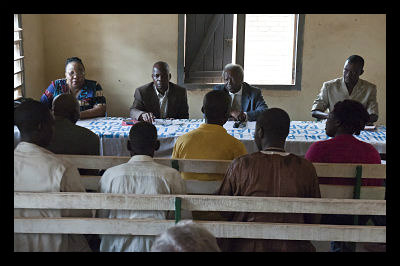
The Central African Republic is on the brink of disaster. The conflict has a dense history, for violence initially erupted in the Central African Republic in December 2012 when a predominantly Muslim rebel militia, the Seleka, stormed across the country and captured the capital city, Bangui. The Seleka took over the capital and proceeded to organize killing and looting against the country’s non-Muslim population. A group called the Anti-Balaka rose up in opposition to Seleka, and the violence grew more intense. Gold, uranium, and diamonds are also being used to fiance the conflict.
The conflict has dire humanitarian consequences, for both the Anti-Balaka and the Seleka fail to distinguish between combatants and non-combatants. There are currently more than 4.6 million people in need humanitarian aid, 440,000 people are displaced, and nearly half a million have fled to neighboring countries. The situation remains highly volatile and is in danger of exploding into further mass atrocities, even genocide, with the approach of elections. A U.N. commission of inquiry recently described the situation in Central African Republic as ethnic cleansing due to the violence perpetrated against the Muslim population. In addition, Human Rights Watch called on the international community to focus on the plight of northern Muslims in December 2014. Sectarian violence has been turned into ethno-religious conflict.
The Central African Republic has been relatively calm over the past year. During the summer of 2015, the country will hold democratic elections to begin to rebuild the government of the country. This is an opportunity for peacebuilders to make a lasting impact on CAR society. An interim president was initiated in January 2014, Catherine Samba-Panza, however the security situation remains unstable. In February 2015, peacekeepers killed at least seven rebels in clashes north-east of the capital, Bangui.
According the United Nations Development Program, parliamentary and presidential elections are scheduled for July and August. Sixty percent of the required funding has been made available, and voter registration is set to begin shortly. The desire for a stable future, rather than prolonged transition, has fomented domestic support for the elections. This will one of the more involved peace operations, for the United Nations Development Program is not only assisting with elections, but is also rebuilding the national army and police force. The stability of the Central African Republic is truly vital for the security of its citizens, and for the region as a whole.
A successful election in the Central African Republic requires several ingredients. All the groups in the conflict must be present, otherwise the environment will remain volatile. Until this becomes true, groups and individuals are at risk, as evidenced by recent kidnappings of government officials and aid workers. The Forum for National Reconciliation aims to bring together civil servants, government workers, and local populations in order to secure a peaceful election in the area. Through persistence, patience, and partnership, the elections in Central African Republic may be the next example of a positive peace operation!
– Neti Gupta
Sources: Africa Research Institute, The Guardian, Insight on Conflict
Photo: Flickr
