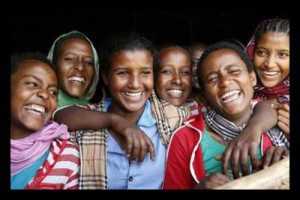
 According to the Human Development Index, most of the world’s developed countries are located in Europe and North America while large swaths of Africa and Asia remain underdeveloped (South America falls somewhere in the middle). In addition to population size problems, these developing nations have to deal with political pressure revolving around the use of environmentally sustainable measures of growth—pressures that did not exist when currently developed nations were in their growth spurts. Discussed below are five easy steps to help develop a country and guide the growth of future international trading partners.
Five Easy Steps to Develop a Country
1. Share resources
Obviously, the fewer resources an average family uses, the lower the nation’s ecological footprint. Developing countries may not be able to afford electric or semi-electric cars, but their people can conserve both money and oxygen by carpooling, riding bikes and reusing grocery bags.
At the level of foreign advocacy, there are already influential notables arguing for the synergy between alleviating poverty and quelling climate change. Lord Nicholas Stern, chairman of the Grantham Research Institute on Climate Change and the Environment, warned against resorting to high-carbon-intensive resources to help impoverished countries. “The world is underinvesting in infrastructure, especially in developing countries where there are the largest unmet needs,” he wrote recently. For this reason, he encouraged governments not to separate climate and environmental funds from foreign aid, arguing that the two had to go hand-in-hand in order to produce long-term benefits.
2. Promote education
All levels of education are important stepping-stones to development, from the fundamentals of kindergarten, to the advanced quantum physics courses at the university. Each class ought to be taught with the overarching goals of quality of life and economic improvement in mind. Education stops terrorist groups from gaining strength and trains doctors and scientists to research and cure diseases. It is one of the primary movers that help impoverished nations to help themselves. Studies have shown that the greater number of mean years children attend school, the healthier that nation’s economy becomes.
3. Empower women
Education is most valuable to a developing country’s most vulnerable groups. The most common demographic among all of these populations—farmers, small-scale producers, victims of epidemics and terrorist groups—are women. Children of both genders are vulnerable as well, but the impoverished boys who do not die prematurely or join the terrorists are more likely to have enough social mobility to get educated and leave than girls. In the least educated African countries—Somalia, Niger, Liberia, Mali and Burkina Faso—over 70 percent of girls between seven and 16 have never attended school.
By empowering women and equalizing academic opportunity, countries can increase incomes by an average of 23 percent. They can do this by investing in schools closer to rural areas so that the children of farmers do not have to walk hours each day to get to and from school, straining their parents’ time and resources in the process. That way, neither parents nor children would feel pressure to force a decision between farm work and schoolwork and the poorest populations could begin to make progress.
4. Negotiate strategic political relations
Americans have seen firsthand what happens when big businesses and lobbyists become too deeply involved with politicians. When it happens in third-world countries, their poorest, most disadvantaged citizens are the ones who suffer. This often leads to violent uprisings with scads of victims on both sides. There’s a reason why college majors such as international relations and politics are practically universal. Aligning with people who have considerable political power and pathetically few scruples seldom benefits the poorer country. For that reason it is imperative that the educated learn to choose their political allies carefully in order to make the greatest leaps in ecological, economic and humanitarian development.
5. Reform the systems of food and aid distribution
So many millions of people still suffer from world hunger each day. Their problem springs less from stinginess among foreign taxpayers, but from inefficient systems of distribution. As Senegalese entrepreneur Magatte Wade recently explained, the bulk of taxpayer money filtering in from more affluent countries does not actually pay for African or Asian aid partly due to deep flaws in the regulations and in large part because of theft. “Look no further than the people who make most of that money,” she advised. “That’s where the money ends up.”
Here again, the rally call ought to be to support Africans rather than the inexperienced, inadvertently patronizing, members of the aid business. Instead of pouring money into resources, shipping and energy costs, she says, developed countries ought to invest in local African businesses so that the people can more effectively improve their own circumstances without having to resort to the whims of potentially corrupt and incompetent leaders.
– Leah Zazofsky
Sources: Business Green, World Education Blog 1, World Education Blog 2, The Guardian, American Thinker
Photo: International Development Research Centre

Baby Renting and Other Trends in Child Trafficking
Last November, NBC New York investigated a group of women who appeared to be working in syndicate using children to panhandle on the streets of New York. Though they turned out not to be homeless, they were still using toddler-aged children to appeal to strangers for money. When offered food and shelter by well-meaning individuals, they would turn them down.
While panhandling with children is termed a misdemeanor in the state of New York, there are plenty of people in urban areas who are all too willing to exploit children in similar, yet far more sinister ways.
In broken English, an anonymous writer explained that there are actually networks of women who are controlled by crime rings. They sit on the street with unknown infants that have been drugged into unconsciousness with vodka or heroin to make them sleep. Said children are either ‘borrowed’ from unfit parents or outright kidnapped.
The most repulsive aspect of this story, if it is to be believed, is that children often die from overdoses. In these cases the street ‘mothers’ have to hold the corpse all day in order to collect money on the streets of the unnamed city until the end of their shifts.
An anonymous commenter on the story claims to have seen this phenomenon in action in Uganda, while another corroborates it with accounts of trafficked infants and children in China.
According to Polaris, human trafficking takes on many other forms besides panhandling. It happens both in third world countries and in the United States and often disguises itself under the façades of spas, restaurants, carnivals and other small businesses.
Approximately 20.9 million people have been trafficked both domestically and abroad. Among the most vulnerable groups are children, migrants, troubled minors and victims of social stigmatization, sexual assault, domestic violence or war.
The traffickers recruit by promising victims lucrative jobs, novel opportunities and even romantic relationships. Once they are firmly in hand, the perpetrators flip the switch, employing psychologically coercive and damaging tactics such as threats, lies, physical force and emotional manipulation.
Children in particular are prone to the tactics employed by traffickers because their frontal lobes do not fully mature until around the age of 25. The frontal lobe is responsible for conscious reasoning and decision making.
They become especially vulnerable when they run away from home and are exploring unfamiliar territory. Under these circumstances, minors are more likely to rely on the kindness of strangers, in these instances to their grave detriment.
In the worst case scenarios, the traffickers turn out to be pimps who force their female victims into prostitution. Often, they wait near truck stops and gas stations for their next clients to drive up before knocking on their doors.
Despicable as the pimps may be, however, they are working off what is ultimately a profitable business model. It is profitable because the people who pay for the sexual favors and services of slaves are either ignorant or choosing to rationalize their decisions. It’s time to stop being part of the epidemic of human rights violations. Wake up, read up, call up and stop the spread of evil.
– Leah Zazofsky
Sources: CNN, Opposing Views, Polaris
Photo: Smug Mug
Five Easy Steps to Develop a Country Sustainably
Five Easy Steps to Develop a Country
1. Share resources
Obviously, the fewer resources an average family uses, the lower the nation’s ecological footprint. Developing countries may not be able to afford electric or semi-electric cars, but their people can conserve both money and oxygen by carpooling, riding bikes and reusing grocery bags.
At the level of foreign advocacy, there are already influential notables arguing for the synergy between alleviating poverty and quelling climate change. Lord Nicholas Stern, chairman of the Grantham Research Institute on Climate Change and the Environment, warned against resorting to high-carbon-intensive resources to help impoverished countries. “The world is underinvesting in infrastructure, especially in developing countries where there are the largest unmet needs,” he wrote recently. For this reason, he encouraged governments not to separate climate and environmental funds from foreign aid, arguing that the two had to go hand-in-hand in order to produce long-term benefits.
2. Promote education
All levels of education are important stepping-stones to development, from the fundamentals of kindergarten, to the advanced quantum physics courses at the university. Each class ought to be taught with the overarching goals of quality of life and economic improvement in mind. Education stops terrorist groups from gaining strength and trains doctors and scientists to research and cure diseases. It is one of the primary movers that help impoverished nations to help themselves. Studies have shown that the greater number of mean years children attend school, the healthier that nation’s economy becomes.
3. Empower women
Education is most valuable to a developing country’s most vulnerable groups. The most common demographic among all of these populations—farmers, small-scale producers, victims of epidemics and terrorist groups—are women. Children of both genders are vulnerable as well, but the impoverished boys who do not die prematurely or join the terrorists are more likely to have enough social mobility to get educated and leave than girls. In the least educated African countries—Somalia, Niger, Liberia, Mali and Burkina Faso—over 70 percent of girls between seven and 16 have never attended school.
By empowering women and equalizing academic opportunity, countries can increase incomes by an average of 23 percent. They can do this by investing in schools closer to rural areas so that the children of farmers do not have to walk hours each day to get to and from school, straining their parents’ time and resources in the process. That way, neither parents nor children would feel pressure to force a decision between farm work and schoolwork and the poorest populations could begin to make progress.
4. Negotiate strategic political relations
Americans have seen firsthand what happens when big businesses and lobbyists become too deeply involved with politicians. When it happens in third-world countries, their poorest, most disadvantaged citizens are the ones who suffer. This often leads to violent uprisings with scads of victims on both sides. There’s a reason why college majors such as international relations and politics are practically universal. Aligning with people who have considerable political power and pathetically few scruples seldom benefits the poorer country. For that reason it is imperative that the educated learn to choose their political allies carefully in order to make the greatest leaps in ecological, economic and humanitarian development.
5. Reform the systems of food and aid distribution
So many millions of people still suffer from world hunger each day. Their problem springs less from stinginess among foreign taxpayers, but from inefficient systems of distribution. As Senegalese entrepreneur Magatte Wade recently explained, the bulk of taxpayer money filtering in from more affluent countries does not actually pay for African or Asian aid partly due to deep flaws in the regulations and in large part because of theft. “Look no further than the people who make most of that money,” she advised. “That’s where the money ends up.”
Here again, the rally call ought to be to support Africans rather than the inexperienced, inadvertently patronizing, members of the aid business. Instead of pouring money into resources, shipping and energy costs, she says, developed countries ought to invest in local African businesses so that the people can more effectively improve their own circumstances without having to resort to the whims of potentially corrupt and incompetent leaders.
– Leah Zazofsky
Sources: Business Green, World Education Blog 1, World Education Blog 2, The Guardian, American Thinker
Photo: International Development Research Centre
Climate Change Impacts Developing Nations
Climate change is defined as a shift in global weather patterns, largely due to man-made influences on the environment. According to a U.N. report, the average land and sea temperatures are expected to rise an additional four degrees Celsius; meaning, future temperatures can become warm enough to ruin agricultural sectors and impact ways of living. When land as well as sea temperatures warm, a spike in rainfall occurs, causing heavier storms with stronger monsoons and cyclones. Additionally, warming oceans result in melting glaciers and polar ice caps which cause rising sea-levels and coastal flooding.
Global Warming
In the past 50 years global temperatures have risen faster than any other time in history. Severe heat waves and droughts, due to warming, impact not only water and food sources but individual health as well. If exposed to heat waves for an extended amount of time, illness and death become likely. Diseases transmitted through food and water also increase since bacteria rapidly multiply when exposed to heat for a long period of time.
Additionally, poor crop yield due to droughts can cause increased hunger and famine. Droughts also cause a scarcity in water supplies that also contribute to poor health and hunger.
Stronger Storms
Storms such as cyclones and monsoons are being amplified as a result of climate change.
Developing nations such as the islands of Vanuatu are at an increased risk of such storms. Vanuatu has recently experienced its strongest cyclone yet. The storm caused coastal flooding due to rising sea-levels and has affected food supplies and destroyed around 90 percent of buildings in its country’s capital of Port Vila, according to The Guardian. The storm has affected business and employment as well, leaving many without jobs or homes.
Rising Sea-Levels
According to National Geographic, since the 1990s, sea levels have been rising 0.14 inches per year. As sea levels rise each year, islands of developing nations are at risk of losing land to the sea.
For example, the island of Kiribati faces being the first country to become a refugee of climate change. Rising sea levels not only invade the land of Kiribati, but also drive its people into deeper poverty. The salt water that seeps into the land contaminates fresh water sources and kills crops that are needed for survival.
Countries like Kiribati along with other developing nations are at a higher risk because of unavailable funds to combat the consequences of climate change. Poor countries cannot afford to counter the effects the climate has on its environment, causing developing nations to be more susceptible. Global warming and droughts, storms such as cyclones and monsoons along with rising sea-levels require a degree of funding in order to combat its effects. Without it, developing nations will continue to be hit the hardest as climate change progresses.
– Nada Sewidan
Sources: The Guardian 1, The Guardian 2, The Guardian 3, Natural Resources Defense Council, The World Bank
Photo: National Geographic
Israel Ends Tax Transfer Freeze on Palestinian Authority
Israeli Prime Minister Benjamin Netanyahu has agreed to end a tax transfer freeze on the Palestinian Authority (PA). The Israeli government collects and transfers about $125 million each month to the PA, but cut them off last December after the PA was accepted into the International Criminal Court. Israel now plans to release the several months’ worth of revenue that it had previously withheld.
The freeze in tax transfers hit the Palestinian Territories hard. The economy was already in a recession, with unemployment at 25 percent and a budget deficit of 15 percent of GDP. The PA was then forced to cut public sector wages by 40 percent. Tax transfers account for 70 percent of the Palestinian Authority’s revenue and the freeze pushed the region to the brink of collapse.
Palestine’s stock market has contracted by 10 percent since this time last year. The Palestinian Central Bank had warned there was an imminent risk of a major financial crash. Hospitals reported a shortage of medicine and equipment.
The Israeli government cited the humanitarian crisis and the threat of increased instability in the West Bank as its primary reasons for resuming tax transfers. The Palestinian Authority had warned it was unlikely to survive for much longer without tax revenue. Israeli military officials had also warned that the Palestinian Authority was at risk of collapsing and disbanding.
The Israeli military also warned that the freeze was fueling instability and extremism and was a threat to Israel’s national security. Officials had previously recommended that the government end the freeze to prevent the spread of instability in the already unstable region.
This is good news for the West Bank, which has long struggled with high rates of poverty. The resumption of tax revenue will help to alleviate this and lesson the effects of the ongoing economic crisis. But since the Palestinian Authority is set to officially join the ICC on April 1, relations with Israel will remain strained and the threat of a future transfer freeze still remains.
– Matt Lesso
Sources: BBC, The New York Times, The Wall Street Journal
Photo: Wall Street Journal
Malnutrition in the Maldives
The Maldives, with its sun kissed beaches, warm seas and clear blue waters, is a popular tourist destination and an oasis for honeymooners. In 2013, more than a billion tourists visited Maldives. It is no wonder that tourism is one of the major industries of these islands. The dark side of the sunny islands is the malnutrition in the Maldives that its children endure. 19 percent of children in Maldives suffer from stunting, or low height-to-age ratio. According to UNICEF, nearly 17 percent of children are underweight.
Infection, inadequate breast feeding, lack of access or awareness of nutritious foods all contribute to malnutrition. Although exclusive breast feeding is recommended for children up to six months of age, UNICEF reports that less than 50 percent of children are exclusively breast fed for the full 6 months. Maldives has met five of the Millennium Development Goals set forth by the UNDP and is on track to achieve the others, yet it has a long way to go to make its child population healthy. However, its progress relative to other south Asian countries is impressive and there is full hope that malnutrition can be curbed as well.
Maldives has recently achieved middle-income status yet 51 percent of its population live in poverty. A World Bank report states that although scaling up micronutrient interventions would cost 720,000 dollars a year, this should not be a roadblock for the Maldives as income alone is not an indicator of malnutrition. Development of public health systems and counseling for mothers could go far in bridging this gap.
Micronutrient fortification has had demonstrated success in helping children get to a healthy nourishment level. The Micronutrient Initiative has a special guide for the fortification of staple like wheat flour and maize meal. Flour fortification with folic acid and other B vitamins as well as iron and calcium among other minerals are well established procedures. Rice can also be fortified in a similar manner. The people of Maldives use both rice and wheat flour as staples in their diet, and can incorporate the food fortification initiative into their public health programs.
Twenty-one civil society organizations won grants from the World Bank in 2009 for innovative solutions to the malnutrition problems. The winning projects give an idea of the scope of creativity in finding solutions to these difficult situations. Many of the projects focus on improving maternal health during pregnancy and breast feeding practices through community programs and combining breast feeding awareness and behavioral change communication during routine or emergency health care visits for other health concerns. All are ideas that could create real impact in Maldives.
Maldives has come so far in their progress. Being a small island developing country, they have managed to reduce abject poverty, achieve gender equality and increase their per capita GDP faster than many of their South Asian counterparts. With an added push to ensure the health of their youth and maternal population, the Maldives could very well be an example for the South Asia region.
– Mithila Rajagopal
Sources: Micronutrient Initiative, Ministry of Tourism, Maldives, UNDP, UNICEF, The World Bank
Photo: Rethink
Health Finance and Governance in the Kyrgyz Republic
How can a government ensure that resources devoted to health are used efficiently and effectively? Which performance-based incentive is really providing the desired outcome? How responsive are health policies to the actual needs of its target community? The Health Finance and Governance (HFG) project was launched by USAID in 2012 to help answer these questions. It is a five year- 209 million dollar global project to improve health finance and health governance in partner countries. The end goal is to improve health outcomes and access to health care, as well as generate evidence on the most efficient improvements to health management.
HFG works on five broad topics relating to financing health projects: transparency and accountability, pricing and management, development of evaluation metrics, and capacity building. Perhaps the single most important factor in dealing with these issues is that local, regional and cultural aspects contribute to the problems and the solutions. No one solution can fit all countries or even all target populations within one country. Let us consider just one example of HFG’s work.
In 2013, the Kyrgyz Republic had a tuberculosis (TB) incidence rate of 141 for every 100000 people. It is among the countries suffering from the most high multi-drug resistant TB (MDR-TB) burden in the world, yet TB detection rate at 66 percent, and drug susceptibility testing coverage, at 25 percent is still low. The WHO cites poor coordination of TB data management, insufficient oversight of treatment and monitoring of adherence to treatment, and non-compliance by patients and health providers to the prescribed antibiotic regimen as well as poor infection control as causes for rampant prevalence of TB and the spread of MDR-TB.
In the 1990s, the Kyrgyz Republic transitioned its general hospital system to case-based financing, where funds are provided to a hospital based on the previous years bed occupancy levels. This incentivized hospitals to increase hospitalizations, which not only is not always required leading to ineffective use of funds, but also exposes the patient to an infection-rich environment where depressed immune systems can acquire secondary, drug resistant infections.
The HFG assisted the Kyrgyz Republic to transition to a financing system that is based on the number of patients treated. Under this model, the hospital would receive a set fees for complicated MDR-TB cases and a lower fees for less complicated cases. This kind of financing structure also stimulated hospitals to require bacterial confirmation of the disease as opposed to a more subjective clinical diagnosis, which would reduce the number of cases treated in error. To complete this transition successfully, the government had to be fully involved to ensure that finances saved by reduced hospitalizations would be reinvested to provide better support for TB outpatient services like patient transportation, supplies, and social support.
In this region, this kind of approach integrates well with more standard approaches of launching rapid diagnostics like the work done by the National TB program and TB Reach, or providing access to new antibiotics like the End TB Erogram run by Partners In Health, Medecins Sans Frontieres, Interactive Research and Development and UNITAID. There is still a long way to go and a lot of gaps to fill. As about 44 percent of the financing for TB projects in Kyrgyzstan comes from foreign aid, assistance in mobilizing domestic resources can make health projects more sustainable. This would parallel the work of HFG in Nigeria where it is working to increase the resource mobilization capacity to support HIV/AIDS treatment.
When the various arms of the government work effectively with each other and with private sector and donor organizations, inefficiencies and wastage in development projects can be resolved. However, the first step remains identifying these gaps and designing novel solutions to fill them. When the HFG completes its term in 2017, a full measure of its successes can guide further development decisions.
– Mithila Rajagopal
Sources: HFG, Medecins Sans Frontiers, StopTB, WHO, The World Bank
Photo: USAID
Cottage Industries
Cottage industries have faced many challenges over the ages from, at the time, the industrial revolution and now, globalization. Yet people living in rural areas even now often engage in small scale manufacturing activities like weaving, sewing and other artisanal crafts, to supplement their income. These activities need little investment and are usually conducted at home, sometimes passed on from generation to generation.
The benefits of cottage industries and other small scale enterprises are a no-brainer. Apart from productive income activities, they create an environment of lower income inequality and allow people to take control of their lives and bring earnings into their community. Most importantly, they generate gainful non-agriculture based employment for those who cannot find jobs elsewhere. They can play a surprisingly large role in improving a nation’s economic standing. In addition to general poverty alleviation programs, developing cottage industries is an approach that can boost the rural economy and diversify its production.
In spite of its benefits, cottage industries struggle to survive under the pressure of globalization. Their products are unable to compete with the cheap goods of efficient production. Lacking the marketing savvy to advertise their products and safeguard their interests, these entrepreneurs lose out on the global playing ground. On the flip side, globalization also opens new markets and increases demand for products of all kinds, ranging from tourism to uniquely embroidered textiles and crafts. Indian handicrafts export alone has grown from Rs. 10 crores in the fifties to over Rs. 4000 crores in the post globalization era in 1991.
What can be done to help the cottage industry thrive, even in the face of globalization? The main issues that face cottage industries in most countries are the same—lack of finance, infrastructure and an easily accessible method to advertise and sell their products. In Myanmar (Burma), 80 percent of cottage and small enterprises mentioned access to finance as a major roadblock to their operations. Microfinance and development banks play a critical role in alternative financing. In India, the MSME Act of 2006 was launched specifically to improve the development of such industries. They manage cluster development where groups of cottage industries can train and sell their products together, in addition to mandating stricter penalties for delays in payment by banks to cottage industries.
Cottage industry clusters promote employment, local capacity and collective power for small entrepreneurs. UNIDO cluster development program in India addresses all these issues, increasing productivity of the units by 15 to 20 percent by providing basic machinery, increasing market linkages, profit margins and empowerment of women artisans. Fluency in English, improved marketing skills, vocational training and access to raw materials can help small domestic business broaden their customer and product base. The scope for involvement of community service organizations and business associations in working towards this goal is large. The U.S. Food and Agriculture Organization supports women’s cooperatives in the war torn West Bank and Gaza strip in training in food processing, providing small equipment to aid their manufacturing and a centralized point of sale where they can get a constant market.
So far cottage industries have been focusing on products and services that have high demands and markets. However, the scope for such small community organizations in environmental, health and other sectors is also large. An exciting example of this is solar systems as a cottage industry. Dr. Richard Komp, Director of Maine Solar Energy Association, has been building solar cottage industries across South America and Africa. He teaches people how to build solar collector arrays from factory second photovoltaic cells that can be used for things like solar cookers and thermal systems. Cottage industries can accomplish so much given the right support and infrastructure.
– Mithila Rajagopal
Sources: FAO, Government of Odisha, Ministry of Economic Affairs, Bhutan, Ministry of Micro, Small and Medium Enterprises, Royal Thimphu College, Solar Array, Social Science Research Network, UNIDO 1, UNIDO 2
Photo: Wikimedia
Chocolate’s Future May Not Be Sweet
28,000 member co-op ECOOKIM has started to push for longer contracts than the yearly ones that are the industry norm. A representative of ECOOKIM has suggested three years as the minimum length of contracts going forward. This would allow growers to make longer term, concrete plans for their farms and to focus on the biggest challenge facing the chocolate industry today: the world is running out of chocolate.
The world is poised on the edge of the longest-running chocolate shortage in 50 years.
Last year, the world consumed approximately 70,000 more metric tons of cocoa than farmers produced. According to Bloomberg, the deficit is expected to last through 2018. Chocolate-makers are taking an even more dire view—they believe the cacao deficit could reach two million metric tons by 2030. The International Cacao Organization claims that in the past two years, only about four million tons of cacao have been produced.
Experts are pointing to many different factors as causes in this huge and growing shortfall. The first is that the market for chocolate is exploding. With the rapid expansion of the global middle class, more people than ever before can afford, and want to buy, chocolate. China in particular has seen a massive uptick in the consumption of chocolate, and the trend shows no signs of slowing down.
Not only are these millions of chocolate consumers demanding more than they ever have before, they are demanding it in more concentrated form. Between claims of healthy antioxidants and perceived prestige, a great deal of chocolate consumers prefer dark over milk chocolate. Milk chocolate can contain as little as 10 percent cacao, while dark chocolate usually contains 50 percent or more. This means the average bar of chocolate is taking more and more cacao to produce.
On top of this new and exploding demand, farmers are facing a biological threat. A fungal blight called frosty pod has, by one estimate, destroyed 30-40 percent of global cacao production.
Even Mother Nature is getting a hit in. The recent spate of droughts worldwide, largely attributed to climate change, has hit countries like Ghana and the Ivory Coast very hard. These two countries combined produce about 70 percent of the world’s cacao beans, and they are in terrible danger from the water scarcity plaguing their farms.
Plant breeders and genetic engineers are rising to the challenge to save the world’s tastiest treat. According to Bloomberg, Costa Rican farmers are developing several strains of cacao. These trees show promise in disease resistance and taste, which is a relief to connoisseurs concerned the cacao bean is about to go the way of the hothouse tomato, plentiful but tasteless.
Unless the world starts taking notice not only of chocolate, but of cacao farmers, we could be doomed to a much less delicious future. The growing demand and shrinking supply will make chocolate scarce and will drive prices up to extreme levels. As John Mason of the Ghana-based Nature Conservation Research Council, put it, “in 20 years, chocolate will be like caviar. It will become so rare and expensive that the average Joe just won’t be able to afford it.”
– Marina Middleton
Sources: Confectionery News, Equal Exchange, International Business Times, Fox News, The Washington Post, The Week
Photos: Flickr
IntraHealth International Provides Health Treatment for Poor
Founded in 1979 at the University of North Carolina Chapel Hill School of Medicine, IntraHealth hopes to strengthen the medical support given to those in need. This could mean lending support to the victims of maternal complications, the HIV/AIDS virus or the current Ebola epidemic.
IntraHealth accomplishes this by sending health workers to where they are most needed and making sure they are trained and educated to treat their patients. They also educate others on reproductive and contraception, which they claim “could prevent the death of more than two million children annually and up to one-third of maternal deaths.” On top of that, IntraHealth tries to form support groups in communities where mothers, especially those who are facing HIV/AIDS, can mentor and comfort each other.
Additionally, the organization prioritizes gender equality, an often overlooked issue that is present in many developing areas. IntraHealth health workers make sure to advocate for equal rights in whatever country they are located in and are quick to treat any victims of gender-based violence they come across. They are also vocal about the stigma that comes with an HIV/AIDS diagnosis. The workers of IntraHealth do not only work as health workers, they work as activists.
IntraHealth has also recently introduced “SwitchPoint” in 2013, an annual conference where supporters and workers can collaborate on new ideas to solve health-related issues. People listen to speakers to be inspired and come up with new ways to save lives around the world. Among previous speakers are former President Bill Clinton and Bill and Melinda Gates. The next SwitchPoint conference will be held in Saxpahaw, North Carolina on April 23 and 24, 2015.
IntraHealth International believes that by providing the best technologies, tools and training to health workers, people around the world can have their life be dramatically improved or even saved.
– Melissa Binns
Sources: InterAction, IntraHealth, WHO
Photo: Flickr
Malnutrition in Kazakhstan
When focusing on malnourished children, the most fragile victims, it is evident that Kazakhstan has higher numbers than other neighboring countries. In Kazakhstan, four percent of children under the age of 5 are moderately underweight, and only 0.8 percent are classified as severely underweight.
Some children, however, are not reaching their growth potential. The age group that contained the highest number of growth stunts was the 12 to 18-month-old age group with 16.6 percent of children not reaching their potential. Even though this is the highest figure of the negative-oriented data, it is still comparatively okay.
Why is Kazakhstan doing well? Kazakhstan takes food security very seriously, which is probably a main factor. It is one of the world’s top producers of grain and flour, and it is also active in creating humanitarian aid programs for people in need. KazAID is one of the programs that Kazakhstan provides.
With its fundamental success in providing citizens with nutrition, Kazakhstan seeks to spread the well-being of its country to other countries in need using KazAID. Approval from major organizations, like the UNDP, has allowed KazAID to start providing assistance to other countries in the area.
– Erik Nelson
Sources: Kazakhstan UNSC, Penn State Journal of Law & International Affairs, UNICEF, UNDP
Photo: SciELO Public Health