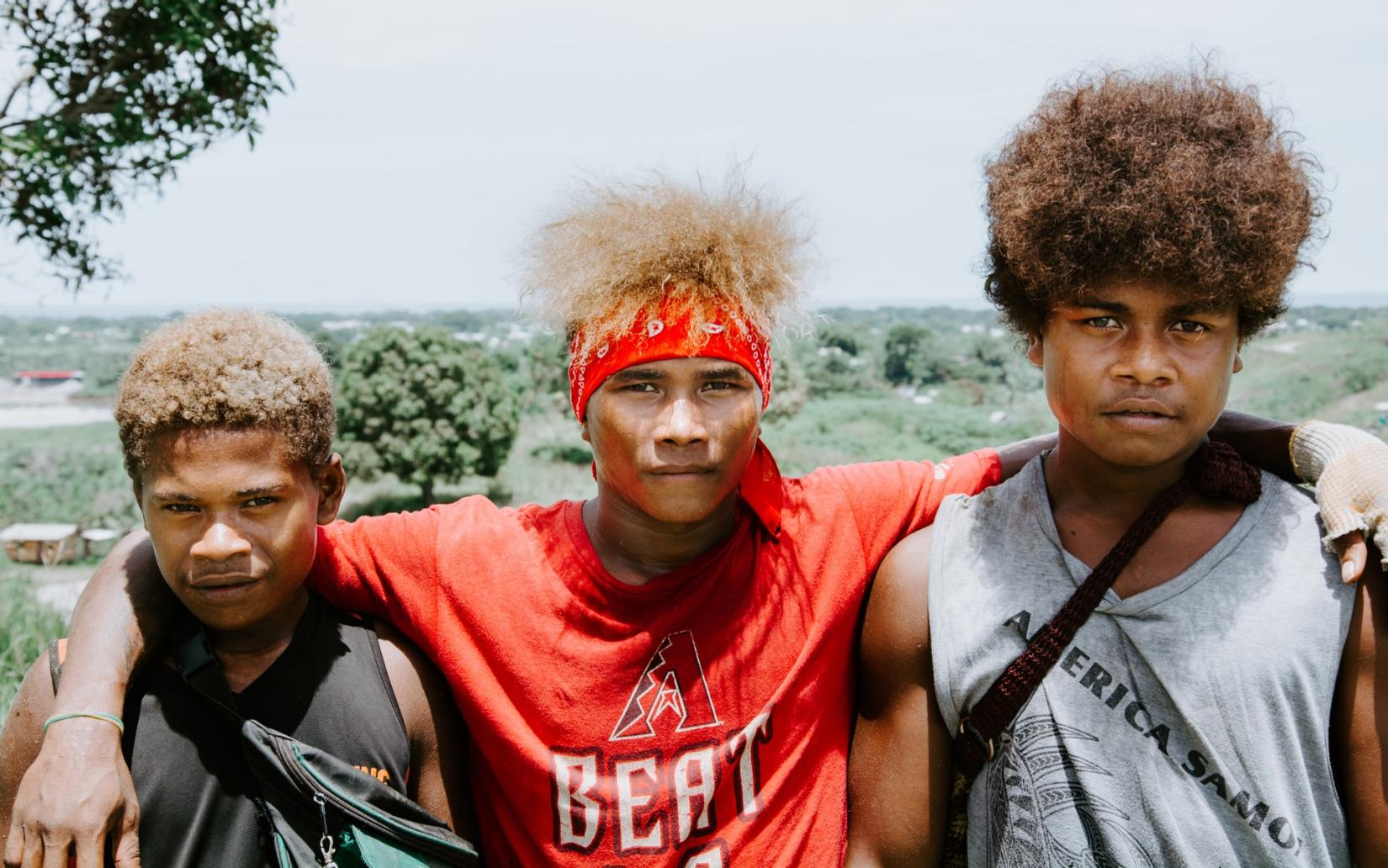
The Solomon Islands consist of six major islands located east of Australia. Despite its rich and unique culture, the country still faces challenges related to poverty. There are four closely related causes of poverty in the Solomon Islands.
Ethnic Tensions
Between 1998 and 2003, the Solomon Islands experienced civil unrest. In September 1998, an armed group, the Guadalcanal Indigenous Revolutionary Army, attacked Malaitan inhabitants’ villages in the Guadalcanal Province. As a result, the governor-general of the Solomon Islands declared a state of emergency, implementing martial law.
Following the attack, Malaitan villagers fled to another island, Malaita. The violence stemmed from decades of economic inequality, with the Malaitan settlers being perceived as much more wealthy compared to the local populations. Income disparity and power caused tensions between islanders to boil over. Income disparity continues to be an issue for the Solomon Islands, particularly between its urban and rural populations.
Location
Being a country consisting of islands, the Solomon Islands are classified as a Small Island Developing State (SID). As such, the nation experiences isolation from the market and international transportation. While the Solomon Islands do have a developed domestic economy and are tapped into the international market, the far-off location of the country makes international transport to and from the Solomon Islands expensive, as well as cumbersome.
The country’s location is a heavy contributor to poverty in the Solomon Islands. Physical isolation from the main international markets means that the country has to spend much more time developing personal relationships with well-recognized markets in North America, Europe and Asia.
Industries
The country’s economy is dominated by agricultural industries, including logging, fisheries, copra, palm oil and cocoa. Logging alone accounted for 11% of economic growth in 2021. While these industries have consisted of more than 73% of all exports as of 2018, the current youth struggle to reconfigure their agricultural upbringing with an economy that strives to integrate into a global economy.
In 2022, approximately 74% of the Solomon Islands’ population remained rural. As a result, this segment of the population was largely dependent on semi-subsistence agriculture, fisheries and forestry. The rural population also used other small-scale, informal revenue streams from within the local communities.
Lack of Employment for Youth
As of 2021, 1.9% of the Solomon Islands’ youth are unemployed. These youth contend with increasing violence and a poor educational infrastructure. Without access to technological or telecommunication skills, youth are disadvantaged in trying to find employment globally. Instead, they may be forced to take up traditional, agricultural-based jobs. While these jobs may provide for youth in the short term, they result in long-term dissatisfaction. The country’s isolated location means that youth must either find work in the country or leave the country altogether.
Moving Forward
The Solomon Islands are already working toward improving its infrastructure. The National Adaptation Program of Action (NAPA) has analyzed some of the environmental causes of poverty in the Solomon Islands. It plans to rehabilitate coastal zones, helping to prevent erosion and other dramatic and negative climate changes. By preserving the environment of the Solomon Islands, NAPA hopes to improve a variety of livelihoods for the local population and lay the foundation for long-term sustainable development.
– Smriti Krishnan
Photo: The United Nations
Updated: May 29, 2024

Combating Counterfeit Medicine in Africa
One of the primary issues in tackling this issue of counterfeit medicine in Africa is a lack of public awareness; many individuals simply do not know they risk purchasing counterfeit or substandard medicine. Those entrenched in the cycle of poverty are most often the victims of counterfeit medicine, as they typically have a smaller variety of medicinal options available to purchase- meaning that they might unknowingly have no choice but to purchase a counterfeit drug. Further, the poor generally opt for cheaper medicines, unaware that such medicines are often counterfeit. This lack of variety and financial accessibility ensures that the counterfeit medicine market preys on the poor in particular.
In the effort to address the issue of counterfeit medicines, Nigeria has emerged as a world leader. The nation’s strategy focuses on three areas: public education regarding counterfeit medicines, increased regulation for medicinal imports to stem the flow of counterfeit medicines and reinforced points of entry to mitigate the smuggling of counterfeit medicines. Since it first began this strategy in 2001, Nigeria has successfully reduced the incidence of these drugs by 90 percent, clearly demonstrating that the issue can be successfully minimized through intentional actions.
Nigeria’s stance as the leader in the battle against counterfeit medicine made it the logical base for Sproxil – a company that has created a mobile phone-based technology to verify the authenticity of purchased medicines. Medicinal companies can register their products with Sproxil, receiving individualized scratch-codes to be placed on their products. Once the product reaches a consumer, the consumer scratches off the code and texts it to Sproxil, who then verifies the code in its database. If the code is not verified, the consumer is immediately alerted and given a number to report it. Considering the widespread use of technologies such as MobileMoney in Africa, the structure of Sproxil is ingenious and entirely conducive to the lifestyle of the average consumer.
To date, Sproxil has provided over five million anti-counterfeit labels, contributing to Nigeria’s strategy of public education regarding counterfeit medicines. The company seeks to expand beyond Nigeria, into Kenya and India next. The effectiveness of simple education and verification techniques in Nigeria serve as a wonderful example of successful strategies against counterfeit medicine in Africa, and also the world on the whole. If other developing nations are able to adopt a similar education and verification-based strategy to combat the counterfeit medicine market, the future is bright, indeed, for the increased mitigation of the issue on a global scale.
– Kailee Nardi
Photo: Flickr
David Oyelowo’s Humanitarian Work for Nigeria
On September 27, 2017, Oyelowo was an honoree at the GEANCO Foundation Benefit and previously in 2015, for the GEANCO Global Promise Award, for his humanitarian work for Nigeria. He has contributed to the foundation which rallies support for women and children in Nigeria. In the past two years, Oyelowo, a Britsh-Nigerian native himself, has been an advocate for women in Nigeria who suffer from human-trafficking, gender inequality and marginalization.
In an interview with CNN, the actor spoke about his motivation for establishing a leadership scholarship fund for Nigerian girls affected by terrorist acts. His motivation was the kidnapping of 300 schoolgirls by a Jihadist group in Chibok, Nigeria in 2014, which sparked the Bring Back Our Girls movement. The actor also attributes his inspiration to the women in his life and Oprah Winfrey, who started her own school to benefit girls in Africa.
“I really value the contribution women make to society,” said Oyelowo, concerning his inspiration for the scholarship fund.
David Oyelowo’s humanitarian work for Nigeria was also demonstrated in 2016 when he joined the Save the Children Global Campaign along with other celebrities. This campaign involved writing an open letter to Nigerian dignitaries and international charities warning them about the tens of thousands of children who would starve due to the Nigerian famine unless proper action was taken to prevent this at the humanitarian emergency donors meeting.
Additionally, David Oyelowo’s humanitarian work in Nigeria has involved advocating against human-trafficking. He was honored in June 2017 at the Diamond Empowerment Fund for using his platform to make a change. The actor spoke to Huffington Post about his objective to “extend his humanitarian efforts to combat the global epidemic of human trafficking.”
– Ashley Howard
Photo: Google
How Education in Monaco is Benefiting the Economy
Monaco is a country located on the southern coast of France, near the border with Italy. It is a primarily French-speaking country, and is best known for its casinos and high standard of living. Monaco has a population of about 30,645 people, with more than 55 percent of the population made up of immigrants.
The Principality of Monaco, its formal name, remains close with France, even down to the legal and educational system. Monaco has a 99 percent literacy rate and a course syllabus that is identical to France’s. Education in Monaco consists of four public schools and two secondary schools and is required for all children in Monaco between the ages of six and 16. During this stage of education in Monaco, students receive high-quality instruction, as there are small classes, a focus on sports and language and options for individual needs and aptitudes.
From secondary school, students can choose to go on to higher education. There are two higher education schools in Monaco, the Lycée Albert 1er, which emphasizes secretarial studies and accounting, and the Lycée Technique et Hôtelier de Monte-Carlo, which focuses on hotel management and hospitality, business, and specialized education. Both of these schools are optional for those who want to further their education.
The focus on education in Monaco is closely linked to France’s education system and benefits from the stability of the principality’s economy, as it is efficient and geared for the workforce. The schools in Monaco are under contract and are approved as French educational establishments, which follow the same timetables, teaching programs and tests as those set by the French national educational authority. Education in Monaco serves a practical purpose, as its economic interests have a direct impact on the principality’s curriculum, thus boosting the economic stability of the principality.
– Jennifer Lightle
Photo: Flickr
Imported Food Affecting Malnutrition in French Polynesia
Pearl fishing remains the second largest industry among the islands. However, as a result of tourism and globalization, the islands have shifted from an agricultural economy to one that depends on food imports.The health issues are not as a result of a lack of food or hunger in French Polynesia but rather the type of food being imported and consumed.
Before French Polynesia became a tourist destination, the food consumed came from local farms and fisheries and was shared among the community. Since then, globalization has had a negative effect on French Polynesian imports and diets.
Once people started vacationing on the island, they wanted foods that were closer to their westernized diets and not naturally found on the island. This paved the way for food imports and grocery stores.
Data collected by the Food Secure Pacific organization shows that chicken is the largest food imported to the islands and a large contributor to the “rapid change in the daily diets” of the Polynesian Islanders over the years. The amount of milk and meat, including chicken, has increased, though the amount of most fruits and vegetables “has remained relatively constant” on the islands.
Overall the addition of processed, imported foods and unhealthy, unbalanced eating habits that have resulted in major dietary issues and malnutrition in French Polynesia.
In 2010 the World Health Organization and United Nations partnered up with the Pacific Food Summit “to make a better future for the Pacific Islanders as a whole”. The intent was to draw attention to the different types of diseases, including malnourishment to obesity, that have been affecting the Pacific islands.
At the Summit, the organizations stated their hope to come to a “resolution on the prevention and control of non-communicable diseases,” malnutrition and food-borne illness in French Polynesia. Their mission includes achieving food security in the Pacific, ensuring all people have access to safe, affordable and nutritious food that enables active and healthy lifestyles.
The World Health Organization’s strategic plan to help malnutrition in French Polynesia also aims to secure a positive future for the children of the islands.
– Jennifer Lightle
Photo: Flickr
Education in Slovakia
Education in Slovakia has a lot of similarities to the education system in the U.S., however there are a few key differences worth noting.
The first one of these major differences is the years of preschool education. In America, most schools have one year each of pre-school and kindergarten, which most students attend at the ages of four and five, respectively. However, Slovakia has a few years of kindergarten education. Most students attend this when they are between three and six years old. Although this level of schooling is not required, kindergarten is a period where students learn numbers, nature, colors, how to draw, shapes and names of the days and months.
The next level beyond kindergarten is primary school, which is required by law. In America, primary school is called elementary school and is six years long, and leads into two years of middle school. In Slovakia, primary school is split into two sections. The first section starts at age six and is four years long (first to fourth grade) and the second section is five years long (fifth to ninth grade). By the time students finish this level of education, they should be about 15 years old. In America, at 15 years old, students would already be halfway into their high school education.
Secondary schools are where the most differences show between American and Slovakia. High school education in America is still focused on core subjects like history, science and math, although they usually delve deeper into the subject matter. Rather than general subjects, you can specialize in certain subjects. For example, it is no longer just science class – you can usually pick between biology, chemistry or physics. Secondary education in Slovakia focuses not only on higher education in these subjects, but vocational training is a key aspect. This better prepares students for the future job market, and also this blend of general education and vocational training is what makes education in Slovakia so effective. The Legatum Institute releases a yearly ranking of countries based on certain aspects. In 2016, according to the Legatum Prosperity Index, Slovakia ranked 30th out of 149 countries evaluated, compared to the U.S., which was ranked eighth.
According to the Organization for Economic Co-operation and Development (OECD), attending secondary education gives students a significant advantage in the job market. Employment rates for those who complete upper secondary education is 70 percent and that rises to 82 percent if they complete tertiary education as well. However, the rate of employment for those without upper secondary education is 30 percent, which is against the OECD average of 55 percent.
Slovakia and America have different ideologies about education, but it is clear that Slovakia’s focus on higher education and vocational training especially have hugely benefitted Slovakia in terms of education for its citizens.
– Scott Kesselring
Photo: Flickr
Addressing Hunger in Taiwan and the World
Hunger in Taiwan is addressed by the current welfare system in place. The Taiwanese government is not only helping its own people, it is also committed to becoming an international leader in feeding the hungry worldwide.
The welfare system in Taiwan is a contributing factor for the decline of hunger in Taiwan. Different welfare programs are distributed to help those in specific age groups. For example, welfare for children and youth is designed to give homeless kids day-care centers so they can be helped and provided for. It also provides school dropouts with study opportunities and enforces parental responsibility.
A similar system is in place for the elderly. The government provides “benevolent homes” to help homeless people over the age of 70, providing them with food and shelter. It is not uncommon for adults to receive welfare aid as well.
The welfare system is in place for those under the poverty line, yet only 2-3 percent of the population is considered for monthly welfare help. Although the Taiwanese government is doing what it can to provide help to the families that need it, they do not want the population to depend on welfare.
The government wants more family intervention and assistance to help each other in need. The local non-profit organization, Taiwan Fund for Children and Families, assists those who are just over the poverty line.
The government also wants to help reduce world hunger. The Taiwanese government has committed to donate 300,000 tons of rice to 33 different countries. Over 17,300 tons of rice has been distributed in 2016. This commitment to feed hungry people in the world has gotten the Taiwanese government praise from African nations.
The organization, Food for the Poor, has also praised Taiwan for its continued contributions. According to Food for the Poor, Taiwan has provided food for tens of thousands of people around the world.
By providing assistance to residents in need, as well as others around the world, Taiwan has proven its commitment to ending hunger worldwide. It stands as a good example for handling hunger domestically and abroad.
– Daniel Borjas
Photo: Flickr
Hunger in Lesotho
Lack of Resources
Lesotho’s economy and population rely heavily on agriculture; however, in recent years there has been severe drought. As a result, only about 20 percent of their demand for food has been met causing harsh food shortages across the country.
The World Food Programme (WFP) has been present in Lesotho since 1965, and strives to work with the government and communities to promote resilience and disaster risk reduction. As the country is susceptible to drought, the WFP works to prepare communities for changes in climate by providing food assistance.
The WFP provides two meals per day to 250,000 students in elementary schools across Lesotho. These meals act as a safety net for children who face food insecurity.
HIV/AIDS
While the country has a small population of about two million, it has the third highest rate of HIV/AIDS in the world. Approximately 23 percent of the population (500,000 people) has HIV/AIDS. The prevalence of the disease with no cure substantially exacerbates the issue of hunger.
Since 2006 the United States, through the President’s Emergency Plan for AIDS Relief (PEPFAR) has committed more than $380 million to a bilateral HIV response in Lesotho. In April 2016, Lesotho became the first country in Africa to launch the “Test and Treat” program which ensures that all those who test HIV positive are eligible to begin treatment. This provides a more direct approach to addressing the HIV epidemic.
Solutions
While there is not one right way to address the issue of hunger in Lesotho, efforts including HIV prevention and treatment, coupled with disaster preparedness efforts, can significantly help to reduce food insecurity.
– Sarah Jane Fraser
Photo: Flickr
4 Causes of Poverty in the Solomon Islands
The Solomon Islands consist of six major islands located east of Australia. Despite its rich and unique culture, the country still faces challenges related to poverty. There are four closely related causes of poverty in the Solomon Islands.
Ethnic Tensions
Between 1998 and 2003, the Solomon Islands experienced civil unrest. In September 1998, an armed group, the Guadalcanal Indigenous Revolutionary Army, attacked Malaitan inhabitants’ villages in the Guadalcanal Province. As a result, the governor-general of the Solomon Islands declared a state of emergency, implementing martial law.
Following the attack, Malaitan villagers fled to another island, Malaita. The violence stemmed from decades of economic inequality, with the Malaitan settlers being perceived as much more wealthy compared to the local populations. Income disparity and power caused tensions between islanders to boil over. Income disparity continues to be an issue for the Solomon Islands, particularly between its urban and rural populations.
Location
Being a country consisting of islands, the Solomon Islands are classified as a Small Island Developing State (SID). As such, the nation experiences isolation from the market and international transportation. While the Solomon Islands do have a developed domestic economy and are tapped into the international market, the far-off location of the country makes international transport to and from the Solomon Islands expensive, as well as cumbersome.
The country’s location is a heavy contributor to poverty in the Solomon Islands. Physical isolation from the main international markets means that the country has to spend much more time developing personal relationships with well-recognized markets in North America, Europe and Asia.
Industries
The country’s economy is dominated by agricultural industries, including logging, fisheries, copra, palm oil and cocoa. Logging alone accounted for 11% of economic growth in 2021. While these industries have consisted of more than 73% of all exports as of 2018, the current youth struggle to reconfigure their agricultural upbringing with an economy that strives to integrate into a global economy.
In 2022, approximately 74% of the Solomon Islands’ population remained rural. As a result, this segment of the population was largely dependent on semi-subsistence agriculture, fisheries and forestry. The rural population also used other small-scale, informal revenue streams from within the local communities.
Lack of Employment for Youth
As of 2021, 1.9% of the Solomon Islands’ youth are unemployed. These youth contend with increasing violence and a poor educational infrastructure. Without access to technological or telecommunication skills, youth are disadvantaged in trying to find employment globally. Instead, they may be forced to take up traditional, agricultural-based jobs. While these jobs may provide for youth in the short term, they result in long-term dissatisfaction. The country’s isolated location means that youth must either find work in the country or leave the country altogether.
Moving Forward
The Solomon Islands are already working toward improving its infrastructure. The National Adaptation Program of Action (NAPA) has analyzed some of the environmental causes of poverty in the Solomon Islands. It plans to rehabilitate coastal zones, helping to prevent erosion and other dramatic and negative climate changes. By preserving the environment of the Solomon Islands, NAPA hopes to improve a variety of livelihoods for the local population and lay the foundation for long-term sustainable development.
– Smriti Krishnan
Photo: The United Nations
Updated: May 29, 2024
Hunger in Namibia: Fighting Aftereffects of Apartheid
Namibia has a Global Hunger Index (GHI) of 31.4, as reported by the International Food Policy Research Institute. This shows an alarming level of hunger in Namibia. What makes it more serious is the fact that Namibia has the lowest percentage reductions in GHI scores since 2000. Though child stunting, child wasting and child mortality have declined, undernourishment has increased to 42.3 percent. The factors that lead to hunger in Namibia include frequent droughts and flooding, putting pressure on the country’s agricultural and livestock production.
Chronic droughts, lack of agricultural land and water shortages result in crop failure. This means that agricultural production is severely low, even though about 70 percent of the population depends on the agricultural sector for their subsistence.
15.8 percent of Namibia’s population lives on less than $ 1.25 per day. Its economy is largely dependent on extraction and limited processing of minerals like diamonds, gold and zinc. It is also one of the largest producers of uranium in the world. However, only 10 percent of the labor force is employed in the mining sector.
Poverty is the most important of the causes of hunger in Namibia, limiting access to food. Another problem is that Namibia is heavily reliant on food imports (60 percent of all its food requirements), which means it is subject to high prices. The proportion of food insecure individuals was estimated at 25 percent in 2016.
Recently, the World Food Programme and Namibia’s National Planning Commission launched a five-year Country Strategic Plan (CSP) with an aim to end hunger in Namibia. The CSP is aligned with the Fifth National Development Plan and the Zero Hunger Roadmap, meant to achieve two strategic wins: enabling the vulnerable population to meet their food and nutrition requirement and ensuring government policies and programme designs are more informed of hunger issues. The support includes implementation of food-based safety net programmes, food management and monitoring system as well as capacity development to sustain the improvements and achieve zero hunger in Namibia.
– Tripti Sinha
Photo: Flickr
Five Facts About Hunger in Southeast Asia and How to Help
Five Facts About Hunger in Southeast Asia
Four Ways to Help
While there is still a lot of work to be done, the global community is taking many positive steps toward reducing, and eventually eliminating, hunger in Southeast Asia. The problem can seem overwhelming at times, but with ongoing innovation and advocacy, the number of people suffering from malnutrition in the region will continue to decrease.
– Aaron Childree
Photo: Flickr