Poverty in Guyana
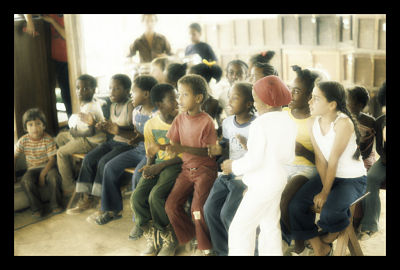
Poverty in Guyana remains a problem. Guyana is a small country located in Northern South America that borders Venezuela, Brazil, and Suriname. Initially a Dutch colony in the 17th century, Guyana came under British control in 1815. The British first used African slave labor to man their sugar plantations, but slavery was finally abolished in 1834. The abolition of slavery in Guyana led former slaveholders to import indentured servants from India, maintaining ethnic and socioeconomic divisions in the colony. Though Guyana achieved independence from the U.K. in 1966, the country is still experiencing the aftereffects of its colonial background.
Societal Divisions in Guyana
Today, approximately three quarters of Guyana’s population descends from slave or indentured servant populations. 43.5% of Guyana’s population is of East Indian descent, and 30.2% is of African descent. These dominant ethnic groups frequently clash, backing ethnically based political parties and voting almost entirely along ethnic lines. Roughly 43% of Guyana’s population lives below the poverty line, with indigenous people comprising the biggest fraction of those affected.
Education and Economy
Though Guyana reports a literacy rate of 91.8%, the poor quality of education and teacher training combined with its suffering infrastructure contribute to a much lower level of functional literacy for most of the population.
Guyana’s emigration rate is also one of the highest in the world, with 55% of its citizens living abroad. The country is one of the largest recipients of remittances relative to GDP out of Latin American and Caribbean countries. 80% of Guyanese citizens with tertiary degrees have left the country, depriving those living in Guyana of invaluable services, including healthcare.
The Guyanese government owned more than 80% of industries until the 1990’s, but mismanagement combined with falling commodity prices and high fuel costs caused the standard of living to fall drastically. The government has since divested itself of many industries, but problems such as deforestation, violent crime and widespread poverty continue to threaten the economy.
Poverty Statistics
Roughly two-thirds of Guyanese citizens living in poverty, or 29% of the population, can be classified as being extremely poor. Most of the poor live in rural areas and work as agricultural laborers. Though Guyana’s farmers have access to adequate land resources, their productivity is extremely low.
Guyana has one of the highest maternal mortality rates in Latin America, with 280 deaths per 100,000 live births. Its infant mortality rate is the 66th highest in the world, with 34.45 deaths per 1,000 live births. These grave statistics can be attributed in part to the low density of physicians, with just .59 doctors per 1,000 people. 1.2 percent of Guyana’s population is living with HIV/AIDS, a rate higher than that of most other Latin American countries.
Solutions to Poverty in Guyana
The World Bank is currently working in Guyana to refocus public expenditures to improve the infrastructure and the quality of health, education, and water services. Advocating for the privatization of most industries, the World Bank hopes to increase opportunities for investment and conserve government resources.
The United Nations Development Programme is also working to empower vulnerable people in Guyana by improving the economic status of indigenous groups and establishing community livelihood projects that will create jobs.
Though Guyana ranks 117th out of 187 countries on the UN’s Human Development Index, continued aid and humanitarian assistance will ensure that its citizens can overcome past subjugation and establish a strong infrastructure.
– Katie Bandera
Sources: CIA, World Bank, UNDP, BBC
Photo: California Historical Society
