Education in Micronesia Leads to Economic Struggle
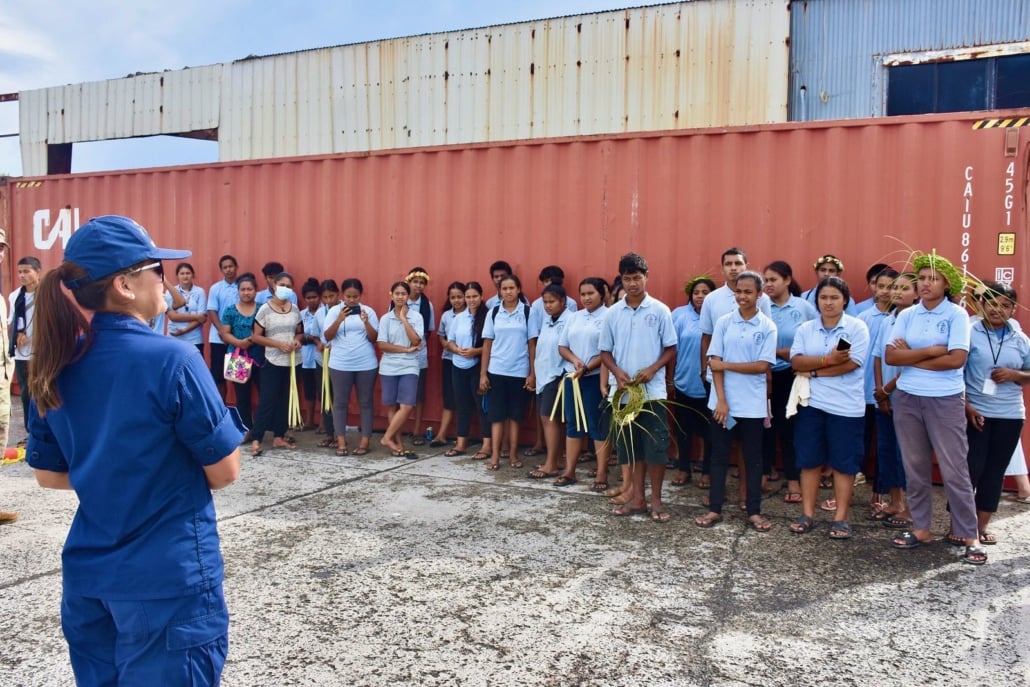
The Federated States of Micronesia is a country in the western Pacific Ocean and comprises more than 600 islands. Although most Micronesians receive a basic education, gaps in the education system have limited opportunities and contributed to ongoing economic challenges. Here is more information about education in Micronesia.
The State of Education in Micronesia
In Micronesia, children must attend grades 1 through 8 (although not all do) and teachers must be certified by the Department of Education. While programs for gifted students are in place, compliance with these requirements is often inconsistent.
Among Micronesians aged 15 to 24, there is a literacy rate of 98.8%, and as of 2022, 77% of the eligible population attended primary school. However, the enrollment rate for secondary school was under 50%, sitting at only 47%. As of 2022, total enrollment in Micronesia had decreased significantly since 2018, from 26,811 enrolled students in 2018 to 24,015 in 2022.
One reason that enrollment in Micronesia is so low is that many students drop out. Many students do not find school interesting and do not believe that attaining an education is necessary to enter the workforce, resulting in almost half of students who begin secondary school dropping out before graduation (as of 2018). The reason that students do not view education as necessary is that they often cannot attain the level of education required to work in the formal sector, even if they tried. The College of Micronesia does not offer Bachelor’s Degrees, which are a prerequisite for many jobs in the formal sector. Thus, immigrants who do have Bachelor’s Degrees often get these jobs instead of native Micronesians, who are instead left to participate in the informal sector. Thus, if Micronesians’ education would not better predispose them to obtain a job anyway, many see little reason to continue.
Education’s Effect on the Economy
This lack of post-primary education in Micronesia leads to economic issues. Between 1999 and 2010, educational attainment in Micronesia increased, with the percentage of Micronesians over the age of 25 who had earned a high school diploma reaching 36%, and the percentage of those who had earned a bachelor’s degree reaching 12%. However, from 1994 to 2010, the unemployment rate stayed constant at 16%. The fact that the College of Micronesia does not offer Bachelor’s Degrees and that many Micronesians cannot participate in the formal sector regardless of educational attainment undoubtedly contributes to these economic troubles.
Solutions to Micronesia’s Educational and Economic Problems
Micronesia has worked to resolve the problems it faces in education and the economy. In 2022, the World Bank designated $17.7 million for the Skills and Employability Enhancement Project in Micronesia. The goal of the project was to create more opportunities for Micronesians to learn technical and vocational skills, in large part through the creation of the Federated States of Micronesia Skills Academy. It aimed to provide these new opportunities to 4,000 Micronesian youth of high school age, and by November 2025, 1,664 students had undergone one year or more of technical and vocational education and training. By providing youth with an education directly applicable to the workforce, this program has allowed youth to make good economic use of the education they receive.
Furthermore, the Asian Development Bank has provided Micronesia with a grant for its Improving the Quality of Basic Education initiative, which aims to train primary school teachers, use assessment tools to improve education, bolster bilingual educational opportunities, and involve families and communities in the administration of schools. Gains have already been made, with students at beneficiary schools demonstrating a 12% improvement in fourth- and sixth-grade math testing and in sixth-grade reading testing. Although there is still work to be done in improving children’s basic educational attainment in Micronesia, this initiative has proven effective in doing so thus far and will hopefully continue to provide children with a solid educational foundation to support their future endeavors.
It is clear that there exists a disconnect between the education that Micronesians receive and the jobs that they go on to get. However, by training Micronesians specifically for the employment they seek, emphasizing the importance of education to Micronesians and improving the education that they have access to, more Micronesians may be able to receive an education and put it to use than ever before.
– Drew Fox, Jackson Mayer
Photo: Flickr
