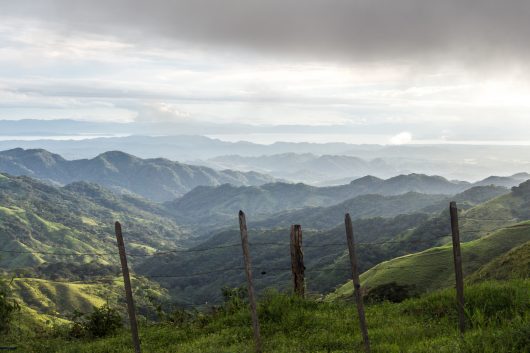
Migrating to Costa Rica from Panama for economic opportunities, many indigenous people are experiencing the consequences of lacking a state ID, specifically the Ngäbe-Buglé people of remote Costa Rica. Originally from Panama, many Ngäbe-Buglé have moved to Costa Rica in search of work, often as coffee farmers. The farmers and their families are deprived of any national healthcare as well as the opportunity to seek a secondary education without a valid ID.
For many, the lack of healthcare leads to preventable deaths. According to the United Nations High Commissioner for Refugees (UNHCR), an expectant mother, 23-year-old Teresa, suffered from leukemia that went undiagnosed because she lacked access to a medical center. Teresa soon found it difficult to walk and experienced frequent fainting.
However, thanks to the registration drive in Costa Rica by the Costa Rican and Panamanian Civil Registry Office, supported by the UNHCR, Teresa and the Ngäbe-Buglé people are receiving assistance with state registration, giving them access to hospitals and much-needed treatment.
For Teresa, this project saved her life as well as her baby’s. “I was fainting and I couldn’t even walk … They came to the house and helped me with the paperwork,” Teresa said, according to UNHCR. After becoming a citizen and being admitted to a hospital, Teresa received a bone marrow transplant as well as chemotherapy.
The outreach program, the Chiriticos Project, travels door-to-door, primarily targeting the Ngäbe-Buglé people during the harvesting season. The reason many Ngäbe-Buglé adults fail to obtain an ID is because they are unaware of the required steps and paperwork.
Often traveling by motorcycle or even on foot, the outreach workers aim to bridge the gap by guiding them through the process. According to UNHCR, about 15,000 Ngäbe-Buglé travel from Panama to Costa Rica without an ID. However, more than 3,600 people have received assistance with registering for an ID since 2014 thanks to the Chiriticos Project.
Chiriticos experience immense deprivation of opportunity in life. Parents often fail to register their child’s birth, making obtaining a birth certificate an overwhelming and nearly impossible feat later in life. Without a birth certificate, children are denied access to secondary schools and forced to return to farming, trapping them in an inescapable circle.
Another way that the UNHCR supports the registration drive is through its campaign #IBelong, which aims to eliminate statelessness by 2024. The campaign is supported by local authorities and assists indigenous people with obtaining an ID and providing legal aid.
One person who reaped the benefits of the registration drive in Costa Rica is 18-year-old mother Elida Andrade. According to The Costa Rica Star, Andrade’s parents, who moved to Costa Rica from Panama for work, never registered Elida’s birth. The effect of their decision was made clear when Andrade tried to enroll in a secondary school. Without a state ID, the state denied Elida access to grants, pushing the possibility of an advanced education out of reach.
The outreach project restored Andrade’s hope by helping her register for a birth certificate and opening the door to her potential education. “That day was one of the happiest days of my life. I now feel like a real Costa Rican,” Andrade said. She quickly registered her one-year-old son Pablo’s birth to prevent him from facing the same problem later in life.
Andrade, who plans on studying in the medical field, expressed her enthusiasm and appreciation for the registration drive in Costa Rica. “I will be the pride of my parents and my community. In the meantime, I will promote birth registration so that all my people can assert their rights. The future is ours,” Andrade said, according to The Costa Rica Star.
The registration drive in Costa Rica has unveiled a whole new realm of possibilities for some Ngäbe-Buglé people living in remote, poor areas. While providing a pathway to education for some, and opening access to medical care to others, the registration drive is essential for the wellbeing of the Ngäbe-Buglé.
However, according to UNHCR, more than 10 million people worldwide suffer from statelessness. Gaining citizenship is just another step to improve a nation’s most remote and poor areas.
– Austin Stoltzfus
Photo: Flickr

Revolutionizing Emergency Services in Kenya Through an App
In places like the U.S., one can dial 911 and expect to receive help within a reasonable amount of time. In places like Nairobi, there are fifty different numbers available to call for emergency services, some of which remain unanswered because of the swarm of prank calls flooding the lines. Emergency services in Kenya cannot reach people in need if they are simply unable to be connected.
Flare connects a person in an emergency to a responder, who then uses one of the many tools available to track and locate the appropriate services nearest to the emergency. Responders have access to over fifty hospitals that have registered with Flare, as well as the option to choose the most suitable vehicle depending on equipment on board and the expertise of the staff. While emergency service numbers are still relevant, they’re not always as quick or successful as Flare has proven to be.
Flare has revolutionized emergency services in Kenya by putting people first with the following innovations:
By using Google Maps, dispatchers tell drivers the quickest route to an emergency facility around traffic jams.
By locating and recording where functional fire hydrants are, fire agencies can save valuable time.
As Dolkart said to BBC News, “We learned there is a lack of ambulances between 7 a.m. and 9 a.m. due to shift handovers.” Staggering the shift changes for ambulance companies makes sure there are always some ambulances available.
The creators of Flare saw where the emergency services in Kenya were failing people and decided to create something that would improve the system’s flaws. There have been countless lives that have been saved due to police arriving on time, ambulances reaching an injured person and a facility within half an hour and plenty more. With emergency services improving so much in Nairobi, Kenya, one can only hope that this app can expand to more places where this problem still persists.
– Irimar Waters
Photo: Flickr
Three Organizations Improving Sustainable Agriculture in Comoros
Sustainable agriculture is an ever-present priority in the Comoro Islands. More than 80 percent of the rural population relies on small-scale agriculture for food and income, therefore sustainable farming practices have become a major necessity. Current agricultural practices do not prevent soil erosion or retain field fertility, but there are a number of projects aiming to improve sustainable agriculture in Comoros. Three organizations operating these projects are:
The Engagement Communautaire pour le Developpment Durable (ECDD) project works toward environmental conservation in Comoros through the introduction of sustainable farming techniques. These methods increase crop yields and protect natural resources like soil and water. One recommended activity is market gardening, which generates income and reduces reliance on traditional agricultural practices. The ECDD project also provides the necessary support for the people to implement the new techniques.
The Food and Agriculture Organization (FAO) of the U.N. also plays a big role in the improvement of sustainable agriculture in Comoros. Some of the focuses of the U.N. organization are boosting domestic food production and improving food safety. Much of the population is affected by low-quality and unsanitary foods, and farmers don’t have access to the technology and methods needed for sanitary production. Additionally, this U.N. organization, as well as the World Bank and the Global Environmental Facility, have run programs supporting sustainable fishing and agroforestry. These are two other industries that are critical for life in Comoros.
Finally, the International Fund for Agricultural Development (IFAD) has a number of projects in Comoros. One of these projects is the Nioumakele Small Producers Support Project, which developed and popularized the practice of planting live fences around plots. This technique has benefited sustainable agriculture in Comoros by both rehabilitating soil in the region and increasing agricultural and dairy production levels. The project officially closed in 1997, but the environmental impact is still growing as local farmers continue to use the methods and take responsibility for the sustainable activities.
Ultimately, sustainable agriculture in Comoros needs to be improved. So much of the nation depends on agriculture, and in order for the country to withstand climate change and further development, it needs to implement more sustainable practices. However, through the help of organizations like the ECDD, FAO and IFAD, the Comoro Islands have the potential to create a much more environmentally-conscious agricultural industry.
– Liyanga de Silva
Photo: Flickr
A Global Health Institute in Lebanon
Under its “Health 2025 initiative,” AUB’s vision of contributing to national healthcare reform inspired the idea of establishing a Global Health Institute in Lebanon. An additional Health Sciences Complex will also be developed to complement the institute in its goal of empowering AUB’s footprint in health, for it to become a renowned medical center serving the clinical and surgical needs of the Arab population on a global scale.
According to Khuri, the Global Health Institute in Lebanon will contribute positively to the development of a “sustainable future for health in the Arab World.” He also acknowledged his fellow board members, associate vice president for health affairs Shadi Saleh and executive vice president Dean Mohamed Sayegh. Their collaborative efforts over a period of 18 months have ultimately launched the institution.
Donors & International Supporters
The Global Health Institute in Lebanon relies on the support of its generous donors. A five-year $1.35 million core foundational grant was given by Canada’s International Development Research Centre (IDRC) in recognition of the university’s ambitious healthcare mission. The IDRC leadership expressed its enthusiasm in collaborating with AUB to support new research leaders on current issues in healthcare, society, economics and the environment.
Interdisciplinary Programs
Currently, the Global Health Institute in Lebanon has launched three interdisciplinary programs directed by different health units within the university. The Conflict Medicine Program, the Refugee Health Program and the Nutrition, Obesity, and Related Disease Program have already exceeded expectations with their research projects, capacity-building events and outreach actions. New programs will be launched in the near future to broaden the range of activities and topics addressed by the institution.
Strategic Agreement with Humanitarian Leadership Academy
In August 2017, AUB’s Global Health Institute in Lebanon signed a Memorandum of Understanding with the Humanitarian Leadership Academy (HLA), a global learning initiative providing people the skills needed to effectively prepare for and respond to crises. The Global Health Institute will pilot research, develop new structured learning pathways and contextualize content through advanced learning tools such as online courses to deliver necessary humanitarian capacity-building assessments to HLA.
One of the first activities organized by both parties was a workshop offered to representatives of different local and international organizations in Lebanon. The one-day workshop was focused on supporting local stakeholders responding to the Syrian Crisis.
Director of the Middle East Centre Brigitte Khair-Mountain praised the workshop for being a great opportunity to validate gaps in humanitarian learning present in the Middle East. She added that the workshop will allow stakeholders to prioritize best practices based on the region’s previous experiences in humanitarian response.
– Lea Sacca
Photo: Flickr
Sustainable Agriculture in the Solomon Islands
Sustainable agriculture in the Solomon Islands is not as big a concern as it is in regions where domestic agriculture is the main source of food and income. The Solomon Islands does have a small agricultural sector, but for the most part, the nation is very dependent on imported food. Some projects in the country have focused on creating more sustainable agricultural practices, but most focus on disaster preparedness.
Help from Multinational Organizations
Since the Solomon Islands is a Pacific Island country, it is very susceptible to natural disasters, particularly with the increased volatility of climate change. These disasters typically threaten food security and make it very difficult to consistently import food into the country. Organizations like the Food and Agriculture Organization of the United Nations (FAO) have worked with the government of the Solomon Islands to improve disaster preparedness and response. Additionally, the FAO has worked with the Ministry of Health to improve standards of sanitization for imported foods and other food control systems.
The Khaled bin Sultan Living Oceans Foundation also operates in the Solomon Islands. A major project conducted by the organization was the Sustainable Seaweed Farming project. Seaweed farming is a common practice on the islands, and with increased pollution, it is important that practices for sustainable agriculture in the Solomon Islands are in use. This project helped manage overharvesting and helped reduce damage to the coral reef ecosystems.
Government Policy Focused on Agriculture
The Solomon Islands does have its own ministries and departments that manage agricultural issues on the islands. The Ministry of Agriculture and Livestock creates and disseminates policy regarding plans for sustainable rural development, food security and improved livelihoods. These policies are very transparent and easily accessible.
Additionally, these policies are comprehensively broken down into four categories:
These categories show a good understanding by the government of who has a stake in the agriculture industry. It shows participation by the government in rural communities, in which almost 80 percent of the population lives. Most of these people additionally rely on agriculture for a portion of their income.
Ultimately, sustainable agriculture in the Solomon Islands is doing quite well, despite it not being a major focus for the island. Through the diligence of the government and projects run by independent organizations the Solomon Islands has implemented green farming and development practices and hopefully will continue to do so in the future.
– Liyanga de Silva
Photo: Flickr
How the US Benefits from Foreign Aid to Costa Rica
Costa Rica is a relatively small country in Central America with around 4.9 million inhabitants. Considered one of the more stable countries of the region, it ranks highly on the Human Development Index, at 69 in 2015. It has a highly educated workforce, which stems from the 6.9 percent of its annual budget it spends on education. Much of its population is bilingual in Spanish and English.
The Success Story of Costa Rican Development
As well, it is known for is environmentally sustainable practices, as it is the only country in the world that meets all five of the U.N. Development Program measures for environmental sustainability. In 2016, 98 percent of its electricity was generated from green sources, and it plans to become carbon-neutral by 2021.
But for all its successes, it was once, like many developing countries, on the list of those receiving foreign aid from the U.S. After receiving more than $2.7 billion in foreign aid, Costa Rica graduated from the program in 1996. This suggests Costa Rica achieved competency and shows the success of foreign aid.
But what are the U.S. benefits from foreign aid to Costa Rica? By funneling billions of dollars into Costa Rica, the U.S. has helped another country, but does that amount to worthwhile U.S. benefits from foreign aid to Costa Rica?
Electrifying Trading Partners for Mutual Growth
For one thing, by increasing economic stability for Costa Rica, the U.S. has also increased the nation’s purchasing power. In 1995, exports of non-traditional products totaled $1.4 billion. At almost 54 percent of total exports, Costa Rica imported more goods than Poland, Hungary and Romania combined. Stable growth of another nation, therefore, electrifies the U.S. economy as well, creating wealth in both countries.
Consider, for example, the concept of bilateral economics that’s been in place since the 1980s. It eliminated tariffs, opened markets and reduced barriers for imports and exports between the two countries. As one of Costa Rica’s largest trading partners, the U.S. has been able to export billions of dollars worth of products to Costa Rica in a way that alleviates the hindrance of taxes for both countries.
Similarly, it helps create allies for the U.S. and secure its global interests. As noted in a Washington Post article, aid to Costa Rica in the 1980s helped it become a nation of stability, democracy and human rights, as well as agreeing to regional trade agreements that give the U.S. a positive position. In this way, the U.S. benefits from foreign aid to Costa Rica are not only economic, but also strategic and political.
– Nick McGuire
Photo: Flickr
Port Infrastructure in Sao Tome and Principe Key to Nation’s Growth
Sao Tome and Principe, Africa’s smallest country in terms of geographical size, relies heavily on the production of cocoa, which has been steadily declining due to droughts and mismanagement. Despite the decrease in production, the economy has been growing at a rate of around 4 percent, but it is not enough to alleviate the country’s widespread poverty. An estimated 62 percent of the population lives in poverty.
About 100,000 people, almost half of the island nation’s population, live without electricity and one-third of the available roadways remain unpaved, which makes road travel difficult.
Investing in projects like paved roads and other areas encompassed by infrastructure in Sao Tome and Principe has the potential to jumpstart the alleviation of poverty across the country. Improving the country’s infrastructure opens up other doors for Sao Tome and Principe’s economy to grow and flourish. The World Bank and the government of Sao Tome and Principe are working together to introduce a multitude of reforms promoting growth in the financial sector and infrastructure.
The Urban/Rural Divide
The urban/rural divide is often a driving force for inequality. As countries urbanize, many people move towards the cities and leave rural areas behind. The people left in rural areas often have trouble keeping up with the shift and fall into a pattern of poverty. This is the case for Sao Tome and Principe.
Infrastructure in Sao Tome and Principe is worst in rural areas, but many initiatives have been implemented to improve the infrastructure so that it is equal to urban areas. The African Development Bank Group, a development finance institution, has a goal to diversify rural infrastructure to keep up with Sao Tome and Principe’s growing agriculture strategy.
Sao Tome and Principe’s Location
Oftentimes, poor developing countries fall into a poverty trap based on their geographical location. Many of the most impoverished countries in the world are landlocked. Sao Tome and Principe, being an island nation, is in a much better position to escape poverty than many other countries with a less fortunate geographic location. The islands are situated in a strategic location for international trade via waterways.
Sao Tome and Principe’s government is seeking international investors for the creation of a deepwater port. The government hopes that with the emergence of the deepwater port, Sao Tome and Principe will become an international shipping point connecting central Africa with the United States, Asia and Europe.
The International Development Association
The International Development Association (IDA) is the World Bank’s sector dedicated to helping the world’s poorest countries. Nearly 50 percent of the IDA’s funds go towards programs in Africa. Currently, in Sao Tome and Principe, the IDA is funding projects that total $22 million. The projects are currently focused on the country’s social support sector, advocating for equality for all citizens of Sao Tome and Principe.
Despite its size, infrastructure in Sao Tome and Principe has the potential to make the country a major player on the world’s stage. Continued development in this area can help the country improve living conditions for its most vulnerable citizens.
– Sonja Flancher
Photo: Flickr
How the US Benefits from Foreign Aid to Guyana
One major goal for the U.S. is to effectively address the global HIV/AIDS epidemic, which is why the U.S. President’s Emergency Plan for AIDS Relief (PEPFAR) was established in 2003. Through PEPFAR, Guyana has been able to significantly improve its response to HIV. For instance, PEPFAR helped establish the National Public Health Reference Laboratory (NPHRL) and supported the development of a prevention of mother to child transmission (PMTCT) program.
It also helped the Guyanese national blood safety program to reach international standards, established functioning supply chain management and improved strategic information. As a result of these initiatives, Guyana saw significant improvement in its response to HIV/AIDS and has also become more efficient in working on its own to fight this disease.
Recently, however, there have been drastic reductions in PEPFAR’s operations in Guyana. For instance, PEPFAR no longer provides antiretroviral drugs to Guyana, and the country has assumed responsibility for all cervical cancer and PMTCT activities, blood safety in the country and human resources for the NPHRL. Although this makes it a challenge for the country to continue responding strongly to this epidemic, it also makes Guyana self-sufficient as it gathers domestic funds for HIV/AIDS programs.
However, PEPFAR is still crucial in Guyana because there are many ways the country still needs assistance. For instance, there are still “gaps in core strategic information, laboratory and supply chain systems as well as pervasive stigma and discrimination” in the country. By helping to establish a sustainable national HIV program in Guyana, PEPFAR would achieve its goal. In that way, the U.S. benefits from foreign aid to Guyana.
Additionally, the U.S. benefits from foreign aid to Guyana because the U.S. is committed to combatting drug trafficking, and Guyana is one of the most frequently used transit points for this illegal activity. U.S. assistance through the Caribbean Basin Security Initiative (CBSI) helps Guyana effectively tackle drug trafficking. The CBSI-funded programs in Guyana work to improve law enforcement capabilities, “protect borders and ports, strengthen workforce development, and promote anti-money laundering effectiveness,” efforts that address key concerns shared by both Guyana and the U.S. Additionally, U.S. assistance also helps promote law enforcement professionalization and effective narcotics investigations, thereby improving the anti-drug trafficking strategy in Guyana.
There are other ways the U.S. benefits from foreign aid to Guyana, as it helps the country effectively respond to issues such human trafficking and other crimes that also affect the U.S. Hopefully, with continued collaborated efforts from both the U.S. and Guyana, the country will be able to effectively address all of these issues.
– Mehruba Chowdhury
Photo: Google
Confronting Oral Health in Haiti
Although Haiti is facing some tough times combating these major public health concerns, it is a must that dental care is provided, as it interlinks with one’s overall wellness. Infections like gum disease can heighten the chances of HIV transmission, tooth decay can contribute to poor nutrition and oral diseases can lead to bloodborne infections and ultimately cause heart attacks.
Haiti has about one dental hygienist for every 10,000 Haitians, and the majority of these dentists practice in or around the country’s capital of Port-au-Prince, leaving the remaining 48 percent living in rural Haiti with restricted access to dental care. In the aftermath of the 2010 earthquake, the workforce for oral health in Haiti has faced countless challenges, mandating aid from international oral health organizations, including Health Volunteers Overseas (HVO).
HVO is a nonprofit organization committed to developing the resources and quality of healthcare in developing countries through education, training and professional development. HVO works with the American Dental Association Foundation (ADA) and the American Association of Oral and Maxillofacial Surgeons on international oral health programs.
To confront the issues that Haiti’s oral healthcare community is facing, HVO and ADA established the Adopt-a-Practice: Rebuilding Dental Offices in Haiti program. Through the program, the ADA and HVO have helped dentists in Haiti who were impacted by the earthquake to reconstruct their practices. The Adopt-a-Practice program has raised more than $129,000 in contributions from dentists and donors across the globe. Many of these doctors have been able to receive donations and new equipment in order to re-establish themselves and continue providing care.
HVO has also been collaborating with the Faculté d’Odontologie, Haiti’s only dental school that graduates about 15 to 20 students annually, for a training program that focuses on oral health in Haiti. A large percentage of Faculté d’Odontologie students leave the country once finished with school to practice elsewhere. The school’s goal is to graduate a group of dentists who can serve the Haitian community.
The more dentists that graduate from the Faculté d’Odontologie and are willing to stay in Haiti and serve their local community, the more they can contribute to improving dental health for Haitians that need it. Building a community of Haitian dentists all around Haiti is just the first step in the right direction.
– Zainab Adebayo
Photo: Flickr
Registration Drive in Costa Rica Opens New Opportunities
Migrating to Costa Rica from Panama for economic opportunities, many indigenous people are experiencing the consequences of lacking a state ID, specifically the Ngäbe-Buglé people of remote Costa Rica. Originally from Panama, many Ngäbe-Buglé have moved to Costa Rica in search of work, often as coffee farmers. The farmers and their families are deprived of any national healthcare as well as the opportunity to seek a secondary education without a valid ID.
For many, the lack of healthcare leads to preventable deaths. According to the United Nations High Commissioner for Refugees (UNHCR), an expectant mother, 23-year-old Teresa, suffered from leukemia that went undiagnosed because she lacked access to a medical center. Teresa soon found it difficult to walk and experienced frequent fainting.
However, thanks to the registration drive in Costa Rica by the Costa Rican and Panamanian Civil Registry Office, supported by the UNHCR, Teresa and the Ngäbe-Buglé people are receiving assistance with state registration, giving them access to hospitals and much-needed treatment.
For Teresa, this project saved her life as well as her baby’s. “I was fainting and I couldn’t even walk … They came to the house and helped me with the paperwork,” Teresa said, according to UNHCR. After becoming a citizen and being admitted to a hospital, Teresa received a bone marrow transplant as well as chemotherapy.
The outreach program, the Chiriticos Project, travels door-to-door, primarily targeting the Ngäbe-Buglé people during the harvesting season. The reason many Ngäbe-Buglé adults fail to obtain an ID is because they are unaware of the required steps and paperwork.
Often traveling by motorcycle or even on foot, the outreach workers aim to bridge the gap by guiding them through the process. According to UNHCR, about 15,000 Ngäbe-Buglé travel from Panama to Costa Rica without an ID. However, more than 3,600 people have received assistance with registering for an ID since 2014 thanks to the Chiriticos Project.
Chiriticos experience immense deprivation of opportunity in life. Parents often fail to register their child’s birth, making obtaining a birth certificate an overwhelming and nearly impossible feat later in life. Without a birth certificate, children are denied access to secondary schools and forced to return to farming, trapping them in an inescapable circle.
Another way that the UNHCR supports the registration drive is through its campaign #IBelong, which aims to eliminate statelessness by 2024. The campaign is supported by local authorities and assists indigenous people with obtaining an ID and providing legal aid.
One person who reaped the benefits of the registration drive in Costa Rica is 18-year-old mother Elida Andrade. According to The Costa Rica Star, Andrade’s parents, who moved to Costa Rica from Panama for work, never registered Elida’s birth. The effect of their decision was made clear when Andrade tried to enroll in a secondary school. Without a state ID, the state denied Elida access to grants, pushing the possibility of an advanced education out of reach.
The outreach project restored Andrade’s hope by helping her register for a birth certificate and opening the door to her potential education. “That day was one of the happiest days of my life. I now feel like a real Costa Rican,” Andrade said. She quickly registered her one-year-old son Pablo’s birth to prevent him from facing the same problem later in life.
Andrade, who plans on studying in the medical field, expressed her enthusiasm and appreciation for the registration drive in Costa Rica. “I will be the pride of my parents and my community. In the meantime, I will promote birth registration so that all my people can assert their rights. The future is ours,” Andrade said, according to The Costa Rica Star.
The registration drive in Costa Rica has unveiled a whole new realm of possibilities for some Ngäbe-Buglé people living in remote, poor areas. While providing a pathway to education for some, and opening access to medical care to others, the registration drive is essential for the wellbeing of the Ngäbe-Buglé.
However, according to UNHCR, more than 10 million people worldwide suffer from statelessness. Gaining citizenship is just another step to improve a nation’s most remote and poor areas.
– Austin Stoltzfus
Photo: Flickr
Bettering Citizens’ Lives With Infrastructure in Swaziland
Swaziland is a small, middle-income country in southern Africa that was once heavily influenced by British and Dutch rule in the nineteenth and twentieth centuries. Since it was granted its freedom in 1968, the Swazi government has worked hard to create a stable and thriving community for its inhabitants, one of its main focuses being infrastructure in Swaziland.
Swaziland has a GDP of approximately $3.73 billion and a population of 1.1 million. It is estimated that 63 percent of the Swazi population lives under the poverty line and lives in areas that lack adequate access to basic needs, such as reliable roads and a constant food source. To address these issues surrounding citizen well-being, the Board of Directors of the African Development Bank Group (AfDB) drafted a Country Strategy Paper (CSP) for 2014 to 2018 that focuses on promoting economic growth and improved quality of life in Swaziland.
This document, while tenacious, hopes to address the country’s status as a lower-income country with moderate to high poverty and inequality rates. The board drafted two main goals in its legislature:
Within the first goal of the legislature, the board’s plan was to address infrastructure in Swaziland by improving the country’s amenities to match those of surrounding countries. This was meant to aid the integration of disadvantaged groups of society by giving them better access to opportunities coming from improved infrastructure. Since the CSP was drafted in 2014, there have already been progressive steps taken in addressing these issues.
First, in 2014, the Board of Executive Directors of the AfDB approved a $47 million loan to improve the quality of the Manzini-Mbadlane highway, a highly trafficked roadway. This job not only provided 250,000 Swazis with economic benefits regarding reduced travel cost and time, but it also provided a more stable route to and from South Africa, a popular tourist destination and stable trading partner.
Additionally, in May 2016, Swaziland received a $63 million loan in order to finance the second phase of the Lower Usuthu Smallholder Irrigation Project in the southeastern part of the nation. This loan provided an opportunity for small, poorer farmers to use the natural resources provided by the Lower Usuthu River Basin to get involved with the commercial agriculture sub-sector, which is an excellent opportunity for both the underserved citizens of Swaziland as well as the country’s overall economy.
However, contrary to the active work being done to improve infrastructure in Swaziland, the country has not seen much development in terms of official action being taken to strengthen governance and institutional capacity. But, in recent years, the country’s lawmakers have drafted plans that focus on bettering healthcare and the decentralization of hospitals in Swaziland.
The Swaziland Ministry of Health National Health Sector Strategic Plan, which was drafted for 2014 to 2018, has outlined some key procedures surrounding the improvement of responsiveness, sustainability and creating a distinctive organizational culture within Swaziland’s healthcare sector. These plans will be funded by the World Bank and the European Union, and are being led by the Health Partners Southern Africa, which will be working with the Health Information Systems Program, the Institute for Health Measurement as well as the Strategic Development Consultants. The hope is that the goals stated in these drafts will come into effect in the next few years.
While there is still a long way to go in terms of improving infrastructure in Swaziland, the country’s lawmakers are working with their economic resources to find ways to better the lives of their country’s inhabitants. With loans and foreign support, the hope is that Swaziland will acquire the means to reach its goal of becoming a first world country.
– Alexandra Dennis
Photo: Flickr