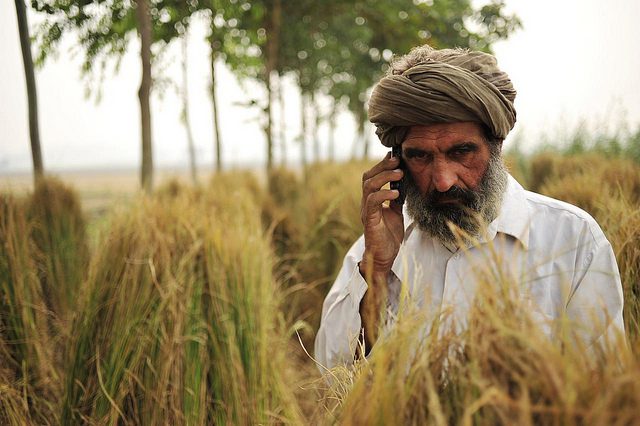
 India is an agrarian economy and over 58 percent of the rural households depend on agriculture as their principal means of livelihood. With the recent help of tech giant Microsoft, Indian farmers have begun to use AI to increase efficiency, further encouraging them to harvest a good crop.
Every year since 2013, more than 12,000 suicides have been reported in the agricultural sector with 10 percent accounting for farmer suicides. Collectively, seven states (Maharashtra, Karnataka, Telangana, Madhya Pradesh, Chhattisgarh, Andhra Pradesh and Tamil Naidu) accounted for 87.5 percent of the total suicides in the farming sector. Additionally, the reasons for farmers’ suicides have varied widely including high input costs, low yields, disintegration with markets, mounting loans, water crisis and urban consumer-driven economic policies.
In partnership with the International Crop Research Institute for the Semi-Arid Tropics (ICRISAT), Microsoft developed an AI-sowing app. With the app, Indian farmers use AI to increase their agricultural income, giving them greater price control over their crop yields.
On his two-day visit to India in 2017, Microsoft CEO Satya Nadella highlighted the benefits of AI in agriculture. In an interaction with Microsoft engineers in India, Nadella said, “Taking AI to the oldest industry on our planet, agriculture, is something we have already been doing in collaboration with local stakeholders like ICRISAT, which just at a little distance away from the campus. If you can increase the yield [with the help of AI] in agriculture, the kind of impact it will have on economies like India will be huge.”
The beta version of the new sowing application was tested in June 2016 in Kurnool district of the Indian state Andhra Pradesh and was applied only to the groundnut crop. The results showed a 30 percent higher average in yield per hectare. The pilot also confirmed that the advisories received through the app via SMS were relevant and accurate. The sowing app provides the best times to sow depending on weather conditions, soil and other indicators, relieving Indian farmers from inaccurate forecasts.
The app relies on business intelligence tools that give clear insights on the soil health, fertilizer recommendations and seven-day weather forecasts powered by the world’s best available weather observation systems and global forecast models. So far, Indian farmers use AI-powered apps in a few dozen villages in Telangana, Maharashtra and Madhya Pradesh.
Powered by Microsoft Cortana Intelligence Suite, the app provides updates to Indian farmers. Indian farmers use AI for sowing recommendation, seed treatment, optimum sowing depth, preventive weed management, land preparation, farmyard manure application, recommendation on harvesting, shade drying of harvested pods and storage. The SMSs can also be delivered in regional languages like Telugu and Kannada. Through a basic phone capable of receiving text messages, farmers can use AI with no capital expenditure.
Microsoft’s next collaboration could help farmers fight pest risk. In collaboration with India’s largest producer of agrochemicals, United Phosphorous (UPL), Microsoft aims at leveraging AI and machine learning to calculate the risk of pest attack.
But interestingly, Indian farmers are not oblivious to digital farming. In the past, Tata Consultancy Services (TCS) Innovation Labs introduced mKrishi, which allowed farmers to receive advice on pest information, crop prices, weather conditions and more in their local languages.
Tech innovations and partnerships like that of Microsoft and TCS could help Indian farmers with information that is more data-driven and based on pure analytics. Whether such efforts lower the suicidal rates of Indian farmers or not is yet to be seen. But if the results are positive, it will be a boon to many agriculturally reliant Indian households that have faced huge losses.
– Deena Zaidi
Photo: Flickr

Three Organizations Working to Eliminate Poverty in Mexico
Poverty in Mexico, and crime as a result of that poverty, are well-known problems. In Mexico, there is a rising level of violence as well as stagnant wages and declining purchasing power.
In 2014, 53.2 percent of the country lived below the national poverty line by the broadest measure of poverty. This means they lack sufficient income to meet basic needs including food, health, education, clothes, housing, transport and more.
On average, Mexican laborers worked a total of 2,246 hours in 2015, the most of the 35 members countries of the Organization for Economic Co-operation and Development (OECD). However, those workers earned on average a total of only $14,867, the lowest in the OECD.
According to the U.S. Agency for International Development (USAID), Mexico received $338 million in aid that was broadly classified as economic development and military assistance in 2015.
The amount of foreign aid to Mexico varies each year but it has been about 0.7 percent of overall U.S. foreign aid since 2010. Overall foreign aid represents about 1 percent of the federal budget.
There are several initiatives that address poverty and seek to help those living in poverty in Mexico. Three organizations running initiatives like these are:
Freedom from Hunger
Freedom from Hunger uses microfinance as a self-assist support tool to help the poor reduce the day-to-day uncertainties of cash management. It also promotes the delivery of integrated financial services to increase economic and food security of the poor in Mexico and Central America, especially for women and girls.
Freedom from Hunger also developed and promoted “value-added” or “integrated” microfinance programs that pair financial services with education and health protection.
The education programs engage women during microfinance meetings with practical skills to promote better health, nutrition, business and money management through the use of dialogue, story, song, demonstrations and pictures.
The organization has six specially designed e-learning courses to build the skills of microfinance institutions and to create a frontline group who can provide better financial training to their clients.
TECHO
TECHO is a youth led non-profit organization present in Latin America and the Caribbean. They seek to overcome poverty in slums through the collaborative work of youth volunteers with families living in extreme poverty in Mexico.
TECHO aims to have society as a whole recognize poverty as a priority and actively work toward overcoming it, doing so through three strategic objectives:
ECLAC
ECLAC, also known in Spanish as CEPAL, is a U.N. regional commission encouraging economic cooperation. It works toward economic, social and sustainable development in Latin America and the Caribbean. It also reinforces economic ties to other countries and nations around the world.
With efforts toward eliminating poverty in Mexico, there can be a pathway toward a stronger, flourishing country.
– Julia Lee
Photo: Flickr
Mutual Gains: How the US Benefits From Foreign Aid to Lebanon
From the civil war that lasted around 20 years, to the Israeli war in 2006 and the outbreak of the Syrian crisis in March 2011, Lebanon has been in a state of instability and conflict for many years. The nation has struggled to overcome the seemingly endless obstacles that prohibit the country from reform and development. Luckily, though, USAID and foreign aid in general have been a great source of support in assisting its citizens with greater accessibility to clean drinking water, increased access to primary healthcare centers and medical treatment and improving education, poverty and vaccination rates among children.
Is Foreign Aid Detrimental to the U.S.?
Answering how the U.S. benefits from foreign aid to Lebanon has been a subject of debate for many years, particularly among U.S. citizens who believe that their government is continuously providing monetary assistance to developing countries in huge amounts, far more than what is actually needed.
U.S. Perception
Most U.S. citizens estimate that around 25 percent of the federal government’s budget is spent on foreign aid; however, in reality, foreign aid accounts for less than 1 percent of the total budget. Since the perceived amount donated to help third world countries is highly inflated in the public’s eyes, it is expected that approximately 59 percent of Americans want to reduce foreign aid with the hope that the money will instead be invested in their own country.
Yet, what the public neglects is that the funds allocated to underserved nations is not just an act of compassion, but rather the establishment of a mutually beneficial relationship between both parties — the U.S. benefits from foreign aid to Lebanon through improved security, increased stability and economic prosperity.
What are the U.S. benefits from foreign aid to Lebanon?
By contributing to the country’s development process through the investments in projects and programs aimed at educating people and providing citizens with necessary resources, the U.S. benefits from foreign aid to Lebanon through the establishment of a new trade relationship with the recipient country. This camaraderie will, in turn, increase its margin of profit.
In 2015, Lebanon imported goods from the U.S with a total value of $1.22 billion, as the U.S. ranked the country’s third top importer of goods. Such huge financial transactions have surely benefited both the donor (economic prosperity) and recipient (strong quality of goods).
Moreover, the U.S. donation of $419 million to aid Syrian refugees in Lebanon will not only help the Lebanese population in overcoming the economic and social burden imposed on their nation, but it will also reduce the influx of refugees to the U.S which can create an even greater burden if left uncontrolled.
Democratic Governance and Conflict Resolution
USAID has succeeded in initiating the start of democratic and resilient Lebanese societies by coordinating with local partners to enhance transparency and accountability of governments, as well as supporting elevated participation rates by the civil society, youth and women. By favoring government-led reforms that intend to foster more pluralistic and fair political leadership, U.S foreign aid to Lebanon has offered the country a chance to exercise proper peaceful democratic relationships.
Integration and Expansion
In response to the Syrian war crisis and its impact on Lebanon, USAID has also re-oriented existing projects in the country to integrate the refugees within the established system. Additional foreign aid to Lebanon has been provided to help host the refugees by building more schools, expanding health facilities and improving access to water.
Through foreign aid, Lebanon and the U.S. can maintain a healthy and mutually beneficial relationship that works to improve citizens’ lives from both nations.
– Lea Sacca
Photo: Flickr
PAXI, the Pink Taxi: Pakistan’s First Taxi Service for Women
A study by the International Labor Organization isolated a lack of safe transportation as a major contributor to the low number of Pakistani women participating in the workforce. Pink Taxi is Pakistan’s first taxi service for women, and ‘Paxi’ aims to create a safe environment for both its female passengers and female drivers through its Pink Taxi service.
Paxi offers three services: bikes with male drivers for short distances, the Paxi Taxi with male drivers and the Pink Taxi with female drivers. Pink Taxis are Paxi’s women-exclusive car service — the cars will not pick up male passengers between the ages of 12 and 70.
Pink Taxi launched in March 2017 and has been growing in popularity. Two months after launch, the service received approximately 50-60 more requests for rides per day.
A Safe Form of Transportation
Karachi’s Urban Resource Center recently released a study that found that 55 percent of women commuting by public bus in Karachi felt uncomfortable and faced sexual harassment. Public buses have large men’s areas and small women’s areas, but separation is oftentimes not enforced.
Syed Nasir Hussain Shah, Minister for Transport in Sindh (the province where Karachi is located) supports safe alternative transportation for women. He says: “Having a mode of public transport catering to [the women] alone can solve many of their transport issues.”
Call a Cab via an App
The taxi service for women can be called with the Paxi app. To accommodate less tech-savvy customers, Pink Taxi users can also dial a call center or use SMS texting to find a car. The rides can also be hailed on the road. To make the taxis recognizable to passengers, the cars are heavily branded and drivers wear special uniforms.
In addition, Pink Taxi drivers are given free driving and self-defense lessons and extensive communication training. Female drivers might face harassment and threats on the job, but Paxi teaches its female employees how to mitigate these situations.
Cost of a Paxi
Each ride is slightly more than a traditional taxi service, with a base fare of Rs. 150 and an additional Rs. 15/km. Other taxis start at a base fare of Rs. 100. Taxis are substantially more expensive than bus fare — a one-way bus ticket costs Rs. 20.
For professional women, Pink Taxis offer a welcome alternative to male-driven taxi cabs; however, the price can exclude lower-income women who rely on the bus for their daily commute.
Paxi’s Unifying Goals
Paxi aims to bring its taxi service for women to other cities in Pakistan such as Sukkur and Peshawar — Peshawar, for instance, is deeply conservative and observes strict purdah (seclusion of women), so Paxi would be extremely useful to the women in these areas. In fact, Paxi’s founder, Shaikh M. Zahid, argues that bringing Pink Taxis to Peshawar can give the large number of highly-educated women increased mobility throughout the city. This idea is encouraged by the positive response he’s received in informal talks with religious leaders and women in the community.
For now, though, Paxi will continue increasing its fleet of women drivers in Karachi to meet growing demand, all while looking to expansions of its services in the future.
– Katherine Parks
Photo: Flickr
The Difference Between Ethnic Cleansing and Genocide
The United Nations (U.N.) first termed ‘genocide’ in the Convention on the Prevention and Punishment of the Crime of Genocide, while ‘ethnic cleansing,’ on the other hand, is not recognized as a crime under international law (United Nations Office on Genocide Prevention and the Responsibility to Protect).
The lines between the ethnic cleansing and genocide can become blurred; however, when it comes to the international community taking action to mediate in a crime, the difference between ethnic cleansing and genocide needs to be understood.
Genocide
Genocide, in the Convention, means “any of the following acts committed with intent to destroy, in whole or in part, a national, ethnical, racial, or religious group, as such:
Therefore, under international law, genocide is a punishable crime. Any person found guilty of carrying out genocide will be tried by a tribunal of the state where the genocide was committed or an international tribunal.
Ethnic Cleansing
Ethnic cleansing is the process of removing particular groups from a specific area based on race, nationality, religion and other identifying principles.
While ethnic cleansing doesn’t, by definition, involve the intent to kill a group, the resettlement of said people typically results in the loss of lives; genocide, however, focuses on the “intent to destroy.”
Ethnic cleansing is considered a crime against humanity. It has not been written and signed in any U.N. treaty, which means Member States do not have to protect those who have fallen victim.
Critics of the terms “ethnic cleansing” and “genocide” say that many state governments will use the initial phrase — even in incidents that could arguably be classified as genocide — in order to escape the necessity of using state resources and taking action against the perpetrating nation.
Responsibility to Protect
International law, in general, is a tricky topic when it comes to holding perpetrators accountable and protecting human rights. However, there is discussion on the national and international level (especially within the U.N.) to improve global law enforcement mechanisms.
The Responsibility to Protect (R2P) doctrine says that “if a state is unable to protect its own population from “genocide, war crimes, ethnic cleansing and crimes against humanity” then the internationality community must do something.”
R2P was adopted at the World Summit in 2005. It aims to hold member states accountable for the equal and moral protection of their own populations and all populations at risk of genocide and other mass atrocity crimes.
Discussion is increasing to meet the needs of millions of individuals that have suffered (and are suffering) from ethnic cleansing and genocide in the world today.
– Caysi Simpson
Photo: Flickr
The Ways the US Benefits from Foreign Aid to Indonesia
The U.S. has allocated a total of $27.8 billion in foreign aid for the fiscal year of 2018 to benefit numerous countries around the world. One such recipient of that foreign aid is Indonesia, a country that began receiving U.S.-based funds after it gained its independence from Netherland in 1949.
Agencies like the U.S. Agency for International Development (USAID), Millennium Challenge Corporation (MCC) and Peace Corps have assisted the country for over 60 years in various development challenges. Although the country attributes much of considerable progress to foreign aid, the U.S. benefits from foreign aid to Indonesia in numerous notable ways as well.
U.S. Benefits from Military Cooperation
The U.S. administration requested almost $41.7 million as foreign aid for Indonesia in fiscal year 2008. The goal was a joint fight of the two countries against terrorism, weapon expansion and other trans-national crimes. These aims also included strategic monitoring of waterways surrounding Indonesia and cooperation with the United States armed military forces.
From 2011 to 2016, the U.S. and Indonesia jointly performed 998 defense and security activities. High ranking military officials of the two countries exchanged their views on regional and global security issues through the Indonesia-United States Security Dialog (IUSSD) meetings. In 2015 at one of these meetings, the officials stated their focus on the following activities:
U.S. Benefits from Maritime Cooperation
In June 2010, the two countries signed a Memorandum of Understanding (MOU) on Maritime Cooperation which led to a joint National Oceanic and Atmospheric Administration (NOAA) expedition. This voyage helped explore geological, biological and archaeological features of the unexplored ocean and involved scientists and engineers from both countries.
The MOU also extends cooperation in conservation and management of fishery, the Coral Triangle Initiative (CTI) and maritime safety and security, including combating and eliminating illegal, unregulated and unreported (IUU) fishing.
U.S. Benefits from Economic Development
In 2008, the U.S. invested almost $27 million in the economic development of Indonesia. This funding helped to prevent corruption and increase transparency in finance, investment and the private sector of Indonesia facilitating trade between the two countries.
As a result of these aims, the U.S. Foreign Direct Investment (FDI) stock reached almost $16 billion in Indonesia in 2009, an increase that substantially aided the growth of the U.S. investment sector. Then, from 2010 to 2011, the trade between the two countries amounted to almost $23.4 million with a 17 percent increase of exports of U.S. goods to Indonesia.
The U.S. is also a major supplier of aircraft transport, rail transport and energy sector equipment to Indonesia. In 2011, the supply of U.S. agricultural products was remarkable and earned more than $3 billion for the country. Different U.S. firms also invested a combined $450 million on plants.
Other Benefits
Indonesia is one of the world’s top greenhouse gas emitters due to its vast tropical forest. Thankfully, though, with the help of Millennium Challenge Corporation (MCC) and USAID, the country aims to reduce CO2 emissions and generate 19 percent of the energy from renewable sources by 2019; accomplishing these goals would help fulfill the admirable targets of the Sustainable Development Goals (SDGs).
Since 2004, the U.S. has also assisted with Indonesia’s education programs. This aid helped to develop education exchange programs between universities of two countries and in January 2017, it was reported that almost 500 U.S. citizens studied in Indonesia with scholarships helping waive tuition fees and living expenses.
The U.S. benefits from foreign aid to Indonesia is manifold in fighting terrorism and fostering marine exploration, fishing conservation, exchange education programs and job creation. These advantageous results help prove that foreign aid does not have to be charity but rather a strategic investment benefitting both recipient and donor.
– Mahua Mitra
Photo: Flickr
How Credit Access in South Africa Can Change Lives
In order to have a stable and profitable economy, a country must rely on instilling credit options for its citizens. This comes with some downfalls, such as the ability to spend more than one earns, and can lead to debt.Credit access in South Africa became a struggle for its citizens, and in 2001, about 57 percent of the country lived below the poverty line. More often than not, it’s poor people that lack credit for loans and other ways to get funds.
Accessing Financial Services
During apartheid, many South Africans were denied access to simple financial services like being able to establish credit. Whether caused by social barriers or policies, the people living in the country strived for change once the divisive political system came to an end.
South Africans were able to pass the National Credit Act in 2005, an act that allows for the promotion and advancement of “the social and economic welfare of South Africans, and also promotes a fair and transparent credit market and industry to protect consumers,” according to the Banking Association of South Africa.
A Decade of Results
In the decade after the law was passed, there has been a significant increase in job retention, income and even the quality of food being grown and purchased. South Africans’ lives were affected in positive ways as a direct result of having a credit score. Credit access in South Africa also helped people feel that they still had ways to support their families, even during times of job insecurity.
Lulalend
Lulalend is a South African based lending company that aims to help small businesses reach their potential growth levels and caters to what they call small and medium enterprises (SMEs). Founded in 2014, the organization aims to make a difference for businesses “too small to receive credit from traditional commercial banks, yet too large to receive credit from micro-financing businesses.”
Lulalend helped with credit access in South Africa in a major way because the application and review process is so quick. However, it has come with some drawbacks: in a 2015 World Bank report, South Africans were the world’s biggest borrowers and also managing their debt poorly.
A Brighter Future
As long as credit providers are willing to work with the borrowers, the economy may become stable enough to support the country without a large market crash. Efforts such as improved credit access are the crucial routes necessary to changing this region’s economic status.
– Nikki Moylan
Photo: Wikimedia Commons
How Organizations Are Building Sustainable Agriculture in Lesotho
The Kingdom of Lesotho is a mountainous country in sub-Saharan Africa. Only around 10 percent of lands have agricultural potential, but most of them are degraded. Frequent droughts, irregular rainfall, occasional flooding and the severe climate conditions significantly influence the ability to produce sustainable agriculture in Lesotho.
Due to water and soil erosion, overgrazing and severe land degradation, at the end of 2017, Lesotho needed external food assistance. Extreme weather lowered the annual agricultural productivity. Food security has thus become one of the most crucial issues in Lesotho. In recent years, various international institutions, such as the World Bank, the Food and Agriculture Organization of the United Nations (FAO) and the International Fund for Agricultural Development (IFAD), have been continuously offering help to improve sustainable agriculture in Lesotho.
On Sep. 29, 2017, the World Bank financed Lesotho’s Smallholder Agriculture Development Project with $10 million to develop market output in Lesotho’s agriculture sector. The World Bank and the Global Environment Facility implemented the project in 2011. This project aims to aid smallholder farmers in exploring the agriculture market and boosting productivity.
In an interview with Lesotho Times in October 2017, Mahala Molapo, the Minister of Lesotho Agriculture and Food Security, said Lesotho’s agriculture sector was at a turning point. Molapo said the nation has made a mega-plan, which focuses on the chain process from agricultural input supply to the market. Lesotho would cooperate with different stakeholders to further develop sustainable agriculture in Lesotho.
“The ministry understands that our agricultural sector is vulnerable to the effects of climate change,” Molapo said. “Through our extension services, we will continue working with partners to support climate-smart agriculture.”
In the 1950s, Joseph J. Machobane developed a sustainable agricultural system called the Machobane Farming System (MFS), which is a simple, low-input technique based on an intercropping and localized application of organic manures. In 1991, the FAO incorporated MFS into its two agricultural programs in Lesotho. Under the traditional agricultural system, the general family needs 1.2 hectares to assure food security. Under MFS, however, the average family only needs less than 0.5 hectares to solve food problems.
In December 2004, IFAD implemented the Sustainable Agriculture and Natural Resource Management Program in Lesotho. This program aimed to improve food security and family nutrition, and it has trained farmers in field crop, fodder, pest and disease control and irrigation techniques.
In October 2012, Lesotho suffered a food insecurity crisis, which caused 725,215 people to need food aid. In response to this crisis, the FAO and the Ministry of Agriculture and Food Security launched a three-year cycle program named the Emergency and Resilience Program to promote conservation agriculture and ameliorate nutrition in Lesotho. From 2012 to 2014, this program supported more than 18,500 households.
For next steps, the FAO, IFAD and the World Bank will work to continuously strengthen sustainable agriculture in Lesotho, including:
Sustainable agriculture in Lesotho can be achieved with the persistent efforts of organizations like these. As Molapo says, “We are at a turning point and I believe with hard work, partnerships, strong systems and innovation, the vision of a food-secure Lesotho is within reach.”
– Judy Lu
Photo: Flickr
Projects to Improve Infrastructure in Guinea-Bissau
Since the early 1980s, one of Guinea-Bissau‘s main goals has been to develop and improve its fundamental facilities and services. Some of the needs for successful infrastructure in Guinea-Bissau include improvements to:
Transportation
With 2,734 miles of roads in Guinea-Bissau, only 10 percent are paved. This has attracted foreign aid in the form of sealing the main road to the northern border and constructing a major bridge at Joao Landin.
Guinea-Bissau has many rivers that can be accessed for coastal shipping, but the water transport needs major improvement. Bissau is the main port, and there have been plans for a European Union-sponsored deep-water port that will specialize in minerals and link to Guinea by rail.
Since the elimination of the privatized national airline, Guinea-Bissau has had to rely on foreign-owned carriers. The Guina-Bissau civil war that lasted from June 7, 1998, to May 10, 1999, severely disrupted flights and the main airport reopened in July 1999. In 2000, the country had about 29 airports but only three with paved runways.
Electricity
Guinea-Bissau has one of the lowest electrification rates in Africa. This rate indicates the number of people with electricity access as a percentage of the total population. Electricity is not accessible to a large part of the population, mostly due to corruption and inefficiency. The country is completely dependent on petroleum products, despite its own high energy potential, especially in hydroelectric power.
Telecommunications
The government of Guinea-Bissau announced its intention to liberalize the telecom industry, extend telecommunications to the whole country and introduce a cellular network. The internet access for the network would be provided by the U.S. Agency for International Development (USAID). In 1997, there were 8,000 telephones in the country, and in 2000, there was one internet service provider with about 1,500 internet users. As of July 2016, less than 1 per 100 people in Guinea-Bissau had a fixed phone line, but more than 70 percent of people had a mobile cell phone. The country now has five internet service providers and about 66,000 internet users.
Rehabilitation Projects
The World Bank conducted various projects to improve the infrastructure of Guinea-Bissau. The goal of its Social and Infrastructure Relief Project (SIRP) was to improve job opportunities and financial status for low-income workers through the support of activities with high social and economic benefits. The bank committed $15 million to the project.
Results for the SIRP in Guinea Bissau were satisfactory. There continues to be a need for assistance in the development of more detailed procedures and in fully implementing the introduction of the accounting system.
The purpose of the bank’s Multi-Sector Infrastructure Rehabilitation Project (MIRP) was to improve the access to power, water and road infrastructure services. The World Bank committed $5 million to the project, but the results were not as successful as the SIRP.
Initially, the program leadership expected the private sector to participate and contribute to the energy and water sectors. However, the willingness of the private sector to get involved in a volatile political environment was overestimated and unrealistic. Additionally, there was an imbalance of supervision between project groups.
With continued efforts to improve the infrastructure in Guinea-Bissau, the country is headed for advancement and progress.
– Julia Lee
Photo: Flickr
Remittances to El Salvador Keep Families Out of Poverty
The Trump administration has announced an end to temporary protected status (TPS) for the 200,000 El Salvadoran refugees residing in the U.S. Immigrants have until Sept. 9, 2019, to either obtain a green card or to exit the country. Critics of the policy argue that El Salvador is unable to support an influx of citizens and point to the importance of remittances to El Salvador for the families that depend on this source of income.
Why Refugees Need TPS
El Salvadoran immigrants were granted temporary protected status in 2001 following two devastating earthquakes. Once enrolled in the program, immigrants have access to social security cards and a pathway to legal employment.
TPS status was originally granted to El Salvadoran refugees for only 18 months. However, previous administrations have repeatedly extended the program due to other adverse conditions like poverty and violence, as these have worsened since the earthquakes. For a country not at war, El Salvador has the highest homicide rate in the world: 108 per 100,000 people.
Remittances to El Salvador
El Salvadoran workers send billions of dollars annually back home to their families. These money transfers are called remittances. El Salvador has one of the highest remittance rates in the world.
In 2016, approximately 1.2 million El Salvadoran immigrants lived in the United States. They sent $4.6 billion in remittances back to El Salvador, making up 17 percent of the country’s Gross Domestic Product (GDP). Remittances to El Salvador have a much larger impact on the country’s economy than foreign aid. The United States sent only $88 million in aid to El Salvador in 2016.
According to Manuel Orozco, a political scientist with Washington D.C. think-tank InterAmerican Dialogue, between 80 and 85 percent of El Salvadoran immigrants send money back home. Orozco estimates that the average immigrant sends $4,300 annually. More importantly, Orozco estimates that one in 20 El Salvadoran households depend on remittance for survival.
How Remittances Help Those in Poverty
Remittances to El Salvador often help the poorest families access education, clothing, medicine and financial support for elderly citizens. In 2013, about 33 percent of households receiving remittance were considered poor, while about 46 percent were considered vulnerable. This suggests that remittance payments play an important role in keeping vulnerable households above the poverty line.
Remittances made up about 50 percent of monthly household income for recipients. Remittances constituted an even larger percentage of monthly household income for rural households and female- and elderly-led households.
Additionally, households receiving remittance in 2013 were more likely to have access to running water, bathrooms and electricity than the average household in El Salvador. Rates of home ownership were higher in remittance households than in the average El Salvadoran household.
In 2013, 94 percent of households receiving remittances used part of the money on consumption spending. Remittances increase domestic spending by providing poor families with a greater disposable income. Eliminating this source of revenue has the potential to hurt El Salvadoran businesses and, consequently, the El Salvadoran economy.
According to economist Cesar Villalona, “It’s a cycle. If remittances went down it would plunge people into poverty and reduce spending, which would hurt companies, causing unemployment and hitting government finances.” President Trump’s repeal of temporary protected status for El Salvadoran refugees could have devastating effects on the nation of El Salvador as a whole.
– Katherine Parks
Photo: Flickr
Indian Farmers Use AI to Increase Crop Yields
Every year since 2013, more than 12,000 suicides have been reported in the agricultural sector with 10 percent accounting for farmer suicides. Collectively, seven states (Maharashtra, Karnataka, Telangana, Madhya Pradesh, Chhattisgarh, Andhra Pradesh and Tamil Naidu) accounted for 87.5 percent of the total suicides in the farming sector. Additionally, the reasons for farmers’ suicides have varied widely including high input costs, low yields, disintegration with markets, mounting loans, water crisis and urban consumer-driven economic policies.
In partnership with the International Crop Research Institute for the Semi-Arid Tropics (ICRISAT), Microsoft developed an AI-sowing app. With the app, Indian farmers use AI to increase their agricultural income, giving them greater price control over their crop yields.
On his two-day visit to India in 2017, Microsoft CEO Satya Nadella highlighted the benefits of AI in agriculture. In an interaction with Microsoft engineers in India, Nadella said, “Taking AI to the oldest industry on our planet, agriculture, is something we have already been doing in collaboration with local stakeholders like ICRISAT, which just at a little distance away from the campus. If you can increase the yield [with the help of AI] in agriculture, the kind of impact it will have on economies like India will be huge.”
The beta version of the new sowing application was tested in June 2016 in Kurnool district of the Indian state Andhra Pradesh and was applied only to the groundnut crop. The results showed a 30 percent higher average in yield per hectare. The pilot also confirmed that the advisories received through the app via SMS were relevant and accurate. The sowing app provides the best times to sow depending on weather conditions, soil and other indicators, relieving Indian farmers from inaccurate forecasts.
The app relies on business intelligence tools that give clear insights on the soil health, fertilizer recommendations and seven-day weather forecasts powered by the world’s best available weather observation systems and global forecast models. So far, Indian farmers use AI-powered apps in a few dozen villages in Telangana, Maharashtra and Madhya Pradesh.
Powered by Microsoft Cortana Intelligence Suite, the app provides updates to Indian farmers. Indian farmers use AI for sowing recommendation, seed treatment, optimum sowing depth, preventive weed management, land preparation, farmyard manure application, recommendation on harvesting, shade drying of harvested pods and storage. The SMSs can also be delivered in regional languages like Telugu and Kannada. Through a basic phone capable of receiving text messages, farmers can use AI with no capital expenditure.
Microsoft’s next collaboration could help farmers fight pest risk. In collaboration with India’s largest producer of agrochemicals, United Phosphorous (UPL), Microsoft aims at leveraging AI and machine learning to calculate the risk of pest attack.
But interestingly, Indian farmers are not oblivious to digital farming. In the past, Tata Consultancy Services (TCS) Innovation Labs introduced mKrishi, which allowed farmers to receive advice on pest information, crop prices, weather conditions and more in their local languages.
Tech innovations and partnerships like that of Microsoft and TCS could help Indian farmers with information that is more data-driven and based on pure analytics. Whether such efforts lower the suicidal rates of Indian farmers or not is yet to be seen. But if the results are positive, it will be a boon to many agriculturally reliant Indian households that have faced huge losses.
– Deena Zaidi
Photo: Flickr