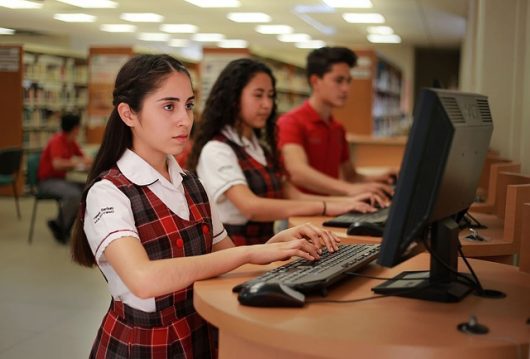
There is a proven link between lack of education and rises in poverty numbers. People around the world struggle with poor school systems, denied scholastic access and few academic resources. Illiteracy is directly correlated to poverty, and creates a cycle that is hard to break. The difficulties associated with this crisis are large scale and ones that few individuals feel that they can fix by themselves.
The Female Plight
At the brunt of this battle is the female population. Due to gender-based violence, negative stigma within communities and higher rates of poverty, women globally lack education opportunities that are often provided to men.
Many citizens believe that there is nothing that they can do to help, and rely on the bigger voices to take the lead. But there are companies working to change that and to enable consumers to fight for female education as well.
These companies work to help individuals make a global difference and improve the lives of women and girls who are deprived of an education. Consumers can join the fight to educate, empower and break the cycle of poverty created by females’ lack of schooling and access to it.
Here are a five of the most impactful companies that are working towards educating the world.
1. Conscious Step
This sock company supports many different global causes, including their non-profit partner, “Room to Read.” For every pair of “socks that give books” sold, a school book is given to a child in one of a list of targeted countries that struggle with education.
The company especially focuses on communities that need gender equality in their school systems, and work towards enabling girls to achieve an education alongside their male counterparts. Conscious Step also enables consumers to fight for female education through beautiful socks that everyone loves.
2. Sseko Designs
The apparel company, which specializes in sandals, works with young women in Uganda to ensure that many can receive a college education. Sseko Designs employs local girls during the nine-month period between the end of high school and potential beginning of college.
The organization then provides the pre-collegiate girls with employment and scholarship opportunities. For each month of their nine months, 50 percent of the girls’ earnings go into a savings fund for college. This savings account not only allows these driven women to further their education, but it also deters them from caving to social pressures to give the money away to family and friends, which would thus continue the poverty cycle.
At the end of employment terms, Sseko provides the involved girls with scholarships matching the amount of their savings by 100 percent. Thanks to their employment opportunities, the company has already sent 87 girls to college, so far.
3. Out of Print
A business that sells literature themed products, Out of Print not only donates to literacy programs but for every piece purchased, the company also sends one book to a community in need.
Many of these communities have low female attendance in education due to extremely high rates of gender violence. These products help improve these struggling communities and encourage girls to receive an education so that they can rise above poverty and illiteracy.
The book based company work to enable consumers to fight for female education, bring literacy into poorer communities and spread awareness about the difficulties in high illiteracy rates.
4. Bloom and Give
With a specialty in handmade bags, this company sends girls in India to school. The company works to help girls fight against social views and norms that deter them from attending class, and enable them to become educated even through cultural protests. The company donates half of their profits to programs and grassroots movements that work directly with in-need communities.
Bloom and Give’s vibrant bags and other products serve as a way for shoppers to give back globally and also help Indian communities educate girls.
5. Naja
This underwear and lingerie company helps educate Colombian children and aid mothers to return to work. Naja, through its “Underwear for Hope” line, employs local single mothers, or female heads of household, and provides their children with books, uniforms, school supplies and all school meals.
The company strives to change the dialogue that makes mothers choose between childcare and employment, and helps its female employees to educate their children. On top of that, two percent of Naja’s revenue goes towards local charities that fund continuing education for these women.
Naja empowers not only Colombia’s women and children to become educated but also empowers consumers to help in the process through their purchases.
Every Person Counts
While the education crisis is a global one, each person can make a difference. Educating women does not have to solely ride on the backs of the wealthy and the well-connected. The average person can send a girl to school, teach a girl to read and send a woman to college through conscious purchasing and globally-minded companies.
– Emily Degn
Photo: Pixabay

Bill Gates on Why Global Health Must Be a Global Priority
J.P. Morgan has made the following its core values:
In January 2018, Bill Gates made an appearance at the annual J.P. Morgan Healthcare Conference to discuss his thoughts. At the conference, Gates’ speech discussed recent progress in global health and what else still needs to be done. Initially, he pointed out how global health has been the focus of his foundation, the Bill and Melinda Gates Foundation, for the last eight years. He explained how child mortality has decreased by 50 percent and credited new vaccines to reducing deaths due to rotavirus, pneumonia and malaria.
Afterwards, he expressed the need for more innovation, explaining how funding research is the most elementary step in improving global health. He mentioned the current gap between the tools that are currently available to eliminate stubborn diseases and poverty and the tools that are needed, explaining that the only solution is innovation. He emphasized how “the tools and discoveries companies are working on can also lead to breakthrough solutions that save millions of lives in the world’s poorest countries.”
He concluded his speech by emphasizing the need for more research into preterm births, as they account for half of newborn deaths. It has also become clear that a child’s nutrition and the microbiome in their stomach, or rather the interactions between the two, are the largest factor in determining the child’s survival rate. The best solution to this is ensuring that children have the proper ratio of microbes in their stomach, a problem Gates and his partners have started to tackle.
Gates and his foundation have always made global health a priority. They work with partners globally to improve the following five program areas:
Thanks to Bill Gates, his foundation and the J.P. Morgan healthcare conference, investors and advancements will continue to increase, alleviating the burden of global poverty and improving global health.
– Chylene Babb
Photo: Flickr
15 Organizations That Help Improve the World
With the myriad difficulties that face the world, it is essential to have organizations making the planet a better place. Without such generous assistance, the world would be plagued with unmanageable adversities. The following is a list of 15 organizations that help improve the world with their innovative ideas and generous efforts.
The Bill & Melinda Gates Foundation is an organization that works to fight hunger and its consequential effects on a global scale. It works specifically to eradicate infectious diseases and child mortality rates in struggling countries.
Doctors Without Borders delivers emergency aid to people in need. These efforts include helping people in situations of natural disasters, epidemics and lack of health care.
The FAO’s prime purpose is to defeat hunger. It works in 130 countries worldwide to help ensure people have access to food and are not going hungry. The organization has been fighting hunger since 1945.
Human Rights Watch was established in 1978 and is an organization that reports on human rights conditions in countries all over the world. With its findings, it meets with governments and financial corporations to urge for policy changes that assist the betterment of human rights around the world.
Oxfam is a global organization that helps improve the world through poverty-reduction efforts. It focuses on the conditions that cause poverty and works to fix the effects of such difficulties. Its efforts include disaster response, programs to help people afflicted by poverty and education improvement.
Founded in 1881, the Red Cross foundation works to help people in urgent need. Assisted greatly by volunteers, the Red Cross mainly provides disaster relief, support to America’s military families, health and safety services, blood donations and international services.
Save the Children is a nonprofit organization that focuses primarily on helping children in need. This includes emergency response, global health initiatives, HIV and Aids prevention, disaster response and creating educational opportunities. In 2016, Save the Children reached and assisted 157 million children.
The Borgen Project is a nonprofit organization that aims to end poverty by working to make poverty a focus of U.S. foreign policy. The organization is an influential ally for the world’s poor that educates and mobilizes people to communicate with their Congressional leaders to ensure funding for poverty-fighting efforts are not eliminated. In 2017, the organization had volunteers in 754 U.S. cities and is one of the 15 organizations that help improve the world immensely.
The World Bank works with other organizations to provide extensive financial assistance to developing countries. It was established in 1944 and has more than 10,000 employees and 120 offices worldwide.
The UNDP is an organization that aims to eradicate poverty. It implements this goal by developing policies, skills and partnerships to enable people to sustain their progress and improvement. The UNDP is in over 170 countries and territories.
UNICEF is an organization that fights for children’s rights to shelter, nutrition, protection and equality. It does so by being children’s advocates and providing humanitarian assistance to children and their families, most often in developing countries.
USAID is an international agency that provides development assistance to countries in need. It works to advance U.S. national security and “economic prosperity” by promoting self-sufficiency. It uses humanitarian response efforts to bring disaster relief and supplies to those who are struggling.
WFP’s mission is to fight world hunger and provide people around the world the quality food they need to survive. It does this by working with U.S. policymakers and other foundations to organize financial resources, as well as develop necessary policies to assist the fight against worldwide hunger.
Of the 15 organizations that help improve the world, WHO is among the largest. The WHO is an organization that works directly with governments and various partners to ensure a healthier future for people all around the world. It fights infectious diseases and works directly with mothers and children to improve and maintain their health.
The WWF is an international nongovernmental organization working to conserve nature and reduce extreme threats. It also aims to increase awareness to prevent further damage to the earth and its inhabitants.
These are only 15 organizations that help improve the world. There are many more that work together with partners to help make the world a better and safer place to live. Their generosity helps people on a daily basis live healthier and happier lives, and it is troublesome to think of where the world would be without such assistance.
– McCall Robison
Photo: Flickr
Sustainable Agriculture in St. Vincent and the Grenadines
These beautiful rocky islands are home to approximately 109,000 citizens who can benefit from an increase of sustainable agriculture in St. Vincent and the Grenadines, personally and economically. The Grenadine islands consist of Bequia, Mustique, Canouan, Mayreau and Union, which form a chain of landmasses leading to Grenada.
Only a portion of the island’s 150 square miles is being utilized, with a large part dedicated to agriculture (25 percent) while the majority is forest (68 percent). Despite much of the land being used for agriculture, it only makes up about 7 percent of their Gross Domestic Product (GDP).
With most of the population centered around the nation’s capital, Kingstown, much of the agriculture comes from small family farms outside of the capital. But two crops, bananas and arrowroot, in particular, have the potential to change the country’s economic condition and future circumstances for the good.
Bananas
Despite the recent threat, plans to encourage the farming of bananas have come in the form of the Banana Accompanying Measures (BAM) for the sustainable agriculture in St. Vincent and the Grenadines.
In 2010, BAM was created by the European Union as an initiative to help developing countries export bananas better; of the developing countries, African, Pacific and other Caribbean nations were chosen. Essentially designed to create economic opportunities, competitiveness and diversification of sustainable agriculture in St. Vincent and the Grenadines, the initiative involved EC$18 million to install.
BAM is based on minimizing poverty through strategic investing that increases banana production along with other crops, such as root vegetables. So far, the financial packages have established a food science lab at the St. Vincent and the Grenadines Community College and other infrastructural add-ons that aid in banana production, specifically, such as upgrades to packing facilities.
Arrowroot
This root vegetable alone has the potential to significantly reduce the poverty of whoever grows it. The sustainable agriculture in St. Vincent and the Grenadines is unique for being one of the only producers of the starchy tuber, producing 95 percent of the world’s arrowroot. Arrowroot flour is used in a variety of Caribbean dishes for its starchy texture and gluten-free characteristics, but these are not the only aspects of the root vegetable that make it profitable.
Once ground into flour, arrowroot can be mixed with chemicals like sodium chloride and citric acid to create a dressing for paper, making it extremely water resistant. Print photographers originally used this kind of paper for its water resistance, but the practice became outdated. Since then, arrowroot has made a revival due to the technology boom and the abundant use of printers. The root vegetable is now crucial in the manufacture of carbon-less paper.
The Permanent Secretary in the Ministry of Agriculture, Raymond Ryan, said the desire for this form of sustainable agriculture in St. Vincent could get higher with “100,000 pounds of [the] starch per year” acting as the potential. This fact, along with the “growing demand of gluten-free products,” means arrowroot and its starch have a good chance of elevating St. Vincent and the Grenadines’ growing popularity.
The Uplifting Effects of Bananas and Arrowroot
Both of these crops have the potential to pull St. Vincent and the Grenadines to the high standards that a global economy demands. However, arrowroot has many profitable niches that bananas have already overblown, indicating that the root vegetable’s potential is arguably greater for the island.
The fact that St. Vincent is the main supplier of arrowroot is an overall positive for the country. Formerly dependent on only bananas, this root offers a second chance at economic growth for sustainable agriculture in St. Vincent and the Grenadines.
With this kind of agricultural diversity on the horizon, the Caribbean nation can compete on a global economic scale and turn small rural family farms into big agricultural businesses that financially impact their communities as much as their country.
– Toni Paz
Photo: Pixabay
The Success of Humanitarian Aid to the Maldives
Since its independence from colonial British rule in 1965, the Maldives gradually improved from least developed country status to upper-middle-income status in 2013. The success of humanitarian aid to the Maldives is notable and contributed greatly to its economic growth.
The country mostly received foreign assistance from Arab countries like Saudi Arabia, Kuwait and the United Arab Emirates before 1980. However, in 1992, it received $11.6 million in foreign aid from the World Bank, the Asian Development Bank and Japan, which was intended for education, health, transport, fisheries and harbor development.
Although the Maldives is known as a great tourist destination, it is facing a unique danger of potentially disappearing into the ocean due to climate change and rising sea levels. In 2004, the country was struck by a tsunami, leading to massive destruction on its various islands.
Following the tsunami, the U.S. among many other countries provided $8.65 million and USAID contributed $1.9 million in foreign aid for the reconstruction of the damaged areas. Libya sent almost $2 million in emergency humanitarian aid to the Maldives. The U.S also contributed $100,000 after a storm in May 2007 for disaster recovery assistance.
In January 2005, UNICEF, with the help of the European Commission Humanitarian Aid Office, provided educational supplies and other basic emergency supplies with a total value of $1 million to children in the Maldives who were affected by the tsunami, with an aim of returning them to school by the end of the month.
In December 2014, when a fire destroyed the generator of the largest water treatment plant in the capital city of Mali, India provided water aid to Maldives residents. Ten planeloads of drinking water and two warships with the capacity of purifying water through reverse osmosis systems were dispatched from India, helping almost 150,000 Mali residents.
The European Union contributed €4 million in humanitarian aid in 2007 and another €4 million in 2013 towards environmental sustainability and poverty reduction. This helped in the improvement of safe water, waste disposal, renewable and efficient energy development and coral reef protection.
Australia contributed almost A$1.3 million through the United Nations Development Program for Integrated Government from 2012 to 2018. This includes strengthening civil society organizations and the transparency of the justice department, as well as improving respect for human rights in the country.
The success of humanitarian aid to the Maldives is evident from the birth of the country up to recent times. It has aided in the development of the country’s infrastructure, increased its economic activity and helped with restoration after natural disasters. These examples demonstrate the short-term and long-term effects that humanitarian aid can have on developing countries.
– Mahua Mitra
Photo: Flickr
Addressing the Success of Humanitarian Aid to Kiribati
Although Kiribati’s land mass covers 811 square kilometers, its 33 coral atolls are spread over an area the size of the United States and the vast majority rise no higher than three meters above sea level. Kiribati’s small land mass and high fertility rate mean its main centers are severely overcrowded.
Unemployment rates remain high in the island nation and only 15 percent of children attend secondary school. Only two-thirds of the population has access to an improved drinking water source, and less than 40 percent have access to adequate sanitation facilities. Tuberculosis, dengue fever, leprosy and typhoid are major health concerns for Kiribati.
The United Nations lists Kiribati as an “endangered country” because of the dangers it faces from rising sea levels, contaminated fresh water supplies and poor waste management. There is a need for humanitarian aid to Kiribati because of significant development challenges, such as:
Kiribati’s economy relies on overseas aid, income from fishing licenses and remittances from merchant seamen. Most of Kiribati’s inhabitants are employed in fishing and subsistence farming, but poor soil fertility limits production. Fortunately, new programs are focusing on humanitarian aid to Kiribati.
Caritas Australia implemented The Disaster Response and Preparedness program, funded by AusAID, in four Pacific Island countries. The three-year initiative expands Kiribati’s capacity to prepare for and respond to disasters. Caritas Australia partnered with the Diocese of Tarawa and Nauru to train local young people to work with communities and raise awareness about the impacts of climate change.
Saltwater contaminates drinking wells and high tides destroy land crops, threatening the food security of communities dependent on subsistence agriculture in Kiribati. The Disaster Response and Preparedness program pairs young people with elders to identify strategies to mitigate these effects.
This initiative has given young people the opportunity to become strong advocates for their small island at international climate change forums around the world. Humanitarian aid to Kiribati has been handed off to the next generation.
– Paula Gibson
Photo: Flickr
Humanitarian Aid to Guinea Improves Livelihoods of All Guineans
Situated between Guinea-Bissau and Sierra Leone, Guinea is home to about a third of the world’s bauxite reserves which have not been smelted and refined into aluminum largely owing to the political instability in the country. Chronic underdevelopment has also angered many locals who have, in desperation, disrupted operations at the country’s mines to bring attention to their plight.
According to the U.S. State Department’s Office of Investment Affairs, Guinea suffers from “persistent corruption and fiscal management.” However, the country is not only resource-rich but also filled with economic potentials in the energy and the agricultural sector.
With over four billion tons of untapped high-grade iron ore, abundant rainfall, gold and diamond reserves, off-shore oil reserves and indeterminate amounts of uranium, Guinea has many economic drivers. The country’s natural geography also makes it very hospitable to renewable energy sources such as hydroelectric dams and turbines.
In May 2015, the 240 megawatt Kaleta Dam project was built after a $526 million investment by China. Kaleta more than doubled the country’s electricity supply and encouraged the government to seek aid for more energy infrastructure, mainly in the solar and hydroelectric sector.
According to USAID, Guinea suffered heavy losses to its economical revenue and outlook in the wake of the Ebola outbreak. Many widespread preventable and treatable diseases, such as malaria, prevail in the country and infant and maternal mortality rates remain very high. Furthermore, the agricultural sector is not able to completely function to provide the much-needed source of income and revenue for the people and the government.
The success of humanitarian aid to Guinea is underlined by USAID’s work in the country. In March 2015, USAID provided more than $7 million through the United Nations World Food Programme (WFP) to improve food security and nutrition as a means to combat poverty and hunger in Guinea.
This culminated in WFP making the largest-ever purchase of locally-produced rice, which supported the local agricultural sector and provided children with meals in hundreds of schools across the country. Furthermore, farmers were educated about the business and contracting process, including working with development partners, and were encouraged to establish relationships with banks to obtain credits and rates they could use to sustain their farms.
It has been said that Guinea’s entire population of 12 million people is at risk of malaria. Malaria control efforts and prevention policies are underway in the country, but the damage is ongoing. According to the Ministry of Health, most of the hospitalizations, consultations and deaths in Guinea are a result of malaria.
Aid organizations such as Plan International have been working for decades to provide humanitarian aid to Guinea. Plan International improves children’s access to health, education and sanitation. This is done by ensuring that sustainable, quality education is provided to all children. Children are afforded access to clean water and sanitation facilities. Furthermore, a safe environment designed to empower children is nurtured.
The International Organization for Migration (IOM) Guinea actively helps vulnerable people and migrants to resettle in other countries by advocating on their behalf and lending support at every step of the resettlement process, including performing medical health assessments on behalf of the resettlement countries. Funding for IOM Guinea is mainly provided by the same governments of resettlement countries, and the international community can and should support the efforts of these countries.
With more humanitarian aid to Guinea, this resource-rich country certainly carries the potential to infuse its wealth of resources into the livelihoods of all Guineans.
– Mohammed Khalid
Photo: Flickr
The Devastating Effects of Cluster Bombs in Poor Countries
More than 98 percent of known cluster bomb victims are innocent civilians, and 40 percent of these are children. Cluster bombs are most prevalent in poor countries because these areas tend to be high in crime, corruption and war. These weapons undergo the following process that may result in detonation:
The Drop
A cluster munition is dropped from a plane and can fly around nine miles before releasing its submunitions. This ability makes for highly inaccurate targeting, meaning the bombs are a disproportionate hazard to civilians.
The container begins to spin a short time before releasing its submunitions. It opens at an altitude between 330 and 3,300 feet. The cluster munition’s height, rotation speed and velocity determine how large of an area will be impacted.
Parachutes Open
Submunitions deploy parachutes as they descend. The parachute ensures that each submunition is stable and descends with its nose down. Each submunition is about the size of a soda can and made of a copper cone containing over 300 steel fragments and incendiary material. The cone can pierce through seven inches of armor and its contents are designed to burn the targeted area and destroy its inhabitants.
Effects of Cluster Bombs
Depending on altitude and wind speed, a cluster bomb’s submunition strikes can cover an area up to 861,120 square feet. The detonation of a single submunition can cause fatalities in a 65-foot radius and injure anyone within a 328-foot radius.
Cluster bombs lack consistency; they are prone to external factors such as weather and deployment tactics. Their volatility renders it near impossible to predict the exact size of an area affected. The effects of cluster bombs usually include numerous civilian and child deaths because of the bomb’s unpredictability.
Many submunitions fail to detonate on impact, resulting in the scattering of explosive “duds” throughout the targeted area. Duds contaminate the area even after conflict ends, essentially becoming landmines that injure and kill civilians. The percentage of unexploded submunitions from older canisters can be as high as 30 percent, but modern canisters typically range from two to 20 percent.
Currently, 63 countries are stockpiling submunitions and this number continues to grow. Cheaper variations of the bombs are likely to be used by countries that brutalize their own civilians or by violent no-state agents that disregard civilian safety.
The Convention on Cluster Munitions prohibits the use, production, transfer and stockpiling of cluster bombs. The international agreement was created in August 2010 and has been signed by 111 countries and ratified by 70. The U.S. has not signed the Convention on Cluster Munitions.
It is possible to combat the effects of cluster bombs by supporting the clearance of unexploded bombs and encouraging countries to sign the treaty banning cluster munitions. With continued effort, civilians’ and children’s lives can be spared.
– Carolyn Gibson
Photo: Flickr
The Varying Success of China’s Humanitarian Aid to Suriname
Suriname, officially the Republic of Suriname, is a small country on the northeastern coast of South America. Originally a Dutch colony, Suriname gained independence in 1975. Though Suriname is not a widely prosperous country, its economy has recently endured a variety of difficulties.
The Netherlands
In 2016, Suriname’s Gross Domestic Product (GDP) was more than $3.6 billion, the unemployment rate was slightly less than 10 percent and the poverty rate was 47 percent.
Despite gaining its independence, the Kingdom of the Netherlands was Suriname’s heaviest financial donor, sending years worth of humanitarian aid to Suriname. In 2012, the Netherlands suspended all aid to Suriname — approximately 26 million — two years after the election of President Desi Bouterse.
The European Commission
The European Commision has also approved emergency funding for Suriname over the years, especially in the case of natural disasters. Suriname is prone to severe flooding, which can wipe out homes and businesses, and increase unemployment and poverty. Usually, this aid is geared toward the population’s health, hygiene and sanitation, food and water.
People’s Republic of China
However, shortly after the Kingdom of the Netherlands completely pulled their funding to Suriname, the People’s Republic of China (PRC) increased its humanitarian aid to the country.
Since the immigration boom to Suriname in the 1990s, China has slowly been giving humanitarian relief to the South American country; in 2011, the Chinese government gifted Suriname with a new Foreign Ministry headquarters.
Also in 2012, China gave Suriname a grant of over 4 million to further the cooperation between both countries; however, it is unclear where this money is going. Since 2009, the Chinese embassy stated that development projects in Surinam — such as help with low-income housing, transportation, seaports and network television — are underway, despite any major initiatives.
Investment and Infrastructure
Within the last 10 years, China has set up various companies, businesses, shops, casinos and restaurants throughout Suriname. While this has vastly helped decrease unemployment, the poverty rate is still high, with nearly half the country living below the poverty line. In exchange for the land, China continues to give Suriname grants, buildings and advancements for the military.
Health-Related Aid
But not all of China’s aid is geared toward infrastructure and employment. In 2016, China provided Suriname with $1 million in humanitarian aid specifically geared toward Zika-related assistance. This included medical supplies and funding for medication and hospitalization for those affected. Zika virus is an infection most commonly found in Central and South America and can be fatal.
Suriname still has a long way to go before it is a completely stable country. The poverty rate still needs to lower significantly and the GDP must increase to be considered a prosperous economy.
Despite these much needed improvements, Suriname has already started distributing humanitarian aid itself. In September 2017, Suriname sent humanitarian aid to Cuba to help with relief efforts after hurricane Irma.
Though the success of humanitarian aid to Suriname is slow, the funds thus far have laid a solid groundwork. The Surinamese now have the tools they need to become a prosperous and independent country.
– Courtney Wallace
Photo: Flickr
5 Companies that Enable Consumers to Fight for Female Education
There is a proven link between lack of education and rises in poverty numbers. People around the world struggle with poor school systems, denied scholastic access and few academic resources. Illiteracy is directly correlated to poverty, and creates a cycle that is hard to break. The difficulties associated with this crisis are large scale and ones that few individuals feel that they can fix by themselves.
The Female Plight
At the brunt of this battle is the female population. Due to gender-based violence, negative stigma within communities and higher rates of poverty, women globally lack education opportunities that are often provided to men.
Many citizens believe that there is nothing that they can do to help, and rely on the bigger voices to take the lead. But there are companies working to change that and to enable consumers to fight for female education as well.
These companies work to help individuals make a global difference and improve the lives of women and girls who are deprived of an education. Consumers can join the fight to educate, empower and break the cycle of poverty created by females’ lack of schooling and access to it.
Here are a five of the most impactful companies that are working towards educating the world.
1. Conscious Step
This sock company supports many different global causes, including their non-profit partner, “Room to Read.” For every pair of “socks that give books” sold, a school book is given to a child in one of a list of targeted countries that struggle with education.
The company especially focuses on communities that need gender equality in their school systems, and work towards enabling girls to achieve an education alongside their male counterparts. Conscious Step also enables consumers to fight for female education through beautiful socks that everyone loves.
2. Sseko Designs
The apparel company, which specializes in sandals, works with young women in Uganda to ensure that many can receive a college education. Sseko Designs employs local girls during the nine-month period between the end of high school and potential beginning of college.
The organization then provides the pre-collegiate girls with employment and scholarship opportunities. For each month of their nine months, 50 percent of the girls’ earnings go into a savings fund for college. This savings account not only allows these driven women to further their education, but it also deters them from caving to social pressures to give the money away to family and friends, which would thus continue the poverty cycle.
At the end of employment terms, Sseko provides the involved girls with scholarships matching the amount of their savings by 100 percent. Thanks to their employment opportunities, the company has already sent 87 girls to college, so far.
3. Out of Print
A business that sells literature themed products, Out of Print not only donates to literacy programs but for every piece purchased, the company also sends one book to a community in need.
Many of these communities have low female attendance in education due to extremely high rates of gender violence. These products help improve these struggling communities and encourage girls to receive an education so that they can rise above poverty and illiteracy.
The book based company work to enable consumers to fight for female education, bring literacy into poorer communities and spread awareness about the difficulties in high illiteracy rates.
4. Bloom and Give
With a specialty in handmade bags, this company sends girls in India to school. The company works to help girls fight against social views and norms that deter them from attending class, and enable them to become educated even through cultural protests. The company donates half of their profits to programs and grassroots movements that work directly with in-need communities.
Bloom and Give’s vibrant bags and other products serve as a way for shoppers to give back globally and also help Indian communities educate girls.
5. Naja
This underwear and lingerie company helps educate Colombian children and aid mothers to return to work. Naja, through its “Underwear for Hope” line, employs local single mothers, or female heads of household, and provides their children with books, uniforms, school supplies and all school meals.
The company strives to change the dialogue that makes mothers choose between childcare and employment, and helps its female employees to educate their children. On top of that, two percent of Naja’s revenue goes towards local charities that fund continuing education for these women.
Naja empowers not only Colombia’s women and children to become educated but also empowers consumers to help in the process through their purchases.
Every Person Counts
While the education crisis is a global one, each person can make a difference. Educating women does not have to solely ride on the backs of the wealthy and the well-connected. The average person can send a girl to school, teach a girl to read and send a woman to college through conscious purchasing and globally-minded companies.
– Emily Degn
Photo: Pixabay
How Fair Trade Coffee in Colombia Could Solve the Poverty Struggle
Colombia is a land known for its jungles, food and, of course, the coffee industry. Four million of Colombians rely on the coffee bean for income. While coffee is the second most profitable industry in the world, 30 percent of the country still lives below the poverty line. These valuable coffee farmers are living on less than $2 a day, and yet are at the forefront of the global economy.
Coffee Farm Wage Discrepancies
This discrepancy is largely due to two factors: the middlemen are making 87 percent of the profits, and most farms are too small to become “fair trade certified” in order to sell fair trade coffee in Colombia. It is an unprofitable business for the growers but is central to Colombia’s and the world’s economies.
This disconnect perpetuates poverty in the country, as well as creates a lack of interest in the youth to continue the coffee business. Children grow up watching their parents struggle on the farms and receive little pay from buyers, and witnessing such hardship significantly impacts the next generation’s well-being and career foci. There is now a growing trend of these growing sons and daughters not only leaving their communities to escape rural poverty, but participating in criminal activity and gang life due to lack of education, and a support system elsewhere.
As the coffee farmers struggle, crime increases, and in a cyclic motion, so does poverty. Fair trade coffee in Colombia is key to abolishing such high rates of poverty within the economy.
The country has been taking measures to focus on growing profits from the industry and works to address the poverty issue at hand. The Colombian Coffee Growers Federation has been working to spread fair trade coffee in Colombia, transparent and fair prices and humane working conditions for farm workers.
One Improvement at a Time
Thanks to new and required minimum price lines on the beans, and large-scale corporations stepping in to help, Colombia is slowly improving living conditions for their farmers, making it a viable income for many. Making coffee have a required fee guarantees that farmers make a certain profit. The farmers can charge more if they’re able, but doing so deters buyers from taking advantage of the small farms.
Starbucks is one of the large corporations practicing direct trade in order to ensure fair price for both parties. They don’t buy from middlemen. They go straight to the farm. This practice is spreading slowly among coffee chains, thanks to the ethical sourcing being already embraced by a few.
Fair Trade Certification
A huge problem in the improvement process of this industry is the price to become Fair Trade Certified. Most of the coffee farms are small and lack the funds to gain certification. Many even already implement the practices involved, but are not able to participate in the movement and thus cannot gain the associated Fair Trade Certified market advantages.
Due to this occurrence, the National Federation of Coffee Growers strives to give easier access to the certification of small farmers, and lower costs. The Federation has already implemented measures to improve the sustainability, working conditions and economic value of the coffee business as a whole.
Fair Trade and Colombia
Colombia has a goal now to be certified nationwide by 2027. The government is working very closely with the different organizations to achieve this and is making the coffee business the nation’s business.
Thanks to conscious buyers, and chains that buy directly from the farmers, the country might be able to pull through with this achievable goal. The movement for fair trade coffee in Colombia has already gained a significant amount of traction in the United States and Great Britain, and small coffee farmers could be the key to raising Colombia out of poverty.
– Emily Degn
Photo: Flickr