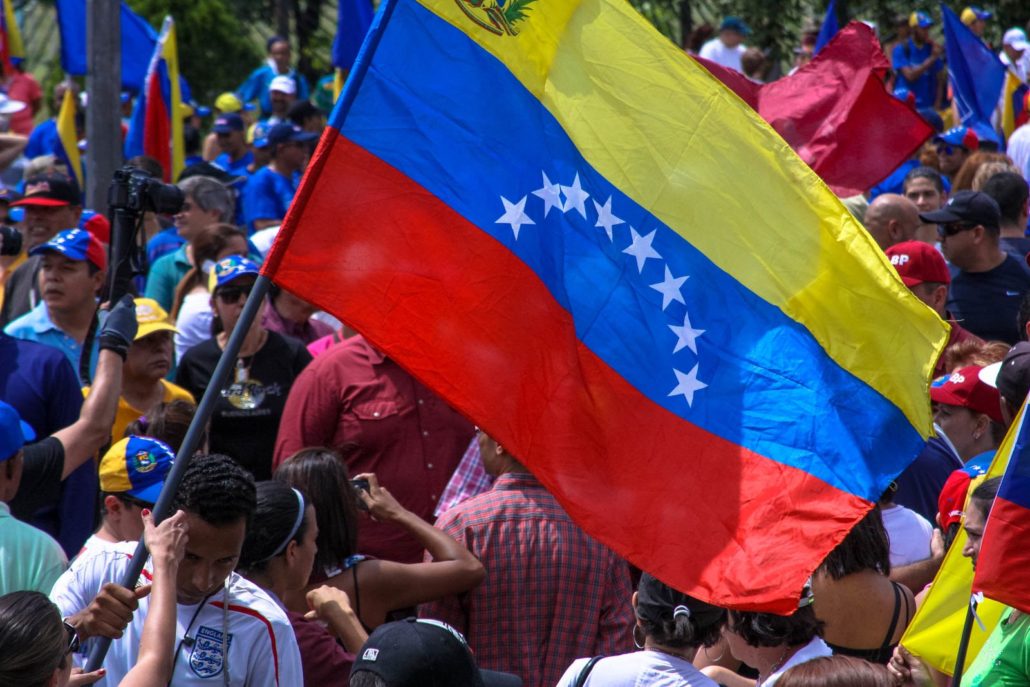
For decades Venezuela’s government and economy have struggled significantly. Entering Venezuela into a search engine will generate links to a multitude of foundations attempting to relieve the Venezuelan Crisis. What is the Venezuelan Crisis and how is the U.S. reacting?
The South American country’s history is full of political and social inequity. Venezuelan leadership has been rocky at best since Simon Bolivar led the country to independence more than 200 years ago. Despite his original constitutional implementations of extremely strict rules such as capital punishment for any public officer guilty of stealing 10 pesos or more from the government, the country quickly fell into corruption.
History of Corruption
The disorder apparent in Venezuela’s contemporary governmental and social climates stems from centuries ago when inefficient leadership set the precedent. The country did not institute a democratic election until 1945. That is more than 130 years after its founding and establishment of the civilian government. Turmoil ensued as Marcos Perez Jimenez, a military figure, overthrew the first elected President Romulo Gallegos within eight months. Admiral Wolfgang Larrazabel, in turn, ousted Jiminez and leftist Romulo Betancourt subsequently took power. This period of rapid regime change defined by government instability and disorganization instilled a distrust that still resonates in the hearts of Venezuelans today.
The trend of unreliable leaders continued until the late 1960s and 1970s when a beacon of light emerged. This age saw much-needed transparency in public assets, contrasting with previous leaders who were heavily corrupt. During this time, other South American countries even began to restructure their governments after the Venezuelan model. However, Venezuela lived this era of tranquility for only a short time because of one man: President Jaime Lusinchi.
Lusinchi served as President from 1984 to 1994. Even in the era of Nicolas Maduro, he stands as the epitome of Venezuelan corruption. In his 10 years as the country’s leader, a corrupt security exchange program stole an alleged $36 billion from the government. Additionally, many accused Lusinchi of stealing from the National Horse Racing Institute to promote the campaign of his successor, Carlos Andres Perez.
Venezuela’s economy functions almost solely on oil exports. The volatility of international oil demands, a market characterized by consistent inconsistency, historically parallels with the state of the Venezuelan market. A booming oil stock in an oil-dependent country naturally creates extraordinary temptation, a temptation that Lusinchi gravely fell into.
Making the national situation worse, the money Lusinchi stole from the government came from a temporary oil surge. Therefore, when oil prices normalized, the economy faced a much more difficult catching up than it would have otherwise.
For many Venezuelans, Lusinchi reopened recent wounds concerning government distrust. This fueled a wave of anger that the famous populist Hugo Chavez harnessed. Lower-class Venezuelans blamed government corruption and greed of the elite for the country’s extreme economic and social issues. The support of this large base played an important role in electing Chavez as President in 1998.
Today’s Dictatorship
To understand the current state of affairs under Maduro, it is vital to understand Chavez’s impact on the Venezuelan Crisis. Chavez’s policies raised (and still raise) enormous controversy as he led using traditionally socialist policies. Under these policies, Venezuela saw a 50 percent reduction in poverty and a dramatic reduction in the unemployment rate.
These policies were only achievable because of a 2004 soar in oil prices in the middle of Chavez’s presidency. His excessive spending on categories like food subsidies, education and health care was only possible through this boom. To get the Venezuelan people to reelect him, Chavez did not scale back these programs to match declining oil prices and set up his country to fail.
In 2014 Venezuelan oil prices crashed, leaving the economy in shambles as Chavez’s programs quickly racked up an enormous deficit. This also started the massive inflation of the Venezuelan bolivar that the country still struggles with today. Following Chavez’s death, Nicolas Maduro gained power in 2014, taking on the responsibility for the economy and deficit. Maduro failed to diversify the oil-rigged economy. This caused the petrostate to fall back into extreme poverty, currently wielding a poverty rate of around 90 percent, double what it was in 2014.
The Council on Foreign Relations quotes Venezuela as “the archetype of a failed petrostate,” describing it as a sufferer of the infamous Dutch disease. The transition to this began back in 1976 when then-President, Carlos Andres Perez, nationalized the oil industry creating the state-owned ‘Petroleos de Venezuela (PDVSA). Chavez’s mismanagement of this company led it to render weak profits. Internal issues such as insider business practices and drug-trafficking also littered the business with corruption. Chavez then sanctioned a series of other national businesses and foreign-owned assets tilting the country towards extreme socialism.
This progression of increased nationalization slowly opened the doors for Maduro to initiate authoritative rule. He abused this power in multiple facets which had devastating consequences on the well-being of the country and its people.
Early in his rule, Maduro placed his supporters in the Venezuelan Supreme Court and replaced the National Assembly with his own Constituent Assembly. Through this cunning, undemocratic move, he essentially eliminated all political opposition and erased any check on his power. This allowed him to pass extremely contentious policy such as the abuse of food importation. Because of Maduro’s extremely poor operation of a socialist economy, hyperbolic inflation rates currently plague the country. While the political elites operate on a 10:1 rate, the rest of the country uses around a 12,000:1.
To make matters worse, Maduro delegated food commerce to the military which has access to the significantly decreased exchange rate. To make enormous profits, it buys food at the 10:1 rate and then sells it domestically at a 12:000:1 rate. The 2017 statistic shows that Venezuelans lost an average of 27 pounds, highlighting the horror of Maduro’s corruption.
What is the US’s position in all of this?
As expected, the U.S. with its long history of an anti-socialist stance disapproves greatly of the Maduro suppressive regime. There is historical friction between the two, which emerged again during Chavez’s time in a battle between capitalist and socialist ideals.
After Maduro’s reelection, the Trump administration grew furious and decided to use aid as a tool against the dictator. In an act of defiance against the U.S., Maduro rejected all supplies from the capitalist power. The U.S. decided to use this move to its advantage, pledging to send copious amounts of humanitarian aid and urging Venezuela’s officials to defy their President’s orders.
As Dylan Baddour states in his article for The Atlantic, “Those who support the mission say that soldiers will be motivated by the impact Venezuela’s crisis is having on their families to switch sides and affect a peaceful transfer of power.” However, not everyone supports this mission because of the U.S.’s bittersweet past regarding Latin American intervention.
Citizens in countries like Chile, Nicaragua and Panama certainly are in living memory of times when American involvement only made matters worse. But as Baddour writes, in a situation as dire as Venezuela’s during the Venezuelan Crisis, “the world’s most powerful country showing up at Venezuela’s border with truckloads of food and medicine is much better than what it has done in the past.”
There is, of course, a concern that Venezuela could transform into the next Syria — where the majority of the population suffers because of one belligerent leader. But if the U.S. takes a proper humanitarian route with its aid, unlike previous attempts, it could do more help than harm. Hopefully, Venezuela will accept aid and transfer power peacefully and efficiently to someone that does not endorse such heinous policies. Until then, the U.S. simply providing its current amount of humanitarian aid is a positive step in the right direction to relive some of the effects of the Venezuelan Crisis.
– Liam Manion
Photo: Flickr

Comfort Dog Project Helps War Survivors in Uganda
The Republic of Uganda is a landlocked country in sub-Saharan Africa surrounded by Kenya, South Sudan, the Democratic Republic of the Congo, Rwanda and Tanzania. The northern parts of Uganda suffered from a 20-year long war between its government and the Lord’s Resistance Army (LRA) which was led by Joseph Kony. The war has left Uganda as an impoverished nation and its people with unhealed emotional and physical wounds. However, thanks to the efforts of organizations including The Comfort Dog Project, more focus has been placed on addressing the mental health needs of war survivors in Uganda.
Background
The war forced more than a million people to abandon their homes and live in camps for more than 10 years. Estimates show that the LRA abducted around 20,000 children to become their soldiers. They killed men and raped women. As a result of these atrocities, seven in 10 people suffer from post-traumatic stress disorder (PTSD) today. And, the lack of mental health care services in the country is driving these survivors towards suicide and substance abuse. Uganda spends 9.8 percent of its GDP on health care and less than 1 percent of this goes to mental health. Overall, Uganda has 1.83 per 100,000 beds in the mental hospital with an occupancy rate of 100 percent.
The Birth of The Comfort Dog Project
The Comfort Dog project is a program of The Big Fix Uganda, a registered international NGO in Uganda. It operates the only veterinary hospital in Northern parts of the country. Francis Okello Oloya started this program in his hometown, Gulu in 2014. Oloya lost his sight to a blast at the age of 13 while he was working in his family garden. Despite these hurdles, Oloya managed to graduate from a community college with a degree in psychology. To fill up the gap in mental health care consequent to lack of resources and poverty in the country, this project provides psychosocial rehabilitation to the war survivors in Uganda who are suffering from PTSD.
The Comfort Dog Project uses the healing effect of the human-dog relationship. It is based upon the Animal Assisted Interventions (AAI) initiative to improve a wide range of physiological and psychological outcomes in humans. The project helps by providing one on one and group education as well as counseling to those who suffer from PTSD followed by bonding with dogs through playing, nurturing and team activities.
Who Does The Comfort Dog Project serve?
The Comfort Dog project helps three groups of people: the LRA abductees, Uganda’s People Defense Force (UPDF) veterans and war-affected community members. The team assesses clients through psychological interviews for symptoms and refers those with severe symptoms to the regional hospital. Those who show the ability to create a bond with the animals are matched with an animal. The program also rescues and serves the dogs which have been homeless, neglected or mistreated. The project team spay, vaccinate and perform temperament tests on the dogs before matching them with their humans.
The Comfort Dog project has been successful in reducing the symptoms of PTSD among its participants. It also improved the public’s perception of dogs and animals. This project is a shining example of the concept ‘local solutions for local problems.’ Although not sufficient, the Big Fix Uganda is effectively fixing two problems of the country cost-effectively using a single project. With so many regions affected by war all around the world, this project shows a possible path to recovery for those who have suffered for long.
– Navjot Butta
Photo: Flickr
10 Facts About Life Expectancy in Gabon
Gabon, located on the west coast of Africa, is surrounded by Atlantic Ocean, Equatorial Guinea, Cameroon and The Democratic Republic of the Congo. Forest covers 85 percent of the country, and the population is sparse and estimated to be 2.17 million. Keep reading to learn the top 10 facts about the life expectancy in Gabon.
10 Facts About Life Expectancy in Gabon
– Navjot Buttar
Photo: Flickr
6 Facts About Education in Rwanda
Rwanda has come far from its genocidal war that split the country apart decades ago. The country has taken a step away from this bloody past and is looking towards the future by improving its education system. Rwanda still has massive hurdles like the transition from traditional learning ideas to the implementation of modern and more progressive ideas involving technology and curriculum. This article will go over exactly what Rwanda has done through 6 facts about education in Rwanda.
6 Facts about Education in Rwanda
Rwanda’s Education Budget: Rwanda has allocated more of its national budget towards its education system in recent years than before. Between 2012 and 2013, the country allocated only 17 percent of the national budget towards education, but it increased to 22 percent between 2017 and 2018. This country sees this increase as necessary since the current system currently overworks many teachers who have to pull double shifts to cover all of the required curricula.
The Previous Education System: It is evident that the education system has come a long way since the early 1900s when the schooling system was informal. At that time, Rwandan families were in charge of education and children went to Amaterero schools where they learned about military matters, smithing, basketry and other practical skills that the nation required. Rwanda did this to prioritize education during wartime and conflict rather than fermenting an education during peace.
Education Disparity and Civil War: Uneven education played a part in the civil war within Rwanda. Rwanda allowed the Tutsis to have some premium education between 1960 to 1990, leaving the Hutus to foot the bill. The Hutus also did not have nearly as much access to this education. This exploitation and inequality of education influenced the eruption of civil war between the two peoples.
Tertiary Education: The highest level of education in Rwanda is the Tertiary education level with over 50,000 students within the country competing there. One of the most prestigious of these schools is the National University of Rwanda, which emerged in 1963 and is located in Butare. It is actually a conglomerate of several facilities that make up one single university where educators encourage students to specialize in many different curriculums
Despite having a bloody history, Rwanda is clearly taking steps to make sure that its education system can plant the seeds for the country’s future. The country is making sure that its education system is putting money to proper use to improve the learning of its younger populace, through the use of technology and the efficiency of its various leveled programs. This has all become clear to us through these 6 facts about education in Rwanda.
– Collin Williams
Photo: Flickr
10 Facts About Life Expectancy in Tajikistan
Tajikistan is located in central Asia, with Kyrgyzstan, China, Afghanistan and Uzbekistan bordering. Though the smallest in land size, Tajikistan does have a higher elevation average with a more mountainous landscape which should place it at a disadvantage with the spread of health care. Here are 10 facts about life expectancy in Tajikistan.
10 Facts About Life Expectancy in Tajikistan
According to data from the United Nations, Tajikistan ranks 134th in life expectancy for both sexes and second in relation to its neighboring countries. Life expectancy in Tajikistan follows the global trend of rising and currently has a male life expectancy of 68.6 placing it at rank 126 for male life expectancy. Tajikistan has a female life expectancy of 73.1 years placing it at 134th for female life expectancy.
During the past 60 years, the only time life expectancy in Tajikistan has dropped was during its five-year civil war through May 1992 and June 1997. The civil war resulted in between 65,000 and 150,000 deaths, which accounted for about 1 percent of Tajikistan’s population at the time. Additionally, severe food shortages, as well as refugees and internally displaced people negatively affected Tajikistan’s standard of living.
Since 2005, Tajikistan’s maternal mortality rate decreased from 95/100,000 to 32/100,000 in 2008. Afterward, the rate decreased to 25.2/100,000 in 2016. Throughout this time USAID and the United Nation Population Fund (UNFP) were working with Tajikistan’s Ministry of Health to strengthen its health care programs through improved health care education and financial support. This support came through the USAID’s Maternal and Child Health Project which focused on improving health, nutrition and hygiene for the women and children at the community level, as well as the UNFP training of doctors and midwives on effective perinatal care.
Tajikistan has 170 physicians and 444 nurses per 100,000, which is comparatively less than the EU average of 347 and 850, respectively. The Swiss Agency for Development and Cooperation (SADC) is currently working to help improve the condition of health care education by promoting medical education. Currently its efforts are supporting roughly 900 undergraduate medical students, several hundred nurses and over 100 postgraduate residents per year.
Since 2009, USAID has helped to create or fix 76 water systems allowing 242,000 or more people to access safe drinking water. Tajikistan also has an estimated 354,000 cubic meters per year, which is four times the average water flow than the entire region of Central Asia. This is important as roughly 3.7 percent of deaths are related to water-borne diseases such as bacterial diarrhea, hepatitis A and typhoid.
Non-governmental organizations are working to fill the gaps in their health care systems relating to the prevention of human immunodeficiency virus (HIV) and the acquired immunodeficiency syndrome (AIDS). These gaps exist due to Tajikistan’s limited manpower and financial resources.
At 99.8 percent Tajikistan has a high literacy rate compared to countries of similar economic standing. The high literacy rate should help facilitate the spread of health care information.
Since 1994, Tajikistan has had legislation to protect patient rights and give patient choice, complaint and reimbursement procedures. Tajikistan’s constitution even includes this legislation in Article 38 which promises that each person has the right to basic health care and any other sort that future laws deem necessary.
According to the World Health Organization (WHO), Tajikistan ties for the 76th rank in road fatalities at 18.8 deaths per 100,000 people. For comparison, the U.K. has 3.1 deaths for every 100,000 people related to road fatalities. Though road safety contributes to a large number of deaths in Tajikistan, the road affects access to health care as well. As mentioned previously, the mountainous landscape proves to be a major obstacle in improving access to health care.
The 10th fact about life expectancy in Tajikistan is that even though these problems and solutions are occurring, 45 percent of women from the ages 15 to 49 agree that the largest issue is getting the necessary money to afford health care treatment.
Life expectancy in Tajikistan is steadily improving with help from NGOs and further promoted health care education. While proper laws are in place to allow the population to seek out proper/adequate health care, financial limits burden those in poorer parts of the country and force them to seek the cheapest alternative.
With data being collected on Tajikistan’s health care system, an interest in increasing clean water access and an ample desire to better its system, Tajikistan is on the road to progress. There are several ways to contribute to helping improve the life expectancy in Tajikistan through supporting NGO’s efforts to provide children and families with clothes, food and shelter and to improve education standards and accessibility.
– Richard Zamora
Photo: World Bank
Top 6 Water NGOs in Latin America
A number of countries in the Latin America and Caribbean region are experiencing water crises which present an obstacle in achieving the U.N.’s Sustainable Development Goal of universal access to clean water access by 2030. Fortunately, there are a number of organizations actively working to help them get there as quickly as possible. Keep reading to learn more about the top six water NGOs in Latin America.
Top 6 Water NGOs in Latin America
What Happens Now?
While access to water has improved in poor and marginalized regions in-line with the decrease in global poverty, disparities remain. These disparities are clear between regions, where 94 percent of citizens in the United States and Europe have access to safe drinking water compared to 65 percent in Latin America and the Caribbean. Moreover, even larger disparities can be seen within a given region, such as the gap between urban and rural regions within Latin America. While 96 percent of citizens living in the Dominican Republic’s cities can obtain piped water, less than 25 percent of Dominicans in rural areas have this same access.
While the fight to universalize access to clean water and sanitation remains a pressing matter, these top six water NGOs in Latin America present the importance of civil society’s proactive planning, hard work and progress.
– Breana Stanski
Photo: Flickr
Top 10 Facts About Living Conditions in Tonga
Tonga is a tropical group of islands located in the South Pacific. Tonga is rich with a vibrant culture and population and the islands are known for their tropical beauty. While the lives of Tongans have vastly improved in recent years, there is still much that can be done. These 10 facts about living conditions in Tonga showcase both the struggles that Tongans face on a daily basis as well as the positive aspects of life in the country.
Top 10 Facts About Living Conditions in Tonga
These 10 facts about living conditions in Tonga demonstrate the progress that the country has made in improving the lives of its people. Though there is still much work to be done, Tonga is working hard to become a strong, self-reliant nation.
– Melissa Quist
Photo: Flickr
The Advancement of Green Energy in Kenya
Kenya has big plans for its future as a major green technology user. About 70 percent of Kenya’s electricity comes from renewable energy, which is almost three times the global average. The Lake Turkana Wind Farm, which was completed in 2018, and the Meru County Energy Park are two important developments in wind and solar power, each helping Kenya to reach its target of 100 percent renewable electricity by 2020.
Meru County Energy Park
Meru County Energy Park will be Africa’s first large scale hybrid wind, solar photovoltaic and battery storage project. It will provide 80 megawatts (MW) of clean, renewable energy that could power more than 200,000 households. The project is a great step in producing green energy in Kenya and also acts as a model for other countries seeking to advance in low-cost, clean energy. Construction begins during 2021 in Meru County, Kenya.
The $150 million investment consists of 20 wind turbines and more than 40,000 solar panels. The Meru County Energy Park is a lead project by the Meru County Investment and Development Corporation (MCIDC) and its partners WindLab and Eurus Energy. WindLab is a wind energy developer that has completed projects across three different continents. During the signing of the agreement between Meru County and Windlab, Governor Peter Munya stated that “The development, construction and operation of a large scale renewable energy project within the County will bring employment, energy security and expertise to the region.”
Lake Turkana Wind Farm
The Lake Turkana Wind Farm, operational since 2018, is another major development in Kenyan green technology. It’s Africa’s largest wind power project, consisting of 365 turbines with a capacity of releasing 310 MW of sustainable low-cost energy. The wind farm is located in the Turkana Wind Corridor that channels wind between the mountains in the north and south of the desert region.
It’s also another stride in achieving Kenya Vision 2030, Kenya’s long-term development plan to create a better nation by 2030. The energy provided by the Lake Turkana Wind Farm is helping to create “a newly-industrializing, middle-income country providing a high quality of life to all its citizens in a clean and secure environment.” The entire energy sector has grown tremendously. Thanks to advancements in green energy in Kenya, electricity access in 2018 stood at 73.4 percent, an increase from 56 percent in 2016.
Since September 2018, the Lake Turkana Wind Farm generated 1.2 billion kilowatt-hours of electricity and saved taxpayers about $77 million from reduced use of diesel-operated power. The project proves that wind power is an efficient and low-cost alternative for rural regions that often rely on more expensive and environmentally harmful methods of electricity, such as diesel.
Future of Green Energy in Kenya
President Uhuru Kenyatta plans to continue reducing Kenya’s carbon footprint by welcoming private investment in green technology. Major investments from corporations such as WindLab and Eurus Energy are simply the beginning to Kenya reaching its goal of achieving 100 percent renewable electricity by 2020. The nation ranks ninth in the world for geothermal power generating capacity, making green energy in Kenya a viable option to help those in poverty who struggle to access electricity. Since 70 percent of Kenya’s current power usage is already from renewable sources, the country is on an upward trajectory to achieving its green technology goal.
– Lucas Schmidt
Photo: Flickr
10 Facts About Life Expectancy in Djibouti
The life expectancy of a country deeply intertwines with various factors, such as economic status, living conditions and nutrition. People living within these countries often find themselves short on food, stable living conditions and consistent employment which may lead to a higher mortality rate. These 10 facts about life expectancy in Djibouti will show the myriad of factors playing into Djibouti’s low life expectancy, and how NGOs and Djibouti’s government are making a difference in the region.
10 Facts About Life Expectancy in Djibouti
These 10 facts about life expectancy in Djibouti show that while Djibouti has many issues contributing towards its abnormally low life expectancy, none of these issues are insurmountable. What Djibouti lacks in resources it more than makes up for with its favorable geographic location that makes it a hub of local and international maritime trade.
An in-depth look at these 10 facts about life expectancy in Djibouti makes it plain as day that Djibouti can and will overcome the factors hindering the population’s low life expectancy. Djibouti’s GDP increases every day thanks to its bustling port that provides jobs and goods; the Humanitarian Logistics Hub is a step in the right direction for Djiboutian nutrition and its water sources are second to none. Djibouti has shown that with a little help from NGOs and government agencies like the IFAD and USAID, it can become a thriving maritime hub where no man, woman or child goes hungry, thirsty or destitute.
– Ryan Holman
Photo: Wikipedia Commons
The Venezuelan Crisis and How the US is Reacting
For decades Venezuela’s government and economy have struggled significantly. Entering Venezuela into a search engine will generate links to a multitude of foundations attempting to relieve the Venezuelan Crisis. What is the Venezuelan Crisis and how is the U.S. reacting?
The South American country’s history is full of political and social inequity. Venezuelan leadership has been rocky at best since Simon Bolivar led the country to independence more than 200 years ago. Despite his original constitutional implementations of extremely strict rules such as capital punishment for any public officer guilty of stealing 10 pesos or more from the government, the country quickly fell into corruption.
History of Corruption
The disorder apparent in Venezuela’s contemporary governmental and social climates stems from centuries ago when inefficient leadership set the precedent. The country did not institute a democratic election until 1945. That is more than 130 years after its founding and establishment of the civilian government. Turmoil ensued as Marcos Perez Jimenez, a military figure, overthrew the first elected President Romulo Gallegos within eight months. Admiral Wolfgang Larrazabel, in turn, ousted Jiminez and leftist Romulo Betancourt subsequently took power. This period of rapid regime change defined by government instability and disorganization instilled a distrust that still resonates in the hearts of Venezuelans today.
The trend of unreliable leaders continued until the late 1960s and 1970s when a beacon of light emerged. This age saw much-needed transparency in public assets, contrasting with previous leaders who were heavily corrupt. During this time, other South American countries even began to restructure their governments after the Venezuelan model. However, Venezuela lived this era of tranquility for only a short time because of one man: President Jaime Lusinchi.
Lusinchi served as President from 1984 to 1994. Even in the era of Nicolas Maduro, he stands as the epitome of Venezuelan corruption. In his 10 years as the country’s leader, a corrupt security exchange program stole an alleged $36 billion from the government. Additionally, many accused Lusinchi of stealing from the National Horse Racing Institute to promote the campaign of his successor, Carlos Andres Perez.
Venezuela’s economy functions almost solely on oil exports. The volatility of international oil demands, a market characterized by consistent inconsistency, historically parallels with the state of the Venezuelan market. A booming oil stock in an oil-dependent country naturally creates extraordinary temptation, a temptation that Lusinchi gravely fell into.
Making the national situation worse, the money Lusinchi stole from the government came from a temporary oil surge. Therefore, when oil prices normalized, the economy faced a much more difficult catching up than it would have otherwise.
For many Venezuelans, Lusinchi reopened recent wounds concerning government distrust. This fueled a wave of anger that the famous populist Hugo Chavez harnessed. Lower-class Venezuelans blamed government corruption and greed of the elite for the country’s extreme economic and social issues. The support of this large base played an important role in electing Chavez as President in 1998.
Today’s Dictatorship
To understand the current state of affairs under Maduro, it is vital to understand Chavez’s impact on the Venezuelan Crisis. Chavez’s policies raised (and still raise) enormous controversy as he led using traditionally socialist policies. Under these policies, Venezuela saw a 50 percent reduction in poverty and a dramatic reduction in the unemployment rate.
These policies were only achievable because of a 2004 soar in oil prices in the middle of Chavez’s presidency. His excessive spending on categories like food subsidies, education and health care was only possible through this boom. To get the Venezuelan people to reelect him, Chavez did not scale back these programs to match declining oil prices and set up his country to fail.
In 2014 Venezuelan oil prices crashed, leaving the economy in shambles as Chavez’s programs quickly racked up an enormous deficit. This also started the massive inflation of the Venezuelan bolivar that the country still struggles with today. Following Chavez’s death, Nicolas Maduro gained power in 2014, taking on the responsibility for the economy and deficit. Maduro failed to diversify the oil-rigged economy. This caused the petrostate to fall back into extreme poverty, currently wielding a poverty rate of around 90 percent, double what it was in 2014.
The Council on Foreign Relations quotes Venezuela as “the archetype of a failed petrostate,” describing it as a sufferer of the infamous Dutch disease. The transition to this began back in 1976 when then-President, Carlos Andres Perez, nationalized the oil industry creating the state-owned ‘Petroleos de Venezuela (PDVSA). Chavez’s mismanagement of this company led it to render weak profits. Internal issues such as insider business practices and drug-trafficking also littered the business with corruption. Chavez then sanctioned a series of other national businesses and foreign-owned assets tilting the country towards extreme socialism.
This progression of increased nationalization slowly opened the doors for Maduro to initiate authoritative rule. He abused this power in multiple facets which had devastating consequences on the well-being of the country and its people.
Early in his rule, Maduro placed his supporters in the Venezuelan Supreme Court and replaced the National Assembly with his own Constituent Assembly. Through this cunning, undemocratic move, he essentially eliminated all political opposition and erased any check on his power. This allowed him to pass extremely contentious policy such as the abuse of food importation. Because of Maduro’s extremely poor operation of a socialist economy, hyperbolic inflation rates currently plague the country. While the political elites operate on a 10:1 rate, the rest of the country uses around a 12,000:1.
To make matters worse, Maduro delegated food commerce to the military which has access to the significantly decreased exchange rate. To make enormous profits, it buys food at the 10:1 rate and then sells it domestically at a 12:000:1 rate. The 2017 statistic shows that Venezuelans lost an average of 27 pounds, highlighting the horror of Maduro’s corruption.
What is the US’s position in all of this?
As expected, the U.S. with its long history of an anti-socialist stance disapproves greatly of the Maduro suppressive regime. There is historical friction between the two, which emerged again during Chavez’s time in a battle between capitalist and socialist ideals.
After Maduro’s reelection, the Trump administration grew furious and decided to use aid as a tool against the dictator. In an act of defiance against the U.S., Maduro rejected all supplies from the capitalist power. The U.S. decided to use this move to its advantage, pledging to send copious amounts of humanitarian aid and urging Venezuela’s officials to defy their President’s orders.
As Dylan Baddour states in his article for The Atlantic, “Those who support the mission say that soldiers will be motivated by the impact Venezuela’s crisis is having on their families to switch sides and affect a peaceful transfer of power.” However, not everyone supports this mission because of the U.S.’s bittersweet past regarding Latin American intervention.
Citizens in countries like Chile, Nicaragua and Panama certainly are in living memory of times when American involvement only made matters worse. But as Baddour writes, in a situation as dire as Venezuela’s during the Venezuelan Crisis, “the world’s most powerful country showing up at Venezuela’s border with truckloads of food and medicine is much better than what it has done in the past.”
There is, of course, a concern that Venezuela could transform into the next Syria — where the majority of the population suffers because of one belligerent leader. But if the U.S. takes a proper humanitarian route with its aid, unlike previous attempts, it could do more help than harm. Hopefully, Venezuela will accept aid and transfer power peacefully and efficiently to someone that does not endorse such heinous policies. Until then, the U.S. simply providing its current amount of humanitarian aid is a positive step in the right direction to relive some of the effects of the Venezuelan Crisis.
– Liam Manion
Photo: Flickr
10 Facts About Life Expectancy in Iran
Since the 1979 Iranian Revolution, the government of the Islamic Republic of Iran (IRI) has prioritized the need to improve Iran’s health care system. Indeed, Article 29 of the IRI’s Constitution establishes every Iranian citizen’s right to high-quality health. The Ministry of Health and Medical Education is responsible for providing the health care necessary to achieve this goal. Here are 10 facts about life expectancy in Iran and the state of the country’s health care system.
10 Facts About Life Expectancy in Iran
Starting in the early 1980s, Iran successfully launched a reformed primary health care system or PHC. Because of Iran’s PHC programs, life expectancy in Iran has steadily risen from 55.7 years in 1976 to 75.5 years in 2015. Since the implementation of the PHC system, Iran has also experienced increased economic growth and literacy, and an improvement in safe water access and sanitation. The Community of Health Workers suggests that all of this may have contributed to Iran’s increased life expectancy.
The aim of PHC was to provide all Iranians with health care by 2000. Especially in the beginning, PHC prioritized reducing health inequality between urban and rural populations by focusing attention on and resources to rural areas. Central to PHC was the establishment of health houses in rural areas. Behvarzes, local community members who had personal ties and commitments to the community, would run these houses.
As of 2009, more than 90 percent of Iranians have some type of health insurance according to data cited by the Japan Medical Association Journal. Both the public and private sectors play a pivotal role in Iran’s health care system, which is a nation-wide network that includes local primary care centers in Iran’s provinces, secondary care hospitals in the provincial capitals and tertiary hospitals located in big cities. The public sector provides most of the primary care and some of the secondary and tertiary health services. Some public services, like prenatal care and vaccinations, are free. The private sector focuses on secondary and tertiary services. Additionally, NGOs play an active role in Iran’s health system, specifically concerning issues like children with cancer, breast cancer, diabetes and thalassemia.
In addition to higher life expectancy, Iran has seen better health outcomes on several fronts. For one, the incidences of malaria-related deaths have decreased significantly from 15,378 cases in 2002 to 777 cases in 2015; 28 of these cases resulted in death. The reduction in malaria-related deaths is the result of interventions, such as the introduction of tap water and electricity into villages.
To completely eradicate malaria, health officials should concentrate resources to prevent and treat the disease in the specific provinces where the disease is most prevalent. Policymakers should monitor borders to prevent the spread of malaria into Iran from outside the country. They should strengthen cooperation between institutions and improve the health systems’ ability to quickly identify epidemics.
Between 1995 and 2011, Iran’s neonatal (NMR), infant (IMR) and under-5-year (U5MR) mortality rates in rural parts of the country decreased substantially. In particular, Iran’s NMR and IMR saw a statistically-significant decline as a result of a family physician program and rural insurance program. Implemented in 2005, Iran intended these programs to reform PHC, which did not cover access to specialists or private-sector physicians for rural populations. The family physician program and rural insurance program provided preventive and outpatient care to rural communities and made health care access more equitable between urban and rural areas. By providing greater access to important health services, these reforms improved many health indicators, such as child mortality. From 1995 to 2011, Iran’s NMR dropped from 17.84 to 10.56; the IMR decreased from 31.95 to 15.31; and Iran’s U5MR declined from 40.17 to 18.67.
One of Iran’s significant health achievements is a dramatic increase in child immunization; indeed, providing vaccinations was one of the main activities of the community health workers under PHC. From 1990 to 2006, the percentage of one-year-olds immunized with three doses of DPT rose from 91 to 99 percent. Over that same period, one-year-olds immunized with three doses of the hepatitis B vaccine increased from 62 to 99 percent; similarly, one-year-olds immunized with MCV rose from 85 to 99 percent. This increase in immunization among children correlates with a sharp decline in Iran’s infant mortality rate.
Cardiovascular diseases are the most common causes of mortality in Iran and connect to more than 45 percent of deaths. The second most common cause of death in Iran is accidents at 18 percent. Cancer follows at 14 percent and then neonatal and respiratory diseases, each of which accounts for about 6 percent of deaths in the country. Many NGOs, like the Union for International Cancer Control (UICC), are cooperating with the Iranian Ministry of Health to combat these frequent causes of mortality. For instance, at the beginning of 2019, the country launched a national campaign to fight cancer. This campaign seeks to bring hope to cancer patients and to raise awareness about the fact that cancer is treatable and often preventable. Officials note that behavioral and dietary risks can cause cancer.
While Iran’s health care system has improved significantly, it still has room for growth. For instance, greater than half of the under-5 deaths in Iran are the result of preventable or easily-treatable diseases and illnesses, such as malnutrition, which affects some 45 percent of children under the 5-years-old in Iran. One NGO that is helping food-insecure refugees in Iran is the World Food Programme (WFP), which has had a presence in Iran since 1987. In January 2018, WFP implemented the Iran Country Strategic Plan (2018-2020), which provides a combination of cash and monthly distributions of wheat flour to refugees in need, especially the most vulnerable women-headed households. In January 2019 alone, WFP helped 29,736 people in Iran.
Another NGO providing health services to Iranians in need is Médecins Sans Frontières (MSF), which translates to Doctors Without Borders. MSF provides marginalized groups in south Tehran, such as drug users, sex workers, street children and the ghorbat ethnic minority, with free health care. MSF runs a clinic in the Darvazeh Ghar district, where they provide services including medical and mental health consultations, testing and treatment for sexually transmitted infections, ante- and postnatal care and family planning. In 2018, MSF provided 29,900 outpatient consultations.
As these 10 facts about life expectancy in Iran show, the health of the Iranian people and health care system of Iran have improved significantly in the past few decades, due largely to the reforms of PHC and the family physician program and rural insurance program. If the Iranian government continues its investment in these programs, there is a good reason to believe life expectancy in Iran will continue to rise in the coming years.
– Sarah Frazer
Photo: Flickr