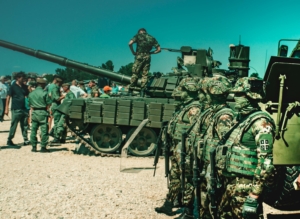
Military ExpenditureIn 2024, global military spending rose for the 10th year in a row. It reached a record high of $2.7 trillion, which accounted for 2.5% of the world’s gross domestic product (GDP). The 9% rise from 2023 represented the sharpest annual increase since the end of the Cold War. While military expenditure surged, developmental funding faced massive shortfalls.

In the same year (2024), humanitarian aid totaled $24.2 billion, representing a decrease of nearly 10% from the previous year. At its current rate, the projected military spending for 2035 is between $4.7 to $6.6 trillion. An annual military expenditure of $6.6 trillion would be almost five times the spending at the end of the Cold War.

In 2024, governments invested 750 times more in defence infrastructure than the regular budget of the United Nations (U.N.). The figures prompt a deeper question: What would the world accomplish by investing this vast budget in achieving the SDGs? Channeling it toward development instead of defense? The following section explores these questions by drawing on data from the U.N. Secretary-General’s report.

Reorienting the Military Budget Toward Sustainable Development

Spending on militarization takes money away from achieving the SDGs and ending poverty. As of 2024, nearly 700 million people globally live in extreme poverty, while more than 3.5 billion people live in poverty based on a standard that is more appropriate for upper-middle-income countries. According to the U.N., it would cost $93 billion to end global hunger, less than 4% of the money spent on the military in just one year.

Every 1% increase in military spending is equivalent to a 1% decrease in publicly financed health services in low and middle-income countries. It would cost $370 million annually, a fraction of the current military budget, to provide basic health care to every person in low and lower-middle-income countries. Using 10% of the $2.7 trillion could ensure full vaccination for every child in the world.

More than 250 million children and young adults lack access to education. However, less than a quarter of this decade’s military spending could have provided 12 years of quality education for every child in low- and lower-middle-income countries. With $114 billion annually, 140 low- and middle-income countries could gain access to safe drinking water and sanitation.

In terms of employment, $1 billion could create more than 25,000 jobs in education, 17,200 in health care, 16,800 in clean energy and 11,200 jobs in the military. Therefore, the rise in global military spending, as opposed to humanitarian aid and development aid, is undermining the progress made toward achieving the SDGs. The report highlights how investing in development through health care, education and poverty alleviation rather than the military can help build a future that is sustainable and peaceful.

Voices for Disarmament and Demilitarization

Numerous international and civil society organizations are challenging militarization and actively advocating for disarmament. Amnesty International, Human Rights Watch and Action on Armed Violence are among the organizations working to shift existing global priorities toward a focus on peace. The Women’s International League for Peace and Freedom is also among the leading voices.

Through its Reaching Critical Will program, the organization actively promotes permanent peace through disarmament and demilitarization. It rejects militarism in all its forms, believing that it is an oppressive system which fuels inequality and conflict. Through its campaigns and initiatives, the organization advocates for disarmament, demilitarization and denuclearization with governments.

Final Remarks

The rising global expenditure on arms and military has led to the reallocation of development funds and a scaling down of humanitarian aid, which could have a positive impact on billions. Over the decade, while the answer to conflict has been investment in defense infrastructure, it has not helped create a world that is truly secure or sustainable. The call for demilitarization and disarmament is urgent to reclaim resources for restoring humanitarian aid and addressing pressing global challenges, creating a safer, more equitable world.

– Priya Doshi

Priya is based in Edinburgh, UK and focuses on Good News and Politics for The Borgen Project.

Photo: Pexels

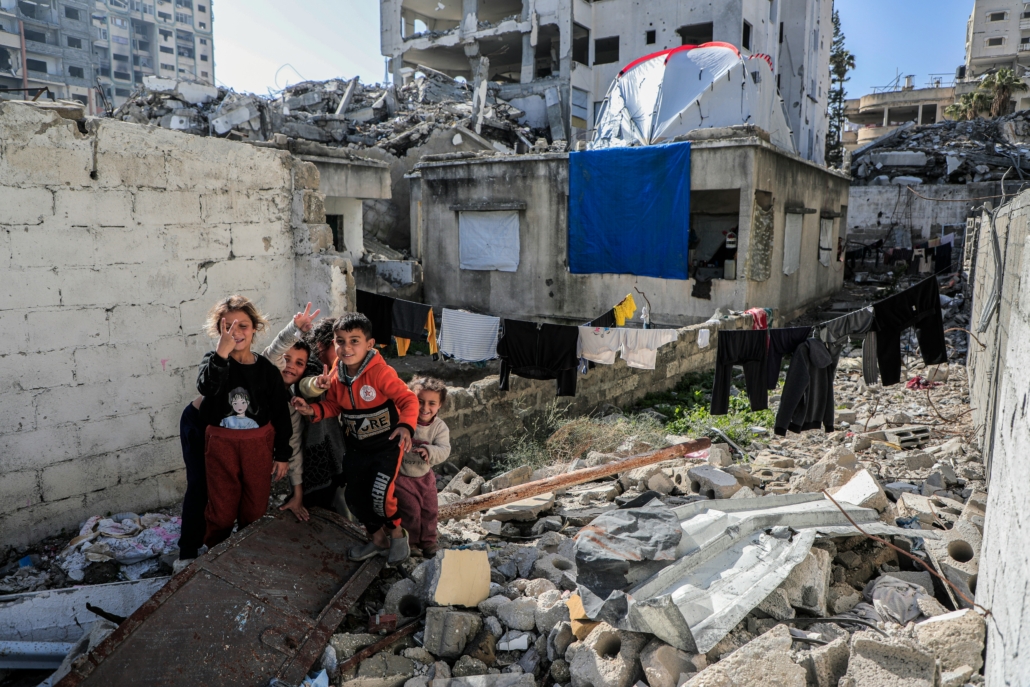
famine in gazaOn August 22, 2025, the war in Gaza reached a sobering milestone when the U.N.-backed Integrated Food Security Phase Classification (IPC) declared a famine in the Gaza Governorate. In a speech by the United Nations Under-Secretary-General for Humanitarian Affairs and Emergency Relief Coordinator, Tom Fletcher, he called this the world’s famine, underscoring what he saw as the abject failure of the international community to prevent Gaza’s suffering.

Just weeks later, the Independent International Commission of Inquiry on the Occupied Palestinian Territory, including East Jerusalem, and Israel found that Israel had committed four of the five genocidal acts defined in the 1948 Genocide Convention. Pedro Sanchez called the declaration of famine a “shame for all of humanity.” Such words of shame have ramped up as nations across the world call for an end to the suffering of Gazans, the release of hostages and a ceasefire to allow aid to reach the Gaza Strip unencumbered.

IPC Classifications

The IPC has individually assessed four of the five governorates in the Gaza Strip, according to the 2025 report. This has been evaluated on the Acute Famine Index and the Acute Malnutrition Index, each with five stages. The Famine Review Committee, which operates within the IPC, concluded that a Phase 5 famine was affecting the Gaza Governorate. This represents the most catastrophic classification and requires “extreme critical levels of acute malnutrition and mortality.”

North Gaza faced similar or worse conditions, but evidence was insufficient for an official Phase 5 classification. Both the Deir al-Balah and Khan Younis Governorates face a Phase 4 emergency, which the IPC projects will imminently rise to Phase 5 by September 30, according to the August 2025 review. While these classifications provide vital structure, it is crucial to recognise the lived realities they represent.

As of September 25, 2025 Israeli forces have killed almost 65,000 Palestinians, according to BBC, and have damaged or destroyed an estimated 90% of homes. Each of these fatalities is a life, each fatality has a story, and each fatality has a family that will be mourning their death. The human aspect of this conflict must always remain its primary framing.

Previous Warnings

Even before the official declaration of famine in Gaza, the IPC had been warning that the humanitarian crisis was reaching catastrophic levels. As early as March 2024, the IPC warned that “Famine is now projected and imminent in the North Gaza and Gaza Governorates.” Just a week before the official declaration of famine in Gaza, more than 100 organizations signed a statement calling on Israel to stop the “Weaponization of aid.”

Furthermore, in a statement on September 17, 2025, the leaders of more than 20 aid agencies called on world leaders to intervene after the declaration of genocide by a U.N. Commission. They called the situation on the ground “unconscionable” and recounted meeting Palestinians who had lost limbs and even children who wished for death to join their parents in heaven. Amnesty International echoed these appeals with a statement on the 25th September, asserting that “Words alone will not stop the atrocities.”

They called for all states to use every diplomatic, economic and political tool to exert influence over Israel to secure a ceasefire. These escalating appeals highlight a growing agreement among humanitarian groups that action on an international level is desperately needed.

The International Community

The realities of geopolitics in the region make it difficult for international actors outside of the U.S. to make decisions that could decisively end the war. In recent months, many of Israel’s allies, frustrated with the continuing conflict, have recognized Palestine in an attempt to revive the two-state solution that Netanyahu has said he will strongly oppose. However, some are calling for European states, particularly, to go further.

At the recent U.K. Labour Party conference, members of the governing party backed a non-binding motion calling for the full suspension of arms trade with Israel. This follows the Spanish government, which had already announced a full arms embargo on Israel in response to what Prime Minister Pedro Sanchez called a genocide. The European Commission has also announced plans to restrict trade with Israel and impose sanctions on extremist Israeli ministers.

Israel’s number one trading partner is the EU, and it accounted for 32% of Israel’s trade in 2024, positioning the EU well to apply meaningful pressure. However, experts predict the impact to be somewhat limited, with trade commissioner, Maroš Šefčovič, estimating the effect to be just €227 million a year, if the measure passes at all, which currently looks doubtful.

President Trump has also proposed peace with the backing of Netanyahu, which would see the demilitarisation of Gaza, the release of prisoners by both Israel and Hamas, a surge of aid into the strip and the creation of a temporary committee tasked with the transitional governance of Gaza. The success of this deal in the long term remains uncertain; however, leaders in the Middle East and Europe have signalled support for the plan.

Final Thoughts

International agencies described the humanitarian situation in Gaza as unprecedented in scale and severity. In September 2024, a U.N. commission declared that acts committed by Israel in Gaza met the legal definition of genocide, a finding that has intensified appeals for urgent international intervention.

Reports from the IPC, U.N. bodies, and humanitarian organizations continue to highlight widespread food insecurity, mass displacement, and the near-total collapse of essential services. Aid groups warn that without immediate and sustained access to food, water, and medical supplies, famine will deepen.

While long-term political solutions remain uncertain, humanitarian actors stress that the immediate priority is securing life-saving assistance for civilians. These repeated calls from agencies, governments, and human rights organizations are part of a growing international consensus that words of shame are insufficient without tangible measures to prevent further civilian suffering and loss of life.

– Adam Walsh

Adam is based in Burnley, UK and focuses on Global Health and Politics for The Borgen Project.

Photo: Flickr

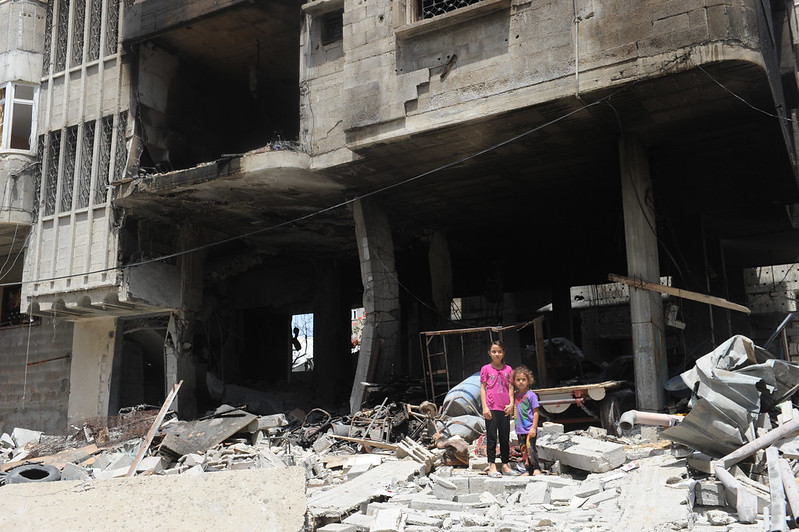
Rebuilding SyriaIn December 2024, Syria’s ruler, Bashar al-Assad, was chased out of the country, bringing an end to the country’s 14-year-long civil war. In the first 10 years following the Syrian revolution, the conflict displaced 13 million people both within Syria and abroad. Continuous bombing, political instability and disease outbreaks have devastated Syria for more than a decade, leading to the destruction of thousands of buildings, including homes, businesses, hospitals and schools.

As a result, 16.5 million people across Syria require humanitarian aid, making it one of the biggest humanitarian crises in the world. Urgent action is needed to repair the damage and provide adequate food, water, shelter and medical care to the displaced in Syria. Fortunately, humanitarian organizations like UNICEF and World Vision, the United Nations (U.N.) and government organizations like the European Union (EU) have been supplying these needs, albeit with struggles.

Syria’s Current Crisis

Syria ranks among the most food-insecure countries globally, with 14.5 million people requiring food assistance. More than seven million people are internally displaced within Syria, of which two million live in refugee camps that fail to meet basic needs. More than half the population lacks stable access to water.

Children are among the most victimized by the ongoing crisis. More than seven million children require humanitarian assistance. Six million children need protection services from forced labor, human trafficking, child marriage and child recruitment in local militias. Thousands of schools within Syria have been destroyed and those still standing have turned into encampments or emergency medical centers. As a result, 2.4 million eligible children are out of school, leaving them at increased risk of child labor, recruitment and trafficking.

Additionally, fewer than 50% of hospitals and medical facilities in Syria are either half-functioning or non-functioning. The lack of medical care has led to an increase in cases of waterborne, respiratory and vaccine-preventable diseases such as cholera and pneumonia, especially among children.

Rebuilding Syria

When factoring in the cost of rebuilding infrastructure, providing humanitarian aid and military spending, it is estimated that the recovery of Syria could take $1.2 trillion. The international community is assuredly investing in crucial aid to Syria. The largest donor is the EU, which has provided more than $37 billion since the beginning of the war in 2011 and pledged to invest more in 2025. The United Kingdom (U.K.) announced it will spend more than $216 million on humanitarian aid in Syria.

UNICEF has been providing aid to Syria since 2011. Over the years, it has given 4.6 million people access to clean water and vaccinated millions of children. It has also delivered additional medical care to 2.2 million women and children. Since the escalation of violence in July, UNICEF has deployed 14 mobile health and nutrition teams, offering medical care to 4,000 children and women and safe drinking water and fuel for pumping stations that benefit more than 30,000 people.

Similarly, World Vision has managed to aid more than 1.2 million Syrians, providing them with food and natural disaster relief. After a devastating earthquake in 2023, World Vision provided shelter and medical care.

Final Remarks

Reaching the millions of Syrians in need will require significant effort to ensure aid is delivered effectively. Meeting these needs is crucial and imperative, demanding that humanitarian organizations continue investing time and resources in rebuilding Syria.

– Zoe Alatsas

Zoe is based in Brooklyn, NY, USA and focuses on Global Health for The Borgen Project.

Photo: Flickr

Social Remittances to UkraineThe story of Ukrainian refugees shows how migration can generate not just financial assistance, but also the transfer of ideas, skills and civic values. These “social remittances” can help Ukraine recover from war, resist aggression and build an economy less vulnerable to poverty.

Remittances, sums of money sent to another place, are often a way for migrants to continue relationships while abroad, a method for supporting their communities from a distance. Beyond financial remittances, some Ukrainian refugees have found another way to support their nation, planning to bring social remittances to Ukraine home with them. These ideas, skills and values can strengthen democratic institutions and create economic opportunity.

Poverty in Ukraine & Financial Remittances

According to the Economic Commission for Europe, poverty rates in Ukraine decreased by an estimated 30.5% from 2016-2021. In 2021, the estimated rate of people below the Ukrainian subsistence minimum (the minimum income required to cover basic living expenses) was 20.6%. Since the Russian invasion in 2022, the poverty rate has been on the rise. While there is a lack of data for 2022, the following year’s (2023) poverty rate in Ukraine was 35.5%, having increased 14.9% in just two years.

The Ukrainian National News reports that in 2024, remittances to Ukraine reached $9.6 billion. The report shares that, according to the National Bank of Ukraine, the top sources for these funds were the U.S., Israel and Germany.

Refugee Relocation

The Council on Foreign Relations estimates that since the Russian invasion, 2.9 million Ukrainians have fled to the Eastern border, entering Russia. Another 1.6 million refugees escaped to Poland, where they joined the 1.3 million Ukrainians that already migrated there. The remaining refugees headed to the Czech Republic, Moldova, Romania, Slovakia and other European nations.

Social/Intangible Remittances

As Silke Meyer, a professor of European Ethnology at the University of Innsbruck, shared,  remittances can extend beyond financial support. Migrants may also send back social capital, networks, knowledge and community norms.

Sociologist P. Levitt describes these as “social remittances,” ways of thinking and living that migrants transfer back to their home. Later research by Grabowska, professor of Social Sciences and Economics at Kozminski University, explains that the concept expanded into “intangible remittances,” encompassing professional and educational practices, attitudes towards mental health, disability, gender roles and political participation. Such exchanges are quietly political and can lay the groundwork for reducing poverty.

The Ukrainian context stands apart because the Russian invasion has forced millions to flee. In this setting, intangible remittances often “emerge[d] as urgent responses to national crisis, moral obligation, or collective recovery,” according to Grabowska. For the women in her study, displacement deepened their attachment to Ukraine. Their intent to bring home what they have learned reflects a will to see Ukraine become stronger, self-reliant and economically resilient.

Migrant Focus on Ukraine

One study participant noted that a work culture fostering development “is something that could benefit [the Ukrainian] workforce back home.” Another expressed a wish to see the hands-on learning and critical thinking she encountered abroad implemented in Ukrainian schools. Others spoke of professional flexibility, cross-cultural respect and greater inclusion for people with disabilities, values that also support long-term poverty reduction.

Grabowska’s work also explores the cumulative advantage effect, a theory explaining how people with more initial resources – money, education or recognition – tend to expand those advantages more quickly. Ukrainian refugees with these resources were better positioned to gather skills and networks abroad, which they then return as powerful remittances to Ukraine.

Unique Predictors

Beyond material resources, “higher civic engagement attitudes and autonomous reflexivity” were strong predictors of which refugees would benefit most from the cumulative advantage effect. War migrants who had a history of community activism and independent decision-making were “more than twice as likely” to gain advantages that could be sent back home. This points to social remittances as not just cultural or personal contributions, but explicitly civic and political, with the potential to influence economic growth and help address poverty in post-war Ukraine.

Future Remittances

The invasion forced Ukrainians into survival-based emigration, but it also created space to imagine a different future for the country. Some refugees plan to return permanently; others foresee a transnational lifestyle or contribution from afar. The only constants throughout the female war migrants’ interviews is their “emotional and symbolic ties to Ukraine” and “desire to contribute to its recovery.” Such commitments to restore and strengthen democratic, inclusive and resilient institutions are inherently political acts of resistance to attempts of domination and can lay the groundwork for reducing poverty by creating more equitable opportunities for all Ukrainians.

Benefits of Remittances

Ukraine is not the sole beneficiary of these contributions. The refugees see themselves as global citizens, fostering cooperation between Ukraine and their countries of residence. In sending back social remittances to Ukraine, they not only help their nation resist aggression but also share ideas that can strengthen anti-poverty efforts both locally and globally.

Whether through peacebuilding, civic participation or inclusive social practices, Ukrainian refugees are shaping conversations about the kind of world they, and their homeland, want to live in, one where the roots of poverty are addressed alongside the wounds of war. 

– Alyse Rhee

Alyse is based in Winter Garden, FL, USA and focuses on Good News and Politics for The Borgen Project.

Photo: Flickr

Poverty in UkraineWith ongoing humanitarian threats and a national focus redirected toward wartime efforts following Russia’s illegal 2022 invasion, Ukraine is experiencing a rise in poverty.

Poverty in Ukraine

Despite recent negative trends, Ukraine’s national poverty decreased from 2016 through 2021, with poverty levels of 51.1% declining to 20.6%, according to the United Nations Economic Commission for Europe. With the help of sustained economic growth, increased income, improvements in the labor market and government policies, Ukraine ensured a reduction in poverty.

Once the war began in 2022, government policies and initiatives, including the Household Budget Surveys (HBS), were canceled because of disruptions and the need to consolidate funds. According to the Ministry of Economy of Ukraine, the government implemented a program to modernize state statistical methods and initiatives, including the HBS, reinforcing Ukraine’s commitment to the United Nations’ Sustainable Development Goals through 2030.

With these and other poverty-reducing policies now on hold, continued international support and donations are imperative to help reduce poverty in Ukraine.

National Organizations Supplying Donations

  1. Razom for Ukraine. This is a nonprofit that uses international donations to reduce poverty in Ukraine and support those affected by the war. Its goals include delivering supplies to medics and civilians and promoting education and advocacy to build public support for international policies backing Ukraine. Donations have provided hygiene and first aid kits for families in war-devastated areas, supplies for field medics and repair kits for damaged homes. According to Razom for Ukraine, these items, together with broader support programs, help communities facing violence hold onto hope for a future with reduced poverty and recovery from the impact of Russia’s invasion. Razom for Ukraine partners with other nonprofits and organizations to deliver humanitarian aid across multiple sectors. One example is its collaboration with Building Ukraine Together, highlighted by CEO Dora Chomiak in an interview with Columbia University’s “Journal of International Affairs.” This partnership helps physically and figuratively rebuild households so Ukrainians can improve living conditions despite large-scale destruction. Through international donations, Razom for Ukraine reduces poverty by strengthening communities and expanding access to jobs and education.
  2. Nova Ukraine. Another nonprofit that sends international donations to reduce poverty in Ukraine and improve Ukrainians’ well-being is Nova Ukraine. Nova Ukraine shares similar goals with Razom for Ukraine, focusing on humanitarian aid and raising awareness. Its volunteers work on supplying resources and aid, running outreach programs and supporting refugee initiatives, with some volunteers based in Ukraine.Like Razom for Ukraine, Nova Ukraine partners with other organizations to extend aid to those in need. One such partnership is with UNICEF USA, which focuses on supporting children and families in Ukraine. Helping families directly and supporting children from devastated communities enables current and future generations to persevere. This creates stronger ties and a unified front in rebuilding Ukraine during and after the war.

IKEA’s Humanitarian Aid for Ukraine

IKEA, a Swedish furniture and home goods company, has taken steps, along with partners, to address the humanitarian issues that arise from the war. After Russia’s initial invasion in 2022, IKEA halted exports and imports to Russia and Belarus. Additionally, IKEA and its partners have donated millions of dollars to aid organizations, hoping to support services and individuals in Ukraine impacted by the war.

These donations also support medical organizations and allow medics and doctors in Ukraine to receive modern equipment, improving the country’s medical system. These supplies benefit civilians, enlisted military and members of international aid organizations near and at the frontlines, maintaining direct humanitarian aid for Ukraine.

Within IKEA, the Ingka Group, a retail partner, donated furniture, toys and other goods for displaced families and Ukrainians fleeing the nation at the start of the war. The donations were crucial for supplying UNICEF with the necessities of housing and caring for individuals and added humane relief for children. IKEA and its partners help reduce poverty in Ukraine by supporting organizations that assist refugees while creating and preserving jobs and livelihoods for Ukrainians in need.

– Avery Kachmarsky

Avery is based in Los Angeles, CA, USA and focuses on Business and Politics for The Borgen Project.

Photo: Flickr

Reducing Poverty in UkrainePoverty has risen in Ukraine as the nation continues to face war, despite earlier policies that had created positive outcomes for its population. One way Ukraine can combat poverty now is by investing in education.

Higher Education in Ukraine

According to the Ministry of Education and Science of Ukraine, the country supports educational access to all people, including those who have been displaced from Ukrainian territories due to Russia’s illegal invasion. In addition, citizens who meet certain requirements and qualifications can earn free tuition from existing educational categories of funds and budgets.

As stated by Boston College’s International Higher Education, roughly 16% of the total number of students in Ukraine have left Ukrainian territory since the start of the expanded war in 2022. Russia’s constant bombardment of cities and non-military targets has led to millions of Ukrainians fleeing their homes for safety and shelter in other parts of Ukraine and the world.

Russia has also attacked higher education institutions, which has increased the displacement of students and staff. On August 18, 2025, Sumy State University was struck by a missile and drone attack on Sumy conducted by Russia, damaging multiple university and residential buildings in the city.

In response to the current war, Ukraine’s universities have utilized remote learning, relocation, scholarships and other methods to enhance students’ educational skills, continue education and reduce poverty in Ukraine. As seen in different nations, education can produce a strong working class, contributing to the national economy and supporting current and future generations.

Programs and Initiatives Supporting Ukrainian Students

One international program created after the 2022 invasion is the Program for Hosting the Ukrainian Scientists. This program was also supported and backed by the Government of Paraná in Brazil, as stated by the Araucária Foundation. The foundation, aimed at supporting sustainable development in the state and working with many businesses across sectors, supported the relocation of Ukrainians in Ukraine to Paraná, which had a large existing Ukrainian population.

This program aimed to receive and aid refugees from the war by connecting them with fellow Ukrainians. It also gave Ukrainian researchers and professionals, the majority of whom are women, the ability to support initiatives that help Paraná’s economy. Additionally, these initiatives supplied research grants and served as a starting base for these Ukrainians to gain and expand skills related to improving Ukraine’s economy and reducing poverty in Ukraine after the war.

Another initiative that supports Ukrainian students studying abroad is the University of Tartu’s scholarship fund. According to its website, the University of Tartu in Estonia has enabled Ukrainian students to receive financial and social support. This support ensures that Ukrainian students can access education, ultimately supporting the devastated economy and reducing poverty in Ukraine, while positively contributing to themselves, their future and their host nation’s economy.

Ukrainian Catholic University’s Support

Higher education institutions in Ukraine have continued learning instruction for students despite being targeted in attacks and having to resort to other methods for teaching. Halyna Kurochka, head of the Center for Modern Foreign Languages and Anastasiia Kryzhanivska, an English and Polish lecturer at Ukrainian Catholic University (UCU), spoke with The Borgen Project about UCU’s support for students during the war.

Kurochka and Kryzhanivska said, “The university quickly transitioned to online learning and later to hybrid formats, maintaining academic continuity despite the ongoing challenges. Now, we have returned to offline learning.” The ability to pivot quickly and effectively is key for Ukrainian universities in their fight to ensure educational access to all, including those who are in territories near the frontlines as well as those who are in protective shelters during missile and drone attacks.

As a result of these new locations and methods, the university “upgraded its digital infrastructure to better support both students and staff.” In addition to tailored educational methods, the “university integrated themes of civic responsibility, ethics, resilience and leadership into its curriculum,” promoting civic participation for students and future generations, declared Kurochka and Kryzhanivska.

The university also ensures financial support for students in need, especially those vulnerable and in the minority, with available scholarships and interest-free loans, expanding higher education access to more students. Kurochka and Kryzhanivska also said, “In 2024, 52% of applicants received some form of financial assistance, reflecting UCU’s commitment to supporting students during this difficult time.”

The university is also currently pursuing a project called the Intercultural Interaction and Cooperation through Transnational Education with Latin America, allowing students to learn together while connecting people and ideas from across the world.

Final Remarks

Higher education in any nation is important for younger generations to improve their futures. However, it is also key in reducing cyclical poverty and building and strengthening society. For Ukraine, higher education builds a sense of national pride while reducing poverty in Ukraine by creating a skilled and competitive workforce.

Kurochka and Kryzhanivska said, “The university has become a second home for many young people, where they not only receive an education but also take their first steps in building their careers.”

– Avery Kachmarsky

Avery is based in Los Angeles, CA, USA and focuses on Business and Politics for The Borgen Project.

Photo: Flickr

Exercising in GazaDespite the unique challenges that arise from living in the war-torn country, one Palestinian man is exercising in Gaza and documenting it for the rest of the world to see.

The Fitness Trend

Young people are increasingly prioritizing health and wellness. This year’s London Marathon broke records with 56,640 finishers. Gen Z is also drinking less and signing up for more gym memberships. Social media proves this trend, with a rise in fitness influencers sharing their workout routines, meal plans and physical transformations with millions of followers worldwide.

One of these influencers is Mohammed Hatem. He fits the mold in many ways: he’s 20, has more than 300,000 followers on Instagram and posts fitness videos online. But the difference is that he lives in Gaza.

The Journey

Hatem began documenting his fitness journey on Instagram as a displaced Palestinian in April 2024. An avid gym goer and bodybuilder before the war, he notes on his page that, since the conflict started in 2023, he hasn’t been able to access a gym or nourish himself properly, leading to losing much of his strength. Eventually, he grew “fed up [of] waiting for the war to end” to prioritize his physical health again. So he started posting videos of himself exercising in Gaza, detailing his workouts and meals.

More than a year later, Hatem has fled his home several times due to the widening “danger zone.” Despite this, he continues exercising in Gaza. He not only encourages his fellow Palestinians to keep fit with the little they have but also inspires people worldwide to confront their preconceptions and rethink what it means to live in a warzone.

Most of his videos share the innovative ways he keeps fit, including doing weighted press-ups with bricks in his backpack, using his door frame to do pull-ups and carrying large containers of water upstairs. However, he also details what he eats, mostly from a tin. Fresh food is scarce in Gaza and earlier this year, the U.N. warned that one in five people living there is at risk of starvation.

Hatem also posts informative videos on other aspects of his life besides exercising in Gaza. These include how he gets access to the internet, updates on ceasefires and his method of planting fruit and vegetables to supplement the food other nations send in aid.

Looking Ahead

In a recent video entitled “Pursuing Dreams in Gaza,” Hatem explains that he is hoping to build his dream physique and eat enough to gain muscle when the war is over. He also dreams of starting an online coaching business to help others, just as he does now through his Instagram account. Despite all adversity, he continues exercising, educating and inspiring. He provides hope to all those affected by war, poverty and displacement.

– Elsa Tarring

Elsa is based in London, UK and focuses on Good News and Global Health for The Borgen Project.

Photo: Unsplash
Translators without BordersMyanmar is one of the least politically stable countries in the world, having been in some state of civil war since its independence in 1948. Amid the cycle between civilian democracy, autocracy and military dictatorship, ethnic minorities have been subject to persecution and harassment. The ongoing Rohingya genocide has prompted a mass exodus to neighboring Bangladesh, which shares their Islamic faith. With the majority lacking formal education and access to a reliable and diverse media diet, the Rohingya have become a bellwether for internet-fueled misinformation.

Donor Fatigue and Repercussions

As the Rohingya crisis stretches further, aid givers are warning of the growing trend of “donor fatigue,” a phenomenon whereby major philanthropists and the public decrease interest and donations. Donor trust is fragile: it can be damaged by a single viral hoax about corruption or a misconstrued image that goes viral.

The real-world effects of donor fatigue and funding cuts are severe. As noted, food rations have already been reduced — in March 2023, monthly aid per person dropped from $12 to $10. It was on track to fall further until a last-minute funding injection stabilized it.

Diminished funding creates a vicious cycle: misinformation reduces public support, leading to funding cuts, worsening conditions and making the crisis even more challenging to resolve. As a result, displaced populations remain trapped in prolonged dependence and growing risk. Refugees International recently warned that declining aid and “ongoing restrictions on the ability to work” are forcing more Rohingya to risk dangerous sea journeys in search of survival.

Translators without Borders: Community-Led Solutions

Calling out and confining online misinformation requires a coalition of individuals, platforms, governments and nonprofits. Organizations like Translators without Borders are working to provide accurate and fact-based reporting to refugees. A particular successful program is the “Flying News” rumor bulletin. This periodic flyer, written in clear terms and translated orally by field staff for those who can’t read it, takes the latest prevalent rumors and provides verified answers and facts.

Media platforms are also mobilizing to counter misinformation. In response to international outcry, Facebook has altered its Myanmar site to contain additional algorithms automatically detecting inflammatory language. Questions arising from Facebook’s role in the Rohingya genocide have led a group of refugees to file a landmark $150 billion lawsuit against its parent company, Meta. First filed in 2021, the suit alleges that Facebook’s negligence helped fuel the violence in Myanmar. Although initially dismissed, the refugees appealed and the case is now progressing through the U.S. Ninth Circuit Court of Appeals. The appellate decision remains pending.

Furthermore, Bangladesh-based fact-checking groups such as BD Fact Check and Boom Bangladesh have begun debunking viral falsehoods about the Rohingya in national media, helping curb the spread of misinformation in host communities. In 2018, Bangladesh’s unicameral legislature passed the Digital Security Act, which criminalizes the dissemination of “rumors” or “false information” that could destabilize the country. In theory, this law could apply to those inciting violence or spreading hoaxes about the Rohingya in refugee camps.

Meanwhile, in Indonesia, the spread of inflammatory TikToks made international headlines. It prompted the country’s security agencies to investigate the online hate campaign that sparked violence in Aceh. Authorities are working to identify the masterminds and bots behind the coordinated effort.

Moving Forward With Innovation

Since the genocide of the Rohingya began, breakthroughs in artificial intelligence have complicated things. Researchers in Indonesia have started using AI to collect and analyze data on social media. Using natural language processing and sentiment analysis, they hope to gauge public attitudes toward Rohingya refugees accurately. One recent study analyzed Indonesian Twitter and news commentaries using a BERT-based model (a form of AI language model). It found that around 65% of online sentiments about Rohingya refugees were negative.

Although long-term ramifications are poorly understood, the findings as of 2025 have demonstrated that community-led dramatizations are the most successful initiatives. Training aid organizations and expanding localized fact-checking trends in refugee camps resonate strongly. These posts are often in the local idiom and usually laced with humor to gently correct false beliefs.

In summary, Translators without Borders and others within the humanitarian sector’s approach has evolved to “fight fake news alongside the pandemic” and other crises. Aid workers now see information management as a core part of aid, not an optional add-on. These evolving strategies offer hope for protecting vulnerable populations from the dual threats of displacement and digital misinformation.

– Maxwell Marcello

Maxwell is based in Pittsburgh, PA, USA and focuses on Technology and Politics for The Borgen Project.

Photo: Flickr

Nagorno-KarabakhNagorno-Karabakh is a small territory in the South Caucasus, between the regions of Armenia and Azerbaijan. These two states have contested this piece of land since the first war in the 1990s, with 30,000 casualties and significant displacements after Armenia took control of the territory. The conflict escalated in 2020 when Azerbaijan reclaimed a large part of Nagorno-Karabakh territory, along with the support of its ally, Turkey.

Russia moderated the ceasefire due to the shared ties with both nations; however, tension prevailed. In 2022, a blockade by Azerbaijani activists at the Lachin corridor prevented the free movement of food and essential goods. Both parties accused each other of posing threats, which was not confirmed. What remains clear is the consequent humanitarian crisis leading to an urgent post-war recovery of Nagorno-Karabakh refugees.

Blockade of Lachin Corridor

The Azerbaijani military operation led to the displacement of thousands of ethnic Armenians from their homes. The blockade in the Lachin corridor left the population facing a severe shortage of resources essential to survival, such as medical and food supplies. The Azerbaijani government has been criticized internationally due to its failure to ensure a safe passage for the population and human rights violations.

The International Committee for the Red Cross (ICRC) and Russian peacekeepers tried sending aid, which the Azerbaijani administration had blocked, alleging unauthorized objects among them.

Displacement and Daily Struggles

Thirteen-year-old Natalie Musayelian fled Nagorno-Karabakh with her family. On her way, she collected berries, stones and a branch, keeping all the items in a small box of chocolates and the key to her house. Currently, she lives in Armenia with her aunt and grandmother. She misses her home every day and cherishes these objects as memories and comfort after the loss. Her story is just one of many people who were displaced from their homes due to the conflict.

Many refugees from Nagorno-Karabakh have fled to the capital of Armenia, Yerevan and the region of Syunik. Armenia has already opened shelters and provided social aid for the displaced population. The U.N. launched a $97 million funding appeal to ease the burden on the volunteers and the Armenian host community. However, it anticipates further movement of people as they search for employment and long-term housing.

The Role of the US Foreign Aid

In 2023, the United States Agency for International Development (USAID) Administrator Samantha Power visited Armenia after a disproportionate number of displacements. She announced $11.5 million in U.S. humanitarian aid, providing essential supplies and psychosocial services. The collection of refugee testimonies enabled the criticism of the blockade. Furthermore, they reaffirmed the high level of concern for a post-war recovery of Nagorno-Karabakh refugees.

Furthermore, the U.N. World Food Program (WFP) hosted a two-day visit from USAID’s Bureau for Humanitarian Assistance (BHA) to assess support for refugee families. The delegation collaborated with local officials, social workers and even families, such as a grandmother in Kotayk struggling with her grandchildren’s care. USAID’s BHA provided a $1.13 million grant for emergency food assistance, which helped 30,000 refugees. Additionally, from February to September 2024, food cards and parcels were distributed to alleviate short-term needs, ensuring the families’ well-being.

– Sara Arias Saiz

Sara is based in Leipzig, Germany and focuses on Politics for The Borgen Project.

Photo: Flickr

Rebuild SyriaThe Syrian civil war, which started in 2011, destroyed the country’s economy and infrastructure as armed groups loyal to different sides fought for control over many local economic hubs. This led to the destruction of sprawling urban centers and infrastructure nationwide. However, in December 2024, Syrian opposition forces ousted the Assad regime, marking a turning point in the nation’s history. Now, a transitional government is leading efforts to rebuild Syria through diplomatic measures.

A Free Market Economy

According to Al Jazeera, under the opposition group Hayat Tahrir al-Sham (HTS), the transitional government wants to establish Syria as a free market economy. As a step towards this, the government reopened the Nasib border crossing with Jordan, one of Syria’s busiest trading routes.

The government will be trying to establish new economic protocols to stabilize the public sector. The focus right now is on necessities such as electricity. However, the country’s economy currently revolves around informal markets that don’t have official oversight, resulting in a hard-to-follow capital flow that will be a challenge to capitalize on.

Reforming Government Ministries

Mohammed Abazeed, finance minister, told Reuters that government ministries would be reformed to improve accountability and efficiency, leading to a 400% increase in public sector salaries by February. The government also plans to overhaul the tax system to benefit all taxpayers. These improvements in various sectors will help Syria. 

However, the country still suffers from sanctions other nations imposed on it during Assad’s regime. The Assad regime received sanctions from many countries in the West, such as the U.S. and the U.K. These sanctions forced the regime to look to Iran and Russia for funding, but now that the old regime has been ousted, the new transitional government inherited those sanctions without a direct source of outside financing to counter them.

Removing Economic Sanctions

The transitional government led by interim President Ahmed Al-Sharaa is in diplomatic talks with the U.S. and European Union (EU) countries to remove economic sanctions. The U.S. government did label HTS as a terrorist organization;

However, on December 20, 2024, the U.S. government removed a $10 million bounty for al-Sharaa. The U.S. is also leading talks with Gulf Arab states to remove sanctions so long as the new government cuts ties with Russia and Iran, according to Al Jazeera.

A Peaceful Resolution

Armed groups and militias still control much of Syria. Many of these groups fought the HTS or remained wary of their intentions. As a show of peace, the transitional government invited delegates from all over Syria to a national dialogue conference on February 25.

Al-Sharaa and his government are trying to reach a peaceful resolution with other armed groups by involving them in rebuilding and creating a unified army from these groups. However, the Syrian Democratic Forces have refused to disarm and give up their territory.

Conclusion

Many Syrians remain hopeful for the future. Diplomatic talks with nations such as Türkiye remain consistent for the transitional government, potentially allowing for foreign investment. Syria remains in a precarious position but is consolidating a plan to rebuild.

– Jonathan Joseph

Jonathan is based in Milwaukee, WI, USA and focuses on Good News and Politics for The Borgen Project.

Photo: Wikimedia Commons