• Link to X
  • Link to Facebook
  • Link to Instagram
  • Link to TikTok
  • Link to Youtube
  • About
    • About Us
      • President
      • Board of Directors
      • Board of Advisors
      • Financials
      • Our Methodology
      • Success Tracker
      • Contact
  • Act Now
    • 30 Ways to Help
      • Email Congress
      • Call Congress
      • Volunteer
      • Courses & Certificates
      • Be a Donor
    • Internships
      • In-Office Internships
      • Remote Internships
    • Legislation
      • Politics 101
  • The Blog
  • The Podcast
  • Magazine
  • Donate
  • Click to open the search input field Click to open the search input field Search
  • Menu Menu

Archive for category: Refugees

Refugees

10 Facts about Vatican City Refugees

 Vatican_Refugees
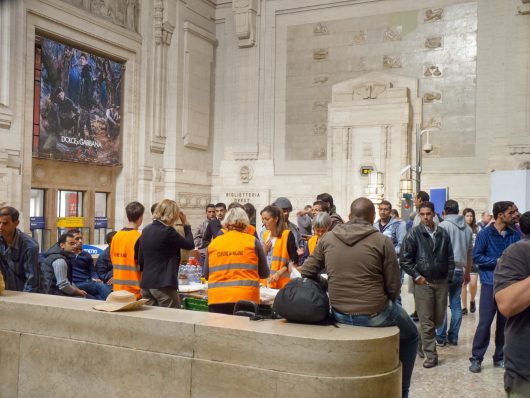
The Vatican has taken in several Syrian refugees over the last few months. In April of 2016, Pope Francis took 12 Muslim Syrians from three different families into the Vatican as refugees. In June, he welcomed nine more Syrians as Vatican City refugees, seeming very symbolic to many individuals throughout Europe and the rest of the world. The refugees that were brought into the Vatican were very grateful for the Pope’s “gesture of hope” and some even went on to call him a savior.

Being a refugee is difficult but being a refugee in Vatican City is not only difficult but also very interesting due to the uniqueness of the situation. Here are 10 facts about Vatican City refugees:

    1. The Greek island of Lesbos is where many Syrian refugees are being held and where the Pope took in a portion of the refugees in Vatican City. Most of the refugees on the island of Lesbos feel as though they are trapped as prisoners in the neglected detention center. They are also constantly at risk of being sent back to Turkey due to a new deportation deal between the E.U. and Turkey.
    2. The refugees the Pope took from Greece on his visit in April consisted of three families whose homes had been bombed in the Syrian war. After bringing these refugees to the Vatican, the Pope declared that he wanted to make a gesture of welcome for the refugees.
    3. Even though many thought the Pope’s action in taking in these refugees were on a whim, his actions were actually carefully thought out and had involved a large amount of planning and paperwork for not only the Vatican and Italy, but also Greece.
    4. The Pope’s refugees will all be taken care of by the Catholic charitable association, Sant’Egidio, which will help care for the families and assist them in finding work.
    5. When questioned about why these specific families were chosen to be taken from Greece to the Vatican, the Pope did not explain, but instead simply stated that: “They are guests of the Vatican.”
    6. Beginning in the summer of 2015, thousands of migrants, mostly from Syria, Iraq and Afghanistan, journeyed into Lesbos after paying smugglers to make the brief sea journey from Turkey. This smuggling of refugees caused the E.U. to have a political crisis which, in turn, led several countries to either restrict or completely close their borders.
    7. The number of migrants coming into Greece has fallen significantly since Turkey agreed to take back all of the individuals coming into the Greek islands for billions of dollars in E.U. cash. Over 1.1 million people have covertly crossed from Turkey to Greece since the start of 2015, and hundreds have drowned in this journey.
    8. In 2015, the Pope appealed to all Catholic diocese in Europe to take in a refugee family. Unfortunately, the Pope’s appeal was ignored by the majority of individuals across Europe.
    9. The Pope continued to fight for refugees when he offered special praise for ordinary Greeks who have taken refugees into their homes. Other religious leaders have called upon the E.U. to provide more help for Greece in this migrant crisis.
    10. Currently, there are 20 Syrian refugees living in the Vatican, which consists of 1,000 inhabitants.

While the Pope has clearly been doing his part in the Syrian refugee crisis, the issue has not been solved. However, using the Pope as a model by taking in refugees to the Vatican and treating them with respect, many individuals in Europe and around the world should have a better outlook on Syrian refugees and how they should be treated.

– Bella Chaffey

Photo: Flickr

September 24, 2016
https://borgenproject.org/wp-content/uploads/borgen-project-logo.svg 0 0 Borgen Project https://borgenproject.org/wp-content/uploads/borgen-project-logo.svg Borgen Project2016-09-24 01:30:172024-12-13 17:55:4310 Facts about Vatican City Refugees
Global Poverty, Refugees

How Foreign Aid is Helping Refugees in Ukraine

Refugees in Ukraine

The conflict in eastern Ukraine has taken nearly 10,000 lives just since 2014, and the casualties continue to rise as the conflict becomes tenser.

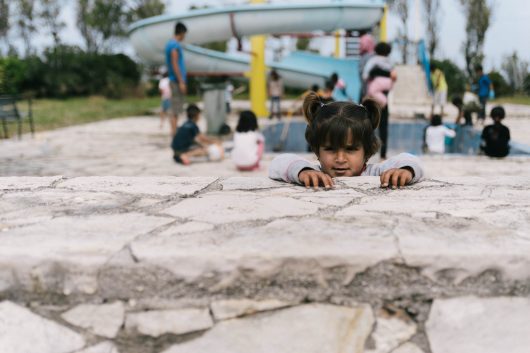
Many of the refugees in Ukraine have been internally displaced – some have fled to cities that are actually close to the conflict like Kharkiv and Zaporizhia while others have left to their neighboring nations.

The 1.4 million internally displaced Ukrainians are victims of a hidden humanitarian crisis where families are displaced in run-down apartments or other vacant buildings instead of typical refugee. UNHCR has been providing shelter repairs for these internally displaced people after the damage in the eastern region. However, many are still without accommodation or have lost their homes.

Many of these Ukrainians fled to the Russian Federation. During the worst time of conflict Russia made a significant effort to assist refugees in Ukraine by providing housing and dispatching humanitarian convoys regularly. However, Russia recently has dialed back on their efforts and is accepting far fewer refugees. Ukrainians now flee to Belarus, Poland, and Germany where they find aid from various organizations such as the Ukrainian Samaritan Federation.

The Ukrainian Samaritan Federation has partnered with the ASB in Ukraine to provide assistance to the refugees. They have donated over $30,000 while aid has also come from seven other European Samaritan Associations.

These funds are meant to ensure that the refugees continue to have medical care, particularly for the injured activists. Refugees have also received over 200,000 food parcels as well as 4,000 winter aid parcels. The volunteers at SSU have spent countless hours providing relief supplies and have even provided safe shelter for many refugees.

In order to improve life back home, USAID has installed the Ukraine Confidence Building Initiative to create a more stable nation and provide short-term assistance to Ukraine in its transition to democracy. Assistance comes in the form of grants for goods, services and technical support to help communities to mitigate the effects of conflict in the east. The goal is to make this a stable and peaceful transition to resolve this conflict so that the refugees may eventually return to their homes and rejoin their families.

– Amanda Panella

Photo: Flickr

September 22, 2016
https://borgenproject.org/wp-content/uploads/borgen-project-logo.svg 0 0 Kim Thelwell https://borgenproject.org/wp-content/uploads/borgen-project-logo.svg Kim Thelwell2016-09-22 01:37:002024-12-13 17:55:39How Foreign Aid is Helping Refugees in Ukraine
Global Poverty, Refugees

San Jose Action Statement: Helping Central American Refugees

San Jose Action Statement
On August 4, Belize, Canada, Costa Rica, El Salvador, Guatemala, Honduras, Mexico, Panama and the United States welcomed the San Jose Action Statement. The statement was issued in response to an unprecedented meeting of concerned nations regarding the influx of Central American refugees.

Since 2012, the number of pending asylum cases in the U.S. and Mexico alone has reached over 109,000. In 2014, 66,000 unaccompanied children fleeing Central America entered the U.S. Further, data from 2015 shows the U.S. continuing as the main receiving country, registering almost twice as many asylum applications as in 2014.

Recognizing the need for urgent action and improved institutions to manage the flow of migrants, members of the San Jose Action Statement agreed to responsibility-sharing and regional cooperation. To mitigate the crisis and lessen the plight of refugees, the San Jose Action Statement has three main objectives:

Preventing and Addressing Root Causes of Displacement in and Migration from Countries of Origin

To accomplish this, member states vowed to strengthen coordinated responses, focusing on socio-economic development, access to education and livelihood opportunities, consolidating the rule of law, acting against impunity and operating under a framework that fully respects human rights.

Member states further agreed to monitor internal displacement and migration in order to develop well-informed national and international responses to the refugee crisis. In addition, all parties acknowledged the need to provide protection for internally displaced persons (IDPs) and returnees. These measures aim to minimize the outward flows of migration by creating prosperous, secure lives in home countries.

Enhancing Asylum and Protection Responses in Countries of Transit, Destination and Asylum

All parties to the San Jose Action Statement agreed to provide timely identification and documentation of refugees, as well as unhindered access to documentation processes and protection.

Member states further vowed to improve alternatives to detention and resource provision for refugees, including access to legal aid, psychosocial support and humanitarian assistance. Early integration into receiving communities will also be targeted and strengthened.

Promoting Regional Cooperation

All nine nations agreed to develop a collaborative approach, emphasizing the need for partnerships with other nations, U.N. organizations, international and regional organizations, civil society, academia and other entities. These partnerships will create responsibility-sharing mechanisms in the region, such as legal pathways to admission and humanitarian visas.

This call for action marks an important step in combating the Central American refugee crisis. The U.N. High Commissioner for Refugees (UNHCR) Assistant High Commissioner for Protection, Volker Türk, stated, “The San Jose Action Statement is a visible and significant demonstration of the willingness of countries from the region to work together to address the plight of refugees, internally displaced persons and others in need of protection, in a spirit of solidarity.”

– Anna O’Toole

Photo: Flickr

September 20, 2016
https://borgenproject.org/wp-content/uploads/borgen-project-logo.svg 0 0 Borgen Project https://borgenproject.org/wp-content/uploads/borgen-project-logo.svg Borgen Project2016-09-20 01:30:562024-06-11 02:48:22San Jose Action Statement: Helping Central American Refugees
Activism, Human Rights, Refugees, Refugees and Displaced Persons

Ten Facts About North Korean Refugees

d
The North Korean refugee situation is not one to be taken lightly. While the American media predominantly focuses on the recent refugee crises in Syria and other Middle Eastern countries, the totalitarian regime of North Korea impedes on the human rights of North Korean refugees everyday and such injustices cannot be ignored.

10 Facts about North Korean Refugees

  1. The people who live in North Korea are governed by Kim Jong-un under a completely totalitarian regime. Totalitarianism as a form of government theoretically prohibits individual freedom and expression; all aspects of an individual’s life are subject to the government’s authority. As such, media access and information about life outside of North Korea is extremely restricted.
  2. Most North Korean refugees defect to either China or South Korea. Refugees must usually travel through China to reach South Korea, as the border between North and South Korea is extremely regulated.
  3. South Korea’s media usually does not publicize individual defections, but large groups of North Koreans who defect all at once, such as the group of thirteen restaurant workers who left North Korea in April 2016, are more likely to be reported.
  4. The government of South Korea offers citizenship to all North Korean refugees who legitimately try to claim refugee status. The people seeking refuge are extensively interviewed to filter out any North Korean spies. As of May 2016, around 29,000 North Korean refugees live in South Korea.
  5. South Korea also offers reorientation classes for refugees from NK. These courses teach refugees basic life and job skills that don’t apply in North Korea, such as how to withdraw money from an ATM or shop in a Western-style supermarket.
  6. If any refugees from NK manage to escape to China, most face the fear of Chinese government discovery and the forcible repatriating that follows. Despite a signatory on the United Nations convention on refugees stating that China is not obligated to repatriate people seeking refuge, China still cooperates with the North Korean government and will even pay Chinese citizens to turn in undocumented refugees.
  7. Once they arrive back in North Korea, the refugees generally face torture, harsh physical labor and internment in political prisoner camps. It is therefore important to make sure people who want to leave North Korea can leave without fear of repatriation and punishment for leaving their country of birth.
  8. Organizations like Liberty for North Korea use donations to provide rescue and rehabilitation for North Korean refugees without any direct cost to the refugees themselves. It costs about $3,000 to fully rehabilitate one refugee. So far they have rehabilitated 505 refugees.
  9. As of May 2016, over 200,000 North Korean refugees live secretly in China. Most of them live in fear of repatriation and simply want to move on to South Korea or another country that will offer legal protection to refugees. However, tightly restricted travel between China and other countries’ borders often prevents such an opportunity.
  10. Many refugees from NK suffer from a host of mental health problems, including but not limited to depression and PTSD, even after they leave North Korea.

The cooperation of the Chinese with North Korea’s government makes the Chinese government complicit in the refugee injustices. North Korean refugees need help, and they’re looking to the rest of the world for aid.

– Bayley McComb

Photo: Liberty in North Korea

September 19, 2016
https://borgenproject.org/wp-content/uploads/borgen-project-logo.svg 0 0 Borgen Project https://borgenproject.org/wp-content/uploads/borgen-project-logo.svg Borgen Project2016-09-19 01:30:562020-06-25 23:20:04Ten Facts About North Korean Refugees
Global Poverty, Refugees

10 Important and Interesting Facts About Burundian Refugees

Burundi Refugees
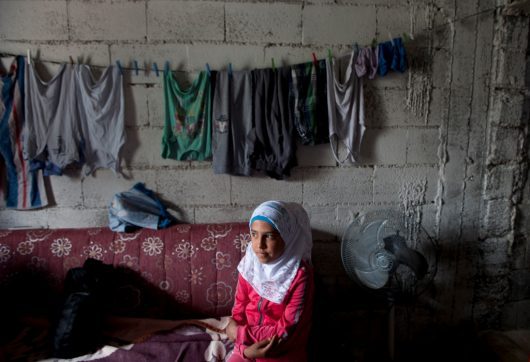
Burundi is a country in East Africa that shares borders with Tanzania, the Democratic Republic of the Congo and Rwanda. The country’s civil war has left Burundian refugees in a state of emergency.

The tumultuous civil war, which occured from 1993 to 2006, culminated in the parliamentary election of Hutu rebel leader Pierra Nkurunziza. Events similar to those that triggered the war, which claimed 300,000 lives, have once again come into focus.

Although Burundi’s constitution limits presidential incumbency to two terms, President Nkurunziza expressed desire to seek a third term, aggravating opposition groups severely.

A 2015 coup exacerbated the issue further. The power struggle between the Hutu and Tutsi ethnicities contributed to the discord. Although Nkurinziza received 79 percent of the vote, the crisis led to bloodshed and mass emigration, which has crippled Burundi and left many impoverished.

The following 10 facts about Burundi refugees describe their plight:

  1. As highlighted by the 2008 U.N. Human Development Index, Burundi ranks 167 out of 177 countries, with a concurrent rural poverty rate of 68.9 percent.
  2. More than 250,000 Burundian refugees have fled to neighboring countries. Moreover, Tanzania alone is collectively home to 144,000 Burundian refugees.
  3. The Nyarugusu and Nduta refugee camps in Tanzania have reached maximum carrying capacity, and the Mtendelli refugee camp now has to house the surfeit.
  4. Médecins Sans Frontières (MSF) has played a pivotal role in combating the spread of malaria among Burundian refugees and addressing mental health problems. One in two MSF patients in the Tanzanian refugee camps have malaria.
  5. Attackers from Burundi’s ruling party have gang raped and ostracized women, especially female family members of assumed opposition groups. The problem has been widespread in refugee camps.
  6. According to UNHCR, an estimated $134 million is needed to effectively respond to Burundi‘s plight and safeguard the needs of Burundian refugees. However, only $46 million has been raised by donors.
  7. The Brethren Disaster Ministries have provided grants to help the Brethren Church of Rwanda carefully maneuver and support the influx of Burundian refugees into Rwanda. The grants will provide emergency food and supplies to hundreds of families.
  8. The U.N. Security Council has agreed to deploy 228 police forces to monitor and ease the situation in Burundi‘s capital, Bujumbura. Despite this decisive move, the U.N. still needs to seek approval from the Burundian government and cope with the protests that have emerged as a result of the decision.
  9. Many Burundian refugees want an outlet for their products and a way to market their goods. Handcraft cooperatives at Mahama refugee camp in Rwanda have benefited from UNHCR guidance and aid. Most of these cooperatives are spearheaded by women, who now have the opportunity to express their culture and sell their products.
  10. The UNHCR has made great headway with regards to promoting education in refugee camps. A major plan is in the works to set up a university in Mahama camp.

These 10 facts showcase the plight of Burundian refugees. The balance of power between the Tutsi and Hutu ethnicities in military and government institutions is fragile. Keeping it in check is the objective of the international community and Arusha Accords.

– Shivani Ekkanath

Photo: Flickr

September 19, 2016
https://borgenproject.org/wp-content/uploads/borgen-project-logo.svg 0 0 Borgen Project https://borgenproject.org/wp-content/uploads/borgen-project-logo.svg Borgen Project2016-09-19 01:30:182024-12-13 17:55:3910 Important and Interesting Facts About Burundian Refugees
Global Poverty, Refugees

10 Facts About Sudan Refugees

Facts about Sudan refugees
Historically, Sudan has been the site of great conflict and famine since the mid-twentieth century. As a result, a constant outflow of refugees streamed into neighboring countries and all around the world. Here are ten significant facts about these Sudan refugees.

10 Facts about Sudan Refugees

  1. According to the U.N. Refugee agency, there are currently 666,000 displaced Sudanese. Sudan has recorded high numbers of refugees since 1990.
  2. Major causes for the Sudanese exodus are prolonged civil war and famine. There have been three major Sudanese conflicts and ongoing hostilities since 1969, with the most recent South Sudanese Civil War beginning in 2013.
  3. A major spike in refugees from Sudan occurred following a famine in 1998. In the subsequent six years, Sudan’s refugee numbers doubled before decreasing rapidly during a period of relative stability.
  4. Refugees fleeing Sudan were about half as numerous in 2009, but large-scale ethnic conflicts displaced hundreds of thousands in the 2010s, particularly in the Darfur region.
  5. Neighboring South Sudan, which gained independence in 2011, houses many Sudanese refugees, despite the ongoing conflicts in the region. The opposite is also true, with many South Sudanese fleeing north to Sudan, an area that is regarded as slightly safer by the Global Peace index.
  6. Despite the split of Sudan and South Sudan, the Sudanese have continued to seek asylum in other countries since 2011. The number of Sudanese refugees steadily increased through 2014, before decreasing ever so slightly in 2015.
  7. One of the most interesting facts about Sudan refugees are the final places where the migrants eventually end up. The U.S. Census estimated there were about 41,000 Sudanese Americans in 2012, many of whom left Sudan in the 1980s and 90s during civil war. Australia also hosts many Sudan refugees, reporting almost 20,000 in their national census.
  8. The ongoing hostilities and large numbers of refugees have decreased Sudan’s annual population growth rate to less than 1 million per year, lower than Iraq, Vietnam and Afghanistan.
  9. While current numbers of refugees from Sudan and South Sudan are undoubtedly high, (both above 600,000) there have been significantly more Sudanese displaced in the past. For example, during the second Sudanese Civil War, approximately 4 million people were forced to leave Sudan.
  10. Despite the extremely complex and difficult nature of the Sudanese exodus, the UNHCR was able to assist 39,470 Sudanese refugees, with 2/3 of them living in adequate dwellings through almost $75 million in aid.

These facts about Sudan refugees are not all-encompassing, but they do offer great insight into the critical Sudanese refugee situation. Fortunately, there’s hope that current peace talks in South Sudan may help stabilize the region, despite the failure of previous regimes to put an end to Sudanese violence.

In the meantime, the UNHCR and refugee-hosting first world countries continue to be an ally for the huge numbers of displaced Sudanese.

– John English

Photo: Flickr

September 10, 2016
https://borgenproject.org/wp-content/uploads/borgen-project-logo.svg 0 0 Borgen Project https://borgenproject.org/wp-content/uploads/borgen-project-logo.svg Borgen Project2016-09-10 01:30:362024-06-05 02:12:1310 Facts About Sudan Refugees
Global Poverty, Refugees, Refugees and Displaced Persons

10 Facts About Pakistani Refugees and Asylum in Pakistan

Pakistan refugees
The media’s focus has centered on the Syrian refugee crisis but other people from other nations, including Pakistani refugees, are fleeing their homelands for a better future in America or Europe.

Because it shares its borders with both Iran and Afghanistan, Pakistan has been embroiled in the Iran and Afghanistan wars with the United States. Many refugees have fled to and from Pakistan due to the ongoing conflict.

Here are 10 facts about Pakistani refugees and asylum in Pakistan:

  1. Malala Yousafzai is a notable Pakistani refugee who garnered media coverage when she was shot point-blank in 2012. Yousafzai has gone on to advocate for equitable access to education for young women and won a Nobel Prize at fifteen years old in 2015.
  2. Pakistan was not a party to the 1951 Refugee Convention, which defined a refugee as “someone who owing to a well-founded fear of being persecuted for reasons of race, religion, nationality, membership of a particular social group or political opinion, is outside the country of his nationality.”
  3. Pakistan has not been able to establish any nationwide legislation regarding the protection of refugees or procedures to determine whether someone falls into refugee status.
  4. Pakistan’s lack of legislation regarding refugees means that the provisions of the 1993 Cooperation Agreement, between the government of Pakistan and the United Nations Refugee Agency (UNHCR), determine any refugee status.
  5. More than 1.2 million Pakistanis have been affected by military insurgencies in northwest Pakistan.
  6. Most refugees flee Pakistan by crossing the border on foot into Iran, taking a bus toward Turkey and crossing the Turkish border on foot to avoid border security. From there, it is a matter of finding someone willing to transport the refugees across the Mediterranean Ocean, for a reasonable sum, to land in Greece.
  7. Even if Pakistanis reach Greece and the relative safety of the European Union, they are not guaranteed decent living conditions, according to some refugees. Instead of being given asylum status, refugees run the risk of being contained in high-security detention facilities or even repatriated to Pakistan.
  8. Pakistan is not involved in an official war so it is possible that refugees from Pakistan are overlooked. The threat of gangs, mafia and poverty are not seen as “legitimate” causes for creating refugees when compared to an internationally recognized war.
  9. Pakistan’s government began cracking down on refugees living in their country. UNHCR set aside funds to repatriate 600,000 Afghan refugees as of June 2016. Some families do not want to leave their adopted country — they worry that they will be forcibly deported when their Pakistan Proof of Registration card expires.
  10. Around 1.6 million refugees live in Pakistan as of June 2016 according to UNHCR.

The refugee system in Pakistan is still in flux and requires more strict legislation be passed to help asylum seekers.

Advocates like Malala Yousafzai are doing great work to bring attention to the plight of Pakistanis fleeing Pakistan but there is still work to do.

You can help by contacting your Congress representatives and letting them know you support increasing the International Affairs Budget that goes to help the world’s poor, which often includes struggling Pakistani refugees.

– Bayley McComb

Photo: Flickr

September 8, 2016
https://borgenproject.org/wp-content/uploads/borgen-project-logo.svg 0 0 Borgen Project https://borgenproject.org/wp-content/uploads/borgen-project-logo.svg Borgen Project2016-09-08 01:30:502024-05-24 23:40:3010 Facts About Pakistani Refugees and Asylum in Pakistan
Global Poverty, Refugees, Refugees and Displaced Persons

Jeans for Refugees: Celebrities and Artists Join Forces

Jeans for RefugeesJeans for Refugees is a project that raises funds and awareness about the needs of refugees around the world. Artist Johny Dar wants refugees to know that the world can mobilize in different ways to help them and that they will not be forgotten.

“Ever seen the news and felt helpless, sad or angry about why things are the way they are? You are not alone!” says the Jeans for Refugees website. “And our mission is to make sure that neither are the millions of refugees who are homeless, hungry and suffering the effects of war and destruction.”

Jeans for Refugees uses art and celebrity culture as tools to raise awareness. Their website explains that the project, “galvanizes celebrity culture to focus a global audience on a global humanitarian cause.”

Actors, artists, models, singers and songwriters have donated jeans that Dar will paint and sell in an auction at the end of October. The proceeds will be donated to International Rescue Committee (IRC) projects that provide relief to millions affected by the global refugee crisis.

Alicia Vikander, Benicio del Toro, Bryan Adams, Daniel Radcliffe, Emma Watson and Ryan Gosling are some of the celebrities involved in the project. Dar paints each pair of jeans to reflect the personality of the celebrity who donated them. Dar told Vogue News that celebrities do not need convincing to donate a pair of their jeans.

“I believe they were convinced the same way that I was convinced myself, and how everyone else became convinced too — this is a humanitarian cause that is much grander than me and everyone involved in it,” said Dar.

Platoon Cultural Development claims Dar is a renaissance man, whose name is big in fashion, textiles, body art, painting and many other artistic fields.

Having Dar’s signature on the Jeans for Refugees movement places the humanitarian cause at the forefront of popular modern art and in the sights of the millions involved in the art community.

The enthusiastic response from celebrities shows how individuals with influence are eager to support a worthy cause. The hope is that others will follow these celebrities’ examples and react as quickly when given the opportunity to help those in need.

Dar’s art has the potential to be a major awareness-raising tool as it reminds people that every life deserves a chance.

– Christina Egerstrom

Photo: Zimbio

September 7, 2016
https://borgenproject.org/wp-content/uploads/borgen-project-logo.svg 0 0 Borgen Project https://borgenproject.org/wp-content/uploads/borgen-project-logo.svg Borgen Project2016-09-07 01:30:522024-06-05 04:10:53Jeans for Refugees: Celebrities and Artists Join Forces
Global Poverty, Refugees, Refugees and Displaced Persons

10 Facts About Democratic Republic of the Congo Refugees

Democratic Republic of the Congo Refugees

According to the BBC, the Democratic Republic of the Congo (DRC) has suffered from political instability, insecurity and violence since its independence in 1960. As a result, the country hosts a considerable amount of Democratic Republic of the Congo refugees.

From 1997 to 2003, the country experienced a violent civil war. In addition, the Congolese army fought Rwandan forces and rebel groups near the Rwandan border. Multiple armed groups continue to fight among themselves and with the government for control of the resource-rich eastern provinces.

The extreme level of violence and human rights abuses in the eastern DRC have caused thousands to flee the area. Here are 10 facts about Democratic Republic of the Congo refugees:

  1. At the end of 2015, the UNHCR identified 495,724 DRC refugees. They live scattered among the Republic of the Congo, Uganda, Tanzania, Rwanda, Burundi, Zambia and Malawi.
  2. Congolese refugees are predominantly from the provinces of North and South Kivu, Orientale and Katanga in northeastern DRC. Fighting between government and rebel forces has been prevalent in that region for decades.
  3. The Cultural Orientation Resource Centre’s (COR) data on the DRC places 73 percent of Congolese refugees under the age of 25. Many of these individuals are single parents or the head of their households.
  4. Living conditions for most DRC refugees in host countries are harsh, unhealthy and unsafe. Additionally, these conditions are likely to deteriorate further as more refugees flee the DRC. For example, the COR reports that Rwandan refugee camps are extremely overcrowded and lack recreational and employment opportunities. This results in “high rates of sexual and gender-based violence (SGBV), prostitution, early pregnancy and school dropouts.”
  5. Many refugees suffer from a high degree of trauma from exposure to violence, torture and assault and require professional medical attention.
  6. Most of the refugees are from the historically persecuted Banyamulenge, Hutu and Tutsi ethnic groups.
  7. Congolese refugees face very limited employment opportunities in many host countries. This makes integration unlikely and increasing their dependence on foreign aid. According to the European Resettlement Network, Malawi, Tanzania, Uganda and Zambia have imposed restrictions to prevent Congolese refugees from obtaining work.
  8. In Uganda, the country hosting the largest proportion of Congolese refugees, “the settlements resemble agricultural village life back in the DRC, with small plots available for farming.” Education and SGBV prevention and response services are also available. This will allow refugees to provide for themselves, even when there are scarce employment opportunities.
  9. Although repatriation remains unlikely, the Peace, Security and Cooperation Framework in DRC and the Region (PSC) initiated a program for voluntary repatriation for Congolese refugees in 2014. If this program is successful it could mean the return of thousands of refugees to their homes.
  10. The European Resettlement Network claims “160,000 refugees have been identified for resettlement” in the U.S. and Europe. This massive resettlement plan will greatly reduce the operational strain on many overcrowded refugee camps.

In order to improve the living conditions of Democratic Republic of the Congo, refugees need additional aid in countries like Rwanda, Burundi and Uganda. Host countries must continue to provide (and improve) education and employment opportunities.

Furthermore, as in Uganda’s refugee settlements, Democratic Republic of the Congo refugees need the means and the training that will allow them to provide for themselves in times of employment scarcity. Consequently, this will reduce refugees’ dependence on foreign aid. It will also increase their ability to integrate and improve their standards of living.

– Christina Egerstrom

Photo: Flickr

September 4, 2016
https://borgenproject.org/wp-content/uploads/borgen-project-logo.svg 0 0 Borgen Project https://borgenproject.org/wp-content/uploads/borgen-project-logo.svg Borgen Project2016-09-04 01:30:272020-06-14 18:45:0210 Facts About Democratic Republic of the Congo Refugees
Advocacy, Global Poverty, Refugees

3 Artists’ Thoughts on Immigration: Salcedo, Ai and Banksy

Artists' Thoughts on ImmigrationArt has a history of inspiring social change, creating awareness and questioning human nature. The public can infer artists’ thoughts on immigration and social issues through their work.

Approximately 227,316 migrants have entered Europe and 2,920 were reported dead or missing on Mediterranean and African routes in 2016, according to the International Organization for Migration.

Three elite artists have brought issues surrounding immigration to the forefront as tensions continue to increase around the world.

Doris Salcedo

In 2007, Colombian artist Doris Salcedo changed the floor of the Tate modern with her installation piece, Shibboleth. The work is a 548-foot long crack that began very thin and steadily grew wider, ultimately splitting the entire gallery in two.

The crack represents the experience of being an immigrant in Europe and the segregation and discrimination that accompanies it. A wire mesh lines the inside of the crack’s walls, replicating a chain wire fence, which is a common divider along borders.

The name, Shibboleth, holds much significance. It is a word that distinguishes a specific class or social group of those who belong from those who do not belong.

Shibboleth changed the museum space itself, forcing a disruption in the gallery that visitors had to become used to. The piece illustrates in an abstract, but unavoidably literal way, the racism and hatred that divides Europe.

Ai Weiwei

Chinese artist Ai Weiwei created an installation on the Konzerthaus Berlin for the Cinema for Peace Gala on February 15, 2016. He wrapped each of the buildings six columns with over 14,000 life jackets that were salvaged from refugees entering Europe.

This artists’ thoughts on immigration are hard to ignore — the life jacket installation acknowledged the thousands of lives lost in the past year and reminded us of the hardships undergone by those trying to reach safety.

Ai is also known for his political activism. The artist closed his “Ruptures” exhibition in Copenhagen to protest Denmark’s new laws that deter refugees from seeking asylum in January 2016.

Banksy

The elusive Banksy has also contributed to the ongoing migration discussion with powerful pieces that appeared recently.

One of Banksy’s pieces depicts a girl from Les Misérables emerging from tear gas with a torn French flag in the background. This mural followed reports of French officials entering the camp with tear gas to drive out refugees. The Quick Response (QR) code in the bottom left corner of the mural links to a video of the police raids at the Calais Camp.

The Calais Refugee Camp, also known as “The Jungle,” holds about 7,000 refugees, according to the BBC. Banksy donated wood and supplies from his closed Dismaland “bemusement park” to help build shelters at the refugee camp. The materials were used to build 12 accommodations, a playground and a community center.

Another Banksy mural surfaced on the wall of a tunnel in the Calais Refugee Camp in December 2015. The piece portrays former Apple CEO Steve Jobs carrying an early Apple computer in one hand and holding a bag over his shoulder.

Banksy makes it clear through his work that artists’ thoughts on immigration can make the refugee issue a worldwide conversation.

Highlighting Jobs’ origin as the son of a Syrian migrant, Banksy reminded viewers that, “Apple is the world’s most profitable company, [one that] pays over $7 billion a year in taxes — and it only exists because they allowed in a young man from Homs.”

His statement stands in stark contrast to the popular opinion that accepting refugees will have a negative impact on a country’s economy.

Banksy’s recent murals are part of a new series centered on Europe’s treatment of refugees in the current migration crisis.

Each of the pieces by Salcedo, Ai and Banksy show how artists’ thoughts on immigration can be used as a powerful tool for social awareness. At a critical time of forced movement and migration around the world, an artist’s striking representation of current events and issues promotes empathy and critical thought.

– Erica Rawles

Photo: Flickr

September 2, 2016
https://borgenproject.org/wp-content/uploads/borgen-project-logo.svg 0 0 Borgen Project https://borgenproject.org/wp-content/uploads/borgen-project-logo.svg Borgen Project2016-09-02 01:30:402024-05-27 09:34:263 Artists’ Thoughts on Immigration: Salcedo, Ai and Banksy
Page 52 of 53«‹50515253›

Get Smarter

  • Global Poverty 101
  • Global Poverty… The Good News
  • Global Poverty & U.S. Jobs
  • Global Poverty and National Security
  • Innovative Solutions to Poverty
  • Global Poverty & Aid FAQ’s
Search Search

Take Action

  • Call Congress
  • Email Congress
  • Donate
  • 30 Ways to Help
  • Volunteer Ops
  • Internships
  • Courses & Certificates
  • The Podcast
Borgen Project

“The Borgen Project is an incredible nonprofit organization that is addressing poverty and hunger and working towards ending them.”

-The Huffington Post

Inside The Borgen Project

  • Contact
  • About
  • Financials
  • President
  • Board of Directors
  • Board of Advisors

International Links

  • UK Email Parliament
  • UK Donate
  • Canada Email Parliament

Get Smarter

  • Global Poverty 101
  • Global Poverty… The Good News
  • Global Poverty & U.S. Jobs
  • Global Poverty and National Security
  • Innovative Solutions to Poverty
  • Global Poverty & Aid FAQ’s

Ways to Help

  • Call Congress
  • Email Congress
  • Donate
  • 30 Ways to Help
  • Volunteer Ops
  • Internships
  • Courses & Certificates
  • The Podcast
Scroll to top Scroll to top Scroll to top