• Link to X
  • Link to Facebook
  • Link to Instagram
  • Link to TikTok
  • Link to Youtube
  • About
    • About Us
      • President
      • Board of Directors
      • Board of Advisors
      • Financials
      • Our Methodology
      • Success Tracker
      • Contact
  • Act Now
    • 30 Ways to Help
      • Email Congress
      • Call Congress
      • Volunteer
      • Courses & Certificates
      • Be a Donor
    • Internships
      • In-Office Internships
      • Remote Internships
    • Legislation
      • Politics 101
  • The Blog
  • The Podcast
  • Magazine
  • Donate
  • Click to open the search input field Click to open the search input field Search
  • Menu Menu

Archive for category: Refugees

Global Poverty, Refugees, Refugees and Displaced Persons

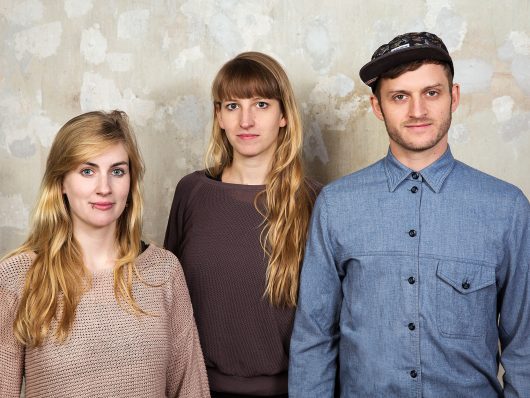
How Three Berliners Have Made Refugees Welcome

Refugees WelcomeRefugees Welcome, a non-profit organization founded by Germans Mareike Geiling, Jonas Kakoschke and Golde Ebding, provides an online platform for people to lend a room to an asylum-seeking refugee.

Often called the “Airbnb for refugees,” the organization aims to help refugees integrate into their new communities and create a more welcoming culture, according to The Independent.

Founded in Germany in 2014 in response to the growing refugee crisis, Refugees Welcome has quickly spread to eight other European countries and Canada. It is also supporting groups in more than 20 additional countries to set up the platform there. As of mid-July, Refugees Welcome has already placed 791 refugees in shared flats.

To offer a room to a refugee, individuals must register online through the organization’s website. There they fill out basic information such as how much space they have available and for how long. Similarly, refugees fill out a questionnaire to facilitate the matching process.

Once a match is made, the potential new roommates have the chance to meet up to see if they will be a good fit. Rent and utilities are paid for with micro-donations made to Refugees Welcome or by government programs.

According to The Independent, “Although people have offered the group entire empty houses and flats, Ms. Geiling said that would defeat one of the key aims of the initiative – to integrate.” Geiling further expressed that the program is “about living with people and getting to know them.”

In typical refugee situations, overwhelmed officials frequently place refugees in unorthodox living places such as old schools or shipping containers. In an NPR interview, Kakoschke notes that in these cases, refugees cannot work or learn the local language and often become depressed due to the stagnant nature of their living situation.

The Refugees Welcome website explains that through their program, refugees have an opportunity to learn the local language more quickly than they would in typical accommodations granted to refugees, and they can more easily acclimate themselves to their new country.”

The website adds, “You, on the other hand, will get to know a different culture and help a person in a difficult situation.”

– Laura Isaza

Photo: The Independent
 

July 22, 2016
https://borgenproject.org/wp-content/uploads/borgen-project-logo.svg 0 0 Borgen Project https://borgenproject.org/wp-content/uploads/borgen-project-logo.svg Borgen Project2016-07-22 01:30:582024-12-13 17:54:40How Three Berliners Have Made Refugees Welcome
Refugees

Making an Impact: 3 Ways to Host Refugees

Ways to Host Refugees AmericaIncreased media coverage of the global refugee crisis has prompted waves of humanitarian support and local activism across the world. Iceland made headlines when 10,000 of its citizens volunteered to house personally refugees coming from Syria, and others have followed suit in finding ways to host refugees, from Berlin to Birmingham.

Wondering about ways to host refugees in your home? Not everyone can personally provide housing, but below are three simple ways to get started in the effort to welcome refugees to America.

3 Ways to Host Refugees in America

  1. Become aware of local need. It’s easier than ever to become connected to relief and charitable organizations near you. Some of the largest and most wide-reaching of resettlement agencies in the United States are the International Rescue Committee and Catholic Community Services, both of which organize humanitarian aid in over 100 U.S. cities. Spend some time reaching out to charitable organizations in your area to find out what their current needs are, who their clients are, and what types of schools, health or religious organizations work with them.
  2. Consider temporarily housing a refugee. Although refugees admitted to the United States for resettlement are usually quickly connected with local relief agencies, refugees are often vulnerable to unstable housing conditions or even homelessness. Several U.S. and international agencies are searching for individuals and families with extra rooms that they are willing to use to host recently arrived refugees, especially those in crisis or extreme circumstances. Connect with Room for Refugees, which specializes in providing safe temporary housing for refugees living in the United Kingdom, the United States, Europe and Canada. The chance to personally share your home with a refugee can be immensely rewarding, and provide desperately needed help for those adjusting to life in a new place. Looking for ways to host refugees in your home? Search for organizations like the Karam Foundation, a nonprofit group providing aid for Syrians, which is currently seeking to help new refugees find housing with Americans of Syrian descent. Many private nonprofit organizations are seeking to connect refugees with a variety of services for temporary housing, and your opportunity to help could be as close as your front door.
  3. Consider ways to host refugees by connecting them with neighbors. Becoming a friend and neighbor to refugees struggling to resettle may be the most powerful way to combat hateful rhetoric, both in the U.S. and abroad. Agencies like the International Rescue Committee, among others, place a high priority on helping refugee families find friends, neighbors and support structures within their new communities. When the 2015 cap for U.S. resettlement of refugees was raised to 85,000 from 70,000, it prompted waves of polarization and xenophobia across the country. A Pew Research Center survey even showed that a majority of Americans disapprove of helping to resettle more Syrians within our borders. The International Rescue Committee, along with other agencies, regularly recruit home mentors for refugee families, providing you with the opportunity to welcome your new friends into your home, or you into theirs, as you solidify a new friendship.Other aid agencies are in constant need of home tutors, both for students struggling to adjust to life in American public schools, as well as adults returning to school or learning English as a second language.

    While in-kind and monetary donations of food, clothing, furniture and supplies can help a refugee family build a home, the chance to be a family mentor, tutor or friend may do more to help refugees feel like they belong.

The U.S. admits record numbers of refugees, but schools and government agencies still struggle to help refugees feel at home and safe. Helping to find ways to host refugees and opening your home, either literally or otherwise, is a critical opportunity to be part of solving the world’s worst refugee crisis in 70 years. More importantly, it’s a chance to help your neighbors know that they belong.

– Eliza Campbell

Photo: U.N. Multimedia

July 18, 2016
https://borgenproject.org/wp-content/uploads/borgen-project-logo.svg 0 0 Borgen Project https://borgenproject.org/wp-content/uploads/borgen-project-logo.svg Borgen Project2016-07-18 01:30:222024-12-13 18:06:07Making an Impact: 3 Ways to Host Refugees
Global Poverty, Refugees

Norwegian Refugee Council: Fight Against Crisis in Fallujah

Crisis in FallujahWeeks of combat in Fallujah, initiated by Iraqi military forces in an attempt to eradicate ISIS militants from the city, have left tens of thousands of civilians displaced. The Wall Street Journal reports that upwards of 80,000 men, women and children have been forced to flee their homes, in what has become the largest refugee crisis in Iraq.

The Islamic State invaded Fallujah in 2014 and has been in control of it since. In an interview with NPR, Karl Schembri, a member of the Norwegian Refugee Council working in Fallujah, stated that it has been “a nightmare” for those in the city.

Schembri noted that individuals were living on “animal feed, on expired dates and drinking the river water, which is undrinkable.” He went on to say that ISIS soldiers shot any civilians attempting to escape from the city.

Although Fallujah has officially been liberated by the Iraqi military, civilians cannot return to their homes. Fighting has left buildings destroyed and, according to the Chicago Tribune, “only a third of the city has been cleared of the militants”. Civilians must travel for miles to reach refugee camps, only to find that they are running out of food, water, toilets, shelter and funds.

The Norwegian Refugee Council (NRC) has been leading the fight against the refugee crisis in Fallujah. The NRC is a humanitarian organization comprised of about 5,000 people focused on providing “food assistance, clean water, shelter, legal aid and education” to refugees across the world.

As more and more refugees flood to the camps the NRC, United Nations and International Organization for Migration have become desperate for additional aid. These organizations can no longer accommodate all the refugees. Often they are forced to disclose that there is no more room in the tent cities.

Iraq’s budget for aid is stretched thin as ISIS has displaced people across the entire country and, according to The Wall Street Journal, “foreign governments have only provided one third of the financial assistance the U.N. has said it needs to cover humanitarian needs in Iraq this year.”

However, the U.N. and other countries recently appealed for $298 million in emergency aid and it has been answered. The U.S. Department of State announced on June 21st that it was donating an additional $20 million to the U.N. for relief in Fallujah. The U.S. challenged other governments to answer the U.N.’s appeal so that the refugee crisis in Fallujah can be properly handled by organizations such as the Norwegian Refugee Council.

– Liam Travers

Photo: Flickr

July 8, 2016
https://borgenproject.org/wp-content/uploads/borgen-project-logo.svg 0 0 Borgen Project https://borgenproject.org/wp-content/uploads/borgen-project-logo.svg Borgen Project2016-07-08 01:30:252024-12-13 17:54:43Norwegian Refugee Council: Fight Against Crisis in Fallujah
Refugees

LightHouse Relief Brings Hope to Refugees on Greek Shores

Refugee_GreeceMany know the island of Lesbos as a small, quiet vacation island. It embodies the quaint characteristics of Greece, with its freshly caught fish and rural roads through mountain ranges. But what many people do not know is that Lesbos also accepted nearly 60 percent of the migrants that entered Greece last year because of its location at the northern tip of the country.

The small town of around 100 residents became a familiar name for media centers around the world covering the refugee crisis, as most Middle Easterners seeking asylum, shelter and safety arrive in the town on a daily basis.

Already doomed by the government’s economic crisis, the island has been overwhelmed with balancing compassion and aid for refugees while having their tourist-dependent economy wane because of the arrival of the refugees. Along with the refugees, international organizations like the United Nations and other NGOs also began to arrive in an attempt to stabilize the region and help the refugees. One of the most notable of these organizations is Lighthouse Relief.

LightHouse Relief, a Swedish nonprofit organization, works to provide relief to refugees who arrive in the Katsikas and Ritsona camps in mainland Greece, in addition to providing ecological support of Lesvos. Skilled volunteers from around the world give their time to work with the organization on the ground to help people.

The organization was started in September 2015 by a group of volunteers working on the northeastern coast of Lesvos in Skala Sikamineas. There were no other organizations present at that time to help the Greeks who were attempting to aid the incoming refugees, so LightHouse Relief volunteers rented nearby land and prepared to have a long-term presence.

The organization’s main goal is to provide relief to children, women, and the elderly through their various programs and initial help of migrants when they arrive on shore. Since October 2015, LightHouse Relief has been able to provide a reception camp with electrically-heated tents and playgrounds for children.

One of their biggest projects is Lighthouse ECO Relief,which stands for Environmental Clean-Up Operation. So far, 600,000 lifejackets and 10,000 rubber dinghies have been discarded on the shores all around Lesvos, hurting the ecosystem of the area and making it a more dangerous destination for subsequent migrants. This project removes trash, lifejackets and broken boats.

All volunteers have to at least be 21 and committed to staying for a minimum of three weeks. Holidays are no exception, as multiple volunteers were standing on the shore waiting for migrants to arrive on Christmas morning, prepared to give warm clothes and a Christmas Dinner on the beach to help the refugees feel as though they were home as well.

Volunteers must also have some sort of a background in the resources that the organization tries to provide. From nutrition to being a midwife, to language skills, all of their volunteers are prepared to have lasting effects on all of the people they encounter.

– Ashley Morefield

Photo: Flickr

July 4, 2016
https://borgenproject.org/wp-content/uploads/borgen-project-logo.svg 0 0 Borgen Project https://borgenproject.org/wp-content/uploads/borgen-project-logo.svg Borgen Project2016-07-04 01:30:252020-05-30 13:21:13LightHouse Relief Brings Hope to Refugees on Greek Shores
Page 54 of 54«‹525354

Get Smarter

  • Global Poverty 101
  • Global Poverty… The Good News
  • Global Poverty & U.S. Jobs
  • Global Poverty and National Security
  • Innovative Solutions to Poverty
  • Global Poverty & Aid FAQ’s
Search Search

Take Action

  • Call Congress
  • Email Congress
  • Donate
  • 30 Ways to Help
  • Volunteer Ops
  • Internships
  • Courses & Certificates
  • The Podcast
Borgen Project

“The Borgen Project is an incredible nonprofit organization that is addressing poverty and hunger and working towards ending them.”

-The Huffington Post

Inside The Borgen Project

  • Contact
  • About
  • Financials
  • President
  • Board of Directors
  • Board of Advisors

International Links

  • UK Email Parliament
  • UK Donate
  • Canada Email Parliament

Get Smarter

  • Global Poverty 101
  • Global Poverty… The Good News
  • Global Poverty & U.S. Jobs
  • Global Poverty and National Security
  • Innovative Solutions to Poverty
  • Global Poverty & Aid FAQ’s

Ways to Help

  • Call Congress
  • Email Congress
  • Donate
  • 30 Ways to Help
  • Volunteer Ops
  • Internships
  • Courses & Certificates
  • The Podcast
Scroll to top Scroll to top Scroll to top