• Link to X
  • Link to Facebook
  • Link to Instagram
  • Link to TikTok
  • Link to Youtube
  • About
    • About Us
      • President
      • Board of Directors
      • Board of Advisors
      • Financials
      • Our Methodology
      • Success Tracker
      • Contact
  • Act Now
    • 30 Ways to Help
      • Email Congress
      • Call Congress
      • Volunteer
      • Courses & Certificates
      • Be a Donor
    • Internships
      • In-Office Internships
      • Remote Internships
    • Legislation
      • Politics 101
  • The Blog
  • The Podcast
  • Magazine
  • Donate
  • Click to open the search input field Click to open the search input field Search
  • Menu Menu

Archive for category: Refugees

Global Poverty, Refugees

Conflict and Displacement in Yemen: A History of Struggle

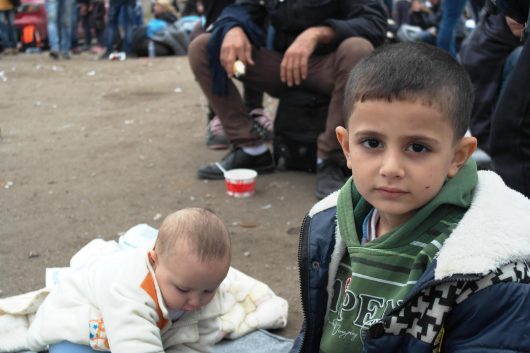
Conflict and Displacement in YemenA joint report released in August by the Office of the United Nations High Commissioner for Refugees (UNHCR) and the International organization for Migration (IOM) said an exorbitant amount of conflict and displacement in Yemen resulted from civil war — 3,154,572 people were displaced, over two million of whom remain in displacement.
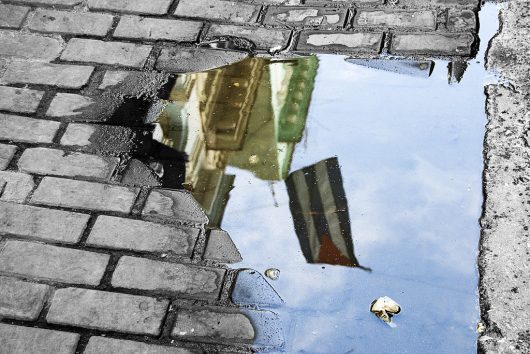
Unfortunately, this is not the first armed struggle the nation has seen. Yemen has ancient roots as the crossroads of Africa, the Middle East and Asia but the modern Republic of Yemen is a relatively new state.

It was formed when the communist South Yemen and traditional North Yemen merged in 1990 after years of struggle. There has been plenty of conflict and displacement in Yemen’s 26 years as a nation.

The merger did not ease tensions between the two different groups of people cohabitating the land. A southern separatist movement called for secession in a short-lived 1994 civil war.

Violence erupted once more in 2009 when government troops and rebel forces began fighting in the north in an armed conflict that killed hundreds and displaced over a quarter million people.

Arab Spring uprisings in 2011 inspired a wave of protests that forced then-President Ali Abdallah Saleh to resign. Yemen’s history of unrest and turmoil made it an easily exploited place for militant groups like Al-Qaeda and Islamic State, further destabilizing the already conflicted nation. Yemen lapsed into another civil war in 2014 that rages on despite peace initiatives.

With the rebel Houthis overthrowing the Yemeni government prompting a Saudi-led counteroffensive, the fighting in Yemen has had grave humanitarian consequences. The U.N. designated the humanitarian emergency as severe and complex as those in Iraq, South Sudan and Syria.

“The crisis is forcing more and more people to leave their homes in search of safety,” said Ita Schuette, UNHCR’s Deputy Representative in Yemen. The report also added that displacement in Yemen increased by seven percent since April as a result of escalating conflict and worsening humanitarian conditions.

According to the figures displayed in the report, as the conflict continues, the average length of time that people are spending displaced from their homes has increased.

Some 89 percent of refugees have been displaced for ten months or longer. Cumulatively, due to conflict and natural disaster, 8 percent of Yemen’s population remains displaced.

Although the situation looks bleak, conflict and displacement in Yemen should improve. Thankfully, the international community is stepping up to provide assistance. The U.N.’s World Food Program is providing food assistance to some 3 million people through monthly distributions.

The organization is also progressively implementing commodity voucher programs through local suppliers. Wherever there is suffering and conflict, the international community will be there to do what they can to provide food to the hungry and shelter to those who cannot go home.

– Aaron Parr

Photo: Flickr

October 19, 2016
https://borgenproject.org/wp-content/uploads/borgen-project-logo.svg 0 0 Borgen Project https://borgenproject.org/wp-content/uploads/borgen-project-logo.svg Borgen Project2016-10-19 09:30:572024-12-13 17:55:43Conflict and Displacement in Yemen: A History of Struggle
Refugees

10 Facts About Cuban Refugees

10 Facts About Cuban Refugees
Following Fidel Castro’s disposal of the Batista regime, Cuba became known as a refugee state. Thereafter the United States began receiving the majority of Cuban refugees.

  1. There are more than 1.5 million Cuban refugees living in the United States.
  2. The Cuban Adjustment Act (CAA) was passed by the U.S. Congress and signed into law by President Lyndon Johnson in 1966. The law allowed any Cuban citizen the legal right to become a U.S. permanent resident after being in the U.S. for at least two years.
  3. The first type of Cuban refugee consisted of mostly middle and upper social classes. They left Cuba in the 1950s to 1970s following the dictatorship take-over of Fidel Castro. In fear of reprisals from the Communist party, they left everything in search of political asylum.
  4. The second type of Cuban refugee consisted mostly of poor Cubans seeking economic opportunities in the 1980s.
  5. The majority of Cuban refugees fled to Florida because of the state’s close proximity. Currently, approximately 68% of Cuban refugees live in Florida.
  6. To counteract the emigration, Castro began incarcerating and executing those he perceived as opponents.
  7. Between 1960 and 1962, over 14,000 Cuban children were sent to the U.S. by their parents in what was known as Operation Peter Pan. These children were placed in foster homes and cared for by the Catholic Church in an effort to avoid indoctrination into the Communist party.
  8. In order to go to war with Cuba, the U.S. Joint Chiefs of Staff drafted a plan to trick the American public into supporting a war against Castro. This project was code-named Operation Northwoods and included plans to sink boats filled with Cuban refugees and then blame the violence on Castro. The plan was rejected by the Kennedy administration.
  9. In 1980, frustrated with the lack of help, a group of Cubans drove a bus through the gates of the Havana Peruvian Embassy to request asylum. The Peruvian ambassador refused to return the asylum-seeking Cubans to the Cuban authorities. Eventually, these Cubans were allowed to seek asylum in the U.S.
  10. Currently, many organizations focus on giving aid to Cuban refugees and immigrants. Their mission is to search for Cuban refugee rafters in the Florida seas.

Since 2012, the Cuban government began easing its restrictive immigration policies. A visa is no longer required to leave the country. Because of this, there has been an influx of Cuban refugees entering the United States and more are expected this year.

– Marcelo Guadiana

Photo: Flickr

October 16, 2016
https://borgenproject.org/wp-content/uploads/borgen-project-logo.svg 0 0 Borgen Project https://borgenproject.org/wp-content/uploads/borgen-project-logo.svg Borgen Project2016-10-16 01:30:482024-06-05 04:37:4810 Facts About Cuban Refugees
Global Poverty, Refugees

10 Facts You May Not Know About Uganda Refugees

Uganda Refugees
A landlocked country located between Kenya, South Sudan, Rwanda, Tanzania and the Democratic Republic of the Congo, Uganda is an East African Nation that has been constantly plagued by violence. Since gaining its independence from Great Britain in 1962, the Ugandan people have been forced to deal with dictatorships, military coups, wars and a 20-year insurgency from the Lord’s Resistance Army.

The nations that border the country of Uganda are additionally tormented with instability and violence which have pushed many people into the country.

Here are 10 interesting facts that you may not know about Uganda refugees:

  1. As of 2016, there are 512,000 documented asylum seekers and refugees in the country of Uganda.
  2. Uganda refugees are slowly outnumbering the current citizen population within Uganda. In Uganda, areas like the Adjumani district expect to see the number of people seeking refuge in the country exceed the number of local inhabitants.
  3. Local farmers are in conflict with Uganda refugees. With Uganda refugee populations increasing every day, many farmers find themselves with little land to grow crops. This is due in part to the fact that the government takes portions of land from farmers in order to make room for the incoming people. This seizing of land for asylum seekers creates internal conflicts between local farmers and people seeking refuge.
  4. Roughly 85% of refugees entering the country are women and children.
  5. Migration into cities has left Uganda refugees at a cultural disadvantage. Although Uganda has warmly welcomed people seeking refuge, cultural barriers still pose a major obstacle to Uganda refugees. Barriers such as language, adapting to Uganda’s culture, stereotypes and general safety simultaneously affect the everyday lives of Uganda refugees.
  6. Uganda has hosted approximately 550,000 refugees as of July 2016. Of the 550,000 refugees, 315,000 are asylum seekers from South Sudan, while an additional 200,000 individuals are from the Democratic Republic of the Congo.
  7. Uganda does not question or interrogate people seeking refuge. With constant violence on the borders of Uganda, millions of people have fled their countries in order to escape unimaginable horrors.
  8. The U.N. Refugee Agency has acknowledged the nation of Uganda as having exceptional policies regarding refugees. In 2006, the country passed a Refugee act that provided refugees with employment, education, right to property, dignity and overall self-sufficiency; Uganda implemented policies that allow people seeking refuge to work in order to contribute to the nation’s economy.
  9. The continuity of violence in areas, like South Sudan, increased refugee migration into Uganda, which has overwhelmed local aid agencies. Overcrowding has become a serious issue in areas like Adjumani, which is home to the Nyumanzi reception center for refugees, as a result. The reception center is supposed to host up to 3,500 individuals; however, overcrowding in Nyumanzi has led to over 8,000 people residing at the reception center.
  10. There are many Uganda refugees that still cling to the idea that they are able to return home and resume the life they once had. A quote from a refugee who fled from Burundi, Cedric Mugisha, states, “In Burundi, I have a life, my life was promising. I miss my family, I don’t know where they are, and I don’t know what happened to my friends.”

Though many refugees have experienced tremendous hardships and trials while fleeing from their homes to Uganda, many positive efforts are underway in order to improve their quality of life. The Uganda government and humanitarian organizations, such as the U.N. Refugee Agency, are continuously providing aid and support for the many Uganda refugees.

– Shannon Warren

October 16, 2016
https://borgenproject.org/wp-content/uploads/borgen-project-logo.svg 0 0 Borgen Project https://borgenproject.org/wp-content/uploads/borgen-project-logo.svg Borgen Project2016-10-16 01:30:102024-05-27 23:53:5410 Facts You May Not Know About Uganda Refugees
Global Poverty, Human Rights, Refugees, Refugees and Displaced Persons

German Companies Give Refugees in Germany a Chance

Refugees in GermanyGerman chancellor Angela Merkel has made refugees in Germany a priority. As the Syrian refugee crisis unfolded, the chancellor decided on an open-door policy, which allowed over one million refugees to resettle in Germany. Recently, Merkel urged German corporations to integrate refugees into companies more quickly, arguing that refugee employment will support the German economy. And there is no shortage of refugees in Germany who are ready to work; the latest reports provided by the Federal Employment Agency state that 346,000 people with asylum status sought employment in the month of August alone.
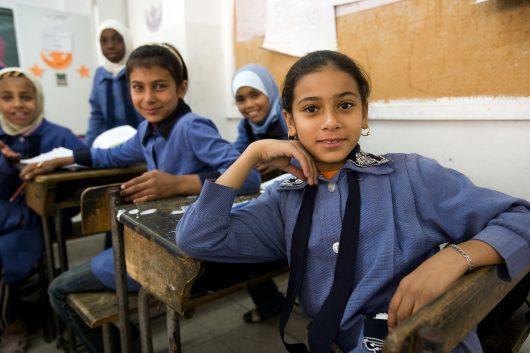
Large German companies are hesitant to hire refugees for a myriad of reasons. Companies argue that they do not want to risk their productivity by employing refugees who don’t currently possess the necessary skills. Companies may also have qualms about the fact that many refugees have yet to become fluent in German, and that 80 percent of asylum seekers do not possess a primary- or secondary-level education.

Legal issues still remain, such as incomplete paperwork for asylum approval and a lack of proper identification for background checks. Merkel and some German companies, however, are working to make it easier for refugees to land jobs that not only provide income but also the skills necessary to be qualified contenders in the job market.

Despite the trepidation of some German companies towards refugee employment, many are using the influx of people to their advantage. Germany’s national rail carrier, Deutsche Bahn, announced that over the next two years it will create room for an additional 150 refugees in its qualification program, which includes German language courses. Deutsche Post currently employs more than 100 refugees, and national internet service provider Deutsche Telekom plans to hire 75 refugees through an apprenticeship program as well. Companies such as Mercedes, Siemens and Daimler have even created pre-training programs to prepare refugees for apprenticeships.

With the support of German companies, refugees in Germany can build better lives.

– Mariana Camacho

Photo: Flickr

October 4, 2016
https://borgenproject.org/wp-content/uploads/borgen-project-logo.svg 0 0 Borgen Project https://borgenproject.org/wp-content/uploads/borgen-project-logo.svg Borgen Project2016-10-04 01:30:352020-06-05 10:51:53German Companies Give Refugees in Germany a Chance
Refugees

I Am Syria: Changing World Views of Refugees

I Am SyriaI Am Syria is a nonprofit organization that promotes the interests and concerns of Syrians by educating the world about the Syrian conflict.

Many people around the world have developed a negative stereotype of Syrians, particularly due to the recent upsurge of refugees. In 2015, the total number of refugees shot up to 4 million contributing to the most severe humanitarian crisis in modern history.

Terror attacks that have occurred since then are commonly linked to the large numbers of infiltrated refugees and foreigners. However, despite popular belief, evidence shows that 80 percent of domestic acts of terrorism are committed by Americans.

The negative attitude toward Syrians originates from the media, from where Syrians have been labeled terrorists since March of 2011 when some Syrians assembled for a peaceful protest movement for democracy. In hopes of debunking the biased and inaccurate information being fed to people all over the world concerning Syrians, I Am Syria has made it their mission to educate young students with recent news and reliable articles written by Syrians in the movement through lesson plans.

The curriculum is intended to inform students of the facts involving the Islamic state and the refugee crisis, while also encouraging the students to preemptively brainstorm positive ways to generate change. Students are exposed to the suffering of the impoverished innocent Syrians, rather than the alarming work of the extremists. These types of images illicit emotions that, in turn, drive the students to want to do something to help.

The voices of those who need help in Syria are drowned out by the oppressive Syrian regime that manipulates media in its favor and distorts the story. I Am Syria seeks to mend the bond between people can help and those who are in need of help by removing the stereotypes and that accompany the inaccurate allegations made toward Syrians. What’s left is the story of innocent families who have encountered so much violence and anguish, and have fled their homes in search of a better life.

I Am Syria is tackling the issue of stereotyping Syrian refugees one classroom at a time, empowering the world’s youth by making them aware of the tragedies that are occurring in the world, opening the floor for discussion and coming up with solutions to derail the inaccurate images of Syrians and helping refugees reclaim their lives.

– Kayla Mehl

Photo: Flickr

October 4, 2016
https://borgenproject.org/wp-content/uploads/borgen-project-logo.svg 0 0 Borgen Project https://borgenproject.org/wp-content/uploads/borgen-project-logo.svg Borgen Project2016-10-04 01:30:042020-06-05 12:15:25I Am Syria: Changing World Views of Refugees
Global Poverty, Refugees

Seven Facts about the Plight of Bhutan Refugees

Bhutan Refugees
Situated between India and China, Bhutan is an isolated Buddhist kingdom that had generated one of the highest numbers of refugees in the world compared to its population. Since 1991, one sixth of Bhutan’s people have resettled in Nepal, India and other countries.

  1. Bhutan refugees are called Lhotshampas, or ‘southerners.’ Lhotshampa people are Bhutanese people of Nepalese ancestry. In the 1980s, Lhotshampas were seen as a threat to political order and were evicted from Bhutan in the 1990s to settle in Nepal.
  2. The government of Nepal and UNHCR has managed seven refugee camps since the 1990s. In 2008, the International Organization for Migration and UNHCR jointly started refugee resettlement programs throughout the world.
  3. In 2007, more then 100,000 refugees from Bhutan lived in the seven camps of the Jhapa and Morang districts in eastern Nepal. Now, just two camps remain and the refugee population is less than 18,000 people.
  4. A group of eight countries — Australia, Canada, Denmark, New Zealand, the Netherlands, Norway, the United Kingdom and the United States of America — came together in 2007 to create new life opportunities for Bhutan refugees.
  5. Bhutan refugees have to go through an interview and selection process. The first refugees settled included women at risk, survivors of violence and torture and refugees with medical needs such as speech and hearing impairments.
  6. Some Bhutan refugees requested that the Nepal government send them back home. These refugees are unwilling to settle in a third country; however, the Secretary of Beldangi Camp Sanchahang Limbu said that he fears there would be no one to care for the refugees once they returned home.
  7. As of November 2015, 5,554 Bhutan refugees were resettled in Australia, 6,500 in Canada, 874 in Denmark, 1,002 in New Zealand, 327 in the Netherlands, 566 in Norway, 358 in the United Kingdom and 84,819 in the U.S.

These migrating people hope for a final destination to their journey, and countries across the world strive to help them attain this goal.

– Jacqueline Venuti

Photo: Flickr

October 1, 2016
https://borgenproject.org/wp-content/uploads/borgen-project-logo.svg 0 0 Borgen Project https://borgenproject.org/wp-content/uploads/borgen-project-logo.svg Borgen Project2016-10-01 01:30:042020-05-16 07:57:52Seven Facts about the Plight of Bhutan Refugees
Refugees

Ten Facts about Refugees in Iceland

Refugees in Iceland
As Iceland stands geographically remote with wisps of chilly Arctic air and an intimate population of 323,000, refugees in Iceland who have been granted asylum have experienced a unique assimilation. In a Telegraph article, a Syrian refugee commented, “For us, [Iceland] is the freezer” while Audur Magnuscdottir, a biochemist helping a family settle said, “[Iceland] is dark, it’s cold and it’s windy – it must be hell. Just to get used to going out in the cold is a huge step.”

Yet in light of Iceland’s unusual characteristics, the majority of Icelanders have welcomed refugees with open arms. Here are 10 facts about refugees in Iceland:

  1. Since Iceland’s refugee policy first initiated in 1956, the country has accepted a grand total of 584 refugees, a rate lower than other Nordic countries. According to data from the United Nations High Commissioner for Refugees, there has been a total of 17,785 refugees accepted in Denmark, 142,207 in Sweden and 47,043 in Norway.
  2. Since 1956, groups and families of refugees have arrived from a diverse range of countries — Vietnam, Poland, Hungary, former Yugoslavia and Serbia.
  3. Post-recession, Iceland’s economy has recovered at a four percent growth rate per year. However, according to a PBS report, Iceland would require 2,000 new immigrants a year to maintain that level of growth — refugees would contribute to this number. Mayor of Akureyri, Iceland, Eirikur Bjorgvinsson, explains that refugees contribute more to Iceland’s economy than the amount of assistance that they are actually receiving.
  4. In order to become assimilated in Iceland society, the government offers financial assistance, education, health services, housing, furniture and a telephone for up to one year to refugees in Iceland.
  5. According to the Ministry of Welfare, the policy in Iceland has welcomed a quota of 25 to 30 refugees every year. However, this quota has changed in the last few years with the crisis in Syria, protests from Icelandic citizens and an exception in 1999 with the outbreak of the war in Kosovo.
  6. The largest group of refugees accepted together in Iceland was comprised of 75 people, who were all from Kosovo in 1999. The smallest group to migrate to Iceland in a single year was comprised of five people in 2014, who hailed from Zimbabwe, Cameroon, Uganda and Syria.
  7. In September 2015, via Facebook, 11,000 Icelanders called on the government to increase its intake of refugees. At that time, the Icelandic government had only pledged to accept 50 refugees.
  8. Amid the conflict in Syria, with 4 million Syrians fleeing the country and a further 7.6 million being displaced inside Syria, 48 Syrian refugees from the United Nation’s refugee camp in Lebanon have found new homes in Iceland since January 19 of this year. An additional 40 refugees will be arriving in Iceland this fall.
  9. A refugee committee suggested that the municipalities of Reykjavik, Árborg and Hveragerði, Iceland receive Syrian refugees due to its strength in employment opportunities, housing and abundance of Red Cross chapters.
  10. Although many refugees in Iceland have found peaceful relocation to Iceland with citizens embracing the new diversity created with the influx among their predominantly white and Christian population, many who have entered Iceland with false and forged passports have been jailed due to a violation of international law. The typical sentence is 30 days in jail, legal fees from 50,000 to 125,000 ISK.

– Priscilla Son

Photo: Flickr

September 30, 2016
https://borgenproject.org/wp-content/uploads/borgen-project-logo.svg 0 0 Borgen Project https://borgenproject.org/wp-content/uploads/borgen-project-logo.svg Borgen Project2016-09-30 01:30:372024-05-27 23:53:22Ten Facts about Refugees in Iceland
Global Poverty, Refugees

Aid Overhaul Changing Refugee Nonprofits

Refugee NonprofitsWhile forced migration is a constant problem, advances in technology have changed the playing field, and aid organizations are struggling to keep up. Today, refugees are using their smartphones for both practical uses and methods of comfort in a difficult situation. For efficient aid distribution, change in refugee behavior must be accompanied by a corresponding change in nongovernment organization (NGO) structure.

“Our phones and power banks are more important for our journey than anything, even more important than food,” a refugee from Syria, Wael, told Agence France-Presse (AFP) news agency.

When Hassan, a 28-year-old teacher fleeing the Syrian civil war, found out his rubber dinghy was sinking in the middle of the Aegean Sea, he used WhatsApp to alert his friend in New York of his location. He was found by the Turkish Coast Guard 45 minutes later.

Hala, a refugee from Aleppo, uses her phone as the only means of contact left between her and her husband, who was kidnapped by ISIS prior to her departure. “That’s why I’m always holding it. I’m holding on to it like I’m holding on to an address of my own, my family. This metal device has become my whole world,” said Hala to a Channel 4 film documentary crew.

Smartphones have become such vital tools that it is now standard practice for NGOs to distribute chargers in refugee camps. Facebook, WhatsApp, Viber, Google Maps – they’re commonplace applications that have helped refugees quickly navigate their way to safety. Perhaps even a bit too quickly.

“You see their [NGOs] logos, but you don’t see them,” said Hassan.

International aid workers have struggled to keep up with the pace of migrants, often ditching the practice of establishing camps in favor of delivering aid to wherever refugees might happen to be.

The United Nations High Commissioner for Refugees (UNHCR) changed their policies in 2014, funding hackathons across Europe so app developers throughout Europe could create new tech-centric solutions to their problem. These hackathons proved themselves instantly effective. Instead of relying on static means of distribution, new projects like Germany’s Refugees Welcome and Comme à la Maison (CALM) created a channel for refugees to find necessary contacts to help them wherever they may be.

In the future, huge aid organizations should back the winners of hackathons like Techfugees, which generates a variety of smaller startups that are more intuitive and problem-specific.

– Regina Park

Photo: Flickr

September 30, 2016
https://borgenproject.org/wp-content/uploads/borgen-project-logo.svg 0 0 Borgen Project https://borgenproject.org/wp-content/uploads/borgen-project-logo.svg Borgen Project2016-09-30 01:30:222020-06-08 15:34:40Aid Overhaul Changing Refugee Nonprofits
Inequality, Refugees, Refugees and Displaced Persons

Australia’s Refugee System and the Nauru Detention Center

Australia’s RefugeeAustralia founded their offshore Nauru Detention Center for asylum-seekers on the Pacific island Nauru in 2001. It closed for a brief period in 2008 while the Australian government built detention centers on the mainland, but Nauru eventually reopened for refugee-processing in 2012.

Asylum seekers who arrive in Australia without a valid visa are transferred to either the Nauru or Manus Island Detention Center, where they spend an average of 445 days behind bars.

Australian law dictates that there is no limit on the length of time a refugee may be held in a detention center.

This militarized system of dealing with refugees is designed for the ease of processing on staff.  It is also easier to sell to other countries as “effective” rather than identifying and adapting the Australian refugee system to current changing global migration patterns.

Despite criticism that its refugee system is inhumane, the Australian government’s methods in their detention centers are often envied and copied by other countries, particularly because of the hostile mood toward refugees in recent years.

In contrast to Germany, which accepted over one million refugees in 2015, Australia placed only around 13,750 refugees in their Humanitarian Program in the 2015-2016 year.

Recently, the Nauru Detention Center, in particular, has come under scrutiny since the release of around 2,000 staff incident reports from the Center. These detail, among other things, sexual and physical abuse of refugees as well as self-harm among refugees.

In July 2015, there was an average of one incident of a refugee self-harming every two days. These “incidents” ranged from slashing wrists or overdosing on pills to self-immolation.

Immigration Minister Peter Dutton stated in a press release that refugees lied about the incidents of sexual abuse at Nauru Detention Center and deliberately self-harmed in order to garner sympathy and speed up their immigration process.

Though the Prime Minister Malcolm Turnbull has resisted holding a royal commission on the state of Nauru Detention Center, Human Rights Commissioner Gillian Triggs called for immediate action on the Australian Broadcasting Corporation, calling the Detention Center’s methods illegal and immoral.

Three non-governmental organizations have also petitioned the Royal Commission into Institutional Responses to Child Sex Abuse to investigate Nauru, based on the released reports of abuse.

Because the reports on the maltreatment of Nauru Detention Center prisoners were released so recently (first published by The Guardian on August 10th, 2016), there is no current information on whether the Australian government plans to close the detention center or allow it to remain open. There is also a dearth of information on what solutions the government will propose to fix the allegations of sexual and physical abuse to refugees.

Until the mistreatment of asylum seekers at Nauru Detention Center can be investigated thoroughly, proposed solutions are based on testimony alone. These solutions include improved living conditions, faster processing, and more visitations between refugees and any relatives/loved ones who live on the mainland.  An increase in healthcare, especially mental healthcare, for those living in the detention center is also a proposed solution.

– Bayley McComb

Photo: Flickr

September 25, 2016
https://borgenproject.org/wp-content/uploads/borgen-project-logo.svg 0 0 Borgen Project https://borgenproject.org/wp-content/uploads/borgen-project-logo.svg Borgen Project2016-09-25 01:30:292024-12-13 17:55:39Australia’s Refugee System and the Nauru Detention Center
Global Poverty, Refugees

Top Five Facts You Should Know about Haitian Refugees

Haitian RefugeesAfter six years of recovering from the 7.0 magnitude earthquake that claimed the lives of more than 200,000 people and left 1.5 million Haitians homeless in 2010, Haitian refugees continue to face marginalization and poor living conditions. As a growing number of refugees from Haiti flock to the U.S. border seeking asylum, here are the top five current facts you should know about the Haitian refugee crisis and what is being done to alleviate it:

    1. An estimated 60,000 people live in Haitian refugee camps, according to Public Finance International (PFI). This is a 96% reduction from the initial number of refugees that moved to makeshift encampments after the earthquake that rocked Haiti’s foundation. The improvement can be largely attributed to the effectiveness of Haiti’s relocation programs.
    2. Food insecurity and cholera are on the rise in Haiti’s refugee camps after El Niño and three years of drought. The effects of the tropical storm and years of drought have left 3.6 million people in Haiti food insecure, according to the World Food Programme (WFP). To deal with the crisis, the UN Office for the Coordination of Humanitarian Affairs calls for increased medical treatment, access to clean water, and nutrition interventions in Haiti according to PFI.
    3. Tense ties with the neighboring Dominican Republic, threaten mass deportations of Haitians and Dominicans of Haitian descent. With the possible expulsion of nearly 200,000 stateless people, a new refugee crisis with devastating consequences looms in the distance, according to UN News. Last spring, the New York Times reported that an estimated 3,000 people had arrived in Haiti’s makeshift encampments after fleeing or being forced out of the Dominican Republic.
    4. Brazil is striving to improve immigration services on a community-level in order to decrease xenophobia and improve the living conditions of Haitian refugees. Brazilian organizations, such as the Association of Haitians in Balneário Camboriú, is filling in the gaps left by the government by managing work opportunities and improving integration services for refugees from Haiti, according to the Huffington Post.
    5. There has been a recent surge of Haitian refugees camping near the San Diego-Tijuana border as they await processing for asylum in the United States. Most of the refugees originally sought asylum in Brazil, but a worsening recession and lack of immigration support services drove refugees from Haiti to seek better living conditions elsewhere, according to the San Diego Union-Tribune.

As the poorest country in the northern hemisphere, Haiti continues to strive for economic and political stability years after the quake. While the Haitian government rebuilds Haiti’s economic and social infrastructure, the U.S. and other countries play a major role in supporting the integration and well-being of Haitian refugees abroad.

One way to ensure that the U.S. provides vital humanitarian support to refugees is by expanding the International Affairs Budget. The funds of the International Affairs Budget are imperative to helping refugees and the world’s poor but unfortunately, this resource is grossly underfunded.

To help alleviate the Haitian refugee crisis, call or email your congressional leaders in support of increased funding for the International Affairs Budget.

– Daniela Sarabia

Photo: Flickr

September 24, 2016
https://borgenproject.org/wp-content/uploads/borgen-project-logo.svg 0 0 Borgen Project https://borgenproject.org/wp-content/uploads/borgen-project-logo.svg Borgen Project2016-09-24 01:30:532024-12-13 17:55:33Top Five Facts You Should Know about Haitian Refugees
Page 51 of 53«‹4950515253›»

Get Smarter

  • Global Poverty 101
  • Global Poverty… The Good News
  • Global Poverty & U.S. Jobs
  • Global Poverty and National Security
  • Innovative Solutions to Poverty
  • Global Poverty & Aid FAQ’s
Search Search

Take Action

  • Call Congress
  • Email Congress
  • Donate
  • 30 Ways to Help
  • Volunteer Ops
  • Internships
  • Courses & Certificates
  • The Podcast
Borgen Project

“The Borgen Project is an incredible nonprofit organization that is addressing poverty and hunger and working towards ending them.”

-The Huffington Post

Inside The Borgen Project

  • Contact
  • About
  • Financials
  • President
  • Board of Directors
  • Board of Advisors

International Links

  • UK Email Parliament
  • UK Donate
  • Canada Email Parliament

Get Smarter

  • Global Poverty 101
  • Global Poverty… The Good News
  • Global Poverty & U.S. Jobs
  • Global Poverty and National Security
  • Innovative Solutions to Poverty
  • Global Poverty & Aid FAQ’s

Ways to Help

  • Call Congress
  • Email Congress
  • Donate
  • 30 Ways to Help
  • Volunteer Ops
  • Internships
  • Courses & Certificates
  • The Podcast
Scroll to top Scroll to top Scroll to top