• Link to X
  • Link to Facebook
  • Link to Instagram
  • Link to TikTok
  • Link to Youtube
  • About
    • About Us
      • President
      • Board of Directors
      • Board of Advisors
      • Financials
      • Our Methodology
      • Success Tracker
      • Contact
  • Act Now
    • 30 Ways to Help
      • Email Congress
      • Call Congress
      • Volunteer
      • Courses & Certificates
      • Be a Donor
    • Internships
      • In-Office Internships
      • Remote Internships
    • Legislation
      • Politics 101
  • The Blog
  • The Podcast
  • Magazine
  • Donate
  • Click to open the search input field Click to open the search input field Search
  • Menu Menu

Archive for category: Extreme Poverty

Information and news about poverty

Advocacy, Developing Countries, Development, Extreme Poverty, Global Poverty, Inequality, Nonprofit Organizations and NGOs, Poverty Reduction, United Nations

International Day for the Eradication of Poverty

On October 17, International Day for the Eradication of Poverty was celebrated in honor of the goal to end world poverty by 2030. Declared by the UN General Assembly, this annual day serves as a reminder to promote the need to end poverty and destitution in all countries, specifically the developing nations.

In celebration of the International Day for the Eradication of Poverty, Interaction, the NGO alliance, highlighted global programs that are already making an impact. One of these programs, A World Vision program in Zambia, has made health care, education, and psycho-social support accessible for more than a quarter million children. The program has also trained nearly 40,000 volunteers to assist people living with HIV across the country. It is programs like these, indeed, that are helping us reach our goal.

In hope to get to zero percent by our lifetime, NGOs, like Interaction, are essential parts of the solution. “We cannot let over a billion people suffer in extreme poverty when we have the tools and the research to change their lives for the better. … We can do better. We have to do better,” said World Bank president Jim Yong Kim.

So far, the world has made significant progress in working toward this goal. While it is bold, it is undoubtedly achievable. Already, extreme poverty rates are half of what they were two decades ago. In 1990, nearly one in two people in the developing world lived in “extreme poverty” or on less than $1.25 a day. Today, this number is about one in five. Because of the help of many institutions, government and nongovernment organizations alike, we have been able to make immense developments. Still, it is not enough. The International Day for the Eradication of Poverty recognizes these groups that have made all the difference through these years and even further, motivates people to help take those next few steps forward.

– Sonia Aviv
Sources: UN, Global Dimension, Devex
Photo: Times Square

October 26, 2013
https://borgenproject.org/wp-content/uploads/borgen-project-logo.svg 0 0 Borgen Project https://borgenproject.org/wp-content/uploads/borgen-project-logo.svg Borgen Project2013-10-26 04:00:382024-05-25 00:30:06International Day for the Eradication of Poverty
Development, Extreme Poverty, Global Poverty

How do you Accurately Measure Extreme Poverty?

New Definition of Extreme Poverty
We currently measure poverty by quantifying it as existing on less than $1.25 USD a day. Not only is that an inaccurate capture monetarily, the true cost or measure of poverty often exists on parallels outside of the economic benchmarks given to development and poverty.

A recent event organized by ActionAid described the $1.25 a day or less benchmark as a starvation line, not a poverty line.

Lant Pritchett of the Center for Global Development has argued that a single monolithic figure to indicate extreme poverty is not only flawed, but fails the poor on an additional level. He has suggested employing a range to indicate and understand extreme poverty, and identifies those living in the range of existing on $10 USD a day or less as those living in extreme poverty.

The current definition of extreme poverty would suggest that only 6% of the world’s population is poor. Taking Pritchett’s range of $10 a day or less, it expands to 5 billion of the 7 billion global population as living in poverty.

Keeping the definition to an economic understanding still does not account for the reality of what poverty means to those who are trapped in it. Consider how even if someone earns enough to live off $1.25 or even $10 a day, without education and access to healthcare or social services, he or she will still exist in a state of extreme poverty.

Not only do they lack the same access to key factors of human development and progress, they are just as likely to be trapped in its cyclical and systemic nature as someone who is numerically counted as living in extreme poverty.

In wealthy countries, the Pritchett range does not account for many who would obviously be identified as part of the global poor and as living in extreme poverty. The economic measurement of poverty varies between national borders and rests on the value of a given currency.

Those who live in extreme poverty, regardless of the borders surrounding them, face similar risks and lack similar basic needs. If development can be universally measured, why can’t poverty?

The Oxford Poverty and Human Development Initiative along with ministers from several countries in the developing world have pushed for the adoption of a multidimensional poverty index (MPI). An MPI could be utilized alongside economic indicators to present a more dynamic and nuanced understanding of poverty, how to address it, and how to measure progress when combating it.

The MPI would measure individuals and households across a series of parallels, including access to healthcare and education.  This would create a profile of deprivations to not only measure extreme poverty, but to offer a structural analysis of the ways in which people are impoverished and what is being denied to them.

The data would also provide indicators for points of investment in development, so that suffering and the ways in which it can be eliminated can be measured.

– Nina Verfaillie
Feature Writer

Sources: The Guardian, National Review, World Bank
Photo: Awareness Bali

October 23, 2013
https://borgenproject.org/wp-content/uploads/borgen-project-logo.svg 0 0 Borgen Project https://borgenproject.org/wp-content/uploads/borgen-project-logo.svg Borgen Project2013-10-23 04:24:562024-05-25 00:27:26How do you Accurately Measure Extreme Poverty?
Developing Countries, Economy, Extreme Poverty, Foreign Aid, Global Poverty, United Nations

Pressure on Developed Nations to Contribute More Aid

Leaders have begun to discuss what will replace the Millennium Development Goals once they reach expiration in 2015. Mukhisa Kituyi, the new secretary general of UNCTAD, the UN Trade and Development body, stated that aid-flows from wealthy nations were drying up and that developing economies must contribute more in order to assist the poorer nations.

Kituyi, who took office last month, urged Brazil, China, and other emerging economies to take responsibility for the fight against extreme poverty. “From Brazil to China, while they have shown a willingness to invest in economic infrastructure – the construction of roads, railways, and ports – that capacity should also extend to the construction of social infrastructure,” he said.

There has been constant pressure on developed nations to contribute more aid in both reaching the Millennium Development Goals and ending extreme poverty; however, Kituyi’s call for action represents one of the rare voices asking the developing nations to pay tribute as well.

UNCTAD, which was formed in 1964, is seen as the intellectual counterweight to the World Bank and the IMF, urging even more liberalized trade and deregulated finance. However, in recent years, some of the organization’s staff members are increasingly concerned about Unctad’s future. Kituyi claims that he is determined to boost the organization’s reputation, and is especially concerned in taking part in the formation of what follows the Millennium Development Goals.

– Sonia Aviv

Sources: The Guardian, International Development News, News 168
Photo: The Habari Network

October 9, 2013
https://borgenproject.org/wp-content/uploads/borgen-project-logo.svg 0 0 Borgen Project https://borgenproject.org/wp-content/uploads/borgen-project-logo.svg Borgen Project2013-10-09 20:58:002024-05-25 00:24:02Pressure on Developed Nations to Contribute More Aid
Extreme Poverty, Global Poverty

How Poverty Impacts the Environment

Poverty Impacts the Environment
How poverty impacts the environment: Natural resources are being depleted, clean air is growing scarce, climates are shifting, and entire ecosystems are being affected. It doesn’t take long to look around the world and see the ways in which the environment is changing. While mankind, in general, places stress on the environment, poverty in particular has played a major role in environmental degradation across the world.


Poverty Impacts the Environment: Effects and Solutions


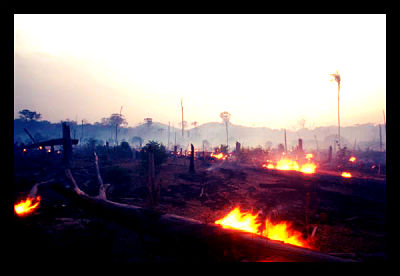
One of the biggest ways that the environment is affected by poverty is through deforestation. Forests provide the world with clean air, in addition to working as “sink holes” that help reduce the drastic climate changes seen in the world today. With the increasing level of deforestation taking place, the environment is taking a heavy blow and finding it difficult to recover. Impoverished communities, unaware of the errant, harmful ways in which they use natural resources, such as forest wood and soil, are continuing the destructive cycle that spirals the environment further downward.

Air pollution is another way in which poverty contributes to environmental degradation. As mentioned above, poor communities lack the proper knowledge when it comes to production techniques. Thus, the ways in which they use resources to help them survive are harmful to the resources around them, and ultimately the world at large. Air pollution is one of the major consequences of poor production techniques while water pollution is a result of poor water management, once again due to lack of knowledge. Water pollution affects so many things beyond the poor community itself. Water pollution deprives soil of nourishing elements, kills off fish, and is extremely harmful to human health.

Because extreme poverty doesn’t always lend to widespread birth education, many poor women lack the resources necessary to engage in birth control. Therefore, it is common for poor women to continue having children well after they would have liked because of little to no access to resources and education.

The more the global population grows, the more weight is placed on the environment. Every human being consumes their share of resources from the environment, and with so many births originating from poor communities, the burdens placed on the environment grow heavier and heavier each day.

In order to help the state of the environment, we must first help the state of the poor and education is key.

Poor regions need to know what the proper and harmless methods are in which they can dispose of their waste. They must learn how to tend a healthy and sound agricultural system without the reliance on degraded soil, and other unfit resources. There must be more importance placed on water management and protecting fisheries, as those are essential for the livelihood of many people. Re-forestation projects are crucial in replenishing the supply of environmental “goods” that deforestation has destroyed.

In addition, taking action to stop the rampage of deforestation is even more important in order to begin to nourish the environment back to good health.

– Chante Owens

Sources: Teams To End Poverty, Global Issues
Photo: Science Daily

October 2, 2013
https://borgenproject.org/wp-content/uploads/borgen-project-logo.svg 0 0 Borgen Project https://borgenproject.org/wp-content/uploads/borgen-project-logo.svg Borgen Project2013-10-02 20:51:132024-06-05 01:53:39How Poverty Impacts the Environment
Extreme Poverty, Food & Hunger, Food Aid, Global Poverty, Technology

Why Technology Won’t Solve World Hunger

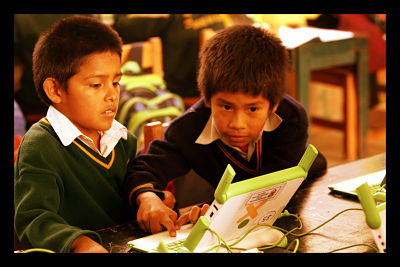
Technology Won't Solve World Hunger Kids Using Laptop
Ideas for ending world hunger are the subject of deep contention and intrigue. Conversations about how best to go about ending hunger are held among regular people far removed from the international, sociopolitical arena or non-profit sector, as well as among leaders in national governments and conferring minds within the United Nations.

Duncan Green in The Guardian recently reminded the world of the stark contrasts between those who can afford to eat and the nearly 900 million who sleep on empty stomachs. Progressive efforts underway in Ghana and Brazil have seen initiatives such as cash transfers to the impoverished and an increase in minimum wage. These programs have made strides, but in nations like India that are growing exponentially, the government must address the issue.

Of the myriad of ways to eradicate hunger, is technology perhaps a truly viable option at this point? If so, are the contributions made by technology being overlooked as a way to finally solve world hunger, or is technology simply a tool in this case?

Josette Sheeran, blogging for The Huffington Post, seems to think that technology is something of a cure-all for world hunger. She talks of the electronic vouchers used in Palestinian territories that give people greater access to food. The World Food Programme (WFP) is responsible for that, and other projects, such as the one in the Philippines that uses texting to feed workers. People participate in work projects and can collect their payment at participating food shops.

The WFP also uses social media with their WeFeedBack initiative that lets the user online select a favorite food and using a special calculator, can see based on its cost how many children would be fed with it. The calculated amount is what WFP encourages the user to donate.

Not long ago, a lab-grown burger patty was cooked and eaten in view of the public, touted as a way to help save both planet and people. A report from The Atlantic posits that the world already produces enough food to feed a growing global population and that new technology won’t necessarily solve the hunger crisis. Three-dimensional food printers are also a new tech tool being developed, but the report makes the case that in-house food printers won’t be an appliance in every kitchen because regular people cannot figure out the technology.

Why, then, would these technologies work in the emergent world? And, even if labs in emergent nations were capable of mass producing meat, consumption would be limited to the middle class and upper classes.

Sarah Sloat for Pacific Standard cites a 2012 paper by CUNY law student Rebecca Bratspies that says food production has grown inversely proportional to the hungry. Better food distribution will help solve hunger more than technological developments. The feeling, then, is that even with the massive amount of resources available to solve the world hunger crisis, the solutions are not dependent upon increased production.

Technology in food production has proven to increase production, but access is still contingent upon how food is distributed and how easily available it is to those who need it. Getting there may not be an issue of widespread production, but rather individual nations doing what they can to feed citizens.

– David Smith

Sources: The Guardian, The Atlantic
Photo: Huffington Post

October 2, 2013
https://borgenproject.org/wp-content/uploads/borgen-project-logo.svg 0 0 Borgen Project https://borgenproject.org/wp-content/uploads/borgen-project-logo.svg Borgen Project2013-10-02 20:43:142017-02-21 12:51:45Why Technology Won’t Solve World Hunger
Extreme Poverty, Global Poverty, Politics and Political Attention

Definition of Poverty: What Is It, Exactly?

define_poverty
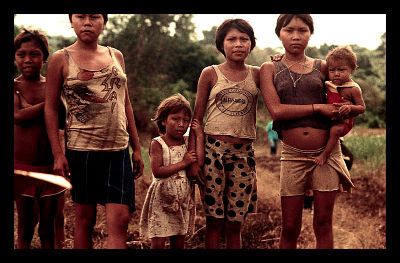
In the vaguest sense of the word, Merriam-Webster will tell you that general poverty is “the state of one who lacks a usual or socially acceptable amount of money or material possessions.” This is just about as much as anyone with a context clue for the word poverty could define it as. But what is it really? What does it mean to live in poverty? There are different types and levels, in a sense, of poverty. Each country tends to have different cut off points that determine whether they are truly impoverished or not. But it is generally accepted that those living in such a way that it is difficult to make ends meet, are impoverished. So what are the different levels?

There are several million people living at or nearby the poverty line just in the United States, but even our poverty line is higher than that of the world’s poorest countries. A person living alone and unmarried is allotted just over $11,000 or less to meet the poverty requirements set by the government. And while survival in our country would be absolutely difficult on this meager income, many people are living on even less. In fact, there are 2.4 billion people living at the poverty line of $2 a day, this comes to less than $3,000 income in an entire year. That is two dollars every day to feed themselves and their families. All that money to have a place to live and water to drink and clothes to wear. Defining poverty means looking at the fact that people are going without the full education or access to good jobs that they so desperately need to pull themselves out of this way of life. People living this way often have to choose one necessity over another in order to make sure that at least some of the needs are met and taking any government assistance when possible, like food stamps and welfare. And it gets even worse than that.

What about extreme poverty? This is recognized as living on less that $1.25 a day as defined by the World bank in 2008 and there are over 1 billion people living in this state. This level is decided by a lack of clean water, housing, food, health care and education. Some of the countries most beset by this issue include Africa, Afghanistan, and Haiti. Most things that other people take for granted, those living in extreme poverty must go without. People living in extreme poverty suffer much higher rates of infant and maternal mortality. 22,000 children around the world die every day in the poorest countries due to unchecked illness and succumbing to malnourishment. In fact 1 billion out of 2.2 billion children in the world are living in poverty conditions such as these. At this point every aspect of survival becomes a struggle. It is not simply a matter of going without health care to ensure that there is enough food in the house. It is instead going without reasonable amounts of anything at all and living a day by day existence.

What about social poverty, or social exclusion? Poverty is not only defined in a monetary fashion. Income poverty is the most commonly looked at, but there is such a thing as social poverty. This is defined as lacking cultural inclusion due to the inability to conform to society’s ideal norms due to a lack of education, skills, money, health care, child care, and a certain type of living condition. This multidimensional measurement of poverty brings all these into consideration to define itself as the inability to participate in the community socially whether on that national, local, or even familial level. While it is much more difficult to measure than what is called absolute poverty, it is still considered to be an important aspect of poverty by many in the world. It is thought that a quality of life should also be applied to standards of living.

All in all, while poverty is defined much in the same way that any word is, it is a constantly adjusting thing as it is an active part of life itself. It fluctuates regularly and changes to meet the times. Hopefully, with the right amount of work and education, it will also become a part of our past as opposed an all too realistic part of our present.

– Chelsea Evans

Sources: Merriam-Webster, Families USA, Global Issues, UNESCO, One Day’s Wages
Photo: Photo Brazil

August 18, 2013
https://borgenproject.org/wp-content/uploads/borgen-project-logo.svg 0 0 Borgen Project https://borgenproject.org/wp-content/uploads/borgen-project-logo.svg Borgen Project2013-08-18 12:25:552024-05-25 00:18:29Definition of Poverty: What Is It, Exactly?
Extreme Poverty

Extreme Poverty in the United States

Extreme Poverty in the United States
Throughout the world, extreme poverty rates have decreased significantly in the past years. According to the United Nations, “the number of extreme poor has dropped by 650 million in the last three decades.” Economic investment and poverty relief work in developing countries have played a significant part in reducing extreme poverty rates across the globe.

Although the majority of the people living in extreme poverty reside in developing nations, extreme poverty has yet to be eradicated from even the wealthiest of countries in the world. A recent study conducted by sociologists from Harvard and the University of Michigan have determined that extreme poverty in the United States still exists. Nearly 1.65 million households in the United States survive on less than $2 a day. This figure “accounted for 4.3% of all non-elderly households with children” in the United States.

The conditions of an American living in extreme poverty are certainly different than those of people who live in the developing world. Fortunately for the American impoverished, the United States has established a number of programs to assist people living under the poverty line. Food stamps, housing subsidies, and refundable tax credits are available to ensure that a person’s basic needs are met. The United States spent $9.6 billion on funding Temporary Assistance for Needy Families in 2011. This program provides temporary financial assistance to the impoverished, allowing them to pay for daily expenses when they are struggling to earn a sufficient income.

Although extreme poverty is concentrated in developing nations, extreme poverty is truly a global issue. Poverty reaches rich and poor countries alike, and the impoverished need aid no matter where they live. The difference between the impoverished living in a wealthy country and a developing one, however, is that wealthy countries have well-established safety nets for those living below the poverty line. In other parts of the world, this is not the case, making foreign assistance to these areas even more critical to ensure that the impoverished have their most basic human needs fulfilled.

– Jordan Kline

Sources: CNN, UNDP, Washington Post
Photo: HandsOn Blog

July 23, 2013
https://borgenproject.org/wp-content/uploads/borgen-project-logo.svg 0 0 Borgen Project https://borgenproject.org/wp-content/uploads/borgen-project-logo.svg Borgen Project2013-07-23 06:52:082024-12-13 17:49:27Extreme Poverty in the United States
Extreme Poverty

New Goals for the Fourth World

 New Goals for the Fourth World
This past week, the UN considered a set of recommendations for reworking the Millennium Development Goals at their headquarters in New York. This time, however, a new group wants a seat at the discussion: the extreme poor.

The Fourth World, as it is called, has always been home to the population most at-risk and, unfortunately, the most difficult to help. Juan Baltazar, a former street-dweller in Bolivia and current development researcher, says he never knew about development efforts when he was homeless.

ATD Fourth World, an organization dedicated to studying and eradicating extreme poverty, compiled a report based on a three-year action-research program across twelve countries and involving over 2,000 men and women like Baltazar. Entitled “Towards Sustainable Development that Leaves No One Behind: The Challenge of the Post-2015 Agenda”, the report lists the five most important new development goals based on suggestions from the extreme poor. They are:

1. Leave no one behind: Fighting discrimination based on race, gender, and class is the most urgent need of those living in extreme poverty to access education, jobs, and so forth.

2. Introduce people living in poverty as new partners in building knowledge on development: The best way to assist the highly marginalized is to bilaterally share information and support to foster input and agency on their part.

3. Promote decent jobs and social protection: Policies that drive job-creation and fair social outcomes are essential to helping the poor help themselves.

4. Achieve education and training for all: Education must be relevant, equitable, and accessible to everyone in order to provide a firm social foundation for the “Fourth World.”

5. Promote participatory governance: Democracy is key to any sustainable approach to poverty alleviation, and the voices of the disempowered must be heard in order to help them effectively.

The report seeks to shift the emphasis in development from economic and health benchmarks to aligning policy with human rights standards. Pursuant to that, ATD believes that no real progress can be made without hearing the contributions of the poor themselves.

– John Mahon
Sources: Devex, ATD Fourth World
Photo: Amazonaws

July 21, 2013
https://borgenproject.org/wp-content/uploads/borgen-project-logo.svg 0 0 Borgen Project https://borgenproject.org/wp-content/uploads/borgen-project-logo.svg Borgen Project2013-07-21 05:39:432024-05-25 00:00:47New Goals for the Fourth World
Extreme Poverty, Family Planning and Contraception, Global Poverty, Health, Women and Female Empowerment

Worst Countries in Which to Give Birth

worst-countries-to-give-birth-in-borgen-project-rural-poverty_opt
Many of us spent some time in May being thankful for our mothers. Something else that we may not think to be thankful for is the healthy and sanitary conditions mothers were able to give birth in. For women living in developing countries, this is a huge concern for pregnant women. One country, however, has proven to be the worst place to give birth: Chad.

This statistic was identified by the organization, Save the Children, in their annual Mother’s Index. The group uses an index that includes a woman’s risk of death during childbirth or pregnancy. Chad was deemed the worst place for a mother to give birth because 1 in 15 mothers are at high risk of dying while pregnant or in child labor.

A contributing factor to these startling statistics is that women get married and become pregnant at a young age. 50% of girls are mothers by the age of eighteen. These girls are at risk because their bodies are not fully developed enough to safely experience pregnancy and childbirth. Malnutrition is also a concern for mothers in Chad. High levels of poverty make healthy diets unattainable for many mothers.

The second worst country for women to give birth in is Somalia. This country is the highest ranking in not providing proper care during pregnancy, with 74% of women not receiving adequate care. Somalia also is barely behind Chad in terms of the risk of death during pregnancy and childbirth. In Somalia, one in sixteen women are at risk. The newborn child is also at danger when it is born in Somalia. About eighteen newborns die per 1,000 live births.

Other countries that are ranked in worst places to have a child are Niger, Sierra Leone, Liberia, Guinea-Bissau, Central African Republic, Mali, Nigeria and Guinea. In order to improve childbirth conditions in these developing countries, it is necessary to invest in health systems and the training of health employees, midwives and other who may assist in the birth process. With these improvements in healthcare, more women will survive and be able to celebrate Mother’s Day with their children.

– Mary Penn

Source: Devex, Save the Children
Photo: Global Giving

July 19, 2013
https://borgenproject.org/wp-content/uploads/borgen-project-logo.svg 0 0 Borgen Project https://borgenproject.org/wp-content/uploads/borgen-project-logo.svg Borgen Project2013-07-19 05:00:012024-12-13 17:49:20Worst Countries in Which to Give Birth
Developing Countries, Extreme Poverty, Global Poverty

Where is the Worst Poverty in the World?

Worst Poverty in the World
It is difficult to rank poverty into objective levels of better and worse, as though human suffering can be quantified. Are the crowded slums of India, for example, worse than the isolated villages in rural Brazil? Answering the question of where the worst poverty in the world is depends on the factors one considers.

In statistical terms, the Democratic Republic of the Congo earns the dubious distinction of having repeatedly been labelled the world’s poorest country. With a GDP per capita of less than $400 and wracked by instability, the DRC has come to be an all around worst-case scenario. Traveller Giovanni Contadino described his trip to the Congo: “Everyone was very keen to tell me how hard life was, and how much better things must be where I am from… Whenever I pressed people as to why their situation was so difficult, it was always the fault of the fighting.” Contandino also described the lack of infrastructure and the rife corruption in the city, where bribes were an everyday occurrence and politicians expected to live well beyond their means, with no protest from the people.

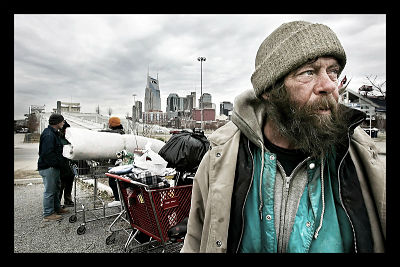
Many have pointed out the psychological devastation of being among the poorest in the United States. Though it is the richest country in the world, the United States is also plagued by devastating poverty. Affected areas include urban communities like infamous Hunt’s Point in New York City or Detroit, which was labelled the most miserable city in the United States and has lower earnings than any other city and a high crime rate. It is a condition that must be made more intolerable by the knowledge of your countrymen’s affluence as well as living in a culture that thrives on materialism and consumption.

Syrian refugees are undergoing one of the world’s most horrendous crises at the moment, losing homes, belongings, livelihoods, subject to random violence and rampant sexual assaults, forced into underserved communities and robbed of any hope of future security while their country burns around them. The poverty to be found in a refugee camp breeds severe physical and psychological trauma. It would be difficult to look at a refugee and state that their suffering was less profound than that to be found in the Congo, simply because it began more recently.

All poverty is bad poverty. All poverty creates suffering and undermines dignity. To ask if one is worse than the other is an impossible and misguided question with little purpose; the most we should be asking is why there is poverty at all.

– Farahnaz Mohammed

Sources: Global Finance, Road Trip to the DRC, MSN
Photo: The Telegraph

July 18, 2013
https://borgenproject.org/wp-content/uploads/borgen-project-logo.svg 0 0 Borgen Project https://borgenproject.org/wp-content/uploads/borgen-project-logo.svg Borgen Project2013-07-18 08:10:592024-12-13 17:49:29Where is the Worst Poverty in the World?
Page 6 of 10«‹45678›»

Get Smarter

  • Global Poverty 101
  • Global Poverty… The Good News
  • Global Poverty & U.S. Jobs
  • Global Poverty and National Security
  • Innovative Solutions to Poverty
  • Global Poverty & Aid FAQ’s
Search Search

Take Action

  • Call Congress
  • Email Congress
  • Donate
  • 30 Ways to Help
  • Volunteer Ops
  • Internships
  • Courses & Certificates
  • The Podcast
Borgen Project

“The Borgen Project is an incredible nonprofit organization that is addressing poverty and hunger and working towards ending them.”

-The Huffington Post

Inside The Borgen Project

  • Contact
  • About
  • Financials
  • President
  • Board of Directors
  • Board of Advisors

International Links

  • UK Email Parliament
  • UK Donate
  • Canada Email Parliament

Get Smarter

  • Global Poverty 101
  • Global Poverty… The Good News
  • Global Poverty & U.S. Jobs
  • Global Poverty and National Security
  • Innovative Solutions to Poverty
  • Global Poverty & Aid FAQ’s

Ways to Help

  • Call Congress
  • Email Congress
  • Donate
  • 30 Ways to Help
  • Volunteer Ops
  • Internships
  • Courses & Certificates
  • The Podcast
Scroll to top Scroll to top Scroll to top