• Link to X
  • Link to Facebook
  • Link to Instagram
  • Link to TikTok
  • Link to Youtube
  • About
    • About Us
      • President
      • Board of Directors
      • Board of Advisors
      • Financials
      • Our Methodology
      • Success Tracker
      • Contact
  • Act Now
    • 30 Ways to Help
      • Email Congress
      • Call Congress
      • Volunteer
      • Courses & Certificates
      • Be a Donor
    • Internships
      • In-Office Internships
      • Remote Internships
    • Legislation
      • Politics 101
  • The Blog
  • The Podcast
  • Magazine
  • Donate
  • Click to open the search input field Click to open the search input field Search
  • Menu Menu

Archive for category: Extreme Poverty

Information and news about poverty

Extreme Poverty, Politics and Political Attention

Agit8 Concert Promotes Anti-Poverty Campaign

Agit8 Concert Promotes Anti-Poverty Campaign
Musicians from around the world performed in London this past Wednesday to support Agit8, a music-based campaign focused on raising awareness for extreme poverty. The group was launched by the One Campaign, a group co-founded by Bono and Bob Geldof. The idea was to get modern groups to record newer versions of famous protest songs.

The Agit8 concert hoped to put pressure on leaders attending the G8 summit in Northern Ireland next week. Musicians that participated included Angelique Kidjo, Paloma Faith, U2, Will. i. am, Elvis Costello, and Green Day among others. Artists appeared to live and online to participate in the event.

One of the artists at the event remarked that Agit8 is a movement to push leaders to fulfill their promises and to be held accountable.  Ending poverty will grow economies around the world and result in a healthier and more educated global workforce.  The artists involved in the campaign want to motivate a new generation to fight against extreme poverty and hunger.

The One Campaign gathered the extraordinary group of musicians together to show the world that protest often leads to progress. History has shown that and British filmmaker Richard Curtis produced a film showing this that will also be shown in conjunction with the event.

– Amanda Kloeppel
Sources:The Irish Sun, NTD Television
Photo: Yahoo Finance

June 20, 2013
https://borgenproject.org/wp-content/uploads/borgen-project-logo.svg 0 0 Borgen Project https://borgenproject.org/wp-content/uploads/borgen-project-logo.svg Borgen Project2013-06-20 04:00:092020-07-03 00:24:44Agit8 Concert Promotes Anti-Poverty Campaign
Aid Effectiveness & Reform, Developing Countries, Extreme Poverty

Economic Freedom Essential to Reduce Poverty

Economic_Freedom_Poverty
Poverty is a global issue affecting every nation on earth. Over the past hundred years, life expectancy ranged from 30 to 40 years for many people. And if they made it that far, often they did so without adequate food, clothing, and shelter. The past decade has seen massive reductions in the numbers of the global poor, but there is still much work to be done. Today, the number of people in the world living on less than $1 a day is down to around 20% and dropping.

Essential to reducing poverty is economic freedom. China and India have become leaders in economic enterprise and in improving the economic freedoms within their nations. As a result, they have seen millions of people lifted out of poverty. To back up the numbers, the Cato Institute and Canada’s Frazier Institute put out a report called the Economic Freedom of the World report. The study annually looks at five major indicators of economic freedom. Those indicators are size of government, legal system and property rights, sound money, freedom to trade internationally, and regulation. From the indicators, the report lists 141 countries in terms of economic freedom.

The report has found that countries with higher levels of economic freedom grow more rapidly, have higher per capita incomes, and greater longevity than countries with lower levels of economic freedom. The top fifth of countries had per capita incomes seven times higher than the the bottom fifth and the results among the poor are significant. The poor in the bottom tenth in terms of economic freedom had incomes of $1,061 versus poor in the top tenth who had incomes around $8,735.

The report also pointed out that income inequality does not seem to be a factor in economic freedom. As a country becomes more free, the rich do not grow richer at the expense of the poor. Rather the poor also gain an advantage.  Economic freedom improves wealth which also improves health and mortality rates especially among women and children.

People are the solution to poverty and equal distribution of economic freedom will have a greater impact on reducing poverty than redistribution of wealth.

– Amanda Kloeppel
Source: The York Daily Record
Photo: The Guardian

June 20, 2013
https://borgenproject.org/wp-content/uploads/borgen-project-logo.svg 0 0 Borgen Project https://borgenproject.org/wp-content/uploads/borgen-project-logo.svg Borgen Project2013-06-20 04:00:002016-02-08 14:27:16Economic Freedom Essential to Reduce Poverty
Extreme Poverty

Capitalism Is Helping End Global Poverty

Capitalism Is Helping End Global Poverty
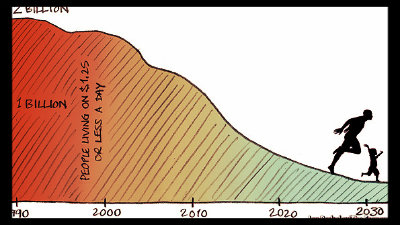
1.1 billion people in the world still live in extreme poverty, which means surviving on less than $1.25 per day. While that may seem like bad news, the good news is that that number is half of what it was 20 years ago. Between 1990 and 2010, 1 billion people were lifted out of extreme poverty, and now we need to do it again to wipe out extreme poverty by 2030 to reach the goal set by the World Bank.

So, who is to thank for helping curb poverty around the world? Certainly, the leaders who proposed the Millennium Development Goals have contributed by raising awareness about the problem of poverty and encouraging advocacy by creating goals. And without a doubt, the nonprofit organizations that have raised money and volunteered to help raise less than privileged people out of extreme poverty should be applauded. But, the most significant hero in this scenario maybe capitalism.

One of the best ways to help people is to teach them how to help themselves. Sending food, medical care, and other supplies to help the poor helps greatly, but not as much as helping a country grow so that they can create their own food, become doctors to care for the sick, and buy or make their own supplies. When a country’s entire economy grows, individuals’ financial outlooks begin to look brighter as well.

China is a prime example of how capitalism is helping to end global poverty. The country has one of the most impressive “rags to riches” stories, bringing 680 million people out of extreme poverty from 1981 to 2010. Furthermore, a staggering 84% of China’s massive population used to live in extreme poverty, and that number has now been reduced to 10%. Most of the reasoning behind this incredible transformation lies in the fact that China’s productivity level drastically increased towards the end of the 20th century, supplying people with jobs to bring them out of extreme poverty.

There is much more to global poverty and the methods of ending it than simply providing jobs through capitalism. There are major issues with inequality and government systems, for example, and there’s not always a simple answer. But, growth remains one of the most significant ways to help a nation lift and keep itself out of extreme poverty.

– Katie Brockman
Source: The Economist

June 11, 2013
https://borgenproject.org/wp-content/uploads/borgen-project-logo.svg 0 0 Borgen Project https://borgenproject.org/wp-content/uploads/borgen-project-logo.svg Borgen Project2013-06-11 04:00:372020-06-29 03:09:34Capitalism Is Helping End Global Poverty
Extreme Poverty, Health

Universal Health Care Can End Extreme Poverty

Universal Health Care Can End Extreme Poverty
Universal health care in all countries could help bring an end to extreme poverty by 2030, says World Bank President Jim Yong Kim. He explains that “every country in the world can improve the performance of its health system in the three dimensions of universal coverage: access, quality and affordability.” Last month Kim set the goal of ending extreme global poverty around the world, which means that nobody will be living on $1.25 or less each day by the year 2030. He claims that universal health coverage is essential to be able to reach this goal because it is costly to receive medical care, and many of the poorest families cannot afford these costs.

Health issues are a major reason people are in extreme poverty, putting 100 million people into extreme poverty as well as creating severe financial stress for an additional 150 million people around the world each year. Kim states that to create a valuable and helpful system, those in the public sector should take tips from private sector companies to be more efficient and provide “value-for-money health care.” He further explains that to create the best universal health care in poor, developing countries, point-of-service and out-of-pocket costs must be eliminated, because they hinder people’s ability to obtain the services they need but cannot afford.

Kim knows that for the poorest people around the world, even what would seem like small costs to visit a doctor or receive a vaccine can be detrimental to a family’s financial stability, and could push some people back into poverty or extreme poverty. With universal health care, these individuals and families can receive these necessary health benefits without sacrificing other areas of life or worrying about being forced back into poverty.

– Katie Brockman
Source: Businessweek
Photo: World Health Coverage

May 29, 2013
https://borgenproject.org/wp-content/uploads/borgen-project-logo.svg 0 0 Borgen Project https://borgenproject.org/wp-content/uploads/borgen-project-logo.svg Borgen Project2013-05-29 04:00:352020-06-27 02:44:31Universal Health Care Can End Extreme Poverty
Extreme Poverty

Extreme Poverty or Higher Aggregate Happiness

Extreme Poverty or Higher Aggregate Happiness
In a recent research analysis regarding the after-effects of eradicating extreme poverty, researchers found that the world’s well-being as a whole is much more important to focus on. During the past decade, the main focus of the U.N. and developed nations has been to eradicate extreme poverty, but now researchers are asking: what comes after the end of poverty? The argument is that many people will still be considered poor in comparison to those who are rich. Daniel Altman of Foreign Policy asserts that even if people move up from extreme poverty (living on less than 2 dollars a day), the more they are exposed to ads and a TV showing them how the “other half lives,” the more the income gap will yet remain.

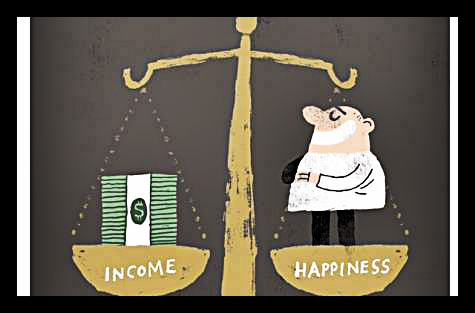
Altman writes, “the link between income and happiness is strong in countries around the globe.” Thus, rising income maintains constant happiness which means that focusing on non-extreme poverty is just as important as focusing on eradicating extreme poverty. Basically, even if poor farmers and sweatshop workers’ lives were advanced “beyond the level of mere subsistence,” there needs to be a constant advancement of their lives in order to maintain consistent and constant well-being and happiness.

Although the aid industry has been successful in lifting small numbers of people out of poverty for a given time, there is a need for “big changes in living standards,” and that calls for the growth of the private sector and a change of political institutions. By following up on the Bill and Melinda Gates Foundation’s slogan that every human life has equal value, perhaps there is a need for a new slogan for the aid industry, argues Altman. Rather than it being the eradication of extreme poverty, perhaps it should be the building of higher aggregate happiness.

– Leen Abdallah

Source: SBS News
Photo: Google

May 18, 2013
https://borgenproject.org/wp-content/uploads/borgen-project-logo.svg 0 0 Borgen Project https://borgenproject.org/wp-content/uploads/borgen-project-logo.svg Borgen Project2013-05-18 04:46:582024-05-24 23:52:17Extreme Poverty or Higher Aggregate Happiness
Extreme Poverty

End to Extreme Poverty is Within Grasp

jim-yong-kim-within-our-grasp
On April 2, President of the World Bank Group Jim Yong Kim gave a speech at Georgetown University outlining the goals and actions the world must to take to reach the 2030 Millennial Development Goals and eliminate global poverty. The President encouraged listeners to “seize the opportunity to end extreme poverty” because the goal is “within our grasp.”

Amid various challenges that threaten the elimination of poverty, such as inequality, global climate change, and an increasing number of natural disasters, Kim remains hopeful. However, to ensure that progress continues, he believes that we must change the way we work together. Kim outlined two lessons learned in the last decades of poverty reduction. By accelerating the end of extreme poverty and boosting shared prosperity, he believes that poverty can be reduced below 3% within the next generation of activists. The role of the World Bank Group becomes critical in reducing and eliminating world poverty as it encourages the cohesion of these two lessons through its mission and focuses on equity. “We must collectively work to help all vulnerable people everywhere lift themselves well above the poverty line,” said Kim.

While working together is essential, Kim outlined four roles that the World Bank Group will play in reducing poverty. Identifying worthy projects, closely monitoring these projects, conveying advocacy to policymakers, and working with partners to share knowledge are essential aspects to making progress and meeting the Millennial Development Goals.

In closing, Kim noted that April 5 marked 1,000 days to execute the Millennial Development Goals. While he acknowledged the challenges that poverty reduction faces, he remained confident that these goals and the ultimate elimination of poverty are within grasp. To view the transcript of Kim’s speech, visit The World Bank website.

– Kira Maixner

Source: The World Bank
Photo: The Guardian

May 11, 2013
https://borgenproject.org/wp-content/uploads/borgen-project-logo.svg 0 0 Borgen Project https://borgenproject.org/wp-content/uploads/borgen-project-logo.svg Borgen Project2013-05-11 10:00:102020-05-26 09:05:18End to Extreme Poverty is Within Grasp
Advocacy, Extreme Poverty, Foreign Aid

Religious Leaders Fight World Hunger

Global_Hunger_Poverty_Religious_Leaders_Lobby_Congress
On May 15th, hundreds of religious leaders from 170 difference spiritual organizations will unite in combating the issue of global hunger by lobbying parliament. The Catholic Agency For Overseas Development (CAFOD) has organized the mass lobby on behalf of the “Enough Food for Everyone IF” campaign. This campaign has a strong message encompassed by four IFs.

Enough food for everyone…

IF governments keep their promises on aid, invest to stop children dying from malnutrition and help the poorest people feed themselves through investment in small farmers.
IF governments stop big companies dodging tax in poor countries, so that millions of people can free themselves from hunger.

IF we stop poor farmers being forced off their land, and use the available agricultural land to grow food for people, not biofuels for cars.
IF we force governments and investors to be honest and open about the deals they make in the poorest countries that stop people getting enough food.

These hundreds of monks, nuns, priests, and others will meet with members of Congress to discuss the reasons behind world hunger and ways to end the epidemic. Many of these religious leaders have first hand experience in third world countries working with people suffering from hunger and malnutrition.

One of the campaign’s organizers, Sister Pat Robb CJ, plans to inform members of Congress about her time in developing countries where she witnessed children dying from lack of food. She also hopes that the large scale of this lobby will put pressure on Congress to not merely listen, but to take action against world hunger.

Other groups that support the IF campaign are JPIC Links (Justice Peace and Integrity of Creation), the Africa Europe Faith and Justice Network (AEFJN), the Conference of Religious (COR), Progressio, Trocaire, Church Action on Poverty and SCIAF.

Archbishop Desmond Tutu hopes that this anti-hunger movement will be as successful as the anti-Apartheid campaign that happened several decades ago. He is confident that if people can unite over the issue of hunger, then the campaign will be a victory. One of the ways to reach this goal, he says, is for wealthy countries to commit to invest 0.7 percent of their gross national incomes in foreign aid. However, it is also important to change the systems that created extreme poverty in the first place.

These religious leaders are hoping that their influence will sway the minds of politicians to support foreign aid legislation. In the words of Sister Pat Robb, “As long as one person is still hungry, our work is not over.”

– Mary Penn

Source: INC
Photo: Theatre Goodman

May 4, 2013
https://borgenproject.org/wp-content/uploads/borgen-project-logo.svg 0 0 Borgen Project https://borgenproject.org/wp-content/uploads/borgen-project-logo.svg Borgen Project2013-05-04 10:00:212020-05-26 08:27:01Religious Leaders Fight World Hunger
Extreme Poverty, Global Poverty

Les Misérables

LesMiserables
The World Bank’s Director of Economic Policy and Poverty Reduction Programs for Africa, Marcelo Giugale, recently wrote about the current progress and development around the world in regards to extreme poverty. He explains that the 2013 World Development Indicators (WDI) have recently been released, evincing the status and evolution of people who live on $1.25 or less. Giugale’s detailed description of what it would be like to live on such a meager number really captures the essence of poverty and contrasts it with the expectations, advancement, and materialism of the 21st century. It allows the reader to visualize life in another light, one that is much different than what would be expected from the 21st century. Giugale writes, “If you had something that could be called a house — [it] would have no electricity, gas, running water or sewer.”

Out of the world’s human population of 7 billion, 1.2 billion live in extreme poverty. However, Giugale expresses his optimism in commenting on how it has been proven through one region’s shift away from poverty that rapid economic growth can tackle poverty. For example, in the past 20 years through 2010, China’s fast economic growth played the main and most prominent role in lifting approximately 700 million people out of poverty. Giugale also sheds light on the fallacy that the 2008-2009 global financial crisis raised extreme poverty; that is not true, according to Giugale. The financial crisis “if anything…only slowed [down] temporarily the downward trend that extreme poverty had been on.”

The Director also shares that although almost half of all Africans still live in extreme poverty, the rate of poverty declined from 60% in 1993 to 48% in 2010. Taking into account economic growth while noting that Africa is home for a third of the world’s extreme poor emphasizes that growth is not enough; that much more can be done. Finally, he comments that, according to the World Development Indicators’ predictions, 250 million people will be lifted from poverty by 2015 (mainly people in South and East Asia).

It is intriguing to note the title of Marcelo Giugale’s article, Les Misérables, because it denotes a certain theme. In Victor Hugo’s novel Les Misérables, the story’s structure is described as a “progress from evil to good, from injustice to justice, from falsehood to truth, from night to day, from appetite to consciousness, from corruption to life.” Those deep words parallel Giugale’s point that more can be done, and that it is not costly for governments of countries with plenty of natural resources to alleviate their people’s misery. It is time to progress from injustice to justice, from hell into heaven.

– Leen Abdallah

Source: Huffington Post, Liturgy
Photo: Google

May 3, 2013
https://borgenproject.org/wp-content/uploads/borgen-project-logo.svg 0 0 Borgen Project https://borgenproject.org/wp-content/uploads/borgen-project-logo.svg Borgen Project2013-05-03 16:33:432020-05-26 08:04:25Les Misérables
Extreme Poverty, Global Poverty

Ben Affleck Lives Below the Line

Academy Award winner actor Ben Affleck is taking part in the Living Below the Line challenge. Next week, he will be living on just 1 dollar and 50 cents a day. The challenge requires participants to bid farewell to their comfortable and stable lives for 5 days to experience poverty on a personal scale. Living Below the Line was “cofounded in 2009 by Rich Fleming from the Global Poverty Project and Nick Allardice from the Oaktree Foundation in Australia.”

The U.S. Country Director of the Global Poverty Project, Michael Trainer, said that last year approximately 15,000 people were part of this Living Below the Line challenge and more than 3 million dollars were raised. According to the Yahoo report, Ben Affleck’s participation will build awareness and raise funds for the Global Poverty Project. The Project’s main emphasis is to get people to recognize their potential effectiveness by coming together and fighting to end global poverty. Next week anyone can be, and everyone should be, in solidarity with the poor with this humbling poverty experience.

–Leen Abdallah
Source: Examiner

May 2, 2013
https://borgenproject.org/wp-content/uploads/borgen-project-logo.svg 0 0 Borgen Project https://borgenproject.org/wp-content/uploads/borgen-project-logo.svg Borgen Project2013-05-02 09:00:472020-05-26 07:59:51Ben Affleck Lives Below the Line
Aid Effectiveness & Reform, Developing Countries, Extreme Poverty, Global Poverty, Nonprofit Organizations and NGOs, Poverty Reduction

$500 Million ‘Rescue Mission’ Initiative Launched

$500 Million 'Rescue Mission' Initiative LaunchedWith cuts to foreign aid looming and some already in place, humanitarian organizations are going to become even more important in the fight against global poverty. Evangelical organization World Vision launched a $500 million ‘Rescue Mission’ initiative to help 10 million children living in poverty.  The ‘Rescue Mission’ initiative will focus on clean water, access to health care, and child protection.

Under the budget cuts that went into effect as of January 1, 2013, non-profits are predicting that there will be 1.1 million fewer mosquito nets distributed, 300,000 fewer people with access to clean water, and 2 million people with reduced or zero access to food aid.  This is cause for serious concern as we look at being less than 1,000 from the end date for the Millenium Development Goals (MDG).

World Vision launched the $500 million ‘rescue mission’ dubbed “For Every Child” which seeks to raise $500 million by 2015.  It is the farthest-reaching endeavor World Vision has ever taken on.  The initiative will focus on clean water, fighting communicable diseases, providing small loans to families, and protecting children from human trafficking.

When the government cuts budgets, it can be difficult for non-profit organizations to get the start-up capital they need to start new ventures. This campaign is important to continue the life-saving work World Vision is already doing around the world.  It will hopefully fill the gap from government funds and continue to promote the MDGs as we near the final stretch.  We have halved poverty in the last decade and it is very possible to continue the downward trend, but it is going to take a lot of hard work.

While the needs are great and the costs seem high, the alternative to pushing forward is not an option. As Richard Sterns, Executive Director of World Vision put it, “We’ve taken a hard look at the needs that exist today. They are great, but we refuse to believe that poverty is too big, too expensive, or too difficult to overcome-because for the millions of children living in poverty, the stakes couldn’t be higher.”

– Amanda Kloeppel

Source: Christian Post

April 24, 2013
https://borgenproject.org/wp-content/uploads/borgen-project-logo.svg 0 0 Borgen Project https://borgenproject.org/wp-content/uploads/borgen-project-logo.svg Borgen Project2013-04-24 09:00:522020-06-12 23:12:22$500 Million ‘Rescue Mission’ Initiative Launched
Page 8 of 10«‹678910›»

Get Smarter

  • Global Poverty 101
  • Global Poverty… The Good News
  • Global Poverty & U.S. Jobs
  • Global Poverty and National Security
  • Innovative Solutions to Poverty
  • Global Poverty & Aid FAQ’s
Search Search

Take Action

  • Call Congress
  • Email Congress
  • Donate
  • 30 Ways to Help
  • Volunteer Ops
  • Internships
  • Courses & Certificates
  • The Podcast
Borgen Project

“The Borgen Project is an incredible nonprofit organization that is addressing poverty and hunger and working towards ending them.”

-The Huffington Post

Inside The Borgen Project

  • Contact
  • About
  • Financials
  • President
  • Board of Directors
  • Board of Advisors

International Links

  • UK Email Parliament
  • UK Donate
  • Canada Email Parliament

Get Smarter

  • Global Poverty 101
  • Global Poverty… The Good News
  • Global Poverty & U.S. Jobs
  • Global Poverty and National Security
  • Innovative Solutions to Poverty
  • Global Poverty & Aid FAQ’s

Ways to Help

  • Call Congress
  • Email Congress
  • Donate
  • 30 Ways to Help
  • Volunteer Ops
  • Internships
  • Courses & Certificates
  • The Podcast
Scroll to top Scroll to top Scroll to top