• Link to X
  • Link to Facebook
  • Link to Instagram
  • Link to TikTok
  • Link to Youtube
  • About
    • About Us
      • President
      • Board of Directors
      • Board of Advisors
      • Financials
      • Our Methodology
      • Success Tracker
      • Contact
  • Act Now
    • 30 Ways to Help
      • Email Congress
      • Call Congress
      • Volunteer
      • Courses & Certificates
      • Be a Donor
    • Internships
      • In-Office Internships
      • Remote Internships
    • Legislation
      • Politics 101
  • The Blog
  • The Podcast
  • Magazine
  • Donate
  • Click to open the search input field Click to open the search input field Search
  • Menu Menu

Archive for category: Extreme Poverty

Information and news about poverty

Children, Education, Extreme Poverty, Food & Hunger, Global Poverty, Hunger

10 Facts on Child Labor

Child Labor
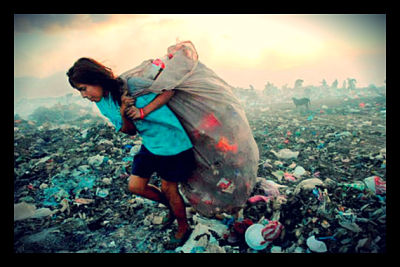
Child labor is work that steals a child’s childhood. Defined in International Labour Organization (ILO) Conventions, child labor is work that children should not be involved in given their age, or – if that child is old enough – work that is too dangerous and unsuitable.

Forcing children to take part in often dangerous and strenuous work and preventing them from attending school, child labor stands in the way of a child’s healthy physical and mental development in addition to his or her education.

In some cases children are enslaved laborers, engaged in the agricultural, mining and manufacturing sectors, or in domestic service, subsequently pushed into homelessness and living on the streets. However, others are trafficked and enslaved in prostitution, or forced into armed combat as child soldiers. These are all forms of child labor; the latter qualifying as some of the worst forms of child labor given that such bondage is especially harmful and in direct violation of a child’s human rights. Child labor is a continuing global phenomenon and following are some shocking, but important, facts regarding the practice.


Important Facts about Child Labor


  1. Currently, there are nearly 30 million people held in slavery and an estimated 26 percent are children.
  2. In 2012, 168 million children – from 5-years-old to 17 – were involved in child labor. Of this number, 85 million worked in hazardous conditions, enduring beatings to sexual violence.
  3. Around the world one in six children are forced to work, with children below the age of 18 representing between 40 to 50 percent of laborers.
  4. Children living in more rural areas can begin working as young as the age of five.
  5. According to the ILO, an estimated two thirds of all child labor is in the agricultural sector.
  6. The highest proportion of child laborers is in Sub-Saharan Africa where 49 million children are forced laborers.
  7. The highest numbers of child laborers are in Asia and the Pacific, where over 122 million children are forced into work.
  8. According to the U.N. Children’s Fund (UNICEF), there are over 300,000 child soldiers forced into armed combat.
  9. In most regions, girls are just as likely as boys to be involved in child labor; however, girls are more likely to be involved in domestic work.
  10. According to the ILO, only one in five child laborers is paid for their work, as the majority of child laborers are unpaid family workers.

So why are some children forced into labor?

Poverty is the most often cited reason why children work. Pressured to provide food and shelter, as well as to pay off debt owed by the parents, some children have no other choice but to become involved in labor in order to support their families. However, some children are sold against their will and forced into slavery. Other factors that influence whether children work or not include barriers to education and inadequate enforcement of legislation protecting children.

Child labor is a complex issue, as are the solutions, but the following steps must continue to be pushed for in order to see further progress. First and foremost, child labor laws must be enforced. Another strategy would be to reduce poverty in these areas so as to limit the need for children to be forced into these situations. Finally, providing access to quality education ensures that each child has a chance for a better future.

– Rachel Cannon

Sources: UNICEF 1, International Justice Mission, UNICEF 2, International Programme on the Elimination of Child Labour, International Labour Organization, UN 1, UN 2
Photo: Flickr
April 24, 2014
https://borgenproject.org/wp-content/uploads/borgen-project-logo.svg 0 0 Borgen Project https://borgenproject.org/wp-content/uploads/borgen-project-logo.svg Borgen Project2014-04-24 04:00:462024-12-13 17:50:1410 Facts on Child Labor
Development, Extreme Poverty, Global Poverty, USAID

USAID and Clinton Launch Global Development Lab

On April 3, the U.S. Agency for International Development and Hillary Clinton announced the launch of the U.S. Global Development Lab, with the goal to end extreme poverty by 2030.

Dr. Rajiv Shah, USAID Administrator, said at the launch that, “To solve our most intractable development challenges, USAID has established a new way of working, bringing on board the best and brightest staff and new partners, all working in concert to help end extreme poverty.”

In the new program, USAID is partnering with 31 universities, corporations, and foundations in the hope to use science and technology to help find methods of alleviating poverty. These partners are being called the Cornerstone Partners, as they come from a number of different fields.

The Cornerstone Partners include corporations like Cargill, Cisco, Coca-Cola, DuPont, GlaxoSmithKline, Intel, Johnson & Johnson, Microsoft, Nike, Syngenta and Walmart as well as foundations and organizations like CARE, Catholic Relief Services, Plan, Save the Children, World Vision, the Global Impact Investing Network, the Skoll Foundation, the National Academy of Sciences, the Smithsonian Foundation, and the Gates Foundation.

In addition, many universities have decided to be part of the Global Development Lab, including the University of California at Berkeley, Duke University, Johns Hopkins Univesrity, Massachusetts Institute of Technology, Michigan State University, Stanford University’s Freeman Spogli Institute, Texas A&M University, and the College of William and Mary. Sweden has also decided to donate to the creation of the lab.

Together all of these groups have contributed over $30 billion in investments and have also provided technology, experts on the subject, and the capabilities to conduct necessary research and development.

Shah went on to explain the lab by saying that, “The Lab will engage a global community of inventors, academics, researchers, entrepreneurs, investors, and corporate leaders in science and technology to invent, test, and scale the most promising and cost effective solutions to end extreme poverty.”

Shah believes that Americans can lead the effort to eliminate poverty, but admits that it will take time. He hopes that by forming these partnerships and creating the Global Development Lab, USAID will be able to help construct the best solutions to worldwide problems.

Prior to being the USAID administrator, Shah served as the undersecretary for the U.S. Department of Agriculture and has worked with Clinton before. One example of their work together was when Shah was applying scientific techniques to improve agriculture in conjunction with Clinton’s work on a global food initiative. Shah hoped to combine these efforts, and his operations in USAID work towards that goal.

The Global Development Lab will work on developing cost-effective products that incorporate the newest discoveries in science, but will also work on solving other problems, such as hunger, disease, and literacy. By bringing together the greatest minds from several different fields, the Global Development Lab will have all the necessary resources to reach its goals.

In light of the announcement, Lana Stoll of USAID said, “By tapping into things that really make America what it is, which is our entrepreneurial spirit, our scientific expertise, and our real commitment to help people, you have a real ability to accelerate our impact.”

– Julie Guacci

Sources: TIME, The Skoll Foundation
Photo: Still4Hill

April 11, 2014
https://borgenproject.org/wp-content/uploads/borgen-project-logo.svg 0 0 Borgen Project https://borgenproject.org/wp-content/uploads/borgen-project-logo.svg Borgen Project2014-04-11 04:00:142024-05-26 23:25:43USAID and Clinton Launch Global Development Lab
Children, Extreme Poverty, Global Poverty

When Art and Sports Collide for Street Children

street_soccer_world_cup_kids_plaing_red_orange_soccer_ball_vest_goal_fun_children_somebody_photo__opt
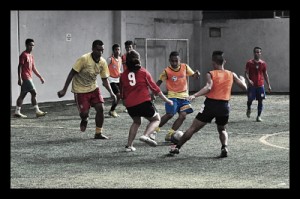
The second Street Child World Cup has officially kicked off as of March 28 where it first originated in Rio de Janeiro, Brazil.

With the excitement surrounding the highly anticipated FIFA World Cup, the Street Child World Cup was set to precede FIFA.

The Street Child World Cup is an event made to focus on the plight of street children around the world while incorporating their love of soccer and arts to share their experiences with one another as well as bringing awareness to the public.

You may be asking yourself, what is a street child? The answer is as simple as the name sounds. A street child is a child forced to live a life on the streets doing whatever they can to survive with poverty more often than not being the heart of the problem.

Many street children are without homes or even families to go back to. Some have been torn away from their families during the outbreak of a war and others have lost their parents to HIV/AIDS.

There are also those children who are left to live a life on the streets as a means to provide for their family the best they can.

Warchild.org reports that the number of street children in the world is estimated to be over 100 million. To put this statistic in perspective, that is nearly one-third of the United States population.

The Street Child World Cup is more than just a soccer game where children around the world gather together. It is a global campaign to bring recognition to a marginalized youth and push for the protection of an easily overlooked group.

This 10-day event brings together teams of street children from up to 20 countries that will get the opportunity to interact with one another throughout the various workshops hosted.

In fact, rather than making the games the main focus, the campaign provides children with a creative outlet enabling them to express their plight through various workshops.

The workshops offer something for all of the participants ranging from technology based workshops, to the choir, photography, cooking, yoga, etc.

This campaign is being used to challenge the negative perceptions and treatment of street children around the world.

Street Child World Cup places the hardships that street children endure everyday at the forefront of the public consciousness by putting street children in the spotlight as media coverage and interest levels rise around the soccer games.

“Street Child World Cup is an initiative of UK registered charity Street Child United. The aim is to provide a platform for street children to be heard, to challenge negative stereotypes of street children and to promote the rights of street children.”

UNICEF reported that one billion children are deprived of at least one service essential to development and survival. Street children fall under this category all too well.

The Street Child World Cup gives the children a place to escape the dangers that have unfortunately become just another aspect of their lives.

 – Janelle Mills

Sources: Street Child World Cup (1), Street Child World Cup (2), War Child, The Borgen Project
Photo: WordPress

April 7, 2014
https://borgenproject.org/wp-content/uploads/borgen-project-logo.svg 0 0 Borgen Project https://borgenproject.org/wp-content/uploads/borgen-project-logo.svg Borgen Project2014-04-07 04:00:432018-02-14 09:21:46When Art and Sports Collide for Street Children
Extreme Poverty, Global Poverty

The World’s e-Dumpsite

wall-e_e-waste_dump
When you were little, you may have wondered where the souls of your deceased pets went, but have you ever wondered where defunct or discarded electronics go? After all, they have to be disposed somewhere. In the Ghanaian capital Accra is the Pearly Gate—or perhaps more appropriately the limbo—of the electronic dead.

Agbogbloshie (altogether now, come on: uh-g-bog-blo-shee), a suburb of the capital, is the world’s largest e-dumpsite. Here, many scrap dealers—mainly economic migrants from the poorest parts of Ghana—are busy toiling their days away dismantling non-figurative tons and tons of gadget remains. When their day at work is over, they return to nearby shantytown called Old Fadama whose sobriquet is—and I kid you not—“Sodom and Gomorrah.”

There are around 80,000 residents in this shantytown of around 3, 000 square feet. In order to retrieve metals and other sellable materials, children and young adults smash and burn these toxic. Operating without any safety equipment, most workers laboring in this horrendous condition die from cancer within their 20s. For many who work on the dumpsite, if they were to get injured or ill, medical care would be beyond their means, translating to s shortened life expectancy.

As for the living condition in “Sodom and Gomorrah,” which is the country’s biggest slum, they are appallingly precarious. Aside from being located adjacently to the world’s biggest e-dumpsite, the community also lacks basic sanitation such as running water, waste collection, and medical care. It is also estimated that around 49% of the inhabitants of this slum do not have any education at all.

Furthermore, due to the infamy brought with extreme impoverished, the district and its inhabitants are highly stigmatized in the Ghanaian society. Perhaps due to this attitude, this poisonous shantytown has long suffered negligence from the society at large. Despite the fact that there is pressure to relocate its inhabitants, an endeavor for which the Ghanaian government has allocated almost $13 million (in USD), this effort has been met with strong resistance from its targets. It is evident that the dwellers view the government’s effort as forced eviction rather than an attempt to improve their living standard.

The case of Old Fadama is not the only instance of extreme poverty and destitution in Accra. The People’s Dialogue on Human Settlement estimates that around 80% of the city’s residents live in slums—though with varying degrees of material inadequacy.

The situation in Agbogbloshie also raises the question of the responsibility that consumers all over the world must take with regard to their electronic consumption. Even though dumping their broken or unfashionable apparatuses in Ghana may provide the residents of Old Fadama with paltry incomes, their health and wellbeing are greatly compromised.

Where then should these electronic devices be disposed? By whom? And, perhaps, the most important questions of all in the cosmos of consumerism—what will be the cost and who will pay for it?

–Peewara Sapsuwan

Photo: Trade 2 Save
Sources:
Think Africa Press, Think Africa Press, The Guardian, e.tv Ghana, GhanaWeb

March 6, 2014
https://borgenproject.org/wp-content/uploads/borgen-project-logo.svg 0 0 Borgen Project https://borgenproject.org/wp-content/uploads/borgen-project-logo.svg Borgen Project2014-03-06 04:00:382024-12-13 17:53:51The World’s e-Dumpsite
Advocacy, Children, Developing Countries, Extreme Poverty, Global Poverty

Best Solution for Poverty: Investing in Children

L_children_playing_africa
Across the world, almost one billion children live in poverty. They live without access to proper nutrition, healthcare and especially, adequate education. Children are the future of the world and need to be nurtured to become successful. When children grow up with skills to join the labor force, they can help pull their countries out of poverty by making changes in the political system and economy. As educated citizens, they will be less likely to engage in unethical behavior and more likely to have fewer children. As a result, both mortality and overpopulation rates decline.

By ignoring children’s education, developing countries are also unaware of talented children.

Talented children are more likely to achieve higher degrees and may go into professions such as being educators, business leaders and scientific researchers. These children have the capacity to make huge contributions to society in various fields that will support economic growth in developing countries.

Therefore, nurturing talent, both physically and psychologically is a crucial to reducing global poverty in the long run.

From a physical perspective, children need to have a good nutritional diet so that they can be healthy both physically and mentally. Lacking necessary nutrition can cause children to develop slower and not be able to absorb education properly.

From a psychological point of view, education systems and societal support are the keys to unlock the full potential for young talents. Good education gives children the chance to prove themselves as well as the basic knowledge to pursue their dreams. At the same time, support from society gives them the motivation to overcome challenges in their daily life and strive to become a better citizen of the world.

– Phong Pham

Sources: Spring: Gifted Children, Spring, UNICEF
Photo: Borgen Project

February 24, 2014
https://borgenproject.org/wp-content/uploads/borgen-project-logo.svg 0 0 Borgen Project https://borgenproject.org/wp-content/uploads/borgen-project-logo.svg Borgen Project2014-02-24 12:11:012024-12-13 17:53:49Best Solution for Poverty: Investing in Children
Economy, Extreme Poverty, Global Poverty

Poverty in Nicaragua

poverty in nicaragua
Nicaragua is one of the poorest countries in Latin America, second only to Haiti. Most of the poverty in Nicaragua exists rurally (more than 80 percent,) but there are also very impoverished neighborhoods in the capital of Managua.  In fact, 43 percent of the Nicaraguan population lives in rural areas and 68 percent of them are trying to survive off just over $1 per day. Overall, 46.2 percent of the population lives below the poverty line.


Implications of Poverty in Nicaragua


The poverty in Nicaragua has caused extremely poor health conditions. HIV and AIDS have been a big issue; there have also been frequent reports of violence against women. Many organizations have been working to prevent the spread of HIV and AIDS and provide support for those with it, to empower women in their fight for freedom from violence and to empower the youth to encourage them to change their society.

Over the last 40 years, there has been extreme inequality and the country has had to overcome a cruel dictatorship, a gruesome civil war and multiple natural disasters. Another big problem is that the central government has historically marginalized the areas with large populations of indigenous people. The gross domestic product (GDP) per capita has decreased to only one-third of what it was in 1977 because of the combined impact of continued civil strife, trade embargos, unsuitable macroeconomic policies and institutional changes that are leading toward an even and more centrally-controlled economy.

Unemployment across the entire country is at 12 percent, but among the poor rural families, it is over 20 percent, so many rural families are migrating to other countries or urban areas within Nicaragua to find work. Remittances are vital sources of income for one in every five families and account for 20 percent of the country’s GDP.

Fortunately, the Nicaraguan economy has been growing substantially and has recently received lots of attention, having grown 30 percent since 2006, when the Sandinistas came back into power. Also, the GDP per capita has increased from $1,239 to $1,582 in the past year alone. Also, the Nicaraguan government has signed a lucrative memorandum of understanding with a telecommunications company from China to fund and build an inter-oceanic canal that is said to rival the Panama Canal.

Nicaragua is presently importing oil from Venezuela at solidarity rates, so Nicaragua pays extremely low prices up front for the first half of the oil and then pays low-interest loans over time for the rest. The Central Bank has said that macro-business development and social programs are funded by 62 percent of the Nicaraguan oil revenue.

Because of all of this news in the last five years,  extreme poverty (measured by a familial income of less than $1.25 per day) in Nicaragua has fallen from 11.2 percent to 5.5 percent. In 2011, Nicaragua was reported to have an economic growth of 5.1 percent, which was the highest in Central America.  Despite all of this good news, a considerable amount of work still needs to be done before it can fully eradicate poverty.

– Kenneth W. Kliesner

Sources: World Bank, Rural Poverty Portal, Health Poverty Action, The Tico Times
Photo: Pacific Lots

February 11, 2014
https://borgenproject.org/wp-content/uploads/borgen-project-logo.svg 0 0 Borgen Project https://borgenproject.org/wp-content/uploads/borgen-project-logo.svg Borgen Project2014-02-11 21:21:512019-10-24 09:31:59Poverty in Nicaragua
Advocacy, Economy, Extreme Poverty, Global Poverty

What $10 Buys in World’s 10 Poorest Countries

Often, the assumption is that the world’s poorest countries must have a low cost of living; unfortunately, the average annual income (GNI) in poor countries is often too low to purchase many of the things Western Civilization considers basic necessities of life. With this discrepancy, it is possible to see how so many people are going without food and an education. Below is a list of what you can buy with $10 in the World’s 10 poorest countries.

Afghanistan (GNI = $426): $10 buys 35 pounds of Pakistani sugar, or 17 pounds of rice

Madagascar (GNI = $450): $10 buys five dozen eggs, five liters of domestic draft beer or two seats for an international film release at the cinema

Malawi (GNI = $900): $10 buys 22 pounds of rice

Niger (GNI = $3,716): $10 buys 20 cigarettes

Central African Republic (GNI = $800): $10 buys four and a half pounds of apples, or 11 pounds of potatoes

Eritrea (GNI – $403): $10 buys ten liters of gasoline

Liberia (GNI = $436): $10 buys 15 liters of mineral water

Burundi (GNI = $160): $10 buys five and a half pounds of rice, or one combo meal at a local fast food joint

Zimbabwe (GNI = $150): $10 buys a meal in an inexpensive restaurant, or five cappuccinos

Democratic Republic of the Congo (GNI = $120): $10 buys financial literacy training material for one woman

This list demonstrates how important it is to provide the means rather than the product; shipping water across the ocean rings up an endless bill, but digging a well could save hundreds and is a one-time labor. A small loan is all it takes to provide a woman with the knowledge to later provide for herself and her children.

The cost of food skyrockets when there is a shortage and evaporates when there is abundance, so rather than a single meal, they often need support for their agricultural systems to provide a cushion for farmers. Our money would be well served providing farmers with the knowledge and equipment to maintain a reliable price on their product. This would not only allow farmers to feed and care for their families, but keep food available and affordable for the masses.

– Lydia Caswell

Sources: Asia Times, FINCA, Global Giving, International Women’s Rights Action Watch, Maps of World, The Richest, The Washington Post, The World Bank, World Vision
Photo:
Vando Nascimento

February 5, 2014
https://borgenproject.org/wp-content/uploads/borgen-project-logo.svg 0 0 Borgen Project https://borgenproject.org/wp-content/uploads/borgen-project-logo.svg Borgen Project2014-02-05 05:00:242024-12-13 17:50:00What $10 Buys in World’s 10 Poorest Countries
Aid Effectiveness & Reform, Children, Economy, Extreme Poverty, Global Poverty

Are Needy Children in Nigeria Invisible?

children_nigeria
As the most populous country in all of Africa, the Federal Republic of Nigeria is made up of over 250 ethnic groups. The following are the most populous: Fulani and Hausa, 29 percent; Yoruba, 21 percent; Igbo, 18 percent and Ijaw 10 percent.  They also have a significant split in religion, with 50 percent of the population being Muslim and 40 percent of the population being Christian.

With the largest population in Africa, Nigeria has 174,507,539 people and is ranked as having the 8th highest amount of people in the world.  Of all those people, 76,461,896 are fourteen years of age or younger, meaning 43.8 percent of Nigerians are children.  Of that 43.8 percent, about 60 percent lack birth certificates, meaning they are not permitted to use many government facilities that would normally be free with proper proof of citizenship.

Nigeria’s government is trying to reform its petroleum-based economy, but through all the corruption in that sector, it is not focusing as much on the youth in need.  On top of that, presidential elections are tarnished by substantial violence and irregularities and the country has been undergoing long-lasting religious and ethnic conflicts, which also takes focus away from the children in need.  These children need help; about 1,000,000 children die each year in Nigeria before their fifth birthday (10 percent of the global total.) What they need to save more lives is continuous investment and organized scaling up of essential newborn, maternal, and juvenile health interventions.

In Nigeria, there are numerous state hospitals that are free for children under the age of five, but the only dilemma is that the majority of these children do not have birth certificates.  This is a catch-22 because the hospitals admit patients under five for free with proof of age, but these children have never had any way to prove how old they truly are.  From there, they have no choice but to go to a private hospital for treatment where they are forced to pay $45 (a trivial amount for a life-saving medication in the United States,) but an unfathomable expense for the people living in this region, especially since most of them live on less than a dollar per day.

The number of children lacking birth certificates in Nigeria is up to about 17,000,000, a number second only to India, which has 71,000,000 unregistered children.  According to UNICEF, one out of every three children in Sub-Saharan Africa does not “officially exist,” but does that mean that they do not still need help?  The undocumented children in Nigeria are denied education and healthcare and often times have their rights abused.  Their parents often times cannot even help them because in these rural areas many are uneducated and are not aware of how important it is to register their children.

The deficiency of birth records in Nigeria also causes an error in the government’s efforts to track demographic information.  Without the proper information on how many children need hospitalization or immunization, the government cannot tell how many vaccines it needs from organizations like UNICEF, it cannot tell how many children have already died nor the cause of death.

The good news is UNICEF is trying to convince people to register their children and trying to increase the number of registration centers in Nigeria so the families can have easier access.  They plan on having 65 percent to 70 percent of children be registered with official birth certificates within the next few years.

– Kenneth W. Kliesner

Sources: CIA World Factbook, Voice of America ,UNICEF
Photo: The Guardian

February 2, 2014
https://borgenproject.org/wp-content/uploads/borgen-project-logo.svg 0 0 Borgen Project https://borgenproject.org/wp-content/uploads/borgen-project-logo.svg Borgen Project2014-02-02 04:00:382024-05-26 23:07:46Are Needy Children in Nigeria Invisible?
Activism, Developing Countries, Development, Extreme Poverty, Food & Hunger, Food Security, Global Poverty, Poverty Reduction, Technology

Spreading Agricultural Technology to India’s Poor Farmers

India_Technology
It is an accepted fact that poverty is the root cause of malnutrition. Over 42% of the Indian population lives on less than $1.25 a day. However, if farmers could increase their output and earn more from what they already have through the use of innovative technology, food insecurity could decrease and that same dollar and a quarter could go much further.

Technology can help farmers to augment their knowledge of which crops to produce for the best return, find the most effective farming practices and make plans based upon weather forecasts.

The e-Choupal initiative is one way that technology is being used to give farmers the information they need to be more successful. The aforementioned benefits of technology are all accounted for on the e-Choupal platform, even enabling buyers to come to the farmers instead of having to haul the produce to market, where oftentimes traders manipulate the market in order to exploit the farmers out of their proper earnings.

The initiative also provides access to storage services and agricultural equipment in addition to other important assets for rural farmers. The e-Choupal network has expanded to 6,500 centers synchronizing the efforts of 40,000 villages to produce greater quantities of better produce and profit.

In this same vein of increased technology and higher profits, organic farming is a possible venue poor farmers could explore. Organic produce consistently garner high prices, the demand for which is only rising. The only constraints are the ones that the e-Choupal network is already helping to eradicate, at least in India, including lack of technical expertise and insufficient market knowledge.

Another example of innovative agricultural technology is the use of drip-irrigation, which cuts water use by 40%, and saves the equivalent of 10 million households water expenditures per year. Much in the same way, the e-Choupal initiative has created a network where over 25,000 small farmers have organized a supply chain that has augmented their average annual incomes by a very significant $1,000.

India is a country of fertile lands and capable farmers. Technology is the catalyst that promises to drive the more than 400 million people living on less than $1.25 a day out of poverty.

– Jordan Schunk
Sources: The Huffington Post, New Indian Express, Rural Poverty Portal
Photo: The Fourth Revolution

January 22, 2014
https://borgenproject.org/wp-content/uploads/borgen-project-logo.svg 0 0 Borgen Project https://borgenproject.org/wp-content/uploads/borgen-project-logo.svg Borgen Project2014-01-22 16:07:182015-02-09 14:12:08Spreading Agricultural Technology to India’s Poor Farmers
Extreme Poverty, Global Health, Global Poverty, Health

OECD’s Health at a Glance Reports

health_growth_slows
The Organization for Economic Co-operation and Development (OECD) has reported slow health-spending as economies continue to struggle. Further, Reuters reported that total health spending fell in one in three OECD countries between 2009 and 2011 with the poor from these countries being the ones hardest hit.

Those living in poverty within those hard-hit countries are at a larger risk of longer-term problems and have lessened access to regular medicines and checkups, the OECD explained on Nov. 14.

This drop in health spending is a “sharp reversal” compared to the years prior to the financial crisis. The OECD said this makes it “all the more important that governments work to make healthcare systems more productive, efficient and affordable.”

The OECD further stated that longer-term impacts on health and health spending are important to focus on in contrast to short-term benefits to budgets.

Reuters then explained that personal spending per capita “fell in 11 of the 33 OECD countries between 2009 and 2011, according to the 2013 Health at a Glance report.”

As it stands, Japan and Israel are the only countries that saw their health spending rise since 2009, when compared to the previous decade.  On the other hand, growth in the U.S. fell 1.3% and 0.8% in Canada.

In fact, a third of what the OECD claims to be “rich countries” cut their health spending between 2009 and 2011. The report states that budget cuts in “austerity hit countries for the drop in healthcare spending.”

The OECD said that “Governments have worked to lower spending through cutting prices of medical goods, especially pharmaceuticals, and by budget restrictions and wage cuts in hospitals.”

Some of the other findings in the Health at a Glance 2013 report are:

1. “Chronic diseases such as diabetes and dementia are increasingly prevalent. In 2011, close to 7% of 20-79 year-olds in OECD countries, or over 85 million people, had diabetes. This number is likely to increase in the years ahead, given the high and often growing rates of obesity across the developed world.”

2. “The market share of generic drugs has increased significantly over the past decade in many countries. However, generics still represent less than 25% of the market in Luxembourg, Italy, Ireland, Switzerland, Japan and France, compared with about 75% in Germany and the United Kingdom.”

3. “The burden of out-of-pocket spending creates barriers to health care access in some countries. On average in the OECD, 20% of health spending is paid directly by patients; this ranges from less than 10% in the Netherlands and France to over 35% in Chile, Korea and Mexico.”

3. “Across OECD countries, more than 15% of people aged 50 and older provide care for a dependent relative or friend, and most informal carers are women.”

– Alycia Rock

Sources: OECD, Huffington Post, Reuters

December 18, 2013
https://borgenproject.org/wp-content/uploads/borgen-project-logo.svg 0 0 Borgen Project https://borgenproject.org/wp-content/uploads/borgen-project-logo.svg Borgen Project2013-12-18 04:00:432024-06-11 02:09:22OECD’s Health at a Glance Reports
Page 5 of 10«‹34567›»

Get Smarter

  • Global Poverty 101
  • Global Poverty… The Good News
  • Global Poverty & U.S. Jobs
  • Global Poverty and National Security
  • Innovative Solutions to Poverty
  • Global Poverty & Aid FAQ’s
Search Search

Take Action

  • Call Congress
  • Email Congress
  • Donate
  • 30 Ways to Help
  • Volunteer Ops
  • Internships
  • Courses & Certificates
  • The Podcast
Borgen Project

“The Borgen Project is an incredible nonprofit organization that is addressing poverty and hunger and working towards ending them.”

-The Huffington Post

Inside The Borgen Project

  • Contact
  • About
  • Financials
  • President
  • Board of Directors
  • Board of Advisors

International Links

  • UK Email Parliament
  • UK Donate
  • Canada Email Parliament

Get Smarter

  • Global Poverty 101
  • Global Poverty… The Good News
  • Global Poverty & U.S. Jobs
  • Global Poverty and National Security
  • Innovative Solutions to Poverty
  • Global Poverty & Aid FAQ’s

Ways to Help

  • Call Congress
  • Email Congress
  • Donate
  • 30 Ways to Help
  • Volunteer Ops
  • Internships
  • Courses & Certificates
  • The Podcast
Scroll to top Scroll to top Scroll to top