• Link to X
  • Link to Facebook
  • Link to Instagram
  • Link to TikTok
  • Link to Youtube
  • About
    • About Us
      • President
      • Board of Directors
      • Board of Advisors
      • Financials
      • Our Methodology
      • Success Tracker
      • Contact
  • Act Now
    • 30 Ways to Help
      • Email Congress
      • Call Congress
      • Volunteer
      • Courses & Certificates
      • Be a Donor
    • Internships
      • In-Office Internships
      • Remote Internships
    • Legislation
      • Politics 101
  • The Blog
  • The Podcast
  • Magazine
  • Donate
  • Click to open the search input field Click to open the search input field Search
  • Menu Menu

Archive for category: Extreme Poverty

Information and news about poverty

Advocacy, Education, Extreme Poverty

Alleviating Poverty in Calcutta, India

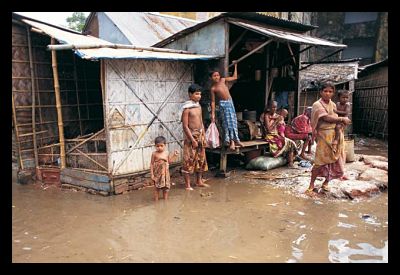
poverty in calcutta
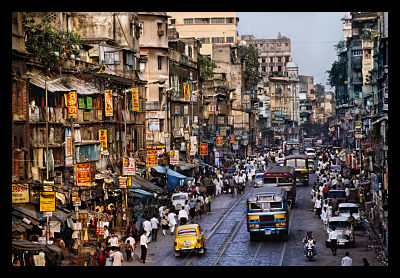
Calcutta is a region that is rich with history, culture and destitution. Calcutta was the former capital of British India, and is one of India’s largest cities and ports, for it is located on the east bank of the Hugli River. Calcutta proves to be the dominant urban center of Eastern India, as it acts as a point of commerce, transport and manufacture. The city holds a diverse range of people, as multiple Hindus, Muslims, Christians, Sikhs, Jains and Buddhists resides in this city.

Languages spoken In Calcutta range from Bengali, Urdu and Oriya to Tamil and Punjabi. Due to the wide range of people and activities, the population density is extremely high with over 4.5 million people, thus overcrowding is an immediate issue. The conflict in Bangladesh during the 1970s has also contributed to refugee colonies in the northern and southern suburbs. Migrants from less urban areas have migrated to Calcutta in search of employment as well, as it is a major export center for tea, petroleum, jute, coal, iron and manganese. Unfortunately, poverty in Calcutta is a huge problem and severe unemployment has been an issue since the early 1950s.

Calcutta has a housing shortage, and approximately one-third of the city’s population lives in poverty-ridden neighborhoods composed of a collection of huts standing on a plot of land that is at least one-sixth of an acre. These dwellings are often not ventilated, single-story rooms with few sanitary facilities, and very little open space.

India is growing into a substantial open-market economy; however, the economy includes a wide range of modern industries and services, including village farming, modern agriculture and handicrafts. The economic downturn in 2011 affected poverty significantly, and the inflation and high interest rates have yet to be alleviated. Furthermore, problems such as corruption, environmental degradation, overpopulation and increasing economic development contribute to the perpetuation of poverty while decreasing the capacity of the government to significantly alleviate any one problem.

According to USAID, “One-third of its population still lives on less than $1.25 per day. Projected to become the world’s most populous country by 2030, India faces tremendous energy, education, health, water and sanitation challenges. India is an important U.S. partner in maintaining regional stability, deepening trade ties and addressing development challenges in India and globally.”

The impact of overcrowding, displacement by natural disasters and lack of sustainable urban policies contribute to the marginalization of Calcutta’s poor; there is simply a lack of means for the homeless to progress and gain material wealth.

The importance of education and farmer organizations is critical for the alleviation of poverty in Calcutta.

– Neti Gupta

Sources: Encyclopedia Brittanica, News Action, USAID
Photo: Steve McCurry
February 22, 2015
https://borgenproject.org/wp-content/uploads/borgen-project-logo.svg 0 0 Borgen Project https://borgenproject.org/wp-content/uploads/borgen-project-logo.svg Borgen Project2015-02-22 11:00:082024-12-13 17:51:20Alleviating Poverty in Calcutta, India
Extreme Poverty, Poverty Reduction

Progress in Poverty Alleviation in Dhaka

poverty alleviation in dhaka
Bangladesh is a densely populated country in south-central Asia that encompasses a predominantly Muslim population. Dhaka is the capital of Bangladesh and is characterized by not only a dense population, but also social and economic diversity. It is one of the most industrialized cities in Bangladesh, with major industries specialized in leather goods, ceramics and electronic products.

Bangladesh is in a position to reach its Millennium Development Goals; however, it remains a low-income country with substantial inequality, deprivation and poverty. With over 45 million people in Bangladesh, approximately one third of the population lives below the poverty line with a majority living in extreme poverty. Poverty in rural areas is more severe, with 36 percent of the population in poverty whereas the urban centers are estimated at 28 percent. Plagued with an inadequate diet and massive food shortages, over half of the rural children are chronically malnourished and 14 percent suffer from acute malnutrition.

A large source of this poverty is due to a lack of economic opportunity and a reliance on farming. Agriculture accounts for less than 20 percent of the GDP; however, the farm sector is the lifeline of over 40 percent of the labor force. Due to urbanization and industrialization, the amount and availability of farmland is decreasing, and the land itself is less cultivable. A lack of technology and access to open bodies of water has affected the fisheries of Bangladesh as well.

A large source of poverty in Bangladesh has accumulated by overpopulation and climate change. Population density has placed significant pressure on the country’s natural resources, yet the urban and rural industries are unable to provide jobs for all Bangladeshi people; many citizens have been forced to seek work abroad. The impact of climate change has increased Bangladesh’s vulnerability, for it is one of the most flood-prone countries in the world. Severe flooding causes detrimental damage to crops, property and livelihoods. Monsoon floods, cyclones and storms significantly impact the rural poor, for their housing is less adequate than the urban centers, and the re-building process is longer, harder and increasingly difficult.

The World Bank released a poverty assessment of Bangladesh studying from 2000-2010 in June of 2013, and concluded with some striking results. The conclusion stated that the development gap ought to be addressed between the East and the West through increasing the economic opportunities for those in both regions. While Dhaka and several other eastern divisions have experienced growth, their Western counterparts have remained primarily stagnant and destitute. The growth of Bangladesh is occurring in an uneven fashion, and the impact of remittances, inadequate electricity, roads and access to markets further contributes to the unequal distribution to goods and resources.

The Borgen Project offers a variety of methods to contribute to poverty alleviation, albeit allowing all people to contribute to poverty alleviation in Dhaka, Bangladesh, as well as any other region that necessitates global attention.

– Neti Gupta

Sources: Encyclopedia Brittanica, Rural Poverty Portal, World Bank
Photo: MIT News Office

February 22, 2015
https://borgenproject.org/wp-content/uploads/borgen-project-logo.svg 0 0 Borgen Project https://borgenproject.org/wp-content/uploads/borgen-project-logo.svg Borgen Project2015-02-22 04:00:232024-05-27 09:23:19Progress in Poverty Alleviation in Dhaka
Extreme Poverty

Wastewater to Help Developing Nations

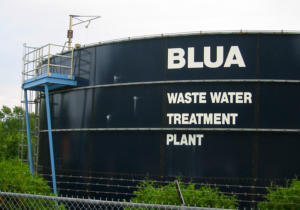
wastewaterThe idea behind a technology used to control pollution with algae may not be new but for the first time, scientists have found a way to efficiently implement this unusual system.  Aquanos Energy is now available and aims to produce high-quality water from liquid waste, using minimal amounts of energy.
The key to the advances made by Aquanos Energy lies in addressing algal blooms. Algal blooms are the result of an excess of essential plant nutrients into water. The higher concentrations of these nutrients cause an increased growth of algae and green plants. The term is often used when there is a rapid accumulation in the population of algae in a water system. As more algae and plants grow, others die and the dead matter becomes food for the bacteria. This results in what is often referred to as a “dead area.”

These blooms can be dangerous if the algae involved are toxic, however, researchers have come up with a novel way to control algal blooms and then use them to absorb these excess nutrients before they escape to other parts of the environment.

Researchers were unsure as to why other wastewater with algae treatments did not work in the past. They eventually came to the conclusion that the water which was used to test the methods in the past was simply not dirty enough. The recommendation reached as a result of these studies was that decontamination plants needed to be in shallow ponds and stretch over vast areas of land. Fortunately for people in dire need of fresh water all around the world, these recommended areas can be found in remote areas in developing nations.

Despite the impressive economic growth by developing countries such as India, problems produced by waterborne pathogens still amount to the cause of about 80 percent of illnesses. A huge part of this issue is the lack of wastewater facilities. Only about 20 percent of India’s communities had access to wastewater treatment in the past.

Traditional wastewater treatments require large amounts of oxygen for their biochemical activity. Supplying this amount of oxygen requires mechanical devices to provide air into the reactors to begin cleaning the water. Unfortunately, these devices demand huge amounts of electrical power, to which many developing countries do not have access.

A new technology developed by Aquanos Energy and further improved by World Water Works has succeeded in making conventional wastewater treatment plants available.

The technology’s concept captures the interdependent relationship between bacteria and algae. The process results in a 90 percent reduction in plant energy and reduces the operational costs of wastewater treatment systems by 40 to 60 percent.

The concept was proven effective and successful in a demonstration project and is now being launched in parts of India and Africa.

– Sandy Phan

Sources: Aquanos, World Water Works, Natural Resources Defense Council 
Photo: Flickr

February 1, 2015
https://borgenproject.org/wp-content/uploads/borgen-project-logo.svg 0 0 Borgen Project https://borgenproject.org/wp-content/uploads/borgen-project-logo.svg Borgen Project2015-02-01 04:00:182024-12-13 17:51:18Wastewater to Help Developing Nations
Extreme Poverty, Human Trafficking, Slavery

Causes of Human Trafficking

human trafficking

There are numerous causes of human trafficking, but the root of most causes is money. Reaping approximately $150 billion and victimizing close to 27 million people, human trafficking is the fastest-growing illicit industry in the world. It includes sex trafficking, child sex trafficking, forced labor, debt bondage, domestic servitude, forced child labor and the unlawful recruitment of soldiers. The common factor lurking behind the different causes of human trafficking is the victim’s vulnerability to exploitation.

Characterized by low costs and high returns, human trafficking is an extremely lucrative enterprise. Harvard’s Siddharth Kara discovered that the cost of today’s slaves is, on average, $420 and modern slaves can generate more than 500 percent in annual return on investment. In comparison, the cost of slaves in 1850, after adjusting for inflation, was between $9,500 and $11,000. During the time, the return on investment from a slave was significantly lower, around 15 to 20 percent in annual return on investment. Furthermore, traffickers face low risks, although more governments around the world are actively penalizing human traffickers, and have a steady stream of vulnerable people to exploit.


Poverty & Causes of Human Trafficking


Although the world successfully reduced global poverty by 35 percent in the past 27 years, 767 million people still live in poverty and make up a portion of the pool of those vulnerable to human trafficking. The structural causes of human trafficking are poverty, lawlessness, social instability, military conflict, natural disasters, weak law enforcement and racial and gender biases. These structural causes represent the broader, necessary requirement for human trafficking to thrive: vulnerability.

Many times, poor families will give their children away to traffickers posing as agents promising their children better lives. Refugee camps are prime locations for this kind of exploitation. Where displaced people lack many forms of proper care, shrewd traffickers build relationships with corrupt officials and freely prey on the weak.

In a more recent example, migrants who cross the Sahara to escape war and terrorism are often captured by traffickers in northern parts of Africa. The International Organization for Migration reported that many of these migrants are falsely promised jobs and then are sold publicly in Libyan slave markets. Many do not make it to Europe.

Human trafficking can happen anywhere, as long as the environment contains vulnerable conditions. The New York Times estimates that one-fifth of homeless youth are victims of human trafficking in the U.S. and Canada. In West Africa, traffickers pose as teachers and enslave optimistic students to become beggars. In 2015, the Associated Press discovered that young migrants and impoverished Thais were forced to catch seafood that later ended up in the world’s seafood supply, including on the shelves of America’s major retailers and supermarkets. Thai agents recruited children and the disabled, some of the most marginalized and vulnerable groups in the world.

Today, many countries are collaborating together to reduce the causes of human trafficking. The U.S. State Department Trafficking-in-Persons Report is the world’s most comprehensive resource on anti-trafficking efforts, including 188 countries and territories. Countries that fail to meet the report’s minimum requirements fall to tier three status, which can result in sanctions on the country. In 2016, Thailand was recognized for making significant strides in eliminating human trafficking.

Locally, ordinary people and nonprofits are continually impacting their communities. Nonprofits, such as Mango House in Chiang Mai, Thailand or FOREFRONT in India, continue to address these structural issues that breed vulnerability.

– Andy Jung
Photo: Flickr

January 27, 2015
https://borgenproject.org/wp-content/uploads/borgen-project-logo.svg 0 0 Borgen Project https://borgenproject.org/wp-content/uploads/borgen-project-logo.svg Borgen Project2015-01-27 16:00:142024-05-27 09:23:12Causes of Human Trafficking
Extreme Poverty, Food & Hunger, Global Poverty

Poverty in Singapore

Singapore has a population of almost 6 million people with a $297.9 billion GDP which is growing at the average rate of 3.9 percent every year. Singapore is one of the richest Asian countries per capita. In 2012, Singapore city was ranked as the sixth most expensive city to live in the world—after cities including Tokyo, Sydney and Oslo. Despite these statistics, one-tenth of Singapore’s population is currently living in poverty.

Today, the income inequalities have become more noticeable than ever. Unlike large countries such as China or India where there is a distinct difference between urban towns and rural villages, Singapore is a small island where both the wealthy and poor live in proximity to each other.

Out of 136 countries considered, Singapore currently ranks the 26th most income disparate. This makes them the second most income unequal country in Asia. According to the Singapore government, over 105,000 families live in poverty. This translates to about one in 10 family homes, or 378,000 people.

While Singapore has the highest concentration of millionaires in the world and has an average per capita income of over $52,000, there are 105,000 families left with $5 to spend per day and 114,000 individual residents making less than $805 per month.

Furthermore, the purchasing power of the poor has significantly dropped. It has been determined that the top 10 percent wager-earning households earn as much as 25 times more than the bottom 10 percent. While the top earners saw their real wages increase, those on the bottom saw their real wages decrease. It is further distressing to realize that the price of goods and services rose by 13.1 percent since 2012.

Poverty in Singapore Today

Singapore had never had an official poverty line to measure the rates of poverty in their country. However, the Singaporean Parliament chose to establish a rough definition after neighboring Hong Kong created guidelines to better identify and take strides towards relieving the financial stress those particular citizens.

Currently, while Singapore has no acceptable measure of poverty, they consider any four person household that makes less than $1,250 per month as somewhat struggling. The $1,250 figure is considered the average a four person household would typically spend on food, clothing and shelter per month.

Much of the country’s poverty is created by the influx of foreign workers taking blue collar jobs that were once held by native Singaporeans. Foreign workers unfortunately mean cheaper labor. There is always a cost to globalization, and this time it has affected Singaporeans in their own home.

Despite the large, wealthy buildings in Singapore, many are often struggling to find affordable housing. Those that cannot make it live in tiny government-owned apartments that are barely bigger than 13 square feet. In those cases, rent is paid to the government according to how much they can afford to pay, children from impoverished backgrounds attend school on fees subsidized by the government and food is provided not by the wages earned but by charitable donations.

While Singapore does not have abject poverty like one would find in various parts of Africa, being unable to afford living in your country is an issue that any government should address and find solutions.

– Christina Cho

Sources: BBC, Singaporeans Against Poverty, Al Jazeera, World Bank
Photo: SMU

January 22, 2015
https://borgenproject.org/wp-content/uploads/borgen-project-logo.svg 0 0 Borgen Project https://borgenproject.org/wp-content/uploads/borgen-project-logo.svg Borgen Project2015-01-22 04:00:002024-05-27 09:23:10Poverty in Singapore
Development, Extreme Poverty

PAK-Energy Saves Lives

PAK-Energy
In Pakistan, 16 million families don’t have access to clean-burning fuels for cooking and heating. The result of this is increased health problems, especially for women and children. A solution has been developed by PAK-Energy to help reduce this issue. Ranked in the list of “10 Incredible Tech Innovations from 2014 that will Benefit Humanity” on the ONE website, PAK-Energy knows where the need lies and seems to be working towards a better alternative for people living in Pakistan.

Ali Raza of PAK-Energy has created a small, sustainable domestic biogas unit that produces biogas good enough to take care of a family’s cooking and heating needs. This biogas unit will also help the family save money by reducing the cost of fuel. The other benefits of it include reducing waste production and producing nontoxic organic residues that can be sold later on for fertilizer.

PAK-Energy has a vision that is committed to becoming part of a green revolution for Pakistan. It does this by providing energy solutions that are more cost efficient and better for the community like the one mentioned above.

So what is biogas exactly? Organic waste like animal manure, kitchen waste, agricultural residue and even industrial waste can be turned into biogas. This biogas can be used for cooking, heating, lighting and electricity generation for families. There are also economic benefits to biogas such as employment generation, industrial growth, additional source of income with fertilizer, rural development, low cost product and create a sustainable economy.

PAK-Energy has received a lot of recognition for its progress in helping the poor for example in 2011, it received an invitation from the Prime Minister of Turkey to attend the Global Entrepreneurship Summit. Also within that same year, it one the first prize in the Young Entrepreneurs Business Challenge in Lahore, Pakistan.

So far, PAK-Energy has made a big impact by creating seven pilot projects in Lahore, Pakistan. This helps families save money and it helps the environment as well. As a plan moving forward, PAK-Energy has a goal of 25,000 units to be installed within the next five years.

– Brooke Smith

Sources: ONE, PAK Energy Solution
Photo: Flickr

November 15, 2014
https://borgenproject.org/wp-content/uploads/borgen-project-logo.svg 0 0 Borgen Project https://borgenproject.org/wp-content/uploads/borgen-project-logo.svg Borgen Project2014-11-15 04:00:092024-05-27 09:22:59PAK-Energy Saves Lives
Extreme Poverty, Food & Hunger, Global Poverty, Human Rights

ActionAid USA: Aiding Over 25 Million People

ActionAid USA
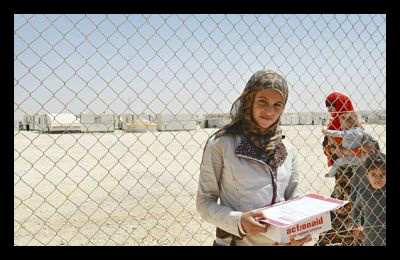
ActionAid USA is working to end global poverty and further enhance human rights. Operating in over 40 countries around the world, through their work the organization has been able to reach and impact the lives of approximately 25 million people.

ActionAid addresses a variety of issues that affect the daily lives of people in an assortment of countries. The organization works to change policies surrounding biofuels (in the hopes of stabilizing food prices) and to help countries in poverty adjust to the shifting changes in climate.

It also focuses its attention on aiding countries that are hit by natural disasters and do not have the resources to help themselves. In providing relief, they have been able to respond to 87 of these occurrences and help about 7 million people.

Additionally, the organization has been looking for new ways to empower women, engage the youth and improve the overall quality of life for people across the globe.

One of ActionAid’s most recent projects has been advocating for President Obama to approve the Assessing Progress in Haiti Act, which he signed on August 8, 2014.

In the aftermath of the Haiti earthquake in 2010, although billions of dollars were donated to Haiti, the money was not always  spent in the most efficient way. The new act  requires that the U.S. government submit an extremely detailed report stating exactly how the money donated to provide relief for the Haitian people is being spent.

The organization, however, is not so supportive of President Obama’s backing of the “New Alliance” plan regarding agriculture in Africa. It claims putting agriculture into the hands of big businesses will hurt smaller farming communities and increase poverty levels. Buba Khan, the ActionAid International Advocacy Officer, stated that, “Companies should be part of Africa’s cultural future, but profit should not be prioritized over people’s rights.”

 As part of their efforts to effectively combat global hunger and poverty, ActionAid works to make sure that their opinions on what the U.S. government is doing right and what the U.S. government is doing wrong are clearly expressed. 

– Jordyn Horowitz

Sources: Lee House
Photo: ActionAid USA

August 28, 2014
https://borgenproject.org/wp-content/uploads/borgen-project-logo.svg 0 0 Borgen Project https://borgenproject.org/wp-content/uploads/borgen-project-logo.svg Borgen Project2014-08-28 04:00:312024-12-13 17:53:55ActionAid USA: Aiding Over 25 Million People
Children, Education, Extreme Poverty, Nonprofit Organizations and NGOs

The Effects of Poverty on the Adult Brain

effects of poverty on the adult brain

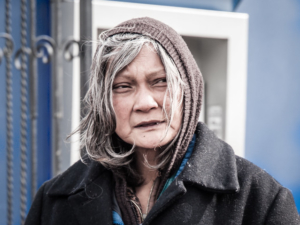
A recent study examined the effects of poverty on the adult brain and how it is influenced by childhood development. Results of the study showed that children from poor families performed more poorly on academic tests later in life. Furthermore, the study found that children who dealt with stress inducing factors, such as poor housing, in addition to poverty performed the worst of all tested subjects.

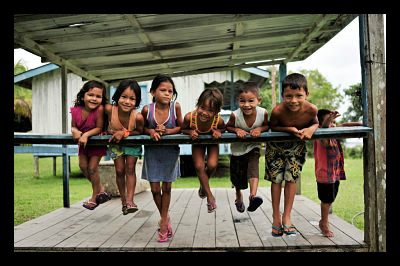
What does this mean for the future of children that are presently living in extreme poverty? With more than 1 billion children worldwide who lack one or more essential needs critical to survival and development, this can present even more problems in the future.

Most children living in extreme poverty face stress-inducing factors in addition to poverty. According to UNICEF, 101 million children currently do not attend primary school, and 148 million children under the age of 5 are underweight. A total of 270 million children worldwide do not have access to health care, and one out of five do not have access to clean drinking water, according to CARE, a nonprofit aiding in the fight against extreme poverty.

With more than 300 million children worldwide chronically hungry and 90 percent suffering from long-term malnourishment, these stressors can have lasting effects on their intellectual performance, and subsequently their financial stability, as adults.

For every additional year of primary school in developing countries, a girl’s wages are raised by 10 to 20 percent. This shows a direct correlation between education and income.

Children from poorer households are three times more likely to not attend school than those from wealthy homes. The largest population of non-attending school aged children is in sub-Saharan Africa, where 45.5 million children do not attend primary school. Much of this is caused by poverty, as many parents and families cannot afford required school fees and supplies to send their children to school.

Extreme poverty certainly involves several stress inducing factors besides lack of money, and these issues compound the problem of intellectual performance further. According to Professor K. Luan Phan, the author of the study, “the stress-burden of growing up poor may be an underlying mechanism that accounts for the relationship between poverty as a child and how well your brain works as an adult.”

By this same logic, helping these children out of extreme poverty today will lead to more intellectual men and women of tomorrow – men and women who will have the education needed to help other children escape poverty.

– Christopher Kolezynski

Sources: PsyBlog, The Borgen Project, CARE, Compassion
Photo: Flickr

July 28, 2014
https://borgenproject.org/wp-content/uploads/borgen-project-logo.svg 0 0 Borgen Project https://borgenproject.org/wp-content/uploads/borgen-project-logo.svg Borgen Project2014-07-28 15:33:412020-07-28 07:17:41The Effects of Poverty on the Adult Brain
Extreme Poverty, Food & Hunger

Global Poverty Statistics 2013

Global Poverty Statistics
According to the Global Poverty Statistics for 2013, nearly half of the world’s population, (that’s more than 3 billion people,) can live on less than $2.50 a day. More than 1.3 billion live in extreme poverty, which is less than $1.25 a day.

As of 2013, according to the United Nations Food and Agriculture Organization, there are roughly 870 million people on the planet who suffer from chronic malnourishment; this is a large part of what makes up global poverty. This means, that 1 in 8 people suffer from not having enough food to eat.

However, there was some good news for malnourished and impoverished people in Asia and the Pacific. Asia saw new socio-economic advancements in 2013, which decreased those who suffered from severe malnourishment by 30 percent.

Latin America and the Caribbean also saw improvements in 2013. The chronic malnourished of Latin America and the Caribbean fell from 65 million to 49 million. That means where there used to be 15 percent of the population suffering from undernourishment, there is now only 8 percent of the population suffering.

In Africa in 2013, however, the number of people hungry and chronically undernourished grew by 2 percent over the period of a year. The conditions of neither the African people nor their economic status has improved much in the past several years. In this case, the number of chronic malnourished people rose from 175 million in 2013, to 239 million in 2013.

More women are hungry than men; 60 percent of women go hungry to 40 percent of men. Many women who are pregnant will still be malnourished due to a lack of maternal care being offered in their countries. This means, annually, 240,000 women will die in childbirth.

According to global poverty statistics from UNICEF, one billion children in the world today are faced with extreme global poverty, and 22,000 will die each day due to the impoverished conditions of their countries.

Due to global poverty, many children and their families cannot afford vaccinations that would fight off and prevent disease. This means, thousands, if not millions, of children will die this year alone due to preventable causes such as malaria, polio or hunger.

As the World Food Programme said, “The poor are hungry and their hunger traps them in poverty.” Hunger is the number one cause of death in the world, killing more than HIV/AIDS, malaria and tuberculosis combined.

According to the global poverty statistics of 2013, malnourishment is one of the most dangerous things facing the world’s impoverished peoples. Starvation, malnourishment and unclean drinking water kill more people than almost anything else in the world. Every single one of those problems is preventable through advocacy and donations.

According to poverty facts, 1.6 billion people, or a quarter of the entire world’s population, lives without electricity in addition to facing extreme poverty and hardship.

The world’s poor should not have to live in a world of darkness and fear of where their next meal will come from. Every single problem the impoverished world faces can be prevented through advocacy and donations.

 — Cara Morgan

Sources: DoSomething, The Hunger Project, World Hunger
Photo: Flickr

June 18, 2014
https://borgenproject.org/wp-content/uploads/borgen-project-logo.svg 0 0 Borgen Project https://borgenproject.org/wp-content/uploads/borgen-project-logo.svg Borgen Project2014-06-18 20:06:332024-05-26 23:48:26Global Poverty Statistics 2013
Extreme Poverty, Food & Hunger, Gender Equality, Hunger

Carolina Maria de Jesus: Life in Favelas

The book begins: “July 15, 1955. The birthday of my daughter Vera Eunice. I wanted to buy a pair of shoes for her, but the price of food keeps us from realizing our desires. Actually we are slaves to the cost of living.”

Carolina Maria de Jesus’s diaries were edited into a book called “Room of Garbage” (1960), which quickly became one of the most successful books in Brazilian publishing history. In Sao Paulo, 10,000 copies of the book sold out in the first three days and it has since been translated into 13 different languages, becoming an international bestseller. Despite her success, within a few years she would return to living in the favelas and would later die in poverty.

Carolina was born in 1914 to a single mother in Minas Gerais. After attending primary school for two years, she was forced to drop out. She wrote her diary entries while living in the favelas (slums) of Sao Paulo with her three illegitimate children.

After World War II, the number of favelas exploded in major cities such as Rio de Janeiro and Sao Paulo due to mass migrations. Favelas were located on the unwanted lands left behind by urban development, often in the hills surrounding the cities.

A self-confident woman, Carolina refused to conform to social standards. She never married, and she expressed herself aggressively with sometimes racist views. Her diary entries describe her struggle to rise above poverty, living as one of the “discarded” and marginalized.

She collected paper, bottles and cans for coins, held various odds and ends jobs and scavenged in garbage bins for food to feed her children. Her stories, poems and diary entries deal with themes of poverty, loneliness, hopelessness and death. She writes of the racial injustice and discrimination heaped onto the poor and the blacks in the favelas.

She writes about political events and politicians with their empty promises to the urban poor, arguing, “Brazil needs to be led by a person who has known hunger. Hunger is also a teacher. Who has gone hungry learns to think of the future and of the children.” Many readers and critics were surprised that an uneducated black woman from the slums could eloquently write about politics, racism and gender discrimination.

In 1958, Audalio Dantas, a reporter for Diario da Noite, heard Carolina yell at a group of men on a playground, “If you continue mistreating these children, I’m going to put all of your names in my book!” Dantas convinced her to show him her writings and took them to his editor.

Although her book would reach international acclaim, many Brazilians criticized and ostracized her for her refusal to conform to social norms. Today, most Brazilians do not acknowledge her impact, only recognizing her as that “slum dweller who cracked up.” Why is Carolina Maria de Jesus important if her country refuses to remember her?

Her stories humanize poverty and hunger, bringing attention to the human lives behind facts and figures. She describes the pain of hearing her children ask for more food because they are still hungry. She writes about watching restaurants spill acid in the trashcans to prevent looting by the poor. In the favela, she had the “impression she was a useless object destined to be forever in a garbage dump.”

A quick search on the Internet can show you numbers and statistics about the millions of people living below the poverty line in the world, but Carolina’s words showed people “the meaning and the feeling of hunger, degradation and want.” To overcome global poverty and move forward with understanding and empathy, Carolina’s stories and the countless stories of others must not be forgotten.

– Sarah Yan

Sources: Latin American Studies, The Life and Death of Carolina Maria de Jesus, Notable 20th Century Latin American Women
Photo: Omenelick 2 Ato

May 14, 2014
https://borgenproject.org/wp-content/uploads/borgen-project-logo.svg 0 0 Borgen Project https://borgenproject.org/wp-content/uploads/borgen-project-logo.svg Borgen Project2014-05-14 04:00:032024-05-26 23:35:46Carolina Maria de Jesus: Life in Favelas
Page 4 of 10«‹23456›»

Get Smarter

  • Global Poverty 101
  • Global Poverty… The Good News
  • Global Poverty & U.S. Jobs
  • Global Poverty and National Security
  • Innovative Solutions to Poverty
  • Global Poverty & Aid FAQ’s
Search Search

Take Action

  • Call Congress
  • Email Congress
  • Donate
  • 30 Ways to Help
  • Volunteer Ops
  • Internships
  • Courses & Certificates
  • The Podcast
Borgen Project

“The Borgen Project is an incredible nonprofit organization that is addressing poverty and hunger and working towards ending them.”

-The Huffington Post

Inside The Borgen Project

  • Contact
  • About
  • Financials
  • President
  • Board of Directors
  • Board of Advisors

International Links

  • UK Email Parliament
  • UK Donate
  • Canada Email Parliament

Get Smarter

  • Global Poverty 101
  • Global Poverty… The Good News
  • Global Poverty & U.S. Jobs
  • Global Poverty and National Security
  • Innovative Solutions to Poverty
  • Global Poverty & Aid FAQ’s

Ways to Help

  • Call Congress
  • Email Congress
  • Donate
  • 30 Ways to Help
  • Volunteer Ops
  • Internships
  • Courses & Certificates
  • The Podcast
Scroll to top Scroll to top Scroll to top