• Link to X
  • Link to Facebook
  • Link to Instagram
  • Link to TikTok
  • Link to Youtube
  • About
    • About Us
      • President
      • Board of Directors
      • Board of Advisors
      • Financials
      • Our Methodology
      • Success Tracker
      • Contact
  • Act Now
    • 30 Ways to Help
      • Email Congress
      • Call Congress
      • Volunteer
      • Courses & Certificates
      • Be a Donor
    • Internships
      • In-Office Internships
      • Remote Internships
    • Legislation
      • Politics 101
  • The Blog
  • The Podcast
  • Magazine
  • Donate
  • Click to open the search input field Click to open the search input field Search
  • Menu Menu

Archive for category: Extreme Poverty

Information and news about poverty

Extreme Poverty, Global Poverty

How Extreme Poverty Decreased 80 Percent Since 1980

Poverty_foodIn a recent TED talk, Arthur Brooks, president of the conservative think tank, the American Enterprise Institute, discussed the need for ideology to be put aside when assisting those in destitution.

Originally from Seattle, Brooks dropped out of college early in his life to become a professional French horn player. His curiosity about a 1970’s National Geographic cover led him to research the fight against poverty.

He found that “there’s been an 80 percent decline in the world’s worst poverty,” which can be defined as those living on less than a $1.25 a day. Brooks attributes the improvement of 2 billion lives to the economic power provided by the capitalist system, a “policy” that both conservatives and liberals can get behind.

In his presentation, he highlighted five main reasons why capitalism provides the best environment for growth and prosperity: globalization, free trade, property rights, rule of law and entrepreneurship. All of these aspects of a free market emphasize economic freedom in the lives of the people who live under it.

“Capitalism is not just about accumulation,” he said during his talk. “At its best, it’s about aspiration.” Most important of all, economic freedom is something that both parties can get behind and support. It was, after all, President Obama who uttered the conservative’s favorite quote: “Free markets have created more wealth than any system in history. They have lifted billions out of poverty.”

While studies have shown that liberals and conservatives focus on different political topics, their affinity for free markets should still unite them against poverty and for freedom. Psychologists have identified a phenomenon called “political motive asymmetry” where individuals think their ideology is motivated by love and the opposite is motivated by hate.

Evidence provided by a U.N. study and a Fraser Institute study indicates that poverty decreases when economic freedom increases. More specifically, the U.N. report highlighted a 25 percent decrease in the number of people in extreme poverty between 1981 and 2005. At the same time, the Fraser Institute reported a 29 percent increase in economic freedom from 1980 to 2013.

Brooks continued his speech by challenging both liberals and conservatives to embrace arguments that they might typically be opposed to hearing. “I’m asking you and I’m asking me to be the person specifically who blurs the lines, who is ambiguous, who is hard to classify,” he says. Ending the divisiveness of the party system is only possible with divergent ideological thinking.

The current political environment in the U.S. can often limit the government’s ability to fight global poverty. Bipartisanship means compromise. In order to assist millions of those in extreme poverty, the mobilization of relief must come from both sides with productive dialogue and a collaborative attitude.

– Jacob Hess

Photo: Flickr
May 3, 2016
https://borgenproject.org/wp-content/uploads/borgen-project-logo.svg 0 0 Borgen Project https://borgenproject.org/wp-content/uploads/borgen-project-logo.svg Borgen Project2016-05-03 01:30:292024-12-13 17:54:19How Extreme Poverty Decreased 80 Percent Since 1980
Extreme Poverty, Global Poverty

Global Poverty Rates Drop Below 10 Percent

Global_Poverty_Rates_Drop
A new report by the World Bank has some promising news. For the first time ever, they are expecting to see extreme global poverty rates drop below 10 percent.

Jim Yong Kim, the World’s Bank president, is delighted by the positive news that was published last month.

“This is the best news story in the world today,” he said. “These projections show us that we are the first generation in human history that can end extreme poverty.”

While the numbers are only projections, they are a step in the right direction to champion extreme poverty, an issue that continues to plague millions of people worldwide.

Extreme poverty was once defined as living on or below $1.25 a day. However, the World Bank has adjusted the daily wages and increased that amount to $1.90. The change reflects the cost of living differences across countries while “preserving the real purchasing power of the previous yardstick.”

In 2012, it was estimated by the World Bank that nearly 902 million people lived at or below the poverty line. That number equated to 12.8 percent of the population. Now, in 2015, that number has predicted to drop to 9.6 percent, or 702 million people.

The World Bank has attributed declining poverty to “healthy economic growth rates in emerging markets”. Investments in the realms of education and health are also contributors.

Last month, the United Nations, in collaboration with 193 countries, created a target to eliminate poverty by 2030. Kim called the goal “a highly ambitious target”. He warns that sluggish economic growth, coupled with conflicts and volatile financial markets will most likely stunt that wishful target.

“But it remains within our grasp, as long as our high aspirations are matched by country-led plans that help the still millions of people living in extreme poverty,” he added.

According to the World Bank, approximately half of the world’s poor will come from conflict-infected countries by the year 2020. As it currently stands, Sub-Saharan Africa hosts half of the world’s poor, an issue that the World Bank calls “a growing concern”.

“While some African countries have seen significant successes in reducing poverty, the region as a whole lags the rest of the world in the pace of lessening poverty,” they add.

Kaushik Basu, the chief economist for the World Bank says that the future of global poverty still holds some uncertainty, stating, “There is still some turbulence ahead.”

However, that “turbulence” remains overshadowed by the fact that global poverty has been slashed in half since 1990, a statistic that leaves much to be celebrated.

– Alyson Atondo

Sources: CNN, The Guardian, Al Jazeera, Time
Photo: Pixabay

November 10, 2015
https://borgenproject.org/wp-content/uploads/borgen-project-logo.svg 0 0 Borgen Project https://borgenproject.org/wp-content/uploads/borgen-project-logo.svg Borgen Project2015-11-10 01:30:292024-12-13 18:05:20Global Poverty Rates Drop Below 10 Percent
Extreme Poverty, Global Poverty

End Poverty Day: World Bank Group President Visits Ghana

Ghana and the world bank
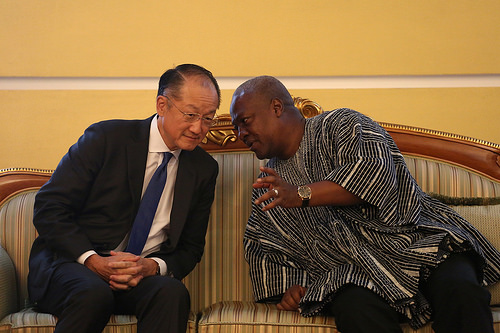
On October 16, World Bank Group President Jim Yong Kim visited Ghana to participate in high-level talks, launch a report on poverty in Africa, highlight Ghana’s progress toward ending extreme poverty and commemorate End Poverty Day.

Earlier this month, the World Bank released a report showing that the percentage of people living in extreme poverty around the world will have fallen to 9.6 percent  in 2015, which is below 10 percent for the first time.

With this percentage, the Bank estimates that 702 million people still live in extreme poverty today around the world. Jim Yong Kim’s visit to Accra is part of several activities focusing on the World Bank’s goal of ending extreme poverty by 2030.

Several African countries, such as Ghana, are successful in reducing extreme poverty. From 1991/92 (under the $1.90 poverty line) to 2005/06, Ghana reduced extreme poverty from 47.3 percent to 25.2 percent.

However, the whole region lags behind the rest of the world in progressing toward the elimination of poverty. Based on an extreme poverty line of $1.90 a day, Sub-Saharan poverty fell from 56 percent in 1990 to 35 percent from 1990 to 2015.

Rapid population growth remains a key obstacle in many countries’ progress.

Firstly, joined by Ghanaian President John Dramani Mahama and other development partners as well as civil society leaders, private sector representatives and student leaders, Dr. Kim visited “End Poverty Day” in Jamestown, Accra to launch the regional flagship report, “Poverty in a Rising Africa,” with the other participants.

The content of his report includes whether Africa’s growth covers enough citizens on the continent, the challenges related to poverty data and updates on poverty and other trends related to human well-being.

In the afternoon at the University of Ghana, Legon, Kim also participated in a “Shared Prosperity Forum,” along with government ministers from Africa, civil society and private sector leaders, to share thoughts on what it will take to end extreme poverty in Africa and the rest of the world by 2030. Participants explored Ghana’s own path toward prosperity.

The World Bank’s current portfolio for Sub-Saharan Africa consists of $11.6 billion for 103 projects, including $1.2 billion in IBRD loans and $10.4 billion in IDA commitments.

IFC is a member of the World Bank Group focused on the private sector. It has a total committed investment portfolio of $10.3 billion in Sub-Saharan Africa. IFC also offers advice to governments and businesses to emphasize the roles of private sectors in the global effort to end extreme poverty and boost shared prosperity.

MIGA, the political risk insurance and credit enhancement arm of the World Bank Group, has a gross exposure of $3.3 billion in the region. Ending poverty is a goal that the World is fighting for.

– Shengyu Wang

Sources: World Bank, GBN
Photo: Flickr

October 23, 2015
https://borgenproject.org/wp-content/uploads/borgen-project-logo.svg 0 0 Borgen Project https://borgenproject.org/wp-content/uploads/borgen-project-logo.svg Borgen Project2015-10-23 01:30:012020-06-25 19:49:34End Poverty Day: World Bank Group President Visits Ghana
Extreme Poverty, Global Health, Global Poverty, Health

Health Poverty Action: Combating Poverty and Poor Health

health_poverty_action
Extreme poverty and poor health conditions are inextricably linked. According to the World Health Organization, about 1.2 billion people worldwide are currently living on less than $1 a day, which places them in the extreme poverty category.

This is why it is important to tackle the causes of poor health, which will in turn help to drastically improve poverty levels and vice versa.

In developing areas of the world, poverty increases people’s chances of getting sick due to poor nutrition, overcrowding and a lack of clean water. Some people are forced to put themselves into dangerous, health-hazardous situations in order to provide for and keep their families safe.

On the flip side, poor health causes an increase in poverty when a family loses a source of income due to an inability to work, perhaps causing them to sell assets such as livestock or equipment and tools essential to their work.

This will significantly decrease a family’s ability to fight poverty, especially during times of extreme political, economic or natural shocks.

In order to combat and tackle both issues at once, which will significantly reduce the prevalence of both extreme poverty and poor health conditions, Health Poverty Action, a nonprofit dedicated to fighting both poverty and poor health, suggests several things:

1. Aid should be more long term and have a stable, predictable structure. When tackling health concerns, the focus should be on improving the country’s health system and not just on one specific disease.

2. There is a need for more health workers to be trained in their own countries and to stay where they are most needed. Wealthier countries should avoid taking away sorely needed health professionals.

3. Emphasis needs to be placed on prioritizing health and reasonable global health coverage.

4. Issues such as nutrition, education, clean water and sanitation much be addressed.

5. It is important that there be affordable, easy access to a variety of medicine for the poor.

All around the world, organizations like Health Poverty Action are already enacting change.

Along the border between China and Burma, there is a high risk of malaria infection. Health Poverty Action is giving communities their access to treatments and prevention. A similar story is true of TB in Cambodia and HIV in South Omo, Ethiopia.

The poverty rate has been steadily decreasing but it is time for the world to take the next big steps as one. By implementing initiatives to address the points above, we have a true shot at ending global poverty and poor health conditions.

– Drusilla Gibbs

Sources: Health Poverty Action 1, Health Poverty Action 2, World Health Organization, Inequality Watch
Photo: Pixabay

October 19, 2015
https://borgenproject.org/wp-content/uploads/borgen-project-logo.svg 0 0 Borgen Project https://borgenproject.org/wp-content/uploads/borgen-project-logo.svg Borgen Project2015-10-19 01:30:472024-12-13 18:05:15Health Poverty Action: Combating Poverty and Poor Health
Extreme Poverty

Could You Live on a Dollar a Day?

dollar bill
Could you live on a single dollar or less a day? That is what four college students set out to test for two months in rural Guatemala in 2010.

Two Months On a Dollar a Day

As part of their venture, they filmed their time in Guatemala and then released a documentary entitled “Living On One Dollar” that depicts their struggle living in poverty. The project was pioneered by Chris Temple and Zach Ingrasci and co-produced by Ryan Christoffersen and Sean Leonard.

The film won Best Documentary at the Sonoma International Film Festival and received endorsements from Nobel Laureate Muhammad Yunus, USAID Administrator Rajiv Shah, and the Director of the Hunger Games, Gary Ross.

In the documentary, the four allotted $1 a day per person and combined their entire budget into a single pool. Then they divided the total into smaller amounts ranging from zero to nine that would then be randomly selected as the amount of money they would receive each day.

This meant that some days they could earn $6 to spend on food, investing or saving, but it also meant some days they would be left with nothing. Throughout the movie, the four experienced intense hunger and parasites, but also found a connection with their Guatemalan neighbors.

A Film That Inspires

The project has been inspirational to others. Live Below the Line is an annual fundraiser where people spend only $1.50 on food and drink for a day. In 2015, it raised close to $480,000 for poverty alleviation programs in Peña Blanca and the surrounding villages.

In total, this year Live Below the Line has raised nearly $3 million for anti-poverty projects across the world, according to the group’s website.

Living On One, a non-profit directly linked to the film, accepts donations to help raise awareness about extreme poverty through distribution of the documentary.

In addition, the organization created a new video series and curriculum resources about issues of global poverty and to build an online platform to allow people to participate in the fight against extreme poverty through partner organizations.

A Lifetime On a Dollar a Day

Still the question remains, what does it mean for people to live consistently on a dollar a day? While $1 in America buys much less than the same amount in Guatemala, due to relative buying power and costs of living, a dollar a day is not nearly enough in Guatemala to acquire an adequate standard of living.

For example, even though the first six years of public schooling in Guatemala are free and mandatory, many families cannot afford the cost of supplies and transportation required for children to attend school.

Even if they could, many families need their children to stay home to work to provide an income. As a result, only three in ten children actually make it through the sixth grade.

– Brittney Dimond

Sources: IMDB, Global Education Fund, Global Envision, Living On One, Huffington Post
Photo: DORIGAMIFLOWER

October 13, 2015
https://borgenproject.org/wp-content/uploads/borgen-project-logo.svg 0 0 Borgen Project https://borgenproject.org/wp-content/uploads/borgen-project-logo.svg Borgen Project2015-10-13 01:30:012024-12-13 18:05:09Could You Live on a Dollar a Day?
Extreme Poverty, Global Poverty

Overcoming Extreme Poverty by Addressing Income Inequality

Income_Inequality
While world leaders have agreed to end global poverty by 2030, more than 200 million people worldwide will be trapped unnecessarily by income inequality unless governments find solutions.

Oxfam, an international organization that works to find solutions for poverty have reported that income inequality will continue to increase with the addition of the newly approved Sustainable Development Goals.

Research conducted by the Overseas Development Institute found that 79 percent of people in developing countries live in a nation where the incomes of the bottom 40 percent grew slower than the average during the period of the Millennial Development Goals.

The slow growth of income is due to the richest one percent’s fast earning potential. If trends continue, the richest one percent will own more wealth than the rest of the world’s population combined.

“Wealth does not automatically trickle down to those who need it most. It’s up to politicians to ensure everyone gets a fair share of the benefits of growth,” said Winnie Byanyima, Executive Director of Oxfam International.

While the past 15 years have seen the fastest reduction of poverty in human history, world leaders must act.

Some solutions to income inequality include:

  • Fair Taxes: Rules must be enacted to ensure everyone, including rich and multi-billion dollar corporations, pay their fair share.
  • Invest: Money used in unfair and broken tax systems should be invested toward health care, schools and public transportation to significantly change the lives of the world’s poor.
  • Fair Pay: People who work hard should have fair pay no matter what gender. This could give people a chance for the world’s poor to escape poverty when on the same playing field.
  • Financial Resources: People have the right to understand how to save and invest money wisely. Through financial mentors, the world’s poor can learn how to eventually become part of the world’s middle class.

Through government actions and the eradication of income inequality, the Sustainable Development Goals have a better shot of completion by 2030.

– Alexandra Korman

Sources: InfoZine, OxFam, Voice of America
Photo: Wikemedia

October 10, 2015
https://borgenproject.org/wp-content/uploads/borgen-project-logo.svg 0 0 Borgen Project https://borgenproject.org/wp-content/uploads/borgen-project-logo.svg Borgen Project2015-10-10 03:08:122024-05-27 09:28:08Overcoming Extreme Poverty by Addressing Income Inequality
Extreme Poverty, Global Poverty, Hunger

The Poorest City in the World

The Poorest City in the World

A poor city in a wealthy country: Monrovia, Liberia.

In examination of the ten poorest cities in the world, all ten of them are in Africa. In a Western African country on the coast lies a city full of slums. Theorists suggest the poorest city in the world is in Monrovia, the capital city of Liberia. The population of Liberia is currently 4,294,000 and is one of the least populated countries in Africa. It is considered the fifth poorest country, despite being the oldest independent country.

The population suffers from poverty and hunger despite numerous political administrations and new policies being introduced. According to the United Nations’ The Food and Agriculture Organization, Liberia is a low-income and food-deficit country. Over half of the country’s population is food-insecure or highly vulnerable to food insecurity.

Twenty-nine percent of the population of the country live in Monrovia, for a total of 1,010,970 residents. At the turn of the century, 80 percent of the people living in the city were living in poverty. The gross national income is estimated at $790 USD annually. However, eighty-five percent of the population lives on less than one USD per day.

Conflict with q neighboring country, Sierra Leone, has had a major impact on the city. Despite the civil war that ended twelve years ago, the city still endures the effects. The constant turmoil between the two countries has caused the educational system to be broken down, abject poverty and inadequate educational access in these slums. The children of Monrovia continue to be subjected to the cycle of both poverty and illiteracy.

On the outskirts of the city, the agricultural sectors have major challenges that compound its poverty. There are low yields as a result of technological disadvantages. Inadequate roads and little to no access to markets limit the possible value chains. A majority of the people who live in these rural areas suffer from poverty.

In Monrovia, basic necessities are rarely available. Electricity and water resources are scarce and at best unreliable. Both the health care and social services are lacking. The GDP, the health expenditures is ten percent and the amount of health expenditures per capita is eight dollars USD annually. Slums are rampant with disease due to the flooding that has occurred. The streets of Monrovia are filthy, dangerous and unfinished, making it very unsafe to drive on them. The city lacks infrastructure and public transportation despite being the capital city. In Monrovia, the crime index is 82.81 and has a safety index of 17.19. Over the last three years, the crime rate has increased in the city.

Liberia is a country that is the home of many precious gem and diamond mines. Violent acts and war crimes are ongoing for power struggles over their control. This has left the city war-torn and vulnerable as a result of the exploitation of no true supply chain. The resource-rich country suffers from the pandemic of poverty and hunger. Monrovia is a city that depicts global poverty’s existence even in a naturally wealthy country.

– Erika Wright

Sources: AllAfrica, Nations Encyclopedia, NUMBEO, Rural Poverty Portal, The Richest, WHO
Photo: Flickr

October 1, 2015
https://borgenproject.org/wp-content/uploads/borgen-project-logo.svg 0 0 Borgen Project https://borgenproject.org/wp-content/uploads/borgen-project-logo.svg Borgen Project2015-10-01 03:57:492020-06-29 11:40:13The Poorest City in the World
Development, Extreme Poverty, Food & Hunger, Global Poverty, Poverty Reduction

How the UN Fights Global Poverty

How the UN Fights Global Poverty2015 represents an important year for the United Nations to eradicate extreme poverty and hunger.

Among the goals that the United Nations has to eradicate poverty and hunger are: to reduce by half the amount of people that make less than $1 per day, accomplish employment and work for everyone including minorities such as women and to reduce by half the amount of people who are suffering from hunger.

The United Nations partners with different organizations and foundations in order to achieve these goals to eradicate poverty.

The Zero Hunger Challenge, the Scaling Up Nutrition (SUN) Movement and the UNDP-IKEA Foundation are three movements that the United Nations are partnering with.

1. Zero Hunger Challenge

U.N. Secretary-General Ban Ki-moon gives the invitation to every country to work for the future, a future in which every person has adequate nutrition and doesn’t lack food.

The Zero Hunger Challenge involves having no stunted children, 100 percent access to adequate food, sustainable food systems, 100 percent increase in smallholder productivity and zero food waste.

According to this challenge, the investment in agriculture, rural development and equality of opportunity helps to eradicate hunger.

This challenge promotes different strategies and cooperation in order to strive for results that combat hunger.

2. Scaling Up Nutrition (SUN) Movement

The principle of this movement is that everyone has the right to good nutrition and food. This movement is supported by donors, people from the government, the United Nations and various others.

This movement seeks to address malnutrition by activities such as implementing programs and collaborations.

The principles of engagement are to be transparent and honest about the impact that collective action has, bring solutions that can be proven and interventions to scale, have a commitment to support the rights and equity of all human beings, resolve conflicts if they arise, be responsible so stakeholders can feel collectively accountable to the commitments, establish priorities and be communicative toward what works and what doesn’t.

3. UNDP-IKEA Foundation

This is a foundation that is benefiting 50,000 women from India.

This foundation has helped 9,000 dairy producers to form a company through provided financial literacy training. Profits also double within a year through the participation of the members.

The United Nations also contributes with other organizations, such as the UNDP and Brazil’s Natura Cosméticos, which brings training to beauty advisors in areas that vary from direct sales to customer training.

It is clear that the United Nations uses different methods to obtain results in the different humanity issues that it focuses on.

While they address different issues such as climate change, terrorism, food production, human rights, health emergencies and many others, global poverty and the eradication of extreme poverty and hunger is under the Millennium Development Goals that the United Nations has, and partnering with different associations, movements, organizations and foundations has resulted in a way to reach for success in addressing these issues in the year of 2015.

– Diana Fernanda Leon

Sources: United Nations 1, United Nations 2, Scaling Up Nutrition
Photo: Flickr

September 3, 2015
https://borgenproject.org/wp-content/uploads/borgen-project-logo.svg 0 0 Borgen Project https://borgenproject.org/wp-content/uploads/borgen-project-logo.svg Borgen Project2015-09-03 05:09:282024-05-27 09:24:20How the UN Fights Global Poverty
Development, Extreme Poverty, Global Poverty

New Anti-Poverty Initiative for the Middle East

anti-poverty
The Islamic Development Bank and the Bill & Melinda Gates Foundation have teamed up to launch a new $2.5 billion sharia-compliant fund targeting extreme poverty in the Middle East. By partnering with the world’s richest charitable institution, the IDB hopes to successfully combat poverty in the Islamic world.

Although the Middle East is home to some of the richest countries worldwide, it also includes some of the world’s poorest, such as Burkina Faso and Chad. Additionally, some countries show a combination of extreme wealth and poverty, such as Egypt and Indonesia. Others are known simply for their extreme violence, like Yemen and Syria.

Without the assistance of a strong partner, regions like these would normally have a much harder time bringing in grants and skills into their territories. Key players hope that the various connections established through the partnership will prove to be even more effective than the partnership itself.

Hassan Al Damluji, head of Middle East Relations at the Bill & Melinda Gates Foundation, recently discussed the Lives and Livelihoods Fund in an interview, stating, “We are engaging Gulf donors who will be around and are sustainable, unlike the Foundation, which is a family fortune and is thus finite.”

Al Damluji went on to explain that one of the key features of the fund is its encouragement of investment from the poor countries themselves. Another essential working part of the fund is that it gives aid linked to the loans taken by recipient countries, so these countries are held accountable for their own development.

The plan is for the fund to finance projects in four different areas: agriculture and food security, primary health care, infectious disease control and eradication, and basic infrastructure. Al Damluji explained that all of these areas represent major drivers of inequality across the globe.

The overarching goal is to maximize the beneficiaries of this partnership, regardless of race, country or religion. With the additional long-term goal of sustainability in mind, the fund will be strategically housed in and administered by the IDB.

So far, the IDB has provided $2 billion, and a remaining $500 million will come from donors over the next five years in the form of grants. Both partners will work together to determine which projects deserve priority. The partners will meet twice annually in order to ensure cooperation and coordination.

The reasoning behind the choice of the four main project areas is that over time, effects like improved health and increased farmer productivity will work to boost economies. The key to understanding the way the new fund will work is to operate from a big picture perspective and to take into account its long-term consequences.

This will be the first major fund of its kind to actually be based in the Middle East. Al Damluji boasted that the fund will also have a bank of shareholders that are not OECD countries and not traditional donors.

Both the IDB and the Bill & Melinda Gates Foundation understand the necessity of a well-functioning partnership in order to accomplish real change in the Middle East. The new partnership is more important than the fund itself and cooperation is absolutely necessary.

Additionally, both partners understand that two minds are better than one—especially when dealing with such a deeply rooted, complex problem. Together, the IDB and the Bill & Melinda Gates Foundation have raised the bar in the global anti-poverty fight.

– Sarah Bernard

Sources: Nonprofit Quarterly, Gulf News
Photo: Time USA Newsweek

August 13, 2015
https://borgenproject.org/wp-content/uploads/borgen-project-logo.svg 0 0 Borgen Project https://borgenproject.org/wp-content/uploads/borgen-project-logo.svg Borgen Project2015-08-13 01:30:492024-06-05 03:46:41New Anti-Poverty Initiative for the Middle East
Developing Countries, Economy, Extreme Poverty, Global Poverty

Poverty in Lahore, Pakistan

Poverty-in-Lahore-Pakistan
Pakistan is among the nations in the developing world that has made substantial progress in poverty reduction. The amount of people living in extreme poverty has gone down considerably over the years and continues to decrease today. What drives poverty reduction in Pakistan, especially in large areas such as Lahore, is income growth. Through a combination of support programs and reforms, as well as income equality, Pakistan was able to translate income growth to poverty reduction.

According to the World Bank Group, there are over 50 million less people living in poverty in present day Pakistan than there were in 1991. Additionally, the percent of people living on less than a dollar and a quarter a day fell from 66.5 percent to 12.7 percent. However, although extreme poverty in the region has been reduced, there is still over half of the population living under two dollars a day. Despite progress made in Pakistan, there still remains a high number of Pakistanis in poverty and many more who are vulnerable to falling back into poverty, especially in large cities such as Lahore.

Lahore, a large region in Pakistan, is considered to be one of the most populated urban areas in the world and is one of the largest cities in the Islamic world. According to Index Mundi, as of January 2015, Lahore has an estimated 10 million people living in the region. The size of the region poses a bilateral problem; on the one hand, Lahore’s population and size contributes to its wealth and prosperity, while on the other hand, with a large city comes overpopulation and underdevelopment. Large cities such as Lahore often have another side to their urban development: the underdevelopment of parts of the region called the slums. Similar to the slums in various parts of India, Indonesia and Kenya, slums in Lahore are densely populated with areas lacking in basic necessities such as clean water, electricity, security and health care.

In Lahore, 30 percent of the region is considered to fall into the category of slums; however, the percentage does not take into account the amount of unregistered slum neighborhoods in the city. These slums are formed by low income communities that do not have the means to live in proper housing in the city, and they are a byproduct of over population, economic, political and social inequalities as well government intervention. Slums in Lahore are also a consequence of people moving from rural areas around Pakistan to the city in hopes of attaining a better life. The reality, however, reveals that many who move into the city have a difficult time securing employment, and eventually settle in the slum communities as a result. Health care, education, and basics such as sanitation and electricity, are extremely limited in the slums of Lahore and further contribute to low living conditions.

A solution that can bring poverty rates down in Lahore is to have more government involvement through political laws and reforms that pay special attention to these areas. More government interference and aid to counteract inequalities can be the beginning of reducing poverty in the slums of Lahore.

– Nada Sewidan

Sources: The World Bank, TribuneAcademia.edu
Photo: Pakistan Defence

June 6, 2015
https://borgenproject.org/wp-content/uploads/borgen-project-logo.svg 0 0 Borgen Project https://borgenproject.org/wp-content/uploads/borgen-project-logo.svg Borgen Project2015-06-06 12:00:572020-07-17 20:36:39Poverty in Lahore, Pakistan
Page 3 of 10‹12345›»

Get Smarter

  • Global Poverty 101
  • Global Poverty… The Good News
  • Global Poverty & U.S. Jobs
  • Global Poverty and National Security
  • Innovative Solutions to Poverty
  • Global Poverty & Aid FAQ’s
Search Search

Take Action

  • Call Congress
  • Email Congress
  • Donate
  • 30 Ways to Help
  • Volunteer Ops
  • Internships
  • Courses & Certificates
  • The Podcast
Borgen Project

“The Borgen Project is an incredible nonprofit organization that is addressing poverty and hunger and working towards ending them.”

-The Huffington Post

Inside The Borgen Project

  • Contact
  • About
  • Financials
  • President
  • Board of Directors
  • Board of Advisors

International Links

  • UK Email Parliament
  • UK Donate
  • Canada Email Parliament

Get Smarter

  • Global Poverty 101
  • Global Poverty… The Good News
  • Global Poverty & U.S. Jobs
  • Global Poverty and National Security
  • Innovative Solutions to Poverty
  • Global Poverty & Aid FAQ’s

Ways to Help

  • Call Congress
  • Email Congress
  • Donate
  • 30 Ways to Help
  • Volunteer Ops
  • Internships
  • Courses & Certificates
  • The Podcast
Scroll to top Scroll to top Scroll to top