• Link to X
  • Link to Facebook
  • Link to Instagram
  • Link to TikTok
  • Link to Youtube
  • About
    • About Us
      • President
      • Board of Directors
      • Board of Advisors
      • Financials
      • Our Methodology
      • Success Tracker
      • Contact
  • Act Now
    • 30 Ways to Help
      • Email Congress
      • Call Congress
      • Volunteer
      • Courses & Certificates
      • Be a Donor
    • Internships
      • In-Office Internships
      • Remote Internships
    • Legislation
      • Politics 101
  • The Blog
  • The Podcast
  • Magazine
  • Donate
  • Click to open the search input field Click to open the search input field Search
  • Menu Menu

Archive for category: Developing Countries

Information and stories about developing countries.

Children, Developing Countries, Development, Education, Global Poverty

Venezuela’s Education System

Venezuela's Education System
A number of factors are greatly affecting Venezuela‘s education system. The Venezuelan government has always believed that every citizen has the right to free education. When oil prices drove Venezuela’s economy, so too was its educational system. Venezuela used to rank as one of the highest in education in Latin America until 2010 when it became number six in the region. Now the country is undergoing one of the worst humanitarian crises and it is affecting Venezuela‘s education system.

Economic and Political Collapse

In the 20th century, modernization and urbanization in Venezuela brought many improvements to its educational system. Former President Hugo Chavez used the rise in oil prices to fund the education system, train teachers and fund laptop computers. Now that the gas prices have dramatically fallen, not only has the economy gone down with it, the corruption and mismanagement of the government have also affected the quality of Venezuela‘s education system.

High Dropout Rates and Limited Faculty Members

Several students living in Venezuela have missed more than 40 percent of class due to school cancellations, strikes, protests or vacation days. That is equal to missing more than half of their mandatory instruction school days. There has been a “massive desertion of students” in every level of education. Yearly dropout rates have doubled since 2011 and in 2017 about 50 percent of students in three public universities located in Táchira dropped out. About one-fourth of the students do not attend school at all.

Massive numbers of teachers have left their jobs because of their low-wage salary of $6-$30 a month. About 400 employees have quit one of Venezuela’s top science universities, Simon Bolivar University, in the past 2 years. Some teachers dedicate their time to attending strikes and protests in the hopes of changing the education system, which results in them only working 10 days out of the month. Teachers also miss school when they encounter long food lines to feed their families, and some fear that someone will shoot, murder or rob them on campus when they go to work. Robberies in universities have increased by 50 percent in the last three years.

Lack of Food, Water, Electricity and Supplies

“There is only one bathroom for 1,700 children, the lights are broken, there is no water and the school meals are no longer being served,” said a teacher working in one of Venezuela’s middle-class public schools. The scarcity of water, food in cafeterias and electricity has caused schools like Caracas Public High School to close down for weeks at a time. Teachers are even trading passing grades for milk and flour because of the scarcity of food. Students are passing out every day at physical education classes due to their empty stomachs and broken school kitchens.

Budget cuts on school funding are the major reason why schools lack the supplies they need. In 2019, the University of Central Venezuela received only 28 percent of its “requested annual funding.” This is less than the 40 percent it received in 2014 and estimates determine that it will decline to 18 percent next year. These budget cuts result in “broken toilets, leaking ceilings, unlit classrooms and cracked” classroom floors. The education budget now prioritizes Bolivarian Universities due to the fact that they teach 21st-century socialism.

Lack of Intellectual Freedom

About 15 years ago, during former President Hugo Chavez’s presidency, the Bolivarian University of Venezuela opened. This is a higher education institution for underprivileged and poor civilians that are suffering due to Venezuela’s situation. This developed into a new education system the government created that stands by “the ideology of its socialist revolution.” Since the government has taken control over the university’s autonomy, lack of academic thought and intellectual freedom is prevalent. Since private companies now cannot fund universities as of 2010, there have been no new majors approved.

Solutions

Caritas is a nonprofit organization inspired by the Catholic faith and established in 1997. It has a history of listening to the poor talk about what they need and giving them what is necessary to improve their lives. It has seen over 18,890 children and provided 12,000 of them with nutritional care. About 54 percent of those children have recovered from malnutrition and other medical emergencies.

Global Giving is another NGO that has started a foundation called the I Love Venezuela Foundation. This Foundation focuses on creating and channeling resources to NGOs that focus on the “wellbeing, human development, and social transformation” in Venezuela. It also works on raising money in order to buy shoes for low-income families in Venezuela so that they can safely walk to school, play with their friends and be children. Its goal is to reach $10,000 and it has raised about $630 so far.

While Venezuela’s education system has had challenges in recent years, organizations like Caritas and Global Giving should help alleviate some of the burdens that prevent children from attending school. With continued support, Venezuela’s school system should one day reach its height again.

– Isabella Gonzalez
Photo: Flickr

October 21, 2019
https://borgenproject.org/wp-content/uploads/borgen-project-logo.svg 0 0 Jennifer Philipp https://borgenproject.org/wp-content/uploads/borgen-project-logo.svg Jennifer Philipp2019-10-21 14:26:452019-12-18 13:33:14Venezuela’s Education System
Developing Countries, Development, Global Poverty, Health, Malaria

Dams and Malaria: How They are Linked

Dams and Malaria
Despite the fact that malaria transmission rates have decreased by more than 40 percent since 2000, the morbid disease still affects a large number of people on the African continent. According to WHO, an estimated 219 million cases of malaria occurred in 2017 and a disproportionate 92 percent of these cases happened in Africa. Of these numbers, people can attribute at least 1.1 million cases to dams.

The Relationship Between Dams and Malaria

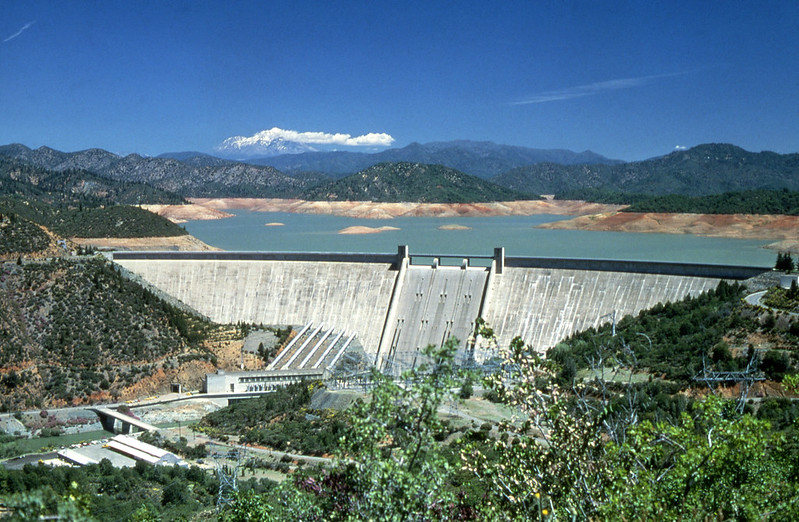
Mosquitoes tend to lay eggs and reproduce in shallow pools of water or somewhere in the near vicinity. Thus, water is a key component in the spread of malaria. The erection of dams creates a multitude of shallow pools along the edges of the water base that provide ideal situations for mosquitoes to nest. This increases the prevalence of malaria and the susceptibility of individuals to malaria.

A study published in the Malaria Journal found that the slope of the shoreline was the most determining factor of a rise in malaria for areas that had dams. Since mosquitoes like to breed in shallow pools of water that do not connect to a larger, main body of water, the shoreline around a dam is a prime location that meets these requirements. The more inclined a slope is, the more water drains out. This means that static pools of water are unable to form, which in turn means that mosquitoes do not find areas of the steep slope to be habitable.

Due to factors like this, not all dams are likely to increase malaria. Reservoirs that have steeper slopes pose a smaller risk of increasing the spread of malaria. For example, the climate and geography at a dam site, temperature fluctuations, elevation and amount of rainfall, also influence the spread of malaria near reservoirs. Thus, the continual study of the relationship between dams and malaria can lead to further identification of factors that increase the risk of spreading disease.

Solutions

Similarly, development planners must carefully select dam sites so that economic growth and electricity generation do not compromise the well-being of a local population. Increasing awareness through activism could see a more informed class of development planners take more calculated and careful approaches to dam construction. Indeed, a greater exchange of knowledge between local populations, journalists, researchers and policymakers is necessary to see increasing benefits and minimization of negative impacts.

This is arguably more important now than ever. As of 2015, 18.7 million Africans reside within five kilometers of dam reservoirs. Policymakers must take measures to ensure that quality of life does not deteriorate for those living near artificially constructed reservoirs. The relationship between dams and malaria is a critical nexus that can inform the implementation of less detrimental policies by those who are in a position to make such a policy.

– Evan Williams
Photo: Flickr

October 21, 2019
https://borgenproject.org/wp-content/uploads/borgen-project-logo.svg 0 0 Lynsey Alexander https://borgenproject.org/wp-content/uploads/borgen-project-logo.svg Lynsey Alexander2019-10-21 11:30:382019-12-12 14:35:59Dams and Malaria: How They are Linked
Developing Countries, Development, Global Poverty, Health, Women, Women & Children, Women and Female Empowerment

How People Are Fighting the Rape Epidemic in India

Rape Epidemic in India
The rape epidemic in India garnered international attention in 2012, when several men brutally raped and beat a woman, Nirbhaya, on a bus. The event immediately spread across the globe and sparked massive international outrage. This pushed the government to promise new laws. However, it did not make any tangible changes. A minor positive change was a social shift resulting in more women finding the strength to report cases of sexual assault. Perhaps the most gruesome fact from this brutal event is the regularity of gang-rape in India. Nirbhaya’s case, while one of the most horrifying stories of rape, is only one among thousands.

Solutions in Bangladesh

There is a precedent for solutions to these types of problems. One solution is for the law to change in a way that punishes those who physically or sexually abuse women. Bangladesh has effectively lowered its acids attacks on women to just 75 in 2014 whereas it was previously 492 cases in 2002. It accomplished this by mandating the death penalty as the crime for acid attacks. Since Bangladeshi men now fear the severe ramifications for an acid attack, they refrain from hurting women with this method. However, if Bangladesh and India enacted rigorous laws for all types of abuse on women, then at the very least, those particular men would not be able to abuse women at as drastic of a level as they are currently.

Snehalaya Provides Aid to Abused Women and Children

Women who suffer abuse can still have hope since many NGOs are actively working to support the victims and help them get back their dignity and return to a normal life. One example is Snehalaya, which provides a safe space for women and children who are suffering abuse, and helps over 15,000 people per year. Snehalaya strives to use “grassroots outreach and education” to lower the amount of domestic abuse and violence that occurs in India. Women who are victims of sexual abuse can count on Snehalaya to provide the proper support group to push them towards a normal life, which is even more important because sometimes a woman’s parents may not accept her after she has become a victim due to social stigma.

Another solution for the rape epidemic in India is women’s empowerment through properly educating women, which is what Sayfty strives to do. It strives to provide women the tools to be safe from acts of sexual violence and to teach women how to defend themselves. While the first solution provides a legal means for female empowerment and the second provides a way to help them after they become victims, Sayfty is essential because it empowers women to stand up for themselves while suffering abuse or at least provides them with knowledge of how to get away from predators and get help.

The efforts of millions of women who are finding the bravery to call out abusers are defeating the rape epidemic in India. The laws in India are slowly changing to match modern social attitudes. NGOs are empowering women to lead their own fight. Though change is slow, it is inevitable, and more women are getting the justice they deserve every day.

– Anish Kelkar
Photo: Flickr


October 20, 2019
https://borgenproject.org/wp-content/uploads/borgen-project-logo.svg 0 0 Jennifer Philipp https://borgenproject.org/wp-content/uploads/borgen-project-logo.svg Jennifer Philipp2019-10-20 17:11:142019-11-14 12:57:01How People Are Fighting the Rape Epidemic in India
Activism, Developing Countries, Development, Global Poverty, Human Rights

Consequences of Violence in Nicaragua

Consequences of Violence in Nicaragua
Since April 2018, the citizens of Nicaragua have been protesting against its government. What started originally as a movement against changes to the social security program quickly turned into an opposition movement demanding President Daniel Ortega and his wife’s resignations. The protests turned violent when anti-government protesters clashed with pro-government protesters and police. As a result, these protests resulted in the killings of more than 300 people and about 2,000 people becoming injured. Here are the major consequences of violence in Nicaragua.

Human Rights Concerns

One of the consequences of violence in Nicaragua has been the concerns surrounding human rights abuses by the government. According to Human Rights Watch, the Ortega administration has violated Nicaraguan citizens’ human rights by “[banning] public demonstrations by any group critical of the government, (…) [stripping] nine non-governmental organizations of their legal registration, [shutting] down media outlets, [prosecuting] journalists under the anti-terrorism law, and [expelling] international monitors from the country. The Ortega government has harassed and threatened the media, human rights defenders and other members of civil society.”

Additionally, it appears that the Nicaraguan government is not only denying its people the freedoms they are entitled to, but it is also retaliating against the reports the UN High Commissioner for Refugees (UNHCR) published. This becomes especially apparent by the government’s reactions to the release of these reports: “Following the high commissioner’s first report, the Ortega administration failed to hold perpetrators accountable for abuses and instead promoted senior officials who bear responsibility for killings and torture of demonstrators. In response to the high commissioner’s second report, the government has even defended the armed pro-government thugs that participated in repressing protests.”

Forced Migration

Additional consequences of the violence in Nicaragua is the forced displacement of 80,000 Nicaraguan citizens who are no longer able to live in their home country. Many are seeking asylum and refuge in neighboring countries like Costa Rica, Panama, Mexico and the United States. Of the 33,000 asylum requests that Costa Rica received in this past year, the country has only processed about 4,900 leaving more than 28,000 people to seek refuge elsewhere. Due to the mass displacement of these Nicaraguan citizens, many must survive on temporary employment or none at all, leaving them to suffer as a result.

Limited Access to Resources

One of the major consequences of violence in Nicaragua is the limited access to necessary resources such as food and health care as a result of the unexpected roadblocks that continually appear throughout the country and the capital, Managua. It is rather unclear whether these roadblocks are government-sponsored or a result of government opposition leaders, however, these often lead to detours and inconveniences when Nicaraguans are attempting to access grocery stores and gas stations. Additionally, government hospitals across the country have begun denying treatment to those who they suspect of being a part of the anti-government movement, which has led to people being unable to receive any kind of treatment for their injuries.

Economic Growth Concerns

In the past, Nicaragua has maintained a steady economic growth rate. In 2017, the growth rate was 4.5 percent. However, in the last year, since the outbreak of violence and political unrest, the economy has contracted about 3.8 percent and the World Bank suspects that this contraction will grow up to 5 percent in 2019. These violent protests have caused many to lose their jobs, while also causing a decrease in consumer and business confidence. As a result, some fear that the violence in Nicaragua will cost recent progress the country has made in poverty reduction efforts.

During the years of 2014 and 2016, poverty rates in Nicaragua had fallen from 29.6 percent to 24.9 percent due to the support of international organizations such as the World Bank’s International Development Association (IDA). Additionally, the extreme poverty rate also dropped from 8.3 percent to 6.9 percent in the same timeframe. It is too early to predict what the poverty rates will be for Nicaragua in 2019, but there is speculation that poverty rates will rise again.

Efforts by International Organizations

After six weeks of protests, U.N. Secretary-General Antonio Guterres addressed the situation in Nicaragua by asking the government to consider allowing the Office of the U.N. High Commissioner for Human Rights (OHCHR) to visit the country. On many occasions, the U.N. has established its willingness to resolve the situation by acting as a mediator in “national dialogue efforts to strengthen the rule of law, respect for human rights and the peaceful resolution of differences.” Additionally, there have been requests for the government to investigate allegations of human rights violations in order to hold perpetrators accountable and to bring much-needed justice and peace of mind for victims’ relatives.

Furthermore, representatives for Amnesty International have spoken out condemning the Nicaraguan governments’ repression of its people. They also suggested the creation of a committee in order to prosecute those guilty of serious human rights violations and crimes. In a report released by Amnesty International titled “Shoot to kill: Nicaragua’s strategy to suppress protest,” there appears to be evidence of Nicaraguan paramilitary forces using lethal weapons against protesters, of which many were students. This report sheds light on the situation in Nicaragua and hopes to bring international awareness in order for others to take action against the repressive forces of the Nicaraguan government.

The consequences of violence in Nicaragua range from human rights concerns to limited access to health care and even issues regarding Nicaragua’s economic growth rate. Though there appears to be no end in sight, there is hope for Nicaragua’s citizens as international organizations attempt to raise awareness and investigate the ongoing crimes committed against the Nicaraguan people. The situation is far from resolution but as it gains more international interest, there is hope that efforts will not be in vain and that the country can find a peaceful resolution.

– Laura Rogers
Photo: Flickr

October 20, 2019
https://borgenproject.org/wp-content/uploads/borgen-project-logo.svg 0 0 Jennifer Philipp https://borgenproject.org/wp-content/uploads/borgen-project-logo.svg Jennifer Philipp2019-10-20 14:00:442019-12-18 11:13:14Consequences of Violence in Nicaragua
Developing Countries, Development, Global Poverty, Health, Water Quality, Water Sanitation

Water Competition and Efficiency in Kazakhstan

Water Competition and Efficiency in Kazakhstan
Former Soviet-controlled Kazakhstan has come a long way since the end of the Cold War. Despite becoming a more stable nation in the Middle East compared to its neighbors, it still struggles with water distribution and quality to this day. This article shall discuss these chief problems through water competition and efficiency in Kazakhstan.

Competition with China

As far as competition goes, Kazakhstan has a major problem in the form of China. Kazakhstan relies heavily on the Ili River for a good portion of its water supply and both countries connect to this valuable river. At the end of the day, China receives a larger share of the river than Kazakhstan. This is partly because the Ili River begins in China, and that China has 15.7 billion cubic meters of water flow into its borders every year. On the flip side, Kazakhstan only gets around half of that with 8.4 billion cubic meters. China states that it should have a larger share due to it being larger than Kazakhstan and the fact that Kazakhstan exploited the water profusely in the 1960s. In fact, Kazakhstan still does today at a rate of 42.7 percent which is over the 40 percent limit range.

Efficiency in Water Distribution

Kazakhstan has noted that it needs to exploit these waters due to its inability to give its population enough water or water that meets sanitary standards. This is partly due to the lack of efficient water distribution to people in certain parts of Kazakhstan. Meanwhile, Central Kazakhstan only receives 3 percent of the country’s water.

Another problem is that the government has been treating its water as an unlimited resource while it is becoming clear that it is very scarce. This lead to poor management of this water while leading the citizens into believing that the problem is not as dire as it seems.

Sanitation in Kazakhstan

Another issue that Kazakhstan has is that most of its drinking water is unsafe to ingest. Due to the aforementioned poor distribution and supply of the water within the country, the amount of clean water sits at only 30 percent. A key cause of poor distribution is that the water often stops in pipes, which allows it to collect bacteria and disease. These interruptions in water flow can occur 14 days a month and last as long as 12 hours. The fact that the pipes that flow this drinking water are also in the same trenches as sewer pipes, causing cross-contamination and a possible epidemic does not help matters. This only further highlights why water competition and efficiency in Kazakhstan is so important.

Course of Action

Kazakhstan is looking to revamp its water system by not just fixing its own, but also by importing water from outside sources, namely other neighboring countries. The government is also receiving support from the E.U.; it is helping to create policies that can help Kazakhstan better preserve its water for drinking and agricultural needs. The E.U. is also going so far as to provide new technology to better equip the country in preserving this water. This is not surprising since the E.U. also provided $1.5 billion to help with water management from 2010 to 2013. With all of this support, the government of Kazakhstan is hoping to increase its people’s access to clean, sustainable drinking water by 2030.

In this article about water competition and efficiency in Kazakhstan, it is clear that the country is in a rough patch to competition outside of its borders, as well as its poor management of the water it possesses. With the proper restructuring of its water system and outside help, the country should be able to improve this issue. With the E.U.’s continued help and allocated funds and resources to fix the contamination and distribution problems, Kazakhstan should be able to see a great increase in clean water.

– Collin Williams
Photo: Flickr

October 20, 2019
https://borgenproject.org/wp-content/uploads/borgen-project-logo.svg 0 0 Kim Thelwell https://borgenproject.org/wp-content/uploads/borgen-project-logo.svg Kim Thelwell2019-10-20 13:04:472020-04-23 20:59:19Water Competition and Efficiency in Kazakhstan
Developing Countries, Development, Education, Global Poverty, Refugees

Link Between Poverty and Integration of Refugees

Poverty and Integration
When refugees flee their countries of origin in search of safety, they often end up living below the poverty line in each of the countries that they settle in. These refugees lack the financial resources for a stable livelihood with or without their families. However, there are also some refugees who seem to flawlessly integrate into the host society and become an accepted member of society. There seems to be a key factor that is causing the difference in whether a refugee can integrate successfully into the host society or not. This article will explore the link between poverty and integration.

The Link Between Poverty and Integration

Dr. Dogus Simsek, a professor who teaches sociology at University College London, has researched the matter within the context of the Syrian refugees in Turkey post-2011. She looked into the Turkish policies regarding migration and developed an argument through her sociological analysis of the literature. She looked into the concepts of market citizenship, refugee economics and the concept of methodological individualism while conducting fieldwork with around 120 Syrian refugees all throughout 2016. Upon concluding her hypothesis, she argued that poverty and integration interlink because the refugees who lack financial resources often lack the stability in their lives that they need to begin the integration process into the host society. When The Borgen Project interviewed her about what made her believe that there was a link between poverty and integration, she replied saying that the laws, rules and policies on migration were in favor of those who were investing in Turkey. The Syrian refugees themselves also backed this up when they talked about their daily life.

Integration and Market Citizenship

In everyday life, the public uses the word integration every day without settling on its definition. To fix that, Alistair Ager and Alison Strang operationalized the definition of integration and have attempted to conceptualize a framework with four domains: markers and means, social connection, facilitators and foundation. Markers and means include the key measurements of employment, housing, education and health. The social connection includes social bridges, social bonds and social links. Facilitators include language, cultural knowledge, safety and stability whereas the domain of foundation includes rights and citizenship. Ager and Strang argue that this conceptualization of integration can be the foundation of how people should define integration.

Simsek also tries to contextualize the concepts of market citizenship, refugee economics and methodological individualism while reaching her hypothesis. She defines the concept of market citizenship as an instance where access to rights and citizenship depends on the economic resources and access to the labor market, given the neoliberal globalized world, such as the case in the Burmese refugees in Michigan.

Market citizenship hindered their integration process economically, socially and linguistically. Countries start to view refugees as a possible case of investment in the economy. Additionally, refugee economics refers to when the government conducts a separate resource allocation system for the refugees that is fundamentally different from the generic model that countries use for the host society. This perpetuates the notion that refugees lead to complex economic lives. Lastly, it is important to not take the concept of methodological nationalism with a grain of salt because the concept itself argues that when one attempts to analyze the cases of refugees, the primary unit of analysis is the nation-state rather than the lives and experiences of the refugees themselves, which already establishes a power inequality between the two.

Class-Based Integration

The main argument remains that poverty and integration greatly interlink. Simsek attempts to develop the notion of class-based integration in the case of Syrian refugees in Turkey, which she has defined as when the availability of economic resources allows the refugee to relax on the domain of means and markers and the chance to start expanding on the other domains of the integration framework mentioned above. This argument also highlights that each refugee has its integration process and that people should not see them as a single unit of analysis. The concept of class-based integration also encapsulates that the allocation of rights, “especially the labor market and citizenship rights, is easier for refugees who can invest in the receiving country compared to those without.”

Simsek said that the NGOs in Turkey are aware of such policies that favor those who can invest in the country and that they try to run their organizations in line with the policies. The events or activities that they organize usually allows refugees to become aware of these policies. Simsek also said that some NGOs might not be aware of the situation if they only attempt to assist the refugees in poverty and integration is a far road for them, unlike the more well-off refugees for whom integration can be like a slide in a playground. When The Borgen Project asked Simsek if she believes that the world can apply the concept of class-based integration to refugees and migrants across the globe, she answered saying that it is a possibility since the world is globalized in a neoliberal context which leads to nation-states viewing refugees as an investment.

Overall, the idea of class-based integration acts as a missing link or bridge between poverty and integration and allows for more scholars, NGOs and governments to obtain a clearer image of what is going with the Syrian refugee crisis. Furthermore, one can possibly extrapolate this notion to other refugee waves around the world given that the policies of the country also view refugees as an investment into their societies within a neoliberal context.

– Nergis Sefer
Photo: Flickr


October 20, 2019
https://borgenproject.org/wp-content/uploads/borgen-project-logo.svg 0 0 Jennifer Philipp https://borgenproject.org/wp-content/uploads/borgen-project-logo.svg Jennifer Philipp2019-10-20 11:30:382020-01-25 06:56:22Link Between Poverty and Integration of Refugees
Children, Developing Countries, Development, Global Poverty

Nigerian Curling Helps to Keep Nigeria One

Nigerian Curling
In Lagos, Nigeria in the mid-1800s, British colonial cartography resulted in the drawing of many inappropriate boundaries across the African region. Nigeria serves as a token example as more than 200 self-identified tribes currently exist in the populous Sub-Saharan country. The three tribes with the most influence, the Yorubas, Hausas and Igbos have demonstrated significant friction since the country’s freedom from British rule in 1960. This perpetual conflict is so serious that it even helped spark an attempt of eastern secession in 1967 known as the Biafran War or the Nigerian Civil War. Luckily, Nigerian curling may serve a purpose in unifying the country.

Sport: The Great Unifier

Beacons of hope still shine over the quest for national unity through organizations that promote cooperation and Nigerian pride. Nigerians universally accept one unifier which is sports. Nigeria’s humid climate might seem to render its winter-sports participation impossible. Yet despite these climate restrictions, Nigeria presented both a women’s bobsled team and a skeleton racer at the 2018 Winter Olympics in Pyeongchang, South Korea. For the 2022 Winter Olympics in Beijing, China, Nigeria hopes to yield a curling team in addition to its aforementioned fleet. The Nigerian Curling Federation, approved by the World Curling Federation in 2018, is actively making these dreams a reality.

Curling and other sports, in general, have the potential to increase national pride while decreasing tribal pride, the latter of which is a significant roadblock in Nigerian attempts towards national unity. There is a normalization of stereotypes about the respective tribes, which feeds large cultural prejudices on each side. This adds to an overarching sense of hostility between the different ethnic groups in the country, which has historically manifested itself in violence as serious as the killing of more 40 people in street-fighting riots between the Yorubas and the Hausas in 1999. As Rachel Odusanya writes, “tribes can misunderstand each other because of their different worldviews, and this is one of the biggest social problems in Nigeria nowadays.”

Christopher Neimeth, Social Injustice and Poverty

This dream involves more than just curling through, as it contains the potential to advance a much-needed togetherness for the Nigerian people. To dig deeper, The Borgen Project spoke to Christopher Neimeth, a member of the curling team who lives in America but has Nigerian citizenship. Not so long ago, he traveled to Lagos, Nigeria’s queen city, with his father to help the rising club gain traction by delivering curling clinics. Neimeth, whose father has Nigerian origins, is sharing his affinity for the sport bearing the positive social implications behind it in mind.

When asked how he thought sports, particularly curling, could remedy some of the social injustice so tightly wound in Nigeria’s current social climate, Neimeth responded optimistically. He conceded that his upbringing in America naturally makes it impossible to grasp the true extent of its cultural issues, but he still believes curling offers a lot to the country. Through the amalgamating nature of sports, Neimeth argues that curling presents a unique opportunity to promote a sense of national pride, while simultaneously creating opportunities for the athletes through travel, professional opportunities and sponsorships, etc.

Additionally, the presence of sports can help reduce the high stress that is an inherent byproduct of extreme poverty. In a country like Nigeria, where more than 86 million people currently live in conditions of extreme poverty, programs like this are important to sustain hope and positive environments. The Nigerian Curling Federation’s clinics provide a safe space for youth that may otherwise turn to crime or drug use.

The underdog premise behind a Nigerian curling team appearing in the 2022 Olympics could amplify the country’s excitement, dismantling previously fortressed barriers between the country’s different peoples.

– Liam Manion
Photo: Flickr

October 18, 2019
https://borgenproject.org/wp-content/uploads/borgen-project-logo.svg 0 0 Jennifer Philipp https://borgenproject.org/wp-content/uploads/borgen-project-logo.svg Jennifer Philipp2019-10-18 11:29:272019-12-18 12:04:17Nigerian Curling Helps to Keep Nigeria One
Developing Countries, Global Poverty, Health

The Ebola Crisis in the Congo

Aftermath of Ebola
An Ebola outbreak in the Democratic Republic of the Congo has infected 250,000 people and has nearly killed 1,700 people. The outbreak occurred in August 2018. The New York Times reported that the World Health Organization (WHO) declared this outbreak a global health emergency.

What is Ebola?

Ebola is a fatal disease that spreads through contact with a person with the Ebola virus. According to the CDC, “It spreads through direct contact with bodily fluids of a person who is sick with or has died from EVD.” One can also contract it through direct contact with blood and sexual contact. Symptoms usually occur within two to 21 days from the time a person contracts the virus.

The disease spread throughout the Congo and proceeded to enter countries such as Goma and those near Rwanda. This outbreak posed a threat to surrounding countries and the overall idea of public health.

Health care workers and medical team members in those areas are also becoming affected. According to data that the Ebola Response Committee collected, 157 workers have suffered Ebola and 41 of them have died. This means that 5 percent of the people suffering from Ebola in the Congo were health workers.

Since these outbreaks have been happening recently, officials are stepping in to launch infection control. The Democratic Republic of the Congo is receiving help from different global organizations in order to implement new infection prevention and control (IPC) training.

One of those training sessions consists of preparing local nurses, doctors and health workers on how to confront this disease. This is important because most of the local workers do not know how to detect the disease and safely isolate patients.

Efforts to Treat and Prevent Ebola

Weeks during and after the outbreak, WHO began to work with community officials to advocate for treatment for patients. This work consisted of WHO teaching and encouraging people in the affected community to recognize the symptoms of Ebola and to seek treatment immediately. WHO also connected with youth leaders and community representatives in order to collaborate with the Ebola Virus Disease (EVD) about responding to the outbreak.

Other organizations such as Save the Children have been responding as well. Save the Children has been working with different organizations in the DRC to ensure they know how to protect themselves. The organization is also working with WHO on the ground to prevent outbreaks from spreading any further. Save the Children and WHO are doing this to reduce the damage the outbreak has already caused.

Save the Children sent out emergency health units to respond to the disease crisis, as well as partnering with the Congolese government on the ground to support its health facilities. It has trained many health workers and community leaders on how to address Ebola in their communities. It also built 15 Ebola triage points that will assist in detecting and preventing Ebola cases among children.

Many different initiatives within these organizations are taking place to help advocate for this crisis and bring in as much medical treatment as they can. As Ebola continues to infest the DRC, the surrounding countries and their poor communities, they will be in a continued state of a global health emergency.

– Jessica Jones
Photo: Flickr

October 17, 2019
https://borgenproject.org/wp-content/uploads/borgen-project-logo.svg 0 0 Jennifer Philipp https://borgenproject.org/wp-content/uploads/borgen-project-logo.svg Jennifer Philipp2019-10-17 10:30:522024-05-29 23:13:11The Ebola Crisis in the Congo
Developing Countries, Food Security, Global Poverty, Health

No or Low-Power Refrigeration Inventions

No or Low-Power Refrigeration
A major issue in developing countries is preserving the effectiveness of vaccines to get them to people in rural areas. This is because of hot climates and the lack of refrigeration. Globally, 19.4 million infants are not adequately immunized and approximately 1.5 million children die annually from vaccine-preventable diseases. Lack of intermittent electricity not only makes transportation and storage of vaccines impossible but also makes constant refrigeration of perishable foods unattainable. This impacts not only consumers but also farmers who are unable to sell most of their products because they go bad during transit and storage. India grows 25 percent of global production but is only able to export 1.5 percent of its produce. Thirty-one percent of children under the age of 5 in developing countries are underweight due to malnourishment because they have no way of preserving the little food they have. However, there are a number of no or low-power refrigeration inventions that have been successful at providing refrigeration to rural areas, thereby improving overall health. Here are some no or low-power refrigeration inventions.

SureChill

People in hot, rural areas with little to no electricity, such as Africa, have limited access to vaccines. This is because vaccines require storage at a cool and constant temperature between 35.6 and 46.4 degrees Fahrenheit (2 to 8 degrees Celsius) in order to remain effective. Due to the temperature requirements, vaccines have traditionally only been available to a main village on a particular day during a month. However, people remote to that village cannot always get the vaccine on that particular day. Compared to urban areas, vaccination in rural areas is around 11 percent lower. This enables pandemics to spread quickly through an area, resulting in more victims and casualties.

SureChill is a refrigerator solely to preserve vaccines up to 14 days without power to help more people receive vaccinations. When it has power, the water in SureChill cools and creates ice right above the vaccine compartment. When it does not have power, the water evaporates as the ice melts, which keeps the vaccines at 39.2 degrees Fahrenheit (4 degrees Celsius).

Mitticool

Without refrigeration, the shelf life of food is around two days. Many rural areas do not have electricity, thus need an inexpensive method to preserve food for longer periods of time. The Mitticool fridge is made from terracotta clay which is better at retaining cold temperatures. It can store vegetables, fruit and dairy, and can cool water without any electricity or artificial energy. Like SureChill, it uses evaporation techniques. Condensation on the upper chambers (where it stores water) evaporates, cooling the inside. There is also a small faucet tap at the front lower end of the chamber for drinking.

Solar-Powered Refrigeration

Fridges can run on solar power rather than electricity. People usually use these fridges to transport vaccines but they can also store food. For example, Emily Cummins invented a device that can be made from ordinary materials like scrap metal, cardboard, sand, wool and soil. This device works by converting sunlight into energy that chills its storage compartment. Rather than using a motor to compress a refrigerant solution (like the ones in stores), solar fridges are absorptive, which means that they use thermal energy from sunlight to convert the refrigerant solution into liquid. This then produces energy that cools the items inside of the fridge. People are using solar fridges in Africa.

Thermal Chilling System

India’s Promethean Power Systems provides a modern thermal chilling system to chill dairy products. Indian dairy farmers were losing up to $13 billion annually due to a lack of refrigeration for perishables. To solve this problem, Promethean Power Systems developed a solar-powered milk chiller. Like other forms of solar-powered chilling techniques, it uses solar energy to power a 500-liter battery and cooling agent, which can chill up to 1,000 liters of milk. This has eradicated the Indian dairy farmer’s need for diesel, making it better for the environment while also more efficiently chilling milk and keeping it free of contaminants.

Initiatives

Some initiatives concerning no or low-power refrigeration are the Global LEAP Off-Grid Procurement Incentives Program and the Global LEAP Off-Grid Cold Chain Challenge. The former has received three orders to deploy 1,025 energy-efficient, off-grid appropriate refrigerators. Said orders are some of the world’s first large-scale, off-grid refrigerator procurement. The latter is part of the U.K. aid-funded Ideas to Impact Initiative. It starts investment and innovation in cold storage tech, mostly in regards to the transfer of dairy/produce from farms to markets.

No or low-power refrigeration inventions show that green power needs to be an integral part of the world’s future. These technologies bring inexpensive refrigeration to developing countries, providing access to life-saving vaccines, reducing the danger and spread of food-borne diseases, decreasing the manual labor and time of collecting or purchasing food and enabling farmers to store crops and dairy to preserve freshness and store goods longer in hopes of getting a better price a little later. These refrigeration options have already increased overall health and well-being, as well as improving the local economies.

– Nyssa Jordan
Photo: Flickr

October 17, 2019
https://borgenproject.org/wp-content/uploads/borgen-project-logo.svg 0 0 Kim Thelwell https://borgenproject.org/wp-content/uploads/borgen-project-logo.svg Kim Thelwell2019-10-17 04:30:192024-05-29 23:13:22No or Low-Power Refrigeration Inventions
Developing Countries, Development, Global Poverty, Health

Iran’s Allocated Budget: Health Care in the Country

Iran’s allocated budget
The year 2019 has proven challenging for Iran as relationships between leaders have caused agreements to cease, straining Iran‘s allocated budget. The nation has felt a weakening economy that is raising the price of the products that the government and foreign aid had previously offset. With the strain of medical costs, many people have had to forfeit medical assistance. There has also been an onset of flash flooding that caused damages to property and the loss of dozens of lives. Looking through these instances, it will be clear how relevant legislation, such as The International Affairs budget, will be.

Disease In Iran

Historically, one reason why disease had spread so quickly was due to the distance between medical facilities, weak public health structure, lack of adequate health treatments and cross-contamination. In recent decades, however, Iran’s allocated budget has made significant efforts to ensure that health crises, like those of the 20th century, do not repeat themselves. The program covers immunization against universal diseases such as Hepatitis B, Tuberculosis and measles.

Iran’s allocated budget began in 1982 by creating a National Immunization Technical Advisory Group (NITAG). Of the illness that Iranian patients experience, over half of them are related to rotaviruses. A vaccine could prevent many rotavirus diseases such as influenza and varicella. The World Health Organization states that it especially emphasizes that countries with high infant mortality rates take the most advantage of pneumococcal vaccines.

During 2015, Iran’s President, Hassan Rouhani, saw through promises he had made Iranians regarding their quality of life, medical access and food shortage. Reconciliation became a possibility as Iran agreed to cease its nuclear programs in exchange for international relief. In 2018, however, that changed when President Trump introduced several harsh sanctions on Iran, causing medical supplies to decrease at a rate the country has not been able to match.

Economic Factors

The value of the Rial (Iranian currency) drastically reduced in value which is an economic factor for why Iran has been having a difficult time. Community leaders in Iran have written hundreds of letters to the government due to the inflation rate of medicine reaching into the hundreds. Although businesses are properly stocking their shelves with over-the-counter medications, workers in hospitals have a different reality. Workers have received instruction to prescribe over 100 medications at a scarce rate or not at all to preserve resources. A portion of those medications is for threatening conditions like diabetes. The scarcity not only results from tough U.S. sanctions but also a misallocation of funds by the Iranian government.

Iran’s limited allocated budget is affecting more than just its health care system. Between March and April 2019, Iran experienced severe flash flooding resulting from record-breaking heavy rainfall for the region. In previous natural disasters, others highly publicized the region’s circumstances and relief came voluntarily when a 6.6 earthquake took place in 2003. The flash floods of 2019 have affected nearly half of Iran’s provinces, causing damage to infrastructure, livestock and agriculture. As these floods displaced thousands of Iranians, there has been a need for food rations as well. The displacement of Iranians adds strain to the nation’s resources, as portions of those supplies are coming from within the country itself.

Conclusion

By enacting policy changes like the International Affairs Budget act, Iran would be able to guarantee its assistance. The budget alone accounts for a small portion of the Federal budget, but the effects of those dollars go farther to make a more significant change in nations that have the most need. For regions that experience poverty, natural disasters or weak health care system, initiatives like the International Affairs budget can make a difference even down to local levels.

– Kimberly Debnam
Photo: Unsplash


October 15, 2019
https://borgenproject.org/wp-content/uploads/borgen-project-logo.svg 0 0 Jennifer Philipp https://borgenproject.org/wp-content/uploads/borgen-project-logo.svg Jennifer Philipp2019-10-15 07:30:002019-12-16 10:26:26Iran’s Allocated Budget: Health Care in the Country
Page 95 of 157«‹9394959697›»

Get Smarter

  • Global Poverty 101
  • Global Poverty… The Good News
  • Global Poverty & U.S. Jobs
  • Global Poverty and National Security
  • Innovative Solutions to Poverty
  • Global Poverty & Aid FAQ’s
Search Search

Take Action

  • Call Congress
  • Email Congress
  • Donate
  • 30 Ways to Help
  • Volunteer Ops
  • Internships
  • Courses & Certificates
  • The Podcast
Borgen Project

“The Borgen Project is an incredible nonprofit organization that is addressing poverty and hunger and working towards ending them.”

-The Huffington Post

Inside The Borgen Project

  • Contact
  • About
  • Financials
  • President
  • Board of Directors
  • Board of Advisors

International Links

  • UK Email Parliament
  • UK Donate
  • Canada Email Parliament

Get Smarter

  • Global Poverty 101
  • Global Poverty… The Good News
  • Global Poverty & U.S. Jobs
  • Global Poverty and National Security
  • Innovative Solutions to Poverty
  • Global Poverty & Aid FAQ’s

Ways to Help

  • Call Congress
  • Email Congress
  • Donate
  • 30 Ways to Help
  • Volunteer Ops
  • Internships
  • Courses & Certificates
  • The Podcast
Scroll to top Scroll to top Scroll to top