
• Link to X
  • Link to Facebook
  • Link to Instagram
  • Link to TikTok
  • Link to Youtube
  • About
    • About Us
      • President
      • Board of Directors
      • Board of Advisors
      • Financials
      • Our Methodology
      • Success Tracker
      • Contact
  • Act Now
    • 30 Ways to Help
      • Email Congress
      • Call Congress
      • Volunteer
      • Courses & Certificates
      • Be a Donor
    • Internships
      • In-Office Internships
      • Remote Internships
    • Legislation
      • Politics 101
  • The Blog
  • The Podcast
  • Magazine
  • Donate
  • Click to open the search input field Click to open the search input field Search
  • Menu Menu

Archive for category: Developing Countries

Information and stories about developing countries.

Aid Effectiveness & Reform, Developing Countries, Development

Human Development Report Has Good News

Human Development Report Has Good News

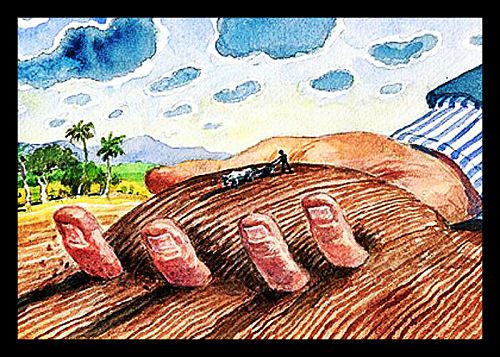
After the longest time of a Northern-dominated global economy, the Global South seems to be catching up. This year’s United Nations Development Program’s annual report has some incredible news: lots of livelihoods have improved and are continuing to move in the right direction in terms of development. The Human Development Report suggests that 40 countries are doing better economically and socially. According to The Yemen Times, these improving nations aren’t solely the “economic tigers” of the world, such as China, and Brazil; they also include Turkey, Mexico, South Africa and several more.

The good news is that countries that were once considered “backward” are rising up to the plate, demanding that their voices be heard. Such a shift in global development and human well-being tips the scale for the dominating countries, mainly the United States, member nations of the European Union, and Japan, which have always set and controlled policies.

The UNDP collected measurements of income, literacy levels, gender rights, and longevity to form this year’s rankings, and the results evinced sustainable success and growth: “a fifth of the nations surveyed – all in the developing world – did better than expected.” Although sub-Saharan African countries did not do so well as to be included in this “rise of the South” phenomena, and there is clearly much more to be done, this year’s results are evidence that much good is being generated nonetheless. There is hope that more work will continue to result in greater improvements.

– Leen Abdallah

Source: Yemen Times
Photo: Static
February 23, 2013
https://borgenproject.org/wp-content/uploads/borgen-project-logo.svg 0 0 Borgen Project https://borgenproject.org/wp-content/uploads/borgen-project-logo.svg Borgen Project2013-02-23 20:36:272024-05-24 23:42:39Human Development Report Has Good News
Developing Countries, Development, Foreign Policy, Global Poverty, Human Rights, United Nations

Who is Benefiting From Land and Water Grabbing?

Who is Benefiting From Land and Water Grabbing?It is assumed that the already existing gap between developed and developing nations is large and apparent enough that wealthier nations would try and fill this gap and bring these opposite ends closer together. According to an ABC Environmental article, however, wealthy nations are instead competing over ‘land’ and ‘water grabbing’ to appease their growing populations and the “stressed” supply of basic necessities such as food and water. Investors in a foreign land, or better yet, the land-grabbers, are countries and investment firms from biofuel producers to large-scale farming operations (agricultural investors).
Since 2000, the major countries that have contributed to this land purchasing are the U.S., Malaysia, the U.K., China, and the U.A.E. Experts aren’t sure of these investors’ motives but it is clear that they are only focusing on buying land where there is clear access to water.

‘Land grabbing’ is defined by Paolo D’Odorico, a professor at the University of Virginia, as “a deal for about two km2 or more that converts an environmentally important area currently used by local people to commercial production.” According to an environmental study, 454 billion cubic meters sums up the ‘water-grabbing’ per year by corporations on a global scale, which is about 5 percent of the world’s annual water consumption. According to the public database Land Matrix “1,217 deals have taken place, which transferred over 830,000 square kilometers of land” since 2000, with 62 percent of such deals happening in Africa alone.

From 2005 to 2009, during a major food price crisis, land purchases, which fall under a very low level of regulation, skyrocketed. In 2011, the Food and Agricultural Organization of the U.N. released guidelines that advise investors to consider the people and communities whose land is being used. However, such guidelines are viewed as humanitarian concerns and have little enforcement, meaning that they aren’t strict enough to have corporations and investors abide by them or even care for them.

Governments who are interested in and have been leasing and selling land to foreign countries and investors are mainly those in Eastern Africa and Southeast Asia. They are interested in these sales because they want to modernize their farming and believe this is the way to do it. However, the reality is that the resulting development from such ‘land and water grabbing’ depends on the investors’ terms and conditions, as well as their sense of morality.

The main problem is that the majority of these sales are happening in poor countries in which there are high rates of hunger and where resources valuable to the local populations are being purchased by wealthier developed nations or even by private corporations. The main question of the matter is this: Who is benefiting from land and water grabbing? Are these sales helping the local people since it is their land? Or are these purchases only concerned about foreign benefits and the population concerns of developed nations?

– Leen Abdallah

Source: ABC
Photo: Water Governance

February 19, 2013
https://borgenproject.org/wp-content/uploads/borgen-project-logo.svg 0 0 Borgen Project https://borgenproject.org/wp-content/uploads/borgen-project-logo.svg Borgen Project2013-02-19 17:33:172024-06-07 04:44:44Who is Benefiting From Land and Water Grabbing?
Developing Countries, Education

Hillary Clinton Announces The Open Book Project

Hilary-Clinton-Arab-League
The media is constantly overflowing with updates on technological advancements and products, but their emphasis is truly reflective of the most important aspect of our changing world. Technology, as the humanitarian world has seen in the past decade or so, is not just a luxury for consumers in the first world. In fact, perhaps the greatest use of technology has been in developing countries.

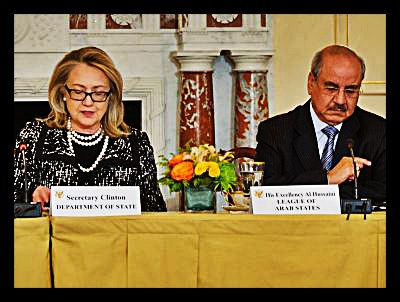
Last week, the now-former Secretary of State Hillary Clinton held a small ceremony for the newest collaborative initiative coming out of the Department of State called “The Open Book Project”. Along with the Arab League Educational, Cultural and Scientific Organization (ALECSO), MIT, Rice University, and the non-profit Creative Commons, among other educational organizations, The Open Book Project strives to extend open educational resources (OERs) to the Arab world in their native language.

While many countries are familiar with OERs, which allow free access to non-commercial users to legally license material for educational or research purposes, translating American textbooks and materials into Arabic is a huge step towards providing much-needed information in an area that does not have adequate access to the best universities or schools.

Websites such as KhanAcademy.org or Coursera.org are priceless tools for young children and adults alike who want to learn more or further their knowledge. In the Arab world, where education can be limited by wealth, geography or gender, The Open Book Project hopes to break these boundaries. This is much more than a technological program; it can and should be seen as an example of “educational diplomacy”. It is a promising relationship between the United States and the Arab League as they come together on the issue of improving the opportunities for young people around the world.

Ambassador Mohammed Al Hussaini Al Sharif, the Arab League’s envoy to the U.S., sees The Open Book Project as “a huge step forward in the Arab-American relations”. By presenting themselves as supporters of increasing education and access to such resources, not only will the United States be improving its public image but more importantly, it is making huge strides in terms of addressing the many issues surrounding global poverty. Education is the main key to achieving success no matter what country someone lives in. By opening up this portal to documents, textbooks, lectures, research and other types of media, The Open Book Project will help people around the world to become productive and active members within their own communities.

– Deena Dulgerian

Source:U.S. Dept. of State,Voice of America

February 15, 2013
https://borgenproject.org/wp-content/uploads/borgen-project-logo.svg 0 0 Borgen Project https://borgenproject.org/wp-content/uploads/borgen-project-logo.svg Borgen Project2013-02-15 10:49:282020-04-08 19:48:15Hillary Clinton Announces The Open Book Project
Page 158 of 158«‹156157158

Get Smarter

  • Global Poverty 101
  • Global Poverty… The Good News
  • Global Poverty & U.S. Jobs
  • Global Poverty and National Security
  • Innovative Solutions to Poverty
  • Global Poverty & Aid FAQ’s
Search Search

Take Action

  • Call Congress
  • Email Congress
  • Donate
  • 30 Ways to Help
  • Volunteer Ops
  • Internships
  • Courses & Certificates
  • The Podcast
Borgen Project

“The Borgen Project is an incredible nonprofit organization that is addressing poverty and hunger and working towards ending them.”

-The Huffington Post

Inside The Borgen Project

  • Contact
  • About
  • Financials
  • President
  • Board of Directors
  • Board of Advisors

International Links

  • UK Email Parliament
  • UK Donate
  • Canada Email Parliament

Get Smarter

  • Global Poverty 101
  • Global Poverty… The Good News
  • Global Poverty & U.S. Jobs
  • Global Poverty and National Security
  • Innovative Solutions to Poverty
  • Global Poverty & Aid FAQ’s

Ways to Help

  • Call Congress
  • Email Congress
  • Donate
  • 30 Ways to Help
  • Volunteer Ops
  • Internships
  • Courses & Certificates
  • The Podcast
Scroll to top Scroll to top Scroll to top