• Link to X
  • Link to Facebook
  • Link to Instagram
  • Link to TikTok
  • Link to Youtube
  • About
    • About Us
      • President
      • Board of Directors
      • Board of Advisors
      • Financials
      • Our Methodology
      • Success Tracker
      • Contact
  • Act Now
    • 30 Ways to Help
      • Email Congress
      • Call Congress
      • Volunteer
      • Courses & Certificates
      • Be a Donor
    • Internships
      • In-Office Internships
      • Remote Internships
    • Legislation
      • Politics 101
  • The Blog
  • The Podcast
  • Magazine
  • Donate
  • Click to open the search input field Click to open the search input field Search
  • Menu Menu

Archive for category: Aid

Aid, Global Poverty, Humanitarian Aid

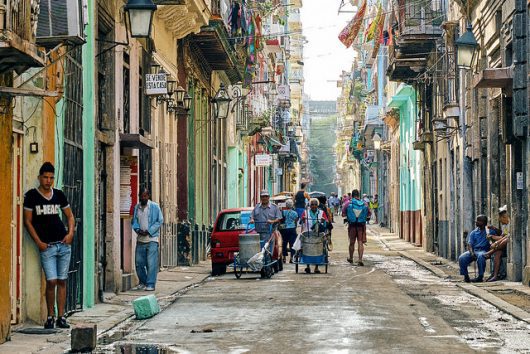
Triumphant Moments Regarding Humanitarian Aid to Cuba

The Success of Humanitarian Aid to Cuba
Spending an entire day flooding over northern regions of the island, the harshest storm since 1932 destroyed over 4,000 homes, obliterated acres of cane sugar, engulfed Havana and ravaged Cuba as well as several other Caribbean islands.

And the entire world took notice — Russian, Japanese, Bolivian and Colombian governments all sent vessels of humanitarian aid to Cuba; in fact, the United States seemed to be the only direct assistance absent. Over the years, humanitarian aid to Cuba has been mixed with a rather substantial amount of political hesitations.

For instance, the United States Agency for International Development offers humanitarian aid — such as food, vitamins, medicines and toiletries — to Cuba in regard to their families, but also to political prisoners and politically ostracized individuals.

President of Engage Cuba, James Williams, stated that “politics playing the dominant role in humanitarian relief unfortunately has been with us far too long.”

A possibility considered by members of Congress was to provide Cuba with tools and supplies to repair public infrastructure like schools, hospitals, roads, and bridges, aside from direct humanitarian aid.

“If the U.S. were to do something magnanimous like this, it would go a long way to further U.S. interests in Cuba and generally support a group of people who are in dire need of help,” said Williams.

However, this plan would also require efforts from Congress to briefly, and temporarily, remove parts of the economic ban on Cuba to allow delivery of construction material to state entities that own the roads and other infrastructure. But as of now, the ban permits such deliveries only to private parties.

While America found loopholes to support the island’s direst needs, the Russian Emergencies Ministry sent humanitarian aid to Cuba that consisted of over 1,000 tons of cargo, including construction materials and medicines.

Three aircrafts from Japan, Bolivia and Colombia delivered humanitarian aid to Cuba in the form of an eight-ton load of cargo composed of rice, water, milk, sheets and hygienic items. Along with these nations, the governments of Argentina, Canada, Costa Rica, China, Dominica, Ecuador, El Salvador, Spain, Mexico, Nicaragua, Uruguay, Venezuela and Vietnam also articulated their unity with Cuba and readiness to support their salvage.

– Jalil Perry

Photo: Flickr

December 12, 2017
https://borgenproject.org/wp-content/uploads/borgen-project-logo.svg 0 0 Borgen Project https://borgenproject.org/wp-content/uploads/borgen-project-logo.svg Borgen Project2017-12-12 01:30:122024-05-29 22:29:39Triumphant Moments Regarding Humanitarian Aid to Cuba
Aid, Global Poverty, Humanitarian Aid

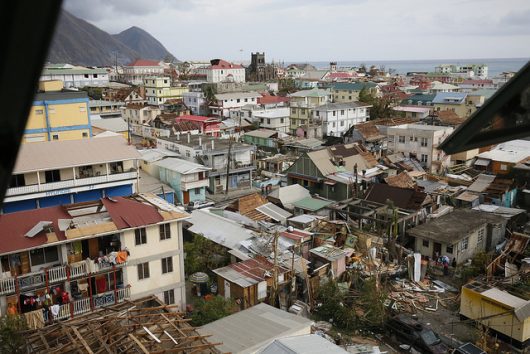
Humanitarian Aid to Dominica Following Hurricane Maria

humanitarian aid to dominica

On September 18, Hurricane Maria devastated the Caribbean Island of Dominica, inflicting what the country’s Prime Minister called “mind-boggling damage”. Homes were destroyed, entire industries were brought to their knees and 27 lives were lost.

Months later, it is clear that the recovery will be a long and expensive process. Many governments and organizations are chipping in to help the beautiful island of Dominica reclaim its natural beauty and rebuild the infrastructure that its citizens need.

In order to aid in recovery and relief efforts, the United States Agency for International Development (USAID) has contributed an additional $3.25 million in humanitarian aid to Dominica. These resources will go toward providing shelter, water, hygiene items, and livelihoods to those effected by the hurricane.

The European Union pledged €750,000 to provide survival kits, food, water, and immediate shelter and household materials to those affected by Hurricane Maria. The funds will also go toward providing training and technical support to those who need to rebuild their homes.

The United Nations Children’s Fund (UNICEF) has been working on the ground in Dominica to help reopen schools. As of November 9, 48 primary and secondary schools had been reopened. UNICEF is also working with other organizations to provide water and sanitation services to some of these schools.

Another organization providing humanitarian aid to Dominica is the United Nations World Food Program (WFP). The WFP made a commitment to provide food assistance to 25,000 citizens of Dominica for three months following Hurricane Maria. They have also been providing critical telecommunications services to those involved in the relief response.

There are many groups that are contributing humanitarian aid to Dominica in the wake of the devastation caused by Hurricane Maria. Progress is being made: schools are reopening, shelters are being built or rebuilt and food and water is being delivered to those who need it most. With sustained investment in the relief effort, Dominica will continue its recovery and become a growing economy and booming tourist destination once again.

– Aaron Childree

Photo: Flickr

December 11, 2017
https://borgenproject.org/wp-content/uploads/borgen-project-logo.svg 0 0 Borgen Project https://borgenproject.org/wp-content/uploads/borgen-project-logo.svg Borgen Project2017-12-11 11:42:132020-01-03 19:48:24Humanitarian Aid to Dominica Following Hurricane Maria
Aid, Foreign Aid, Global Poverty

Providing Foreign Aid in 2018

With the end of 2017 approaching, Congress is working on appropriations bills for the year 2018 that will determine where and how much money will be spent on government programs. Science, research and providing foreign aid in 2018 are among some of the things these bills will impact.
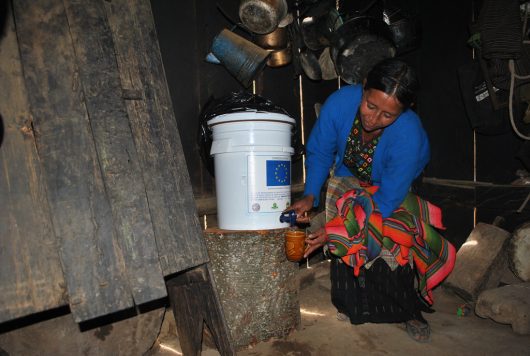
In September 2017, the Senate Appropriations Committee approved $51 billion for foreign aid, the State Department and other related programs for 2018. This bill will also provide more than $6 billion for humanitarian assistance.

The issue of providing foreign aid has received bipartisan support in Congress, with both Democrats and Republicans going against President Trump’s proposed cuts to foreign assistance programs. The $6 billion approval for humanitarian assistance is approximately $1 billion more than the president requested.

The U.S. Secretary of State, Rex Tillerson, is one of President Trump’s main voices of support. Tillerson believes that the budget is “historically high” and that it has grown to provide foreign aid and respond to conflicts abroad.

President Trump’s proposed 30 percent budget cut to USAID, the State Department, U.N. contributions and programs like Power Africa and the Peace Corps has also received criticism from Democrats and Republicans alike. Republican Senator Lindsey Graham of South Carolina voiced his support of providing aid by saying, “Now is the time to double down on diplomacy and development.”

Furthermore, the bill proposed by the Senate Appropriations Committee will resume its $10 million funding for the U.N. Environment Programme, counteracting President Trump’s proposal to end it.

“Frankly, I consider the President’s budget request to be dead on its arrival here in the U.S. Senate,” said Sen. Chris Coons of Delaware. “The aid we provide to countries around the world directly advances U.S. national interests by fostering a safer and more stable world, opening markets to U.S. businesses and promoting American values.”

In addition to being a member of the Senate Foreign Relations Committee and the Appropriations Subcommittee, Senator Coons serves as a co-chair of the Congressional Caucus of Effective Foreign Assistance alongside Senator Johnny Isakson (R-GA), Representative Adam Smith (D-WA) and Representative Ted Yoho (R-FL).

Zimbabwe is one of many countries that relies on the United States providing foreign aid. The $150 million in aid provided by the U.S. yearly is used to help with hunger and climate change programs. With a population of 2.1 million people, the foreign aid provided to Zimbabwe has resulted in the creation of the ENSURE program. ENSURE has helped six districts dealing with famine and has provided proper irrigation systems for over 220 hectares serving 4,200 farmers.

With bipartisan support, the United States plans to continue providing foreign aid into 2018. Members of Congress agree that providing foreign aid is vital to both the United States and the world.

– Blake Chambers

Photo: Flickr

December 11, 2017
https://borgenproject.org/wp-content/uploads/borgen-project-logo.svg 0 0 Borgen Project https://borgenproject.org/wp-content/uploads/borgen-project-logo.svg Borgen Project2017-12-11 01:30:402020-01-03 19:50:07Providing Foreign Aid in 2018
Aid, Global Poverty, Humanitarian Aid

The Continued Success of Humanitarian Aid to Guatemala

Humanitarian Aid to Guatemala
Guatemala, the Central American home to 16 million citizens, has a rich history and culture; but it is also no stranger to hunger, poverty and violence. Considered amongst the lowest of American countries in term of human development, Guatemala’s Mayan history, the abundance of coffee beans and lush landscape is diminished by decades of dictatorial rule, civil war and lack of development.

The need to expound upon humanitarian aid to Guatemala is paramount to ensure the country continues to see development improvements. Here are a few aid efforts that are seeing success in Guatemala:

Contraception

Contraception in Guatemala is expensive and often carries severe side effects. As a result, many Guatemalans have little to no access to any form of birth control. The World Health Organization has no applicable data concerning contraception prevalence, which makes it difficult to gauge the efforts to distribute modes of birth control. However, this is not stopping organizations from providing that necessity.

The Bill and Melinda Gates Foundation’s goal to provide contraception has found its place in Guatemala. Working with organizations such as the Pan-American Social Marketing Organization, the Gates Foundation is educating women about their options regarding birth control and investing funds to ensure high-quality and affordable contraception is available.

Indigenous Population

Due to decades of violence, Guatemala’s indigenous Mayan population has been forced to live in rural areas of their country. In these locations, living conditions are harsh and poor; in fact, over 90 percent of indigenous Guatemalans live in extreme poverty.

To combat this, CHOICE Humanitarian is providing aid to Guatemala’s indigenous population through a number of programs. Due to the lack of infrastructure in these areas, CHOICE is creating programs to provide access to basic needs, including fresh water, healthcare and education.

Amongst the CHOICE initiatives to provide humanitarian aid to Guatemala are major projects such as the construction of schools and a hospital. Over 100,000 indigenous people have been positively impacted as a direct result of CHOICE Humanitarian’s work to serve rural areas.

Education

Guatemala’s educational system is rife with inequality. While nearly every child begins primary school, middle school enrollment rates often fall in most areas to just 40 percent. For those that remain, less than half meet national standards for math and reading; and for the Guatemalan children that don’t continue their education, they rarely have the technical and vocational skills to find a job.

This alarming window into Guatemala’s educational system is challenged by organizations such as USAID. Primarily by supporting Guatemala’s Ministry of Education, national standards are stronger than ever and new training programs are resulting in the hire of better teachers. To bridge the language barrier between Spanish and the many Mayan dialects, USAID and the Ministry of Education have expanded bilingual programs and hired more diverse educators. To combat the 30 percent of sixth graders that achieve national reading standards, it expanded its National Reading Program to reach two million more children.

Humanitarian aid to Guatemala has definitely produced success stories such as access to contraception, quality education and outreach programs to Guatemala’s much-neglected Mayan population to name just a few; however, there is still much more to be done. The country is currently in the middle of a healthcare crisis that is claiming countless lives.

Poverty and hunger are rampant in this nation, and the globe must lead the way to ensuring that Guatemala’s development endeavors remain on track.

– Eric Paulsen

Photo: Flickr

December 11, 2017
https://borgenproject.org/wp-content/uploads/borgen-project-logo.svg 0 0 Borgen Project https://borgenproject.org/wp-content/uploads/borgen-project-logo.svg Borgen Project2017-12-11 01:30:312024-05-29 22:29:39The Continued Success of Humanitarian Aid to Guatemala
Aid, Global Poverty, Humanitarian Aid

The Success of Humanitarian Aid to Eritrea

The Success of Humanitarian Aid to EritreaHumanitarian aid to Eritrea has been a hot topic in international relations and human rights networks for nearly as long as the country’s existence. Following independence from Ethiopia in 1991, President Isaias Afwerki, the founder of Eritrea’s only political party, the People’s Front for Democracy and Justice, commenced a policy of radical self-sufficiency (i.e. little acceptance of foreign aid).

The idea behind his policy of non-acceptance is hinged on the accusation that foreign aid is inherently corrupt and intended to subjugate its recipients. Although this presumption may not be totally false, it is at the very least ironic given that the country’s government is one of the most oppressive and corrupt regimes in modern history.

In its current state, Eritrea is facing a serious threat to national security and well-being with the U.N. estimating that 5,000 Eritreans are fleeing the country each month. Considering these estimates, President Afwerki would do well to question whether or not his policy of non-acceptance is even sustainable.

The reason behind this mass migration has much to do with a fledgling agricultural sector, the product of an idealized self-reliance. Since nearly all humanitarian aid to Eritrea has been refused by the country’s leading officials, the state has experienced an overall rise in poverty and an intense degradation of trust between civil society and government.

The result has led to multiple citations by the U.N. for human rights abuses and fueled continuous civil strife and dissent within the country, causing many foreign watch-dogs to wonder how long it will be before Eritrea is once again embroiled in war. International accusations of negligence against the Eritrean government, however, has prompted some reassessment by Afwerki and led to his acceptance of an allotted 200 million euros from the European Development Fund over the course of four years (2016-2020).

The aid has been slotted to go toward the development of the energy sector with a focus on the improvement of agricultural infrastructure. Additionally, E.U. aid is conditioned upon the implementation of certain recommendations by the U.N. which aim to reduce the occurrence of government perpetrated human rights abuses.

Though the aid that is accepted by Afwerki is small, the impacts are already noticeable. One such example is an E.U. funded project that has distributed solar energy to rural regions of Eritrea. The success of humanitarian aid to Eritrea offers hope that the country might still have the ability to pull itself out of impoverishment.

– Katarina Schrag

Photo: Flickr

December 10, 2017
https://borgenproject.org/wp-content/uploads/borgen-project-logo.svg 0 0 Borgen Project https://borgenproject.org/wp-content/uploads/borgen-project-logo.svg Borgen Project2017-12-10 01:08:232019-11-15 05:52:32The Success of Humanitarian Aid to Eritrea
Aid, Global Poverty

Why Vietnam Loves the US

Why Vietnam Loves the U.S.Vietnam and America engaged in one of the 20th century’s ugliest conflicts. Yet the Vietnamese of today (and Vietnamese Millennials in particular) hold a favorable view of their former enemy. While the popularity of the United States sunk in 2017 throughout the globe, Vietnam’s approval of the U.S. only grew. The key to why Vietnam loves the U.S. lies in how Vietnam benefits from international trade and foreign aid.

In the 2016 U.S. presidential election, both Hillary Clinton and Donald Trump opposed the Trans-Pacific Partnership, a trade agreement that would lower tariff barriers on trade. The United States withdrew from the negotiations. But Vietnam remained in, as 89 percent of Vietnamese were supportive of the TPP, according to a Pew survey. And, as predicted by economists Michael Plummer and Peter Petri, the nations involved in the TPP could gain $147 billion in income by 2030.

Vietnam’s support for free trade draws from its history. In addition to the 20th-century war, the U.S. trade embargo on Vietnam added to the country’s economic woes. The Asian country enriched itself once market opportunities opened up. Growing tourism on Vietnam’s beaches also gave the country the money required for a sustainable recovery.

Tran Thuc Huyen, a master’s candidate currently residing in Washington, commented on how economics, more than goodwill, explains why Vietnam loves the U.S. “What we’ve seen is the U.S. efforts to make war reparations here in Vietnam, like offering education scholarships as part of its soft-power diplomacy,” he said.

Despite Vietnam’s status as a poorer country, it ranks fifth among nations sending their students to American institutions. In addition, it grades in the top 10 among foreign buyers of residential properties in the U.S. These economic interests travel both ways. Forbes Magazine and the World Bank consider Vietnam an investment haven for entrepreneurs. Vietnam looks to American infrastructure investments as an alternative to their inefficient government-run programs.

In 2014, Llewellyn King of the Huffington Post toured Vietnam and interviewed its people. The Vietnamese had little interest in talking about the war. “They wanted to know three things,” said King, “…how could they get American goods, how could they sell their goods in the U.S. market, and what was the United States going to do about China?” Vietnam loves the U.S. because it wants to enrich its people, with the same methods America used, to become an economic superpower.

– Nick Edinger

Photo: Flickr

December 9, 2017
https://borgenproject.org/wp-content/uploads/borgen-project-logo.svg 0 0 Borgen Project https://borgenproject.org/wp-content/uploads/borgen-project-logo.svg Borgen Project2017-12-09 07:30:412019-11-15 05:57:11Why Vietnam Loves the US
Aid, Global Poverty, Humanitarian Aid

Humanitarian Aid to Ukraine Will Help Millions of Citizens

Humanitarian Aid to Ukraine Addresses HungerDespite gaining independence after the collapse of the Soviet Union in 1991, Ukraine is currently enduring serious challenges. War and corruption have left nearly 1.5 million people without food or water, and an estimated four million people are in need of humanitarian assistance as of August 2017. This figure includes approximately three million people who were affected by the water supply system disruptions and an increase in internally displaced persons (IDPs) throughout the country.
The suffering is due to the separatist movement in Ukraine’s south and east regions after a reversal in government that has led to protests, violence and over 6,500 lives lost. Millions of citizens have been forced from their homes, creating a food crisis. However, efforts to increase humanitarian aid to Ukraine have been implemented over the past few years. The U.S. government has provided more than $27 million in assistance to meet the health, food, shelter, water, sanitation, hygiene and protection needs in the conflict-affected areas of the Ukraine during 2017 alone.

In response to Ukraine’s political transition and its effects, USAID’s Ukraine Confidence Building Initiative program was formed in 2014. The Confidence Building Initiative (UCBI) complements ongoing USAID efforts to create a prosperous and stable Ukraine. UCBI assistance will come in the form of small in-kind grants, such as goods, services and technical support, to a range of partners, including national and local civilian government entities, civil society organizations and community leaders.

By providing quick, short-term assistance to Ukrainian partners who are in support of a peaceful democratic transition, UCBI seeks to reduce social tensions and increase available information on the conflict and its impact. According to ReliefWeb, USAID has implemented 70 activities in Ukraine and provided approximately 100,000 IDPs with economic opportunities and other important resettlement services.

By rebuilding confidence and stability in vulnerable communities in the eastern European nation, the goal of humanitarian aid to Ukraine is to create an integrated, educated and unified nation.

– Kailey Brennan

Photo: Flickr

December 7, 2017
https://borgenproject.org/wp-content/uploads/borgen-project-logo.svg 0 0 Borgen Project https://borgenproject.org/wp-content/uploads/borgen-project-logo.svg Borgen Project2017-12-07 11:58:292024-05-29 22:29:38Humanitarian Aid to Ukraine Will Help Millions of Citizens
Aid, Humanitarian Aid

Humanitarian Aid to Costa Rica Vital to Rural Areas

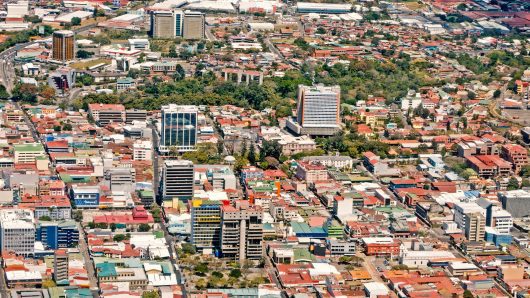
Humanitarian Aid to Costa RicaCosta Rica, a country located in Central America, has received aid from the United States due to recent natural disasters. This aid has been quite positive and has helped Costa Rica recover from hard times.

The most recent humanitarian aid to Costa Rica from the United States was a donation of $150,000 from the Office of Foreign Disaster Assistance to help with storm relief on October 12, 2017. Tropical Storm Nate caused destruction in its path through Costa Rica; 11 people were killed, thousands more were injured and 11,500 people had to use shelters. Costa Rica said that this money will be used to pay for helicopter flights to distribute food, transport and medical care to those in need. This is important since Costa Rica has many remote communities, which means air travel is required to provide the necessary personnel and materials.

This is the largest donation of humanitarian aid to Costa Rica since November 2016, when the United States Southern Command provided relief. The U.S. Southern Command is “responsible for providing contingency planning, operations and security cooperation in its assigned Area of Responsibility,” and one of these Areas of Responsibility is Costa Rica. This is the fifth time that the Southern Command has provided humanitarian aid to Costa Rica.

This project was named Operation Pura Vida, which translates to “simple life” and means a lot to the people of Costa Rica, since “pura vida” is a way of life for them. The Southern Command provided 16 doctors, nurses and dentists who work with 30 Costa Rican physicians to provide free medical care to the people of Telire. Telire is a remote community in the Talamanca mountain range, so helicopters are necessary to reach this area.

Costa Rica has faced some troubling times recently, but the United States has helped use its abundant resources to help those that need it most.

– Scott Kesselring

Photo: Flickr

December 5, 2017
https://borgenproject.org/wp-content/uploads/borgen-project-logo.svg 0 0 Borgen Project https://borgenproject.org/wp-content/uploads/borgen-project-logo.svg Borgen Project2017-12-05 19:39:282024-05-29 22:29:38Humanitarian Aid to Costa Rica Vital to Rural Areas
Aid, Global Poverty, Humanitarian Aid

The Success of Humanitarian Aid to Nigeria

The Success of Humanitarian Aid to NigeriaIn September 2017, U.N. Aid Chief Mark Lowcock said, “that the Government and humanitarians had made important progress in delivering life-saving relief to millions of people in north-east Nigeria.” He made this statement after visiting the country for two days. He did insist on continued efforts from the international community to support humanitarian aid to Nigeria.

This statement shows that humanitarian aid to Nigeria has been making a meaningful impact on the country. The large African country is home to 186 million people and is a large oil producer, but many people do not benefit from the inherent wealth.

The area that the U.K. and other international groups are concerned with is the North East region. According to the Humanitarian Aid Relief Trust, “Nigeria is a country riven with inequality. 85 percent of the population survive on less than two dollars a day, and certain regions, especially the North East, are far behind the rest of the country in terms of development.” It is extremely important to have funds to support this region.

Because of the poverty and poor living conditions of a large majority of Nigeria’s population, international aid organizations have been sending funds to the country. The U.K. pledged $250 million to Nigeria in August and has been a long-term supporter of its former colony’s development. This pledge was made to help stabilize Nigeria as the country is dealing with the terrorist group, Boko Haram. The U.K. had already given over $100 million in 2017 when they made this new pledge. Britain is concerned about the potential famine that could affect around a million people. According to News24, “The new aid is meant to restore key infrastructure and services, improve health care and education and help farmers.”

In addition to the U.K., USAID has also been helping to address food insecurity in the Northeast. The organization gave 2.2 million people emergency food assistance in September. This has been done through cash transfers so that people can buy locally. The success of this type of humanitarian aid to Nigeria occurs at a much more local level.

USAID has also been funding efforts to help improve road access to the North East so that food and supplies can reach those in need. This effort has positively affected over four million Nigerians.

Because of efforts like these, the international community and the people of Nigeria, specifically those in the North East, are seeing improvements. Providing food and resources in order to maintain stability is a continued effort in Nigeria. These efforts will continue to provide support for Nigerians in need of aid and hopefully, humanitarian aid to Nigeria will continue to thrive.

– Emilia Beuger

Photo: Flickr

December 4, 2017
https://borgenproject.org/wp-content/uploads/borgen-project-logo.svg 0 0 Borgen Project https://borgenproject.org/wp-content/uploads/borgen-project-logo.svg Borgen Project2017-12-04 08:44:252024-05-29 22:29:38The Success of Humanitarian Aid to Nigeria
Aid, Global Poverty, Humanitarian Aid

The Success of Humanitarian Aid to Nepal

The Success of Humanitarian Aid to NepalWedged between China and India, the small country of Nepal consists of nearly 30 million individuals. In 2015, the country was devastated by an earthquake that took the lives of nearly 9,000 people, and left close to 4 million in need of urgent humanitarian assistance. The earthquake also destroyed the nation’s infrastructure and homes, setting back economic development significantly. Despite the devastation that occurred, many organizations provided humanitarian aid to Nepal and many of their efforts have proven to be successful. While many organizations showed their support, the work of two key organizations has been transformative to the lives of the Nepalese.

CARE

CARE has been present in Nepal since 1978. Its work has been focused on food security, HIV/AIDS prevention, improving health, education and water sources. It also works to empower young girls and women. When the earthquake struck in 2015, CARE was one of the first organizations that was able to provide humanitarian aid to Nepal. It provided immediate assistance to 10,000 Nepalese with shelter and materials to thousands of others to repair their homes. CARE also distributed water purification tablets, built emergency latrines and provided the Nepalese with hygiene essentials.

Following natural disasters, it is common to see incidents of gender-based violence increase. As part of its humanitarian aid to Nepal, CARE created friendly spaces where women can seek protection, have access to information, education, support and various services. Its work with women has helped to empower many Nepalese women.

To date, CARE has provided humanitarian aid to over 130,000 Nepalese and it is estimated that by the early months of 2018 it will assist another 100,000 people.

Save the Children

Save the Children has worked in Nepal since 1976. The primary goal of its work is to partner with local communities and organizations to design sponsorship programs for kids. These sponsorship programs work to ensure that children have access to education and have the necessary tools to be successful in their education. Some of these tools include access to food, water and sanitation products.

While its work is geared towards assisting children, through providing access to education, Save the Children was also prepared to provide humanitarian assistance to Nepal following the earthquake. In 2016, the organization gave over 1 million children vital nourishment, helped nearly 25,000 families feed their children and supported more than 210,000 children in crisis.

While thousands of children and families have received services and support from Save the Children, its humanitarian aid to Nepal still continues. Many schools have been rebuilt following the earthquake, yet there seems to be a disparity in the number of children who are currently attending. Its current efforts are geared towards getting children back into school and giving them the necessary tools to live a healthy life.

Humanitarian aid to Nepal has been extremely successful. Thousands of Nepalese have been provided with the necessary items, tools and support to rebuild their lives following the earthquake. However, there are many regions of the country that have received little to no support and are still in need. Organizations should continue to provide humanitarian aid to Nepal and other organizations should join the efforts to reduce poverty in the country.

 – Sarah Jane Fraser

Photo: Flickr

December 4, 2017
https://borgenproject.org/wp-content/uploads/borgen-project-logo.svg 0 0 Borgen Project https://borgenproject.org/wp-content/uploads/borgen-project-logo.svg Borgen Project2017-12-04 01:30:482024-05-29 22:29:34The Success of Humanitarian Aid to Nepal
Page 43 of 65«‹4142434445›»

Get Smarter

  • Global Poverty 101
  • Global Poverty… The Good News
  • Global Poverty & U.S. Jobs
  • Global Poverty and National Security
  • Innovative Solutions to Poverty
  • Global Poverty & Aid FAQ’s
Search Search

Take Action

  • Call Congress
  • Email Congress
  • Donate
  • 30 Ways to Help
  • Volunteer Ops
  • Internships
  • Courses & Certificates
  • The Podcast
Borgen Project

“The Borgen Project is an incredible nonprofit organization that is addressing poverty and hunger and working towards ending them.”

-The Huffington Post

Inside The Borgen Project

  • Contact
  • About
  • Financials
  • President
  • Board of Directors
  • Board of Advisors

International Links

  • UK Email Parliament
  • UK Donate
  • Canada Email Parliament

Get Smarter

  • Global Poverty 101
  • Global Poverty… The Good News
  • Global Poverty & U.S. Jobs
  • Global Poverty and National Security
  • Innovative Solutions to Poverty
  • Global Poverty & Aid FAQ’s

Ways to Help

  • Call Congress
  • Email Congress
  • Donate
  • 30 Ways to Help
  • Volunteer Ops
  • Internships
  • Courses & Certificates
  • The Podcast
Scroll to top Scroll to top Scroll to top