• Link to X
  • Link to Facebook
  • Link to Instagram
  • Link to TikTok
  • Link to Youtube
  • About
    • About Us
      • President
      • Board of Directors
      • Board of Advisors
      • Financials
      • Our Methodology
      • Success Tracker
      • Contact
  • Act Now
    • 30 Ways to Help
      • Email Congress
      • Call Congress
      • Volunteer
      • Courses & Certificates
      • Be a Donor
    • Internships
      • In-Office Internships
      • Remote Internships
    • Legislation
      • Politics 101
  • The Blog
  • The Podcast
  • Magazine
  • Donate
  • Click to open the search input field Click to open the search input field Search
  • Menu Menu

Archive for category: Aid

Aid, Development, Global Poverty

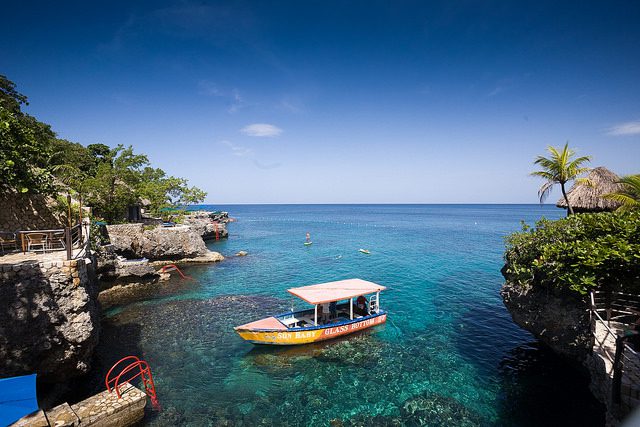
Five Active Development Projects Assisting Jamaica

Development ProjectsThe mission statement of the World Bank is to, “end extreme poverty and promote shared prosperity.” The World Bank has funded over 12,000 development projects across the globe since 1947, and in Jamaica, these projects have provided much-needed assistance to those who need it most. Here is a list of five development projects in progress in Jamaica that are aimed toward improving the lives of the impoverished.

  1. Jamaica Disaster Vulnerability Reduction Project
    Launched in 2016, this project aims to increase Jamaica’s ability to handle natural disasters or dramatic climate events via a four-part plan. The first step is to increase the island’s technological infrastructure to allow for better tracking and predicting of weather events. The next component of this project is the improvement of physical infrastructure on the island to better resist and withstand natural disasters. The third step is to improve emergency services, so that in the event of a disaster, people can more rapidly be assisted. The fourth and final component, which ties all of the parts of this project together, is administrative oversight by the World Bank to ensure accountability.  This project comes at an investment cost of $30 million from the World Bank, a worthy donation that will ensure Jamaica can withstand natural disasters to come.
  2. Early Child Development Project
    The Early Child Development Project (ECD) sets out a three-tier strategy to ensure a better future for at-risk youth. The first goal of this project is to increase the regularity of developmental monitoring, health risk screenings and emergency intervention procedures for children. The second goal is to improve early childhood education facilities through both physical renovation and program development. Lastly, the ECD aims to strengthen and improve training for early childhood education groups, i.e. the adults responsible for providing care for children.  The World Bank began this project in 2014, and has since pledged $14 million toward the cause.
  3. Second Competitiveness and Fiscal Management Program
    Commencing in June of 2017, this project is the World Bank’s most recent development project in Jamaica, with $70 million in funding. The goal is to strengthen Jamaica’s economy and financial sector through a two-part strategy. First, the World Bank aims to support legislative reforms which will enhance the development of the Jamaican economy. Secondly, this plan aims to increase the availability of fiscal management for both businesses and private citizens. If all goes to plan, this project will help Jamaica become a developed country by the year 2030.
  4. Youth Employment in Digital and Animation Industries
    This project began in 2014 with the help of a $20 million loan from the World Bank, and aims to increase employment opportunities for Jamaican youth, specifically in the rapidly expanding digital and animation industries. The World Bank’s plan for this project puts funding into each step along the journey to working in these fields, from early childhood skills training, to investing in the digital animation industries themselves to stimulate growth and job availability. This project also provides funding toward individuals carrying out research, development and innovation in these fields.
  5. Jamaica Integrated Community Development Project
    The World Bank has pledged to provide $42 million from 2014 to 2020 in an effort to improve safety and infrastructure in communities across Jamaica. This project aims to improve roads, drainage, electrical, sewage and water systems and community organizations.

With the assistance of the World Bank, these development projects will encourage Jamaica’s social and economic growth as a nation. With hope and continued aid, Jamaica may be pulled out of poverty and into a bright future.

– Tyler Troped
Photo: Flickr

November 20, 2017
https://borgenproject.org/wp-content/uploads/borgen-project-logo.svg 0 0 Borgen Project https://borgenproject.org/wp-content/uploads/borgen-project-logo.svg Borgen Project2017-11-20 07:30:202019-12-23 08:00:35Five Active Development Projects Assisting Jamaica
Aid, Global Poverty, Hunger

Humanitarian Aid to Rwanda

Humanitarian Aid to Rwanda

We often hear stories about humanitarian aid that highlight waste, corruption and inefficiency. An example is in the wake of the horrific genocide in Rwanda in 1994 when the international community was too slow to react. There are important lessons to be learned from this failure and how to prevent similar atrocities in the future of delivering humanitarian aid to Rwanda.

However, there are also many success stories of aid being delivered effectively, saving lives and changing communities for the better. Despite the tragedy, there have been many positive steps taken to improve humanitarian aid delivery.


Humanitarian Aid to Rwanda Success Stories:

  1. The Clinton Foundation has been giving aid to farmers in Rwanda through the Clinton Development Initiative. During the 2016-2017 season, the foundation worked with over 35,000 farmers. The initiative focuses on increasing crop yields and income for farmers by providing them with the knowledge they need to meet their agricultural goals.
  2. The collaboration between the government and NGOs in Rwanda played a large part in Rwanda’s success in working towards the U.N. Millennium Development Goals (MDGs). Rwanda was one of the few countries to lead in the achievement of the MDGs. Progress was made to close the economic gender gap and free education was extended from 9 years to 12 years. Between 2000 and 2015, the infant mortality rate was cut in half and so was the number of people suffering from hunger.
  3. The USAID Mission in Rwanda began distributing humanitarian aid to Rwanda in 1964. Since that time the U.S. has given aid in many different areas including health, rural development, education and economic development. These funds have also helped develop democracy in Rwanda. The mission had to be halted in 1994 at the beginning of the genocide but was reopened several months later to provide emergency humanitarian aid. The transitional assistance in the wake of the conflict focused on food security as well as HIV/AIDS treatment and prevention. A fully-functioning mission was then reopened in 1998 with a focus on post-conflict reconstruction.

Tackling problems like poverty, hunger and conflict is an enormous undertaking. These issues require complex solutions and coordinated global effects. The size and scope of these efforts can often lead to tragic inefficiencies and lost lives, as was the case with the humanitarian response to the 1994 genocide in Rwanda.

There are also many stories in which humanitarian aid has helped save and improve lives. It is of paramount importance that we learn from the successes and failures of our efforts. The humanitarian aid to Rwanda is an example of both sides of this issue.

– Aaron Childree

Photo: Flickr

November 17, 2017
https://borgenproject.org/wp-content/uploads/borgen-project-logo.svg 0 0 Borgen Project https://borgenproject.org/wp-content/uploads/borgen-project-logo.svg Borgen Project2017-11-17 01:30:352019-12-23 08:04:53Humanitarian Aid to Rwanda
Aid, Global Poverty

Emergency Livestock Vaccination in Mosul

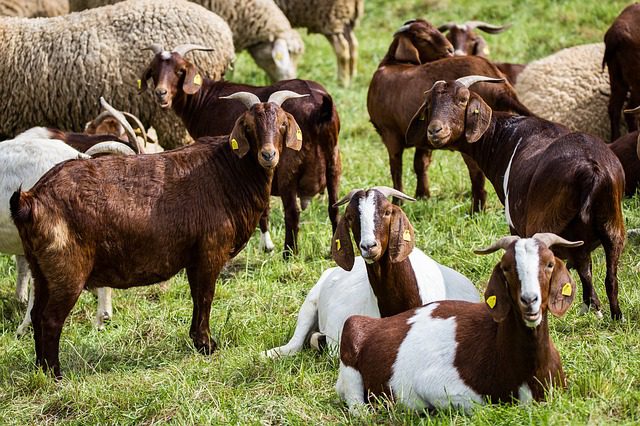
Livestock vaccination in MosulIt has been four months since Iraq’s successful recapture of their second-largest city, Mosul, from Islamic forces. After being under siege for three years, Iraq now has the opportunity to implement livestock vaccination in Mosul. Livestock is the second largest form of agricultural income for Mosul residents and approximately 12 million Iraqis depend on agriculture to live securely.

Since Mosul’s recapture in July 2017, thousands of families who had fled during the conflict returned to their homes to find their farms desecrated. Water supplies were contaminated, agricultural supplies destroyed and any surviving livestock had not been vaccinated since 2014. The lack of livestock vaccinations poses a threat of epidemic diseases that can spread to local residents and neighboring countries.

The United Nations and Iraq have come together to implement an emergency animal health campaign to vaccinate all livestock in the hopes it will end the fear and possibility of being exposed to an epidemic disease. Nearly one million sheep, goats, cattle and buffalo are said to be vaccinated. The Iraq Humanitarian Fund will provide the funds for the vaccinations in partnership with Iraq’s Ministry of Agriculture. In addition, around 60,000 animals will be provided with nutrient-dense food.

The destruction of agriculture will evidently put a delay in the rehabilitation process, as it will take both time and money to rebuild the land. The Food and Agriculture Organization of the United Nations (FAO) released a statement seeking $74.5 million to assist 1.39 million Iraqis. The costs will include agricultural rehabilitation, vaccination and feeding of livestock and expansion of income-generating work and activities for the Iraqi people.

“FAO is committed to ensuring that livelihoods are protected, to promote people’s self-reliance and dignity, and reduce dependence on food assistance,” says Iraq FAO representative Fadel El-Zubi.

With the success of infrastructure restoration and livestock vaccination in Mosul, residents will rely less on humanitarian aid and will have access to producing and selling their own food. By next year, 200,000 Iraqi people should be able to begin earning an income from their agriculture again.

– Brianna Summ

Photo: Flickr

November 14, 2017
https://borgenproject.org/wp-content/uploads/borgen-project-logo.svg 0 0 Borgen Project https://borgenproject.org/wp-content/uploads/borgen-project-logo.svg Borgen Project2017-11-14 01:30:392024-05-29 22:29:10Emergency Livestock Vaccination in Mosul
Aid, Aid Effectiveness & Reform, Charity, Global Poverty

5 Reasons to Donate Money, Not Stuff

Donate money, not stuffIn the midst of global tragedies, many charitable people decide to send old junk or underused resources to foreigners in need. Here are five reasons why one should donate money, not stuff if one wants to solve global hunger.
  1. “Junk” is a logistical nightmare for volunteers. The people brave enough to enter disaster sites must provide emergency care to people in immediate need. They lack the necessary time to sort, transport and store cheap diapers or old sweaters sent in by well-meaning folks. Yahoo Finance reports an incident where, in the aftermath of Hurricane Katrina, a benefactor sent thousands of pounds of cheese to New Orleans. The trouble was that no working refrigerator could hold such a gift. Lots of material goods appeal to a customer’s wants… they’re not so effective in situations of dire need.
  2. Material donations can wreck a nation’s economy. Kathleen Tierney, the director of a Natural Hazards Center in Colorado, notes how economic problems occur in recovering nations when supply outstrips demand. “If you want to see economic recovery, you don’t want to send so many supplies that you create a situation where people can’t survive in a business sense,” said Tierney. Ultimately, the best use of aid is to help a country until they can take care of themselves. It’s difficult to make one’s living selling T-shirts if a global superpower dropped off millions of shirts for one’s potential customers to wear for free.
  3. Local groups know what resources they need. The Central Texas Food Bank, the largest provider of emergency food distributions in the country, was shut down by flooding during 2017’s Hurricane Harvey. The group’s president, Derrick Chubbs, supports monetary donations instead of material aid. He reasons that relief groups in a disaster area know exactly what they need for certain situations. They only lack the funds to acquire the most helpful tools for the job. The chance to clean one’s house and accomplish a moral good is tempting for a lot of do-gooders. But one can achieve similar results by selling old junk to a consignment store (like Goodwill or Half-Priced Books) and donating the proceeds to a respected charity. With one additional step in giving aid, the effectiveness of a donation multiplies.
  4. “Stuff” is a short-term solution to a long-term problem. The media focuses on the immediate aftermath of a tragedy but often loses interest by the time victims have to return to their homes. Groups like the Salvation Army understand that maintaining emergency shelters and rebuilding destroyed sites takes a long time. This is why nonprofits want people to donate money, not stuff. Not only do charities know what to spend cash on, but they know how to divide that cash to ensure a complete job. Such relief groups cannot fix a community with a stuffed animal sent from across the country.
  5. It’s more effective to call/email your representative. So how can someone help if they feel they lack the money to keep themselves afloat? One free solution would be to contact your representative and ask that your government contribute aid to a country or region in need. The Center for Global Development reports that the U.S. donates only 1 percent of its budget towards International Affairs, which includes disaster relief. Not only can this amount be increased through advocacy, but concerned citizens can ask their representatives to support revenue-neutral bills to solve global problems. Anyone interested in this surprisingly easy path to advocacy should explore The Borgen Project’s page on calling Congress.

– Nick Edinger

Photo: Pixabay

November 12, 2017
https://borgenproject.org/wp-content/uploads/borgen-project-logo.svg 0 0 Borgen Project https://borgenproject.org/wp-content/uploads/borgen-project-logo.svg Borgen Project2017-11-12 01:30:262024-05-29 22:27:535 Reasons to Donate Money, Not Stuff
Aid, Health

How to Aid People With Depression in the Developing World

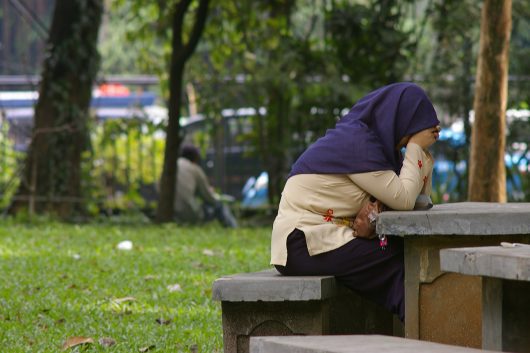
Depression in the Developing WorldDepression is one of the most common conditions affecting Americans each year. In a country as developed as the U.S., health professionals can readily provide high-quality care to patients struggling with depression. Prescription medications have proven successful in treating and helping patients manage their depression, as have therapy and counseling programs. This is unfortunately not the reality for people affected by the same mental illness in the developing world.

It is estimated that 350 million people suffer from depression worldwide, yet less than 10 percent of people in developing countries have access to adequate treatment and care options. A study conducted in rural India found that just under 40 percent of the entire population suffered from some form of mild to moderate depression. Another study conducted in Pakistan found that 50 percent of all women living in rural areas suffered from some form of depression or anxiety. A study published in the Journal of the American Medical Association found that patients who had previously endured a traumatic event – such as conflict or fleeing their countries as refugees – had a significantly increased risk of experiencing recurring depression.

The World Health Organization (WHO) has recognized the severity of depression and its nature as a global health crisis. Conditions that commonly exist in developing countries, such as social and political instability, armed conflict, refugee crises, economic instability and food instability are all extremely high-risk triggers for anxiety and depression disorders. According to the WHO, a disproportionate number of the world’s medical professionals practice in developed countries. There is far greater availability of healthcare in places where it is least needed.

Depression is a disease that can limit a patient’s functioning and cause them a great deal of discomfort and suffering. The WHO has listed depression on their Mental Health Gap Action Program, and as a result, they aim to curb the rising number of individuals suffering from depression in the developing world. The plan is to provide adequate training and assistance to people who might not have extensive healthcare backgrounds so that they can better assist people suffering from depression in developing nations.

There is a real and dire need to determine ways in which to combat depression in the developing world. With the support of the international aid community, organizations such as WHO can implement aid strategies to hopefully bring an end to the disproportionately high number of untreated depression patients living in the developing world.

– Tyler Troped

Photo: Flickr

November 10, 2017
https://borgenproject.org/wp-content/uploads/borgen-project-logo.svg 0 0 Kim Thelwell https://borgenproject.org/wp-content/uploads/borgen-project-logo.svg Kim Thelwell2017-11-10 01:30:592019-12-23 08:51:33How to Aid People With Depression in the Developing World
Aid, Global Poverty, USAID

USAID to Help Salvadorans with Youth Education Programs

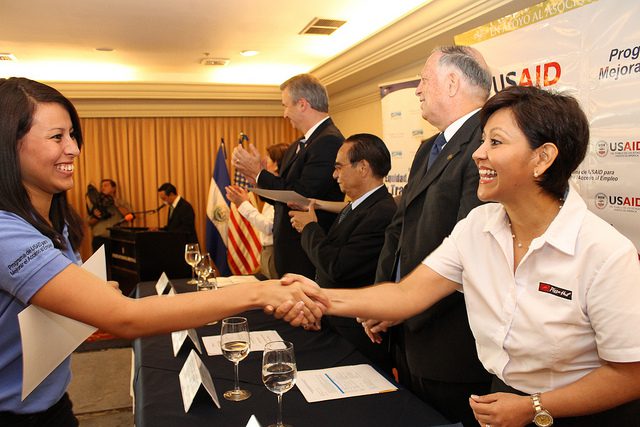
Help SalvadoransThe U.S. Agency for International Development (USAID) is providing job training to equip Salvadorans with skills they can use for future employment and economic opportunities. Larry Sacks, the former USAID and El Salvador Mission Director, was in El Salvador in 1999 and was fearful of the violence that he experienced. He became aware that many Salvadorans are threatened by similar violence every day, and has since been part of USAID initiatives to help Salvadorans.
Youth are the primary victims of violence in El Salvador. Furthermore, many young people have a hard time accessing basic healthcare. Due to the low quality and limited access to basic health services, 41 percent of the HIV/AIDS cases in El Salvador are among young people age 15 to 19.

Poverty, along with the lack of education and job opportunities, forces youth to migrate across international borders to seek better opportunities. Most make their way to the United States,  however many enter illegally. As a result, they have limited access to healthcare and social security in the U.S. as well. This puts young adults at a higher risk of becoming a part of youth gangs, participating in criminal activities and substance abuse.

USAID provides aid that will help Salvadorans thrive, eliminating the need for high rates of migration to other states. USAID is partnering with the government of El Salvador, the Ministry of Education, private sector partners and higher education institutions in both the U.S. and El Salvador.

The activities provided are directed towards young adults at the lower secondary level, grades seven to nine, as they are most susceptible to dropping out of school and most vulnerable to joining gangs.

The education programs that USAID has provided in El Salvador, particularly in high-crime areas, help to keep more than 100,000 youth in school. By providing young Salvadorans with education and a safe environment, they are less likely to join gangs. Further, with USAID’s new programs, over 20,000 youth have now received job training.

– Chloe Turner

Photo: Flickr

November 1, 2017
https://borgenproject.org/wp-content/uploads/borgen-project-logo.svg 0 0 Borgen Project https://borgenproject.org/wp-content/uploads/borgen-project-logo.svg Borgen Project2017-11-01 01:30:122019-12-29 18:20:32USAID to Help Salvadorans with Youth Education Programs
Aid, Global Poverty

How You Can Help the People of Estonia

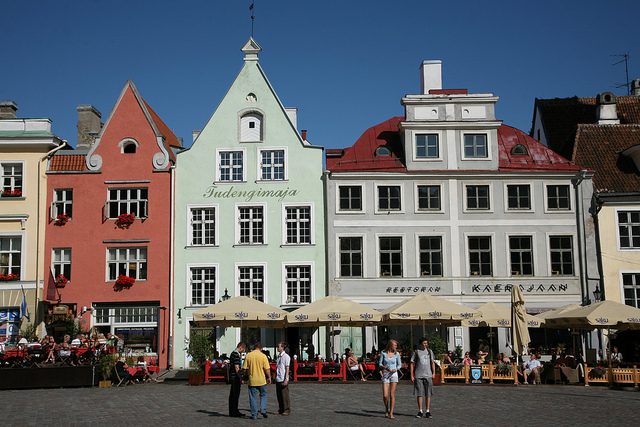
Help the People of EstoniaEstonia is a crucial ally for the United States in the modern age. On March 29, 2004, Estonia joined NATO as a means to strengthen their position in the world and form stronger international relations with the West. Since then, the United States, as well as many other key NATO members, have maintained a strong presence in Estonia to guarantee the nation’s security.

To help the people of Estonia, it is important to consider how to improve the state of their home lives. There are a lot of charitable groups that donate to help displaced children and young mothers.

Caritas Estonia is a valuable organization in Estonia which dedicates itself to improving the lives of vulnerable Estonian women. Their approach to helping the people of Estonia is to provide the support necessary to empower underage mothers and pregnant teenagers to participate and advance in the Estonian workforce.

Another organization working to strengthen Estonian families is SOS Children’s Villages (SOS CV). The organization started in 1992, shortly after Estonia gained its independence from Russia. SOS CV offers a valuable service to the most vulnerable 20 percent of Estonia’s population: it’s children. SOS CV provides homes for children whose parents can no longer afford to house them.

How can you help the people of Estonia? Browse the websites of these organizations to learn more about the work they do. You can donate your time and money to a worthy cause helping to strengthen the Estonian workforce and care for children in Estonia.

You can also email Congress via The Borgen Project’s website. The Borgen Project is an American organization whose purpose is to lobby U.S. Congress to implement policy changes to help reduce poverty around the globe.

These are just a few ways how you can help the people of Estonia.

– Tim Sherwood

Photo: Flickr

October 31, 2017
https://borgenproject.org/wp-content/uploads/borgen-project-logo.svg 0 0 Borgen Project https://borgenproject.org/wp-content/uploads/borgen-project-logo.svg Borgen Project2017-10-31 01:30:122019-12-31 12:44:48How You Can Help the People of Estonia
Aid

The IARAN Keeps Its Eyes on the Future

The IARAN Keeps Its Eyes on the FutureMeet the Inter-Agency Regional Analysis Network (IARAN), a team of nine that is changing the way non-governmental organizations (NGOs) think about aid.
The IARAN, which gained international acclaim when it published “The Future of Aid, INGOs in 2030” report in July, helps humanitarian organizations all over the world by informing NGO strategy through its research about the changing nature of global humanitarianism. Paramount to its mission is ensuring that NGOs around the world harness foresight and modernized approaches to aid when addressing crises.

The group first worked with Save the Children International in 2012 and is now partnering with the international-nonprofit Action Against Hunger to introduce the organization to more proactive and sustainable methods of programming. In both its test-run with Save the Children and its current pilot phase, the group has seen a real change in the way each organization operates — an indicator of success.

The Borgen Project spoke to the IARAN Director Michel Maietta and Communications and Event Manager Leonie Le Borgne about the IARAN’s progress thus far and its ambitions going forward.

“The vision that is behind this program is actually how to contribute to alleviating poverty in a more efficient and preemptive way,” Maietta said. “Most of the humanitarian NGOs are very reactive. Naturally, you want to react when there is a threat. But the problem with reaction is that in the long-term there is no sustainability, and the problem will remain, the vulnerability will remain.”

To create sustainable solutions to the problems endangering the world’s most vulnerable, Maietta argued, NGOs must anticipate and address the root causes of global crises before they manifest. Many of today’s organizations have not practiced such foresight and as a result have not been able to adapt to new challenges or innovate in meaningful ways, yielding disastrous results.

“The refugee crisis that Europe is facing today is a direct consequence of the inability of the humanitarian system to directly access the population in Syria,” Maietta said.

Alternatively, when NGOs prepare for the future and create mechanisms that reduce damage down the line, they greatly increase their potential for positive impact. Planning as far as 15 years in the future can save lives as well as money, and more generally, increases organizational efficiency.

The IARAN aims to bring strategies of preparedness into the humanitarian mainstream.

“[The IARAN is] completely unable to diagnose the Hurricane Irma impact,” Maietta said when describing the IARAN’s scope of influence, “but what we can do is address the root causes of Irma, which are the warming of the Atlantic Ocean and climate change, and then help game-changers to design a preemptive strategy that can actually correct or re-address these root causes.”

Preemptive planning also allows organizations to be quicker and more flexible in their responses to disaster.

“Reactivity and life-saving response, and then strategy, preemptive news and the capacity to address root causes of the problems — the two can be done together. But, you need both. You cannot have one or the other.”

In addition to developing and expanding their work with NGOs, Maietta and his team are also working to enhance the humanitarian leadership graduate programs of two universities in France and Australia. The aim is to ready the next generation of humanitarian managers and directors for the global challenges ahead. This leadership is crucial for the creation of lasting and effective change within NGOs.

“We strongly believe that the humanitarian actors today are very good tacticians because they are very, very reactive,” Maietta said, “but the humanitarian system needs to have strategic leaders, leaders that can handle strategy in a very complex way because the context where we are interacting is very complex.”

The IARAN additionally publishes between 35 and 50 reports a year on a variety of issues, ranging from alleviating poverty to addressing undernutrition to responding to global migration crises. It will also produce a book in the next year that will discuss the organization’s findings from the last four years, including how it developed its methodology and promoted an organizational change in Save the Children and Action Against Hunger.

While the IARAN and its many projects are instrumental in promoting change within humanitarian organizations, the organizations themselves must act for any real progress to occur.

“The mission of IARAN is to offer food for thought but change will not happen without the actors,” Maietta said. “The actors need to be able to be the protagonists of the change.”

Time will only tell if NGOs take up Maietta’s call to action.

– Sabine Poux
Photo: Flickr

October 21, 2017
https://borgenproject.org/wp-content/uploads/borgen-project-logo.svg 0 0 Borgen Project https://borgenproject.org/wp-content/uploads/borgen-project-logo.svg Borgen Project2017-10-21 01:01:312024-05-29 22:27:34The IARAN Keeps Its Eyes on the Future
Aid, Extreme Poverty, Global Poverty, Government

5 Things the US Needs to Know About Extreme Poverty

Extreme PovertyNot all poverty is created equal. Poverty in a developed country is not the same as poverty in a developing nation. Here are 5 things the U.S. needs to know about extreme poverty.

  1. People who live in extreme poverty are deprived of basic human needs such as access to food, clean water and shelter. To be classified as a person living in extreme poverty, one must be living on or below $1.90 a day.
  2. Extreme poverty in a developing nation is different from poverty in a developed nation. The U.S. is a developed nation. In the U.S., government benefits keep millions of Americans out of poverty. These programs mostly tend to target women, children and the elderly, the nation’s (and the world’s) most vulnerable populations. Due to programs such as Social Security, unemployment benefits and food stamps, these people are shielded from the harsh realities of extreme poverty.
  3. Unfortunately, government benefits tend not to exist in developing countries to aid their poor. In addition, due to fear of corruption, the world’s poorest do not receive as much foreign aid as their better-off peers. Low-income countries remain in poverty due to being too poor to be trusted with funds. An effect of this is that the most defenseless population in the world, children, suffers the consequences. The World Health Organization estimates that about 16,000 children under the age of five die each day from preventable causes associated with extreme poverty. The causes of death are lack of access to clean water, lack of access to healthcare, malaria, newborn infections, poor nutrition and diarrhea. Death from these ails is unfathomable in developed countries.
  4. An estimated 766,010,000 people live in extreme poverty today. This is double the size of the U.S.’s population
  5. The number of people in extreme poverty is declining. In 1990, there were 1.1 billion people living in extreme poverty. Today the number is 766 million. This is an amazing feat that can be attributed to a combination of factors such as trade between developed nations and developing nations, foreign aid that reinvigorated economies, increased education, improved infrastructures and investment in basic health.

As with most things in life, poverty cannot be viewed through a single lens. It is a complex social issue, but gains over the past few decades have shown that it is a solvable issue. With continued foreign aid and trade, the world can get that much closer to realizing the goal of eradicating extreme poverty by 2030.

– Jeanine Thomas

Photo: Flickr

October 20, 2017
https://borgenproject.org/wp-content/uploads/borgen-project-logo.svg 0 0 Kim Thelwell https://borgenproject.org/wp-content/uploads/borgen-project-logo.svg Kim Thelwell2017-10-20 07:30:412024-05-29 22:27:405 Things the US Needs to Know About Extreme Poverty
Aid, Global Poverty

How to Help People in Micronesia

How to Help People in MicronesiaMicronesia is a nation in the western Pacific totaling 270 square miles, but its roughly 600 islands are spread out over an area nearly five times the size of France. Due to the unique geography of Micronesia, it faces special challenges– social, economic and governmental.

In the mid-1980s, Micronesia and the United States negotiated a Compact of Free Association that provided the island nation with $100 million per year and its citizens with the right to live and work in the United States. In return, the United States was granted exclusive rights to use the islands of Micronesia as naval and military bases. A similar contract was renegotiated in 2003, this time for 20 years and $3.5 billion to be paid to Micronesia over to course of the contract.

While this compact has certainly been mutually beneficial, Micronesia has become dependent on foreign aid and investment, leaving their economy undiversified and the country unable to adapt to adverse situations, which is why it is now so important to figure out how to help people in Micronesia.

In 2016, Micronesia began to experience one of the worst droughts in the country’s recorded history. Many atolls and islands were ill prepared for this, having few catchments of water, often just enough for a few days or weeks. The drought, caused by the El Niño weather phenomenon, severely damaged Micronesia’s crops, which has led to food shortages.

It has become imperative to find out how to help people in Micronesia. Many organizations have been assisting the region, but help is needed. The International Organization for Migration has gathered significant funding from multiple sources and used such finding to provide clean water, technical training and relief from the worst effects of El Niño.

The United States, New Zealand and Australian governments have combined to donate roughly $240,000. While this is a good step and certainly one in the right direction, the people who were affected by the drought across Micronesia and the U.S. Marshall Islands are in need of more funding in order to recover.

Severe drought is one of the first signs of what is to be a continuous problem for Micronesia. The country is one of the most vulnerable in the world to climate change. The real answer to how to help people in Micronesia is not through short-term donations and provision of aid, though that is necessary and admirable in itself. Instead, the true solution can only be to work diligently to mitigate the effects of climate change for the sake of all nations, especially our less fortunate and more vulnerable neighbors.

– Connor S. Keowen

Photo: Flickr

October 17, 2017
https://borgenproject.org/wp-content/uploads/borgen-project-logo.svg 0 0 Kim Thelwell https://borgenproject.org/wp-content/uploads/borgen-project-logo.svg Kim Thelwell2017-10-17 01:30:442024-05-28 00:15:03How to Help People in Micronesia
Page 44 of 65«‹4243444546›»

Get Smarter

  • Global Poverty 101
  • Global Poverty… The Good News
  • Global Poverty & U.S. Jobs
  • Global Poverty and National Security
  • Innovative Solutions to Poverty
  • Global Poverty & Aid FAQ’s
Search Search

Take Action

  • Call Congress
  • Email Congress
  • Donate
  • 30 Ways to Help
  • Volunteer Ops
  • Internships
  • Courses & Certificates
  • The Podcast
Borgen Project

“The Borgen Project is an incredible nonprofit organization that is addressing poverty and hunger and working towards ending them.”

-The Huffington Post

Inside The Borgen Project

  • Contact
  • About
  • Financials
  • President
  • Board of Directors
  • Board of Advisors

International Links

  • UK Email Parliament
  • UK Donate
  • Canada Email Parliament

Get Smarter

  • Global Poverty 101
  • Global Poverty… The Good News
  • Global Poverty & U.S. Jobs
  • Global Poverty and National Security
  • Innovative Solutions to Poverty
  • Global Poverty & Aid FAQ’s

Ways to Help

  • Call Congress
  • Email Congress
  • Donate
  • 30 Ways to Help
  • Volunteer Ops
  • Internships
  • Courses & Certificates
  • The Podcast
Scroll to top Scroll to top Scroll to top