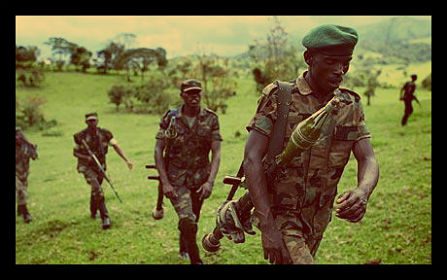
You might be surprised to find that the United States isn’t the richest country in the world. Actually, that crown goes to Qatar who has recently jumped ranks to take first place. But what about the other side of the spectrum, the parts of the world struggling with devastating poverty? Well, on that end the Democratic Republic of Congo comes in first – or last, to be more accurate – as the poorest country in the world, with the lowest GDP per capita than any other country.
The Poorest Country in the World: The Democratic Republic of Congo
Determining a country’s rank in wealth isn’t the easiest of tasks when you sit down and think about the data and economics involved. However, a good indicator of a nation’s standard of living is the assessment of its GDP (gross domestic product) per capita, which is defined as the total value of all domestic goods and services that country produces annually, times its PPP or purchasing power parity. GDP per capita (PPP) isn’t a perfect shot because its purpose isn’t to calculate that kind of economic rank but it’s measured frequently, widely and consistently, allowing trends to become visible.
In 2010, GNI (gross national income) per capita replaced GDP in the calculation, but the list is the same between the two. Qatar was still first with about $100,000 GDP per capita (PPP) in 2012 just as it was on the GNI list and the Democratic Republic of Congo came in last at around $370 GDP per capita (PPP). The gap is massive.
Of the 40 poorest countries in the world, a solid 33 are in Sub-Saharan Africa. They include Zimbabwe, Burundi, Liberia, and Niger. Other parts of the world notoriously infamous for high poverty rates include Afghanistan, Haiti, and Nepal. But none of these places takes it quite as harshly as the Democratic Republic of Congo (not to be confused with the Republic of Congo) whose turbulent past and bloody wars have eclipsed the nation’s potential to thrive.
Since its independence in 1960 and once the most industrialized country in Africa, Congo has bled onto the ground because of its lack of infrastructure and the brutal impact of civil war. Disputes between Congo’s prominent rival groups, the Hutu and Tutsi, erupted after the Rwandan Genocide in which 500,000 people, mostly Tutsi, were victims of mass slaughter by the Hulus in the East African state of Rwanda.
The result was an exodus of over 2 million Rwandans fleeing to neighboring countries like the Democratic Republic of Congo, known in that time as Zaire. Most of the refugees were Hulus attempting to escape the Tutsi who had climbed to dominance at the end of the genocide. The Hulu refugee camps in Zaire, however, became politicized and militarized and when Tutsi rebels invaded Zaire to repatriate the refugees, the conflict escalated into the First Congo War in 1996.
The situation only grew worse and by 1998, the Second Congo War, which was sometimes called the “African world war” because it involved a total of nine African countries and twenty armed groups, devastated Zaire and laid waste to her population and economy. The political turmoil continues today despite intervention and peace attempts and is one of the world’s deadliest conflicts with a death toll of 5.4 million people.
More than almost 90 percent of the conflict’s victims, however, died due a lack of access to shelter, water, food and medicine – all severely aggravated by displaced and overcrowded populations living in unsanitary conditions. Not to mention, 47 percent of deaths were children under 5 and some 45,000 children continue to die each month.
The nation also faces the problem of human rights and the countless crimes against humanity because while many have returned home, an estimated 1.5 million are still displaced. DR Congo is also infamous and heavily criticized for its treatment of women. The east of the country has been described as the “rape capital of the world” and rates of sexual violence has been described as the worst in the world.
It doesn’t help that DR Congo is consistently poisoned by corruption and greed. While mining growth has somewhat boosted the country’s economy, the elite are said to syphon off revenue for their own personal gain due to the nation’s lack of strong central government. Conflicts over basic resources, access and control over rich minerals and oil, and political agendas are some of the many complex causes behind the Democratic Republic of Congo’s inability to rise among the ranks and take the title of the poorest country in the world.
– Janki Kaswala
Sources: World Bank, Maps of World
Photo: The Telegraph

5 Republican Foreign Aid Quotes
Not all Republicans are opposed to foreign aid, and even those who are, have much to say regarding its usage in the American budget. The following are five quotes from various Republican politicians regarding their views on foreign aid.
1. “It has been hard to muster the resources to support fledgling democracies–or to help the world’s most desperate… yet this assistance–together with the compassionate works of private charities–people of conscience and people of faith–has shown the soul of our country.” – Former Secretary of State Condoleeza Rice (2012 Republican Convention)
2. “But too often our passion for charity is tempered by our sense that our aid is not always effective. We see stories of cases where American aid has been diverted to corrupt governments. We wonder why years of aid and relief seem never to extinguish the hardship, why the suffering persists decade after decade. Perhaps some of our disappointments are due to our failure to recognize just how much the developing world has changed. Many of our foreign aid efforts were designed at a time when government development assistance accounted for roughly 70 percent of all resources flowing to developing nations. Today, 82 percent of the resources flowing into the developing world come from the private sector. If foreign aid can leverage this massive investment by private enterprise, it may exponentially expand the ability to not only care for those who suffer, but also to change lives.” – 2012 Presidential Candidate Mitt Romney (in an address to the Clinton Global Initiative, 2012)
3. “For development to play its full role in our national security structure, the U.S. Agency for International Development (USAID) must be a strong agency with the resources to accomplish the missions we give it. But during the last two decades, decision-makers have not made it easy for USAID to perform its vital function. Even as we have rediscovered the importance of foreign assistance, we find ourselves with a frail foundation to support a robust development strategy. I believe the starting point for any future design of our assistance programs and organization should not be the status quo, but rather the period in which we had a well functioning and well-resourced aid agency.” – Senator Dick Lugar (Statement on Foreign Assistance Revitalization and Accountability Act, 2009)
4. “Foreign aid is also an important part of America’s foreign policy leadership. While we certainly must be careful about spending money on foreign aid, the reality is that it is not the reason we have a growing debt problem.” – Senator Marco Rubio (Foreign Policy address at the Jesse Helms Center, 2011)
5. “But I would just tell my fellow citizens and people from South Carolina, I want to shape the world the best we can rather than just follow the world and if you don’t believe military force is the answer to every problem, which I don’t, then we need an engagement strategy, and sometimes investing in a country at the right time can pay dividends.” – Senator Lindsey Graham (in a hearing, 2008)
– Samantha Davis
Read global poverty quotes
Sources: Wall Street Journal, Vote Smart, USGLC
Photo: Flickr
Slum Rising Offers Shift in Thought about Slums
Slums, the vast range of informal housing settlements in developing countries, are largely the result of rapid urbanization, weak housing institutions, and increasing urban poverty. Though often marked by harsh living conditions, lack of sanitation, and no clean water or electricity, popular perceptions of slums tend to reflect misconceptions about and prejudices against the urban poor.
Abby Higgins, a travel writer and journalist, is working to change this one sided discussion on urban slums and their dwellers. After living in Kibera, Kenya’s largest slum, for two years, Higgins was moved by the way her pre-conceived ideas about Kibera vastly differed from its reality. In Kibera, she found a thriving, unified community, rich culture and strong innovative techniques used to negate the constraints of living in a slum.
Her three-part series, Slum Rising, attempts to shift the conversation about slums from “objects of pity to complex parts of a global economy.” Brought to life through a combination of writing and photography, Kibera’s stories are told in three parts. Part one tells the tale of Higgins’s introduction to Kibera and ends with reflection on outsider perceptions versus realities in today’s slums. Part two highlights slums as centers of innovation and creation. Part three tells the stories of unsuccessful government housing plans and helpful alternatives to relocation.
Slum Rising has been featured in the Seattle Times, One’s blog and Good Magazine. You can read the series and experience the movement here.
– Tara Young
Sources: UN Habitat, World Vision, Share the World’s Resources, Seattle Globalist
Photo: Kickstarter
Serengetee Shirts: Fighting Poverty in Style
What happens when activism and fashion unite? Serengetee, an apparel company with a good-humored name, was created last year by five college students with an innovative goal in mind.
The company’s tagline, “Wear the world,” certainly rings true. Serengetee currently has 32 partners to whom it donates 13 percent of its proceeds for every shirt or pair of shorts sold. Each piece of clothing comes with a unique pattern representative of the country it benefits, juxtaposing the clothings’ all-American style.
For instance, sales of “Azul Calavera,” which feature smiling decorative skulls amid a floral backdrop, go toward Soles4Souls, which collects and distributes shoes to impoverished people around the world.
“Kruger,” meanwhile, showcases sunset hues and adorable sketches of elephants, tribal warriors, and gazelles, and benefits the TLC Children’s Home—an organization that provides free care and support to abandoned South African children.
Other buyers can purchase “Managua,” a popular rainbow-striped pattern inspired by the natural scenery in Nicaragua, which benefits Pencils of Promise, a non-profit group dedicated to improving access to worldwide education.
The Future of Serengetee
Since its recent beginnings, the company has donated over $30,000 to causes in over 28 developing countries. The company has even been briefly overwhelmed from the support it has received – following immense social media buzz, orders were backlogged earlier this spring.
Serengetee founders are now prepared for future surges in sales as their public profile continues to rise. They have reached back to their undergraduate roots by employing college representatives from campuses nationwide to promote the Serengentee vision.
With a plethora of trend-setting designs and charitable causes to choose from, it is hard not be charmed by the idea of making the fight against global poverty a primary fashion statement.
– Melrose Huang
Sources: Serengetee, Forbes, Yahoo
Photo: Serengetee
Was Karl Marx Correct?
Was Karl Marx correct? Considered one of the fathers of modern communism, Karl Marx is not exactly a celebrated figure in western culture. Nor is he well understood. It is not possible to provide an adequate summary of his political or economic theories in this space, but a general discussion of some of his ideas may prove beneficial to understanding the current global economic crisis and the growing crisis of income inequality. Whatever our preconceived notions about Marx may be, one cannot deny the thought-provoking nature of his ideas.
Marx envisioned history as a kind of evolution in the modes of production, each mode being defined or characterized by class struggle. Marx theorized that the capitalist mode of production relies on profits that are generated by the exploitation of workers’ time and labor. The desires of the workers–higher wages and better working conditions–will always be pitted against that of the capitalist, who seeks only to maximize profits.
Naturally, this idea is not popular in western societies where “free markets” and “capitalism” are considered canon. But Marx’s theories may need to be revisited. Since 2008, the world’s economies have experienced sluggish growth, stagnant incomes and widening gaps in income inequality. As a result, there is an increasing tension between the rich and working classes as evidenced by movements such as Occupy Wall Street and the fast-food workers’ strike in the United States and the garment workers’ protests in Bangladesh. Though these events garner little mainstream media attention, they are worth exploring and understanding.
If there is one Marxist idea that is particularly relevant today, it is this–capitalism will impoverish the working masses and concentrate wealth in the hands of a very small but very powerful class of über-rich individuals. According to a study by the Economics Policy Institute, between 1983 and 2010, 74 percent of the gains in wealth in the U.S. went to the richest 5 percent while the bottom 60 percent suffered a decline. There are plenty of troubling statistics like these that evidence a crisis of wealth inequality in the United States and across the world.
Marx wrote, “Accumulation of wealth at one pole is at the same time accumulation of misery, agony of toil, slavery, ignorance, brutality, mental degradation, at the opposite pole.” Any objective view of global economics today can see how this statement makes practical sense.
This is not to say that Marx developed a perfect worldview or flawless economic theory. But perhaps the critical question is not whether Karl Marx was correct, but whether western policymakers are (at best) the victims of dogmatic groupthink or (at worst) well-compensated puppets of the über-rich.
To change current economic trends, people everywhere will need to come together to generate new ideas and begin thinking about alternatives to capitalism. Marx might be a good place to start.
– Daniel Bonasso
Sources: Time, Economic Policy Institute, Stanford Encyclopedia of Philosophy
Photo: Critical Theory
Ethiopia Slashes Child Mortality Rate, Meets MDG
It seems that time and time again, all we hear regarding the Millennium Development Goals (MDGs) is how so many countries may not meet them by 2015. Poverty rates in Country A are actually rising. The illiteracy rate in Country B is unfortunately stagnant. The international community isn’t doing enough to make certain goals achievable.
But for some developing nations, there is a light at the end of the tunnel. For these nations, reaching the MDGs may not be too far away. In some cases, it has already been achieved. The East African nation of Ethiopia is one country that has succeeded.
As a country that used to make headlines for heart-wrenching stories of hunger and famine, Ethiopia is quickly making itself a leader in the development of African nations, and it is only beginning with its commitment to the reduction of the child mortality rate.
According to a recent report funded by UNICEF, the World Health Organization (WHO), and the World Bank, Ethiopia has recently become one of the handful of developing countries to succeed in cutting its mortality rate for children under the age of five years prior to the 2015 cutoff date. The data shows that Ethiopia has reduced child deaths by more than two thirds over the past two decades, taking the rate from 204 children in every 1,000 births that died before reaching the age of five to 68 per 1000 births.
Ethiopia’s progress in this area can be attributed to the government’s commitment to achieving the MDGs as well as its fervent allocation of resources towards healthcare programs. Poverty and fertility rates are down, and the number of children enrolled in school has doubled. The progress is not solely limited to urban areas, but rural and remote parts of the country are seeing a decrease in child mortality rates as well.
Ethiopia’s Minister off Health, Dr. Kesetebirhan Admasu, credits the country’s progress to a mixture of government policies as well as the UNICEF-trained and supported 38,000 community health workers the Government brought in and placed throughout 15,000 health posts all across Ethiopia. Dr. Kesete believes the community health workers have led the way to achieving major reductions in child and maternal mortality. He also alluded to how much of an impact an involved government and community can make on a poor country.
“With commitments of governments and the community, it is really possible to make a difference and to save the lives of millions of children and mothers across Africa,” Kesete said.
Dr. Peter Salama, UNICEF country representative for Ethiopia, agreed, praising the ongoing commitment that the Ethiopian government has had towards the development of the country. Salama added that the government-implemented programs will lead to a more sustainable Ethiopia, seeing as they are government-funded rather than donor-supported.
“The government has set some very bold and extremely ambitious targets. It has then backed them up with real resources and real commitment sustained over the last 10 years,” Salama said.
Ethiopia’s progress is a model for other African nations showing that success in reducing poverty and increasing development is possible. With Ethiopia as a leader, other African governments have come forward and pledged their commitments to increasing child survival in their respective nations, as well as taking control of their countries’ development rather than leaving it to donors.
To this end, Ethiopian leaders have been working on developing country-led roadmaps that incorporate potential policies to end preventable deaths among children under five by 2035, as well as decrease the mortality rate for children under five to under 20 for every 1000 births in all African countries.
Feature Writer
Sources: The Guardian, UNICEF
Photo: USAID
Poorest Country in the World: Democratic Republic of Congo
You might be surprised to find that the United States isn’t the richest country in the world. Actually, that crown goes to Qatar who has recently jumped ranks to take first place. But what about the other side of the spectrum, the parts of the world struggling with devastating poverty? Well, on that end the Democratic Republic of Congo comes in first – or last, to be more accurate – as the poorest country in the world, with the lowest GDP per capita than any other country.
The Poorest Country in the World: The Democratic Republic of Congo
Determining a country’s rank in wealth isn’t the easiest of tasks when you sit down and think about the data and economics involved. However, a good indicator of a nation’s standard of living is the assessment of its GDP (gross domestic product) per capita, which is defined as the total value of all domestic goods and services that country produces annually, times its PPP or purchasing power parity. GDP per capita (PPP) isn’t a perfect shot because its purpose isn’t to calculate that kind of economic rank but it’s measured frequently, widely and consistently, allowing trends to become visible.
In 2010, GNI (gross national income) per capita replaced GDP in the calculation, but the list is the same between the two. Qatar was still first with about $100,000 GDP per capita (PPP) in 2012 just as it was on the GNI list and the Democratic Republic of Congo came in last at around $370 GDP per capita (PPP). The gap is massive.
Of the 40 poorest countries in the world, a solid 33 are in Sub-Saharan Africa. They include Zimbabwe, Burundi, Liberia, and Niger. Other parts of the world notoriously infamous for high poverty rates include Afghanistan, Haiti, and Nepal. But none of these places takes it quite as harshly as the Democratic Republic of Congo (not to be confused with the Republic of Congo) whose turbulent past and bloody wars have eclipsed the nation’s potential to thrive.
Since its independence in 1960 and once the most industrialized country in Africa, Congo has bled onto the ground because of its lack of infrastructure and the brutal impact of civil war. Disputes between Congo’s prominent rival groups, the Hutu and Tutsi, erupted after the Rwandan Genocide in which 500,000 people, mostly Tutsi, were victims of mass slaughter by the Hulus in the East African state of Rwanda.
The result was an exodus of over 2 million Rwandans fleeing to neighboring countries like the Democratic Republic of Congo, known in that time as Zaire. Most of the refugees were Hulus attempting to escape the Tutsi who had climbed to dominance at the end of the genocide. The Hulu refugee camps in Zaire, however, became politicized and militarized and when Tutsi rebels invaded Zaire to repatriate the refugees, the conflict escalated into the First Congo War in 1996.
The situation only grew worse and by 1998, the Second Congo War, which was sometimes called the “African world war” because it involved a total of nine African countries and twenty armed groups, devastated Zaire and laid waste to her population and economy. The political turmoil continues today despite intervention and peace attempts and is one of the world’s deadliest conflicts with a death toll of 5.4 million people.
More than almost 90 percent of the conflict’s victims, however, died due a lack of access to shelter, water, food and medicine – all severely aggravated by displaced and overcrowded populations living in unsanitary conditions. Not to mention, 47 percent of deaths were children under 5 and some 45,000 children continue to die each month.
The nation also faces the problem of human rights and the countless crimes against humanity because while many have returned home, an estimated 1.5 million are still displaced. DR Congo is also infamous and heavily criticized for its treatment of women. The east of the country has been described as the “rape capital of the world” and rates of sexual violence has been described as the worst in the world.
It doesn’t help that DR Congo is consistently poisoned by corruption and greed. While mining growth has somewhat boosted the country’s economy, the elite are said to syphon off revenue for their own personal gain due to the nation’s lack of strong central government. Conflicts over basic resources, access and control over rich minerals and oil, and political agendas are some of the many complex causes behind the Democratic Republic of Congo’s inability to rise among the ranks and take the title of the poorest country in the world.
– Janki Kaswala
Sources: World Bank, Maps of World
Photo: The Telegraph
The Mechanic Who Is Lighting Up the World
In 2002, Brazilian mechanic Alfredo Moser figured out a way to illuminate his home without using electricity. His idea was simple— it involved clear plastic bottles filled with water and a small amount of bleach to protect the water from algae. After drilling a hole in his roof, Moser pushed the two-liter bottle up and through the hole, exposing it to sunlight. The water’s refraction of the sunlight created an illuminating effect equal to that of a 60-watt light bulb. Moser’s lamp is now being used to light up the world.
The MyShelter Foundation, an organization that brings sustainable building solutions to poorer regions of the Philippines, has used the Moser lamp to light up more than 140,000 homes. Use of the lamps has also spread to 15 other nations. MyShelter hopes to have one million lamps installed around the world by 2015. The organization also trains individuals to make and install the lamps, which helps them earn a small income. “Alfredo Moser has changed the lives of a tremendous number of people, I think forever,” said Illac Angelo Diaz, the executive director of MyShelter.
In fact, Moser’s lamp has the potential to change the lives of billions of people. The World Bank estimates that more than 1.2 billion people do not have access to electricity. That means 20 percent of the world’s population cannot turn on the lights. Though Moser’s lamp can only be used during the day, it is beneficial for people who live in shacks and huts that are often dark and windowless. According to the United Nations, the lamp refracts light 360 degrees and can reach all corners of a 40 square meter room.
In terms of cost, most of the bottles are upcycled and the cost of installation is less than a U.S. dollar. The United Nations estimates the monthly electricity savings are almost $6. It would be difficult to find illumination that is cheaper or more sustainable than the Moser lamp.
Though Moser has earned little from his invention, it has been a great source of pride. In an interview with the BBC, Moser said that he could never have imagined that his idea would have such an impact on people throughout the world. “It’s a divine light,” he said. “God gave the sun to everyone, and light is for everyone. Whoever wants it saves money. You can’t get an electric shock from it, and it doesn’t cost a penny.”
— Daniel Bonasso
Sources: BBC , Liter of Light , United Nations
Could GMO’s Help Prevent Food Shortages?
With the world population expected to double by 2050, food security will continue to be an increasingly complicated and important issue. More food will be needed to feed more people and, to preserve vital biodiversity sites, we’ll need to produce this additional food using land already devoted to agriculture. While there are many factors that could improve agricultural efficiency, genetically modified crops hold the most potential. Many scientists now believe that transgenic plants could help prevent or minimize future food shortages.
Transgenic plants are those that possess an inserted portion of DNA either from a different member of their own species or from an entirely different species. The inserted DNA serves some special purpose, such as allowing the plant to produce natural insecticides. Once the genes are transferred, they can be passed on to offspring through simple fertilization, allowing farmers to breed advantageous traits in their plants. Transgenic plants have proven extremely profitable in the developed world, accounting for a 5% to 10% increase in productivity, and reducing the cost of herbicides and insecticides.
Such methods could effectively increase productivity in the developing world, where a surge in food production is sorely needed. Developing countries, especially those in the tropics and subtropics, suffer severe crop losses due to pests, diseases, and poor soil conditions. In addition, a lack of financial capital often prevents farmers from investing in high quality seeds, insecticides, and fertilizers. Poor post-harvest conditions such as inadequate storage facilities and thriving fungi and insect populations also fuel crop loss. Currently, pests destroy over half the world’s crop production. Transgenic plants could provide an innovative solution.
Fortunately, bioengineering solutions can be easily adapted from one species to another, allowing one advancement in plant biotechnology to quickly produce many more. For example, insect-resistant strains of several important plant species have been produced using one specific endotoxin. Commercial production of insect-resistant maize, potato, and cotton has already begun. Plant bioengineers hope to use similar technology to create fruits that ripen more slowly, allowing for longer shelf lives and less post-harvest crop loss.
It is important to note that this technology has mostly been established with the developed world in mind. Therefore, adapting it for use in the developing world must be done carefully. For instance, many crops grown in the developing world are local varieties and have not been extensively tested thus far by plant bioengineers. Blindly replacing local crops with bioengineered varieties from the developed world could disturb deep social or religious traditions that are represented in the widely varied cultures in the developing world. Additionally, societies are more likely to embrace a familiar crop than a foreign one. Research and development in bioengineering must, therefore, adapt to include the crops of the developing world.
Although the globe produces enough food for everyone, people everywhere continue to die of starvation. With this unequal distribution in mind, it is imperative that, moving forward, small farmers in the developing world receive the same access to plant biotechnology given to large agribusinesses in the developed world. First-world corporations cannot be granted even more unfair advantages over small landholders in poorer nations, especially as global populations grow and food security becomes ever more scarce and important. As this technology is developed, it is up to us to share it with the developing world in order to minimize severe food shortages in the years to come.
– Katie Fullerton
Sources: Plant Physiology, Colorado State University
Photo: Tree Hugger
African Infrastructure Projects Boom
The 50 countries that make up the African Caucus recently released a statement requesting additional support for large-scale infrastructure projects on the continent. In their address to the World Bank and the International Monetary Fund (IMF), the officials requested funding for these projects, as well as assistance with debt relief.
Large-scale infrastructure projects in Africa have gained momentum in the past year, including U.S. President Barack Obama’s call for U.S. support for an energy grid for the continent. The meeting among World Bank and IMF governors resulted in a Single Infrastructure Project Preparation Facility that will help leverage support for these large-scale projects.
In addition to supporting these bi-lateral and multi-lateral projects, the African Caucus has asked the World Bank to assist with identifying private sources of capital that may help fund these projects. These large-scale infrastructure projects will include energy, water, transportation, and sanitation development efforts.
The World Bank recently approved financing for a USD $340 million hydroelectric project in Africa’s Great Lakes region. The Regional Rusumo Falls Hydroelectric Project will utilize the power from the Rusumo Falls and will eventually generate 80 megawatts of electricity.
The International Finance Corporation (IFC), a member of the World Bank Group, has also undertaken significant infrastructure projects on the continent. In 2012, IFC funding for these projects reached USD $1 billion. The IFC focuses its projects on renewable energy and sustainable infrastructure projects due to its increased concern for global climate change.
President Jacob Zuma of South Africa recently invited businesses from the BRIC (Brazil, Russia, India, and China) to invest in Africa’s infrastructure development. In his address at the BRIC Business Council, Zuma emphasized the commercial opportunities that would open, given improved infrastructure across the continent.
The China Development Bank (CDB) recently announced that their investment in African infrastructure projects has reached USD $2.4 billion. This funding has gone to support projects in mining development, energy, and agricultural and mechanical manufacturing.
During his June 2013 trip to Africa, Obama announced a USD $7 billion investment in energy infrastructure projects in the Sub-Saharan region of the continent. While there are critics of this energy plan, it seems to be one in a long line of infrastructure projects planned for the continent.
– Callie D. Coleman
Sources: Afrique, IFC, USA Today, South Africa Info, Ventures
Photo: IPS
Gender Equality and the Developing World
According to the World Bank, gender equality enhances economic development, improves prospects for future generations and strengthens political and social systems. Though women now comprise more than 40 percent of the world’s labor force, they still lag behind men in terms of earnings and productivity. Women also face greater obstacles when it comes to participation in social and political institutions. Particularly in developing nations, the gender gap hinders economic and social development and destabilizes the political environment.
In it’s 2012 World Development Report: Gender Equality and Development, the World Bank suggests four priority areas for improving gender equality. The first is reducing gender gaps in human capital, specifically female mortality and education. Second, improving female access to education and economic opportunities. Third, addressing women’s under-representation in communities and political systems. Finally, understanding how gender inequality applies across generations. These four priority areas help policymakers understand and address problems associated with the gender gap.
Many factors are helping alleviate the gender gap and promote gender equality in developing nations. Globalization and increased access to information are providing women with stronger connections to markets and economic opportunities. These factors also contribute to increasing knowledge about women’s roles in other cultures throughout the world. Perhaps most importantly, there seems to be a broad understanding and growing consensus about the importance of women’s economic, political, and social empowerment.
One area where gender equality seems particularly important is that of agricultural production and food security. The World Bank Report suggests that improving resource access for women could increase agricultural productivity by 4 percent in developing countries. For example, maize production increased by more than 15 percent in Malawi and Ghana when women farmers were provided with the same resources as men. And, according to the World Food Programme, the number of hungry people in the world could be reduced by as much as 150 million if women farmers had the same access to resources as men.
These reports and accompanying statistics suggest that improving gender equality in developing nations will enhance economic production and create stronger social and political systems. With these systems in place, nations and leaders will be better equipped to address the many issues that confront the developing world. Progress has certainly been made when it comes to gender equality. With more and more evidence confirming the importance of empowering women, policymakers would be well served to improve women’s access to healthcare, education, and economic opportunities as well as increasing female participation in social and political systems.
– Daniel Bonasso
Sources: Council on Foreign Relations, World Bank, World Food Program
Photo: Fincon