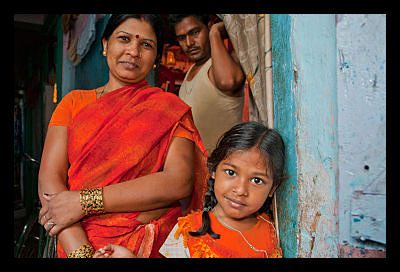
A $100 million credit agreement, signed by the World Bank and the Indian Government, will help low-income Indian families access a loan to purchase, build, or upgrade their dwellings.
The National Housing Bank (NHB) will implement the Low Income housing Finance Project, which will support the government’s agenda for financial inclusion on two counts. First, it will enable low-income households in urban areas to access housing finance, and second will strengthen the capacity of financial institutions that target these groups.
India faces a crippling housing shortage; as its urban population continues to rapidly expand, the urban housing shortage is estimated to be 19 million (as of 2012). Low-income families bear the brunt of the problem; they are faced with an estimated 90% of the shortage.
The housing sector is vulnerable to challenges because current land use policies and building norms restrict the availability of housing. Since the majority of the low-income population works in the informal sector, they lack documentation of income and therefore require customized lending products; as a result, developers are reluctant to enter the low-income market due to the perceived risks associated with these buyers.
As the Indian government strives to achieve financial inclusion for the whole population, the project will let the NHB innovate and provide financial solutions for improving low-income access to housing.
R.V. Verma, chairman and managing director of National Housing Bank said, “The program, which will explore sustainable housing finance models for low income households, has been conceived imaginatively and is consistent with the vision and charter of the NHB.”
Michael Haney, operations advisor at the World Bank, explained how the influx of 10 million Indians to towns and cities each year run into trouble finding loans to build or buy themselves houses. “They are forced to use unregulated, informal sources of finance at much higher rates of interest,” he explained.
The new initiative will help families move from informal sources of finance to longer-term, official sources for their housing needs; risk management, market infrastructure and new products will be implemented in order to achieve this goal.
Initially, the project will launch pilot programs to test the sustainability of these lending guidelines and products, and the long-term goal will be to preserve affordability for low-income families by finding alternative forms of collateral to reduce credit risk and keep interest rates at manageable levels.
– Chloe Isacke
Sources: World Bank, Economic Times
Photo: Kootation

UN Investigates the Alleged Use of Chemical Weapons in Syria
Earlier this week, an attack utilizing chemical weapons in Syria may have left 130 people dead. According to opposition groups, Assad’s government launched rockets with chemical warheads into Damascus suburbs on Wednesday. The government sent further warheads into the suburb on Thursday. Photographic evidence from Wednesday’s attack shows the telltale symptoms of the use of some toxic chemical: difficulty breathing, vomiting, constricted pupils, skin rashes and loose bowels. Western experts believe that sarin gas, an organophosphate agent, was used in the attack.
Secretary Ban Ki-Moon has urged an investigation into the attack, saying that there would be ‘serious consequences’ for those responsible. Ban urged the government to cooperate with the international body, saying,“The time has clearly come for the parties to stop shooting, and start talking. I am determined to do everything I can to assist the victims and move towards a political solution. That is the only way this crisis will be resolved.” Currently, a UN team is in Syria spending up to two weeks investigating the alleged use of chemical weapons by the government. The mandate granted the UN team access to only 3 of 13 sites identified as suspicious before the attack on Wednesday. Angela Kane, the top UN official on disarmament, is expected to arrive in Damascus on Sunday. Kane will push to give UN inspectors access to the affected region.
The Syrian government has not responded to UN requests. Thus far, Syria has not granted UN inspectors access to sites supposedly affected by chemical weapon. Russia, Syria’s arms supplier, said that it was the rebels, not the government, who were preventing UN inspectors from investigating the region. In response, Syrian rebels pledged to guarantee the safety of UN inspectors. Thus far, the rebels have been compliant with these investigations, even sending tissue and blood samples for further inspection.
The international community is conflicted over how to respond to these claims, if they are indeed true. France said that, if the allegations against the government prove to be true, the international community needs to respond with force. Similarly, Turkish Foreign Minister Ahmet Davutoglu said that a ‘red line’ had been crossed in Syria. Although Washington previously said that chemical weapon use was its ‘red line’ in Syria, the Obama administration stated that it was appalled by the allegation and no further plans of retaliation have been put forth. European officials say that there are options, but that they become limited without US support. Furthermore, there is little the international community can do without the support of the Security Council. Russia, Syria’s greatest ally to the Security Council at the moment, went so far as to suggest that the opposition had staged the attack.
According to Ki-Moon, “Our challenge remains: achieving a complete cessation of hostilities, delivering humanitarian assistance and getting the Government and the opposition to the negotiating table in Geneva as soon as possible.” The Joint Special Representative of the UN and League of Arab States for Syria Lakhdar Brahimi said that planning for the second Geneva conference is underway, but that it should take place in September. The last conference in Geneva was held in June with the United States and Russia present. The conference in September would hope to bring a political solution to the conflict. According to Brahimi, a solution is necessary because Syria is “without a doubt, the biggest threat to peace and security in the world today.”
– Kelsey Ziomek
Sources: UN, Al Jazeera, Reuters, Washington Post
Photo: Urban Times
LifeSpring: Bringing Hope and Health to Indian Mothers and Newborns
Considering that the reduction of the child mortality rate is one of the Millennium Development Goals (MDGs), it seems that with recent awareness towards public health concerns in India growing, this goal may actually become a reality in the country. India boasts the highest child mortality rate in the world, as well as the highest rate of maternal deaths globally, with the latter standing at one death every 10 minutes. Because of this, Acumen Fund, a U.S. nonprofit organization, and Indian multi-product company HLL Lifecare Limited have teamed up to create LifeSpring, a network of maternity and child healthcare hospitals that provide maternal health services to lower-income Indian families at affordable prices. In April 2010, LifeSpring became the first chain of healthcare providers to join the Business Call to Action, a global leadership effort for companies with core business initiatives to commit to meeting the MDGs. LifeSpring specifically has committed to the fifth and least progressive MDG, which focuses on decreasing the maternal death rate by 75 percent. LifeSpring opened up their first hospital in 2005, just outside the southern Indian city of Hyderabad in Moula Ali, and since then has grown to become the largest chain of maternity hospitals in South India. The hospital chain boasts nine small hospitals throughout Hyderabad with plans to expand to 30 hospitals located in Delhi, Mumbai and Ahmedabad by 2017. Due to poor health, unsafe home births, and scarce access to quality healthcare, lower-income Indian women often face damaging risks during pregnancy. In fact, more than 100,000 pregnancy-related deaths occur annually in India. Most of these deaths are preventable if a sufficient and standardized level of care is given. However, finding quality healthcare in India can be difficult for poorer individuals. The free healthcare provided to pregnant women and newborns in public hospitals lacks efficiency, transparency, and quality services. For these reasons, many Indian women choose to deliver at private hospitals, but often have to take out loans to finance the delivery. LifeSpring has become a successful alternative to this double-edged sword that exists in the public health system in India. Using a market-based approach of keeping healthcare prices low by cutting costs on infrastructure and using midwives instead of doctors, LifeSpring has been able to provide quality and affordable services to expectant mothers and newborn babies in India. The small chain of hospitals actually offers lower-income mothers the same healthcare and delivery services found at private hospitals at rates 30 to 50 percent lower than market prices. In addition to caring for the mothers during their deliveries, LifeSpring also offers prenatal and postnatal healthcare services, along with offering free vaccinations to babies at its Moula Ali hospital. The organization also engages in community outreach programs in which outreach workers and nurses go door to door within LifeSpring communities and follow up with new mothers and their newborns. – Elisha-Kim Desmangles Sources: LifeSpring, UNDP, India Today, Acumen, Forbes India Photo: Acumen
Irrigation Infrastructure and Malaria, An Interesting Correlation
Irrigation, known for improving crops and overall increasing capabilities of life for centuries, may have one major drawback. With an increase in water abundance through irrigation, infrastructure such as irrigation canals are proving to be havens for mosquito growth.
Recent research shows that newly constructed irrigation infrastructure in malaria prone areas can increase the risk of malaria in the local community.
Research was conducted in the northwest region of India known as Gujarat. The research project found that when irrigation infrastructure was already established in sub-districts, such as Banaskantha and Patan, the monsoon rain influx had less of a malarial increase than sub-districts with early and transitional irrigation systems.
These transitional irrigation systems, known as “low irrigated,” were found to be the most susceptible to malaria that comes after the rainy monsoon season. In comparison, “mature irrigated” areas that had established wells and canals for over thirty years, were less affected by the mosquitoes and the disease they carry.
Led by University of Michigan graduate student, Andres Baeza, the team of researchers monitored the methods and results of a large irrigation project that was set to irrigate 47 million acres of farmland.
“In these dry, fragile ecosystems, where increase in water availability from rainfall is the limiting factor for malaria transmission, irrigation infrastructure can drastically alter mosquito population abundance to levels above the threshold needed to maintain malaria transmission” according to Baeza.
Although it has been known that malaria increases and new irrigation improvements are correlated, this new research shows that the improvements to land that eventually reduce malaria may take longer than expected for farmers in malaria prevalent regions.
This is not to persuade readers that irrigation is not worth it. On the contrary, with irrigation improvements come improved farm yields, food security, better incomes and increased access to finance and healthcare. With improved farmland, malaria is deterred and over the course of a few decades will be much lower as long as farming improvements are made accordingly.
– Michael Carney
Sources: Humanosphere, Proceedings of the National Academy of the Scienes (PNAS)
Photo: The Gef
Keita Becomes New Mali Leader
The traditionally conflict-ridden state, Mali, recently elected former Mali Prime Minister Ibrahim Boubacar Keita as president. Keita won in a landslide presidential run-off with 78 percent of the national vote. This election was designed to bring stability back to Mali after a recent coup and Islamist rebel takeover of northern Mali. This election also marks a transition back to democracy after 18 months of crisis.
46 percent of 6.8 million registered voters casted their ballots on August 11, 2013. Soumaila Cisse was one of Keita’s competitors and received only roughly 22 percent of the vote, coming second in the run-off election. With this victory, Keita has been awarded a strong mandate bringing peace to Mali. But in addition to trying to secure a lasting peace with the Tuareg separatist rebels in northern Mali, Keita also needs to address military reforms, widespread corruption, and the economic crisis.
This election holds major implications because it is designed to unlock billions in international aid that have been offered to Mali in good faith. Aid to this country by international donors had been blocked after both the 2012 coup and insurgency by radical Islamist forces sent Mali into turmoil. With this election and revival of democracy in Mali, Keita will have access to over 4 billion dollars in reconstruction aid. Additionally, the United Nations will be deploying 12,600 troops in peacekeeping missions as France withdraws their 3,000 troops. In January, France helped the Mali government fight and repel the Islamist insurgents in Timbuktu, Gao, and Kidal.
Although Keita and the return of democracy are welcomed by many, a significant number of Mali southerners are opposed to funding the northerners as they try to recover from Islamist rebel occupation because they blame the north for the country’s current crisis.
Another divisive problem that exists is the promotion of coup leader Captain Amadou Sanogo to the rank of lieutenant general. Sanogo and his forces have been linked to serious crimes such as attacks and torture of civilians. This promotion has been highly scrutinized by groups such as the Human Rights Watch. This scrutinization is the first step to investigations of Sanogo and his departure from the military.
Regardless of the problems and obstacles ahead, Keita is known to be tough and a blunt speaker, but he has affirmed his commitment to bring peace and security reunite the people of Mali. The hope is now that Keita remains true to the people and does not appoint his political backers as a way to repay favors and fill cabinet position with his cronies.
– Rahul Shah
Sources: Reuters, Zee News, BBC
Photo: la Croix
Child Labor in Europe Still Exists?
Many people today think that child labor in Europe must not exist anymore. For such a developed area of the world, dependency on children for work seems both outdated and absurd. However in reality, child labor still maintains a hold in Europe.
According to UNESCO, 29% of children from age 7 to 14 in the country Georgia are working. Similarly, in Albania, 19% of children of that age group work. Additionally, an estimated 1 million children are laborers in Russia. Even in Italy, 5.2% of children under the age of 16 are working. There are still millions of other unreported cases of child labor across the continent.
Many of these working children in Europe work highly dangerous jobs in agriculture, construction, or small factories. In Bulgaria, child labor is fairly common in the tobacco industry, some children working up to 10 hours a day. Reports from Moldova also reveal that school directors and agricultural farm cooperatives often sign contracts that require students to work for the harvest. Reports of long hours and hard work also come from children in Portugal and even the U.K.
Work in these industries often involves use of hazardous machinery and equipment, extremely heavy loads and dangerous chemicals. Moreover, like all working children across the world, such hard labor puts each of Europe’s working children in positions of abuse and exploitation. Particularly at risk are accompanied children of migrants from developing countries.
There is speculation that austerity policies in Europe have devastated living standards so much that child labor has returned in greater force. Countries badly affected by this economic downturn and austerity include Greece, Italy, and Portugal, amongst many others. A recent article in the French Newspaper Le Monde highlights the rise of child labor in Europe. The article uses an example of how thousands of children in the Italian region of Naples have quit school to find jobs in order to feed families. It cites reports from a local government that suggested that 54,000 children left education in the year between 2005 and 2009. Of these children, 38% were less than 13 years old.
The case of these Italian children leaving school points out the desperate plight of children affected by high rates of unemployment and economic difficulty. With austerity has come decreased access to welfare benefits for the poor. Thus children in poverty are required to work harder and at a younger age to support families. Moreover, child labor is not simply an Italian question. Child labor is a problem is that all of Europe must face in the advent of economic crises. Moreover, it is a cyclical problem.
The more children work at a younger age, the more unlikely that it is that they return to education systems, perpetuating the cycle of poverty. Child labor is real and it thrives even in the most unlikely places of Europe. Most importantly, it is an issue worth addressing by both governments and individuals alike.
– Grace Zhao
Sources: World Socialist Web Site, Human Rights Comment
Preventing Cancer in the Developing World
Many people in developing countries are lucky to have dinner tonight. While alleviating hunger is a main goal for many humanitarian organizations, the types of food that impoverished people have access to is becoming a concern for health experts. Cancer is an illness affecting people all over the world and developing countries are no exception. However, those living in the third world are especially at risk due to malnutrition, food insecurity, and lack of education.
Cancer is one of the most common causes of death in developing countries and affects more people than in the developed world. One of the main reasons for this is diet. Fruit, vegetables, whole grains and fish are all part of a healthy diet that helps to prevent cancer. On the other hand, fats and oils can increase a person’s chance of developing cancer. This becomes a complicated issue when there are no fresh foods in a community due to conflict or natural disaster, but a humanitarian organization sends processed foods. Rather than starve, the population will eat the unhealthy food.
Several other ways that people living in the third world are more at risk for cancer include exercise habits, smoking, alcohol consumption, sex at an early age and sex with multiple partners. Tobacco can lead to lung, mouth and neck cancer, and early and multiple partner sex is linked to cervix cancer as well as sexually transmitted diseases.
Another main contributor to high cancer rates in the developing world is the healthcare system. Cancer screening services and prevention treatments are out of reach for many impoverished people due to cost, location of healthcare facilities, and limited availability. A lack of vaccines is also a huge concern in the developing world. Vaccines like HPV and HBV are simply not available to a large portion of the population.
There are simple ways to decrease the rates of cancer in the developing world. These include improved food and agriculture aid, increased funding for healthcare, and more vaccines available at a low cost. While these solutions are simple, the implementation of these methods can often be complicated. It can be difficult to reach those living in rural communities and healthy food is difficult to transport long distances. However, increased foreign aid funding, agriculture program aid, and cancer education would be solid first steps towards cancer prevention.
– Mary Penn
Sources: All Africa, Med Scape
Photo: The Times
Homophobic Violence in Haiti
In Port-au-Prince, a British Red Cross employee and his Haitian partner were targeted in a series of homophobic attacks perpetrated by locals wielding petrol bombs and rocks. The attack, which unfolded at a celebration of the couple’s engagement, injured several people before the police arrived to dissolve the violence.
The attack unfolded at a pivotal time in the larger national conversation concerning gay marriage. Last month, over one thousand Haitians protested in the streets for legalized marriages, an unprecedented event in a country where homosexuality too often carries a deleterious social stigma.
On August 19th, the United Nations in Haiti addressed the rise in homophobic violence in the country, urging “…all Haitians to continue working together towards the construction of a state based on the respect for the rule of law; respect for others, tolerance, individual dignity and human rights.”
The UN statement also underscored that Article 19 of the Haitian Constitution grants the right “…to life, health, and respect of the human person for all citizens without distinction, in conformity with the Universal Declaration of the Human Rights”.
Tellingly, Haiti has entered the international human rights conversation revolving around LGBT issues, a tendentious discourse that has proven to be an ongoing struggle in both developed and developing nations alike.
– Anna Purcell
Sources: Daily Mail, UN, i95.5
Photo: i95.5fm
Low-Income Indian Families Get a Boost from World Bank
A $100 million credit agreement, signed by the World Bank and the Indian Government, will help low-income Indian families access a loan to purchase, build, or upgrade their dwellings.
The National Housing Bank (NHB) will implement the Low Income housing Finance Project, which will support the government’s agenda for financial inclusion on two counts. First, it will enable low-income households in urban areas to access housing finance, and second will strengthen the capacity of financial institutions that target these groups.
India faces a crippling housing shortage; as its urban population continues to rapidly expand, the urban housing shortage is estimated to be 19 million (as of 2012). Low-income families bear the brunt of the problem; they are faced with an estimated 90% of the shortage.
The housing sector is vulnerable to challenges because current land use policies and building norms restrict the availability of housing. Since the majority of the low-income population works in the informal sector, they lack documentation of income and therefore require customized lending products; as a result, developers are reluctant to enter the low-income market due to the perceived risks associated with these buyers.
As the Indian government strives to achieve financial inclusion for the whole population, the project will let the NHB innovate and provide financial solutions for improving low-income access to housing.
R.V. Verma, chairman and managing director of National Housing Bank said, “The program, which will explore sustainable housing finance models for low income households, has been conceived imaginatively and is consistent with the vision and charter of the NHB.”
Michael Haney, operations advisor at the World Bank, explained how the influx of 10 million Indians to towns and cities each year run into trouble finding loans to build or buy themselves houses. “They are forced to use unregulated, informal sources of finance at much higher rates of interest,” he explained.
The new initiative will help families move from informal sources of finance to longer-term, official sources for their housing needs; risk management, market infrastructure and new products will be implemented in order to achieve this goal.
Initially, the project will launch pilot programs to test the sustainability of these lending guidelines and products, and the long-term goal will be to preserve affordability for low-income families by finding alternative forms of collateral to reduce credit risk and keep interest rates at manageable levels.
– Chloe Isacke
Sources: World Bank, Economic Times
Photo: Kootation
Elephantiasis in Haiti Might Be Ending Soon
Lymphatic filariasis (LF), a condition known as “elephantiasis” that can lead to the severe and debilitating swelling of the arm or the leg, is considered one of the most disabling diseases for those affected. In Haiti, the condition is present in 118 of 135 communities, which leaves 88% of the country as a potential risk zone. It is classed as a “neglected tropical disease;” although it has long disappeared from industrialized countries, it remains a severe threat for those living in developing regions of the world.
Mass Drug Administration (MDA) was achieved on a national level in Haiti in 2012, with many of the endemic regions having taken part in the program for at least four years. The LF infection can be prevented and treated with a combination of medicines – a single dose of Albendazole and Diethylcarbamazine Citrate – that cost about 50 cents per person each year. The World Health Organization recommends that the drugs are taken for five years in order to stop transmission of the disease, but acknowledges that it is just as important to address the emotional effects of the infection, as it is the physical.
Haiti’s MDA program is now up for assessment; while the project has been successful in reducing transmission, applying the concept to Haiti has been challenging. Extreme poverty, periodic social unrest, and depleted health system infrastructure have persisted as roadblocks to the program. Now, a more holistic approach is being taken by the disability charity, CBM. In partnership with the University of Notre Dame and Hospital St. Croix, CBM is addressing the unmet need of those who already have LF; by setting up self-help groups, they are empowering patients through self-care education, and psychological and emotional support. These clubs meet twice a month and participants receive information about self-care, hygiene and basic limb care. All members receive a hygiene kit, which includes alcohol swabs and antiseptic soaps to clean their feet.
The CBM program combines global heath research and education and puts the two elements into practice; not only does it help prevent LF, but it provides care for those affected by it. Community programs, such as the one provided by CBM, addresses issues other than the physical disability, by promoting inclusion and tackling the stigma for people suffering from clinical manifestations of LF. This comprehensive partnership complements the MDA program and is a crucial mechanism in the fight to address, prevent, and eliminate elephantiasis in Haiti.
– Chloe Isacke
Sources: The Guardian, The Root
Photo: Management Sciences for Health
What Is a Foundation?
Nonprofits, charities, and foundations are often lumped into the general definition of “charity” when it comes to global poverty. That is to say, these three terms are used interchangeably in reference to altruistic organizations across the globe. Yet charities and foundations can be quite different from one another.
Nonprofits, or non-profit organizations, are organizations that operate on a not-for-profit business model. That is to say, nonprofits use whatever profit they may earn to reinvest in pursuit of the organization’s unique charitable interests. Within the category of nonprofits, however, charities and foundation take on very different challenges. We can most easily see the difference by studying these organizations side-by-side.
Whereas charities, such as homeless shelters, often bleed money and are constantly searching for new or continued sources of income to support their projects and programs, foundations are the organizations that supply those funds. In short, charities are nonprofits that either reinvest the profits they make or rely on outside sources of funding. Foundations, on the other hand, are the grantmakers that make such funding happen.
Foundations can be divided into two or three subcategories: private foundations, public charities, and private operating foundations. Private foundations and public charities make up the majority of foundations, while private operating foundations represent the remaining minority.
Private foundations are funded by individuals or families, often operated by the donor or family members of the donor themselves. Public charities, accounting for more than half of all 501(c)(3) organizations, derive their support from diverse sources, including individuals, corporations, other foundations, and even government agencies. Both kinds of foundations, however, as well the lesser-known private operating foundation, work to provide grants for unrelated charitable purposes, which is what very clearly distinguishes a foundation from a charity or the more general definition of non-profit organization.
– Herman Watson
Sources: Grant Space, Minnesota Council on Foundations, How Stuff Works
Photo: Henry Lim