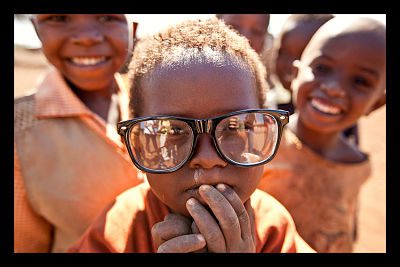
Africa, the second largest continent in the world, is a land caught in the claws of poverty. The impoverished areas of Africa are generally located in rural settings. Seventy percent of Africans live in rural areas, relying on agriculture for food and livelihood. However, the situation in Africa has shown improvements in recent years. While improvements to the quality of life have been made, many areas still require extreme attention and work.
Many of Africa’s problems stem from a massive hunger and thirst epidemic; these vitals have been hard to come by for many years. Not only do the hunger and clean water problems still ravage the continent, the HIV/AIDS virus is also still prominent. In 2009, about two-thirds of the thirty-four million people living with the HIV virus resided in Africa.
Detailed above, there are several reasons why poverty has become an epidemic in Africa. A major reason is certainly the hunger problem. Despite its natural resources, Africa is the world’s poorest continent, and one-third of the population suffers from starvation. Despite the food shortage, programs and organizations worldwide are fighting to help balance out the hunger epidemic.
10 Facts about poverty in Africa.
Dan Church Aid, an organization founded to alleviate food shortages worldwide, is just one program among many that combats this problem. The Dan Church Aid has been especially active in Ethiopia. The organization has teamed up with local farmers throughout the country to educate them about the land and how to cultivate it themselves. The food shortage is not a problem that will be solved by outside aid; it must improve from within. Starting in Ethiopia, farmers will be taught how to use the expansive natural resources the African land offers to produce food. The food epidemic is far from over, but with programs teaching farmers across the continent how to cultivate their own land, progress can be assured, slowly perhaps but certainly steadily.
Another cause of African poverty is water shortage. The Water Project has been working in Africa for years, building wells, rehabilitating wells, catching rain water, protecting springs, and building dams. In the communities where these projects have been established, progress is seen almost immediately. Having a fresh source of water is crucial to survival. One in nearly five deaths of children under five years, comes from a lack of sanitary water. Programs such as The Water Project are doing what they can to help reverse this trend, and with a steady flow of outside aid, the African people will have more fresh water.
While food and water are certainly vital components to life, the HIV virus has certainly added to the African poverty epidemic. However, the trends towards preventing this disease from widespread infection have been made. The United Nations Children’s Fund (UNICEF) has been hard at work in African countries, doing all it can to prevent the spread.
Every day, one thousand children are infected with the disease, and only 23 percent are receiving proper care. However, by reducing mother-child transmission, limiting the spread to new-born children and adolescents, and providing worldwide treatments, UNICEF has assisted in a 15 percent reduction in new infections, and a 22 percent decline in AIDS related deaths.
Poverty in Africa comes from several fronts; disease, food, and water tell only part of the story. However, every day progress is being made somewhere. Africa’s poverty is widespread, but certainly not incurable. Beneficial programs are fighting worldwide to reverse the fortunes of the citizens of Africa.
– Zachary Wright
Sources: UNICEF, Dan Church Aid, Rural Poverty Portal, The Water Project
Photo: Brett Beadle

Using CDs to Clean Water
Can old compact discs, better known as CDs, really clean water? If so, how? Scientists at the National Taiwan University are now using old CDs to grow zinc oxide in order to break down the pollutants in water. Recently, Dr. Ping Tsai, a Taiwan University physicist, spearheaded this innovative project. He and his colleagues have now perfected a water treatment device that uses old CDs to clean water.
According to Taiwan University’s research team, the device uses the flat, smooth surface of the CD in order to complete this process. The surface of the CD serves as the “breeding ground” for zinc-oxide nanorods. These nanorods are what help de-pollute the water. The nanorods can break down the presence of organic molecules in the presence of UV light. The researchers have also explained that these nanorods are usually microscopic in size. The research team explained that the nanorods “are extremely small- just a thousandth the width of a human hair- and are an inexpensive conductor that can function as a photocatalyst.”
In short, the research team calls the cleaning method a type of “Photocatalytic Water Decontamination.” This method has been widely used over the years, but this is the first time CDs have been used in order to help the depollution process. Using CDs to clean water has become very popular. It’s believed that “optical discs are very cheap, readily available and commonly used. They are also durable and portable”. The CDs also rotate quickly, which allows them to absorb water faster than light. As a result, water will pass more quickly and easily through the first layer of the disk than light would. During this process, contaminated water drips onto the device, spreads out in a thin film that light can easily pass through, which breaks down pollutants. The CD is spun in the presence of UV light which further breaks down pollutants.
Using zinc oxide to clean water is not a new idea, but using CDs to absorb water has recently grown in popularity. Its accessibility, low price, and absorbency make it a profitable and efficient way to clean water in places where the vital resource is hard to come by.
– Stephanie Olay
Sources: iScience Times, Science Daily
Photo: Phys
What is Swadhaar?
Swadhaar is an organization that provides economic support to urban poor communities. Swadhaar works primarily in India where urban poverty is a major problem. India has an 8.5% unemployment rate and almost 30% of its population lives under the poverty line.
Swadhaar gives financial assistance to people living under the international poverty line of $2 a day. The organization also has a heavy emphasis on women living below the poverty line. Beyond crediting loans to impoverished people, it aims to create economic self-reliance for people they are assisting. The organization provides financial education and opportunities for its clients so that they may eventually be self-reliant.
This is extremely important in India where many people do not feel that the government is adequately providing for them. Most of the people that Swadhaar gives assistance to are people that do not qualify for government assistance. The organization provides loans to its clients that have declining interest rates. The company does still make a profit from the interest rates, but they are not so extreme that they bury clients in debt.
The major issue that many people living in poor communities have is lack of documentation. Swadhaar offers assistance to those who do not have access to government benefits due to lack of documentation. It may not be a non-profit human rights organization, but nevertheless it provides the tools for success to people in India, which can be just as important.
– Zachary Patterson
Sources: Swadhaar, CIA
Photo: Swadhaar
7 Facts about Syrian Refugees
Every day, thousands of men, women and children cross Syria’s border in hopes of escaping their violence-stricken country, and building a brighter future. However, camps and neighboring countries are running out of places to relocate all the refugees, creating a new problem known as the Syrian Refugee Crisis. Because there are not enough accommodations or supplies for all the refugees from Syria, the places that these people are fleeing to have become similar to the devastation and poverty that they left behind.
Since the Civil War began in 2011, more than 2 million people have fled the country. Approximately 97 percent of these refugees are hosted by neighboring countries such as Jordan, Lebanon and Turkey, putting pressure on these nations’ economies, infrastructures and societies.- Many refugees are not counted. The real number of refugees is significantly higher than currently known. The above number refers to the refugees who registered with the United Nations (U.N.) before leaving Syria. Many refugees have fled to countries illegally, and are therefore not counted in the “official total.”
- Half of these refugees are children. As refugee camps continue to overflow, there are now over 1 million child refugees. Children make up more than half the refugees, according to the U.N. This number is more than the combined under-18 population of Los Angeles and Boston. Many of these children have no access to clean water, vaccinations or education, and constantly are constrained by the crisis in their country.
- Rape and sexual abuse are prevalent. In sprawling camps and overloaded host communities, there have been many cases of domestic violence, violence against women, and rape. Because of the conservative nature of the Syrian culture, many of these women do not report or even speak about these crimes.
- Most refugees don’t live in camps. Jordan’s Zaatari camp is now home to more than 100,000 refugees from Syria, far more than the camp is meant to hold. 70 percent of the refugees in Jordan are living in urban communities. In countries like Lebanon, there are no camps in place, so families are scattered among 1,200 different locations, such as abandoned shopping centers and stores.
- Many refugees have to pay rent. Most refugees living in urban areas are forced to pay rent to landlords. Since many of them lack a source of income, they are faced between a choice of homelessness or overwhelming debt. Because there are so many refugees in some countries like Lebanon, there are no available jobs and families are getting evicted.
- Refugee camps are like prisons. When families enter refugee camps, they are registered and confined to a gated space that they are not permitted to exit or re-enter whenever they please. Armed police officers, who are in control of the daily routine, guard the camp. There are no work possibilities or any productive pastimes. Many refugees cannot bear the conditions and instead have decided to return to Syria and face the dangers that occur there.
– Sonia Aviv
Sources: UNICEF, CTV News, The Guardian, Oxfam International, National Geographic
Photo: The Guardian
U.S. Denies Visa for Sudan President
As police cracked down on protests against the slashing of fuel subsidies in Sudan, which have resulted in at least 50 deaths, the country’s Foreign Affairs Minister Ali Ahmed Karti used the nation’s speech at the U.N. General Assembly to protest the U.S. decision to deny a visa to the country’s president, who faces international war crimes and genocide charges.
Despite an outstanding warrant for his arrest from the International Criminal Court, linked to the conflict in the Darfur region in which around 300,000 people have died since 2003, Sudan’s president Omar Hassan al-Bashir planned to attend the U.N. General Assembly this past week and had already booked a hotel in New York.
Ali Ahmed Karti called the alleged visa denial an “unjustified and unacceptable action,” while the U.S. ambassador to the U.N., Samantha Power, had called Bashir’s intention to travel to New York “deplorable, cynical and hugely inappropriate.”
The U.S. has never denied a visiting head of state who wants to speak at the United Nations entrance into the country. Under a treaty between the U.S. and the U.N., Washington is obligated to issue the visa as the world body’s host country. Despite this, the country had made it clear that it did not want al-Bashir to arrive in New York. Had he been granted entrance, al-Bashir would have been the first head of state to address the world body while facing international war crimes and genocide charges.
Meanwhile, in Sudan, protests broke out in Khartoum and other Sudanese cities over high fuel prices, while the country’s internet was cut off on the third day of protest. In an effort to turn a wave of popular anger into a full-fledged uprising against the 24-year rule of al-Bashir, 5,000 protesters demonstrated in some of the biggest protests in many years in the Khartoum area.
The country’s economy has worsened in the past few years, especially after southern Sudan seceded and took the country’s main oil-producing territory. Still, al-Bashir has managed to keep a grip on the regime, surviving armed rebellions, U.S. trade sanctions, an economic crisis, and an attempted coup last year. He also continues to enjoy support from the army, his ruling party, and wealthy Sudanese with wide-ranging business interests.
– Nayomi Chibana
Feature Writer
Sources: AP, Reuters, ABC News
Photo: The London Evening Post
Poverty in Africa
Africa, the second largest continent in the world, is a land caught in the claws of poverty. The impoverished areas of Africa are generally located in rural settings. Seventy percent of Africans live in rural areas, relying on agriculture for food and livelihood. However, the situation in Africa has shown improvements in recent years. While improvements to the quality of life have been made, many areas still require extreme attention and work.
Many of Africa’s problems stem from a massive hunger and thirst epidemic; these vitals have been hard to come by for many years. Not only do the hunger and clean water problems still ravage the continent, the HIV/AIDS virus is also still prominent. In 2009, about two-thirds of the thirty-four million people living with the HIV virus resided in Africa.
Detailed above, there are several reasons why poverty has become an epidemic in Africa. A major reason is certainly the hunger problem. Despite its natural resources, Africa is the world’s poorest continent, and one-third of the population suffers from starvation. Despite the food shortage, programs and organizations worldwide are fighting to help balance out the hunger epidemic.
Dan Church Aid, an organization founded to alleviate food shortages worldwide, is just one program among many that combats this problem. The Dan Church Aid has been especially active in Ethiopia. The organization has teamed up with local farmers throughout the country to educate them about the land and how to cultivate it themselves. The food shortage is not a problem that will be solved by outside aid; it must improve from within. Starting in Ethiopia, farmers will be taught how to use the expansive natural resources the African land offers to produce food. The food epidemic is far from over, but with programs teaching farmers across the continent how to cultivate their own land, progress can be assured, slowly perhaps but certainly steadily.
Another cause of African poverty is water shortage. The Water Project has been working in Africa for years, building wells, rehabilitating wells, catching rain water, protecting springs, and building dams. In the communities where these projects have been established, progress is seen almost immediately. Having a fresh source of water is crucial to survival. One in nearly five deaths of children under five years, comes from a lack of sanitary water. Programs such as The Water Project are doing what they can to help reverse this trend, and with a steady flow of outside aid, the African people will have more fresh water.
While food and water are certainly vital components to life, the HIV virus has certainly added to the African poverty epidemic. However, the trends towards preventing this disease from widespread infection have been made. The United Nations Children’s Fund (UNICEF) has been hard at work in African countries, doing all it can to prevent the spread.
Every day, one thousand children are infected with the disease, and only 23 percent are receiving proper care. However, by reducing mother-child transmission, limiting the spread to new-born children and adolescents, and providing worldwide treatments, UNICEF has assisted in a 15 percent reduction in new infections, and a 22 percent decline in AIDS related deaths.
Poverty in Africa comes from several fronts; disease, food, and water tell only part of the story. However, every day progress is being made somewhere. Africa’s poverty is widespread, but certainly not incurable. Beneficial programs are fighting worldwide to reverse the fortunes of the citizens of Africa.
– Zachary Wright
Sources: UNICEF, Dan Church Aid, Rural Poverty Portal, The Water Project
Photo: Brett Beadle
Health Leads & Clinton Global Initiative
Risa Lavizzo-Mourey, President and CEO of the Robert Wood Johnson Foundation, spoke about Health Leads during a panel discussion on non-communicable diseases (NCD) at the Clinton Global Initiative on 24 September. Ms. Lavizzo-Mourey noted that important preventative measures for NCDs should include analyzing the living environments outside hospital walls in order to improve the quality of overall care people receive, which is what Health Leads specifically advocates and executes.
Health Leads’s mission statement reads, “to catalyze this health care system by connecting patients with the basic resources they need to be healthy…to champion quality care for all patients.” An example of this model is enabling doctors to prescribe basic resources like food and heat to their patients the same way the doctors would prescribe medicine or provide referrals. This whole-patient approach requires healthcare professionals to learn about the community environment and the living conditions of their patients when they leave their doctors’ offices.
The results of these inquiries enter the patient’s electronic record, which partner-hospitals can use to refer patients who lack basic resources to Health Leads. Through a systematic set of steps, the patient can carry the prescription to a Health Leads desk at the partner-hospital.
A Health Leads Advocate then works with the patient to connect her to the necessary community services that will help provide the basic resources the patient requires. Aid programs for basic resources may include additional health insurance coverage, access to food pantries and food assistance programs, discounts on gas and electric costs, job training, and childcare subsidies.
The last two steps require a follow-up from the Health Leads Advocate and updates to the clinic team from the patient. This symbiotic relationship is necessary to navigate any further challenges that may arise as a result of the previous steps. These challenges may include tracking down phone numbers, creating maps, finding transportation, and completing applications. Health Leads launched in 2010 and has since served over 23,000 patients.
In 2012, the program identified the top seven patient needs: education, utilities, housing, food, employment, income and benefits, and legal. To address these needs Health Leads trains a dedicated staff of program managers and Advocates whose sole design is to connect patients with the basic resources they require to get healthy.
– Yuliya Shokh
Sources: Health Leads, CGI 2013 Annual Meeting
Photo: Bloomberg
Uganda to Provide Contraception for Girls
In an effort to reduce the number of women who die from maternal complications, Uganda’s government is considering a plan to provide contraception to every Ugandan women between the ages of 14 and 18.
In Uganda, an estimated 16 women die every day from complications related to pregnancy and childbirth. For every woman who dies, an additional 15 women develop complications, such as fistulas. These statistics make it unlikely that Uganda will achieve the United Nations Millennium Development Goal of reducing maternal mortality by 75 percent by the 2015 deadline.
During a meeting organized by the Ugandan health ministry earlier this month, Sarah Opendi, the state minister for primary health care, said it was “unethical” to allow Uganda’s female citizens to continue to die from easily preventable complications
Among the most fatal of these complications are hemorrhaging, high blood pressure, and contraction of infectious diseases due to weakened immune systems. However, many young women also die from self-induced abortions.
“You don’t know what some of these girls go through,” Opendi said. “When they can’t confide in anyone and are desperate to get the fetus out they will do anything.”
Afraid to confide in their parents and usually impregnated by classmates who are also unable to support a child, many girls try to terminate their own pregnancies, and often die in the process.
To address this problem, the Ugandan government plans to set up youth centers in schools and hospitals, where young girls can receive proper counseling. The government is likely to also provide condoms and contraceptive pills.
John Cooper, the executive director of Uganda Family Planning Consortium, believes that every woman should have a child by choice, not chance. Currently, of the Ugandan women who get pregnant, half of the pregnancies are unwanted.
“Now, we can’t want to reduce the numbers of women who dies while giving birth and not want to provide women with contraception that can reduce their fertility,” said Cooper.
The Ugandan minister must first convince several critics before the government’s plan to provide contraception to every woman between 14 and 18 is implemented. But this may be the country’s only option. Uganda’s population currently stands at over 34 million, and the country’s fertility rate is 6.7 percent. Moreover, women in rural areas lacking medical resources may produce twice as many children.
If the movement to provide contraception passes, the government must turn to its next issue in the fight to lower maternal mortality and limit population: the need to allocate more funding and resources to Uganda’s impoverished rural regions.
– Scarlet Shelton
Sources: New Vision, Index Mundi, all Africa
Photo: Books For Africa
Solar Energy in Africa
One of the most important indicators of development is access to electricity. Electricity is considered a fundamental and basic element of developed society. There is a huge movement to provide communities without electricity with the means to obtain it.
In many underdeveloped countries, the easiest way to obtain electricity is by solar energy. Many of these areas do not have the infrastructure nor the resources to create mass electrical plants like those in Europe or the United States. Solar panels are a cost effective way to produce electricity anywhere.
Azuri Technologies is providing many families in Africa with a cheap way to obtain electricity. There is a one time installation fee and then a weekly charge of little over $1. This is important because these families currently have to use kerosene which costs much more than the expenses of the solar panel.
Another reason that solar panels are important is that they provide a wide range of uses. The kerosene is only used for light. However, access to mobile phones is becoming more and more common. The solar panels are all equipped to charge mobile phones, which are becoming fundamental to the communities.
The phone situation is one example of how access to electricity leads to development. If communities do not have phone access, they have to refer back to traditional means of communication or using phones that are long distances away. The access to electricity is giving them the tools to advance.
One large impetus to use solar panels is that there is a lot of sun! Fossil fuels are extremely expensive, especially in underdeveloped countries. The sun is a resource that does not cost money and does not run out. Sunlight does not need to be transported and it cannot be stolen, which is a problem with fossil fuels.
The use of solar panels is one way that underdeveloped areas can be brought into the developed world. It is not the only solution to development or poverty, but it is a piece to the puzzle that can put everything in motion.
– Zachary Patterson
Sources: The Eco Experts, Bloomberg Business Week
Photo: PhysOrg
State Street Foundation: Providing Sustainability in Poor Communities
The State Street Foundation is a unique organization that focuses on providing grants to deserving groups that offer services to the poor. By “actively engaging in our global communities,” State Street is able to empower impoverished people through education, affordable housing and small business programs. The company also assists businesses by offering financial guidance in investment, research and trading.
State Street mainly operates 25 countries; most of its programs are in Australia, China, Hong Kong, India, Japan, Singapore, South Korea and Taiwan. The organization’s vast number of volunteers and supporters work in low-income communities to create sustainable poverty alleviation projects. These volunteers worked 78,000 hours and completed 4,900 projects in 2010. Since its formation in 2001, State Street employees and alumni have contributed 430,000 hours and 15,600 service projects.
These projects vary based on the needs of local communities, but all have the goal of improving quality of life in these areas. State Street’s Supplier Diversity Program works with businesses owned by minorities and women to ensure that these small businesses have the same opportunities as other larger companies. Providing grants to these businesses helps them financially thrive, thus creating jobs and increasing economic growth for the entire community.
In addition to distributing local grants, State Street Foundation sponsors community fundraising events for charities the organization supports. In 2010, State Street donated $3.2 million to these charities. For these reasons, the company has won copious awards for its philanthropy, including the Custody Risk’s Mutual Fund Administrator of the Year and Transfer Agent of the Year (2013), Best Securities Financing House in Asia Asset Management’s Best of the Best Awards (2013), European Transfer Agent of the Year (with IFDS) in the 2012 Funds Europe Awards (November 2012) and numerous other awards since its founding.
State Street is a foundation devoted to helping impoverished businesses and communities and hopes to contribute to poverty alleviation, one region at a time.
– Mary Penn
Sources: State Street, AVPN
Photo: Time
Why Female Education Fights Poverty
While providing equal education to girls is necessary from a moral standpoint, it is also essential for a more peaceful and poverty-free world.
Education affects the age at which women marry and have children. Therefore, until girls have equal access to quality education, maternal mortality, overpopulation, and other factors contributing to poverty will continue to terrorize our world.
In sub-Saharan Africa, and South and West Asia, child marriage affects 1 in 8 girls. By the age of 17, 1 in 7 females will have their first child. Since girls in these areas are not given access to education or job opportunities, they are often locked into these marriages, and forced to become mothers far before they are ready.
In the long run, these women can’t afford to take care of their children or even attain proper health services during labor. The line of poverty continues as children are born into impoverished families that are unable to help their offspring escape this cycle.
Providing women with a secondary education brings enormous benefits to both women and to the world. Educated women are empowered women. They can make their own choices and follow their own dreams. If girls receive a secondary education, 64 percent of them won’t get married while still attending school. By giving girls a chance to pursue their own future and making them aware of the risks associated with consecutive childbearing, the vicious cycle will finally reach its end.
The advantages in investing in female education are endless – for individuals, for the fight against poverty, and for lowering child mortality rates. The rise in female education between 1970 and 2009 prevented more than 4 million child deaths. With the Millennium Development Goals still met, perhaps this is an essential place for the U.N. to make a change.
– Sonia Aviv
Sources: Global Post, TIME, Huffington Post
Photo: The Guardian