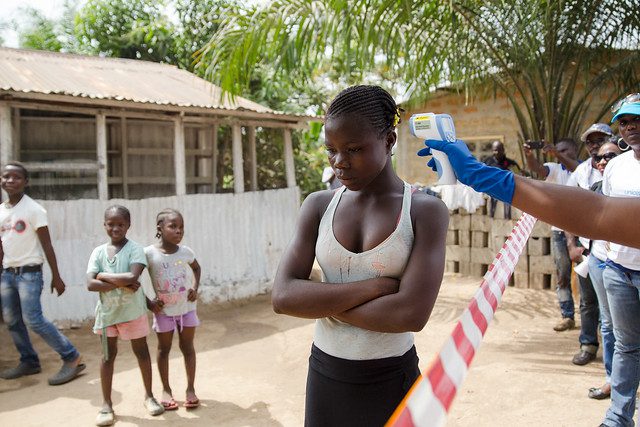
In July 2019, there were 750 reported cases of Ebola among children. This is in comparison to 20 percent dating back to prior epidemics. Children are particularly vulnerable to contracting Ebola and require special care to treat the disease. Also in July 2019, about one-third of children have accounted for the nearly 1,700 people who lost their lives to Ebola since August 2018 in The Democratic Republic of Congo. Additionally this month, over 2,500 individuals have been diagnosed with the illness. The nation has begun working with the World Health Organization (WHO) along with other health advocacy organizations such as UNICEF to help cure Ebola.
Children and Ebola: The Numbers
Children under age five are at the highest risk and often suffer the worst symptoms. Out of the 750 cases reported, 40 percent of children under age five were diagnosed with Ebola. Young children are also most likely to die from this disease, as their fatality rate is 77 percent. This is in comparison to 67 percent for other age groups.
Symptoms and Treatments
Manifestations of Ebola encompass fever, headache, diarrhea, and sometimes blood vessel discharges. Prompt detection and sufficient medication are effective in curing the disease.
Because children are more susceptible to contracting Ebola and due to the difference in symptoms in comparison to adults, children with Ebola require differentiated medical care.
Medical personnel has articulated that special treatments are necessary for children suffering from Ebola. They require different and exclusive treatments to focus on children’s individual psychological and social requirements.
Treatments for children with Ebola consist of the same drugs that are used to treat other age groups. Of course, distinct quantities differ. Young children also receive zinc to cure diarrhea and intestinal parasite infections as well. Undernourished children must receive different medication. For example, they are given food that is precisely manufactured for their needs.
Orphaned and Abandoned Children
Hundreds of children are either orphaned or abandoned due to their parents becoming infected with Ebola. UNICEF has organized nursery settings in conjunction with treatment centers. Survivors even serve as caregivers.
Children whose parents have been diagnosed or die from Ebola are at an increased risk of being condemned and forsaken, as their chances are much higher of contracting the disease. Within the treatment centers, all patients undergo examinations on a daily basis.
For orphan children, The Democratic Republic of Congo works to set up arrangements with other family members for the child to live. Additionally, the country is providing nutrient guidelines and covering the cost of fees to allow children to attend school.
Specialized Care for Children
Pediatricians work with children within the Ebola Treatment Centers to deliver focused treatments for children with Ebola. Treatment is based on the patients’ individual needs. Every child that has lost parents to Ebola, or has been separated as a result of their illness, receives specialized care. They are cared for by Ebola survivors who provide comfort. They also transport the child to visit their parents receiving medical care at the Ebola Treatment Centers. In addition, counselors are also present to provide support to families throughout the duration of their treatment.
Nutritionists are also present in the treatment centers to deliver personalized nutrient guidelines to those who are likely to have the disease, as well as those who have been diagnosed already. As a result of these health innovations, these types of care have proven to improve sufferers’ conditions.
International Intervention to Eliminate Ebola
Save the Children is a nonprofit organization that began in the United Kingdom in 1919. Their goal is to advance children’s lives in various aspects, such as education, healthcare and employment. Additionally, the organization supplies relief in response to natural disasters and war.
WHO, in conjunction with Save the Children has declared the current Ebola epidemic in the Democratic Republic of Congo to be a public health emergency of international concern. Due to the outbreak duration of nearly one year, further actions are being implemented to eliminate further cases of Ebola and to provide treatment for children with Ebola. It is predicted that if the outbreak of Ebola continues, the surrounding countries will be affected as well.
Several hundreds of government officials and health personnel are working to cure those infected by the disease and prevent further cases. Save the Children is promoting advocacy efforts in curing Ebola through communal action and informational sessions. These efforts are to ensure that all age groups are informed of prevention practices.
Since the beginning of the current epidemic, Save the Children has provided one million individuals with advice relating to symptom detection and how to prevent the spread of Ebola. Health workers receive training on how to treat those infected with Ebola. Patients are separated and the disease is then traced. Save the Children also educates the public about the disease.
Save the Children has also delivered various supplies to health practices and border crossings in addition to establishing sanitation facilities in order to decrease further infections and to provide treatments for children with Ebola.
Bringing Hope to Children in the Democratic Republic of the Congo
Thanks to international intervention and specialized care, children in the Democratic Republic of the Congo are receiving the treatment they need to fight against Ebola. There is still much to be done, but as long as aid efforts continue, there is hope for these children’s futures.
– Diana Dopheide
Photo: Flickr

Aquaponics in Developing Countries
What is Aquaponics?
Aquaponics is any symbiotic relationship between fish that produce excretions of ammonia, bacteria that convert this ammonia into nitrate, and plants that use this nitrate as fertilizer. Overall, it creates a win-win-win situation for these three organisms, which leads to the maximization of available resources.
History of Aquaponics
Many historians believe that the first aquaponics systems were devised in South China in 5 AD. Farmers would raise ducks, catfish and finfish together in rice paddies. During the Tang Dynasty, records of floating rice rafts on top of fish ponds also began appearing.
Modern aquaponics, on the other hand, emerged in the U.S. Interest in the concept is relatively new, as the majority of the progress made in this field has been achieved within the past 35 years. The first closed-loop system, as well as the first large-scale commercial facility, were both created in the mid-1980s.
Benefits
Aquaponics provides many benefits to its users. In comparison to traditional conventional agriculture methods, aquaponics uses only one-sixth of the water to grow up to eight times more food per acre. Due to it being a closed system and the use of the fish waste as fertilizer, it also avoids the issue of chemical runoff. Because aquaponics produces both a vegetable and fish crop, communities that implement the system would also have access to better nutrition. Protein-calorie malnutrition is often the most common form of nutrient deficiency in developing countries, so providing stable sources of fish protein to such at-risk communities could potentially be revolutionary.
Challenges
Although it is undisputed that aquaponics would be a game-changer for food production in developing countries, the high initial start-up cost of modern aquaponics — about $20,000 for a small commercial system — remains a significant barrier. Furthermore, technical training on the subject would need to be provided to locals prior to the implementation of such systems. These aquaponics systems also require a consistent source of electricity in order to maintain constant water circulation. This issue, however, can likely be solved through alternative sources such as solar or hydropower. Therefore, a more simplified design is required for implementation in developing countries — one that could withstand shortages of raw materials and professionals as well as a strong technical support system.
Implementation in Developing Countries
Currently, aquaponics in developing countries has mostly been brought about through nonprofits. For instance, the Amsha Africa Foundation started an aquaponics campaign in sub-Saharan African countries. After launching its first project in rural Kenya in 2007, the organization has since expanded into five more countries and positively impacted thousands. The project targets sustenance farmers who do not have an adequate supply of food and water and are living on eroded or depleted soils.
Another similar organization is Aquaponics Africa, a project created by engineer Ken Konschel. The organization works with farmers to build and design their own backyard or commercial aquaponics system. It also sells informational handbooks detailing the process of maintaining an aquaponics system in Africa for just R300, or about $20.
Aquaponics in recent decades has proven itself to be quite revolutionary to the agriculture industry. It provides many benefits over conventional farming, as it is both more efficient and effective. But, for it to be easier accessible by communities and individuals in developing countries, greater headway will need to be made in terms of simplifying its design in order to adapt it to different environments.
– Linda Yan
Photo: Wikimedia
The Berlin Blockade and Emergency Aid
On June 24, 1948, the Union of Soviet Socialist Republics (USSR) cut off land access and power to West Berlin. This act hoped to discredit the U.S. by stranding 2.5 million war-weary people in the American sector without food. American attempts to breach the blockade might have resulted in war, so the Truman Administration circumvented the USSR by airlifting supplies into the city for almost a year. It was a major success. The history of the Berlin Blockade displayed the power of emergency aid and set a precedent for countless American airlift operations.
The Blockade Begins
Following World War II, Germany and Berlin split into Eastern and Western entities. England, France and the U.S. controlled the Western sectors, while the USSR administered the East. Unfortunately, the entire city of Berlin was in East Germany. The Western powers signaled West German autonomy in 1948 by instituting currency reform in their sectors.
The Soviets feared an independent Germany as a threat to its nation’s security. Dr. Armin Grunbacher adds that Soviet leaders wanted to force America to relinquish control of Berlin and discredit them as the Cold War began. The USSR increasingly provoked the West to try and achieve its goals as June 1948 approached. Tensions especially grew during the April Crisis.
A U.S. Army historical report recounts that Soviet provocations led all parties closer to war. On April 5, 1948, a patrolling Soviet jet collided with a British passenger aircraft over Germany and killed everyone on board. The Soviets finally blockaded West Berlin in June 1948, sending American leaders into a panic. Officials questioned if America should risk war with military incursions into Berlin or if there was a better option.
The Airlift
West Berliners desperately required supplies. Residents rationed food, but some still starved. Soviet ration cards enticed 20,000 individuals to go to East Berlin.
President Truman curtailed initial plans by West Germany’s military administrator, General Lucius Clay, to forcefully supply the city with an armed convoy. It was inefficient and could potentially start a major war. Instead, the Truman Administration ordered Clay to gather American transport aircrafts from around the world for an upcoming humanitarian aid operation. General Curtis LeMay ran Operation Vittles and started airlifting 5,000 tons of supplies every day into West Berlin starting on July 1, 1948.
The Airlift’s Success
The U.S. needed to airlift at least 2,000 tons of aid daily to feed everyone. By the end of the airlift, American planes delivered 13,000 tons every day to West Berliners. The breadth of planes utilized and supplies dropped still makes the Berlin Airlift the largest operation of its kind. The success of the aid humiliated the Soviet dictator, Joseph Stalin, and the blockade ended on May 12, 1949.
The U.S. not only saved the lives of millions of people but displayed its immense generosity. Dr. Grunbacher says that the history of the Berlin Blockade showed “the manifested expression of U.S. technical superiority and willingness to defend the ‘Free World.’”
Later Operations
Many airlifts have followed the example of Operation Vittles. A report from the U.S. Air Force accounts for 560 such humanitarian operations between 1947 and 1994. America used emergency assistance to respond to both natural disasters and humanitarian crises in this period.
For example, the 1977 Turkish earthquake killed 3,600 people and left 50,000 homeless. The USAF was quick to respond and airlifted 606 tons of tents, blankets and food to accommodate those affected. The U.S. also participated in the 1994 Rwandan Genocide Relief, nicknamed Operation Support Hope. U.S. planes deposited 3,600 tons of supplies at refugee camps in neighboring nations for fleeing Rwandan refugees.
The history of the Berlin Blockade resonated as late as 2014 when the U.S. airlifted food and water to Yazidi Christians trapped on Mt. Sinjar in Iraq. The Islamic State had assaulted surrounding villages in the area and massacred members of the ethnoreligious minority. American intervention bought the Yazidis vital time. More than 114,000 meals and 35,000 gallons of water dropped sustained Yazidis until most escaped the mountain.
The history of the Berlin Blockade displayed the potential for emergency aid to assist millions of people and avoid violent conflict. It also showed that the reputation of the U.S. benefits from humanitarian operations. The precedent set in 1948 spawns new operations every year and it shows no sign of stopping.
– Sean Galli
Photo: Wikimedia Commons
Tackling Corruption in Tajikistan
Tajikistan is a small country in Central Asia with a population of 8.92 million people. Corruption in Tajikistan is widespread and infiltrates all levels of society. Emomali Rahmon, President of Tajikistan, has been in power since the collapse of the Soviet Union in 1991. There is almost no political renewal and a small number of the elite class control political and economic relations.
The Organization for Economic Cooperation and Development (OECD) made a report on corruption in Tajikistan which found that anti-corruption legislation and institutions lack funding and support in the country. The report also found that there have been no major improvements introduced to Tajik legislation to combat corruption as international standards require.
Daily Corruption
Corruption in Tajikistan affects people on a day to day basis, whether dealing with police, traffic guards or even public services. A public opinion survey that UNDP and the Centre for Strategic Studies conducted in 2010 found that 70 percent of the respondents had either paid a bribe or wanted to despite an inability to afford it. The survey showed that farmers and entrepreneurs are the two segments of society that are most vulnerable to petty, day to day corruption.
Citizens suffer daily police corruption that the large networks of organized crime and drug trafficking in the region only heighten. Some view the police and traffic guards as some of the most corrupt state institutions in the country. The same public opinion survey found that 90 percent of the respondents recognized that they experienced corruption when stopped by traffic guards and that these confrontations happen regularly. Traffic corruption can include an authority pulling someone over for speeding, asking them to pay a bribe to avoid a ticket and threatening jail time if the individual does not pay the bribe. Traffic guards will stop people for speeding even if they were at the speed limit, simply to pocket bribed money.
Political Corruption
Political corruption in Tajikistan is also widespread. All of its elections since gaining independence from the Soviet Union do not qualify as democratic electoral processes as international organizations such as the United Nations observed. The Tajik government functions heavily on patronage networks and family ties. Many of the President’s family members and allies hold political positions. For example, his son, Rustam Emomali, is the mayor of Dushanbe and is among the top 10 most influential individuals in Tajikistan.
Solutions
The Tajik government has taken some steps to combat domestic corruption that infiltrates all levels of society. For example, it adopted the United Nations Convention Against Corruption and anti-corruption legislation. The country still lacks many important factors that are essential to cracking down on corruption such as widespread access to information and an independent audit agency, however, international pressures could greatly improve political corruption in the country.
The OECD is an international organization with a mission to work with governments to construct policies that improve the lives of individuals. It is currently working with the Tajik government to come up with corruption fighting legislation. Amnesty International has also called out the Tajik government for its human rights abuses such as the persecution of LGBTQ members and the censoring of human rights activists. Amnesty does not currently have an office in Tajikistan, however, its media campaigns garnered support from activists and foreign governments such as Norway and Denmark.
Further Measures
Further pressures such as sanctions, naming and shaming techniques and advocacy have the potential to greatly reduce corruption in Tajikistan. If economically advantaged countries such as the U.S. placed pressure on Tajikistan to increase anti-corruption legislation and measures, it could vastly increase the quality of life for the citizens of Tajikistan. Naming and shaming is a method that nonprofit and international organizations use to call out a country or organization for unethical practices, which can pressure the Tajik government to crackdown on debasement. Lastly, advocacy and educational campaigns can increase awareness of the issue and also increase the supply of information about corruption in Tajikistan both to its citizens and the international community.
– Laura Phillips-Alvarez
Photo: Flickr
10 Facts About Corruption in Brazil
As the largest nation in South America with a population of over 200 million, Brazil’s importance on the global stage is clear; however, corruption charges and convictions have riddled the country’s reputation. In 2014, one of the worst economic recessions in Brazil’s history hit it and left it in a state of political and economic instability along with ongoing corruption investigations. It is just beginning to recover. These 10 facts about corruption in Brazil serve to better understand one of the world’s most influential, and most corrupt, global players.
10 Facts About Corruption in Brazil
Above are 10 facts about corruption in Brazil, but the problem and potential solutions are much more vast. While these 10 facts about corruption in Brazil paint a picture of the extent of the problem, one cannot overstate corruption’s tangible impact on the lives of everyday Brazilians. With each new election comes renewed fears of corrupt activities; nevertheless, innovative preventative and corrective initiatives are flowing freely, and a corruption-free future for Brazil is more likely than ever.
– Erin Jenkins
Photo: Flickr
Top 10 Facts about Living Conditions in Guinea-Bissau
Once considered as a possible model for African development, Guinea-Bissau is now one of the poorest nations in the world. The nation has struggled to recover from instability created by a string of military coups in the 1980s. Now, the population is crippled with human trafficking, poverty and low literacy rates. Here are the top 10 facts about living conditions in Guinea-Bissau.
Top 10 Facts about Living Conditions in Guinea-Bissau
These top 10 facts about living conditions in Guinea-Bissau reveal that its citizens are struggling. However, international organizations are taking notice and are striving to institute positive change in this small, West African country.
– Andrew Edwards
Photo: Flickr
Care for Children with Ebola in the Democratic Republic of the Congo
In July 2019, there were 750 reported cases of Ebola among children. This is in comparison to 20 percent dating back to prior epidemics. Children are particularly vulnerable to contracting Ebola and require special care to treat the disease. Also in July 2019, about one-third of children have accounted for the nearly 1,700 people who lost their lives to Ebola since August 2018 in The Democratic Republic of Congo. Additionally this month, over 2,500 individuals have been diagnosed with the illness. The nation has begun working with the World Health Organization (WHO) along with other health advocacy organizations such as UNICEF to help cure Ebola.
Children and Ebola: The Numbers
Children under age five are at the highest risk and often suffer the worst symptoms. Out of the 750 cases reported, 40 percent of children under age five were diagnosed with Ebola. Young children are also most likely to die from this disease, as their fatality rate is 77 percent. This is in comparison to 67 percent for other age groups.
Symptoms and Treatments
Manifestations of Ebola encompass fever, headache, diarrhea, and sometimes blood vessel discharges. Prompt detection and sufficient medication are effective in curing the disease.
Because children are more susceptible to contracting Ebola and due to the difference in symptoms in comparison to adults, children with Ebola require differentiated medical care.
Medical personnel has articulated that special treatments are necessary for children suffering from Ebola. They require different and exclusive treatments to focus on children’s individual psychological and social requirements.
Treatments for children with Ebola consist of the same drugs that are used to treat other age groups. Of course, distinct quantities differ. Young children also receive zinc to cure diarrhea and intestinal parasite infections as well. Undernourished children must receive different medication. For example, they are given food that is precisely manufactured for their needs.
Orphaned and Abandoned Children
Hundreds of children are either orphaned or abandoned due to their parents becoming infected with Ebola. UNICEF has organized nursery settings in conjunction with treatment centers. Survivors even serve as caregivers.
Children whose parents have been diagnosed or die from Ebola are at an increased risk of being condemned and forsaken, as their chances are much higher of contracting the disease. Within the treatment centers, all patients undergo examinations on a daily basis.
For orphan children, The Democratic Republic of Congo works to set up arrangements with other family members for the child to live. Additionally, the country is providing nutrient guidelines and covering the cost of fees to allow children to attend school.
Specialized Care for Children
Pediatricians work with children within the Ebola Treatment Centers to deliver focused treatments for children with Ebola. Treatment is based on the patients’ individual needs. Every child that has lost parents to Ebola, or has been separated as a result of their illness, receives specialized care. They are cared for by Ebola survivors who provide comfort. They also transport the child to visit their parents receiving medical care at the Ebola Treatment Centers. In addition, counselors are also present to provide support to families throughout the duration of their treatment.
Nutritionists are also present in the treatment centers to deliver personalized nutrient guidelines to those who are likely to have the disease, as well as those who have been diagnosed already. As a result of these health innovations, these types of care have proven to improve sufferers’ conditions.
International Intervention to Eliminate Ebola
Save the Children is a nonprofit organization that began in the United Kingdom in 1919. Their goal is to advance children’s lives in various aspects, such as education, healthcare and employment. Additionally, the organization supplies relief in response to natural disasters and war.
WHO, in conjunction with Save the Children has declared the current Ebola epidemic in the Democratic Republic of Congo to be a public health emergency of international concern. Due to the outbreak duration of nearly one year, further actions are being implemented to eliminate further cases of Ebola and to provide treatment for children with Ebola. It is predicted that if the outbreak of Ebola continues, the surrounding countries will be affected as well.
Several hundreds of government officials and health personnel are working to cure those infected by the disease and prevent further cases. Save the Children is promoting advocacy efforts in curing Ebola through communal action and informational sessions. These efforts are to ensure that all age groups are informed of prevention practices.
Since the beginning of the current epidemic, Save the Children has provided one million individuals with advice relating to symptom detection and how to prevent the spread of Ebola. Health workers receive training on how to treat those infected with Ebola. Patients are separated and the disease is then traced. Save the Children also educates the public about the disease.
Save the Children has also delivered various supplies to health practices and border crossings in addition to establishing sanitation facilities in order to decrease further infections and to provide treatments for children with Ebola.
Bringing Hope to Children in the Democratic Republic of the Congo
Thanks to international intervention and specialized care, children in the Democratic Republic of the Congo are receiving the treatment they need to fight against Ebola. There is still much to be done, but as long as aid efforts continue, there is hope for these children’s futures.
– Diana Dopheide
Photo: Flickr
The New Frontier: China’s Investment in Africa
For those seeking investment, look no further than the continent of Africa. While the continent has had a tumultuous couple of decades, plagued by health crises such as Ebola, and political unrest is it also gushing with economic, diplomatic, and political potential – and China is taking notice.
Government Involvement
Just last year (August 2018), President Xi of China, speaking at the Forum on China-Africa Cooperation, has pledged to invest a major sum of $60 billion in commercial loans to the African continent. This investment in Africa, as well as a plethora of other nations scattered across the Middle East, Eastern Europe and Asia, are all apart of China’s overall global strategy – what they are calling the Belt Road Initiative (BRI). Under this daring economic, political and diplomatic strategy, China is investing large sums of money to mainly developing nations as a way to not only benefit China’s economic interests but to cement its role in the world as a dominating global superpower.
A Welcoming Environment
Also, when it comes to large Chinese investments, Africa is more than welcoming. In addition to the overall loans that China is dedicating to forming some friendships, these investments, especially in infrastructure, may be a godsend. At the time of this writing, Africa has a $900 billion infrastructure deficit. The much-needed cash flow from China will not only allow many African nations to lay the groundwork for basic infrastructure projects, but it will also afford children the opportunities required to gain an education and for local businesses to trade.
In addition to the major pillars of the BRI, China is also establishing what it is calling a “Maritime Silk Road” – a chain of seaports from the South China Sea to Africa. With the construction of these ports will come: oil refineries, industrial parks, and fiber optic networks, all designed to make a trade with China easier and mutually beneficial – and thus far it seems to be accomplishing China’s goal of breathing new life into its infamous ancient Silk Road.
And while these projects are beneficial to the recipient countries, China does add that part of the developments will be helped by Chinese labor and companies, thus allowing China to take a slice of the economic cake as it were. But while many Chinese companies are profiting off BRI contracts, the projects being funded are benefiting local communities and provide steady work and cash flow to otherwise struggling areas of Africa. Economic benefits aside, this partnership is allowing many African nations to forge diplomatic relations with a world power as well.
Economic and Political Ramifications
China’s investment in Africa does, however, come with a few pitfalls. While Chinese companies become more prominent in Africa, so will “Made in China” products. This will come with some obvious knock-on effects, for example, for the last couple of decades these products have had a devastating effect on what was once a thriving South African textile industry. But, the pendulum does swing the other way as well. Ethiopia has seen positive outcomes from Chinese investments.
Investment in Africa began as an opening of windows of opportunity around the globe for China. The United States has been the worlds primary loan superpower for the last several decades – investing billions of dollars in foreign aid and development projects through USAID and starting working establishment programs in various nations. But with loans from the West coming with strings attached – mainly strict ethical standards – China saw a chance to offer billions in loans with fewer conditions.
Due to China’s willingness to loan large sums of money to nations torn apart by conflict and instability, the global community has raised concerns. These nations will eventually need to pay back these loans, and the worlds less than reliable recipients could threaten global economic stability if they default.
However, China isn’t necessarily concerned if these countries can’t pay them back, in the literal sense. In exchange for the economic clout that comes with Chinese investments, nations such as South Africa’s Djibouti are lending naval ports as a means of reciprocation – forming a “String of Pearls” which gives China a foothold in the naval Indian ocean. But while some of these loans may be risky investments on the continent of Africa, China understands the cost-benefit analysis and is treating Africa as a new frontier.
A Positive Outcome
China’s investment in Africa, while risky, may end up paying off. With Africa’s willingness to accept loans from China, and listening with open ears to China’s overtures for stronger diplomatic relations, Africa is in a good position to begin funding its own economic and development programs. Programs that will address issues of poverty, inequality, and education.
– Connor Dobson
Photo: Flickr
Team Nelson Aiding Orphans in Tanzania
Team Nelson is a nonprofit organization based out of Atlanta, GA that works to send orphans in Tanzania to school. In 2017, there was a 79 percent net enrollment rate in primary school but only a 23 percent net enrollment rate in secondary school. After primary school, many teenagers have to find work to help provide for their families, so retention is a huge issue in secondary school. Many of the orphanages in Arusha, Tanzania lack the funds to send their children to school, so McCrea O’Haire and her board began to raise money to send the first boy she met, Nelson, to school. From there, it grew.
Team Nelson has been successfully raising money and awareness in order to send more Tanzanian orphans to school. The organization also encourages kids to prioritize their education and reap the greater benefits of completing their education instead of leaving to find work. The Borgen Project had the opportunity to interview McCrea O’Haire about Team Nelson about sending orphans to school in Tanzania.
Who is Nelson?
Nelson is one of the first kids that O’Haire met in Tanzania and the inspiration behind Team Nelson. Upon first meeting him, she recalls him having a reserved and shy nature, as he was just trying to blend in with the other children. It was not until she learned of his situation that she saw him for who he really was and “realized how important it is to help the invisible children that people might not notice.” She eventually decided to transform Team Nelson into much more than just one child. Originally, she did not intend to do anything other than sending Nelson to school, but she received an outpour of support from family and friends which snowballed her intentions. Once she felt the support around her, she had the inspiration to do more.
The Future of Team Nelson
In running this nonprofit, O’Haire cites two main challenges. Firstly, everyone in the organization also works full-time jobs and have careers, so there are many difficult compromises that it must make. Secondly, there are always language barriers and cultural differences her team encounters when they visit Arusha. She cites their desire “to help people living across the world while not interrupting their cultural flow or offending anyone,” noting that this is not always easy.
Within the next five years, O’Haire hopes the organization continues its current trajectory. In the past year and a half, it has been able to send 18 children to school, so in five years, it would like to send around 50 or more kids. One of her favorite things about Team Nelson is the “one to one love” that they currently have. She wants to help as many kids as possible but also does not want the program to include thousands of kids that members of the organization have never met.
Addressing Systemic Issues in Tanzania
AIDS killed Nelson’s mother and alcoholism afflicted his father. His family alone represents a larger, systematic issue resulting in the death of many parents and caretakers in Tanzania, which has left about 3.1 million orphans in Tanzania. O’Haire cites this problem as one of the main reasons she and her team decided to create Team Nelson; “A lot of the problems in Tanzania revolve around offering more opportunities for education and helping the children further their lives with increased resources and tools.” She emphasizes the importance of sexual health education that children receive in school and the need for recurring doctor’s appointments.
If the government continues to receive pressure to employ more top-down approaches, she says, there will be drastic improvements in health and education. Fortunately, the Tanzanian government recently decided to make all lower-secondary education free in order to retain more students, as there are currently 1.5 million adolescents that are not in school.
Although it is quite difficult to live in rural Tanzania right now, O’Haire underscores the positivity of everyone she has met there. Prior to her trips there, she prepares herself to be the beacon of hope and energy that they may need but quickly reminds herself that Tanzanians are a happy group. In hard times, she reminds herself of the objectives of Team Nelson, which is sending children to school. She must often turn down requests but notes the importance of staying focused on her organization’s goals and trust in that impact.
If you would like to help Team Nelson and the orphans in Tanzania, O’Haire encourages a monthly donation of just $10, which directly contributes to getting children an education. In the case that providing a financial contribution is not possible, she hopes that “people will spread the word about this cause and really care about the problems our world is facing.”
To learn more, please visit https://www.weareteamnelson.com/.
– Jessica Haidet
Photo: Flickr
10 Facts About Life Expectancy in North Korea
Korea was divided into the Democratic People’s Republic of Korea in the north and the Republic of Korea in the south due to opposing political ideologies. Before the 1990s, the World Bank estimated that the life expectancy of North Korea was similar to that of South Korea. Men were expected to live to 65.9 years, and women 73 years. Here are 10 facts about life expectancy in North Korea that will list what factors have had the largest impact on the growth or decline or this rate.
10 Facts About Life Expectancy in North Korea
North Korea’s reclusive and secretive nature means that there is still a lot that remains unknown. However, these 10 facts about life expectancy in North Korea provide some insight into what areas may need more attention from the country’s government and international human rights organizations.
– Jordan Melinda Washington
Photo: Unsplash
Inequality in South Africa Continues
Despite the institution of racially inclusive democracy, inequality in South Africa persists decades after the end of apartheid. According to a 2018 report by The World Bank, South Africa is one of the most economically unequal countries in the world. Inequality has gone up since the end of Apartheid in 1994 and remains high.
The Situation
In 2015, South Africa had a Gini coefficient of 0.63, the highest in the world. Also in 2015, the top 10 percent of earners controlled 70 percent of the wealth in South Africa, while the bottom 60 percent had 7 percent of the wealth. Fifty percent of South Africans earn $5 per day. Despite the official end to apartheid and the holding of multiracial elections, inequality in South Africa continues to operate on racial lines. Black South Africans mostly make up the lower class.
A significant wage gap also exists between segments of the population. There is a very small middle class with workers in either very high paying jobs or very low paying jobs. The high paying jobs earn on average five times the amount of lower-paying jobs. Therefore, a small segment of the population has similar income to those in developed countries, while low-wage laborers have wages comparable to ones in low-income developing countries.
Inequality in South Africa
High unemployment and low economic mobility mark inequality in South Africa. Unemployment reached 27 percent in 2017.
Poverty is high for a middle-income country and is a particular problem for black South Africans, the uneducated, the unemployed, female-led households, large families and children. Poverty also has a significant geographic indicator, a relic of the apartheid era. Poverty runs high in regions that people oppressed during apartheid, particularly the homelands, land set aside for black South Africans. Although the likelihood of living in poverty depends, to some extent, on race and gender, research indicates that skills and labor market factors play a significant role, which indicates that public policy has the potential to reduce poverty.
South Africa’s poor public education system means that skilled and professional labor is in short supply. Reforming the education system to make students better prepared to join the workforce could reduce poverty significantly.
Land Rights
Inequality in South Africa continues to connect to land rights even after the end of official segregation. Many black South Africans live in slums, which numbered 300 in 1994 but 2,700 in 2019. These underfunded living quarters stem from the 1960s when the apartheid region uprooted many black residents from their homes and sent them to live in isolated townships. The forced relocations meant many had to spend the bulk of their income on transportation and had to go to underfunded schools which did little to prepare students for the job market, contributing to the cycle of poverty.
Most relocated families have never been able to return home even after the end of apartheid, as prohibitively high costs keep them out of the big cities and in impoverished outskirts. Many have to commute from the outskirts of the town to jobs in the city; the commute can cost $3 a day out of an average wage of $10 a day for a service worker. Sending a child to a school in the city to avoid the poorly performing township schools also incurs costs.
Efforts to Eliminate Poverty in South Africa
Many tracts of public land lay empty, presenting opportunities for building housing. Reclaim the City has been working to stop the privatization of empty government land. It has moved over 1,000 people into abandoned government property such as hospitals, utilizing a law that says people cannot evict citizens if they lack a better alternative. Additionally, groups like the Social Justice Coalition are working to improve informal settlements where people already live by building amenities and securing formal occupation rights.
Additionally, the South African government has taken steps to reduce inequality with the implementation of the National Development Plan 2030 (NDP). The NDP seeks to end poverty within the country by 2030. The policy focuses on “drawing on the energies of its people, growing an inclusive economy, building capabilities, enhancing the capacity of the state, and promoting leadership and partnerships throughout society,” according to the National Planning Commission’s NDP Executive Summary.
– Clarissa Cooney
Photo: Wikimedia Commons