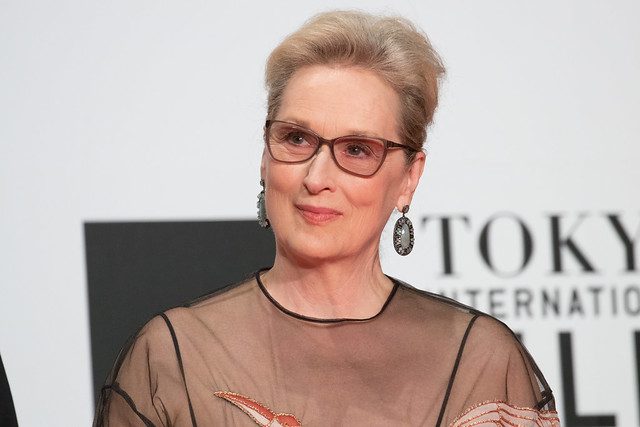
 Often called one of the greatest living actresses, Meryl Streep is one of Hollywood’s most acclaimed stars. With a film career dating back to the 1970s, Streep has racked up an impressive resume, winning two Academy Awards, two Emmy Awards, and seven Golden Globes — among other awards and countless nominations.
Known for her impressive accent impressions and desire to perfect any role she plays, Streep is extremely dedicated to anything she finds passion in. Therefore, it should come as no surprise that when it comes to philanthropy and humanitarian work, Meryl Streep is dedicated to every cause she supports.
Girl Up
Girl Up is a massive organization that focuses on empowering young women and girls. Many influential people have supported the organization in various ways, including fashion photographer Nigel Barker, former NFL player Wade Davis, and Meryl Streep herself. One of Girl Up’s biggest priorities is girls’ education worldwide.
Through a collaboration with the organization, Meryl Streep co-narrated the film Girl Rising. The 2013 film highlights stories of nine girls from Sierra Leone, Haiti, Ethiopia, Afghanistan, Peru, Egypt, Nepal, India, and Cambodia. The film highlights the various obstacles girls in underdeveloped and developing countries face to become educated. By lending her voice to a film with such an important message, Streep inevitably brings in an audience that may not have otherwise tuned in.
Gender Equality
Meryl Streep has also been involved with a variety of panels and events dedicated to gender equality. In 2015, she attended the sixth annual Women in the World Summit — an event started by journalist Tina Brown in an effort to make people “engage with the world and see beyond our own”. Meryl Streep was part of a “Three Great Women of Film” panel, in which she stressed the importance of empathy, telling the audience that nothing matters more than a film’s ability to make people feel what others feel.
In 2016, the White House screened the CNN documentary We Will Rise, which highlights girls in the pursuit of education in Liberia and Morocco. Then-first lady Michelle Obama spoke about her travels to these two countries in Africa, and how she saw the troubles that many girls face concerning education. Meryl Streep, staying true to her passion for global girl’s’ education, accompanied Michelle Obama during these travels. Meryl Streep, therefore, was very supportive of the former first lady’s Let Girls Learn Initiative, an initiative that focused heavily on the reasons that girls are unable to receive an education.
Additionally, Meryl Streep has signed several letters and campaigns calling for gender equality. In 2015, the ONE Campaigned penned an open letter calling for women to be focused on in the UN summit; Streep signed this letter. She also signed another letter on International Women’s Day in 2016 in the name of gender equality.
Streep is a spokesperson for the National Women’s History Museum and has made various donations to the museum. She notably supports the Women in the World Foundation. First launched in 2011, the foundation uses the power of the Internet to determine which causes need which solutions — awarding grants as is seen fit. Streep also supports CHIME FOR CHANGE, which has successfully funded hundreds of projects in 80 countries in the name of health and justice for women and girls.
Silver Mountain Foundation for the Arts
In addition to independently supporting various organizations, Meryl Streep’s humanitarian efforts blossomed into her foundation. Based in New Jersey, USA, Silver Mountain Foundation for the Arts is Meryl Streep’s organization co-founded with her husband, sculptor Donald Gummer. Much of the funding goes towards arts-based organizations such as Mass MoCA, the Museum of Fine Arts in Boston, and the National Museum of Women’s History.
However, the Silver Mountain Foundation for the Arts has also made contributions to women’s and environmental organizations such as Women for Women International, the Women’s Refugee Commissions, the Rainforest Foundation, and the Natural Resources Defense Council.
Additional Support
Since its establishment in 1983, Streep has created a foundation that gives to a multitude of organizations. However, as highlighted previously, Meryl Streep’s humanitarian efforts don’t stop there. She also supports Artists for Peace and Justice, an organization that has donation 100 percent of its donated funds to Haiti in the aftermath of its disastrous earthquake.
Meryl Streep’s humanitarian efforts expand to alleviating hunger and poverty through her support for causes like Heifer International. This organization provides livestock as well as training to low-income families. By providing training, these families and communities can expand their livestock and become self-sufficient — which is the ultimate goal in poverty relief.
With a history of giving back almost as extensive as her film career, it’s clear that Meryl Streep’s humanitarian efforts are extremely important to her. Largely devoted to causes pushing for equality, Streep has served as an excellent role model for what a philanthropic celebrity looks like.
– Emily Cormier
Photo: Flickr

Improving Maternal Health in Guinea
Guinea, officially known as the Republic of Guinea, is a country in West Africa with a significant amount of natural resources, such as bauxite and iron ore as well as gold and diamond mines that could bring the country immense wealth. However, due to its reliance on agriculture and the Ebola outbreak of 2014, the country remains in poverty and has some of the lowest health rates in the world. The philanthropic focus on eradicating Ebola has shifted funds from maternal health to ending the Ebola crisis, endangering the lives of women and children. Improving maternal health in Guinea needs to become a priority.
Maternal Health in Guinea
Of the numerous social problems facing Guinea, maternal health is one of the most detrimental to the country. The neonatal mortality rate in Guinea is 25 deaths per 1,000 live births. The maternal mortality rate is 679 women out of 100,000 live births. This compared to a global neonatal mortality rate of 18 deaths per 1,000 live births depicts a country struggling with maternal health development. Throughout the country, only 36.1 percent of children are vaccinated and approximately 31 babies die each day while 21 babies are stillborn.
One aspect of maternal health that could use improvement is prenatal care and scheduled doctor visits. In rural areas, fewer than 40 percent of women receive prenatal treatment while 71 percent of women in urban areas attend doctor visits before the birth of their child. These low percentages of prenatal care correspond to equally low rates of women who give birth in facilities with trained personnel. The main reason women do not want to give birth in facilities is the mixed-gender wings. Women feel uncomfortable giving birth where men are present.
Global Funding to Reduce Maternal Mortality
To combat these statistics, the government of Guinea and various non-profit organizations are implementing programs to help improve the health and mortality of infants and mothers. In 2018, the World Bank approved $55 million in funding for the two poorest regions of Guinea, Kindia and Kankan. This money will go to improving reproductive, maternal, newborn and child health.
The grant was distributed to two different associations. The International Development Association will receive $45 million to provide low to zero-interest rates for programs that improve economic growth and reduce poverty. The Global Financing Facility will receive $10 million to prioritize underinvested areas of maternal and infant health.
In 2015, the USAID began the Maternal and Child Survival Program in Guinea, which improves the quality and availability of maternal and infant services. The goal of this program is to empower district-level lawmakers to strengthen local centers through a bottom-up approach. Through this initiative, MCSP has established seven healthcare facilities with 42 healthcare providers and 125 healthcare educators.
Focusing on Maternal Health
In 2015, the IDA approved a grant to implement the Primary Health Services Improvement Plan as part of a five-year plan to improve maternal health, child health and nutrition in Guinea. The grant specifically targets health centers by increasing the number of health centers and the availability of equipment and supplies in these centers.
Due to many centers focusing on fighting Ebola, this plan improves the availability of medicines in health centers, restores drug funds within health facilities, supports training in financial drug fund management and covers any financial gap to produce medicines in subsequent years. Additionally, the grant provides three-year training and continuous mentoring for nurse assistants. Furthermore, it recruits unemployed nurse assistants to work at these health centers.
Improvements Made
Since these initiatives began, there has been a significant improvement in developing maternal health in Guinea. The number of births attended by trained health professionals between 2016 and 2018 improved from approximately 27,000 personnel to 44,000. There were also 8 percent more women who received prenatal care by attending at least four doctor visits before the birth of their babies.
Similarly, the Ebola Response Project, although meant to target people affected by the Ebola breakout, has positively affected maternal health development in Guinea by helping fund a new maternity center in Koba. This center helps women attain the privacy they desperately desire by providing two separate wings for men and women. At this center, specifically, a program was initiated to distribute clothes, mosquito nets and soap to expecting mothers to encourage visiting the center.
Maternal health development in Guinea has been steadily improving through programs and governmental plans; however, there is still much work to be done. Although infant and maternal mortality rates are dropping due to an increase in health centers and personnel, a continued increase in funding and a restructuring of fund management is necessary to continue to improve maternal health in Guinea.
– Hayley Jellison
Photo: Flickr
Why Sweden is a Leader in Foreign Aid
Sweden is a Scandinavian country known for providing an impressive amount of humanitarian aid. Sweden’s foreign aid strategies are both similar and unique to the objectives of other countries. The Organisation for Economic Cooperative and Development (OECD) praises Sweden as a leader in foreign aid because of the nation’s “consistent generous levels of official development assistance” and for “its global development leadership on peace and conflict prevention.”
Sweden’s Foreign Aid Record
The Swedish government has long shown concern for humanitarian issues. In 1975, the country achieved the United Nations’ goal of providing 0.7 percent of the nation’s gross national income (GNI) on official development assistance (ODA). In 2008, Sweden contributed 1 percent of its GNI. This number has continued to escalate and is now at 1.4 percent.
In comparison to other countries, Sweden is the largest donor in proportion to the productivity of its economy. Countries that follow are the United Arab Emirates, which contributes 1.09 percent of its GNI, and Norway, which contributes 1.05 percent. These countries are the only three countries whose foreign aid agenda reserves more than one percent of their GNI.
Equality is a core tenant of the Swedish foreign aid mission. In 2014, Sweden was the first country to implement a Feminist Foreign Policy, a strategy that promotes gender equality and women’s rights. Socially, women in countries receiving aid have been provided with programs on how to prevent and resolve instances of discrimination and abuse. Legally, female representation in the government and in the private sector has improved in these countries as well.
Other long-term foreign aid objectives in Sweden focus on installing democracy, peace and security, health equity and efficient education systems in the countries that lack these necessities.
Sweden’s Foreign Aid Agency
Sweden’s most effective agency that works to downsize poverty and foster development is called Sida, or the Swedish International Development Cooperation Agency. The agency methodically establishes democracy throughout countries in order to achieve these two goals.
Sida provides impoverished countries with humanitarian aid for emergency relief and long-term aid for development. Long-term development is the more intricate of the programs. The Swedish government implements this long-term aid with two principles in mind. First, that varying policy areas need to work together to produce positive development; second, that humanitarian aid should be implemented with the perspective that people are capable and eager to accept change.
As of 2007, Sida has 33 partner countries to which they are currently providing aid. While this number has reduced from approximately 125 since the 80s, the extensive efforts put into individual projects illustrate why Sweden is a leader in foreign aid.
Sida’s Work in Syria
Most recently, Sweden has proven itself as a leader in foreign aid through its dedication to those suffering through the Syrian crisis. Due to the disastrous conflict, there are currently 11.7 million individuals in need of assistance. Many hospitals, schools and markets have been destroyed as well.
Sida has allocated more than SEK 367 million (approximately 37.2 million USD) to humanitarian relief in Syria in 2019. This aid goes directly toward life-saving interventions. Basic needs are given to the country’s most vulnerable individuals who live in refugee camps and other communities. Much of Sida’s aid has also gone to Syria’s neighboring countries who receive the most refugees such as Jordan, Turkey and Lebanon.
Lastly, Sida donates to United Nations organizations present in Syria. The Swedish foreign aid machine has worked closely with the International Red Cross and Red Crescent Movement, as well as UNICEF, to improve the infrastructure required to fulfill the needs of Syrian refugees. These organizations have access to local partnerships scattered around the region that continue to provide health care, education and safe housing to displaced individuals.
What Does the Future Hold?
The Ministry of Foreign Affairs estimates that the number of refugees around the world will increase in the years to come. As this reality materializes, global leaders will only benefit from emulating the Swedish government’s extensive efforts to fund, provide and implement efficient humanitarian aid policies.
– Annie O’Connell
Photo: Flickr
Hepatitis B in Sierra Leone
The Hepatitis B virus (HBV) is the leading cause of liver disease. An estimated 248 million people are infected with the virus worldwide. HBV contributes to 600 thousand liver disease-related deaths a year. It is most prevalent in the Western Pacific with 6.2 percent infection rate and African regions with 6.1 percent of the population are infected. Instances of Hepatitis B in Sierra Leone are high, so the government is working to improve access to vaccinations.
Hepatitis B in Sierra Leone
Sierra Leone suffers an especially high prevalence of Hepatitis B. An estimated 8 percent of the population is actively infected, and 6-11 percent of mothers risk passing the disease onto their children through birth. HBV is most often transmitted via childbirth. It can also be transmitted through exposure to infected blood. In highly endemic areas, this occurs most often before age five. Adults can become infected through exposure to any infected body fluids, including through sexual activity.
Typically, the older an individual is at the time of exposure, the less likely the disease is to become chronic. However, children under a year old are 80 to 90 percent likely to develop chronic HBV if exposed, 30 to 50 percent before age 5 and fewer than 5 percent in adults. There is no cure for the disease, which often manifests without symptoms at initial infection. However, those suffering from it can suppress the virus through life-long treatment.
However, the HBV vaccine is 98 to 100 percent effective and has been shown to significantly decrease a country’s HBV prevalence when systematically administered. Sierra Leone has made a push toward improving its national health through international efforts. Though it is limited in its own resources, the country has facilitated “free testing, treatment and counseling” provided through the help of international donors.
Efforts to Reduce Hepatitis B in Sierra Leone
In 2014, the African Regional Committee of the World Health Organization passed a resolution to reduce HBV prevalence in children under 5 years old by 2020 to less than 2 percent. In 2007, Sierra Leone introduced HBV in the vaccine to newborns at week 6, 10 and 14, but the WHO recommended birth dose was not being given.
Much of the efforts on studying hepatitis B in Sierra Leone have been focused on providing accurate information on its epidemiology. The Center for Disease Control conducted a survey measuring the frequency of mother-child transmission and the effectiveness of the current immunization program. Data recently collected on 3,158 households in three provinces of Sierra Leone. Over the course of six weeks, 551 samples of serum were collected
This information will be used to inform Sierra Leone’s Ministry of Health and Sanitation on the success rate of the vaccination campaign. It will show how well the WHO recommended birth-dose works in reducing Hepatitis B. The research also compares Sierra Leone’s mother-to-child infection rate with that of other African countries with similar strains of the virus. The information is expected to be released by the end of 2019.
Areas to Improve
There are still many areas to cover. While the country focuses on expanding the vaccination program, there have been little effort put towards the prevention of adult to adult transmission. Some studies have shown that many healthcare workers lack adequate knowledge of the disease. At least 77 percent of healthcare staff were unable to recognizing clinical symptoms following infection. These areas need to be addressed in order to effectively reduce tranmission of the virus.
Still, the country has made massive strides in improving its HIV and malaria treatments in the past. Now, it must focus treatment on Hepatitis B in Sierra Leone. Education and vaccinations are essential to reducing the spread of the disease.
– Katie Hwang
Photo: Flickr
Meryl Streep’s Humanitarian Efforts
Known for her impressive accent impressions and desire to perfect any role she plays, Streep is extremely dedicated to anything she finds passion in. Therefore, it should come as no surprise that when it comes to philanthropy and humanitarian work, Meryl Streep is dedicated to every cause she supports.
Girl Up
Girl Up is a massive organization that focuses on empowering young women and girls. Many influential people have supported the organization in various ways, including fashion photographer Nigel Barker, former NFL player Wade Davis, and Meryl Streep herself. One of Girl Up’s biggest priorities is girls’ education worldwide.
Through a collaboration with the organization, Meryl Streep co-narrated the film Girl Rising. The 2013 film highlights stories of nine girls from Sierra Leone, Haiti, Ethiopia, Afghanistan, Peru, Egypt, Nepal, India, and Cambodia. The film highlights the various obstacles girls in underdeveloped and developing countries face to become educated. By lending her voice to a film with such an important message, Streep inevitably brings in an audience that may not have otherwise tuned in.
Gender Equality
Meryl Streep has also been involved with a variety of panels and events dedicated to gender equality. In 2015, she attended the sixth annual Women in the World Summit — an event started by journalist Tina Brown in an effort to make people “engage with the world and see beyond our own”. Meryl Streep was part of a “Three Great Women of Film” panel, in which she stressed the importance of empathy, telling the audience that nothing matters more than a film’s ability to make people feel what others feel.
In 2016, the White House screened the CNN documentary We Will Rise, which highlights girls in the pursuit of education in Liberia and Morocco. Then-first lady Michelle Obama spoke about her travels to these two countries in Africa, and how she saw the troubles that many girls face concerning education. Meryl Streep, staying true to her passion for global girl’s’ education, accompanied Michelle Obama during these travels. Meryl Streep, therefore, was very supportive of the former first lady’s Let Girls Learn Initiative, an initiative that focused heavily on the reasons that girls are unable to receive an education.
Additionally, Meryl Streep has signed several letters and campaigns calling for gender equality. In 2015, the ONE Campaigned penned an open letter calling for women to be focused on in the UN summit; Streep signed this letter. She also signed another letter on International Women’s Day in 2016 in the name of gender equality.
Streep is a spokesperson for the National Women’s History Museum and has made various donations to the museum. She notably supports the Women in the World Foundation. First launched in 2011, the foundation uses the power of the Internet to determine which causes need which solutions — awarding grants as is seen fit. Streep also supports CHIME FOR CHANGE, which has successfully funded hundreds of projects in 80 countries in the name of health and justice for women and girls.
Silver Mountain Foundation for the Arts
In addition to independently supporting various organizations, Meryl Streep’s humanitarian efforts blossomed into her foundation. Based in New Jersey, USA, Silver Mountain Foundation for the Arts is Meryl Streep’s organization co-founded with her husband, sculptor Donald Gummer. Much of the funding goes towards arts-based organizations such as Mass MoCA, the Museum of Fine Arts in Boston, and the National Museum of Women’s History.
However, the Silver Mountain Foundation for the Arts has also made contributions to women’s and environmental organizations such as Women for Women International, the Women’s Refugee Commissions, the Rainforest Foundation, and the Natural Resources Defense Council.
Additional Support
Since its establishment in 1983, Streep has created a foundation that gives to a multitude of organizations. However, as highlighted previously, Meryl Streep’s humanitarian efforts don’t stop there. She also supports Artists for Peace and Justice, an organization that has donation 100 percent of its donated funds to Haiti in the aftermath of its disastrous earthquake.
Meryl Streep’s humanitarian efforts expand to alleviating hunger and poverty through her support for causes like Heifer International. This organization provides livestock as well as training to low-income families. By providing training, these families and communities can expand their livestock and become self-sufficient — which is the ultimate goal in poverty relief.
With a history of giving back almost as extensive as her film career, it’s clear that Meryl Streep’s humanitarian efforts are extremely important to her. Largely devoted to causes pushing for equality, Streep has served as an excellent role model for what a philanthropic celebrity looks like.
– Emily Cormier
Photo: Flickr
Global Citizen Year: Connecting Students to Service
In 2008, after winning first place at the Harvard Business School’s Pitch for Change competition, Stanford graduate and aspiring social entrepreneur Abigail Falik established the cultural immersion gap-year program, Global Citizen Year. Falik became inspired to create an opportunity for service available for all rising college freshmen.
Global Citizen Year in Ecuador
As a developing country, Ecuador faces a significant economic strain, especially in its more rural areas. It ranks as the fourth poorest country in South America with a GDP per capita at $11,036.
Global Citizen Year offers five distinct apprenticeships to its fellows, all of which revolve around social justice and complete cultural immersion. The program prides itself on providing an uncensored version of third-world interaction. This stands in contrast to its counterparts, many of which place a patronizing lens over international service.
When a fellow embarks on their mission to Ecuador, they choose between apprenticeships in agriculture, education, environmental conservation, social enterprise or social work. The duties range from working alongside the local government in efforts to protect vulnerable populations, to helping tutor English in local schools, to working in government-run elderly homes.
The following is an excerpt from Natalia Lanzoni’s June 2019 interview with the Borgen Project regarding Global Citizen Year’s unique approach.
Natalia Lanzoni’s June 2019 Interview with the Borgen Project
The Borgen Project: What were the biggest culture shocks—especially relating to the level of poverty—you faced when initially arriving in Ecuador?
Lanzoni: There was obviously a considerably less amount of wealth than the average person has in Cambridge. It kind of permeates every aspect of life, even the little things that you don’t think about what we do here. When I would buy groceries with my host-family we would buy one roll of toilet paper, because that’s what their income allows them. Here we don’t even think about it when we’re buying twenty-four rolls of toilet paper. It means that we have a surplus in our income that we can afford to spend it now. There was a lot of privileges I had that I didn’t even realize. Especially the fact that I was able to travel. The host-family told me they had never seen the ocean, which blew my mind because they were a two-hour drive away. Also, my host parents had to cross the U.S. border as illegal immigrants to find work when their son was born, because the U.S. won’t give visas if they see Ecuador in the papers. Their son lived his first ten years parentless.
The Borgen Project: Can you talk about your service experience in Ecuador?
Lanzoni: For the program, we have what’s called an apprenticeship, which is basically a volunteer job in our communities. So, a lot of people are English teachers or assistants to English teachers. English is important because it is so global. The one I worked for was at a local elderly home, it was run by the government of the town which provided a place for them to hang out during the day. They would come there and do crafts and the home would feed them meals. That home also supported families that lived very rarely, that had no sources of income because they were older. And they lived really high on the mountainsides, so a lot of them didn’t even have access to clean water, or they couldn’t walk all the way to the river because it was too far. They were living in pretty extreme poverty and the organization would also make trips out to do activities with them. Also, deliver them food and supplies for their homes.
TBP: Can you explain the ways in which you believe Global Citizen Year ensures long-lasting improvement on both a personal and social level?
Lanzoni: There are two different parts of how the organization is working to combat poverty. There’s the more obvious one which is the labor, the volunteer work that the fellows do while they’re in the country. But obviously, they’re only 18-year-old kids who don’t have a marketable skill or some niche way in which they can help the community. So I think the organization is more focused on the bigger picture, which is educating the leaders of tomorrow and inspiring young kids who are about to go off to college to involve themselves in social work. People don’t really think about going to college to work for a nonprofit combating poverty that often, so this is a way to expose young kids to those types of fields and to hopefully educates them in ways that they know will tangibly help that community down the line.
Global Citizen Year succeeds in informing its students about the reality of extreme global poverty. In doing so, it builds a force of passionate and motivated youth that will fight the fight to end global poverty. Here is the application to become a Global Citizen Year fellow.
– Liam Manion
Photo: Flickr
The Digital GAP Act: Foreign Aid to Make a Difference
For the developed world, internet access has become a standard part of everyday life. Currently, 80 percent of individuals living in the developed world have access to the internet and this number is growing. However, in the developing world, a mere 40 percent of individuals have access to the internet due to a lack of infrastructure. This number decreases to 11 percent when looking at the world’s least developed countries. In order to promote global economic growth and job development, the U.S. has introduced the Digital Global Access Policy (GAP) Act, a bill that would encourage broadband (high-speed) internet access throughout the developing world.
Purpose of the Digital GAP Act
Ultimately, the Digital GAP Act would fund the infrastructure needed to provide broadband internet access throughout the developing world. The goal of the bill is to provide four billion people living in both the urban and rural areas of developing countries with first-time access to the internet by 2027. The benefits of the Digital GAP Act are manifold. Supporters of this bill hope that fixed access to the internet will “catalyze innovation, spur economic growth and job creation, improve health, education, and financial services, reduce poverty and gender inequality, mitigate disasters, and promote free speech, democracy and good governance.” In short, the Digital GAP Act has the potential to be revolutionary because the ability to access all different types of information with the click of a button would drastically transform the developing world.
Who is Spearheading the Bill?
The Digital GAP Act is a bipartisan bill. Rep. Ron Wright (R-TX-Six), Rep. Ted Lieu (D-CA-33), Rep. Michael McCaul (R-TX-10) and Rep. Ami Bera (D-CA-Seven) introduced it on February 26, 2019. Additionally, Rep. Brad Sherman (D-CA-30), Rep. Dean Phillips (D-MN-Three) and Rep. Derek Kilmer (D-WA-Six) have cosponsored this bill.
On May 20, 2019, the House of Representatives passed the Digital GAP Act. The Senate now needs to pass the bill and President Trump must sign it. The government has reported that there is an 85 percent chance of Senate passing the bill.
The Installation of Broadband Internet
The developing world will gain access to the internet through a build-once policy. In order to fund this initiative, both the public and private sector will invest in roads and other critical infrastructure in order to ensure that the infrastructure will last and that workers install it adequately the first time. The goal is that this infrastructure will be able to reach the poor rural areas of the developing world. Without actively targeting rural areas, only the major cities would gain internet access, leading to heightened wealth disparity. Without promoting the development of all areas, sustainable development cannot be achieved.
The Way the Digital GAP Act Will Benefit the Economy
By providing internet access to more than four billion people throughout the world, the global economic output would increase by approximately $6.7 trillion and raise over 500 million people out of poverty. This initiative would greatly advance the United States’ foreign policy interests because global poverty reduction helps foster resilient, democratic societies, which promote national security and global economic growth. According to the World Bank, “Raising Internet penetration to 75 percent of the population in all developing countries would add as much as two trillion USD to their collective GDP and create more than 140 million jobs around the world.” The bill also anticipates bringing 600 million more women online. Currently, there are 23 percent fewer women online than men. According to the U.S. government, these women would contribute between $13-18 billion in annual GDP across 144 countries.
The Digital GAP Act is a long-term investment. While many foreign aid initiatives look to reduce immediate suffering by providing food aid or funding for crisis relief, the Digital GAP Act looks much further into the future. In other words, the goal of this bill is not to temporarily mitigate poverty, but to end it altogether by promoting avenues for economic growth and job development. However, both forms of foreign aid must work together, for the long-term benefits that this Act could provide are irrelevant if the people do not address the immediate needs of those living in extreme poverty.
– Ariana Howard
Photo: Flickr
4 Ways Asante Africa Foundation is Helping Impoverished Youth in East Africa
The Leadership and Entrepreneurial Incubator Program
The sub-Saharan workforce is the least skilled in the world. According to an Inter-University Council of East Africa report from 2014, a mere 49 percent of employers in Kenya believe graduates are prepared to succeed in an entry-level position. Only 39 percent of employers in Tanzania believe graduates are prepared. Asante’s leadership program works with children to build skills that are applicable in the workforce.
The program is a three year curriculum focused on personal development, job readiness and entrepreneurship. Skills like goal setting, financial literacy, leadership development, professional etiquette, industry exploration, project planning, interviewing and resume building are taught to children in the program. The programs five year impact report states that around 60 percent of participants have a leadership position in their communities, more than 70 percent have completed internships and participants have seen a 40 percent increase in salaries as opposed to those not involved in the program.
The Girls’ Advancement Program
According to Human Rights Watch, over 49 million girls in sub-Saharan Africa are out of primary and secondary school. Tanzania was found to have policies harmful to girls’ education. Human Rights Watch discovered that school officials conducted pregnancy tests and expelled pregnant students. The Girls’ Advancement Program teaches female students about sexual maturation, reproductive health, children’s rights and also assists schools in providing safe environments for girls.
The program has greatly benefited female students. Financial literacy is at 95 percent, 85 percent of participants feel they can attend school while menstruating and 70 percent know the importance of HIV awareness and prevention. The program also involves male students and helps them learn about male and female health.
Accelerated Learning in the Classroom Program
The third of the four ways Asante African Foundation is educating impoverished youth in East Africa is by improving educational resources and classroom environments. The Accelerated Learning in the Classroom Program provides intensive teacher training, a learner-centered education model and low cost digital resources to schools. Over 3,000 teachers have been trained to use digital resources in the program. According to Asante, 63 percent of students involved saw increases in English and critical thinking skills.
Scholarship Program
According to UNICEF, direct and indirect costs of schooling are a large barrier to education, especially among girls. Asante provides scholarships for primary, secondary and university level schooling. The primary school scholarship covers food, school materials, uniforms, personal items, boarding and transportation. The secondary and university scholarships cover all the aforementioned items except transportation and are based on academic performance. All of the scholarships cover one year of expenses and are given to rural and poor students of East Africa.
Asante has positively impacted over 500,000 lives through their programs. According to Global Partnership for Education, programs like Asante’s help reduce poverty rates, increase individual earnings, reduce income inequality while promoting economic growth. Asante has received awards from UNESCO, the Jefferson Awards Foundation, the Khan Academy, the African Achievers Awards and the United Nation Girls’ Education Initiative for their effective and beneficial work. The four ways Asante African Foundation is educating impoverished youth in East Africa and strategies like them are essential for the development of that region, and according to the U.N., imperative in ending extreme poverty.
– Zach Brown
Photo: Flickr
Addressing Mental Health in Sierra Leone
Mental Health in Sierra Leone
The World Health Organization approximates that 10 percent of Sierra Leone citizens are facing mental health problems. This number may be even higher when taking into account cases that have not been officially reported. “[D]aily hardships and misery can turn into what scientists call “toxic stress” and trigger or amplify mental health problems” as a result of living in extreme poverty. For a long time, there was a lack of political support for mental health in Sierra Leone.
Resources are a big problem when tackling the issue of mental health in Sierra Leone. There are only “two psychiatrists, two Clinical Psychologists and 19 Mental Health Nurses” in a country of seven million people. Furthermore, only four nurses are trained to work with children with mental health issues. Due to the absence of support, many citizens seek out help from the traditional healers available.
Many individuals and organizations are working together with the goal of improving mental health in Sierra Leone. Two organizations that have made significant efforts and progress in raising awareness or providing direct aid to mental health services are the Ministry of Health and Sanitation (MOHS) and the World Health Organization (WHO). Both WHO and MOHS have worked together on projects that have greatly improved support for mental health in Sierra Leone.
The Ministry of Health and Sanitation
Most of those infected or family to those infected during the Ebola virus disease (EVD) outbreak experienced trauma. Patients were often isolated from loved ones and surrounded by strangers. People had to cope with the death of family members and friends. Survivors of EVD beat the virus, but they still experienced toxic stress, depression, insomnia and anxiety. MOHS developed a plan for providing mental health services by improving community awareness, building demand for services and improving access to specialized healthcare workers at all levels of care.
The MOHS worked with the Advancing Partners program on a two-year project funded and managed by USAID’s Office of Population and Reproductive Health and implemented by JSI. In Sierra Leone specifically, MOHS’s framework is being used to aid Sierra Leone’s government with the implementation of health service in post-Ebola recovery. The program is improving mental health awareness in the community, training healthcare workers with the skills to provide high-quality care and reinforcing mental health governance.
So far, MOHS and Advancing Partners have created community healing dialogue (CHD) groups. The groups help communities by providing coping mechanisms, finding resources and offering support for those with psychosocial issues. These groups are placed in areas with a large amount of EVD survivors and trained mental health staff. The CHD groups have “reached almost 700 people in 40 communities across the six districts most affected by the Ebola outbreak (Bombali, Port Loko, Kailahun, Kenema, and Western Areas Rural and Urban).”
The World Health Organization
The World Health Organization is focused on training healthcare workers in Psychological First Aid and the identification of distress. WHO developed the mental health gap action programme (mhGAP) to train community health workers and medical doctors in Sierra Leone. This way, healthcare workers will be able to more easily identify mental disorders and discover treatment options. WHO wanted to create an approach that aims to support mid-level and higher level healthcare workers to provide better tailored services.
Sierra Leone was previously a country where mental health needs were not addressed. The country continues to be impoverished since a large part of its population is unemployed. It experienced devastating losses in its 11-year-long civil war and was further distressed by the severe Ebola outbreak in 2014. The country has a large amount of people still suffering from past issues. That suffering went untreated for a long time. However, organizations like the WHO and MOHS have made considerable progress in addressing the mental health in Sierra Leone.
– Jade Thompson
Photo: Flickr
The BARKA Foundation is Bringing Clean Water to Burkina Faso
Burkina Faso is a small, land-locked country located in western Africa. Due to recurring droughts and the lack of efficient infrastructure, access to clean water remains an issue in Burkina Faso, especially during the dry winter months when two of the country’s three rivers dry up. In addition to water scarcity, many areas still do not have the sanitation facilities necessary to ensure drinking water is clean and safe. An organization called the BARKA Foundation is working to change that.
Barka is an African word meaning gratitude, blessing and reciprocity. These three words embody the mission of the BARKA Foundation, an American non-profit that strives to bring clean water to all parts of Burkina Faso. In 2015, 93.3 percent of the rural population and 80.3 percent of the total population did not have improved sanitation facility access. Nearly half the country still lives without clean water. Dirty water can spread diarrheal diseases and other infections to the public. Below are descriptions of the BARKA Foundation’s current clean water projects, and the positive effects these projects have had on communities in Burkina Faso.
WASH
Water, Sanitation and Hygiene Education (WASH) is a long-term initiative that not only supplies rural villages with clean water but also educates the villagers on important sanitation and water purification practices. The goal here is sustainability. By giving village members lifelong sanitation skills, BARKA can be confident that their positive impact will continue after they have left. WASH objectives include digging wells, building latrines and educating members of the community.
Part of what makes the BARKA Foundation special is its culturally sensitive and community-based approach to clean water. Before any project starts, BARKA makes sure it is in accordance with the Declaration of Rights of Indigenous Peoples’ Principle of Free, Prior and Informed Consent (FPIC). This principle ensures that all beneficiary communities agree to the non-profit’s presence and initiatives, have the right to negotiate the terms of the agreement and can withdraw consent at any time.
BARKA also makes a point of developing sustained personal relationships with each village, so the two groups can develop trust and collaborate effectively. The foundation establishes water and sanitation committees in each town, which are run by the villagers and must be made up of equal parts men and women. These principles are central to WASH’s desire to create a sustainable system of clean water and sanitation. So far, more than 25,000 rural villages have been improved by WASH. The organization has drilled 6 wells and built 14 bathrooms in 5 primary schools in rural areas.
Social Art
BARKA recognizes the cultural importance of song, dance and performance in Burkina Faso. Therefore, to engage village members, the BARKA Foundation uses theater to relay information to the public. These performances involve a portable stage along with light and sound equipment. The plays often contain themes such as female empowerment and sustainable agriculture. After a performance, the audience and the actors on stage have a lively debate where questions may be asked or points challenged. The goal is to create an immersive and interactive learning experience in which everyone can participate.
The adult literacy rate in Burkina Faso is only 34.6 percent. For this reason, engaging and participatory education is extremely important in rural areas. BARKA wants to get the necessary information out there in an effective way that does not exclude illiterate members of society. BARKA has involved 10,023 people in villages and public performances to date, benefiting more than 16,000 people. The average audience size per performance is 432 people.
Walk for Water
A great way for people in their home countries to get involved with the BARKA Foundation is to do a Walk for Water. When there are no wells close by, villagers must travel to a water source to fill up heavy jugs of water and lug them home. The chore typically falls on the shoulders of women and girls in the village, so they usually have to attend to small children while making the journey. Often, those going to get water are barefoot or equipped with poor footwear. This practice is physically tiring and time-consuming and takes time away from girls’ education.
Walks for Water are an imitation of this daily burden. Classrooms, schools and clubs raise money and awareness by carrying water jugs and walking for a set distance (usually 6 kilometers). The fundraiser engages the entire community and is a great way to get everyone involved in an important cause.
Ceramic Filters
Ceramic water filters are a cheap, environmentally sustainable and generally effective way to purify household water. The CDC found that people who used ceramic filters were 60 to 70 percent less likely to contract diarrheal diseases from their drinking water. While these filters are useful for removing most protozoa and bacterial pathogens, they are typically not as effective at removing viruses. For this reason, filters should not be considered a long-term solution but rather an important step.
The BARKA Foundation uses a “cross-subsidization” model to distribute filters to impoverished areas. Essentially, BARKA sells the filters to NGOs and the Burkinabe middle class that can afford them. They then use those profits to distribute ceramic filters to poor areas, often visiting rural villages with little to no sanitation facility access. These filters represent a simple and effective way to ensure every household has at least some method of water purification.
The Future of Clean Water in Burkina Faso
Although the federal government recognized the importance of clean water distribution with the Water Act in 2001, Burkina Faso’s local governments largely do not have the money or resources to maintain filtered water and sanitation practices. The BARKA Foundation seeks to fill these gaps, and its efforts have no doubt resulted in success on the ground.
While it can be difficult to quantify exactly how much improvement BARKA has brought about, they are headed in the right direction. In 2005, a year before BARKA was founded, the life expectancy in Burkina Faso was 53.3 years. Today, the country’s life expectancy is about 61 years. BARKA’s various projects will continue to fight poverty by bringing clean, safe and sustainable water to Burkina Faso.
– Morgan Johnson
Photo: Flickr
How Goats Fight Poverty
How Goats Fight Poverty
Goats are the animal of choice for humanitarian groups for a plethora of reasons. From their behavior to their eating patterns, goats are easy to raise and supply marketable produce. For small farmers, goats are much less expensive to raise than cows or buffalo. Their diet mainly consists of grasses and shrubs, allowing them to survive even through inclement conditions such as droughts and crop failure.
Furthermore, goats reach sexual maturity at an early age and reproduce rather quickly. A female goat can give birth up to two times a year. In many impoverished areas, baby goats benefit the entire community as opposed to just one family – instead of being kept on the same farm as its mother, a baby goat is often gifted to an impoverished neighbor.
Goats and Children
Many children living in impoverished conditions do not have adequate access to a nutritious diet. Goats can provide the milk, cheese and protein needed to balance a child’s nutritional needs thus reducing dependency on protein from plant-based sources. This is particularly beneficial for children living in countries like Haiti where crops are often destroyed by natural disasters.
Rearing goats helps families living in poverty to support their children’s educational needs in more than one way. Goats offer a means to break the cycle of generational poverty, providing households with a source of income to send their children to school. Furthermore, with healthful meal options from goats, children will have full stomachs during the day allowing them to focus on their studies.
Recent Programs Involving Goats
One organization, in particular, has recently participated in the effort to alleviate poverty with goats. SIDA, short for the Swedish International Development Cooperation Agency, launched a program in western Mali following a 2014 drought. To help, SIDA provided families suffering from food shortage with two assets: goats and seeds. With these two resources, the organization was able to successfully stabilize Malinese livestock herds to combat the lack of flourishing greens.
SIDA was not only able to alleviate poverty with goats in western Mali, but the organization took things a step further by sharing best practices such as care techniques to ensure sustainability. To date, SIDA’s record in western Mali proves to be exemplary. About 2,610 households in the country received goats to combat food insecurity and provide hope for future generations.
The Future for Goat Farmers
Countless personal stories from smallholder farmers have shown the lifechanging effects a goat can have on a community. These creatures seem to be the perfect solution for rural penury, however, there is one problem that stands in the way: goats are not immune to diseases. Organizations like the African Union Inter African Bureau for Animal Resources have been readily responding to this issue, but it demands much more attention as goats have become an integral part of farming life for poor families around the world.
– Annie O’Connell
Photo: Flickr