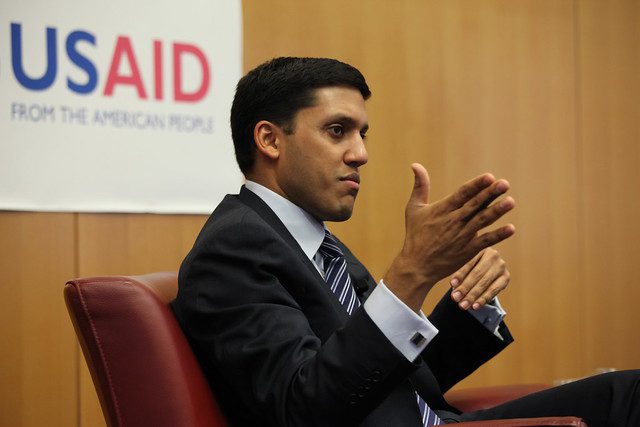
Foreign aid refers to any donation that one country makes to help another. The United States has proven itself to be a leading figure in foreign aid projects through the work of the United States Agency of International Development (USAID). This article focuses on the history of USAID.
USAID is the United States’ foreign aid branch which is responsible for diminishing poverty, innovating development and ideological progress around the world. The organization harbors an interesting history scattered with different approaches and methods. Each decade has acted as an era to test new theories on how to best assuage purveying poverty.
A Quick Historical View
On November 3, 1961, President John F. Kennedy signed an executive order that created the first U.S. agency that would take on global development challenges. USAID emerged “with a spirit of progress and innovation.”
The need for a specific agency to handle global development projects became clear after World War II. The Marshall Plan, active from 1945 to 1949, focused on rebuilding European nations after the damaging war. This demonstrated to U.S. lawmakers that providing assistance to stabilize countries is an effective way of initiating positive change. The 1960s was the decade of development. International powers united under the belief that poverty was a moral blot in the world. Groups like UNICEF and UNDP formed to strengthen infrastructure and industrialization in third-world countries.
Since its early stages, USAID has morphed and shifted focuses. The 1970s had a humanitarian ideal, the 1980s a market-based one and the 1990s saw an effort to stabilize democracy. The 2000s have thus far been reminiscent of USAID’s original purpose. The all too numerous episodes of violence and war have caused much of USAID’s efforts to go towards rebuilding destroyed neighborhoods and governments.
How Does USAID Implement Aid?
The history of USAID shows that while the organization has taken on multiple approaches, funding methods have remained stagnant. USAID sometimes gives donations to governments and predominantly channels them through NGOs that use the money for very specific purposes.
Many NGOs use their budget to directly affect the lives of individuals and families. Communities receive humanitarian aid in the aftermath of natural disasters. Events like these are particularly harmful to impoverished individuals, as many of them rely on agriculture as the sole means of income. Education and health services are also a primary focus of NGO groups as these are both methods to bring third-world countries onto the modern development stage.
Which Countries Receive the Most Aid?
There are over 100 countries that receive foreign aid assistance from USAID. The history of USAID shows that countries riddled with violence are often the highest receivers.
To date, USAID has given Afghanistan the most foreign aid from the United States. The country has received a considerable $4.89 billion in total. About 73 percent of this aid has gone directly to military projects. Counter-terrorist projects are particularly important in Afghanistan, as USAID attempts to stabilize legal and judicial systems that work to hinder the threat of violent groups. This not only protects the domestic Afghan population but also works to improve U.S. national security.
Iraq, Israel and Jordan are the next three countries that receive the most foreign aid assistance from USAID. The purpose of these donations is similar to that of Afghanistan.
Ethiopia, South Sudan and Kenya are also big receivers but for different reasons as economic aid is the primary concern. These programs are diverse and unique to the concerns of each country. Many, however, focus on relieving the spread of disease and allocating food security to suffering populations.
A Recent Project
When reviewing the history of USAID, it is difficult to pick just one outstanding success. The record has shown that it has integrated democracy, erected countless schools and brought the miracles of modern-day science to neglected regions.
One of its recent projects that focuses on agriculture shows that USAID plans for the future and is also pragmatic. The Avansa Agrikultura Project from April 2015 to March 2020 focuses on farming in East Timor. At its completion, the project should help 5,500 individuals in earning more income and benefitting from a nutritious diet. USAID hopes to improve the daily goings of farm life in East Timor in addition to opening international trade markets to recipients.
A glance at the history of USAID personifies it as an organization dedicated to eradicating worldwide poverty through appropriate methods. With its record, it is no secret that this U.S. foreign aid branch poses as an international leader and will more than likely continue to be so in the future.
– Annie O’Connell
Photo: Flickr

Irene’s School in Uganda Supports Girls’ Education
Education outcomes, a lack of funding, rapid expansion and inadequate management have led to low and declining education outcomes for girls and boys in Uganda. Since 2000, initial primary enrollment and attendance rates have increased; however, only one-third of students will finish their primary education.
The Problem
Only 20 percent of students reach O-level, which is four years of lower secondary education, and only 10 percent reach A-level, which is finishing secondary education and two years of upper secondary education. Furthermore, less than half of primary students meet the minimum level of literacy and numeracy in the National Assessments of Performance in Education.
Girls living in sub-Saharan Africa face some of the greatest disadvantages when it comes to gaps in education. Globally, over half of the out-of-school children live in this region, and nearly 40 percent of adolescent girls are out of school.
The reasons for this vary, however one of the most tenacious reasons is harassment from men. There is a lack of private bathroom facilities and it is very common for boys at school to target girls for consensual or forced sexual encounters which can harm the girl’s reputation. If she becomes pregnant, she’s forced out, while the father of the baby can continue with school.
Irene’s Story
Irene’s school in Uganda is a success story that stands above the rest and gives girls in sub-Saharan Africa hope. Irene Kamyuka, the youngest of four kids, was forced to drop out of her sixth year of primary school in 2012 because her father ran short of money. Kamyuka’s father told her that she could go back to school when her siblings were finished and he had saved up enough money.
However, because of her dedication and the generosity of others such as the Plan International Program, the 15-year-old is now in her first year at Kamuli Progressive College and stands as an inspiration to girls aspiring to stay in school. The international development charity is paying her term fees, which work out to about 20 U.S. dollars every three months.
Stories like Irene’s are not uncommon. Ugandans who live in rural areas, like in Kamyuka’s town Kamuli, make their living as subsistence farmers and run into difficulties paying for their children’s schooling. Though this East African nation’s government-run schools are free, parents who cannot afford to pay for uniforms, books and supplies cannot send their child to school.
According to preliminary statistics from Uganda’s Ministry of Education for the 2012 school year, the number of girls who qualify to attend secondary school stood at 343,000 in contrast to 408,000 boys. As in Kamyuka’s case, the outcome of their education is often interrupted or canceled completely.
How is the world helping?
Despite it being unusual for girls to attend school as far as the seventh grade in Uganda, the country is receiving support. UNICEF has been supporting Irene’s school in Uganda since 2015 by providing school supplies, as well as training teachers and building a new classroom block and latrines.
Similarly, the Plan International Program continues to help those in need to pay dues for school, and the Irene Children’s Support Organization (LICSOU) was formed in 2012. They work to respond to the overwhelming number of children who are dropping out of schools within rural communities like Irene’s school in Uganda. In order to accomplish their goals and help the greatest number of children, they plan on lobbying, advocating and improving community networking and collaboration.
– Grace Arnold
Photo: Unsplash
The History of USAID Providing Aid
Foreign aid refers to any donation that one country makes to help another. The United States has proven itself to be a leading figure in foreign aid projects through the work of the United States Agency of International Development (USAID). This article focuses on the history of USAID.
USAID is the United States’ foreign aid branch which is responsible for diminishing poverty, innovating development and ideological progress around the world. The organization harbors an interesting history scattered with different approaches and methods. Each decade has acted as an era to test new theories on how to best assuage purveying poverty.
A Quick Historical View
On November 3, 1961, President John F. Kennedy signed an executive order that created the first U.S. agency that would take on global development challenges. USAID emerged “with a spirit of progress and innovation.”
The need for a specific agency to handle global development projects became clear after World War II. The Marshall Plan, active from 1945 to 1949, focused on rebuilding European nations after the damaging war. This demonstrated to U.S. lawmakers that providing assistance to stabilize countries is an effective way of initiating positive change. The 1960s was the decade of development. International powers united under the belief that poverty was a moral blot in the world. Groups like UNICEF and UNDP formed to strengthen infrastructure and industrialization in third-world countries.
Since its early stages, USAID has morphed and shifted focuses. The 1970s had a humanitarian ideal, the 1980s a market-based one and the 1990s saw an effort to stabilize democracy. The 2000s have thus far been reminiscent of USAID’s original purpose. The all too numerous episodes of violence and war have caused much of USAID’s efforts to go towards rebuilding destroyed neighborhoods and governments.
How Does USAID Implement Aid?
The history of USAID shows that while the organization has taken on multiple approaches, funding methods have remained stagnant. USAID sometimes gives donations to governments and predominantly channels them through NGOs that use the money for very specific purposes.
Many NGOs use their budget to directly affect the lives of individuals and families. Communities receive humanitarian aid in the aftermath of natural disasters. Events like these are particularly harmful to impoverished individuals, as many of them rely on agriculture as the sole means of income. Education and health services are also a primary focus of NGO groups as these are both methods to bring third-world countries onto the modern development stage.
Which Countries Receive the Most Aid?
There are over 100 countries that receive foreign aid assistance from USAID. The history of USAID shows that countries riddled with violence are often the highest receivers.
To date, USAID has given Afghanistan the most foreign aid from the United States. The country has received a considerable $4.89 billion in total. About 73 percent of this aid has gone directly to military projects. Counter-terrorist projects are particularly important in Afghanistan, as USAID attempts to stabilize legal and judicial systems that work to hinder the threat of violent groups. This not only protects the domestic Afghan population but also works to improve U.S. national security.
Iraq, Israel and Jordan are the next three countries that receive the most foreign aid assistance from USAID. The purpose of these donations is similar to that of Afghanistan.
Ethiopia, South Sudan and Kenya are also big receivers but for different reasons as economic aid is the primary concern. These programs are diverse and unique to the concerns of each country. Many, however, focus on relieving the spread of disease and allocating food security to suffering populations.
A Recent Project
When reviewing the history of USAID, it is difficult to pick just one outstanding success. The record has shown that it has integrated democracy, erected countless schools and brought the miracles of modern-day science to neglected regions.
One of its recent projects that focuses on agriculture shows that USAID plans for the future and is also pragmatic. The Avansa Agrikultura Project from April 2015 to March 2020 focuses on farming in East Timor. At its completion, the project should help 5,500 individuals in earning more income and benefitting from a nutritious diet. USAID hopes to improve the daily goings of farm life in East Timor in addition to opening international trade markets to recipients.
A glance at the history of USAID personifies it as an organization dedicated to eradicating worldwide poverty through appropriate methods. With its record, it is no secret that this U.S. foreign aid branch poses as an international leader and will more than likely continue to be so in the future.
– Annie O’Connell
Photo: Flickr
Digital Education Improves Literacy in Bangladesh
Education Overview
Bangladesh’s school system is broken down into four categories: pre-primary, primary, secondary and tertiary. The country currently has five years of compulsory education from age six to age ten. The country has been working to decrease the number of out of school children throughout the past ten years, with only 753 children not in school as of 2017. The number of out of school adolescents has also decreased, dropping from 2,776 children in 2010 to 995 children in 2017.
Impact of Digital Education
With these decreases in out-of-school children, Bangladesh has been working to increase the literacy levels throughout the country. Digital education is making access to reading materials and textbooks easier throughout all regions, which helps to improve literacy in Bangladesh. Using digital materials to increase the level of education in schools is helping children to understand the tools available through the internet and infuse a larger amount of knowledge into the current school systems in place. Many schools have adopted the use of technology to aid education throughout the country, incorporating digital white boards, tablet devices and learning apps to infuse more learning materials into classrooms.
JAAGO Foundation
One group working to improve literacy rates in Bangladesh is the JAAGO Foundation, which has helped through the creation of a digital school. This school helps to teach information and communications technology (ICT) to students, which was accredited by UNESCO in 2017 as an innovative, new method for ICT education. The school is set up into parts: a headquarters for teachers located in Dhaka, and classrooms in remote areas with video-streaming technology to broadcast lessons from the headquarters. JAAGO’s school also includes interactive calls between the students and the teachers in Dhaka so that these students have opportunities to ask questions and get individual learning time.
JAAGO has also partnered with Bangladesh’s government through the A2i project, which provides an e-learning platform for students looking for an online education. This platform, named Muktopaath, features both videos and educational lessons to supplement traditional education forms and help to increase the literacy rates throughout the country.
Literacy Rates on the Rise
Because of institutions like the digital school from the JAAGO Foundation, literacy in Bangladesh is currently at an all-time high, with 72.76 percent of the population being literate in 2016. This number has increased by 26.1 percent from 2007, where literacy rates were measured at 46.66 percent. The literacy rate for people between 15 to 24 has also increased drastically, from 61.87 percent in 2007 to 92.24 percent in 2016. These figures show how Bangladesh is working to break out of the Least Developed Country (LDC) designation and improve overall quality of education throughout the regions.
Bangladesh’s government has also been increasing funding to local schools to benefit the quality of literacy and education throughout the country. Government spending toward education was over $4.3 billion in 2016, which is more than double what the government spent in 2008. The National Education Policy of 2010 helped to make education accessible for everyone, and over 26,000 primary schools have been accredited by the government as national schools to ensure that a primary school is in every region of the country.
Literacy in Bangladesh has been steadily increasing by infusing technology into local schools. Through increasing government funding for schools and with the help of outside programs like the JAAGO Foundation, educational systems throughout the country are beginning to rise to meet international education standards. As more technology is added into school systems, Bangladesh will continue to improve in international standings and surpass LDC status within the next few years.
– Kristen Bastin
Photo: Flickr
10 Facts About Slums in Brazil
Brazil, being among the top 10 most populous countries in the world, has one of the highest levels of wealth inequality. Wealth distribution is lacking, as the south is responsible for the vast majority of Brazil’s bustling economy and holds a large fraction of the nation’s money. The stark contrast between the affluent and the poor is as visible as the divide between the metropolis and the countryside. The outskirts of Brazil’s major cities, namely Rio de Janeiro, indicate a clear division as unregulated neighborhoods, or slums termed “favelas,” are ever-present. Here are 10 facts about slums in Brazil.
10 Facts about Slums in Brazil
The favelas of Brazil signify the divide between the poor and the wealthy. Rio de Janeiro has implemented programs to eradicate the favelas and replace the weak, dangerous infrastructure of the slums with more permanent housing. While the conditions of the slums in Brazil may seem hopeless, change is occurring and progress is being made.
– Clare Leo
Photo: Flickr
3 Initiatives that Help Peruvians During the Frost Season in Peru
While Peru is known for having a pleasant climate in most regions, this isn’t always the case all year round. In the winter months of the frost season in Peru, a wave of freezing weather strikes the communities in many areas of the Andean region.
These freezing temperatures are not your average winter. In 2010, freezing weather in the Andean South went below -20 Celcius, causing pneumonia and hundreds of deaths — with children being the most impacted demographic. In 2017, a wave of freeze killed around 180,000 alpacas on the farthest areas of Ayacucho, where the people heavily depended on the breeding of alpacas for sustenance. Since the affected regions are in extreme poverty, the people living there do not have enough resources to prevent tragedies such as the ones mentioned above.
Each frost season in Peru brings a new wave of adversity and problems, and unfortunately, it is the most vulnerable people that are the most affected by the weather. However, help comes even during the most troubled times. Here are three initiatives that have helped those affected by frost season in Peru.
3 Initiatives To Helping Those Affected by Frost Season in Peru
Peruvian frost season is not an easy season to overcome. Luckily there is even more being done to fight against the hardships of the winter. This year, for example, a new type of potato was developed, called Wiñay, that can tolerate freezing temperatures and maintain its nutritional value, making it possible for farmers to produce crops even then the ground is covered in snow. Through the efforts of organizations like the three mentioned above, Peruvians are being given the resources they need to survive and thrive throughout the frost season in Peru.
– Adriana Ruiz
Photo: Flickr
10 Water Bottle Brands that Give Back
10 Water Bottle Brands that Give Back
As more people are made aware of water crises in developing countries, both small and large, the list of water bottle brands that give back continues to grow. While those who purchase from these water bottle companies receive a portable and reusable container, across the globe, families in need receive something much more precious.
– Emily Beaver
Photo: Flickr
5 Good Books About Poverty
Books, historically, impress on people in ways no other medium can. Their value is indisputable and has proven a necessity throughout time as a means to communicate and collect knowledge. Literature covers an array of genres, from horror to romance, technology to business—a book can really contain anything. In today’s complex world, people also use books to spread the news of relevant issues, and specifically, can spread the news of global poverty. Publishers have published hundreds of books about poverty in the last century alone, but a few have shone through in recent years. If anyone wants to become more informed about global poverty, the list of books about poverty below would be a perfect way to start.
5 Good Books About Poverty
Books have a way of capturing a concept more holistically than any other form of record. While they can contain basic information, authors also have the distinct ability to make an audience feel and empathize with the subject. As such, books are also the perfect way to discuss poverty. Readers are able to learn about the issues and also visualize them with immense detail. They are truly a way to spread the word about poverty.
– Eleanora Kamerow
Photo: Unsplash
7 Facts About Ethiopia’s Economy
Ethiopia is the second-most populous country in Africa with an estimated population of 112 million people. Ethiopia also has the fastest growing economy on the continent and is located on the east coast. In 2015, the World Bank reported 23.5 percent of Ethiopia’s population to be living under the national poverty line, however. As of 2019, its GDP is expected to grow between seven and eight percent in the next year in large part due to Prime Minister Dr. Abiy Ahmed Ali, who proposed large scale economic reforms in June 2018, two months after assuming office. The following facts about Ethiopia’s Economy give a closer look at the country’s development in recent decades.
7 Facts About Ethiopia’s Economy
The economic reforms and rapid, large scale infrastructural development happening in Ethiopia today are a promising start to reducing its poverty levels worldwide. Internationally, others recognize Ethiopia’s efforts too; the World Bank pledged $1.2 billion of support in 2018. These seven facts about the Ethiopian economy highlight the government’s rightfully ambitious initiatives— sure to result in a more advanced country supported by the creation of hundreds and thousands of jobs it requires to continue to thrive.
– Jordan Powell
Photo: Flickr
RD9 Solutions Offers Robotics and Programming Education to African Youth
Access to technology and STEM education in many African countries is limited. In fact, UNESCO reported that only 22 percent of schools in sub-Saharan Africa have access to electricity, let alone any further technology. This is exactly the issue which van Balla and Benefeld plan to address through their company. Additionally, the African Union’s Agenda 2063 aims to provide full access to education, training, skills and technology for Africa’s youth, which accounts for 19 percent of the global population aged 15-24 years, by 2063. The sheer quantity of young, working-age people in Africa has the potential to yield great economic benefit for the continent. With both the government and companies like RD9 Solutions working towards a common goal, there is the possibility for huge changes in the education sector in Africa.
With the help of MiiA, the robot that the two entrepreneurs created, students can be taught robotics and programming education for other technologies. Programming is one of the most valuable modern skills and MiiA the robot helps these children quickly learn how to be efficient programmers. Students are able to program MiiA robots to do simple actions like drive, dance and play ping-pong or soccer. Once the children learn more about programming, the possibilities with MiiA are limitless, as it can be programmed to do just about anything. A robot like MiiA is so useful in Africa because it operates as a self-teaching tool, so there does not necessarily need to be someone present that knows how to program. This allows children in all parts of the continent to become self-taught programmers.
In the next five years, van Balla envisions the robots being available all throughout Africa. He also plans on this technology having a lasting impact on African youth. With a growing job skills gap, it is necessary that the education systems in African countries capitalize on this opportunity for their young people. In fact, STEM jobs alone have grown over 17 percent in the past few years creating an immediate need for more skilled workers. MiiA robots will allow students to be exposed to educational technology at an early age and develop those skills throughout their time in school. Once they enter the workforce, their programming skills will be extremely valuable to potential employers.
– Jessica Haidet
Photo: Flickr
Top 9 Facts About Hunger in Kiribati
Kiribati is a small island country located in the South Pacific between Hawaii and Australia. Thirty-three islands make up the nation, but people only inhabit 20 today. After receiving its independence in 1979, Kiribati began to focus on becoming a self-sufficient nation. However, with a growing population, heavy dependence on imports and reliance on income from overseas, the issue of hunger continues to grow. Here are the top nine facts about hunger in Kiribati.
Top 9 Facts About Hunger in Kiribati
The fear of flooding is always on the Kiribati people’s minds. In an early phase of the Kiribati Adaptation Program, participants installed systems that collect rainwater. According to the government water technician on the island of North Tarawa, there are around 50 water pumps. Ruteta, an islander who feared that children were becoming ill from the water, is “grateful because life is much simpler having rainwater.” This project ensures that Islanders have 24-hour access to fresh water.
These top nine facts about hunger in Kiribati demonstrate that hunger greatly impacts the Kiribati people’s well-being and persists even today. However, through humanitarian efforts and grants, Kiribati’s battle with hunger is one step closer to victory.
– Emily Beaver and Cole Zickwolff
Photo: Flickr
Updated: November 8, 2024