• Link to X
  • Link to Facebook
  • Link to Instagram
  • Link to TikTok
  • Link to Youtube
  • About
    • About Us
      • President
      • Board of Directors
      • Board of Advisors
      • Financials
      • Our Methodology
      • Success Tracker
      • Contact
  • Act Now
    • 30 Ways to Help
      • Email Congress
      • Call Congress
      • Volunteer
      • Courses & Certificates
      • Be a Donor
    • Internships
      • In-Office Internships
      • Remote Internships
    • Legislation
      • Politics 101
  • The Blog
  • The Podcast
  • Magazine
  • Donate
  • Click to open the search input field Click to open the search input field Search
  • Menu Menu

Archive for category: Women’s Empowerment

Global Poverty, Women and Female Empowerment, Women's Empowerment

Women’s Empowerment in Ecuador Following Disaster

In 1929, Ecuador became the first Latin American country to grant literate women the right to vote. The right was adopted during the presidency of Isidro Ayora and was done as a buffer against “a growing socialist threat in society,” as described by Marc Becker in his 1999 thesis. The change in suffrage rights was seen less as a victory for women’s empowerment in Ecuador and more as a move to keep the growing feminist movement and the Communist Party in check.

According to Becker, equality wasn’t a reality for these women since a patriarchal society still governed them. In addition, Spanish colonization during the 16th century had brought with it Catholic faith and spread the concept of marianismo, pure and virginal women. According to Evelyn Stevens and Tracy Ehlers, women were expected to accept the fate that was handed to them, that of being solely mothers and wives. This mentality still prevails today and entails the sacrifice of the women’s wants, desires and dreams for those of their family, predominately the men’s.

On April 16, 2016, a 7.8-magnitude earthquake hit Ecuador, affecting 720,000 people. The earthquake left the country in ruins but that wasn’t all it did: it created a call for action, especially for women. Many Ecuadorean women felt that it was their duty to assist in rebuilding after the earthquake. A 35-year old woman named Veronica Lucas Melo stepped up, accompanied by three other women in her community. These women were determined to show their families and the community itself that women are capable of reconstructing their country.

She recalls the reaction her family had: “They said that I was going to do nothing useful there, just bother everyone. They asked me, ‘what are you supposed to do in a place that’s for men?’” As a mother of three children and a housewife who had never worked outside of her home, her main motivation was to set an example for her children. Another predominant purpose was the fact that the earthquake had damaged the farming ground on which her family relied so heavily. By going out to aid in the reconstruction of her country, she was advocating and bringing much-needed awareness to women’s empowerment in Ecuador.

A joint U.N. program called “Cash for Work” was seeking to reactivate the local economy, and had already trained and certified 48 people from earthquake-affected communities by that time. When the program was completed, participants were registered in an employment database of local people available for rebuilding. Melo heard about this opportunity and felt that it was exactly what she needed to learn new life skills and generate income to provide for her children.

Training in stone and construction work was conducted in Las Giles and Manta with support from the Ecuadorian Ministry of Justice. One the first day Melo showed the women involved in this program that women’s empowerment in Ecuador doesn’t have to be scary. She did this by picking up her tool to strike down a broken wall and the other women cheered her on and joined in. The actions that Melo took were huge and it became a movement for the mutual collaboration between men and women to rebuild Ecuador. “Men began to take us seriously. They didn’t see us as weak anymore and worked with us as a team,” she said.

According to U.N. Women Ecuador representative Moni Pizani, the post-earthquake recovery time presented “a unique opportunity to lay the foundations” for autonomy and women’s empowerment in Ecuador. “It’s a chance to dismantle gender stereotypes and build more equal societies,” she said.

In May 2016, U.N. Women in Ecuador organized a training workshop called, “Tools For My Personal and Business Development,” in collaboration with the Ministry of Justice. It provided entrepreneurship skills to 80 women from the nearby Calceta and Rocafuerte communities.

In these training sessions, the women were taught a range of topics for setting up and operating their own businesses. According to the Huffington Post, after three days of training, many women “already had a vision of the businesses they would establish.” U.N. Women has also come out in support of women’s participation in shelters, police and security training as a way to prevent and address gender-based violence. Women’s empowerment in Ecuador can prevent violence and ensure a better future for the country as a whole.

– Nicole Suárez

Photo: Flickr

December 11, 2017
https://borgenproject.org/wp-content/uploads/borgen-project-logo.svg 0 0 Borgen Project https://borgenproject.org/wp-content/uploads/borgen-project-logo.svg Borgen Project2017-12-11 08:17:502020-01-03 19:49:54Women’s Empowerment in Ecuador Following Disaster
Global Poverty, Women and Female Empowerment, Women's Empowerment

Exploring Women’s Empowerment in Mauritania

Women's empowerment in MauritaniaThe World Bank and the Competitiveness Industries and Innovation Program (CIIP) aim to strengthen women’s empowerment in Mauritania through the country’s leading industry: fishing. Women constitute 30 percent of the workforce within the fishing sector, and therefore participate in the growth of the country’s economy, as the industry contributes 25 percent of public revenue and up to 5 percent of Mauritania’s GDP.

However, in the northern city of Nouadhibou, women face a lack of access to capital and land, thus being driven to work in the fishing industry out of economic necessity. Despite their contributions to the economy, women in Mauritania work in poor conditions. They often have no choice other than to sell their goods outside of the fisheries market, isolated from the saturated Nouadhibou market. As a result of selling their products in smaller markets, women are forced to sell their products at lower prices and will attract only a few buyers.

To avoid a drop in women working in the fishing industry, the Nouadhibou Eco-Seafood Cluster Project was created in March 2016 by the World Bank and the CIIP. The project will strengthen Nouadhibou’s port infrastructure while expanding its onshore fish processing activities, in order to develop a seafood cluster within the region. Targeted training will also be part of the project, reinforcing women’s skills in fishing and helping them grow their businesses and to generate value.

The innovative Personal Initiative (PI) Training is one such project, with the goal of building entrepreneurial success within the community by introducing women entrepreneurs to new products and services.

All these initiatives offer hope for women’s empowerment in Mauritania as they help women develop the entrepreneurship skills they need to become financially and economically stable. In addition to supporting women’s empowerment in Mauritania, these projects have also significantly addressed two urgent development challenges, poverty and unemployment.

 – Sarah Soutoul

Photo: Flickr

December 11, 2017
https://borgenproject.org/wp-content/uploads/borgen-project-logo.svg 0 0 Borgen Project https://borgenproject.org/wp-content/uploads/borgen-project-logo.svg Borgen Project2017-12-11 01:30:462020-01-03 19:50:04Exploring Women’s Empowerment in Mauritania
Women and Female Empowerment, Women's Empowerment

Women’s Empowerment in Guinea

GuineaGuinea, a country located on the western coast of Africa, is one of 31 fragile states that was provided with grants from the United Nations (U.N.). In 2009, the U.N. granted $25 million to develop 50 programs dedicated to gender equality and women’s empowerment. This initiative is known as the Women’s Fund for Gender Equality (FGE). These programs for women’s empowerment in Guinea are divided into four categories: productive resources, institutional relations, interpersonal relations and personal resources.
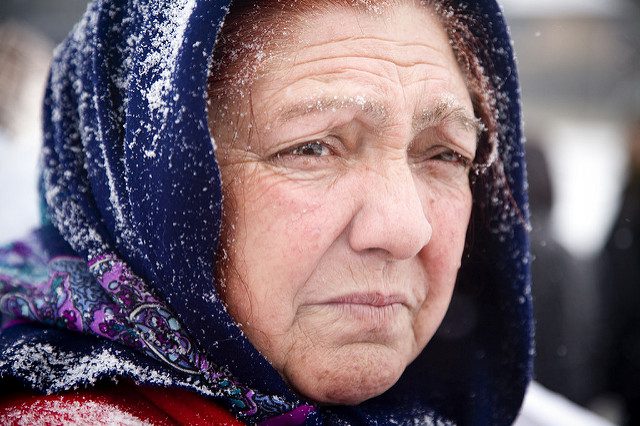
The first category, productive resources, includes anything which deals with the economy and job market. In 2015, only 66 percent of women participated in the labor force, which is low compared to the 78 percent of men who participated. A study by the FGE found that one of the main reasons that women did not work was because they were already dedicating 82 hours a week to housework, childcare and fetching wood and water.

As a response, the FGE developed a training program to teach 300 women from Guinea’s Tristão Islands how to plant, grow, harvest and sell goods made from the moringa plant using solar polytunnel dryers. The moringa is a nutrient-rich tree that can grow in tropical climates and can easily be made into a powder, tea, paste or a sauce. Between 2013 and 2016, 25,000 moringa trees were planted and greenhouse gas emissions were reduced by 40 tonnes through the use of new solar technology to dry them.

Institutional relations and interpersonal relations are closely related when it comes to FGE’s solution to help women’s empowerment in Guinea. These relations deal with the government, representation and identification in the local community. It is reported that only 48 percent of women in Guinea feel satisfied with their representation in the community. One of the reasons for this low number is that only 32 percent of women possess proper identification, which means that the majority of women cannot vote or take part in mainland institutions.

The FGE worked with Partenariat-Recherches-Environnement-Médias (PREM), a grantee organization in Guinea to establish cooperatives, which are small communities of 10-40 women and/or men. These optional groups help to organize economic efforts and help members learn from each other and save money as a collective.

As a member of a cooperative, you are also granted proper identification from PREM so you are able to participate in voting and other institutions. This means that women and men are helping to better women’s representation, but also granting them communities so that they have people in similar situations to lean on for support.

The FGE also maintains efforts to provide more personal resources to the women of Guinea. While many of the women of Guinea are beginning to enter the market of selling products, they are aware that there is more knowledge to be attained in order to be successful. Ninety-five percent of women have expressed a wish to have more knowledge when it comes to reading and writing; this knowledge is necessary to properly market and distribute their new moringa products.

Similar programs include the Business Coalition for Women, which is a group of businesses that work to improve gender equality and fight violence against women, as well as USAID’s Implementation Plan that invests in gender equality initiatives. These programs, along with the United Nations, are working hard to establish a system that increases women’s empowerment in Guinea, and these efforts continue to provide positive results.

– Scott Kesselring

Photo: Flickr

December 11, 2017
https://borgenproject.org/wp-content/uploads/borgen-project-logo.svg 0 0 Borgen Project https://borgenproject.org/wp-content/uploads/borgen-project-logo.svg Borgen Project2017-12-11 01:30:152024-05-29 22:29:38Women’s Empowerment in Guinea
Global Poverty, Women and Female Empowerment, Women's Empowerment

Strides Made for Women’s Empowerment in Kosovo

Kosovo is a country in the Balkan region of Europe that declared independence from Serbia in February 2008. Women in contemporary Kosovo seem to have perfect equality, but this perception can be deceiving.

Following a civil war from 1998-99, Kosovo was subjected to a decade of international observance, culminating in the country’s unilateral independence in 2008. During this period of change, they instituted an egalitarian law package in 2004, which was demanded by the United Nations Interim Administration Mission in Kosovo (UNMIK). These laws fulfill all European Union requirements and include laws on gender equality, inheritance law and family law.

Women’s empowerment in Kosovo is assumed to be at an all-time high: it has a female president, two female former Deputy Ministers and several other female high-level officials. In addition to this, the Assembly of Kosovo has the second-highest representation of women in the region.

In practice, women still struggle to gain access to property, social resources, personal security and cultural equality. Women’s empowerment in Kosovo has struggled, as women continue to live within the confines of a rigidly patriarchal society, a system in which men have the final say in all family matters, as well as having primary access to all social and economic resources. Many of the main structures of women’s oppression in Kosovo stem from cultural norms that link women’s social value to men.

Another problem facing women in Kosovo is domestic violence. Many women are often at the mercy of a justice system that fails to protect them. Kosovo is unique in the fact that it is cut off from key instruments of European justice due to the unresolved political situation in the country.

Despite the struggles being faced, there are many strides being made for women’s empowerment in Kosovo. The most significant of these is being made by the Organization for Security and Co-operation in Europe (OSCE) Mission in Kosovo.

The OSCE promotes women’s empowerment, gender equality and women’s rights by supporting the development and implementation of non-discriminatory legal frameworks and policies. It also focuses on women’s participation in public decision-making and gender-responsive budgeting, ensuring the interests of women and men are equally considered. Additionally, they raise awareness of the need to eliminate gender-based and domestic violence.

With the work of other initiatives that seek to impact women’s empowerment in Kosovo, the situation is constantly improving and positive strides are being made.

– Drew Fox

Photo: Flickr

December 10, 2017
https://borgenproject.org/wp-content/uploads/borgen-project-logo.svg 0 0 Borgen Project https://borgenproject.org/wp-content/uploads/borgen-project-logo.svg Borgen Project2017-12-10 13:52:592020-01-03 19:52:44Strides Made for Women’s Empowerment in Kosovo
Global Poverty, Women and Female Empowerment, Women's Empowerment

Women’s Empowerment in Bulgaria

Bulgaria

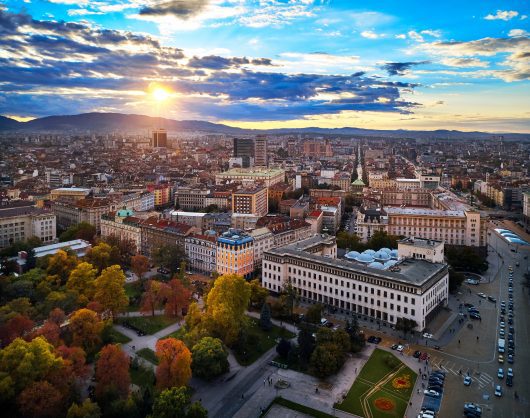
Bulgaria, a country located in southeast Europe, has a population of 7.2 million and is comprised of 51.3 percent of women. Women’s empowerment in Bulgaria has made significant progress in the past decade.

The status of women varies from country to country and is often determined by a combination of factors such as the local cultures and ideologies. In Bulgaria, women are extended several rights that are enjoyed by men, such as the rights to vote, own property, receive an education and have equal opportunities to seek employment. Despite this, Bulgarian women have slightly lower literacy rates, are often employed in lower-paying jobs and occupy fewer leadership roles than men in society. These are issues that must be addressed in order to achieve women’s empowerment in Bulgaria.

In 2015, Bulgaria ranked 45th out of 144 countries on the Gender Inequality Index. As of 2017, Bulgaria is one of the top 20 countries in Eastern Europe and Central Asia on the Global Gender Gap Index, having closed 76 percent of its overall gender gap. Nevertheless, promoting the gender equality of Bulgarian women still demands further work within its patriarchal society.

Women in Bulgaria were initially granted limited suffrage in 1919. The country continued to show its dedication to gender equality by adopting various international treaties. It ratified the Convention on the Political Rights of Women in 1954, the Convention Against Discrimination in Education in 1962, and the Elimination of All Forms of Discrimination against Women (CEDAW) in 1982. While the Constitution of Bulgaria recognizes the principles of equal rights and non-discrimination, gender equality is not specifically regulated.

Education is a crucial metric for determining the gender equality of a nation. Annual statistics between 2012 and 2014 indicate that in Bulgaria 48.3 percent of students in primary education were female. While women are more likely to attain a higher education than men in Bulgaria, which was reflected by 54.3 percent of women in tertiary education, this figure did decrease between 2013 and 2014.

Women’s empowerment in Bulgaria also highly relies on their employment status. As indicated by a 2013 country profile, the employment rates of men and women were 61.3 percent and 56.3 percent, respectively. At the time, only 24.6 percent of Parliament was made up of women representatives, though this was considered a symbolic win for equal rights. Bulgaria has the highest proportion of women software engineers in Europe, consisting of 27.7 percent of women in technology.

The gender pay gap of Bulgaria is 13 percent: though lower than the EU-27 average, women still earn 13 percent less than their male counterparts.

Unfortunately, women face a difficult path to attaining gender equality within the family unit and marriage, due to its traditional society. Women are likely to spend more time caring for their family, doing housework and looking after children than men are. Despite certain family laws enshrining equal rights and obligations between spouses in matrimony, conventional norms of the Balkan culture are still prevalent in some families, leading to women being treated as subordinate to men. Some regions in Bulgaria, such as the old Zagora district, still retain traditions of buying and selling brides.

To address this, Bulgaria started to execute a project against domestic violence in 2001. It also adopted the Program on Prevention and Protection of Domestic Violence, which provides a 24-hour hotline for victims.

Bulgaria plans to achieve gender equality in the next 15 years in order to fully realize women’s empowerment. It plans to implement a new specialized law related to gender equality and ensure that all the related policies are mainstreamed with a gender perspective. In doing so, the government has agreed to eliminate the gender wage gap as well as discrimination and violence against women.

Despite these few challenges, substantial progress is being made for women’s empowerment in Bulgaria. With continued efforts, equal rights will be extended in all aspects of society, including civil, political, educational, economic and social domains.

– Xin Gao

Photo: Flickr

December 10, 2017
https://borgenproject.org/wp-content/uploads/borgen-project-logo.svg 0 0 Borgen Project https://borgenproject.org/wp-content/uploads/borgen-project-logo.svg Borgen Project2017-12-10 10:35:292024-05-29 22:29:40Women’s Empowerment in Bulgaria
Global Poverty, Women and Female Empowerment, Women's Empowerment, Women's Rights

Women’s Empowerment in Algeria

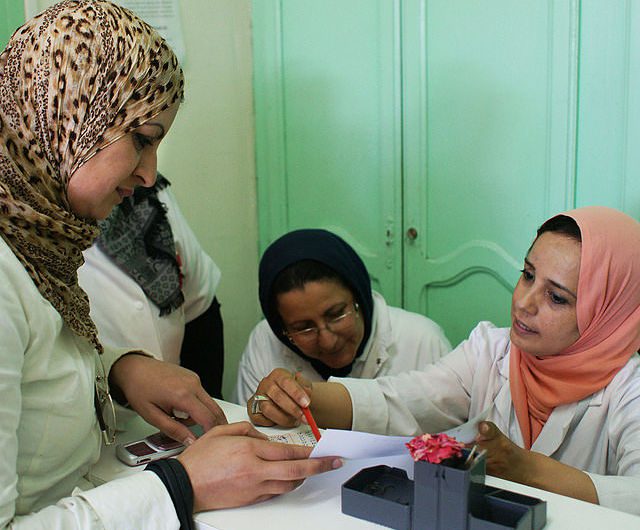
Women's Empowerment in AlgeriaIn Algeria, women are typically viewed as insignificant and lesser than their male counterparts. Ironically, the honor of a family rests almost solely upon the shoulders of the women.

The literacy rate of women in Algeria is 73 percent, for men it is 87 percent. The unemployment rate for women rests at 41 percent, for men it is only 22 percent. There is clearly a disparity in how women are treated in Algeria. Fortunately, efforts are being made to encourage women’s empowerment in Algeria.

Algeria is a country with Islamist values where women are expected to wear conservative clothing. Even at the beach, women are expected to be almost completely covered up. Recently, however, women have begun to push back against these values by wearing what they like, including bikinis.

An Algerian woman, Sara, started a Facebook group to garner acceptance in favor of the bikini. “Swimming in beachwear at the beach shouldn’t be an exploit or shocking,” she said. Some 200 women have gone to the beach in bikinis in support of women’s freedom to wear what they want when they want to. It is a small step for women, but a crucial one for women’s empowerment in Algeria.

Even more significant to women’s empowerment is that more women are appearing in parliament in Algeria.  Despite a patriarchal system, women now occupy 31 percent of parliamentary seats, due to political reforms supported by the UNDP, ranking the country first in the Arab world. According to its website, UNDP “helped establish a legal framework that granted women 30 percent representation in elected assemblies.” Building upon this framework, UNDP founded a program to support elected women officials and ensure that they got the proper education for these roles.

Yasmina, a resident of Algeria who is a lawyer and has been in training to learn about the democratic process understands the importance of this work. “Through these exchanges with the trainers, I’ve come to understand the importance of having women participate in the decision-making process and the impact this has on the future status of women in Algeria,” she said.

Educating women leads to gender parity. Gender parity is a way in which poverty can be reduced. With women gaining more powerful roles in society, gender parity can more likely be achieved and, by extension, reduction of poverty.

While Algeria has made significant strides, there are still some roadblocks to overcome. A woman was set on fire after refusing a man’s advances and a pamphlet instructing men how to beat their wives has been circulated. Women’s rights need to be adopted and respected by everyone in Algeria for progress to be fully realized. Women’s empowerment in Algeria still has a long way to go.

– Dezanii Lewis
Photo: Flickr

December 10, 2017
https://borgenproject.org/wp-content/uploads/borgen-project-logo.svg 0 0 Borgen Project https://borgenproject.org/wp-content/uploads/borgen-project-logo.svg Borgen Project2017-12-10 07:30:372024-05-29 22:29:35Women’s Empowerment in Algeria
Global Poverty, Women and Female Empowerment, Women's Empowerment, Women's Rights

Women’s Empowerment in Cote d’Ivoire

Women’s Empowerment in Cote d'IvoireCote d’Ivoire is a country located on the western side of the African continent. The country is known for its economy which is fueled mostly by cocoa and coffee beans. Thus, Cote d’Ivoire’s economy greatly relies on international economic fluctuations as well as climate conditions.

A predominant problem in the African country is gender inequality. Cote d’Ivoire’s functioning society is based on traditional gender roles. Women are treated more poorly than men in all aspects of life, and in many cases, men use violence in order to control the women in the household.

Gender inequality is even more glaring when it comes to education within the country. Whilst up to 53 percent of males have had an education and are literate, only 33 percent of females have had that same opportunity. This is the result of an ancient point of view that persists within Cote d’Ivoire’s society and that places more value on boys than girls. Parents are more likely to educate their sons instead of their daughters. Lack of education causes an increase in adolescent pregnancies and the spread of STD’s such as HIV-AIDS.

More worrisome is that female genital mutilation (FGM) is still a practiced tradition. The practice consists of the removal of the female external genitalia and is usually practiced for cultural reasons closely related to gender inequality. FGM has been historically performed as a way to suppress women’s enjoyment and freedom. It is a major issue, and it is, in fact, a violation of human rights. Cote d’Ivoire has one of the highest prevalence rates of FGM in West Africa.

UNICEF has taken steps towards eradicating the practice. By creating awareness through local radio and television stations, starting campaigns in order to raise money and creating women’s committees to eliminate FGM, UNICEF is taking big steps towards women’s empowerment in Cote d’Ivoire.

That same inequality is also reflected in the workplace and in the economy. Women’s employment positions in Cote d’Ivoire seem to be limited to the agricultural sector. Men dominate civil and business-related positions, whilst women are limited to collecting vegetables and selling them at local markets. Employers are biased towards men, due to the fact that they consider women to be weak and want to avoid pregnancies in the workplace. In addition, women’s lack of education compared to men reduces their employment opportunities. In order for this to change increased awareness of women’s empowerment in Cote d’Ivoire is needed.

Women’s empowerment in Cote d’Ivoire is taking a step forward by creating job opportunities for women. Such opportunities include working for the government, within business-related workplaces and in administrative positions.

The U.N. office in Cote d’Ivoire has helped launch the National Council for Women. This council will help the government in making decisions on women related issues. Women’s empowerment in Cote d’Ivoire is a work in progress, but such initiatives have already changed the lives of many women and will continue to do so in the future.

– Paula Gibson

Photo: Flickr

December 10, 2017
https://borgenproject.org/wp-content/uploads/borgen-project-logo.svg 0 0 Borgen Project https://borgenproject.org/wp-content/uploads/borgen-project-logo.svg Borgen Project2017-12-10 07:30:042024-05-29 22:29:34Women’s Empowerment in Cote d’Ivoire
Global Poverty, Women and Female Empowerment, Women's Empowerment, Women's Rights

NGOs Encouraging Women’s Empowerment in Bolivia

women's empowerment in BoliviaBolivia, or the Republic of Bolivia, is a country located in South America. Europeans, Aymaras, Quechuas and other ethnicities form the group of habitants in the South American country. Half of the 10 million Bolivian citizens are indigenous.

Such a variety of cultures and ethnicities leads to different religions, sociopolitical points of view and traditions. But among these differences, there is something tragic that remains a part of modern Bolivian society: abuse of women and children.

The main problem that women face in Bolivia is trafficking and forced prostitution. Sexual exploitation in the Latin American country is a serious situation that requires immediate action from the government. Young girls and women are taken away from their households in rural areas and are sent overseas to urban areas to be sex workers. Spain, Russia, Brazil and Peru are the countries that most women end up in.

On a smaller scale, women suffer abuse in their own households from their own husbands. The United Nations is working hand in hand with the Bolivian government to improve the situation and encourage women’s empowerment in Bolivia.

Men are more empowered than women in Bolivia. Habitat Bolivia is one of the organizations that is fighting this inequality and is working to empower women within their homes and families. The abuse of women and children in Bolivia is the second highest priority after poverty.

More than 300 women and men have completed a program run by Habitat Bolivia. The program covers gender equality, how to tackle leadership roles, human rights and housing. The next step for the graduates is to apply this new knowledge in their communities and lives.

Women’s empowerment in Bolivia is also important in the workplace. Women participating in community associations or taking on leadership roles is almost unthinkable in Bolivian society. This lack of support makes women less empowered in the workplace and gives them fewer opportunities for advancement.

Seeds is an initiative promoted by the United Nations’ office in Bolivia. The program is based on the idea of creating employment opportunities in good conditions for Bolivian women. Seeds helps women by lending them money to start businesses and create awareness about the issue. Seeds has helped over 1,000 Bolivian women get loans, build financial assets and exercise their rights.

Yes, Bolivia still has gender inequality throughout its society, but everyday help from different NGOs as well as the Bolivian government itself is changing women’s empowerment in Bolivia for the better.

– Paula Gibson

Photo: Flickr

December 10, 2017
https://borgenproject.org/wp-content/uploads/borgen-project-logo.svg 0 0 Borgen Project https://borgenproject.org/wp-content/uploads/borgen-project-logo.svg Borgen Project2017-12-10 01:30:392024-05-29 22:29:33NGOs Encouraging Women’s Empowerment in Bolivia
Global Poverty, Women and Female Empowerment, Women's Empowerment

Women’s Empowerment in Papua New Guinea


Achieving gender equality is a common challenge for developing nations. This is certainly the case in Papua New Guinea, where a majority of women and girls are victims of violence. Authorities in Papua New Guinea have historically turned a blind eye to violence against women. However, countless organizations are working to make women’s empowerment in Papua New Guinea a reality.

In 2013, Papua New Guinea passed the Family Protection Act to protect women and children against domestic violence. Unfortunately, the parameters of the act are rarely upheld due to a largely corrupt police force. Authorities often charge illegitimate fees before acting, which most women cannot afford. Corruption makes women’s rights difficult to protect at the government level, so aid organizations and NGOs have had to step in.

The U.N. Development Programme (UNDP) has many goals, including bettering the treatment of women and children in the developing world. Government involvement by women is discouraged in Papua New Guinea, but since the UNDP’s intervention, three women have been elected to Papua New Guinea’s parliament. Twenty women have been elected to serve in local government positions, finally giving women a political voice.

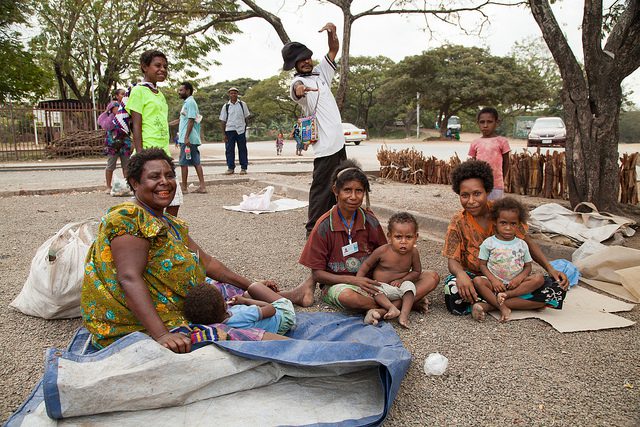
Forty percent of men in Papua New Guinea are employed in the formal sector versus only 24 percent of women. These few employed women earn only half the salary that men make. Since 2015, U.N. Women has sought economic justice for women in Papua New Guinea by improving local markets via the Safe City Program. Eighty percent of market vendors in Papua New Guinea are women, and 55 percent of these women have experienced sexual violence and other forms of exploitation, such as robbery.

By creating a vendors’ association and a mobile bill-paying system, the Safe City Program is making markets safer for women. Dark public toilets were once areas of rampant sexual violence, but the Safe City Program has remodeled outdoor markets to be more organized and have better lighting in order to discourage violence. In new, safer markets, women have the opportunity to pursue economic empowerment.

Papua New Guinean women created and run Meri Toksave, an organization seeking gender equality in their country. Meri Toksave means “information for women” in Tok Pisin, the language spoken throughout Papua New Guinea. The goal of this group is just that: provide women with the knowledge to achieve women’s empowerment in Papua New Guinea. In 2014, Meri Toksave created the “Directory of Emergency Services for Those Affected by Family and Sexual Violence,” which was distributed across the entire country.

While nationwide discrimination often stifles the fight for women’s rights, gender equality in Papua New Guinea is possible and necessary. Through the efforts of local women and with the help of aid organizations, women’s empowerment in Papua New Guinea is taking shape. Women are serving in government positions and safely seeking economic betterment in larger numbers than ever before, and hopefully even larger numbers in years to come.

– Mary Efird

Photo: Flickr

December 9, 2017
https://borgenproject.org/wp-content/uploads/borgen-project-logo.svg 0 0 Borgen Project https://borgenproject.org/wp-content/uploads/borgen-project-logo.svg Borgen Project2017-12-09 14:47:562024-05-29 22:29:43Women’s Empowerment in Papua New Guinea
Global Poverty, Women and Female Empowerment, Women's Empowerment

Women’s Empowerment in Madagascar

 MadagascarGender equality and women’s rights are currently widely discussed in Madagascar. As stated in Madagascar’s Constitution, Article 6, “all individuals have equal rights and enjoy the same fundamental freedoms, protected by law without any discrimination based on sex, education, wealth, origin, religious belief or opinion.” Although this is a right extended to each citizen through the Constitution, when it comes to women’s empowerment in Madagascar, there still remains a gap in society.

Stereotypes and traditional customs are still practiced in Madagascar. An example of a custom is moletry, the act of marrying a young girl to an older man in exchange for a gift or money to the bride’s family. These traditions often prevail due to the economic situations of many families and women, in particular. Many women in Madagascar lack the resources, or employment, to survive independently.

In 2005, Moana Essa Raseta aimed to change this fate. As the first female Governor of Ihorombe, a region in southeastern Madagascar, Raseta shifted the focus from the welfare of cattle in the region to that of women and children.

Through promoting education, Raseta aimed to break the stereotypes of Madagascar that viewed educated women as material only for an unwed and childless future. Initiatives were implemented to show women how to grow rice, sew and engage in social protection projects, which bolstered women’s empowerment in Madagascar. Some residents even learned how to save money, by keeping a portion of their income for themselves and their children, instead of giving it all to their male counterparts. 

While Raseta is one of the few to break the barriers for women, it is still tough for women in Madagascar to become involved in politics. In 2014, Madagascar ranked 73rd in the world for women in parliament back in 2014. Currently, women represent only 23 percent of the national parliament.

Since 2013, the USAID MIKOLO project in Madagascar has been empowering women to adopt healthy behaviors and reduce maternal, infant and child morbidity rates. The women of Masiakakoho, a remote village in southeast Madagascar, use the skills they have learned to teach other villagers about health. These villagers are encouraged to use their community-based health services with women leading and men supporting.

Although progress has been made, there is still more to be done to promote women’s empowerment in Madagascar. In time, more women will have better access to work and independence throughout the country.

– Tara Jackson

Photo: Flickr

December 9, 2017
https://borgenproject.org/wp-content/uploads/borgen-project-logo.svg 0 0 Borgen Project https://borgenproject.org/wp-content/uploads/borgen-project-logo.svg Borgen Project2017-12-09 10:01:472024-06-07 05:07:51Women’s Empowerment in Madagascar
Page 51 of 54«‹4950515253›»

Get Smarter

  • Global Poverty 101
  • Global Poverty… The Good News
  • Global Poverty & U.S. Jobs
  • Global Poverty and National Security
  • Innovative Solutions to Poverty
  • Global Poverty & Aid FAQ’s
Search Search

Take Action

  • Call Congress
  • Email Congress
  • Donate
  • 30 Ways to Help
  • Volunteer Ops
  • Internships
  • Courses & Certificates
  • The Podcast
Borgen Project

“The Borgen Project is an incredible nonprofit organization that is addressing poverty and hunger and working towards ending them.”

-The Huffington Post

Inside The Borgen Project

  • Contact
  • About
  • Financials
  • President
  • Board of Directors
  • Board of Advisors

International Links

  • UK Email Parliament
  • UK Donate
  • Canada Email Parliament

Get Smarter

  • Global Poverty 101
  • Global Poverty… The Good News
  • Global Poverty & U.S. Jobs
  • Global Poverty and National Security
  • Innovative Solutions to Poverty
  • Global Poverty & Aid FAQ’s

Ways to Help

  • Call Congress
  • Email Congress
  • Donate
  • 30 Ways to Help
  • Volunteer Ops
  • Internships
  • Courses & Certificates
  • The Podcast
Scroll to top Scroll to top Scroll to top