• Link to X
  • Link to Facebook
  • Link to Instagram
  • Link to TikTok
  • Link to Youtube
  • About
    • About Us
      • President
      • Board of Directors
      • Board of Advisors
      • Financials
      • Our Methodology
      • Success Tracker
      • Contact
  • Act Now
    • 30 Ways to Help
      • Email Congress
      • Call Congress
      • Volunteer
      • Courses & Certificates
      • Be a Donor
    • Internships
      • In-Office Internships
      • Remote Internships
    • Legislation
      • Politics 101
  • The Blog
  • The Podcast
  • Magazine
  • Donate
  • Click to open the search input field Click to open the search input field Search
  • Menu Menu

Archive for category: Women’s Empowerment

Global Poverty, Women's Empowerment

Legal Reforms Key to Women’s Empowerment in Cameroon

Women's Empowerment in CameroonCameroon, like many countries around the world, has dealt with women’s inequality. There are several laws in Cameroon that are severely discriminatory towards women, and even after observations and suggestions made by the CEDAW Committee to the government of Cameroon in 2000 and 2009, there have been no legal reforms to improve the protection of women’s empowerment in Cameroon. To make matters worse, customary law is applied next to statutory law, which brings about many contradictions and inconsistencies.
There are many customs and traditions that impede the implementation of statutory laws. Many marriages are forced, especially in rural areas, where some girls as young as 12 are married. There is also the practice of levirate, where widows are forced to marry the brother of their deceased husband, a very common practice since widows are considered property. Furthermore, according to tradition, only male children can inherit property.

Domestic violence is prevalent and happens often while remaining socially acceptable. Unlike many other countries, marital rape is not considered a criminal offense. The government has not established shelters or legal aid clinics, and victims usually have to suffer in a culture of silence and impunity.

When it comes to education, the literacy rate for the 15-26 age group is 72 percent for males and 59 percent for females. This is due in part to families being more in favor of boys getting an education if they are unable to send all their children. Even though there are still fewer females than males in secondary school, there is slight progress. There have been some efforts made by the government to promote girls’ access to education. However, only so many girls have been able to benefit from the scholarship policy after already being affected by the lack of infrastructure, educational materials and a shortage of qualified teachers.

There are labor laws in place to honor gender equality and provide equal access to employment and equal wages for equal work, but women are still being employed in informal sectors like agriculture and household services. Sexual harassment in the workplace is common and is not punishable by law.

There are calls for the authorities of Cameroon to reform or repeal all discriminatory measures in statutory law; specifically, the provisions of the Family Code concerning the age of marriage, consent, polygamy, marital power and property. They need to take all necessary measures to improve women’s access to public and political life when it comes to decision-making positions, which include adopting special temporary measures such as a quota system and passing legislation criminalizing sexual harassment. Furthermore, there is an urgent need to improve women’s access to health care; in particular, developing healthcare infrastructure and intensifying the fight against HIV/AIDS.

The country has ratified the Convention on the Elimination of All Forms of Discrimination Against Women but has not ratified the protocol of the African Charter on Human and Peoples’ Rights on the Rights of Women in Africa. These changes would further encourage women’s empowerment in Cameroon.

The government of Cameroon must act and vigorously combat these issues so they can become things of the past. If the government does not make these changes and bring about equality, it will be seen as inadequate and paying lip service to the noble goal of gender equality. Women’s empowerment in Cameroon is the goal and it is up to the government to instill these laws and hold people accountable.

– Chavez Spicer

Photo: Flickr

November 29, 2017
https://borgenproject.org/wp-content/uploads/borgen-project-logo.svg 0 0 Borgen Project https://borgenproject.org/wp-content/uploads/borgen-project-logo.svg Borgen Project2017-11-29 07:30:342024-05-29 22:29:30Legal Reforms Key to Women’s Empowerment in Cameroon
Women's Empowerment, Women's Rights

Fishing and the Future of Women’s Empowerment in Nepal

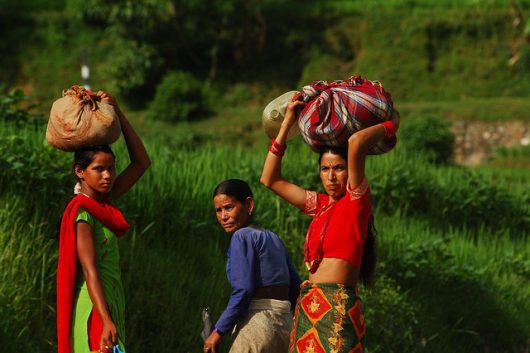
In 2017, the Inspirational Women Series sat down with an empowered young woman named Kanchan Amatya for an interview to discuss her impressive achievements. She was born in Nepal, and through her belief that everyone should have an equal chance in life, she earned herself a scholarship to study abroad for an advanced education. By the age of 21, Amatya is now serving as a U.N. Women Global Champion for Women’s Economic Empowerment, is the founder of Sustainable Fish Farming Initiative (SSFI) and is an ambassador to Women Protection Center Nepal.

Sustainable Fish Farming Initiative 

SSFI is a female-owned social enterprise focused on fighting food security problems and poverty in the rural Nepal region. The organization offers tools and education on sustainable aquaculture and works to continue women’s empowerment in Nepal by providing women with access to all the necessary resources. These include training, micro-credit, distribution and market facilitation to allow farmers to harvest their own fish and manage production on their own farm.

Due to global climate change and the current imbalanced social and economic institutions in Nepal, there is a need to implement methods to diversify livelihoods; this holds particularly true for women. The most common form of employment for women in rural areas is in their own household — an unpaid position that cannot provide independent income. In regard to employment outside of the household, women’s jobs appear in planting, weeding and harvesting — all roles where profits are meager.

However, women have proven themselves in these areas. With programs like SSFI, they are able to continue on the journey to self-empowerment and autonomy.

Women and Aquaculture Farming

A 2007 research study by the WorldFish Center, the Institute of Agriculture and Animal Science and the Asian Institute of Technology analyzed the introduction of an aquaculture sub-system combined with mixed-crop livestock systems into the Nepalese population and their effects on food access and security, as well as women’s empowerment.

Women who were given the opportunity to own and control a portion of the aquaculture farming system increased their autonomy and ability to make self-decisions within their households and community. The aquaculture farming system is the manifestation of women’s empowerment in Nepal and so far, it is working rather well in improving female independence.

Overall, an introduction of programs such as the ones previously mentioned are powerful in limiting the social and economic burdens faced by women with access to such resources in Nepal. As an added bonus, the aquaculture industry ensures easier and more efficient access to healthy meals for women and their families. After all, the challenges of the day are always easier to manage on a full stomach.

Women like Amatya, who grow up in less economically developed countries such as Nepal, grow up with a dream. In her case, this was a dream made of grand economic and social proportions. She is working every day to break down barriers for rural women and offer empowerment at every step.

The participants of this program now enjoy education, resource access and empowerment through the increase of income and expansion of knowledge. Amatya was originally just one fish swimming in the sea, but now her school of fish and community are growing. It will continue to do so for years to come, and women’s empowerment in Nepal will surface just like the fish they harvest.

– Caysi Simpson

Photo: Flickr

November 29, 2017
https://borgenproject.org/wp-content/uploads/borgen-project-logo.svg 0 0 Borgen Project https://borgenproject.org/wp-content/uploads/borgen-project-logo.svg Borgen Project2017-11-29 01:30:542019-12-23 07:42:38Fishing and the Future of Women’s Empowerment in Nepal
Global Poverty, Women and Female Empowerment, Women's Empowerment

Addressing the Issue of Women’s Empowerment in Turkey

TurkeyThe country of Turkey is located in between the European and Asian continents. Technically, the nation belongs to both continents, with 95 percent of Turkey’s landmass geographically located in Asia and the other five percent in Europe. This has led the Republic of Turkey to have evolved cultural influences from both the European lifestyle and the Asian way of life.

Even so, Turkey is a nation still heavily based upon tradition. Based on traditional values, women within the Turkish society rarely work outside the home or with men they are not related to. High-status job positions in almost all fields, except domestic, are taken by men, whilst the women are expected to stay at home mothers and wives.

Over the past several decades, though, women’s empowerment in Turkey has faced a turning point. Turkish women can now work as bankers, teachers, lawyers, engineers and more. A small but encouraging number of women even work as politicians. In spite of this being the case, women in Turkey still are not seen as equals to men. According to U.N. Women, women in Turkey make approximately 44 percent of the earnings that men make.

In the majority of households, the man has more power than the woman. The woman is expected to limit herself by choosing to take on a motherly role for the children, and being a dedicated and loving wife to her husband, even when faced with violence. As recorded by the National Domestic Violence survey, up to 38 percent of married Turkish women had suffered abuse from their husbands in 2014.

As mentioned before, the perception of women in Turkey is slowly starting to change. Throughout the 2000s, the Turkish government has adopted multiple pieces of legislation aimed at protecting women from domestic violence and eradicating gender-based discrimination. However, even though laws have been passed, the implementation and enforcement of such laws has not been as successful.

Gender equality is not yet a reality in the country, but women’s empowerment in Turkey has grown in the past few years. In fact, there is a United Nations campaign focused solely on improving the lives of women in the Western Balkans and Turkey. Initiatives, such as the three-year program Implementing Norms, Changing Minds, fight to end violence and discrimination against women, giving particular attention to women belonging to the most disadvantaged groups.

Furthermore, through the More and Better Jobs for Women project, the International Labour Organization (ILO) fights to create awareness about women’s employment opportunities. Developing women’s employment and creating decent work opportunities are some of the goals undertaken by the organization. By better serving the women of Turkey, the ILO hopes to increase the number of women employed in the labor force, only 26.7 percent of the female population as of 2014.

Turkey is on its way to becoming a country that values gender equality and forwards women’s empowerment. NGOs bring new awareness every day to the nation, and women’s empowerment in Turkey is slowly but surely becoming a reality.

– Paula Gibson

Photo: Flickr

November 28, 2017
https://borgenproject.org/wp-content/uploads/borgen-project-logo.svg 0 0 Borgen Project https://borgenproject.org/wp-content/uploads/borgen-project-logo.svg Borgen Project2017-11-28 07:30:032024-05-29 22:29:27Addressing the Issue of Women’s Empowerment in Turkey
Women's Empowerment, Women's Rights

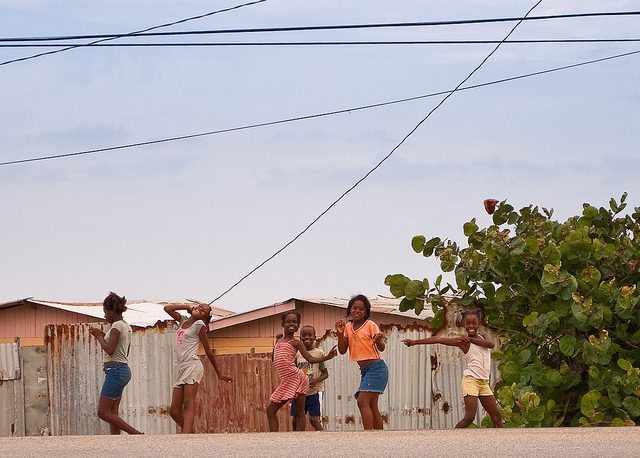
Fighting for Women’s Empowerment in Jamaica

Deep within this tropical paradise lies a history of discrimination based on sex. From job titles and pay to violence, women on the island of Jamaica have often been seen as second place, however, that is slowly changing. The United Nations encourages full integration of women in the development process, ensuring their “fundamental freedoms on the basis of equality with men”. Climbing the ranks, women in Jamaica are leaving their mark and breaking down barriers. Holding 28 percent of chairs in senate, women’s empowerment in Jamaica is making headway. But it is not an easy road. Although there is a high number of women running for offices, the amount elected is significantly less.
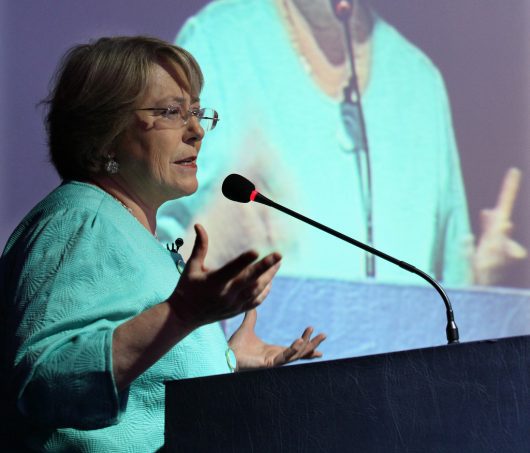
While encouragement for women’s participation in politics is present, many view the opportunity with angst. Verbal abuse, discrimination by male colleagues, and lack of support from their counterparts are some experiences many women have faced. According to the fifth periodic report submitted to the United Nations the word “sex” is absent from the Jamaican Constitution, preventing a person from utilizing their constitutional rights where such discrimination is present. Currently, parts of legislation are being reviewed which include the Domestic Violence Act and the Sexual Offenses Act to bring attention to these areas.

Appointed in December 2009, and re-appointed in January 2012 Kamina Johnson Smith is the Senator and Minister of Foreign Affairs and Foreign Trade. As a believer in a better Jamaica, Smith states that the government is committed to the achievement of gender equality, equity and women’s empowerment in Jamaica.

The Women’s Empowerment Principals (WEPs) is a list created by the United Nations stating several ways to encourage women to be apart of the workforce in an influential and enriching manner. At a recent consultation representatives of Jamaican companies who had signed onto the WEPs partnership were Island Grill, Sandals, RUBiS, Facey and Facey Law, JMMB and Women Entrepreneur Network (WEN Caribbean)/Zinergy International.

With the government’s backing, women’s empowerment in Jamaica is spreading throughout the island. In 2008, Jamaica reported 59 percent of its managers being female, one of the highest rank in the world. Increasing the growth of women workers and merging into other lanes of women’s empowerment will occur as long as the political transformation continues.

– Tara Jackson

Photo: Flickr

November 24, 2017
https://borgenproject.org/wp-content/uploads/borgen-project-logo.svg 0 0 Borgen Project https://borgenproject.org/wp-content/uploads/borgen-project-logo.svg Borgen Project2017-11-24 01:30:092024-05-29 22:29:32Fighting for Women’s Empowerment in Jamaica
Global Poverty, Women's Empowerment

Exploring Women’s Empowerment in Paraguay

women's empowerment in paraguayIn the year 2017, many countries still face a large difference in societal power between genders. One of these countries is Paraguay, which is located in central South America. Women’s empowerment in Paraguay is on the rise, specifically when it comes to women joining the workforce, enacting laws preventing violence against women and increasing access to sexual education.

Paraguayan President Horacio Cartes said in a speech to the U.N., “I make a firm commitment to strengthening the actions needed to speed up the advancement of real and effective equality between men and women in my country.” He supported the Public Policy Law for Rural Women, which aims to help women who live in remote areas gain employment despite scarce resources and few job opportunities. The policy will help provide women with agricultural training. Not only will this help feed families, but it will encourage women to become entrepreneurs. By the end of 2015, this policy had already reached 1,000 women.

Violence against women is an injustice that has been occurring for too many centuries. The president approved the Law for Comprehensive Protection for Women Against Any Kind of Violence in 2016. This law, as well as a commitment to coordinating efforts to fight violence against women and sex trafficking, will help foster women’s empowerment in Paraguay. The law will also help to better punish perpetrators and make sure they actually serve jail time or some other adequate punishment.

Teen pregnancy is a growing issue for women’s empowerment in Paraguay. Due to a lack of sex education, nearly one in 20 Paraguayan women have given birth by the age of 20. Becoming pregnant at a young age can complicate completing school and entering the job market. The Mbaracayú Education Center was opened in 2009 to provide the education that young women deserve. The education center is about more than sex ed: it also teaches job skills, including IT skills, textiles, tourism and environmental management. Movements like these show that there are many people dedicated to women’s empowerment in Paraguay.

– Scott Kesselring

Photo: Flickr

November 23, 2017
https://borgenproject.org/wp-content/uploads/borgen-project-logo.svg 0 0 Borgen Project https://borgenproject.org/wp-content/uploads/borgen-project-logo.svg Borgen Project2017-11-23 01:30:342019-12-23 08:01:27Exploring Women’s Empowerment in Paraguay
Gender Equality, Women and Female Empowerment, Women's Empowerment

Women’s Empowerment in Niger

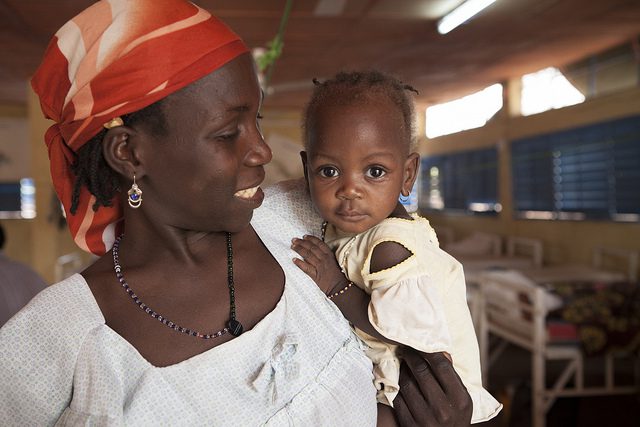
Women's Empowerment in NigerWomen living in Niger face great adversity due to a lack of education, a prevalence in child marriages, and challenges stemming from conflict. Fortunately, many women are taking steps to ensure a better future for their daughters.
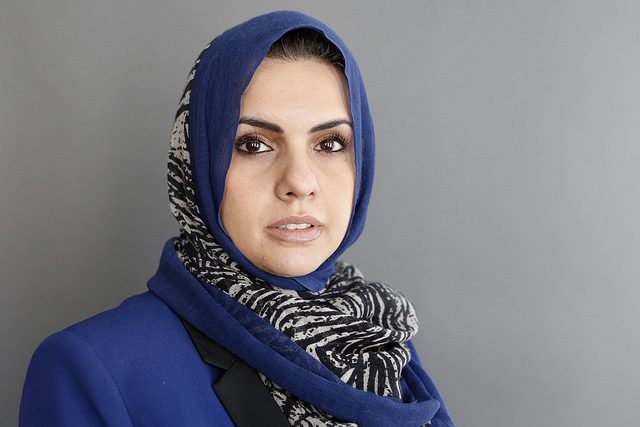

Women and girls in Niger are some of the least educated in the world. Less than a quarter are literate and less than a tenth ever attend secondary school. This is a big deal considering that attending secondary school for a year can mean as much as a 25 percent increase in a woman’s earnings later in life.

Niger has the highest rate of child marriages in the world. Three in four girls under the age of 18 are married. The legal age for marriage in Niger is 15, but various women’s organizations and groups are hoping for the passage of a proposed law that would change the legal age to 18 years.

Aminata Gba Kamara, aged 19, said “Girls in our country need so many things. They need psychological support, they need counseling. Their esteem is very low.” Many women think husbands are needed for protection, and life outside the home is not given much thought, said Kamara.

Protection is a real concern for many, as conflict is a daily fact of life. In the past three years, over 100,000 women and girls have been forced to leave their homes in order to flee from violence perpetrated by the Boko Haram. There are shelters and places of refuge, but women forced into seeking these often fall victim to a cycle of poverty. Most women fleeing from Boko Haram have been traumatized by physical and sexual violence. There is a normalization of discrimination and violence against women and girls on a daily basis.

Even with all these challenges, there are feasible solutions and women’s empowerment in Niger is a large part of it. Change is being implemented from the ground up, and youth are driving it forward. Campaigns have been formed to raise awareness about the issue and boost the self-esteem of women and girls. Tackling the problem of child marriage is important for Niger, as it will increase the number of citizens attending school rather than staying at home.

There are rays of hope for women’s financial empowerment in Niger as well. For instance, a recent push by CARE to help Nigerien women become financially independent via combined insurance policies and female financial groups has been fruitful. The savings groups, called Village Savings and Loan Associations have been a major factor behind women’s financial empowerment, and serves as a base for improving inclusion, health, nutrition, and agricultural productivity.

– Sam Bramlett

Photo: Flickr

November 23, 2017
https://borgenproject.org/wp-content/uploads/borgen-project-logo.svg 0 0 Borgen Project https://borgenproject.org/wp-content/uploads/borgen-project-logo.svg Borgen Project2017-11-23 01:30:072019-11-20 07:20:45Women’s Empowerment in Niger
Global Poverty, Women and Female Empowerment, Women's Empowerment

Women’s Empowerment in Libya

Women's empowerment in LibyaLibya, one of the largest countries in Africa, is located west of Egypt. Since 2014, Libya has been struggling with its second civil war which has affected the Libyan social structure. Though women have lost social status and power they once had, there are several organizations that are dedicated to restoring women’s empowerment in Libya through its political and economic social structures.

2011 was an inspiring time for Libyans. With the conclusion of Gaddafi’s rule, it was an opportune time to make changes to the political environment. The National Transitional Council, which was the first government authority after the Libyan Civil War, was comprised of 96 percent men and four percent women. There was also no representation of women in city councils at this time.

In 2014, the number of females elected to parliament was 16 percent, which it remains at to this day. Each city council was also mandated to elect at least one woman as one of their six members. However, the Zintan and Jadou councils have explicitly denied women representation.

The United Nations (U.N.) is taking action to increase women’s empowerment in Libya as well. The U.N. has made calls to force Libya to adopt a quota of 30 percent female representation within its current government, the Government of National Accord (GNA). As of March 2017, only six percent of the GNA were women. Hopefully, Libya will take these calls seriously and increase women’s representation in the government.

Along with increasing their political influence, Libyan women are focusing on becoming a more vocal force in the economic system of Libya. In October 2013, the Libya Women Economic Empowerment (LWEE) project was started to work towards providing women roles in the economy.  Over the past four years, 200 women attended business development training and 300 women entrepreneurs were given specific training on business skills.

Not only did they teach women how to start their business, but they held a competition among women entrepreneurs. The 20 winners received grants that enabled them to start a brand new business or to expand an existing business. The LWEE also held events where female business owners and managers were able to network with each other and establish connections that would lead to future business partnerships and support.

It has been difficult for women to make a name for themselves in the business world. Since the implementation of the LWEE project, women entrepreneurs have been able to take full credit for the work they have done. This is such an important step since, in many cultures and societies, men are given credit for the accomplishments that women make. Women’s empowerment in Libya is on the rise and it will continue to do so for the foreseeable future.

– Scott Kesselring

Photo: Flickr

November 21, 2017
https://borgenproject.org/wp-content/uploads/borgen-project-logo.svg 0 0 Borgen Project https://borgenproject.org/wp-content/uploads/borgen-project-logo.svg Borgen Project2017-11-21 01:30:212024-05-29 22:29:22Women’s Empowerment in Libya
Global Poverty, Women's Empowerment

Women’s Empowerment in Burundi Appears Optimistic

Women's Empowerment in BurundiBurundi is a small country in Africa with a population of over 10 million people. It is also one of the poorest countries on Earth. This African nation was involved in a 12-year civil war and is currently recovering from it.

Fortunately, its recovery from war has not led women’s empowerment in Burundi astray. In fact, Burundi has a quota for the number of women in government. While it is not quite even with men, the country requires at least 30 percent of federal government positions be filled by women. Women also account for more than half of the workforce in Burundi and play a large role in agriculture.

Despite these factors, women still face discrimination when running for office. The 30 percent quota is not mandated for local government, and many citizens want more women in local positions. Women make up only 17 percent of local governments, much less than at the national level. At the local level, one is able to make a more direct impact on one’s community, leading many women to run for leadership positions within their communities. This movement toward more female leaders is a positive step toward overcoming gender discrimination and stereotypes.

The organization Search for Common Ground and the Dutch government have come together to help encourage women’s empowerment in Burundi, assisting in strengthening women’s participation in all levels of government. The women that they support must overcome the “practical challenges [that] make it difficult to attain true equality with their male counterparts, including balancing the demands of their position with responsibilities at home, a lack of funds to run a campaign, and simply overcoming a lack of experience in government in order to gain greater legitimacy and step into decision-making roles.”

The U.N. has also been working on this issue and has created programs to train women in how to participate in public affairs. Some of the topics covered include lobbying and negotiating, both skills that women need to be successful and make an impact when they are not equally represented. The U.N. also aims to make gender issues and gender policy the center of local and national conversations. This will not only empower women, but also empower their communities.

Because women are working harder to gain political power and there is more discussion about gender, the issues surrounding how women are viewed in society and culture will begin to be questioned more. Hopefully, as a result, Burundi will be able to see that women are more than just supporters of their husbands and children; they are also supporters of their country. For now, women’s empowerment in Burundi is growing and will continue to thrive until women have the same rights and representation as men.

– Emilia Beuger

Photo: Flickr

November 19, 2017
https://borgenproject.org/wp-content/uploads/borgen-project-logo.svg 0 0 Borgen Project https://borgenproject.org/wp-content/uploads/borgen-project-logo.svg Borgen Project2017-11-19 01:30:462019-11-21 00:54:18Women’s Empowerment in Burundi Appears Optimistic
Global Poverty, Women and Female Empowerment, Women's Empowerment

Improvements to Women’s Empowerment in Yemen

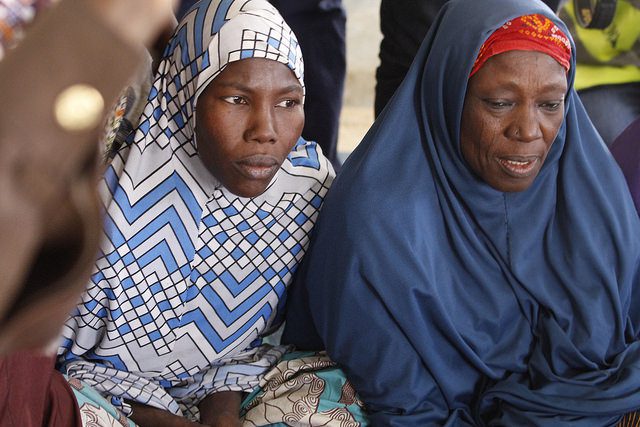
Women's empowerment in YemenYemen, a country in the Middle East, has been the center point of many headlines recently due to the ongoing civil war in the country. The war broke out in 2014 and Yemen has remained in conflict ever since.

The country has a population of 27.5 million people, most of whom have been affected by the war, particularly Yemeni women. Many women in Yemen have expressed concerns about the war affecting their security, as well as the safety of their children. Despite these concerns, however, many women view the war as a contributor to women’s empowerment in Yemen because it has provided them with opportunities to assist in peace-building.

Since the outbreak of the war, women in Yemen have contributed in a plethora of ways, including providing aid to those who are wounded, aiding in the protection of children and providing psychosocial support to others. Some women have contributed in other ways, such as smuggling arms. Whichever end of the spectrum these women fall on, many of them regard their actions as an attempt to promote peace within the country.

Aside from providing aid and support to others during the war, Yemeni women are empowered through maintaining their own businesses and developing better leadership skills, which are two of the goals of Partners for Democratic Change. Though the country’s embassy emphasizes the importance of equality among the genders, there are still cultural attitudes and patriarchal structures that cause barriers for women in Yemen. Partners for Democratic Change has worked to tackle these barriers by changing people’s attitudes and by educating women. The organization has advanced women’s empowerment in Yemen by training 75 women in business and leadership so far.

Aside from Partners in Change, there are many other groups that have been established with the purpose of advancing women’s rights, such as the Supreme Council for Women and the National Commission for Women. Furthermore, the National Dialogue Conference (NDC), which took place from March of 2013 to January of 2014, occurred so as to begin a discussion about women in elected positions in Yemen.

The percent of women that made up the membership at this conference was 27 percent. During the NDC, those in attendance agreed upon the idea that, from then on, the number of women in elected council should be no less than 30 percent.

Though there is still progress to be made in regards to women’s empowerment in Yemen, the country has taken steps in the right direction through the various organizations and councils that it has established for advancing women in society. In addition, though the ongoing conflict in Yemen has been a source of turmoil for the country’s women, it has also caused them to feel empowered by providing them with opportunities to help others and contribute to rebuilding efforts.

– Haley Rogers

Photo: Flickr

November 19, 2017
https://borgenproject.org/wp-content/uploads/borgen-project-logo.svg 0 0 Borgen Project https://borgenproject.org/wp-content/uploads/borgen-project-logo.svg Borgen Project2017-11-19 01:30:082024-05-24 23:48:55Improvements to Women’s Empowerment in Yemen
Global Poverty, Women's Empowerment

Women’s Empowerment in Ghana

Women's Empowerment in GhanaUnfortunately, in many countries around the world, women are not treated as equal to men. Ghana is not an exception, as women are more likely to live in poverty, have less land, are excluded from decision-making, and make minimal income. These existing hardships make it hard for women’s Empowerment in Ghana.

Violence against women is a major issue that women face in Ghana. Women and young girls often face widespread violence, sexual harassment, and abuse in the areas that they populate, which includes their homes, workplaces, the streets, and on public transportation. In many circumstances, women have to constantly live in fear of being attacked and this can lessen their likelihood of living a full life.

The lack of control that women in Ghana have over their own bodies is also extremely harmful. Women and girls are forced to endure dangerous practices that bring great suffering to them. One of these practices is Female Genital Mutilation (FGM). At the young ages of 10 through 12, young girls are forced to go through this mutilation. In addition, they may be forced into marriage, sex-selective abortion, dowry-related crimes, honor crimes, and other harmful practices.

An organization, act!onaid, is a global movement that is working in Ghana to help improve rights and reduce poverty. Some of the issues they are working on are bringing awareness to violence against women and girls, bringing women to the forefront of decision making and leadership opportunities, and harnessing women’s economic empowerment and economic justice. They are working to include women’s rights as a priority in developmental policies and advocating for spaces where women’s voices, especially those from poorer backgrounds will be heard.

Dealing with women’s education in Ghana, there are major inequalities when it comes to women’s access. The country is nearing gender parity in primary education, but the gender gap in post-primary education level remains a challenge, although there was a marginal improvement in the percentage of girls in senior high school and technical vocational education and training.

To bring about women’s Empowerment in Ghana, act!onaid has adopted strategies and interventions to promote gender equality and women empowerment. They have established the Ministry of Women and Children’s Affairs through Executive Instrument. They will be initiating and coordinating formulation policies to monitor and evaluate the execution of policies in place to ensure the promotion of gender equality and empowerment.

Additionally, the organization plans to implement gender-responsive budgeting. They plan to use a strategy using the government’s fiscal policy to achieve gender equality and to implement gender-responsive budgeting in three sectors of the economy; education, health, and agriculture. In addition, they plan to mainstream justice as a policy area for gender equity. The legal reforms will include Constitutional provisions for gender equity under the law to criminalize harmful tradition practices against young women and girls.

The country of Ghana has the help of organizations and a government making changes to alter the hardships the women are facing. If these ideas are put into place, women’s Empowerment in Ghana can exist and these women can live full lives.

– Chavez Spicer

Photo: Flickr

November 18, 2017
https://borgenproject.org/wp-content/uploads/borgen-project-logo.svg 0 0 Borgen Project https://borgenproject.org/wp-content/uploads/borgen-project-logo.svg Borgen Project2017-11-18 01:30:312024-05-29 22:29:21Women’s Empowerment in Ghana
Page 53 of 54«‹51525354›

Get Smarter

  • Global Poverty 101
  • Global Poverty… The Good News
  • Global Poverty & U.S. Jobs
  • Global Poverty and National Security
  • Innovative Solutions to Poverty
  • Global Poverty & Aid FAQ’s
Search Search

Take Action

  • Call Congress
  • Email Congress
  • Donate
  • 30 Ways to Help
  • Volunteer Ops
  • Internships
  • Courses & Certificates
  • The Podcast
Borgen Project

“The Borgen Project is an incredible nonprofit organization that is addressing poverty and hunger and working towards ending them.”

-The Huffington Post

Inside The Borgen Project

  • Contact
  • About
  • Financials
  • President
  • Board of Directors
  • Board of Advisors

International Links

  • UK Email Parliament
  • UK Donate
  • Canada Email Parliament

Get Smarter

  • Global Poverty 101
  • Global Poverty… The Good News
  • Global Poverty & U.S. Jobs
  • Global Poverty and National Security
  • Innovative Solutions to Poverty
  • Global Poverty & Aid FAQ’s

Ways to Help

  • Call Congress
  • Email Congress
  • Donate
  • 30 Ways to Help
  • Volunteer Ops
  • Internships
  • Courses & Certificates
  • The Podcast
Scroll to top Scroll to top Scroll to top