• Link to X
  • Link to Facebook
  • Link to Instagram
  • Link to TikTok
  • Link to Youtube
  • About
    • About Us
      • President
      • Board of Directors
      • Board of Advisors
      • Financials
      • Our Methodology
      • Success Tracker
      • Contact
  • Act Now
    • 30 Ways to Help
      • Email Congress
      • Call Congress
      • Volunteer
      • Courses & Certificates
      • Be a Donor
    • Internships
      • In-Office Internships
      • Remote Internships
    • Legislation
      • Politics 101
  • The Blog
  • The Podcast
  • Magazine
  • Donate
  • Click to open the search input field Click to open the search input field Search
  • Menu Menu

Archive for category: Women’s Empowerment

Global Poverty, Women and Female Empowerment, Women's Empowerment

Government Supporting Women’s Empowerment in Tonga

Women's Empowerment in TongaIn recent years, Tonga has taken action to bridge the gap in gender equality by improving women’s livelihoods and attempting to stop domestic violence against them, while also improving their economic power. They believe that in order to eliminate poverty in their country, women’s empowerment in Tonga needs to improve.

Tonga’s government is determined to promote gender equality. On December 9, the Pacific Community’s Regional Rights Resource Team and the Ministry of Justice helped create a new Access to Justice Project for Tongan residents. The plan’s aim is to provide assistance to victims of domestic violence and offer them the services that they need.

The plan projects to open a community center in Tonga’s capital, Nuku’alofa, in early 2018. The center will provide assistance that will increase survivors’ abilities to apply for protective services under the Family Protection Act. It will also include free legal assistance. For women who are not in Nuku’alofa, the center will provide assistance over the phone.

An earlier development created in 2016 to improve women’s empowerment in Tonga is the Talitha Project. With assistance from Australian Aid and U.N. Women, the project organized a drop-in center as a safe place for women to come and get support and discuss any difficulties they may be having. This center provides counseling and empowerment courses to help women become independent members of society.

The Talitha Project also launched a campaign this year, supported by the Ministry of Justice, to end child marriage in Tonga. The campaign is called “Let Girls Be Girls!” and plans to increase awareness of child marriage in Tonga, as well as repeal sections of the Births, Deaths and Marriage Registration Act of 1926. The current legal age to marry in Tonga is as young as 15 years of age if the child has the consent of a parent.

The campaign is hoping to change the age minimum for marriage to 18. The founder of the Talitha Project, Vanessa Heleta, says this is an essential step to ensure that women realize their full potential.

More recently, Heleta has used the Talitha Project to partner with the Bank of the South Pacific and a telecommunications company to encourage over 50 women to empower themselves financially. The project ensures that these young women are provided guidance on how to become financially independent entrepreneurs.

The project’s main purpose is to increase women’s empowerment in Tonga. With the help of the bank, these young women in Tonga will get assistance in opening a bank account. The project also works with the women to use any talents they may have to create or make goods they can sell, such as handicrafts or fabric printing. Then, when cruise ships come in, the women go to these locations and set up a tent where they can sell their products.

These young women having a functioning bank account and earning an income from the work they have done themselves empowers them and gives them leadership skills. The purpose of all of these projects is to improve women’s empowerment in Tonga and give them the confidence and support they need in order to continue striving as individuals.

Although a persistent effort is needed to further increase women’s empowerment in Tonga, there are numerous projects and plans in place to ensure that this improvement continues. These projects are only some of the influential ones taking place in Tonga and empowering women daily.

– McCall Robison

Photo: Flickr

December 31, 2017
https://borgenproject.org/wp-content/uploads/borgen-project-logo.svg 0 0 Borgen Project https://borgenproject.org/wp-content/uploads/borgen-project-logo.svg Borgen Project2017-12-31 01:30:012024-05-29 22:29:59Government Supporting Women’s Empowerment in Tonga
Women and Female Empowerment, Women's Empowerment

Education Key to Women’s Empowerment in Tanzania

Women's Empowerment in TanzaniaMany women in the countries of Africa deal with marginalization and lack of opportunities. Tanzania is no exception. However, there have been efforts to improve this and empower women. Three unique programs aimed at improving women’s empowerment in Tanzania include USAID/Tanzania’s Gender Equality and Youth Inclusion Project, also known as Tumaini (“Hope” in Kiswahili), Let Girls Learn and the Waache Wasome (Let Them Learn) program.
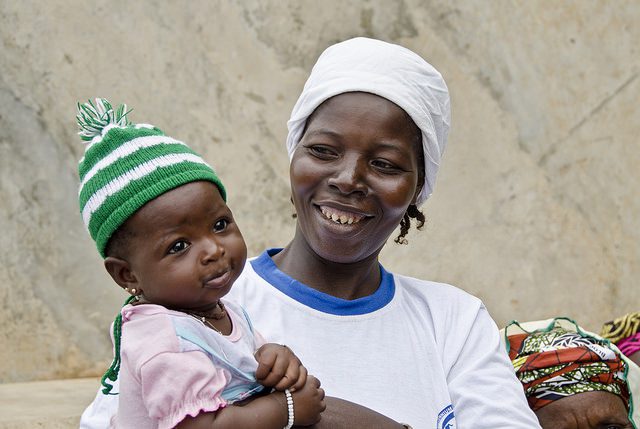
Among the issues that women in Tanzania face include discriminatory laws, restrictive customary practices, no control over resources, barriers to decision-making, maternal mortality rates and HIV.

The Tumaini program includes a broad range of programs by working with communities and local government to increase women’s equality and youth inclusion.

Tanzania is one of two initial priority countries under Let Girls Learn, a United States government initiative to ensure young girls and women receive an education with the goal to improve enrollment and retention in educational programs.

Even though primary school enrollment among girls and boys is nearly equivalent in Tanzania, less than 20 percent of women age 20-24 have completed secondary school and 20 percent have never had any education, according to USAID.

Since USAID and the Department of State launched the Let Girls Learn Challenge Fund in 2015, the Waache Wasome (Let Them Learn) program has been launched. Waache Wasome is a five-year program working to improve the enrollment and retention of girls ages 13 to 19 in secondary school in select districts of the Arusha and Mara regions.

Over the five-year life of the project, Waache Wasome will reach at-risk adolescent girls and their families, covering 268 communities and 67 secondary schools across the four target districts of Tanzania. Their mission is to “address barriers to girls’ education” and “combat gendered beliefs and practices within homes, schools and communities and empower adolescent girls to aspire to and reach their full potential to learn and achieve.”

Because of these programs along with other efforts to combat women’s inequality and provide opportunities for education, there is hope for women’s empowerment in Tanzania, as well as hope for women all over to be empowered and make changes within their communities and in the world.

– Julia Lee

Photo: Flickr

December 30, 2017
https://borgenproject.org/wp-content/uploads/borgen-project-logo.svg 0 0 Borgen Project https://borgenproject.org/wp-content/uploads/borgen-project-logo.svg Borgen Project2017-12-30 07:30:592024-05-29 22:29:59Education Key to Women’s Empowerment in Tanzania
Global Poverty, Women and Female Empowerment, Women's Empowerment

Ending Child Marriage With Women’s Empowerment in Burkina Faso

women's empowerment in burkina fasoApproximately one out of every two girls in Burkina Faso will be married before the age of 18, and one out of ten girls will be married before the age of 15. Although child marriage rates vary from one region to another, rates are as high as 76 percent in the East region and 86 percent in the Sahel region. Tradition, poverty and lack of education contribute to child marriage in Burkina Faso.
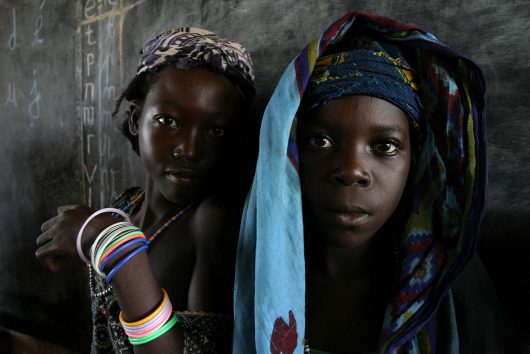
The United Nations Population Fund (UNFPA) recorded the following trends among women aged 20 to 24:

  • 60 percent of women with no education were married at age 18.
  • 42 percent of women with primary education were married at age 18.
  • 3 percent of women with secondary education or higher were married at age 18.

These findings show that there is a negative correlation between the amount of education a woman receives and the age at which she marries. An educated woman is more likely to avoid child marriage than an uneducated woman.

Ending child marriage is possible by increasing women’s empowerment in Burkina Faso. In November 2015, the country finalized a national strategy to end child marriage by 2025. The strategy prevents child marriage, strengthens national efforts to end child marriage, supports child marriage victims and monitors its implementation. A multisectoral platform launched in June 2016 outlines the strategy’s roles and responsibilities.

In November 2015, The Hunger Project-Burkina Faso hosted two workshops for women’s empowerment in Burkina Faso. The workshops focused on female leadership and the fight against forced child marriages. The first workshop was held at Boulkon Epicenter, and aimed to generate interest among female leaders in involving their fellow women in the electoral process.

The second workshop, The Child Marriage Project, included training on sexual and reproductive rights of young girls forced into marriage. It was held in collaboration with Association D’appui et d’Eveil Pugsada, an organization that empowers women to assume significant roles in community development, and Kinderpostzegels, a Dutch organization that supports vulnerable children across the world. Burkina Faso is also a focus country of the UNICEF-UNFPA Global Program to Accelerate Action to End Child Marriage.

Girls who know their human rights and are equipped with education and life-skills are proven to be less vulnerable to child marriage. With continued work from the government and nonprofit organizations, increasing women’s empowerment in Burkina Faso can help end child marriage.

– Carolyn Gibson

Photo: Flickr

December 25, 2017
https://borgenproject.org/wp-content/uploads/borgen-project-logo.svg 0 0 Borgen Project https://borgenproject.org/wp-content/uploads/borgen-project-logo.svg Borgen Project2017-12-25 07:30:542019-11-12 22:26:33Ending Child Marriage With Women’s Empowerment in Burkina Faso
Global Poverty, Women and Female Empowerment, Women's Empowerment

Women’s Empowerment in the Central African Republic

Women's Empowerment in the Central African RepublicThe landlocked Central African Republic has a population of about 4.7 million and a land area of 623,000 square kilometers. Women’s empowerment in the Central African Republic is a challenging task in this nation, known as the unhappiest country in the world. The Human Development Index ranks this country as the lowest among 188 nations.

Similar to a few other undeveloped nations, economic and social discrimination are common barriers to women’s empowerment in the Central African Republic. Single women are not regarded as the heads of households and are often denied family subsidies to which they are entitled. While the constitution guarantees equal rights, many women, especially seniors and those without families, had been accused of being witches. The proportion of women in government ministries and female seats in parliament remains relatively low, at 12.5 percent as of 2015.

While equal inheritance and property rights are enshrined in civil law, women are vulnerable to discriminatory customary laws, especially in rural areas. There is no penalty for spousal rape, nor a minimum sentence for rape. Incomplete statistics suggest that one in seven women had been raped during the previous year, while the true incidence of rape could be even higher. Of women surveyed, 22 percent claimed physical harm by a member of their household. Also, there is no set of penalties on sexual harassment till then.

A 2013 report found that access to primary school was not equal for girls and boys. While 65 percent of girls were enrolled in the first year of school, this number sharply declined to 23 percent after the sixth grade. Many girls left school in their early teens to marry and have children. The illiteracy rate of females was also much higher than that of males.

A recent study reported that this nation has the second-highest rate of child marriage in the world, where 68 percent of teenage girls got married before the age of 18 and 29 percent were married before the age of 15. There is no prohibition against polygamy and bride-trading, which poses significant barriers to women’s empowerment in the Central African Republic.

A few global institutions such as U.N. Women and the International Rescue Committee put great effort into the protection of women’s empowerment in the Central African Republic. Their officials appealed to the international community to mobilize for the peace and security of women.

While some notable progress had been recognized on women’s empowerment in the Central African Republic, gender inequality and other related issues persist, demanding patient global advocacy on closing the long-existing gender gaps for this nation.

– Xin Gao

Photo: Flickr

December 24, 2017
https://borgenproject.org/wp-content/uploads/borgen-project-logo.svg 0 0 Borgen Project https://borgenproject.org/wp-content/uploads/borgen-project-logo.svg Borgen Project2017-12-24 01:30:222019-11-12 22:33:15Women’s Empowerment in the Central African Republic
Global Poverty, Women and Female Empowerment, Women's Empowerment

Uplifting Women’s Empowerment in Uzbekistan

women's empowerment in uzbekistanThe fight for gender equality is an old battle. Countries struggle to benefit each citizen equally due to prejudice in educational practices, outdated work demands and cultural biases. Uzbekistan shares these tendencies in regards to women and equality.
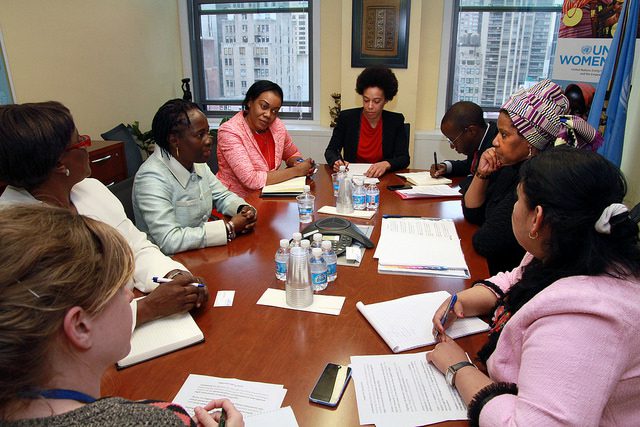
Before declaring independence in 1991, Uzbekistan’s gender roles were influenced by Soviet policy regarding equality and traditional Uzbek values and culture. These factors caused difficulties while transitioning into an independent, sovereign state, limiting growth and empowerment for women in Uzbekistan.

Soviet Union traditions tended to provide formal equality for men and women when it came to education, health and political offices. However, women were largely segregated to unpaid work or lower-paying jobs because of household tasks and childcare. This unequal division of labor remains in existence. The government of Uzbekistan has developed projects to increase women’s empowerment in Uzbekistan.

The government of Uzbekistan took action to address gender issues through legislation, ratifying the Convention on the Elimination of All Forms of Discrimination Against Women (CEDAW). The government also proceeded to work to improve women’s economic status by allowing special credit access to female employers and business that employ women. In an effort to maximize women’s political roles, the government requires political parties to include a certain percentage of female candidates.

The Women’s Committee of Uzbekistan and UNPD partnered for the “Empowering Women to Participate in Public Administrations and Socio-Economic Life” project. Beginning in November 2017, this project’s motive is to enable women to participate in drafting laws and policies in regards to international human rights treaties. Women, through this project, perform workshops and conferences to influence societal prejudices.

UNICEF representative in Uzbekistan Robert Fuderich brought awareness during the November 20 annual campaign “From Peace in the Home to Peace in the World” to the idea that violence against women causes grave consequences that affect the society as a whole. Organizations such as the Women’s Committee of Uzbekistan, the OSCE Project Coordinator in Uzbekistan and the National Association of NGOs and Uzbekistan-India Friendship Society are all working to uplift women’s empowerment in Uzbekistan. U.N. agencies (UNDP, UNESCO, UNFPA and UNV) developed the U.N. Joint Programme, which includes the socio-economic standing of women and how to empower women through Uzbekistan.

Several agencies are taking significant roles in addressing gender inequality in Uzbekistan. Achieving a legislative foundation for women’s empowerment in Uzbekistan will help enable women to improve their socio-economic standing while bettering all of society.

– Bronti DeRoche

Photo: Flickr

December 23, 2017
https://borgenproject.org/wp-content/uploads/borgen-project-logo.svg 0 0 Borgen Project https://borgenproject.org/wp-content/uploads/borgen-project-logo.svg Borgen Project2017-12-23 01:30:532024-06-05 23:55:35Uplifting Women’s Empowerment in Uzbekistan
Women and Female Empowerment, Women's Empowerment

Women’s Empowerment in Equatorial Guinea Needs Improvement

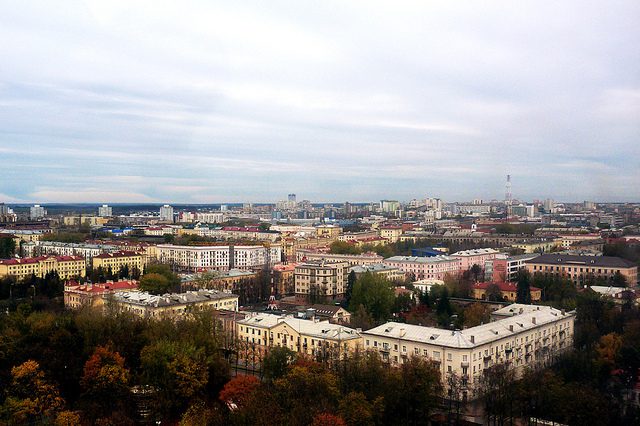
women's empowerment in equatorial guineaLow rates in the labor force, poverty, discrimination and gender-based violence are just some of the adversities that women living in the Central African nation of Equatorial Guinea still face today. However, in the last five years, the government recognized some of these issues and agreed to develop new plans for women’s empowerment in Equatorial Guinea.
Employment

In 2015, the Equatorial Guinean government recognized the low rate of participation of women in the labor force. A report published by the U.N. in 2014 showed how vulnerable employment rates continue to be higher for women than for men. In a vulnerable working environment, women might suffer low incomes, fundamental rights violations and inadequate working conditions.

In 2013, 82 percent of the female working-age population was part of the country’s labor force, compared to 94 percent of the male working-age population. Today, women represent only around 45 percent of the total labor force, and their income is lower than men’s.

Access to Education

Gender plays a role in disparity in school attendance. According to the U.N. Millennium Development Goals report, girls are more likely to be excluded from education than boys and it is more common for girls to drop out of school among poor households. Despite free education, the ratio of school attendees is 92.1 percent for men and 76.4 percent for women.

Women’s empowerment in Equatorial Guinea was also threatened in 2016, when the Ministry of Education issued a ministerial order according to which girl pupils must submit a pregnancy test result prior to enrollment. Pregnant schoolgirls are not admitted by school authorities, forcing teens to seek abortions in many cases.

Gender-Based Violence

Instances of gender-based violence among women in Equatorial Guinea are very high. This includes domestic violence and sexual assaults. In 2011, 63 percent of women 15 and older had suffered some form of violence, with 32 percent being victims of sexual assault. The cultural acceptance of gender-based violence lowers the number of victim reports and legal prosecutions.

Rape is illegal and punishable by 12 to 20 years of imprisonment, but the law does not address spousal rape. Furthermore, in most cases, authorities fail to prosecute the guilty party. According to the U.S. Department of State, police and the judicial system in Equatorial Guinea are more likely to treat domestic violence as a private matter to be resolved in the home.

The Good News

Fortunately, positive steps have been taken for women’s empowerment in Equatorial Guinea. In 2015, the government recognized that, in the past, access to education and some specific careers were “traditionally man dominant,” and it committed to creating better educational and employment opportunities for women. Different projects have also been initiated by cooperation agencies, civil societies and women’s organizations in response to gender-based inequality.

In May 2016, the World Bank Group, in partnership with the Sexual Violence Research Initiative, invested $3.5 million to be spent over five years in different African continents. The investment is for projects which aim to prevent and respond to violence against women. Campaigns and mass demonstrations have also been created in Equatorial Guinea to address gender inequality.

Raising awareness and educating women about their own rights is the first step to obtain women’s empowerment in Equatorial Guinea. It is immensely important that the country’s government and other organizations continue the fight to end women’s inequality.

– Greta Ruffino

Photo: Flickr

December 22, 2017
https://borgenproject.org/wp-content/uploads/borgen-project-logo.svg 0 0 Borgen Project https://borgenproject.org/wp-content/uploads/borgen-project-logo.svg Borgen Project2017-12-22 01:30:362024-05-29 22:29:56Women’s Empowerment in Equatorial Guinea Needs Improvement
Women and Female Empowerment, Women's Empowerment

Women’s Empowerment in Belarus is Slow but Encouraging

Despite the widespread desire for greater women’s empowerment around the world, sometimes actually taking concrete steps to provide greater rights to women can seem like an impossible task. Women’s empowerment in Belarus is no exception. The country struggles in particular with a deeply-entrenched patriarchal culture that serves to prevent substantial change in the area of gender relations.

That being said, all is not lost. There are some relatively straightforward fixes that are currently being applied, and the international community is making a renewed effort to empower civil society groups fighting for women’s empowerment in Belarus.

The two main issues standing in the way of greater women’s empowerment in Belarus are the country’s high rates of domestic violence and the blatant legal restrictions imposed on women’s employment. Violence against women in Belarus is a significant problem, and one that was incorporated into the most recent set of main goals of the U.N. Development Program’s (UNDP) mission to Belarus. The UNDP makes a point of centering violence against women in its work in Belarus and organizes regular awareness campaigns to promote understanding of the severity of this issue.

The second issue essentially amounts to state-mandated employment discrimination against women. In Belarus, there is a list of 181 occupations that are, by law, reserved exclusively for men. Prior to 2014, this list was twice its current length. It was created, and is defended, on the basis of what can be described as “benevolent sexism.”

Benevolent sexism is the belief that women are fragile or otherwise physically or emotionally incapable of performing certain tasks, and so should be prohibited from doing so for their protection. Also at work is the deeply-entrenched cultural belief that women are needed for the tasks of homemaking and child-rearing in order to maintain a high native population and cultivate a strong nation.

Because of these cultural norms, getting the laws changed is no easy task. There are no legal or institutional barriers to women’s political participation in Belarus, which is encouraging, but there are significant cultural obstacles standing in the way. That being said, the UNDP notes that women in Belarus are comparatively highly educated, which bodes well for future successes.

In October 2017, Deputy Resident Representative for the UNDP in Belarus, Zachary Taylor, noted that Belarusian women are poised to play a leadership role in meeting the country’s sustainable development goals. The U.N. is currently focusing on reducing rates of domestic violence in Belarus and on providing capital to female entrepreneurs wishing to start their own businesses. These two actions alone could potentially make a huge difference for women’s empowerment in Belarus in the long run.

Efforts are also being made to support civil society organizations and improve the capacity of women’s human rights organizations to mobilize and advocate for change. In 2014, the Karat Coalition spent time collaborating with and advising the Belarusian Public Association “Women’s Independent Democratic Movement” with financial and technical support provided by the Embassy of the Kingdom of the Netherlands in Poland, drafting legislation to reduce restrictions on women’s employment. This collaboration also served as a valuable networking opportunity for Belarusian women’s rights advocates to learn from the experiences of international allies and gain valuable support.

Although women’s empowerment in Belarus is still battling against antiquated societal norms and discriminatory legislation, it is clear that the nation is making great strides forward in achieving gender equality. With continued support from the U.N. and other organizations, women in Belarus will achieve the same rights as men in the near future.

– Michaela Downey

Photo: Flickr

December 21, 2017
https://borgenproject.org/wp-content/uploads/borgen-project-logo.svg 0 0 Borgen Project https://borgenproject.org/wp-content/uploads/borgen-project-logo.svg Borgen Project2017-12-21 01:30:142024-05-29 22:29:55Women’s Empowerment in Belarus is Slow but Encouraging
Global Poverty, Women and Female Empowerment, Women's Empowerment

Women’s Empowerment in the Maldives

Women's Empowerment in the MaldivesAs a small island country in South Asia, the Maldives ranks at 106 out of 144 nations in a 2017 global gender gap report. There are about 420,000 people in the Maldives, and its population density is among the top ten nations in the world. Women’s empowerment in the Maldives has been a heated topic for a long time.

As early as the fourteenth century, the Maldives had already been ruled by three queens. Sultana Khadija reigned this nation for about 30 years from 1347 to 1380. However, after the transition from monarchy to constitutional republic in 1960s, women in the Maldives were not allowed to become president until a new constitution came out and abolished that regulation in 2008.

However, women in the Maldives currently have a limited presence in political affairs. The 2017 global gender gap also reported that only 5.9 percent seats of parliament and 17.6 percent of ministerial positions are filled by females. In the past 50 years, there have not been any female heads of the state.

Since modern development has changed the traditional way of living, many women in the Maldives play dual roles, working and taking care of their families. In the Maldives, the overall rate of labor force participation for women is 59.6 percent, compared to 81.3 percent for men. Women take all sorts of occupations but remain primarily in education, nursing, administration or secretarial services. Those relatively special positions such as police officer also recruit women and provide equal opportunities.

Regarding educational attainment, there is almost no gender difference in literacy rates are primary education enrollment rates. For tertiary education, women’s participation (20.4 percent) is significantly higher than that of men (12.4 percent). In 2014, the ratio of female teachers in the Maldives reached 75 percent. Well-educated and trained young ladies often become teachers and medical workers in the islands, while most stay in the capital city of Malé due to career choices. Appointment as an island chieftain, is no longer dominated by males.

Women in the Maldives have the rights and indeed own land and real estate. Despite the fact that inheritance is generally in accordance with Muslim theology, any division of land will be based on civil law such that sons and daughters may inherit the same share of land. Women in the Maldives enjoy a personal freedom not shared by the majority of Muslim societies.

One case related to women’s empowerment in the Maldives was widely reported in 2013. A teenage girl was repeatedly raped by her stepfather, and for this she was to be punished with 100 lashes after reaching the age of 18. Thanks to a petition of two million people from global campaign network Avaaz ,and efforts from local groups on women’s rights, the Maldivian High Court reviewed the case and dismissed the sentence.

While women’s empowerment in the Maldives has not been restricted by official regulations, there remain aspects of ingrained culture that must be continually addressed as the nation moves forward.

– Xin Gao


December 20, 2017
https://borgenproject.org/wp-content/uploads/borgen-project-logo.svg 0 0 Borgen Project https://borgenproject.org/wp-content/uploads/borgen-project-logo.svg Borgen Project2017-12-20 01:30:262024-05-29 22:29:55Women’s Empowerment in the Maldives
Global Poverty, Women and Female Empowerment, Women's Empowerment

Women’s Empowerment in Swaziland

Women's Empowerment in SwazilandThough Swaziland has experienced quick and promising economic growth in the past decade, women remain left out of economic participation. Women make up 52 percent of the population in Swaziland, yet in 2008 they consisted of only 48.6 percent of the wage employment in non-agricultural sectors. In an effort to improve women’s empowerment in Swaziland, the African Health Observatory, which works with the World Health Organization (WHO), aimed to increase this percentage to 52 percent by 2015.

Women in Swaziland are not only left out of the country’s economic activities but also the country’s government. From 2008-2013, women made up 28 percent of the ministers in the national parliament, which increased from 20 percent during the 2003-2008 government. The Constitution sets the requirement at 30 percent, though many international bodies, including the African Union and the Southern African Development Community, have set their goal at 52 percent.

Formal employment opportunities for women in Swaziland are also scarce. It has a Gender Inequality Index (GII) of 0.557, which has ranked Swaziland 150th out of 188 countries.

Health and Education

Due to the lack of formal employment opportunities, women often resort to commercial or transactional sex as a way of making ends meet. Their work puts them at a higher risk of contracting a sexually transmitted disease. Compared to the 20 percent of men in Swaziland that have HIV, 31 percent of women from the ages of 15 to 49 have HIV.

Another factor that contributes to women having to turn to sex work is their lack of education. In Swaziland, many girls must drop out of school in order to work at home and provide support for their families.

In 2007, the ratio of girls to boys in secondary education was 1.01. However, in that same year, there were over five thousand more girls of secondary school age than there were boys of this age. This statistic demonstrates that there is still a significant gap between the number of girls that attend school versus the number of boys that attend school in Swaziland.

Progress in Gender Equality

Despite the work that is still to be done for women’s empowerment in Swaziland, considerable progress has been made. The Swaziland Rural Women’s Assembly (SRWA), whose goal is to raise the voices of rural women and to further progress in gender equality, has grown by over four thousand members since 2012. It has also mobilized over 20,000 women to more actively fight for change.

In 2016, the Swaziland Progressive Women’s Charter launched on International Women’s Day, March 8. Over 350 women took part in promoting the Charter, which is meant to reflect the voices of rural women. In the Charter, the women say that they recognize how necessary it is for them to unite and build a strong voice of advocacy.

Through the work of these organizations, considerable progress can be made to improving women’s empowerment in Swaziland.

– Haley Rogers

Photo: Flickr

December 19, 2017
https://borgenproject.org/wp-content/uploads/borgen-project-logo.svg 0 0 Borgen Project https://borgenproject.org/wp-content/uploads/borgen-project-logo.svg Borgen Project2017-12-19 01:30:502024-05-29 22:29:53Women’s Empowerment in Swaziland
Global Poverty, Women and Female Empowerment, Women's Empowerment

Progress for Women’s Empowerment in Montenegro

women's empowerment in montenegroMontenegro became a sovereign state after 55 percent of the population voted for independence in a May 2006 referendum, splitting from the former Union of Serbia and Montenegro. Women’s empowerment in Montenegro is at a complicated crossroads, with their fight for basic rights being heavily encumbered.

Women have topped the list of most discriminated groups in Montenegrin society for years. The statistics of violence are heavily skewed towards women, meaning every third woman in the state has experienced some form of violence. There is both political and social marginalization of women, visible through the lack of participation granted to women in formal institutions. As a result, most important decisions for Montenegrin society are made by men.

Misogyny is also prevalent in media, as smear campaigns against women and civil society activities have become commonplace in Montenegro. Lastly, the troubling economic situation has affected women the most, with many women being forced to work in the grey economy. This work exposes women to additional risks, as these jobs are not covered by insurance nor monitored by the government.

The latest Centre for Civic Education (CCE) research on discrimination indicated that more than 70 percent of citizens agree that the most important role of women in Montenegrin society is to be a good mother and wife. This illustrates the core problem and the difficult challenges that come with moving towards women’s empowerment in Montenegro.

Despite these struggles, there are plans being undertaken to improve the situation. The first of these is the Time for Women’s Rights and Gender Equality in Montenegro, which is a three-year project that was implemented between May 2014 and September 2016. It was undertaken in cooperation with the Ekvilib Inštitut and the Public Policy Institute, focusing on the fields of women’s rights and gender equality. The overall objective of the plan was to increase the visibility of the issue of gender inequality and women’s rights among the public and political actors in Montenegro.

To further women’s empowerment in Montenegro, the United Nations Development Programme has implemented a project that advocates for women’s and girl’s equal rights. The project combats discriminatory practices and challenges the roles and stereotypes that cause inequalities and exclusion in the country. Along with this, the UNDP’s goal is to support Montenegro in fulfilling its commitments of achieving gender equality and women’s empowerment in the post-2015 development agenda.

With these programs instituted and the problems interfering with women’s empowerment in Montenegro exposed, there will be visible improvements to women’s rights and equality throughout the country.

– Drew Fox

Photo: Flickr

December 18, 2017
https://borgenproject.org/wp-content/uploads/borgen-project-logo.svg 0 0 Borgen Project https://borgenproject.org/wp-content/uploads/borgen-project-logo.svg Borgen Project2017-12-18 01:30:422024-05-29 22:29:53Progress for Women’s Empowerment in Montenegro
Page 49 of 54«‹4748495051›»

Get Smarter

  • Global Poverty 101
  • Global Poverty… The Good News
  • Global Poverty & U.S. Jobs
  • Global Poverty and National Security
  • Innovative Solutions to Poverty
  • Global Poverty & Aid FAQ’s
Search Search

Take Action

  • Call Congress
  • Email Congress
  • Donate
  • 30 Ways to Help
  • Volunteer Ops
  • Internships
  • Courses & Certificates
  • The Podcast
Borgen Project

“The Borgen Project is an incredible nonprofit organization that is addressing poverty and hunger and working towards ending them.”

-The Huffington Post

Inside The Borgen Project

  • Contact
  • About
  • Financials
  • President
  • Board of Directors
  • Board of Advisors

International Links

  • UK Email Parliament
  • UK Donate
  • Canada Email Parliament

Get Smarter

  • Global Poverty 101
  • Global Poverty… The Good News
  • Global Poverty & U.S. Jobs
  • Global Poverty and National Security
  • Innovative Solutions to Poverty
  • Global Poverty & Aid FAQ’s

Ways to Help

  • Call Congress
  • Email Congress
  • Donate
  • 30 Ways to Help
  • Volunteer Ops
  • Internships
  • Courses & Certificates
  • The Podcast
Scroll to top Scroll to top Scroll to top