• Link to X
  • Link to Facebook
  • Link to Instagram
  • Link to TikTok
  • Link to Youtube
  • About
    • About Us
      • President
      • Board of Directors
      • Board of Advisors
      • Financials
      • Our Methodology
      • Success Tracker
      • Contact
  • Act Now
    • 30 Ways to Help
      • Email Congress
      • Call Congress
      • Volunteer
      • Courses & Certificates
      • Be a Donor
    • Internships
      • In-Office Internships
      • Remote Internships
    • Legislation
      • Politics 101
  • The Blog
  • The Podcast
  • Magazine
  • Donate
  • Click to open the search input field Click to open the search input field Search
  • Menu Menu

Archive for category: Women’s Empowerment

Global Poverty, Women and Female Empowerment, Women's Empowerment

Efforts for Improving Women’s Empowerment in Guyana

Women's Empowerment in Guyana
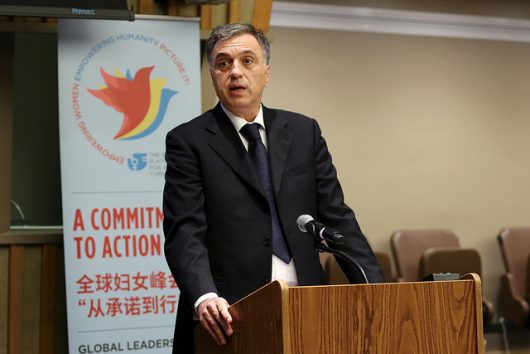
The early 1970s marked the mainstreaming of women’s empowerment in Guyana, with protection and gender equality coming next, followed by the establishment of the Women’s Affair Bureau in 1981. Since then, efforts are constantly made to keep Guyanese women safe. In ten years, female participation in the labor force increased from 48.2 percent in 2003 to 52.9 percent in 2013, ranking 154th according to the World Bank ratio of female to male labor force participation. In 2015, President David A. Granger stated, “we seek to build a country in which women and girls can expect to live in safety, to be protected from abuse, such as trafficking in persons, domestic violence and workplace hazards.” He took action soon after this statement at a Global Leaders Meeting.

The Five-Point Plan

President Granger created a five-point plan that would boost opportunities for women. The plan would focus on: improving access to education for women, taking on violence against women, enhancing employment opportunities for women, eliminating poverty and promoting equality of women in politics. These issues have been addressed in the past but there is still more work can be done.  Adjusting these foci into modern approaches will significantly push forward women’s empowerment in Guyana.

Improving Access to Education for Women

Guyana has met the goal of abolishing gender variation in primary and secondary education, and currently aims to achieve the same at college level.

Taking on Violence Against Women

“Break the Cycle Take Control” ran from 2008 to 2013, and served as a national policy on domestic violence. In 2012, many cases of violence against women went unreported, and there’s currently one center for women of violence, funded by the State party and ran by a non-governmental organization.

Enhancing Employment Opportunities for Women

The Women and Gender Equality Commision of Guyana intends to monitor and educate the public and employees on desirable employment practices in relation to women. The State party has been urged to increase vocational and technical training for women — including within agriculture and male-dominated fields — and allow women’s empowerment in Guyana to thrive.

Eliminating Poverty

It was estimated that 50 percent of women lived in poverty in 1999; in 2017, the number was reduced by 2.5 percent, and now reports state that it’s predominantly children 16 years or younger who live in poverty. Nevertheless, the Sustainable Development Goals are on target, and openly indicate that poverty must be decreased among women and children.

Promoting Equality of Women in Politics

For national and regional elections, candidate lists must have at least one-third of gender representatives be women in order for the proposal to be eligible. This regulation has improved women’s involvement in decision-making at a high level, and in 2015, women represented 33 percent of Parliament — a 14.5 percent increase from 1992.

With backing from the First Lady, Sandra Granger, these five points will also include influence from a woman’s perspective. Focusing on equality, safety of children and education, Granger will help instill her husband’s goals while merging the divide of the country through women’s empowerment in Guyana.

– Tara Jackson

Photo: Flickr

December 17, 2017
https://borgenproject.org/wp-content/uploads/borgen-project-logo.svg 0 0 Borgen Project https://borgenproject.org/wp-content/uploads/borgen-project-logo.svg Borgen Project2017-12-17 08:48:412019-12-06 13:49:26Efforts for Improving Women’s Empowerment in Guyana
Global Poverty, Women and Female Empowerment, Women's Empowerment

Women’s Empowerment in Liberia


Liberia experienced 14 years of civil war between the years 1989 to 2003, which totaled in more than 250,000 casualties. After 2003, the country spent several years undergoing reconstruction and since then, progress has been made in achieving women’s empowerment in Liberia.

In 2006, Liberia became the first country in Africa to democratically elect a woman president, Ellen Johnson Sirleaf. Along with Leymah Gbowee, the leader of the women’s peace movement, President Sirleaf quickly became a symbol for women’s empowerment in Liberia.

In an interview she gave in April 2017, Leymah Gbowee explains that the real beauty of the fight for women’s empowerment in the country is “in the number of young women who have seen a future beyond what they had” and in particular before the end of the war in 2003. She highlighted President Sirleaf’s role in raising an entire generation of young women to look themselves in a mirror and believe that they can achieve anything. Gbowee views President Sirleaf as the female version of Nelson Mandela, a real trailblazer for women’s empowerment in Liberia.

Through her organization, Gbowee Peace Foundation USA, Leymah Gbowee is working on promoting peace, security and reconciliation in the country, as well as lobbying for girl’s and women’s rights and leadership.

Women in Liberia are aiming to achieve equal political and economic rights. Despite having the right to vote since 1946, it is still a predominantly patriarchal society in Liberia. As such, most positions of authority are occupied by men. The disproportionate number of men in these positions can be explained by the lack of education girls and women receive in Liberia, as well as the high rate of child marriage, all which impact future opportunities for women.

As a result of efforts made to increase access to education and the personal development of girls and women, women represent half of the country’s workforce. The poverty level dropped by 10 percent between 2007 and 2010: according to the United Nations Development Programme, empowering women is central to fighting extreme poverty.

Many associations have been created by women, for women, in an effort to continue the progress for women’s empowerment in Liberia. One example is the Association of Women in Cross Border Trade, created in 2010, which teaches women how to manage their financial resources.

With continuous efforts by these organizations, the progress made for women’s empowerment in Liberia is sure to continue. In the words of Karin Landgren, the Coordinator of United Nations Operations in Liberia, “When women are empowered, nations are transformed.”

– Lea Gorius

Photo: Flickr

December 17, 2017
https://borgenproject.org/wp-content/uploads/borgen-project-logo.svg 0 0 Borgen Project https://borgenproject.org/wp-content/uploads/borgen-project-logo.svg Borgen Project2017-12-17 01:30:012024-12-13 17:58:32Women’s Empowerment in Liberia
Global Poverty, Women and Female Empowerment, Women's Empowerment

Entrepreneurship Boosting Women’s Empowerment in Moldova

women's empowerment in MoldovaIn the Eastern European country of Moldova, women have a very peculiar place in society. Men revere and admire women in their society, but many men also hold traditional views which say that women should be the caretakers and the nurturers of the household. These views can stagnate women’s empowerment in Moldova.

Domestic violence is also an issue. About 22 percent of women in Moldova claim that they have been abused at the hands of a partner. This number can increase as the parties get older, according to a report by Promundo Global.

Like many countries, Moldova strains against a predominantly patriarchal society. There are women who own businesses, but they have to struggle to find resources. Women are often unable to obtain loans and lack control of their capital. In this male-dominated political society, women are not favored.

Despite these circumstances, there is hope for women’s empowerment in Moldova. The country has pledged to encourage gender equality. The biggest commitment is the ratification of the Convention on the Elimination of All Forms of Discrimination Against Women (CEDAW). Highlighting the state of women’s rights is the primary purpose of CEDAW.

Another way the country has promoted gender equality is via the Women in Politics initiative. This initiative “works to increase women’s participation in Moldova politics and decision-making,” according to U.N. Women. It also supports women in media.

While women in politics and media are important, a big focus of organizations such as the World Bank is women entrepreneurship. Women-owned businesses make up 25 percent of all businesses in Moldova.

There is evidence that shows that productivity is higher when a business is owned by a woman. This is important for Moldova’s economy, as female-owned businesses employ more people, specifically women.

Women can generally outperform men in Moldova if they are given the chance to do so. In order for women’s empowerment in Moldova to be progressive, the restrictions that limit women need to be removed. The programs that are already underway are providing many opportunities to make that goal a reality.

– Dezanii Lewis

Photo: Flickr

December 16, 2017
https://borgenproject.org/wp-content/uploads/borgen-project-logo.svg 0 0 Borgen Project https://borgenproject.org/wp-content/uploads/borgen-project-logo.svg Borgen Project2017-12-16 07:30:162019-11-14 02:41:18Entrepreneurship Boosting Women’s Empowerment in Moldova
Global Poverty, Women and Female Empowerment, Women's Empowerment

The Importance of Improving Women’s Empowerment in Zambia

women's empowerment in zambia
Zambia is a nation directly above Zimbabwe that has made a concerted effort in the past year to stave off both gender-based violence and child marriage. The nation realizes that in order to enjoy a brighter future, it must educate all members of the household and strive for women’s empowerment in Zambia.

The female Vice President of Zambia, Inonge Wina, made a statement in August of this year wherein she commended the nation for making great strides in not only championing for women’s empowerment in Zambia, but also in taking practical steps in appointing women to positions of leadership.

“However, there is [still a] need to adopt laws in our country and policies that empower women and enhance their leadership roles and equitable participation in governance, politics and in the labor force,” she said.

In 2017, Zambian police recorded 55 gender-based violence (GBV) murder cases, an increase of nearly a quarter compared to 41 recorded in the same period in 2016. There was also a spike in cases of assault, with 1,644 cases recorded this year.

Independent advocacy groups such as the Non-Governmental Organizations Coordinating Council (NGOCC), have been pushing for the implementation of an anti-GBV fund to help survivors. NGOCC executive director Engwase Mwale has also advocated for the full implementation of the “anti-GBV law,” which includes constructing shelters for survivors in the districts.

In response to the increase in gender-based violence, Zambia’s Ministry of Gender launched a strategy aimed at aiding women who have experienced gender-based violence financially.

The Gender-Based Violence Survivors Income Generating Activities Tracking Strategy has already helped to empower 6,500 survivors by providing them with financial opportunities; evidence has shown poverty to be one of the causes spurring gender-based violence.

Lawmakers and government officials in Zambia point to a lack of education as one of the main reasons that gender-based crimes occur so frequently. At the moment, the law in Zambia describes a child as anyone under the age of 16, and allows anyone to marry at the age of 18.

Chief Cooma of the Tonga-speaking people in Zambia’s Choma district, capital of the southern province of Zambia, has taken a strong stance on early marriages. He has warned his subjects against doing so, saying he will not hesitate to have any perpetrator prosecuted by the full power of the law.

Esnart Siandavu of Sikaunzwe, Kazungula, says gender-based violence does not apply only to battery, but in the distribution of resources as well.

“I think gender-based violence is not only when a husband beats his wife. Like here, women are involved in farming while their husbands go drinking. Surprisingly, when it is time to sell the produce to the Food Reserve Agency or private buyers, it is the husbands who take a central role as if we do not know where the FRA depots are. I think it is a violation of our rights because we do not see the money after toiling for the whole farming season,” she said.

Even though women’s empowerment in Zambia is continuing to make strides through education, the patriarchal systems in place still make it difficult for women to take full control of their own financial situations.

– Sam Bramlett

Photo: Flickr

December 15, 2017
https://borgenproject.org/wp-content/uploads/borgen-project-logo.svg 0 0 Borgen Project https://borgenproject.org/wp-content/uploads/borgen-project-logo.svg Borgen Project2017-12-15 07:00:432024-05-29 22:29:55The Importance of Improving Women’s Empowerment in Zambia
Global Poverty, Women and Female Empowerment, Women's Empowerment

Women’s Empowerment in Serbia

Women's Empowerment in Serbia In Serbia, gender inequality is prevalent in the workforce. Disproportionate responsibilities for household tasks, the lack of flexible work arrangements, the continued practice of traditional gender roles and low demand for female employees lend to inequalities among business and governmental roles.

According to research by the World Bank, the employment rate of women is 26 percent lower than it is for men, resulting in higher unemployment and inactivity rates for women. When addressing self-employment and company owners, men constitute 72 percent of those who are self-employed and 71 percent of business owners. Men also make up 80 percent of ministerial positions in government, leaving a disproportionally small percentage of women in positions of authority. The largest discrepancies in employment are evident when discussing uneducated women and girls.

Women in Serbia are disadvantaged due to an educational system that does not promote a balance between work, school and domestic duties. Many lose opportunities to pursue education or attain work experience because of the expected duties of women, such as unpaid household work. Women who are in need of work, due to their economic situation or cost of living, are often forced into lower-paying jobs.

Employment rates rose 4.7 percent for women between 2012 and 2014, but many of these jobs proved to be temporary positions, leaving many uneducated women and girls living in rural locations at a disadvantage. However, various entities are looking at education and work-related gender equality reforms to enhance women’s empowerment in Serbia.

Multiple NGOs and gender advocates are working to influence the government for women’s empowerment in Serbia. The areas of concern relating to gender inequality include the electoral quota, violence against women, women’s entrepreneurship and gender-responsive budgeting. Several laws have been passed to address these issues, some being the Gender Equality Law of 2009, National Strategy for the Improvement of the Status of Women and Promotions of Gender Equality and the Action Plan for 2010-2015. These laws center on the elimination of all forms of discrimination and violence against women.

The United Nations Development Programme (UNDP) also promotes its goal of equal participation in economic activities and decision making. UNDP’s initiative focuses on building lives free of violence against women, in order to enhance women’s empowerment in Serbia. UNDP’s focus on violence against women addresses the fact that 54 percent of women are exposed to some sort of violence. This program supports state institutions and actors that aid in gender equality and benefitting women and girls against discrimination and violence.

U.N. Women and U.N. Global Impact also worked with twelve companies to sign the Women’s Empowerment Principles. These twelve companies committed to transforming current business methods to promote gender equality and women’s empowerment as core business objectives. The principles addressed flexible working arrangements, such as maternal leave, promotion of enterprise development, marketing empowering women and advocacy on behalf of women. These principles, laws and organizations are actively working to improve the lives of women in Serbia.

– Bronti DeRoche

Photo: Flickr

December 13, 2017
https://borgenproject.org/wp-content/uploads/borgen-project-logo.svg 0 0 Borgen Project https://borgenproject.org/wp-content/uploads/borgen-project-logo.svg Borgen Project2017-12-13 01:30:382024-06-05 23:55:34Women’s Empowerment in Serbia
Global Poverty, Women and Female Empowerment, Women's Empowerment

Women’s Empowerment in Romania

Women's Empowerment in RomaniaWomen’s empowerment remains a crucial international issue, with each nation facing its own set of challenges. Significant progress has been made in improving gender equality over the last fifty years, but setbacks still remain regarding women’s empowerment in Romania.

After the collapse of communism, Romania began the slow process of democratization, which triggered many economic, political and social transformations, all with varying outcomes regarding gender equality.

In 2009, a financial crisis occurred throughout the country, resulting in financial assistance packages from the International Monetary Fund (IMF), the World Bank, the European Commission and the European Bank for Reconstruction and Development (EBRD).

During this time, continuous changes were made in legislative provisions involving employment and the work-life balance of Romanians. This posed an issue, especially with the dissolution National Agency for Equal Opportunities between Women and Men in July of 2010. Between 2008 and 2010 the unemployment rate increased by 1.2 percent for men and by 1.8 percent for women, exposing the labor market as favorable to men.

According to a recent report, many laws still make it difficult for women to get a job, start a business or fully participate in the economic life of Romania. Discriminatory rules remain utilized in the country which ban women from certain jobs, limit their ability to make legal decisions and even restrict access to capital from women-owned firms.

Despite these changes, there are many crucial efforts being made to increase women’s empowerment in Romania. The International Finance Cooperation (IFC) through its Banking-on-Women Program has established a loan agreement with Garanti Bank to help Romanian women run their own businesses. Since launching in Europe, the Middle-East and North Africa in 2011, the Banking-on-Women Program has provided over $130 million to six banks for lending to women entrepreneurs.

The labor market segregation is also closely linked to the educational system. Unfortunately, many women in Romania have been greatly deprived of receiving an education. Traditional female domestic roles are still upheld by society and even taught in the school system. Textbooks promote a male-dominated world, leaving girls feeling inferior. Many women do not see the connection between education and getting a job, therefore girls are often taken out of school in order to marry or help with household chores.

Location also impacts the connection between women and education. Around 68 percent of women in urban areas are gaining a secondary education, while only about 42 percent of women in rural areas are receiving a secondary education.

Furthermore, evening attaining a university degree does not help women outright. Despite large numbers of women graduates and high qualifications, women are not equally represented in decision making or professional levels.

To combat this, the Educational Priority Areas (EPA), in partnership with UNICEF and the Institute for Education Sciences, targets disadvantaged communities to increase women’s access to education. With an emphasis on quality communication between schools and parents, and schools and authorities, this project trains teachers with inter-cultural approaches to education while creating a curriculum that will keep students interested and informed.

In addition, UNICEF has helped set up a number of education centers with girl-friendly educational programs. By changing the curriculum and textbooks to accurately represent a balanced gender perspective, this project seeks to decrease the school dropout rate and promote education for everyone, especially women. Since knowledge is power and education drastically alters the economy, this is a positive step towards women’s empowerment in Romania.

With these work and education efforts being made, women in Romania stand a chance to gain their own independence and positively improve the Romanian economy.

– Kailey Brennan

Photo: Flickr

December 13, 2017
https://borgenproject.org/wp-content/uploads/borgen-project-logo.svg 0 0 Borgen Project https://borgenproject.org/wp-content/uploads/borgen-project-logo.svg Borgen Project2017-12-13 01:30:362024-05-29 22:29:41Women’s Empowerment in Romania
Global Poverty, Women and Female Empowerment, Women's Empowerment

Machismo Culture and Women’s Empowerment in Nicaragua

Nicaragua
Nicaragua is a Central American country situated between the Pacific Ocean and the Caribbean Sea. It has gained popularity with tourists for its coastline and variety of landscapes but, its superficial beauty masks a larger problem with women’s equality — the machismo culture. Breaking a long-standing philosophy, such as a machismo culture, has been one of the largest barriers to women’s empowerment in Nicaragua.

Machismo Culture

In Nicaragua, machismo or “macho” is often coupled with a sexist connotation that describes “machistas” as men who objectify women. To overcome the strict gender roles established by a macho society, organizations like The Masculinity Network for Gender Equality (REDMAS), have established gender equality programs in Nicaragua to begin transforming men’s “machista” behaviors. The impact of Machismo culture takes on many forms, and changing machismo behaviors is just the beginning of supporting women’s empowerment in Nicaragua.

During a forum supported by the U.N. in Nicaragua, a member of the FEM (Fundación Entre Mujeres) noted, “money has been managed by men, the gender-based division of labor is absolutely an economic relationship because work for (women) doesn’t have the (monetary) value as it has for men.”

In some Nicaraguan households, women are expected to deposit their earnings to the family patriarch and the women make much less than men in similar positions. In these households, the machismo attitude spreads to affect economic equality for women and obstruct their financial freedom.

The Road to Female Empowerment

In 2012, to counter the machismo culture and enhance women’s empowerment, the Nicaraguan government passed a legislation that requires “50 percent of political party candidates to be women.” This legislation is a large reason Nicaragua is ranked 4th in the World Economic Forum’s political empowerment gender gap.

An article naming Nicaragua “The World’s Unlikely Champion of Gender Equality” states, women are also gaining greater access to higher paying jobs, “making up more than 40 percent of lawmakers, senior officials and managers.”

In consideration of women’s political empowerment, economic opportunity, educational attainment and health and survival, the World Economic Forum has appointed Nicaragua the 10th highest nation in the global gender gap index. The nation has made immense strides to close the gender gap and combat a machismo culture. The World Economic Forum reports that “since 2006, Nicaragua has closed approximately 19 percent of its overall gender gap—making it one of the fastest-improving countries in the world.”

Thankfully, violence against women in Nicaragua has decreased, and more women are finding higher-paying jobs. Nicaragua is also ranked higher than any other Central American country on the global gender index. Efforts to counter machismo behavior have brought more than 25,000 Nicaraguans to various gender equality programs.

Although the Machismo culture is still present, the future for women’s empowerment in Nicaragua is bright.

– Eliza Gresh

Photo: Flickr

December 12, 2017
https://borgenproject.org/wp-content/uploads/borgen-project-logo.svg 0 0 Borgen Project https://borgenproject.org/wp-content/uploads/borgen-project-logo.svg Borgen Project2017-12-12 01:30:572020-01-03 19:46:02Machismo Culture and Women’s Empowerment in Nicaragua
Global Poverty, Women and Female Empowerment, Women's Empowerment

Women’s Empowerment in Albania Moving Forward

women's empowerment in AlbaniaLong a conservative society and closed off to the outside world for decades under the communist rule of Enver Hoxha, Albania is making strides in improving the status of women in the country. Home to just under three million people, women’s empowerment in Albania is moving forward in the 21st century as the country continues to emerge from isolation and enters a period of rapid development.

Domestic violence has been the most pressing issue limiting women’s empowerment in Albania, affecting women of all generations across the country. The southeastern European nation is making progress in its efforts to bring an end to domestic violence, establishing a National Center for the Treatment and Rehabilitation of the Victims of Domestic Abuse in the capital, Tirana. The center was opened by the Albanian government in cooperation with the U.N. Development Project (UNDP) and other aid organizations.

“This shelter is part of the state social service structures,” said the center’s director, Fatbardha Hoxhalli, to the UNDP. “It constitutes an important service in the overall mechanism for the coordination of work and referral of domestic violence cases set up at several municipalities throughout the country.”

Despite the progress in combating domestic abuse, the lack of developed childcare services is another obstacle to women’s empowerment in Albania. In a study published in 2013, UNICEF’s country office in Albania recommended further involvement of Albanian men in childcare and family networks to combat the persistence of Albania’s heavily patriarchal society. Further investment in childcare and early child development services would significantly contribute to women’s empowerment in Albania.

In Tirana, Albania’s bustling capital home to almost half a million people, businesses owned and run by women are thriving. Women run travel agencies, influential online newspapers and countless other enterprises, receiving support from a fund created by the city government.

Albania’s political leaders are also taking note of the gender equality gap in the country, announcing new measures to support women’s empowerment in Albania and enable more women to enter the labor market. A four-year National Strategy for Gender Equality and Action Plan, launched last year, aims to consolidate efforts across government ministries to advance gender equality in Albania by 2020.

All of these projects have been crucial steps in the process to advance women’s empowerment in Albania. By continuing to include women in all facets of the country, Albanian women’s daily lives can be greatly improved.

– Giacomo Tognini

Photo: Flickr

December 11, 2017
https://borgenproject.org/wp-content/uploads/borgen-project-logo.svg 0 0 Borgen Project https://borgenproject.org/wp-content/uploads/borgen-project-logo.svg Borgen Project2017-12-11 17:53:282024-05-29 22:29:51Women’s Empowerment in Albania Moving Forward
Global Poverty, Women and Female Empowerment, Women's Empowerment

Economic Participation Key to Women’s Empowerment in Morocco

women's empowerment in MoroccoAlthough in recent years Morocco has come under fire for its poor gender equality, that does not mean all is lost. In fact, like in most political spheres, while there are setbacks in some areas, there are also massive gains in others. And women’s empowerment in Morocco has certainly improved during the past decade.

For example, gender equality became a huge issue in 2014 when Morocco rewrote its code of family laws. In its most recent writing, the government has yet to guarantee that a woman can receive the family inheritance instead of a man, even if he is younger or a half-sibling. 

In 2004, Morocco created its original family law. Its primary iteration, however, did do away with some gender-related laws. Specifically, since 2004 Morocco has allowed divorce by mutual consent, placed limits on polygamy and raised the minimum marriage age for women to 18. 

An important concept for women’s empowerment in Morocco is recognition. Specifically, certain Moroccan women are receiving international recognition, which only heightens their importance in aspects outside of the home. 

For example, earlier this year a Moroccan businesswoman was selected by the World Economic Forum to co-chair its regional summit. Khadija Idrissi Janati is a PR expert and entrepreneur who is also on the board of directors for the Association of Women Entrepreneurs of Morocco. As she said herself, her appointment to this position demonstrates women’s importance in economic development and that Moroccan women can be key players in the region’s future. U.S. President Barack Obama also received Janati in 2014 to commend her work on women’s empowerment in Morocco. 

Similarly, from September 25-27 this year, Marrakech hosted the first annual Women in Africa Summit. The symposium, which attracted male and female attendees, provided a discussion about concrete actions to provide women with greater power and opportunities in their countries. 

Certain projects have created more palpable routes for women’s empowerment in Morocco. In 2013, Naïma Fdil received the Terre de Femmes Prize for founding the organization Women’s Association of Family Development in Wadi Dadès. After studying in Marrakech, Fdil learned that roses from her birth region and valley could be harvested for cosmetic products. 

She decided to return to the valley and set up an organization that taught women to distill these roses in order to produce products that could be sold at higher prices. Since then, this program has expanded the economic output of the valley and provided women the possibility to remove themselves from poverty. 

Another program, created by the Association of Women for Rural Development, is called Empowering Women in Atlas. It seeks to create economic growth for women in the Atlas region of Morocco. Launched a year ago, it selected 100 female beneficiaries from marginalized areas with plans to give them workshops and training sessions to improve their economic power. 

These projects have done a lot to promote women’s empowerment in Morocco, and more women are becoming involved in the economy as a result. By continuing to increase this participation and encouraging women to take on more influential roles, many women can be lifted out of poverty.

– Nick McGuire

Photo: Flickr

December 11, 2017
https://borgenproject.org/wp-content/uploads/borgen-project-logo.svg 0 0 Borgen Project https://borgenproject.org/wp-content/uploads/borgen-project-logo.svg Borgen Project2017-12-11 17:18:072020-01-03 19:48:08Economic Participation Key to Women’s Empowerment in Morocco
Global Poverty, Women and Female Empowerment, Women's Empowerment

Many Organizations Fighting for Women’s Empowerment in Georgia

women's empowerment in GeorgiaGeorgia, a country near the Caucasus Mountains, is situated between Europe and Asia with its border touching the Black Sea. Georgia has been under the influence of different empires throughout the centuries, from the Roman, Arab and Ottoman Empires to Imperial Russia. It was also a part of the former Soviet Union until its independence in 1991.

The country, though rich in ancient culture and heritage, faces gender inequality and discrimination against women. Due to its deep-rooted tradition and strong patriarchal society, women are mostly engaged in household activities with little opportunity for higher education and employment.

The rate of violence and abuse against women is also a concern. According to research funded by the U.N., one in 11 married women is the victim of violence at the hands of her husband or partner. Domestic abuse is still considered a private matter and women are hesitant to speak out. Thus, women’s empowerment in Georgia faces a major challenge.

The good news is that organizations like the United Nations, the United States Agency for International Development (USAID) and other European associations are helping to fight the injustices that women in Georgia encounter in their everyday lives.

Contributions of the U.N. to Women’s Empowerment in Georgia
Since 2001, U.N. Women, along with Norway and the European Commission, has been working to address this issue. Their target is to reduce violence against women, provide them with peace and security, help them achieve financial independence and include them in national planning, budgeting and policymaking.

So far, U.N. Women has helped the Georgian government establish women’s shelters, launch a domestic violence helpline and promote awareness related to the rights of women, and has also provided assistance in introducing gender-inclusive policies to Parliament.

Another important focus is the support for internally displaced persons, people who were forced to flee their homes but remain within the country. With funding provided by the European Union, U.N. Women provides free legal aid, social services like daycare and economic opportunities to protect them from vulnerable conditions.

Contributions of USAID to Women’s Empowerment in Georgia
USAID has completed a three-year advocacy program to economically empower women in Georgia. The aim of the program was to mobilize women to fight for equality in the workplace. The program also provided incentives to employers to follow the existing non-discriminatory law in Georgia. They also helped to protect women’s rights in the legislature.

USAID’s other program, begun in September 2015, is the reduction of violence against women. The program, along with Georgia’s government, addresses domestic violence by establishing a national referral mechanism and promoting anti-violence education in schools, as well as using media and civic dialogue.

Although women are coming forward to fight for their rights, we still hear disturbing news of violence against women in Georgia. Hopefully, the joint effort of these organizations and their government will help them retain their self-respect and human rights.

– Mahua Mitra

Photo: Flickr

December 11, 2017
https://borgenproject.org/wp-content/uploads/borgen-project-logo.svg 0 0 Borgen Project https://borgenproject.org/wp-content/uploads/borgen-project-logo.svg Borgen Project2017-12-11 16:49:252024-05-29 22:29:45Many Organizations Fighting for Women’s Empowerment in Georgia
Page 50 of 54«‹4849505152›»

Get Smarter

  • Global Poverty 101
  • Global Poverty… The Good News
  • Global Poverty & U.S. Jobs
  • Global Poverty and National Security
  • Innovative Solutions to Poverty
  • Global Poverty & Aid FAQ’s
Search Search

Take Action

  • Call Congress
  • Email Congress
  • Donate
  • 30 Ways to Help
  • Volunteer Ops
  • Internships
  • Courses & Certificates
  • The Podcast
Borgen Project

“The Borgen Project is an incredible nonprofit organization that is addressing poverty and hunger and working towards ending them.”

-The Huffington Post

Inside The Borgen Project

  • Contact
  • About
  • Financials
  • President
  • Board of Directors
  • Board of Advisors

International Links

  • UK Email Parliament
  • UK Donate
  • Canada Email Parliament

Get Smarter

  • Global Poverty 101
  • Global Poverty… The Good News
  • Global Poverty & U.S. Jobs
  • Global Poverty and National Security
  • Innovative Solutions to Poverty
  • Global Poverty & Aid FAQ’s

Ways to Help

  • Call Congress
  • Email Congress
  • Donate
  • 30 Ways to Help
  • Volunteer Ops
  • Internships
  • Courses & Certificates
  • The Podcast
Scroll to top Scroll to top Scroll to top