• Link to X
  • Link to Facebook
  • Link to Instagram
  • Link to TikTok
  • Link to Youtube
  • About
    • About Us
      • President
      • Board of Directors
      • Board of Advisors
      • Financials
      • Our Methodology
      • Success Tracker
      • Contact
  • Act Now
    • 30 Ways to Help
      • Email Congress
      • Call Congress
      • Volunteer
      • Courses & Certificates
      • Be a Donor
    • Internships
      • In-Office Internships
      • Remote Internships
    • Legislation
      • Politics 101
  • The Blog
  • The Podcast
  • Magazine
  • Donate
  • Click to open the search input field Click to open the search input field Search
  • Menu Menu
Blog - Latest News
Developing Countries, Global Poverty

5 Facts About the Poverty Rate in Bulgaria
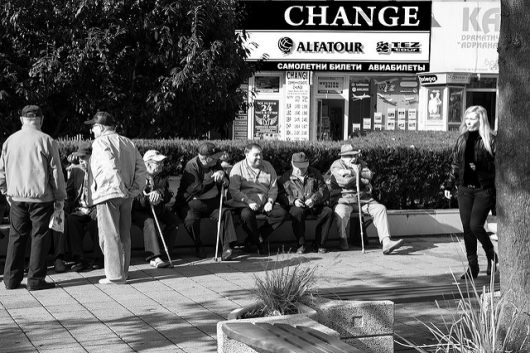
Poverty Rate in Bulgaria
Poverty in Bulgaria has greatly impacted the culture. According to a EuroStat survey of EU satisfaction rates, Bulgaria is the least happy country in the European Union. After joining the EU in 2007, Bulgarians were hopeful that conditions would improve.

On the contrary, unemployment rates remained high and Bulgaria continued to be the poorest country in the Union. While the poverty rate in Bulgaria has not gone down as Bulgarians hoped it would, the economy is slowly and steadily improving.

Top Facts about the Poverty Rate in Bulgaria:

  1. Bulgarians have been living in poverty since the fall of the communist regime in November 1990. EuroStat found that, in 2017, 2.5 million Bulgarians (35 percent of the population) are living in poverty.
  2. More than a third of the European Union poverty resides in Bulgaria, Romania and Greece combined. The average pension in Bulgaria is 165 euros per month–less than $200.
  3. Of the Bulgarian population, 34.2 percent is severely deprived, meaning that they cannot pay their bills, heat their homes or afford an annual vacation. The unemployment rate is 10.8 percent. The average in the European Union is 9.8 percent.
  4. According to a survey by the Bulgarian Chamber of Commerce, around 244 Bulgarian companies increased their number of employees in 2016. The National Statistical Institute showed that, from March to June 2017, the number of employees under contract increased by 2.8 percent.
  5. Due to decades of poverty in Bulgaria, the availability of qualified workers is severely lacking. This is both due to the inability to properly educate youth and the emigration of young people to more developed countries.

Although the poverty rate in Bulgaria is still high, the country is slowly improving and growing its economy. The year 2017 has shown some stagnation in growth, but the progress in 2016 indicates that more growth is on the way. Incomes are rising and, as this happens, happiness is also rising as people have more money to invest in contentment.

– Madeline Boeding

Photo: Flickr

September 9, 2017
Share this entry
  • Share on Facebook
  • Share on X
  • Share on WhatsApp
  • Share on Pinterest
  • Share on LinkedIn
  • Share on Tumblr
  • Share on Vk
  • Share on Reddit
  • Share by Mail
https://borgenproject.org/wp-content/uploads/borgen-project-logo.svg 0 0 Borgen Project https://borgenproject.org/wp-content/uploads/borgen-project-logo.svg Borgen Project2017-09-09 07:30:442018-07-31 15:48:465 Facts About the Poverty Rate in Bulgaria

Get Smarter

  • Global Poverty 101
  • Global Poverty… The Good News
  • Global Poverty & U.S. Jobs
  • Global Poverty and National Security
  • Innovative Solutions to Poverty
  • Global Poverty & Aid FAQ’s
Search Search

Take Action

  • Call Congress
  • Email Congress
  • Donate
  • 30 Ways to Help
  • Volunteer Ops
  • Internships
  • Courses & Certificates
  • The Podcast
Borgen Project

“The Borgen Project is an incredible nonprofit organization that is addressing poverty and hunger and working towards ending them.”

-The Huffington Post

Inside The Borgen Project

  • Contact
  • About
  • Financials
  • President
  • Board of Directors
  • Board of Advisors

International Links

  • UK Email Parliament
  • UK Donate
  • Canada Email Parliament

Get Smarter

  • Global Poverty 101
  • Global Poverty… The Good News
  • Global Poverty & U.S. Jobs
  • Global Poverty and National Security
  • Innovative Solutions to Poverty
  • Global Poverty & Aid FAQ’s

Ways to Help

  • Call Congress
  • Email Congress
  • Donate
  • 30 Ways to Help
  • Volunteer Ops
  • Internships
  • Courses & Certificates
  • The Podcast
Link to: Children with Disabilities in Developing Countries Link to: Children with Disabilities in Developing Countries Children with Disabilities in Developing Countries Link to: Mineral Wealth in the Democratic Republic of Congo: Blessing or Curse? Link to: Mineral Wealth in the Democratic Republic of Congo: Blessing or Curse? Mineral Wealth in the Democratic Republic of Congo: Blessing or Curse?
Scroll to top Scroll to top Scroll to top