• Link to X
  • Link to Facebook
  • Link to Instagram
  • Link to TikTok
  • Link to Youtube
  • About
    • About Us
      • President
      • Board of Directors
      • Board of Advisors
      • Financials
      • Our Methodology
      • Success Tracker
      • Contact
  • Act Now
    • 30 Ways to Help
      • Email Congress
      • Call Congress
      • Volunteer
      • Courses & Certificates
      • Be a Donor
    • Internships
      • In-Office Internships
      • Remote Internships
    • Legislation
      • Politics 101
  • The Blog
  • The Podcast
  • Magazine
  • Donate
  • Click to open the search input field Click to open the search input field Search
  • Menu Menu

Archive for category: Women

Information and news about woman issues

Developing Countries, Development, Global Poverty, Health, Women, Women & Children, Women and Female Empowerment

How People Are Fighting the Rape Epidemic in India

Rape Epidemic in India
The rape epidemic in India garnered international attention in 2012, when several men brutally raped and beat a woman, Nirbhaya, on a bus. The event immediately spread across the globe and sparked massive international outrage. This pushed the government to promise new laws. However, it did not make any tangible changes. A minor positive change was a social shift resulting in more women finding the strength to report cases of sexual assault. Perhaps the most gruesome fact from this brutal event is the regularity of gang-rape in India. Nirbhaya’s case, while one of the most horrifying stories of rape, is only one among thousands.

Solutions in Bangladesh

There is a precedent for solutions to these types of problems. One solution is for the law to change in a way that punishes those who physically or sexually abuse women. Bangladesh has effectively lowered its acids attacks on women to just 75 in 2014 whereas it was previously 492 cases in 2002. It accomplished this by mandating the death penalty as the crime for acid attacks. Since Bangladeshi men now fear the severe ramifications for an acid attack, they refrain from hurting women with this method. However, if Bangladesh and India enacted rigorous laws for all types of abuse on women, then at the very least, those particular men would not be able to abuse women at as drastic of a level as they are currently.

Snehalaya Provides Aid to Abused Women and Children

Women who suffer abuse can still have hope since many NGOs are actively working to support the victims and help them get back their dignity and return to a normal life. One example is Snehalaya, which provides a safe space for women and children who are suffering abuse, and helps over 15,000 people per year. Snehalaya strives to use “grassroots outreach and education” to lower the amount of domestic abuse and violence that occurs in India. Women who are victims of sexual abuse can count on Snehalaya to provide the proper support group to push them towards a normal life, which is even more important because sometimes a woman’s parents may not accept her after she has become a victim due to social stigma.

Another solution for the rape epidemic in India is women’s empowerment through properly educating women, which is what Sayfty strives to do. It strives to provide women the tools to be safe from acts of sexual violence and to teach women how to defend themselves. While the first solution provides a legal means for female empowerment and the second provides a way to help them after they become victims, Sayfty is essential because it empowers women to stand up for themselves while suffering abuse or at least provides them with knowledge of how to get away from predators and get help.

The efforts of millions of women who are finding the bravery to call out abusers are defeating the rape epidemic in India. The laws in India are slowly changing to match modern social attitudes. NGOs are empowering women to lead their own fight. Though change is slow, it is inevitable, and more women are getting the justice they deserve every day.

– Anish Kelkar
Photo: Flickr


October 20, 2019
https://borgenproject.org/wp-content/uploads/borgen-project-logo.svg 0 0 Jennifer Philipp https://borgenproject.org/wp-content/uploads/borgen-project-logo.svg Jennifer Philipp2019-10-20 17:11:142019-11-14 12:57:01How People Are Fighting the Rape Epidemic in India
Global Poverty, Women

Poverty and PTSD

Poverty and PTSDCommonly associated with combat veterans, Post-traumatic stress disorder (PTSD) impacts more of the global population than maybe expected. Recent studies have found a link between poverty and PTSD that reveals that socioeconomic status contributes to the majority of anxiety disorders.

How Poverty Contributes to PTSD

Mental disorders manifest in distinct ways for many people. However, the common underlying origin of Post-traumatic stress syndrome (PTSD) remains a terrifying or traumatic life event. Living in poverty often means surviving daily in vulnerable conditions, and with financial instability that limits access to necessities such as food, shelter and water. The inability to pay for expenses starts to become emotionally and mentally taxing. Poverty acts as a traumatic experience in many people’s lives and even after graduating in class status, difficulty persists to enjoy day to day life.

Symptoms of PTSD can appear within months of the traumatic event and include:

  • Avoiding: Detaching from the traumatic event by avoiding triggers such as places, situations or people.
  • Reliving: Flashbacks and nightmares due to memories that force reliving the traumatic experience.
  • Increased Arousal: An increased blood pressure or heart rate accompanied by outbursts of anger and difficulties sleeping

Some people with PTSD may exhibit all these symptoms, while others exhibit just a few. The severity of PTSD also varies from person to person. PTSD can be broken down into subtypes such as:

  • Delayed on-set PTSD: This variation refers to when symptoms of the disorder develop many years after the traumatic event.
  • Complex PTSD: This type of PTSD usually surfaces after ongoing childhood physical or sexual abuse.
  • Birth Trauma: This type occurs after traumatic childbirth.

Women with PTSD

Research estimates that 284 million people globally suffer from anxiety disorders such as PTSD. About 63 percent of people that suffer from anxiety disorders are women. In addition, women living in poverty tend to face PTSD at higher levels than any other group within the general population. The relationship between poverty and PTSD embodies that of the domino effect. Poor women’s PTSD symptoms often worsen due to the fact that living in impoverished neighborhoods risk ongoing exposure to triggers of the traumatic incident. A study undertaken by the Social Cognitive Theory also reveals that most of the women living in poverty with PTSD share a history of domestic violence and lack social support.

Treatments

It can feel nearly impossible to live a normal life with PTSD. Luckily, effective treatments exist that minimize the symptoms of the disorder. One of the best treatments for PTSD is Psychotherapy. Psychotherapy allows PTSD victims to talk about their cognitive behavioral process to a mental health professional to reduce and change reactions to triggers. Another important tool for managing PTSD is having a strong support system. The help of friends and family means everything during a mental health crisis. A support system of others that have suffered from PTSD also helps signify that a person is not alone in the experiences of the mental disorder. There are also organizations such as the PTSD Alliance, who work to educate and empower people with PTSD psychologically, economically and emotionally to thrive beyond environmental barriers. The organization currently has five international partners that provide programs to help improve the lives of those living in poverty with PTSD.

Overall, poverty and PTSD remain two prominent issues impacting people on a global scale. The connection between poverty and PTSD only further emphasizes that the more work that is done to reduce global poverty also diminishes the mental health crisis.

– Nia Coleman
Photo: Wikimedia

October 8, 2019
https://borgenproject.org/wp-content/uploads/borgen-project-logo.svg 0 0 Kim Thelwell https://borgenproject.org/wp-content/uploads/borgen-project-logo.svg Kim Thelwell2019-10-08 06:37:362024-12-13 18:01:56Poverty and PTSD
Global Poverty, Refugees, Women

Hiring Refugee Women Can Boost the Global GDP

Hiring Refugee Women Can Boost Global GDP
Women and girls make up about half of the refugee population worldwide, but less than half have a paid job. In some countries, such as Germany and Lebanon, females make up just 6 percent of the working world compared to the United States’ 40 percent. Even in the United States, the number is low. Many refugee women do not have paid work because they face violence and discrimination in workplaces, including sexual assault and exclusion. However, if accepted into the working world, hiring refugee women could boost the global GDP by $1.4 trillion.

How Hiring Refugee Women Could Boost the Global GDP

More workers mean more hands to create products. Companies can sell more if they produce more. The global GDP is an annual measurement of all the final goods sold worldwide. Statistically, only four out of 10 migrant women are getting paid to work compared to seven out of 10 men. As mentioned earlier, the gap in women workers is partly due to workplace discrimination and partly to pay gap. In places such as Turkey,  where the pay gap between women and men is highest, the difference in salaries is about 94 cents per dollar. In the United States, where the gap is lower, the difference is 29 cents per dollar. By increasing women’s pay and making workplaces more accessible, women could not only become more motivated to enter the field, but the hiring of refugee women could also boost the global GDP to a total of $2.5 trillion.

Effect of Businesses Hiring Refugee Women

The hiring of refugee women could have a positive impact on the economy and local businesses as well. In 2017, Starbucks Coffee pledged to hire around 10,000 refugees by 2022, which will help give more opportunities for refugee women to go out and seek work. With hiring refugee women, Starbucks hopes to help “a population who seeks a chance to rebuild their lives and have a fresh start.” By giving refugee women a paid job, they are able to start over and put the money towards their families. 

The Pay Gap Status

The way to help employ more refugee women would be to close the pay gap between men and women. Worldwide, only 63 percent of the wage gap has closed, meaning men are making more than women in over half of the world. This rate is highest in countries such as Germany, Lebanon and Jordan. By closing the pay gap, refugee women in these countries will have a steady income to support their families, and make them less dependent on aid from their governments.

Besides economic growth, refugee women can make improvements in society, as well as make personal improvements. In Baalbeck, Lebanon, a Syrian woman refugee named Bushra makes her living by fixing electronic devices. Not only does it bring in a source of income, but it is also making an impact on the world around her, “The role of an electrician is mostly for men,” Bushra says. “But it shouldn’t be exclusively for men. We can work even better than them.” Bushra is one of the few women in the village that has a paid job. She is using her skills to help improve the society around her, while still providing for her family.

Over half of the world’s refugee women do not hold a paying job. If brought into the working world, hiring refugee women can boost global GDP by $1.4 trillion, bringing the total to $2.5 trillion. There will not only be an economic increase but an increase in societal empowerment as well. By encouraging women to use the skills that they have, they will not only improve the production of goods but can use their skills to help others.

– Destinee Smethers
Photo: Flickr

September 27, 2019
https://borgenproject.org/wp-content/uploads/borgen-project-logo.svg 0 0 Jennifer Philipp https://borgenproject.org/wp-content/uploads/borgen-project-logo.svg Jennifer Philipp2019-09-27 07:30:302019-09-23 13:47:59Hiring Refugee Women Can Boost the Global GDP
Global Poverty, Women, Women and Female Empowerment, Women's Empowerment, Women's Rights

Female Entrepreneurship in Mexico

Female Entrepreneurship in Mexico
According to a 2016/2017 study by the Global Entrepreneurship Monitor, Mexico is one of the five countries in the world where the number of women starting their own businesses is equal to or greater than men. This is fantastic news because if men and women participate equally in the economy, Mexico’s GDP could increase by 43 percent or $810 billion. From 2000 to 2010 alone, women’s participation in the workforce decreased extreme poverty by 30 percent in Latin America and the Caribbean. With that increase in female entrepreneurship in Mexico, women are able to become more independent, but many women still face powerful barriers in starting their own business.

Many women, especially in subsistence settings, lack access to training, financing and markets, and face physical, sexual and economic violence. The average female-headed household earns $507 a month in urban areas and $273 a month in rural areas while male-led households earn $780 a month in urban areas and $351 a month in rural areas. The burden of domestic tasks also falls mostly on women. A 2009 survey found that men spend an average of 53 hours a week on economic activities and 12 hours on domestic tasks while women spend an average of 40 to 45 hours a week earning money and 20 hours maintaining the family and household.

The Marketplace Literacy Project

Elena Olascoaga, a gender and development consultant and former project manager for the Marketplace Literacy Project in Mexico, is very familiar with the challenge successful female entrepreneurship in Mexico faces. Olascoaga describes the Marketplace Literacy Project as an initiative to help people in subsistence settings become entrepreneurs by acknowledging the skills they already have in the marketplace and giving them the tools to build on and market pre-existing skills.

According to Olascoaga, the founder of this methodology and workshop program, Professor Madhu Viswanathan, tried to bring this program to Mexico for a long time before finding a U.S. State Department grant intended for breaking cycles of violence against women due to economic dependency. He initially designed the program to be gender-neutral so Olascoaga came in because her background in gender consultancy allowed her to effectively factor the unique challenges female entrepreneurship in Mexico faces to the workshops. She added a new program to the methodology that she called autonomy literacy, because, although the program teaches participants to create their own income, it is often difficult for people in abusive situations to start a business, even if they have the know-how.

The Need for Female Entrepreneurship in Mexico

While Mexico has made great strides to improve gender equality, there is often still a cultural emphasis for women to become mothers and housewives, to a point where Olascoaga describes economic dependence as romanticized. Many consider women lucky if they do not have to work because their husband provides food and shelter. However, this kind of love can be a trap. If the husband is the only provider, then the wife is not building her own savings or gaining experience in the workforce. “If something goes wrong in the relationship, then they have nowhere else to go,” she said.

In an interview by Forbes Magazine, hotel owner Gina Lozada said that “…Most parents don’t educate their girls to succeed in business. On the contrary, it is normal that women are raised to believe that their goal should be to marry and take care of the family.” Often, because female entrepreneurship in Mexico does not receive emphasis, women feel that they do not have many options and lack the confidence to start their own company.

Olascoaga observes that, because women in subsistence settings feel that they cannot strike out of their own, they often stay with their abuser. “A common phrase is no se hacer nada which is I don’t know how to do anything,” she says. Autonomy training, when combined with marketplace literacy training, teaches women that they do know how to do something. For example, they might be good cooks or skilled embroiderers. The methodology of the Marketplace Literacy Project is to build on preexisting knowledge and teach women to recognize their skills and to think strategically about their resources.

Autonomy Literacy

“We want women to be aware that they can create their income,” said Olascoaga. In the workshops, the Marketplace Literacy Project works with women in two age groups, women older than 18 and girls 14 to 18 years old. In her experience, almost all the women older than 18 had been in violent relationships where they stayed with their aggressors because they did not have economic independence. Some among the younger group were already mothers and in violent relationships where they had the potential to work and build skills, but their partners would not let them.

As the younger group went through the program, though, many of them began to realize that their mothers, aunts and other relatives were living in similar situations. One struggle that she noted when working with women is that they will not recognize that they are living in an abusive situation, especially to a group of strangers, so they instead speak in hypotheticals. The participants may know someone in this situation, and if they did, they would express how they could help.

The Marketplace Literacy Project, though, has helped give more than 4,500 women tools for economic independence since its start in 2016. Olascoaga said that those who participate have two major takeaways. The first is that autonomy becomes a very important concept and the second is that they do not need money to start a business. Olascoaga was happy to report that women will often come up to her and say that, after the workshop, they started businesses by selling cookies or embroidering. “It might seem small to us,” Olascoaga said, “but for them, it’s a really big deal.”

With female entrepreneurship in Mexico on the rise, more and more women are not only finding empowerment in their lives but changing the world around them by challenging a culture that often devalues their work.

– Katharine Hanifen
Photo: Flickr


September 2, 2019
https://borgenproject.org/wp-content/uploads/borgen-project-logo.svg 0 0 Kim Thelwell https://borgenproject.org/wp-content/uploads/borgen-project-logo.svg Kim Thelwell2019-09-02 18:35:092019-12-16 12:00:18Female Entrepreneurship in Mexico
Women, Women's Empowerment

The Role of Women in Peace and Security in Afghanistan

Women in Peace and Security

In mid-June, the Senate Foreign Relations Committee held a hearing to discuss the importance of women in peace and security, a follow-up to the Women, Peace, and Security Act (WPS) passed in 2017. This particular hearing responds to the recently published White House Strategy that sets various objectives and goals to diversify the roles women play in the peace process and increase women’s leadership by providing them with the resources, skills, and support needed to secure successful peace agreements.

The members of the committee, as well as the testimonies, emphasized the opportunity to put these plans into immediate action in Afghanistan. The U.S. has committed to peace negotiations with the Taliban but each agreement has failed due to miscommunication, stalemates, or other political reasons. Palwasha Kakar, Senior Program Officer for the U.S. Institute of Peace, stated that including Afghan women in peace and security negotiations is essential to the success and sustainability of peace and recovery in Afghanistan.

Women in Afghanistan

The Taliban government of Afghanistan held power from 1996 to 2001, during which Afghan women were stripped of natural rights–they were prevented from obtaining an education and job, showing skin in public and leaving the house without a male chaperone. Rape and violence against women were widespread until U.S. military action overthrew the regime. A driving factor of U.S. intervention 18 years ago was to protect Afghan women from threats and actions against their human rights. Despite the tremendous gains women have achieved in political, economic and social life since 2001, women still struggle to have a seat at the peace talk table.

However, Afghan women have found ways to participate at a local level. Women have brokered local deals by negotiating directly with Taliban leaders; for example, Afghan women’s communication with the wives of the Taliban helped facilitate the release of hostages several times. Second, Afghan women use their access to information to act as informants for the U.S. and its partners. Third, Afghan women mobilize the public by increasing public awareness and support for the peace process. Fourth, Afghan women have mobilized support across various ethnic lines to push for a unified commitment to equal rights for all Afghan citizens.

Impact of Women on the Peace Process

On a local level, Afghan women in peace and security positions have made significant achievements for Afghanistan and its cities. However, on a global level, women were only included in two out of 23 rounds of negotiations with the Taliban between 2005 and 2014. Yet research shows that women are a necessary asset at the negotiation table. When women are involved in peace agreements, they are 64 percent less likely to fail and 35 percent more likely to last more than 15 years. In her testimonial, Jamille Bigio argues that women in peace and security negotiations are more likely to deescalate tensions and stabilize their communities. Therefore, closing the gender gap will improve a country’s conditions.

Four Focus Areas Outlined in the WPS Strategy

The outcome of this hearing suggests that women’s participation in Afghanistan is essential to create a stable and sustainable agreement. The Senate Foreign Relations Committee plans to simultaneously use and revise the following four goals from the WPS Strategy to encourage multi-agency resources and support for women’s participation in Afghanistan peace talks.

  1.  “Seek and support the preparation and meaningful participation of women around the world in decision-making processes related to conflict and crises.”
  2. Three activities to support this goal includes: Incentivizing women to participate in security-sector programs that train foreign nationals in male-dominated courses, integrating local women’s interests into conflict prevention and resolution, and leading by example by increasing American women participation and making local women partners.
  3. “Promote the protection of women and girls’ human rights; access to humanitarian assistance; and safety from violence, abuse, and exploitation around the world.”
  4. Women are often the targets of violence, and therefore experience unique consequences of conflict. To increase the role of women in peace and security, the U.S. must identify and eliminate obstacles that generate sex-based discrimination and gender-based violence and include medical care and psycho-social support for women as part of humanitarian aid.
  5. “Adjust U.S. international programs to improve outcomes in equality for, and the empowerment of, women.”
  6. Train U.S. diplomats, military and development personnel on the needs and perspectives of women to increase their ability to prevent and mediate violence and support the involvement of women in peace and security negotiations.
  7. “Encourage partner governments to adopt policies, plans, and capacity to improve the meaningful participation of women in processes connected to peace and security and decision-making institutions.”

Women peacekeepers receive more trust from their communities and therefore have more power to increase participation among other women. Further, research shows that women are more likely to address social issues during negotiations, which helps communities recover. Women’s participation increases the likelihood of reaching a sustainable agreement.

Women are essential for achieving peace and security in Afghanistan, and vice versa. The U.S. is more likely to bring peace to a hostile environment with women’s participation. As Sen. Tim Kaine said at the hearing, “We [U.S] have incredible power to give people hope and inspiration, and I hope we will continue to do it. And I think there’s a lot of women in the world who really have grown to count on us during the years, and I hope we don’t let them down.”

– Haley Myers
Photo: Flickr

September 2, 2019
https://borgenproject.org/wp-content/uploads/borgen-project-logo.svg 0 0 Kim Thelwell https://borgenproject.org/wp-content/uploads/borgen-project-logo.svg Kim Thelwell2019-09-02 18:04:102024-05-29 23:10:06The Role of Women in Peace and Security in Afghanistan
Children, Developing Countries, Education, Global Poverty, Health, Women, Women and Children

Building Schools Using Recycled Plastics

Building Schools Using Recycled Plastics
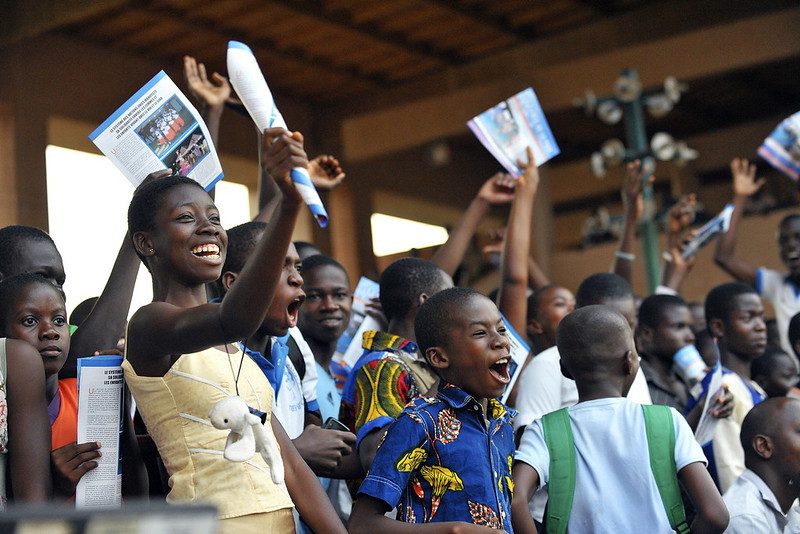
Education in Cote d’Ivoire continues to be a major challenge in the country which has had a literacy rate of 53.02 percent among 15 to 24-year-olds as of 2014. In fact, more than 2 million children are out of school due to a lack of infrastructure. Classrooms are often full beyond capacity with more than 100 students. Fortunately, West Africa is building schools using recycled plastics as a ground-breaking initiative to change the status quo.

The Fighting Women

Abidjan, a city in Cote d’Ivoire, produces about 288 tons of plastic waste every day. The country recycles only 5 percent of the waste, and when it is, it is usually women that do so informally. These women recover the waste and use it to make money.

A women’s group called The Fighting Women makes a living from collecting plastic and selling it for recycling. However, The Fighting Women is now a part of a project that will not only clean up the environment but will also help improve education. The Fighting Women is an organization of 200 women that collect plastic. A woman named Mariam Coulibaly runs the organization and she has been collecting trash for 20 years. Coulibaly’s organizational skills are what made the project possible. The plastic that these women collect go into bricks in order to build schools.

Conceptos Plasticos

UNICEF in Cote d’Ivoire has partnered with Conceptos Plasticos, a for-profit plastic recycling Colombian company that will turn plastic to bricks and build schools for children. This project will help reduce the issue of overcrowded classrooms and give children the opportunity to attend school.

In 2018, the first African recycled plastic classroom emerged in Gonzagueville. It only took five days to build this classroom as opposed to the nine months it would take to build traditional classrooms. In addition, within the first year, two small farming villages, Sakassou and Divo, constructed nine demonstration classrooms. These new classrooms included bricks that are cheaper and lighter than traditional ones, and also last longer.

Before the new plastic classrooms, children would go to school in traditional mud-brick and wood buildings. The mud-brick would erode from the sun and rain, and require repairs constantly. However, the newly built plastic classrooms are way better and longer-lasting. The classrooms are fire retardant and stay cool in warm weather. In addition, the classrooms are waterproof, have excellent insulation and can fight off the heavy wind. UNICEF and Conceptos Plasticos are planning to build 500 classrooms for more than 25,000 children with the most urgent need in the next two years.

Further Success of the Project

On July 29, 2019, a plastic converting factory opened in Cote d’Ivoire, which is also the first of its kind. This factory produces easy to assemble, durable and low-cost bricks others can use to build classrooms. The factory will solve a lot of major education challenges that children in West Africa face. According to UNICEF, kindergarteners from poor areas will be able to join classrooms with less than 100 students for the first time. Once the factory is fully functioning, it will recycle 9,600 tons of plastic waste a year and provide a source of income for women that collect trash. Moreover, there are plans to expand this project to other countries where there is a high percentage of children that are out of school.

Now, children are able to sit comfortably in classes that were once too overcrowded. This project of building schools using recycled plastics has not only constructed classrooms, but it has also reduced plastic waste in the environment. Although there is still a large number of children out of schools, this innovative project to help build schools in West Africa has been tremendously successful and has impacted the lives of many women and children.

– Merna Ibrahim
Photo: Flickr

August 28, 2019
https://borgenproject.org/wp-content/uploads/borgen-project-logo.svg 0 0 Kim Thelwell https://borgenproject.org/wp-content/uploads/borgen-project-logo.svg Kim Thelwell2019-08-28 11:37:152019-10-18 12:37:09Building Schools Using Recycled Plastics
Global Poverty, Violence Against Women, Women, Women and Female Empowerment, Women's Empowerment, Women's Rights

How Poverty Enforces Patriarchy Worldwide

Poverty and Patriarchy
While poverty and patriarchy may seem like separate issues, the two connect deeply. As long as poverty exists, women’s rights and livelihoods will suffer. Likewise, women’s oppression leads to their inability to contribute to the economy and prevents a family’s escape from cycles of poverty. Here are some examples from around the world of poverty and patriarchy reinforcing each other, and some ways humanitarian aid can improve these situations.

Microcredit in Bangladesh Has Left Millions of Women At High Risk For Domestic Violence

From the 1980s to the mid-2000s, people thought that micro-loans would be the future of international development. In Bangladesh, most of these loans went to women on the belief that women could handle money more responsibly than their male counterparts. They received a small amount of money to invest in materials to start a business and earn an independent livelihood in order to bring their families financial stability. Unfortunately, when these women were unsuccessful at lifting their families out of poverty and their families plunged into greater debt as a result of the loans, they often suffered spousal abuse. For other women, as soon as they received the money, the men and their families took it and used it, leaving them to pay off the loans by themselves. As a whole, micro-credit has not had the intended impact on the people of Bangladesh that the international community once hoped for, and rates of violence against women have climbed, increasing the correlation between poverty and patriarchy

Solution: Investing in women’s education will provide them with the knowledge they need to become financially independent and ensure greater legal protection for victims of domestic violence could greatly combat this issue.

Poverty As a Weapon Against Women in the Democratic Republic of the Congo

Sixty-one percent of women living in the Democratic Republic of the Congo live in poverty, compared to only fifty-one percent of men. This is because people have systematically excluded women from peace-building efforts in the country. Because there are no women’s voices at the decision-making table, countries set policies that prioritize men, often at women’s expense. Disturbingly, women’s rights activists in the country are often a target for violence. Many think that those who advocate for women-centered poverty-relief efforts are distracting from larger issues within the country.

Solution: Studies that researchers conducted in the Democratic Republic of the Congo demonstrate that in areas with high levels of poverty, there are high levels of violence against women. Providing food security, as well as funding institutions and organizations to empower women, are important steps in relieving both poverty and oppression in the DRC.

Time Poverty Makes it Nearly Impossible for Indian Women to Contribute to the Economy

In India, the average man works seven hours per day. Although women usually work for nine hours a day, the vast majority of their labor is unpaid housework and childminding. This means that they have little time to earn any outside wages, and therefore, remain financially dependent on the men in their families.  The power dynamic that this situation creates is extremely dangerous. Women lose any agency they may have because they depend on their fathers, husbands or brothers for everything. This means that they have no power to go against their male relative’s wills. It also hurts the Indian economy, as women have little ability to contribute to it.

Solution: In rural India, women spend upwards of four hours each day gathering fuel and cleaning utensils to cook with. Providing them with solar or electric cookers could save them three hours of unpaid labor, giving them more time to do what they want to do or contribute to the economy as an untapped workforce.

These examples display just how poverty and patriarchy intertwine and push women and their families into poverty. If women could gain an education, receive food security or use alternative cooking equipment to limit labor, they might be able to improve their situation and lift themselves out of poverty.

– Gillian Buckley
Photo: Wikimedia

August 26, 2019
https://borgenproject.org/wp-content/uploads/borgen-project-logo.svg 0 0 Kim Thelwell https://borgenproject.org/wp-content/uploads/borgen-project-logo.svg Kim Thelwell2019-08-26 08:04:142019-11-05 13:48:56How Poverty Enforces Patriarchy Worldwide
Global Poverty, Health, Women

Telemedicine: Improving Health Care in Rural Nepal

Health Care in Rural Nepal
In the shadow of the Himalayas, the infrastructure of health care in rural Nepal is often at the mercy of inadequate roads that extreme weather can make inaccessible. Despite these struggles, Nepal has lowered its maternal mortality rate from 539 women in every 100,000 live births in 1996 to 239 in 2016 thanks in part to telemedicine.

It was not until 1950 that Nepal began investing in road systems. While still poor, its road infrastructure is most central to development since the country has a declining railway network and air travel is expensive. Corruption and inadequate quality control measures have stymied infrastructure growth.

Natural Disasters and Nepal’s Health Care Facilities

While infrastructure development has improved, the two 2015 earthquakes, both with magnitudes over seven, destroyed 90 percent of health facilities in the immediate area because people did not build the facilities with disaster preparedness in mind. This disaster killed over 9,000 people and displaced 2,000,000.

Such dramatic geography and inadequate infrastructure development have made health care unaffordable and inaccessible for the majority of people. For example, 90 percent of women in the wealthiest quintile delivered their babies in health facilities compared with only 34 percent in the lowest quintile.

Effective Broadband for Health Program

The Internet Society Nepal Chapter and Center for Information and Communication Technology for Development (ICT4D) have implemented the Effective Broadband for Health program. This is a pilot program in rural Dullu, a hard to reach community in mid-western Nepal and has become possible with support from the Beyond the Net Funding Programme. The expansion of broadband is improving health care in rural Nepal.

To get to Dullu, visitors must fly from Kathmandu to Surkhet and then take a dirt four-wheel-drive road 80 kilometers. Dullu’s hospital often does not have enough people and supplies. Lack of funding coupled with harsh winters and poor road infrastructure have made medical supply and staff deliveries very challenging. These problems endanger the lives of Dullu’s 45,000 residents. Many residents are a two to three-day walk from the nearest hospital on trails which people cannot access in the rainy season.

Before video conferencing or the implementation of other internet-based modalities, those behind Effective Broadband for Health first had to amplify the signal from Surkhet to reach Dullu. Pavan Singh Shakya, Executive Director of ICT4D and project manager asserts that “A community healthcare system underpinned by a robust, high-speed Internet access for these communities is the only lifeline.”

After ensuring proper internet connectivity, Effective Broadband for Health stocked Dullu’s community health center with two multiservice portable health kits. These kits store medical records and allow personnel to remotely track diagnoses. The kit has basic diagnostic tools that capture and transfer data via Bluetooth to Dhulikhel Hospital about 700 kilometers away. With this technology, care providers on the ground in Dullu can have real-time consults with medical specialists thus improving health care in rural Nepal.

Telehealth for Women and Girls

One study suggests that telehealth has particular benefits for the wellness of women and girls since it reduces the amount of time it takes to consult with a doctor. Ossified gender norms have confined Nepali women to certain activities and largely restricted their movements to their local community. For example, women must fetch all fuel and water for their family’s needs and enterprises. This labor takes a great deal of time and energy; as such, if medical care is the three-day walk away, they are unlikely to seek it out even if it is necessary.

Societal expectations in Nepal dictate that women must be married in order to seek reproductive or sexual advice from a physician. Since women can be anonymous over mobile phones, more have begun to discuss their sexual and reproductive health with medical providers. These discussions are reducing maternal mortality and improving health care in rural Nepal.

The Chaupadi Practice

Even though access has improved, women in rural Nepal are still dying from practices such as chaupadi. Chaupadi derives from two Hindu words chau meaning menstruation and padi meaning women; it operates under the assumption that menstruating women are impure. During menstruation, women in some areas must sleep separately in a tiny hut called a goth with little food and few blankets for warmth. They cannot interact with others or use a water source.

Even though the Nepali Supreme Court banned chaupadi in 2005, enforcement does not reach rural areas where gender norms are often stronger. A 2011 U.N. survey in the Accham District of Nepal suggested that 95 percent of women still participated in chaupadi. Women participating in chaupadi experience particular health concerns from exposure and malnutrition to increased vulnerability to wild animals such as poisonous snakes. The U.N. does not have statistics on the number of women whose deaths are due to the practice of chaupadi, but the anonymity that telemedicine offers has increased the number of women asking for medical help.

Telemedicine is remaking the face of health care in rural Nepal. One study of women and telemedicine in Nepal found that women reported “increased comfort in seeking consultation through telemedicine for sexual and reproductive health matters” with access to mobile phones and video conferencing. As technology steers health care, the intersection of development, health and gender dynamics must remain of paramount importance and study not only in Nepal but all over the world. Telemedicine is improving health care in rural Nepal.

– Sarah Boyer
Photo: Flickr

August 15, 2019
https://borgenproject.org/wp-content/uploads/borgen-project-logo.svg 0 0 Kim Thelwell https://borgenproject.org/wp-content/uploads/borgen-project-logo.svg Kim Thelwell2019-08-15 08:17:582019-12-18 11:19:10Telemedicine: Improving Health Care in Rural Nepal
Gender Equality, Global Poverty, Women

The Key to Improving Gender Equality and Nutrition

Gender equality and nutritionWomen are disproportionately affected by malnutrition in developing countries, and as such it is now the focus on many global food programs to simultaneously improve gender equality and nutrition by providing better education and resources for female small farm holders.

Impact of Sociocultural Norms

Sociocultural norms have placed many women in secondary decision-making roles in their families. Women are less likely to receive any education on general health and nutrition, less empowered in financial decision-making within their families and less able to control what food they put on the table. Oftentimes, the main breadwinner in a family is male, while women are reduced to more supporting and complacent roles.

Additionally, many programs are male-centric, neglecting the specific nutritional needs of women. As a result, women in developing countries have more iron deficiencies and have higher rates of being an unhealthy weight (obese or underweight). When women suffer from more chronic illnesses, it further reduces their ability to contribute meaningfully, and they further relinquish control on financial decisions. Gender equality and nutrition both improve when women are the focus of food security initiatives.

Integrating Gender Equality and Nutrition

Antonelle D’Aprile, the country director for the World Food Programme in Nicaragua, is a leader in combining gender equality and nutrition into a cohesive program that truly empowers women farmers. The WFP Women Economic Empowerment Strategy was first implemented in 2016 and has helped 300 female farmers reach higher financial independence and economic development.

The strategy ensures that women are the decision-makers by providing them with proper agricultural training and access to agricultural equipment that optimizes their crop yields. There are courses for women to improve their financial education and business planning skills so that they can begin growing above the sustenance level and sell excess crops for income. This program to improve gender equality and nutrition also focuses on a man’s role in sharing domestic chores with women and supporting the economic development of their wives. It has been so successful, officials in El Salvador, Guatemala and Peru are replicating the program in their own countries.

The Role of the Private Sector in Gender Equality and Nutrition

While nongovernmental organizations (NGOs) are the backbone of nutrition-improvement programs, private sector companies are also necessary if female farmers are to reach their true potential. CARE has partnered with the PepsiCo Foundation to implement one of the largest gender equality and nutrition programs in the world called “She Feeds the World.”

With the help of the PepsiCo Foundation, CARE has initiated several projects throughout the world, such as one in Peru, which teaches women how to test soil quality to optimize crop yield. Other initiatives to improve gender equality and nutrition, focus on teaching women to more efficiently use natural resources like water, seeds and natural fertilizer. With this boosted production, these female farmers have enough extra income to send their children to school, feed their family nutritious meals, expand their business, employ others and make substantial savings.

Private sector companies are also very important in terms of collecting data and analyzing information to improve gender equality and nutrition. It is very difficult to measure an abstract concept like “decision-making power,” but private sector companies have the financing, personnel and expertise to collect adequate data so that resources are making the largest impact.

Empowered Female Farmers Feed Others

Empowering women is the key to improving nutrition for everyone. According to studies, the relationship between gender equality and nutrition is strong. Giving women equal access to basic resources and services could increase yields on female-owned farms by 20-30 percent. This would translate to an increased agricultural output of 2.5-4 percent in developing countries.

A 20-30 percent increase in agricultural output on female-owned farms would lift 150 million people out of poverty.

Women are the backbone of many developing countries. In Sierra Leone, an initiative has focused on empowering grandmothers to be the champions of improved nutrition practices in families. As very respected members of their families, they are teaching and cultivating healthy habits in infants and young children, an approach which has already seen success.

Female small farm holders are central to improving nutrition security in developing nations. World food initiatives are ensuring that women are not left behind – in fact, they are making sure that women lead the fight to improve gender equality and nutrition around the world.

– Julian Mok
Photo: Flickr

August 15, 2019
https://borgenproject.org/wp-content/uploads/borgen-project-logo.svg 0 0 Kim Thelwell https://borgenproject.org/wp-content/uploads/borgen-project-logo.svg Kim Thelwell2019-08-15 01:30:222019-09-29 06:55:53The Key to Improving Gender Equality and Nutrition
Global Poverty, Women

Three Facts About Fast Fashion and Poverty

fast fashion and poverty
In recent years, brands like Zara, Topshop, Uniqlo, H&M and Forever 21 have come under fire for creating fast fashion. Fast fashion products are clothing and accessories that companies price significantly lower than the competition, produce more quickly and make of lower quality. Like many products, the world’s poor produces fast fashion, and thus, helps continue the cycle of poverty. Here are three facts about fast fashion and poverty.

Sweatshops

People create fast fashion in dangerous sweatshops. To provide cheap, ever-changing inventories for customers, fast fashion companies perpetuate fast fashion and poverty by relying on factories in countries with poverty wages, where safety, sustainable practices and suitable working conditions are nearly nonexistent.

One such factory complex was Rana Plaza in Bangladesh, where the collapsing of a building in 2013 killed over 1,100 people and injured thousands more. Rana Plaza housed five garment factories that manufactured products for almost 30 major European and North American fashion companies.

Today, however, there has been an increasing demand for company transparency and ethical manufacturing practices. In the wake of the Rana Plaza Tragedy, the Bangladeshi government has sought to improve safety measures in garment factories and had 38 people charged with murder in 2016 for their roles in the building collapse. Along with the Bangladeshi government’s efforts, companies and trade unions signed two major safety agreements: the Accord on Fire and Building Safety in Bangladesh and the Alliance for Bangladesh Worker Safety. Brands like Nike and Patagonia committed to adhering to higher transparency standards after the tragedy.

Environmental Impact

The business model of fast fashion companies emerged from the idea that consumers always want to stay on top of trends, and thus, will buy new clothes as trends change. To change trends more quickly, fast fashion brands release new clothing once a week or more, which creates a great deal of waste. Instead of the Fall/Winter and Spring/Summer clothing seasons that were once prevalent, fast fashion companies have created 52 micro-seasons.

Since the clothes are only trendy for one week or less, companies do not create them to last. Often, fast fashion clothing falls apart in the washing machine or dryer after only one or two wears. If the clothing falls apart in one wash and was no longer trendy anyway, consumers automatically go back out to buy new, cheap pieces from the fast fashion brands. The clothing is so cheap to buy that consumers may not realize that they are spending more money in the long run in terms of cost-per-wear on a fast fashion garment compared to a more high-quality one.

The destroyed and unwearable fast fashion, which contributes to nearly 70 pounds of textile waste per person, per year in the United States, ends up in U.S. landfills or ships, along with other garbage, to developing countries. Many of these developing countries do not have the capacity to deal with all of this additional waste, and therefore, cannot prevent pollution or other waste-related problems.

To combat the issue of the fast-fashion causes, retailers like Asos and Gap, along with dozens of others, signed the 2020 Circular Fashion System Commitment in 2017; the Commitment encourages brands to use monofibers instead of mixed-fiber and synthetic fabrics. These practices make it easier for people to recycle fabrics and garments going forward.

Chemicals in Clothes

Fast fashion products often contain lead to create bold colors and shiny accessories. Vinyl and plastic products that are red, green, orange and yellow are more likely to have high contamination than products in darker or more muted hues.

Even in low concentrations, lead is extremely dangerous to human health. When it comes to fast fashion merchandise, experts are concerned that these products will leave microscopic particles of lead and other chemicals on consumers’ hands; without proper sanitation practices, these particles can end up on food, drink and other accessories, which can create an environment for repeated exposure.

The Dangers of Lead

Lead contamination, even at low levels, can cause kidney failure, nervous system issues and cardiovascular risks. Lead accumulation in bones and tissues can also cause reproductive issues in women, such as infertility; lead released during pregnancy puts both the mother and fetus in danger. Many experts, considering these risks, have stated that there is no safe level of lead contamination.

The women and children charged with producing these garments and accessories are in danger of lead contamination, just like the women purchasing and wearing these products. For these workers, treatments for health conditions related to lead contamination are either too costly to afford or unavailable. Often, workers may die from complications related to lead contamination in the products they manufacture.

To combat these problems, the Center for Environmental Health (CEH) is fighting against fast fashion companies to eliminate lead contamination on clothing and accessories. In 2010, the CEH sued retailers regarding toxins in accessories; since then, the CEH has been testing accessories sold in-store and online by fast fashion brands for lead contamination.

As more disturbing facts come to light about the fast fashion industry, consumers continue to demand change. With the rise of ethical fashion brands and the increased popularity of secondhand shopping, both fast fashion and poverty may disappear in the future.

– Shania Kennedy
Photo: Pixabay

August 1, 2019
https://borgenproject.org/wp-content/uploads/borgen-project-logo.svg 0 0 Kim Thelwell https://borgenproject.org/wp-content/uploads/borgen-project-logo.svg Kim Thelwell2019-08-01 15:12:102019-10-02 13:12:52Three Facts About Fast Fashion and Poverty
Page 21 of 36«‹1920212223›»

Get Smarter

  • Global Poverty 101
  • Global Poverty… The Good News
  • Global Poverty & U.S. Jobs
  • Global Poverty and National Security
  • Innovative Solutions to Poverty
  • Global Poverty & Aid FAQ’s
Search Search

Take Action

  • Call Congress
  • Email Congress
  • Donate
  • 30 Ways to Help
  • Volunteer Ops
  • Internships
  • Courses & Certificates
  • The Podcast
Borgen Project

“The Borgen Project is an incredible nonprofit organization that is addressing poverty and hunger and working towards ending them.”

-The Huffington Post

Inside The Borgen Project

  • Contact
  • About
  • Financials
  • President
  • Board of Directors
  • Board of Advisors

International Links

  • UK Email Parliament
  • UK Donate
  • Canada Email Parliament

Get Smarter

  • Global Poverty 101
  • Global Poverty… The Good News
  • Global Poverty & U.S. Jobs
  • Global Poverty and National Security
  • Innovative Solutions to Poverty
  • Global Poverty & Aid FAQ’s

Ways to Help

  • Call Congress
  • Email Congress
  • Donate
  • 30 Ways to Help
  • Volunteer Ops
  • Internships
  • Courses & Certificates
  • The Podcast
Scroll to top Scroll to top Scroll to top