• Link to X
  • Link to Facebook
  • Link to Instagram
  • Link to TikTok
  • Link to Youtube
  • About
    • About Us
      • President
      • Board of Directors
      • Board of Advisors
      • Financials
      • Our Methodology
      • Success Tracker
      • Contact
  • Act Now
    • 30 Ways to Help
      • Email Congress
      • Call Congress
      • Volunteer
      • Courses & Certificates
      • Be a Donor
    • Internships
      • In-Office Internships
      • Remote Internships
    • Legislation
      • Politics 101
  • The Blog
  • The Podcast
  • Magazine
  • Donate
  • Click to open the search input field Click to open the search input field Search
  • Menu Menu

Archive for category: Water Quality

Global Poverty, Water, Water Quality

Perceptions of Water Quality in South Korea Today

water quality in south koreaOver the past several decades, water quality in South Korea has remained poor due to poorly-operated water management services and sewage systems. It was not until the 1970s that the Korean government made headway in improving its water services, with help from the World Bank and other nations.

Perceptions Today

According to The Korea Herald, in 2013, the Environmental Ministry conducted a survey of 12,000 South Koreans, and only 10 percent responded that they drank tap water, whether boiled or not. Meanwhile, 55 percent said they only drank tap water after boiling it.

This is despite experts’ opinions that Korean tap water is some of the best in the world. A 2003 United Nations report ranked water quality in South Korea as the eighth highest in the world, ahead of that in the United States (twelfth highest). Incidentally, in 2013, 82 percent of Americans surveyed indicated that they drank tap water.

Why the Disconnect?

Koreans, at least as of 2013, seem to be living in the past on this issue. According to The Korea Herald, 30 percent of those surveyed cited concerns about old water tanks and pipes for their wariness toward tap water, and 28 percent were worried about reservoir sanitation.

Indeed, those were once major issues. The World Bank reports that, in Korea, in “the late 1980s, accelerated urbanization took its toll, and surface and underground water bodies became polluted.”

Then, in the 1990s, the chemical phenol was leaked into the water supply, which caused severe illness to those who drank it. Meanwhile, several reported cases of ‘red water’ increased awareness of aging, rusting underground pipes.

But today, the same concerns are nonissues. Korea’s water and wastewater service are very nearly universal. The Korean government continually monitors tap water quality against a minimum of 59 criteria, including pH levels. Old public pipes have been replaced with new, rust-proof ones, and city governments have offered subsidies for people who want to replace pipes in their private residences.

The water is clean, say the experts. Pain can leave muscle memory, but in time even that fades. If Koreans continue to come together to demand only the highest standards from those they charge with regulating their water systems, they should have nothing to worry about when it comes to drinking tap water.

– Chuck Hasenauer

Photo: Flickr
November 22, 2017
https://borgenproject.org/wp-content/uploads/borgen-project-logo.svg 0 0 Borgen Project https://borgenproject.org/wp-content/uploads/borgen-project-logo.svg Borgen Project2017-11-22 01:30:152019-11-20 07:27:33Perceptions of Water Quality in South Korea Today
Global Poverty, Water Quality

Government Protection Key to Water Quality in Barbados

Water quality in BarbadosBarbados was an uninhabited island in the Caribbean until the British settled the island in 1627. Slaves were taken there from Africa to work in the sugar plantations. Slavery was abolished in 1834, but the economy remained largely dependent on sugar, rum and molasses during most of the 20th century.

Barbados has moved from an economy heavily dependent on agriculture to one focused on manufacturing and tourism. Although the economy has shifted, the sugar industry still plays an important role in the economy. Besides sugarcane, farmers also grow cotton, root crops and vegetables.

Water quality in Barbados can be compromised by pollution from agriculture, industry and urban development. The island nation is listed as a water-scarce country because of the depletion of the water reserves during the 20th century. To address this, strict standards were developed for the use of drinking water. Because of the high demand for water on the island coupled with an inadequate supply, the nation built a desalination plant in 2000. Despite this, the water quality in Barbados is still questioned.

The Daily Herald reported in 2016 that there were rumors circulating on social media suggesting that contaminated water was responsible for a string of deaths during the summer of 2016. According to the rumors, there was lead in the newly installed water meters.

The Barbados Water Authority responded with a statement saying that the meters contained no lead. They were made from plastic and brass and manufactured in Germany. The water meters were approved by the German Environmental Agency under the German Drinking Water Ordinance of 2013.

They also stated that the meters were being used in 22 other countries including France, Spain and Ireland. In addition, the water supply is tested twice a year for heavy metals and pesticides. Tests conducted in March 2016 showed that lead levels were under the limits and drinking water was within standards.

The government of Barbados created a policy that designated five Groundwater Protection Zones around the island. This helped protect public supply wells from contamination from bacteria, which is a significant step towards improving water quality in Barbados.

– Fernando Vasquez

Photo: Flickr

November 15, 2017
https://borgenproject.org/wp-content/uploads/borgen-project-logo.svg 0 0 Borgen Project https://borgenproject.org/wp-content/uploads/borgen-project-logo.svg Borgen Project2017-11-15 07:30:242024-06-07 05:07:50Government Protection Key to Water Quality in Barbados
Global Poverty, Water Quality

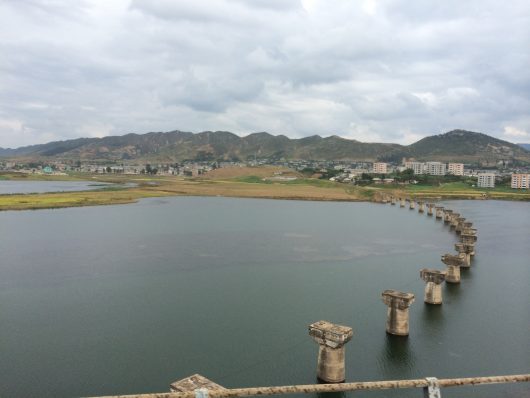
Water Quality in North Korea Affected by Recent Drought

Water quality in North KoreaLocated on the Korean peninsula, North Korea has been discreetly building up a nuclear arsenal while projecting its power to ensure that it is a force not to be reckoned with on the international stage. Despite such shows of power, it is known to be one of the largest food recipients in the world. More recently, it faces immense challenges as a result of ballistic missile tests that have been met with hard sanctions. Economically unbalanced and a grave threat to the international community, the hope of cooperation seems nonexistent. Kim Jong-un still has yet to respond to the country’s severe poverty situation, with about half of North Koreans living in poverty.

The Problem
Water quality in North Korea has been affected by a severe drought, forcing relief aid to step in and counter some of these issues. One observer had the opportunity to monitor the water quality in North Korea and witness the scarcity of access to clean water due to environmental degradation that has gravely affected the nation. Too often, the North Korean people are neglected and rarely humanized by news outlets, who tend to focus on the ominous threat that the country’s government presents.

This individual, who remained anonymous, observed the work of an international charity organization known as World Vision, an advocacy organization that works on development and humanitarian aid. During this visit to North Korea, the observer witnessed the lives of people in rural and urban areas, noting the environmental degradation that had taken place due to the effects of climate change, deforestation, soil erosion and water resource depletion.

In January, it was reported that “more than 50,000 hectares of farmland in North Korea’s granary zones have been damaged by drought.” According to the U.N. Office for the Coordination of Humanitarian Affairs (OCHA), a severe drought had plagued agricultural areas due to a 30-80 percent drop in precipitation in January. OCHA further cited that due to this drought, the effects were a deterioration in water quality in North Korea, causing a concern of waterborne diseases spreading among the population.

Initiatives
On a more positive note, according to a report by World Vision, there has been an increase in installations of wells, along with high-quality solar pumps, in order to pump water to water tanks on nearby hills. This action has led to substantial improvements in access to clean water for communities. Some of the most vulnerable who were lacking this inalienable right that a lot of us take for granted now have indoor plumbing, offering them clean sanitation. As the observer explained: “1,435 children will have easy access to clean water for the first time in their lives.”

Final Thoughts
With its relentless assault on freedom of expression and stifling of any political dissidents who may challenge the status quo, North Korea’s government remains a staunch opponent to any form of democracy. The average North Korean citizen only worries about their daily lives, which includes how to break out of poverty. North Koreans may be among the most difficult group of people in the world to help due to the restrictions imposed by their government, but taking simple steps to improve sanitation and water quality in North Korea can make a major improvement in their lives.

– Alexandre Dumouza

Photo: Flickr

November 13, 2017
https://borgenproject.org/wp-content/uploads/borgen-project-logo.svg 0 0 Borgen Project https://borgenproject.org/wp-content/uploads/borgen-project-logo.svg Borgen Project2017-11-13 07:30:052019-11-21 01:46:09Water Quality in North Korea Affected by Recent Drought
Global Poverty, Water Quality

Water Quality in Chile: The Good and the Bad from North to South

Water quality in Chile

Latin America is notorious for having poor water quality. Worried travelers and residents try to avoid drinking tap water or cooking with it. But most people do not know the facts about water quality in Chile. Here are a few from the north of the country all the way to its southern tip.

In northern Chile is the Atacama Desert, which is known as one of the driest places on Earth. This area, which contains many small towns and villages, receives about one millimeter or less of rainfall per year. Certain towns used to obtain water from a nearby well which was fed by a river flowing down from the Andes Mountains. However, out of the 20 wells, only one exists today. It is common for people here to buy bottled water; however, bottled water is nearly 10 times the cost of tap water.

Central Chile is where most of the bigger cities are located, and Santiago, the capital, is one of them. Very little water comes from the mountains on the outskirts of the city. Temperatures are rising, glaciers are retreating and the mountains are gradually losing their snow-capped peaks. Water availability is predicted to fall by nearly 40 percent by 2070, and experts are claiming that water will become the most important physical commodity worldwide, toppling oil and precious metals. The situation in Santiago is so bad that residents have staged multiple protests over the privatization of the water industry, which occurred in 1981.

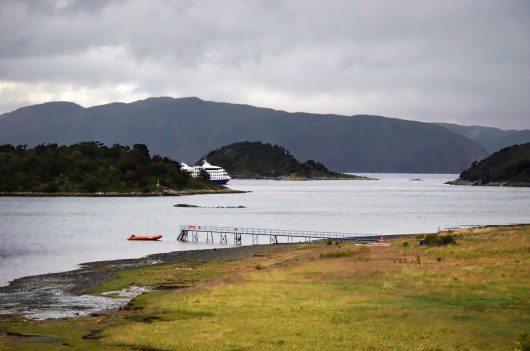
Maybe the most iconic area of the country is Patagonia, in the southern portion of the country. Residents, researchers and travelers flock to this sparsely populated region of Chile. Some American and Chilean scientists claim that the Chilean Patagonia has the purest water on the planet. Dr. Guido F. Verbeck, director of the UNT Laboratory of Imaging Mass Spectrometry, said of Patagonia’s water, “Our results confirm that these waters are clean, the cleanest waters existing on the planet. In fact, the instruments we use to study the samples can detect chemical compounds in the water up to two parts per million, and here, we did not detect anything.” There is very little pollution in this part of the world. Unpolluted freshwater accounts for .003 percent of the total water available globally and most of it is found here.

There are many issues with water quality in Chile. From pollution and overpopulation to excessive mining and the draining of natural resources, it could be the reason that selling water in some cities is one of the highest tariffs in Latin America. There is some good news regarding the water quality in Chile, however. More wells have been dug, residents have set up reverse osmosis water purification systems and the country is implementing a national irrigation strategy that includes a plan to construct 15 reservoirs. If Chile continues to be proactive about maintaining its water resources, it can ensure good water quality and access for all of its citizens.

– Lorial Roballo

Photo: Flickr

November 13, 2017
https://borgenproject.org/wp-content/uploads/borgen-project-logo.svg 0 0 Borgen Project https://borgenproject.org/wp-content/uploads/borgen-project-logo.svg Borgen Project2017-11-13 07:30:002024-06-07 05:07:48Water Quality in Chile: The Good and the Bad from North to South
Global Poverty, Water Quality

The Water Quality in Saudi Arabia: Resisting Water Salinization

Water quality in Saudi ArabiaIn our world, water is one of the main sources of sustenance for life. As our body requires great amounts of it, it is imperative that we take care of how clean and beneficial it continues to be. As a community, we must work together to meet the high standards of water quality.

Water quality is indicated by various characteristics which include physical, chemical, biological and aesthetic. The main goal is to make sure that the external factors that could corrupt the water are controlled. In this way, citizens are able to obtain clean drinking water for their survival.

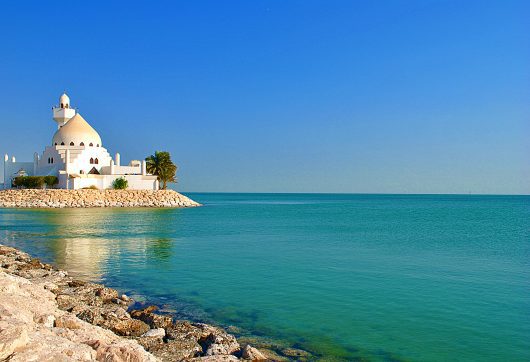
The Kingdom of Saudi Arabia (KSA) is a desert country that extends across most of the Arabian Peninsula with extensive coastlines on the Red Sea and the Persian Gulf. Due to its high levels of heat and humidity, water is a major concern.

The surrounding environment consists of sand, which makes it a challenge to grow crops as well as provide adequate water quality in Saudi Arabia. Most water is received from the sea, however, the high salt content means is it not drinkable. Being one of the largest and fastest expanding expat countries, Saudi Arabia faces a problem of providing enough drinking water for its citizens.

According to a research study on drinking water quality in Riyadh, Saudi Arabia, Abdulrasoul Al-Omran and his colleagues found that the KSA strongly relies “on groundwater and/or seawater desalination for domestic purposes.” Desalinated water has gone through various chemical processes in order to add specific minerals into the original saline water that will cause it to diminish and thus become safe to drink.

There are 27 stations operated by the Saline Water Conservation Corporation, producing more than three million cubic meters of potable drinking water. 

The water quality index (WQI) has been proven to be a simple and effective tool to assess the quality of water, as well as a method of reassuring citizens. The distinct and astounding feature is that by using several water quality variables, a single value is expressed to tell just how clean this water is in relation to others.

The concluding factor of this study stated that using the WQI method helps the design-makers with monitoring and assessment of the quality of drinking water. By being able to determine the water quality in Saudi Arabia, the country and its citizens will be more fully prepared in finding solutions to best distribute their water.

As an ever-evolving country, Saudi Arabia is striving to keep up with its growth by providing efficient ways to distribute the water. One of the solutions that KSA has found is intermittent water supply with reduced system pressures. Although it isn’t the most efficient, it does grant more water to the people that truly need it. It aims to provide 24-hour service but less water is distributed to the residential areas.

This is a challenging issue to remedy as many residents who live in Aramco, the expat compound, have tried to alleviate the intense salt that exists in the water quality of Saudi Arabia by incorporating a portion of sweet water. However, since the country is in an economic crisis, these residents have had to pay SAR 2,000 fee for this luxury, the equivalent of $533.33. 

Until better technology is developed to address desalination, the only solution that would be beneficial would be an increase in water imports from other countries.

– Nicole Suárez

Photo: Flickr

November 13, 2017
https://borgenproject.org/wp-content/uploads/borgen-project-logo.svg 0 0 Borgen Project https://borgenproject.org/wp-content/uploads/borgen-project-logo.svg Borgen Project2017-11-13 01:30:032024-06-04 01:08:26The Water Quality in Saudi Arabia: Resisting Water Salinization
Water Quality

What is the Water Quality in Honduras Like?

Water Quality in HondurasHonduras, a country in Central America, has a population of 9.1 million people. The country’s primary languages are Spanish, English, and various indigenous languages. Honduras’s life expectancy is an impressive 74.6 years, 3.2 years longer than the global average.
However, Honduras’s above-average life expectancy is not necessarily a reliable indicator of superb living or health conditions in the country. A reported 84 percent of Honduras’s population have rural access to clean water, meaning that 16 percent of the country’s people do not.

This rate is higher than the global average of people who do not have access to clean water, which, as reported earlier this year, is 1 in 10 people. Despite the fact that this rate is less than double the global average, this statistic still means that 638,000 people in Honduras do not have access to safe water.

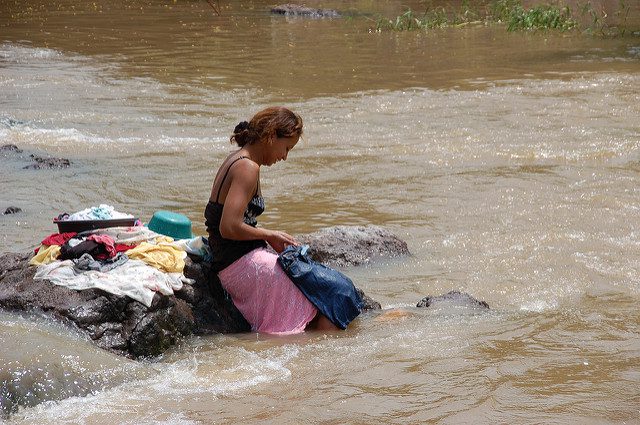
The lack of access to good water quality in Honduras demonstrates a divide between rural populations and the rest of the country’s people. This divide stems from the fact that people in rural communities often rely on small springs to obtain their water and this water is often contaminated and is not always reliable throughout every season.

Additionally, Honduras’s poverty is interfering with which groups of people in the country have access to clean drinking water. As the second poorest country in Central America, around 63 percent of Honduras’s population is reported to be living below the poverty line. Data on financial inclusion reports that families with lower incomes tend to not have as much access to improved water quality in Honduras because of their inability to afford it.

Organizations such as Water for People have been working to remedy the issue of water quality in Honduras, specifically aiming to help people in the country that need the most assistance, such as rural populations.

Water for People started its work in Honduras in 1997 and by 2006, only nine years later, the organization had aided over 90 rural communities in partnership with similar organizations. A year later, Water for People created a strategy specific to this region in order to better provide access to clean water for all of the different populations.

Though Honduras has a higher percentage of people without access to clean water when compared to the global average, the country has made significant progress in this area. Honduras met the Millennium Development Goal to reduce the number of people without access to sanitary water by half by the year 2015. Honduras was one of the only Latin American countries to meet this goal.

– Haley Rogers

Photo: Flickr

November 12, 2017
https://borgenproject.org/wp-content/uploads/borgen-project-logo.svg 0 0 Borgen Project https://borgenproject.org/wp-content/uploads/borgen-project-logo.svg Borgen Project2017-11-12 01:30:482019-12-23 08:39:01What is the Water Quality in Honduras Like?
Global Poverty, Water Quality

Water Quality in Côte d’Ivoire: A Vision for the Future

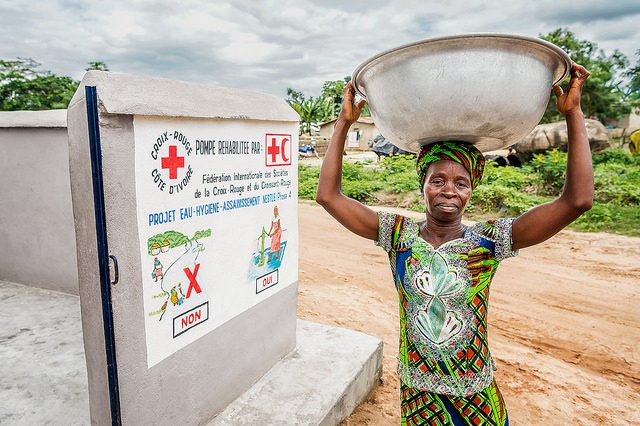
water quality in Côte d’IvoireCôte d’Ivoire used to be an exception in West Africa, a model for other countries of economic success. Since civil war erupted in the country more than a decade ago, that model has deteriorated and largely rendered a mere dream. Now, the country is in dire straits, especially in regards to the quality and conditions of its water supply. Water quality in Côte d’Ivoire is an issue for a staggering 31 percent of rural areas.
Furthermore, the quality of water that is available leaves much to be desired. The civil war has tremendously damaged the water supply infrastructures, and this coupled with the fact that water is exposed to unsanitary conditions often results in water-borne disease. This is not confined to rural areas either; it affects urban areas as well.

Slightly less than half of Côte d’Ivoire’s population (about eight million people) do not have access to proper sanitation facilities. In rural areas in particular, roughly four million people drink water not safe for consumption. As a result, many die from diseases related to unsafe and unclean drinking water, including children.

This crisis has a domino effect on other aspects of Ivorian society. The lack of access to proper and clean water sources means that a lot of energy and resources must be devoted to obtaining it. This results in many Ivorian girls being forced to forego their education in order to seek and provide water for their families.

This is true even in the capital, Abidjan, where a large influx of people into the capital has strained its inadequate urban infrastructure. The large swathes of people that have moved to Abidjan did so largely because of the civil war and the threat of violence.

In other cities, such as the northern town Dabakala, the wells that previously contained water have completely dried up. This has resulted in residents seeking unsafe and unclean water sources. When water is obtained from such sources, such as creeks, life-threatening diseases such as guinea worm and cholera easily affect those in need of water.

However, there have been campaigns to combat this problem. Efforts made by the Global Nature Fund, for example, have met the needs of Ivorians by repairing water pumps. Within a couple of years, the residents of 44 villages, or around 24,000 Ivorians, were able to access fresh groundwater.

The water quality in Côte d’Ivoire and a lack of it is causing severe crises. These calamities were a result of the outbreak of civil war that has successfully dashed the stability, safety and prosperity of the nation. While some improvement efforts have been made, this crisis will only continue unless serious changes are enacted on an international scale that provide a long-term solution to the water needs of Côte d’Ivoire.

– Hasan Javed

Photo: Flickr

November 8, 2017
https://borgenproject.org/wp-content/uploads/borgen-project-logo.svg 0 0 Borgen Project https://borgenproject.org/wp-content/uploads/borgen-project-logo.svg Borgen Project2017-11-08 07:30:022024-05-27 23:59:44Water Quality in Côte d’Ivoire: A Vision for the Future
Global Poverty, Water Quality

Water Quality in Kosovo: Story of Two Lakes

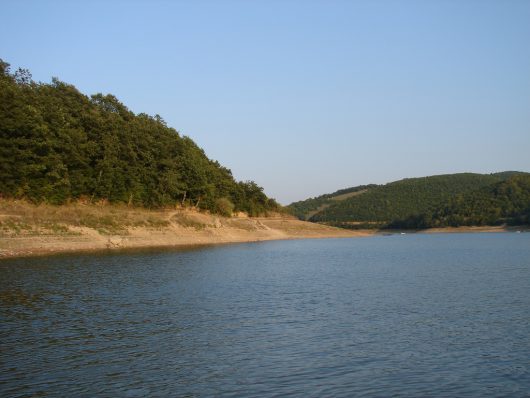
Water Quality in Kosovo: Story of Two LakesWater quality in Kosovo has been a topic of discussion in recent years. Kosovo’s two main water resources are the Badovac and Batlava lakes in the region of Pristina, which supply almost 1.8 million Kosovars with water. But climate change has strongly affected the lakes water levels, which have fluctuated from excessive water accumulation to drought levels in a period of two years.

New Infrastructure

These abrupt climate changes have impacted the almost 200,000 people who live in Pristina, the capital and largest city of Kosovo. For instance, in 2012 severe snow and blizzards affected the area, a year after, flooding impacted Kosovars and the year following that brought with it a drought.

In 2014, Kosovo lived through the worst water shortage in three decades, according to public officials in the country. Around 400,000 people in Pristina faced reduced drinking water supplies thanks to the low water levels of the Badovac and Batlava, a problem that directly impacted the water quality in Kosovo.

However, last year the lakes reached their maximum level, making the extraction of water difficult. The Kosovar system is based on pipes that work in conjunction with a water processing plant, some of which don’t have the capacity to process water when the Badovac and Batlava are at their highest levels.

To resolve the problem, the United Nations Interim Administration Mission in Kosovo (UNMIK) informed that, the European Commission and the German Development Bank granted Kosovar around 17 million euros in order for the country to make improvements to the infrastructure of their water processing plant system and to guarantee water for its citizens.

They Planned to Poison The Lake

Kosovo’s government cut off the water supply from the Badovac reservoir in 2014 after police arrested several suspects linked to the Islamic State (IS) who were allegedly planning to poison the lake.

This reservoir supplies half of Pristina with water. The Guardian informed that policemen found a suspicious substance in the lake. Over the last two years, officials have identified 314 Kosovars who have joined the Islamic State.

Water Quality

Water quality in Kosovo is not perfect. In bacterial and chemical testing of the water, the Water and Waste Regulatory Office reported a 90 percent rate of purity, while the international standard is above 99 percent. Citizens are recommended to buy water instead of to drink it directly from the tap.

– Dario Ledesma

Photo: Flickr

November 8, 2017
https://borgenproject.org/wp-content/uploads/borgen-project-logo.svg 0 0 Kim Thelwell https://borgenproject.org/wp-content/uploads/borgen-project-logo.svg Kim Thelwell2017-11-08 01:30:482019-12-27 14:53:28Water Quality in Kosovo: Story of Two Lakes
Water Quality

Water Quality in Venezuela

Water Quality in VenezuelaThe Latin American country of Venezuela is located in the north of South America. Mostly known for its tropical climate thanks to its bordering the Caribbean sea, this country has been dealing with some concerning political changes for the past few decades.

Ex-president Hugo Chavez took hold of Venezuela in 1999 and handed over rule to Nicolas Maduro before his death, in 2013. The country has functioned under an authoritarian form of government for the past two decades.

With an oil revenue based economy, Venezuela was once considered one of the richest countries in Latin America. But in the year 2014, the country saw itself submerged in an economic crisis after oil prices fell in the economic market. As a result, resources of all types are now lacking in the country. Citizens struggle every day to get food and clean water for their families, electricity in their homes, medicine and other basic necessities to live. The lack of resources has lead to a humanitarian crisis caused, partly, by the government. In spite of the negative impact that Chavez had on Venezuela throughout his regime, one thing he managed to improve was water quality in the country. Investments towards social programs and sanitation helped improve the quality of water.

Chavez’s initiatives, though, failed in the long run. After Chavez’s death Maduro tried to solve the issue and has continued to try for three years now, but the government’s unresponsive officials have not helped to improve the situation.

Water quality in Venezuela has become an important issue that needs to be solved fast. The problem is to the point where not only is water not widely accessible to all citizens, but some of the water that is available has become contaminated and polluted. As awareness has increased so has the knowledge that Venezuela is in need of help to eradicate Maduro’s regime, secure human rights for all, and provide food and good water quality to its citizens. There is hope as Unicef, Chamos Charity, and more non-profit organizations are working every day with the citizens of Venezuela to help improve their way of life.

– Paula Gibson

Photo: Flickr

November 8, 2017
https://borgenproject.org/wp-content/uploads/borgen-project-logo.svg 0 0 Borgen Project https://borgenproject.org/wp-content/uploads/borgen-project-logo.svg Borgen Project2017-11-08 01:30:182024-05-24 23:43:14Water Quality in Venezuela
Water Quality

Water Quality in Sweden: An Effective Model

Water Quality in Sweden: An Effective ModelWith a national growth in population and a changing environment, access to sanitary water has dwindled and become sporadic across the world. The amount of water in the world is finite, yet there remains a high demand. The suitable supply and water quality in Sweden stand as a role model for the rest of the world.

Quality
An OECD survey of average satisfaction with local water quality reports the world average is about 81 percent, yet Sweden’s satisfaction levels top that at 95 percent. Because half of Sweden’s water supply comes from lakes and running water, with the other half being groundwater, their water requires minimal purification.

In addition to their natural extraction methods, Sweden has also enacted programs to ensure adequate water quality. The 2007 to 2013 rural development program granted SEK 510 million to aid agriculture by minimizing nutrient leaching. A study of 65 streams shows a decrease in the amount of nitrogen and phosphorus in bodies of water that surround agricultural fields, due to restrictions on the use of these harmful fertilizers.

Water quality in Sweden relates not only to sanitary drinking water, but also to the health of crops and lifeforms in aquatic environments. Thus, the Swedish Agency for Marine and Water Management allotted SEK 310 million for water management, fish conservation and the protection of threatened species. Sweden identifies that human-made substances are detrimental to the quality of water and has adopted the Non-Toxic Environment objective to ensure an environment free of all chemicals created by man that threaten the environment.

Supply
Sweden remains one of few countries with a vast number of large reservoirs, providing Swedes with a guaranteed resource for freshwater. Other countries are not as lucky to have such a reliable source of quality water, so a part of Sweden’s success lies with the country’s natural foundation.

However, reservoirs can be manmade, giving other less fortunate countries a valid option to gain more reliable access to water. All of Europe’s reservoirs combined grant its people with 20 percent of their overall water usage.

Even further, various parts of Sweden have suffered from droughts or flooding. The irregular weather causes farmers to relocate or to increase irrigation practices. Increases in precipitation have caused negative health effects. The excessive amount of water causes sewage overflow, leading to waterborne diseases. A study in the U.S. demonstrated that 51 percent of waterborne disease outbreaks occurred right after heavy rainfall.

Sweden has implemented programs to ensure the supply of water remains sustainable. The government focuses on protecting bodies of water, since these lakes and reservoirs make up a great percentage of the country’s water. In 2010, they enacted laws to restrict water usage and minimize the overall demand for water. The EU Water Framework Directive incorporated water efficiency plans and water resource management. Although Sweden’s percentage of water gained is on the rise, they are still working to conserve it and lower their demand for quality water.

Perhaps other countries, developing and developed alike, can take Sweden’s lifestyle regarding water into account as the nation works to conserve its suitable water.

– Brianna White

Photo: Flickr

November 8, 2017
https://borgenproject.org/wp-content/uploads/borgen-project-logo.svg 0 0 Borgen Project https://borgenproject.org/wp-content/uploads/borgen-project-logo.svg Borgen Project2017-11-08 01:30:172024-05-29 22:29:06Water Quality in Sweden: An Effective Model
Page 11 of 16«‹910111213›»

Get Smarter

  • Global Poverty 101
  • Global Poverty… The Good News
  • Global Poverty & U.S. Jobs
  • Global Poverty and National Security
  • Innovative Solutions to Poverty
  • Global Poverty & Aid FAQ’s
Search Search

Take Action

  • Call Congress
  • Email Congress
  • Donate
  • 30 Ways to Help
  • Volunteer Ops
  • Internships
  • Courses & Certificates
  • The Podcast
Borgen Project

“The Borgen Project is an incredible nonprofit organization that is addressing poverty and hunger and working towards ending them.”

-The Huffington Post

Inside The Borgen Project

  • Contact
  • About
  • Financials
  • President
  • Board of Directors
  • Board of Advisors

International Links

  • UK Email Parliament
  • UK Donate
  • Canada Email Parliament

Get Smarter

  • Global Poverty 101
  • Global Poverty… The Good News
  • Global Poverty & U.S. Jobs
  • Global Poverty and National Security
  • Innovative Solutions to Poverty
  • Global Poverty & Aid FAQ’s

Ways to Help

  • Call Congress
  • Email Congress
  • Donate
  • 30 Ways to Help
  • Volunteer Ops
  • Internships
  • Courses & Certificates
  • The Podcast
Scroll to top Scroll to top Scroll to top